
“The way to build long-term returns is through preservation of capital and home runs.” -Stanley Druckenmiller
Notes
Short lessons on momentum trading, every day.
Every note from Substack, in one place: risk, setups, leading stocks, market conditions and the mindset behind them. Search them, browse by topic, or filter by stock.
Showing 1141–1160 of 1230 notes
Plenty of people have asked me what platforms I use and here they are for those that are wondering.
I use these two tools every day, and both have Black Friday deals right now.
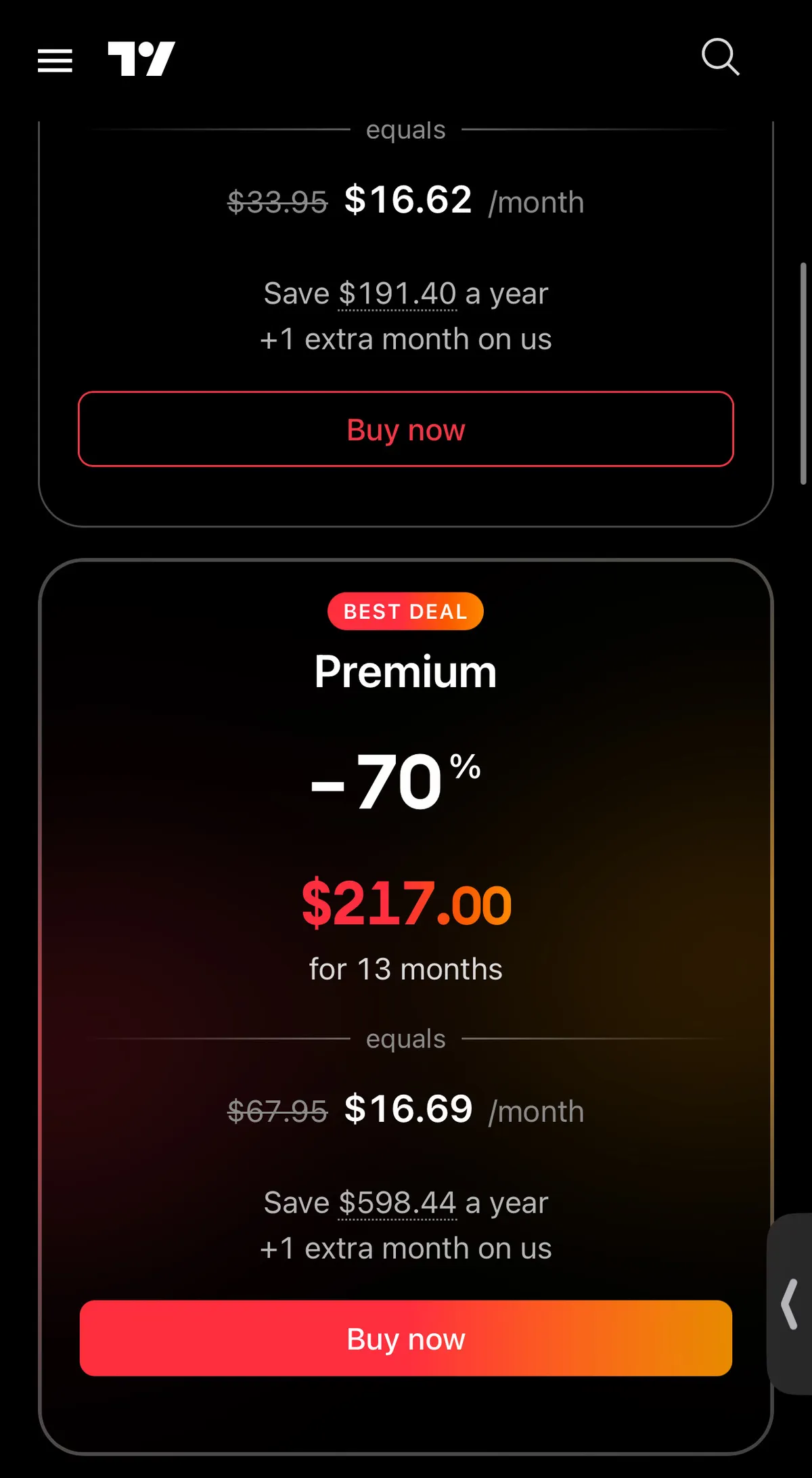
TradingView is 70% off. It is the best affordable charting platform in my opinion.
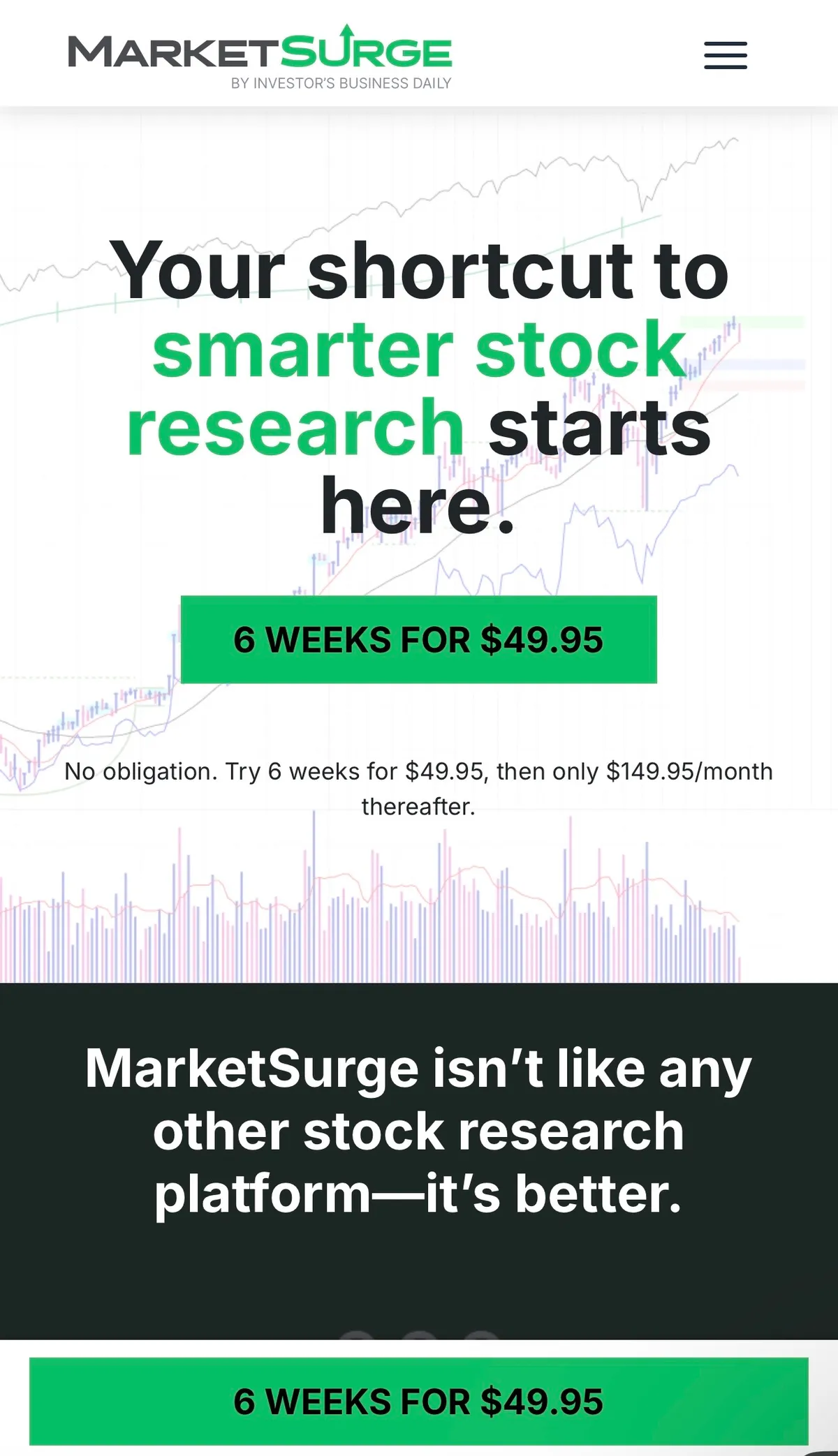
MarketSurge has a 6 week trial for 49.95. This is where I screen for high relative strength, big earnings, and big sales. It is built on the William O’Neil Investor’s Business Daily framework and is now owned by Dow Jones.
You can make millions using these two platforms if you stay disciplined. They cut out the noise and keep you focused on the data that actually matters.
No affiliate links. Just the real tools I use every day.
The Lessons From an Anonymous Pit Legend That Every Trader Should Know
The Phantom of the Pits was written anonymously by a pit trader and it sums up many of the same lessons we have heard from the greats for more than 100 years. His approach focuses heavily on mindset, risk, and behavior, which is why so many traders still study his work today.
I broke down the core ideas from his book, including why he believed small risk at the start and adds only after confirmation created a safer way to build size. Plenty of traders succeed using different methods, but Phantom’s perspective is valuable because it explains the psychology behind why his rules worked for him and many others on the floor.
If you want a clear look at how he thought about risk, confirmation, and survival, here are the lessons from his book.
Read: https://tradingmomentum.substack.com/p/trading-lessons-from-the-phantom
It amazes me how much focus people put on their setup, but very little on how that same setup behaves in different market environments. A pattern that works beautifully in a momentum expansion with strong leadership and breadth can completely fall apart during a correction or choppy, range-bound conditions.
Van Tharp’s six market types opened my eyes to this years ago: bull quiet, bull volatile, bear quiet, bear volatile, sideways volatile, and sideways quiet. The same setup performs very differently depending on which environment you’re in.
The environment dictates the effectiveness of the setup. Understanding when to press and when to step aside is what actually makes a setup work.
Don’t Waste This Pullback
When the market pulls back and everything feels weak, do you still feel the urge to buy something anyway?
If you said yes in your head, you already understand the trap most traders fall into.
Right now we are below key moving averages and making lower lows and lower highs. That is not the time to be buying or fighting the trend. It’s the time to learn and prepare.
This period can be the most beneficial to your long term performance.
Use it to:
• review past winners and losers
• study what actually worked
• identify leaders that are holding up well
• refine your process
• build your watchlists
If the market moves back higher, the names showing strength now usually lead, and you will already be ready.
And if the market moves deeper into this correction, that is still a win. It gives you more time to learn, study, review, and sharpen your edge. It also builds a larger opportunity when we eventually move back up.
It’s a win win for somebody with patience.
Bottom line:
Do not waste this time. This pullback can set up your next big performance jump if you use it well.
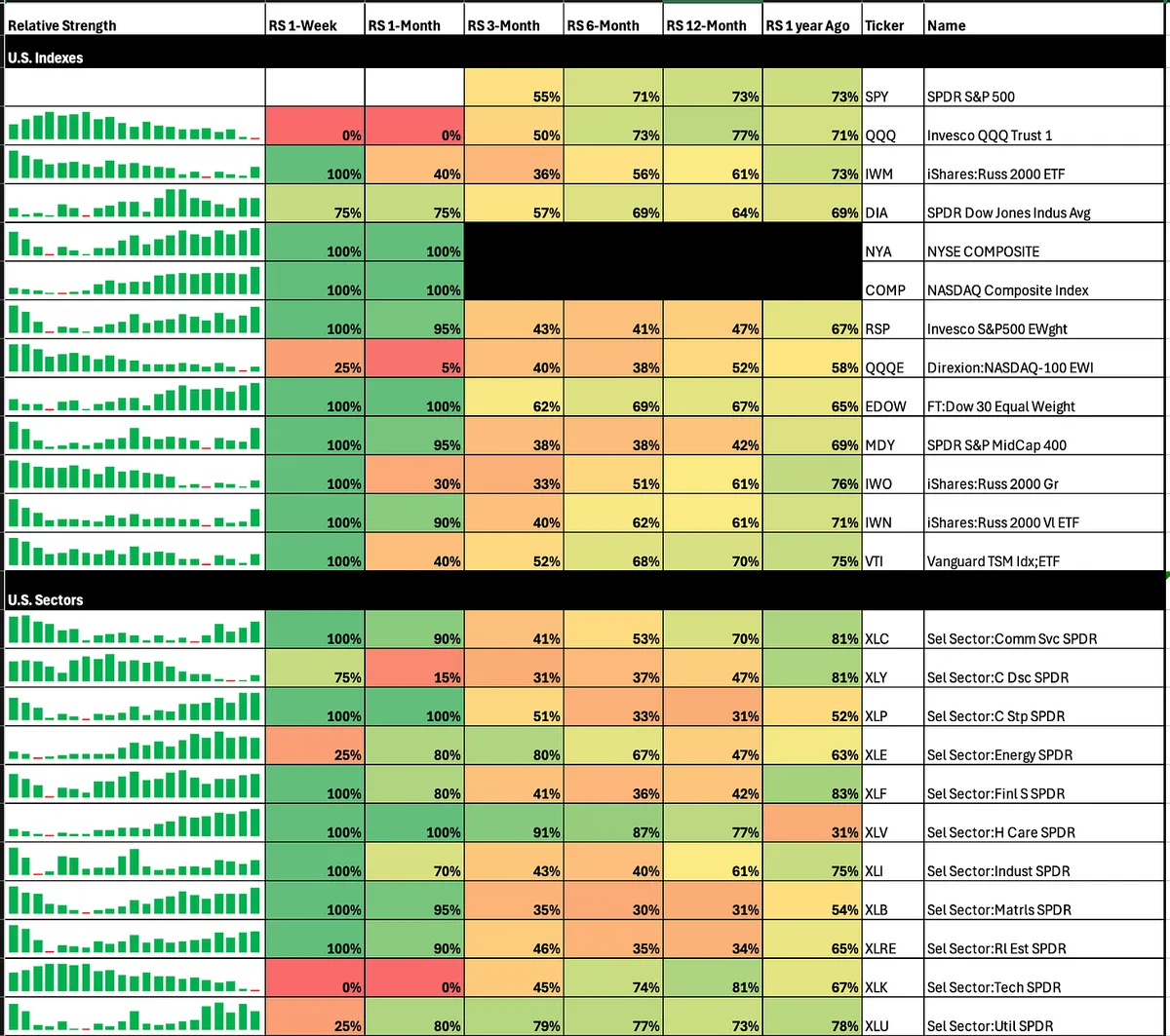
Looking at my Relative Strength dashboard today, something jumped out at me.
Health Care has been one of the strongest sectors over the last 6 months, and the biotech and pharma industries have been quietly leading inside of it. I have noticed this strength for a while, but I completely neglected this area in my own trading.
This is why I track relative strength across sectors and industries. Leaders often reveal themselves long before the headlines notice. While everyone was focused on tech and growth themes, Health Care just kept grinding higher with consistent strength.
Who here has done well trading this sector or these industries? I would love to hear what names have worked for you.
Health Care does not care about the pullback.
XLV is one of the only sectors that completely ignored the recent market weakness.
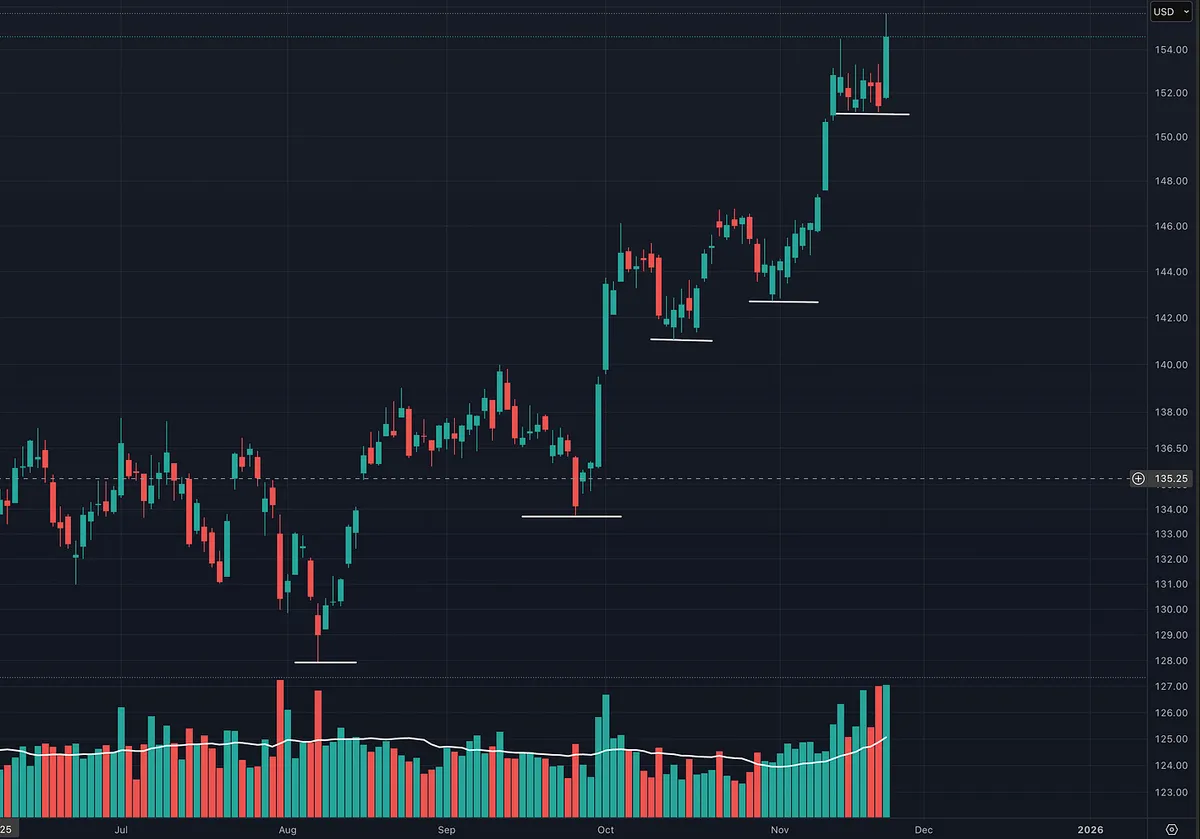
My RS dashboard has it sitting near the top across every major timeframe, and the chart shows clean breakouts and tight consolidations with real volume behind it.
When the market pauses and something keeps pushing higher, that is usually where the real institutional money is flowing.
Leaders reveal themselves during weakness.
XLV is acting like one.
Ream more: https://tradingmomentum.substack.com/p/health-care-does-not-care-about-the
The most important thing you do every day
When I was in the military we had a saying:
“Working out isn’t the most important thing you do in a day, but it’s the most important thing you do every day.”
Back then it wasn’t only about discipline. It was about health. Because when you are stronger, fitter, and in shape, everything else becomes easier.
-Health makes you more focused.
-Health makes you more resilient.
-Health gives you more energy to push through hard days.
-Health improves your mood and decision making.
-Health helps you recover faster from stress.
Since getting out, I’ve realized that same principle applies to running a beauty business with my wife and trading full time.
Most people separate health from work. They treat workouts as optional or something they will get to later. They never see how much harder they are making every part of their day.
When I am training consistently:
• I think clearer when I trade
• I handle stress better
• I am more patient
• I make better business decisions
• My creativity is higher
• My confidence is higher
Success is not built only on discipline. It is built on a healthy body that supports a healthy mind.
Working out might not feel like the most important thing you do in a single day.
But it is the most important thing you do every day.
Because without your health, everything else becomes harder.
With it, everything becomes easier.
The One Thing Almost Every Market Wizard Gets Right
Quick question:
Do you think it's more important to grow your account fast, or to avoid the big drawdowns that erase months or even years of progress?
If you leaned toward minimizing drawdowns, you already think like the Market Wizards.
When you study the greats, the pattern is clear. As they evolved, almost all of them shifted their focus from trying to increase returns to finding ways to reduce drawdowns. They improved their strategies by cutting risk, tightening exits, reducing size, and avoiding the environments that historically hurt them.
Many of them willingly gave up growth to smooth their equity curve.
Professionals are far more impressed by how much someone risked compared to what they earned. They judge a trader by the efficiency of the return, not the size of it.
The key metrics they care about:
Max Drawdown
MAR or Calmar ratio
Risk of Ruin
Time Under Water
Recovery Factor
Ulcer Index and Ulcer Performance Index
MAE (Maximum Adverse Excursion)
Intra-trade Drawdown
Heat on open positions
MAE and Heat expose a critical truth. Some traders close with small losses, but their trades were down 50 or 70 percent while open. On paper they look disciplined. In reality they were praying, adding, moving stops, or risking ruin.
One of the most interesting examples in Unknown Market Wizards was Amrit Sall, the sniper-style trader who had huge winners, sometimes 20R or more, yet extremely low drawdowns and almost no heat. His Sharpe ratio looked only average because the Sharpe formula penalizes upside volatility the same as downside volatility, treating his massive gains as risk. The adjusted Sortino ratio told the real story. It highlighted his incredible downside risk control because he rarely experienced meaningful adverse movement. He focused on low risk, huge reward opportunities with very small drawdowns and massive upside potential.
This exposed a major flaw in the Sharpe ratio. It rewards frequent small gains that often hide large tail risk, and it punishes precise traders who risk very little and occasionally win big.
Professionals avoid big losses. They respect traders who risk almost nothing and still produce meaningful returns.
Growth is easy to chase. Protecting capital and reducing drawdowns is what actually builds wealth.
Quick question for serious Bitcoin investors:
If Bitcoin has only existed during a secular bull market with rising liquidity, why does everyone assume it will behave the same when that environment ends?
We have never seen Bitcoin in a true secular bear market.
That’s the part almost nobody talks about.
Inside secular bulls, bear markets recover faster. Liquidity returns. Risk appetite comes back. Narratives survive.
All of Bitcoin’s major drawdowns happened during this easier type of bear market.
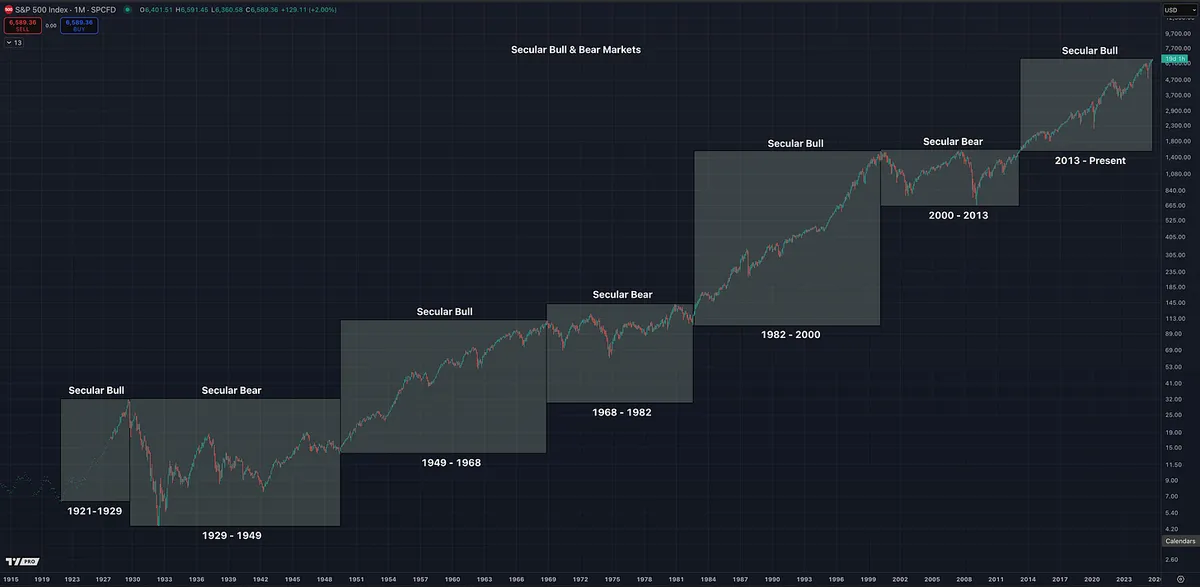
Secular bears are different:
• valuations compress for years • liquidity dries up • risk assets struggle • themes die and never recover
Bitcoin has never been tested in that environment.
Most Bitcoin investors have never lived through a secular bear in their adult lives. Their expectations were shaped in a rising trend that may not continue.
So it raises the question:
If Bitcoin struggled during the easier bear markets inside a secular bull, what happens when liquidity truly disappears?
Does it hold up the way people expect? Or does it behave like past speculative themes once the macro cycle turns?
Curious what you think.
**For context, here is what secular bulls and secular bears have looked like over the last 100 years.
Do you know traders who crush it by focusing on just one asset?
I get it. There is a real advantage in specializing. When you trade the same asset every day you develop a feel for it. You learn how it moves, what the tape looks like when momentum shifts, and you gain confidence in execution. I experienced this firsthand trading the Nasdaq 100. That familiarity is powerful.
And although there are people who do well focusing on only one asset, the majority of professionals with long term consistent results do not. The traders who make it year after year move to what is in play. They follow strength instead of waiting for it to return.
But here is the problem no one talks about.
When you lock yourself into one asset class you give up one of the biggest edges in the entire market. You lose the ability to follow where institutional money is pouring in. You give up the ability to rotate into what is actually moving.
This is where the highest probability opportunities live.
Gold when it is breaking out and outperforming.
AI when capital starts flooding into the theme.
Robotics, energy, biotech, semiconductors, crypto. Whatever the market is rewarding right now.
What we call “stocks in play.”
I see this most with crypto traders. They only focus on that one asset class. They sit and wait for the next big move in Bitcoin or altcoins while ignoring massive opportunities happening in other areas of the market. They stay loyal to an asset that might be dead for months while strength is exploding somewhere else.
Here is the part that stings a little.
Most crypto-only traders are so in love with the idea of crypto that they become emotionally compromised. The narrative becomes part of their identity. In reality, that loyalty hurts their overall performance. They become stuck and rigid, tied to one story while the market rotates into new themes with massive momentum.
They miss powerful opportunities while crypto is sleeping, or they take massive losses because they feel loyal to the cause. It becomes almost cult like. We have seen the exact same behavior with certain stocks like Tesla, where belief and community became stronger than price action and risk management.
Why not move to cash and play the markets that are actually moving? And when nothing is moving, cash can be the best position.
When you follow strength and momentum across sectors you gain almost a margin for error. You are not trying to force trades in a dead asset. You are aligning yourself with the current market theme where volume, attention, and institutional flows are concentrated.
The traders who stay stuck in one asset often end up trading when nothing is happening. They are bored and trying to create opportunity instead of rotating into what is hot.
The market rewards movement, not loyalty.
If you want higher probability setups, follow relative strength. Go where the money is flowing right now.
Become the trader who adapts.
You need to decide what you really want. Do you want to be a great trader or investor? If the answer is yes, your job is to make money. You cannot fall in love with any asset class.
It reminds me of a William O’Neil quote that every serious trader should know:
“There are no good stocks unless they go up in price. If they go down instead, you have to cut your losses fast.”
The Bitcoin Timeline No One Talks About
Why almost every fantasy return story falls apart in reality
Before you read this, answer this honestly in your head:
Would you hold through a 93 percent crash after seeing life changing gains?
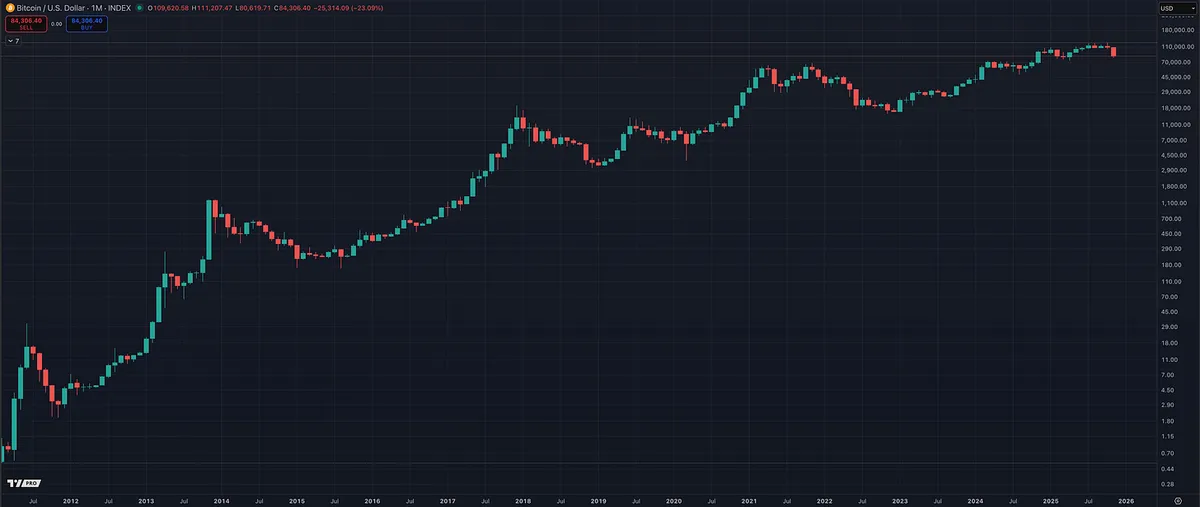
If you bought $100 of Bitcoin in 2010 at twenty-five cents…
And watched it go to $12,000 in 2011… and did nothing
Then watched it crash to $800… and still did nothing
Then watched it spike to $440,000 in 2013… and still did nothing
Then watched it fade back to $80,000… and still did nothing
Then watched $80,000 rocket to $5.6 million… and still did nothing
Then watched $5.6M sink to $1.32M… and still did nothing
Then watched $1.32M explode to $24M… and still did nothing
Then watched $24M crash to $6.2M… and still did nothing
Then watched $6.2M surge to $46M in 2025… and only then decided to “do something”…
Then yes Your lonely $100 bill from 2010 would be worth about $46 million today.
Lesson: This fantasy outcome has more in common with gambling than investing. If you want to be more than lucky, you need a long term strategy that works over and over, compounding not just over time but with each new investment or trade. And remember, it worked in this rare instance with Bitcoin, but imagine how many more times this approach failed completely.
Did you see the market’s warning today?
If you missed it, I broke down the exact signal professionals watch when good news gets sold.
https://tradingmomentum.substack.com/p/when-good-news-gets-sold-the-market
Why the Last 16 Years Produced Mild Bear Markets
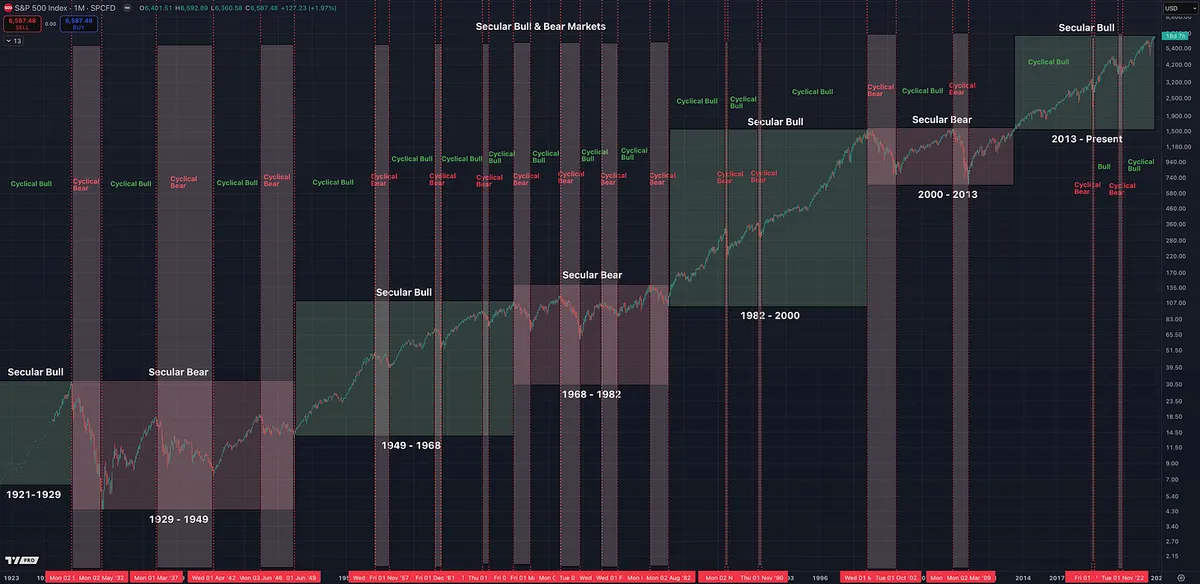
People often ask why the past sixteen years have been filled with shorter and more mild bear markets. Because the past 16 years have taken place inside a secular bull market. In secular bulls, cyclical bear markets tend to be shallow, and in secular bear phases the opposite is true with weaker and shorter-lived cyclical bull markets.
This long-term backdrop is why every decline since 2009 has been brief, recoveries have been fast, and fear-driven selloffs have struggled to gain traction. A secular bull market acts as a structural tailwind, compressing the severity of downturns and keeping long-term momentum intact.
If you want to understand what this means for where we are now, and how the late innings of a secular bull typically behave, I break it all down here:
https://tradingmomentum.substack.com/p/the-big-picture-how-to-read-market
Most People Are On the Slow Path and Don’t Know It
Fun fact: About 70 percent of people click their 401k default options, and another 30 percent try to manage things themselves. But here is the shocking part. Ninety five percent of professional fund managers cannot beat SPY or QQQ long term, and 70 to 90 percent of individual brokerage accounts fail to make money at all.
If you simply avoid the default and choose QQQ for long term growth, and move to SPY as you get closer to retirement, you instantly put yourself in the top tier of all retirement accounts. No trading. No stock picking. No timing. Just choosing a better index.
I just published a full breakdown showing why even William O’Neil told most people to keep it simple, along with two charts that make this reality impossible to ignore. One shows QQQ vs a typical 401k fund since 2006. The other shows what 1,000 dollars per month would have grown into with each one. The difference is life changing.
Read the full post here: https://tradingmomentum.substack.com/p/even-william-oneil-knew-most-people
Why Following the Trend Is My Contrarian Move
Funny thing about markets: doing the simple, obvious thing is actually contrarian.
Most investors fight the trend. They try to call bottoms, average down, over-diversify, cling to their favorite assets, and obsess over being “right.”
I do the opposite.
I buy strength. I only trade Stage 2 uptrends. I rotate to where institutional money is flowing. I cut losers fast, let winners run, and sit in cash when there’s no edge.
I have a thesis, but I’m never attached to it. The market is always right.
Most want to be right. I want to make money.
Short Sellers Aren’t Pessimists
I see a lot of people on social media talk about short sellers as if they are rooting for failure. That is not what is actually happening.
Many traders who take short-side positions are simply acting on risk and reward signals. It is no more pessimistic than going long is optimistic. It is simply taking the other side when the setup makes sense.
Short selling also serves a real market function. It contributes to liquidity and price discovery, and it gives other investors the ability to exit at favorable prices during periods of stress. Without short participation, many major tops would be far more chaotic.
Some of the most respected macro traders, including Paul Tudor Jones and Stanley Druckenmiller, have used short exposure at various points as part of their overall process. Not because they were cheering for companies to fail, but because they were responding to the environment and managing risk.
Importantly, short selling is not only used for hedging. It is also used when traders see what they believe is a favorable risk-to-reward opportunity where an asset or market is likely to decline significantly. In those cases, it is simply another probability-based bet.
It is totally fine if shorting does not fit your style or personality. But for many, it is simply another tool: a rational and strategic way to capitalize on what they see as a low-risk, high-reward financial opportunity.
And yes, plenty of us are perfectly happy people while doing it 😂
Don’t Marry Your Investments
A lot of people think the biggest risk in investing is picking the “wrong” asset.
It’s not.
The real danger is falling in love with the asset you picked.
When you tie your identity to Bitcoin, gold, real estate, or a favorite stock, you stop evaluating it objectively. You defend it. You rationalize. You ignore trend, data, and risk because admitting it’s no longer working feels like admitting you were wrong.
That’s how portfolios quietly bleed out over years… sometimes decades.
History is full of assets that soared with passionate fanbases, only to stagnate or collapse and never recover. The people who stayed loyal suffered, not because they lacked intelligence, but because they lacked detachment.
The pros don’t marry assets. They marry process.
And that mindset is what keeps them alive over multiple cycles.
👇 Read the full breakdown here
https://tradingmomentum.substack.com/p/the-cost-of-bias-why-loving-your
Dr. Van Tharp’s Marble Game proves the power of position sizing in the simplest way imaginable.
Give 10 people the exact same trades: same entries, same exits, same starting capital and you’ll end up with wildly different results.
Some will make millions…
Others will go broke.
The difference?
Not the system.
Not the market.
Not “luck.”
Position size.
Find out why and play the game yourself.
https://tradingmomentum.substack.com/p/the-van-tharp-marble-game-the-single
Yesterday was a great reminder of how combining multiple timeframes can create a low-risk, high-reward swing setup.
I didn’t buy just because price reclaimed the 50-day MA. The 50-day is just an area of interest, not a signal.
Instead, I waited for:
✅ Higher low
✅ Higher high
✅ Supportive tape + volume
This let me define risk tightly, take partials into strength, and let the rest of the position run, essentially financing the trade with early gains.
As Soros said, “It’s very different when you’re risking your principle than when you’re risking your profit.”
Full breakdown here ↓
https://tradingmomentum.substack.com/p/a-low-risk-high-reward-entry-off