“You Only Matched the S&P 500. Why Even Bother Trading?”
A lot of traders are chasing superperformance.
But there's something about trading performance that I think gets overlooked far too often.
When someone spends an entire year actively trading and finishes with returns comparable to the S&P 500, you'll inevitably hear:
"Could've just bought SPY and saved yourself the trouble."
Maybe, but have you looked at how much risk that trader took to achieve those returns?
Consider a hypothetical example.
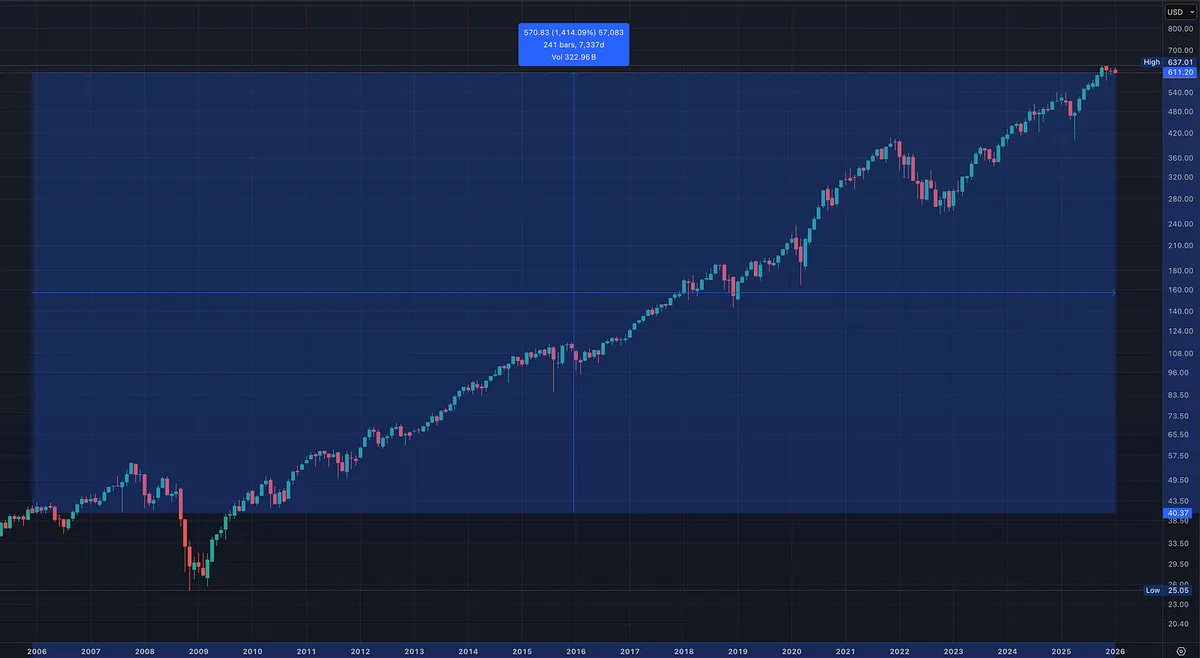
The S&P 500 finishes the year up 11%, but experiences a 20% maximum drawdown along the way.
Another trader finishes up the same 11%, but their maximum portfolio drawdown was only 5%.
Same return. One-quarter of the drawdown. Completely different return-to-drawdown profile.
Peter Brandt discusses this relationship extensively in Diary of a Professional Commodity Trader. Van K. Tharp emphasizes evaluating returns relative to maximum peak-to-trough drawdowns. And in Jack Schwager's Market Wizards, Marty Schwartz makes it clear how much importance he places on controlling the downside.
These traders understood that performance isn't just about how much money you make. It's also about the risk involved in making it.
Now, does one year of lower drawdowns automatically make someone a better trader? Of course not.
But maybe that trader isn't trying to achieve 100% annual returns.
Maybe their objective is to preserve capital, minimize drawdowns, generate reasonable returns, and enjoy something they're genuinely passionate about.
And there's absolutely nothing wrong with that.
I'll continue pursuing superperformance, but I also recognize that not every trader has the same objectives.
Before dismissing someone's trading because they merely matched the market, consider what they accomplished relative to the risk they took.
How much you made is only half the story. How much you had to risk is the other half.