You Might Have to Buy 10 Stocks to Find 1 Big Winner. That’s Trading.
What if I told you that even when you're doing everything right, most of the stocks you buy won't become big winners?
William O'Neil understood this better than most.
In How to Make Money in Stocks, he explains that throughout his career, only one or two out of every ten stocks he purchased turned into truly outstanding winners.
Think about that.
Even with his proven CAN SLIM methodology, most of his purchases didn't become the big winners he was looking for.
So what did he do with the rest? He sold what wasn't working and kept looking.
If those odds surprise you coming from a proven methodology used by some of the greatest traders and U.S. Investing Champions, imagine the odds facing the average retail investor buying stocks based on tips, opinions, and gut feelings.
Even a proven strategy won't make every trade a winner. That's why risk management and position sizing matter so much.
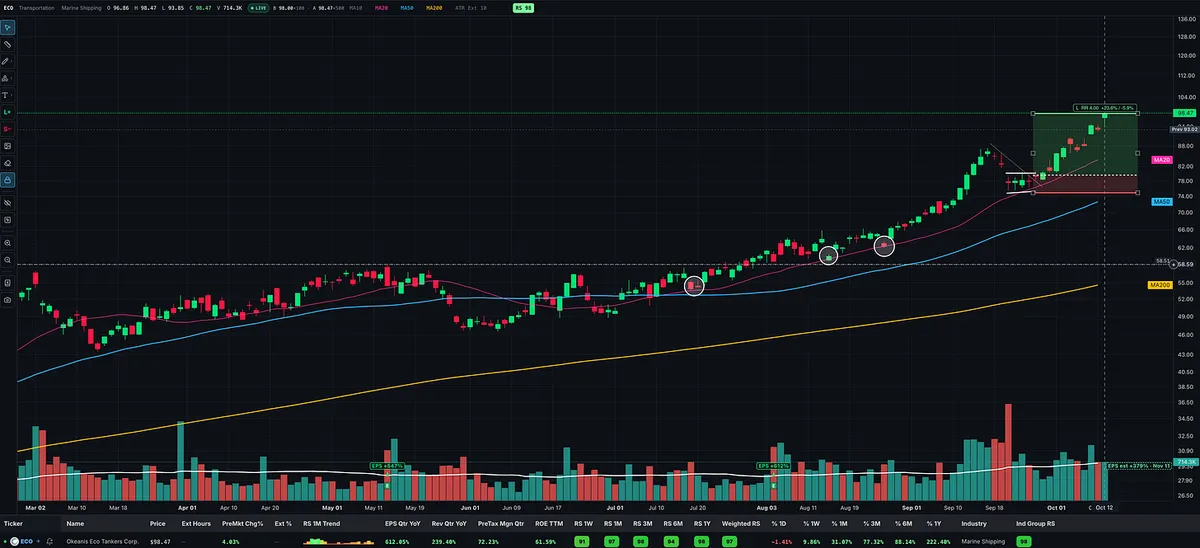
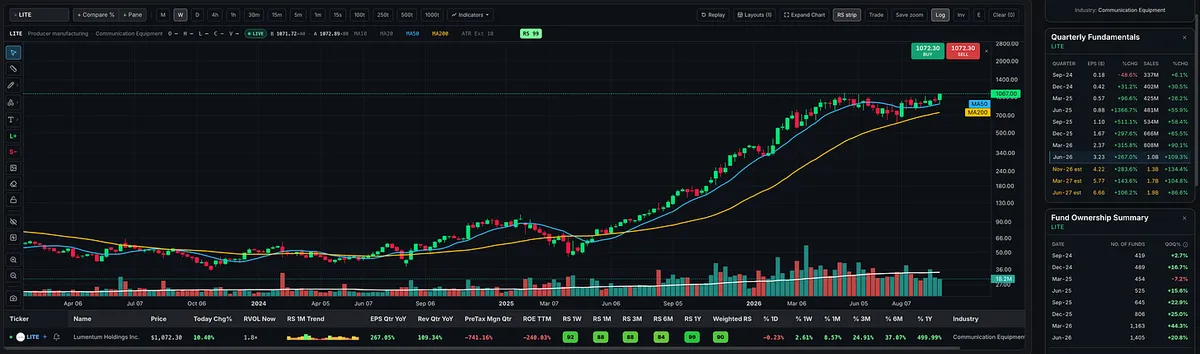
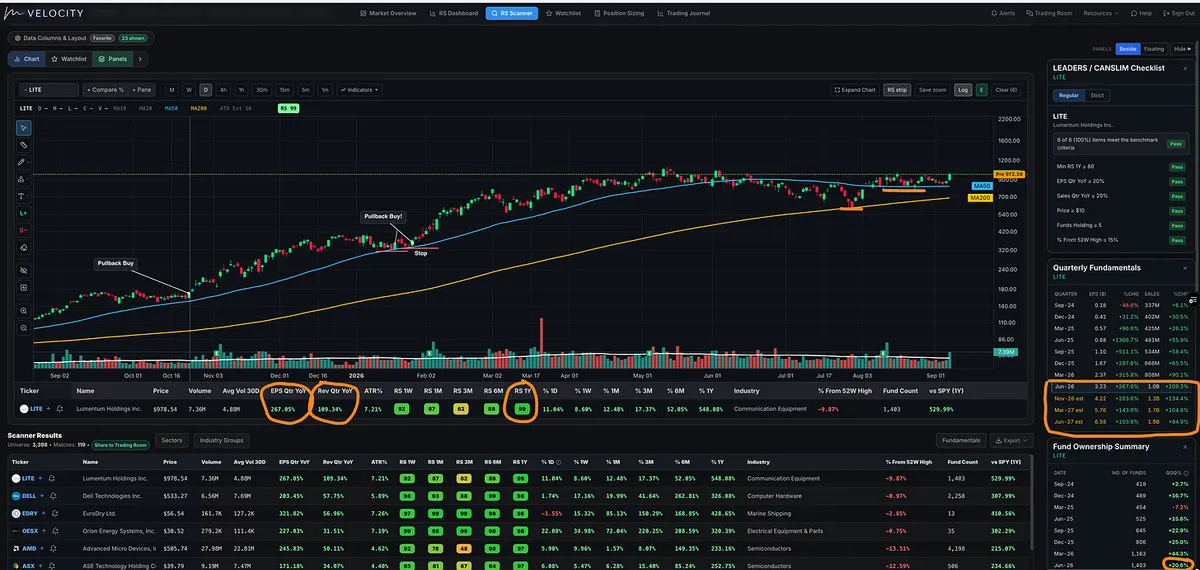
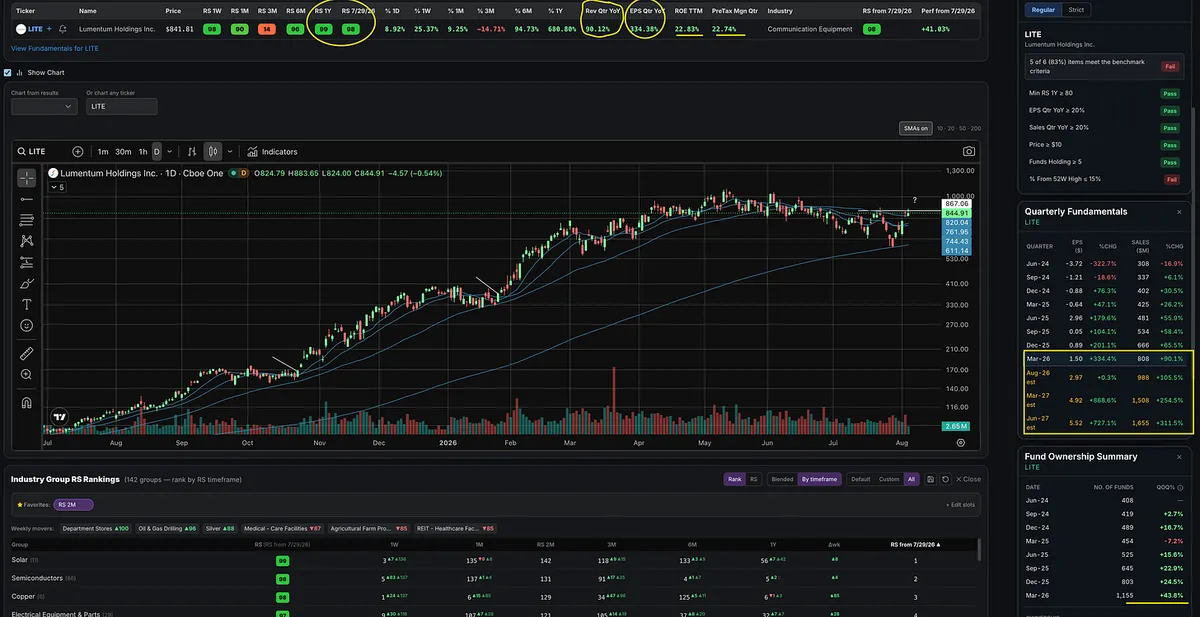
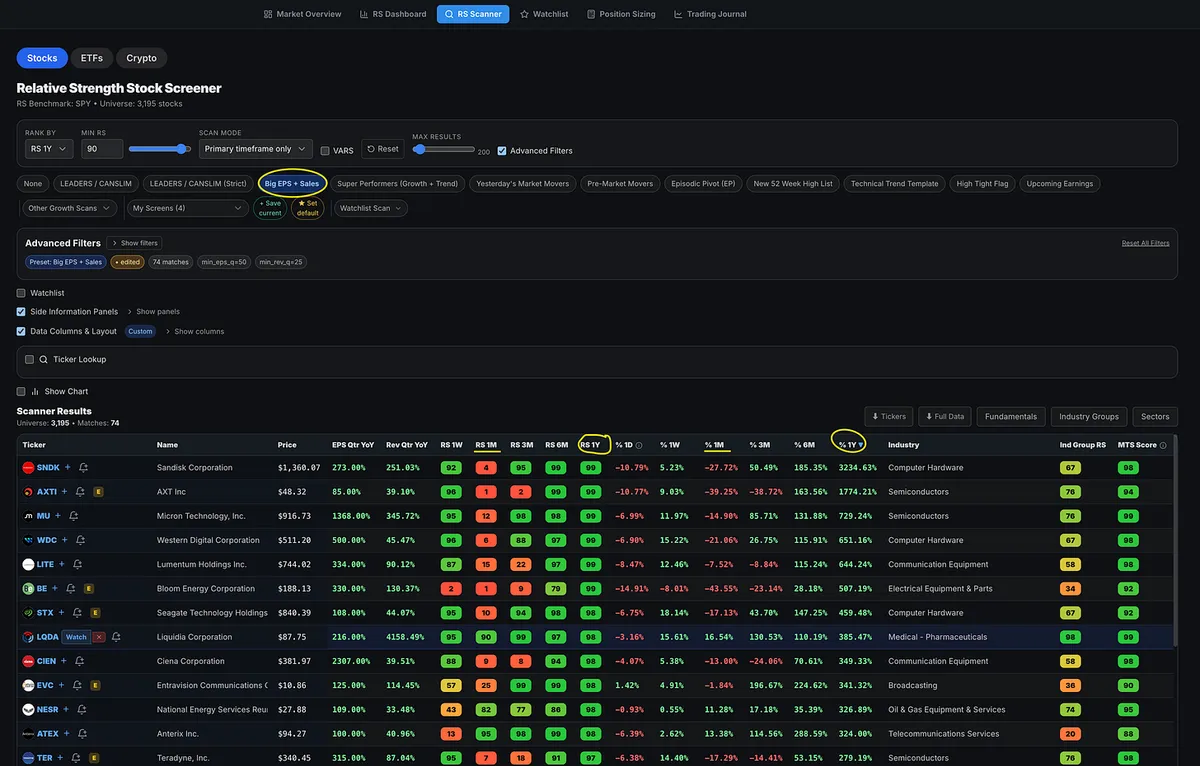
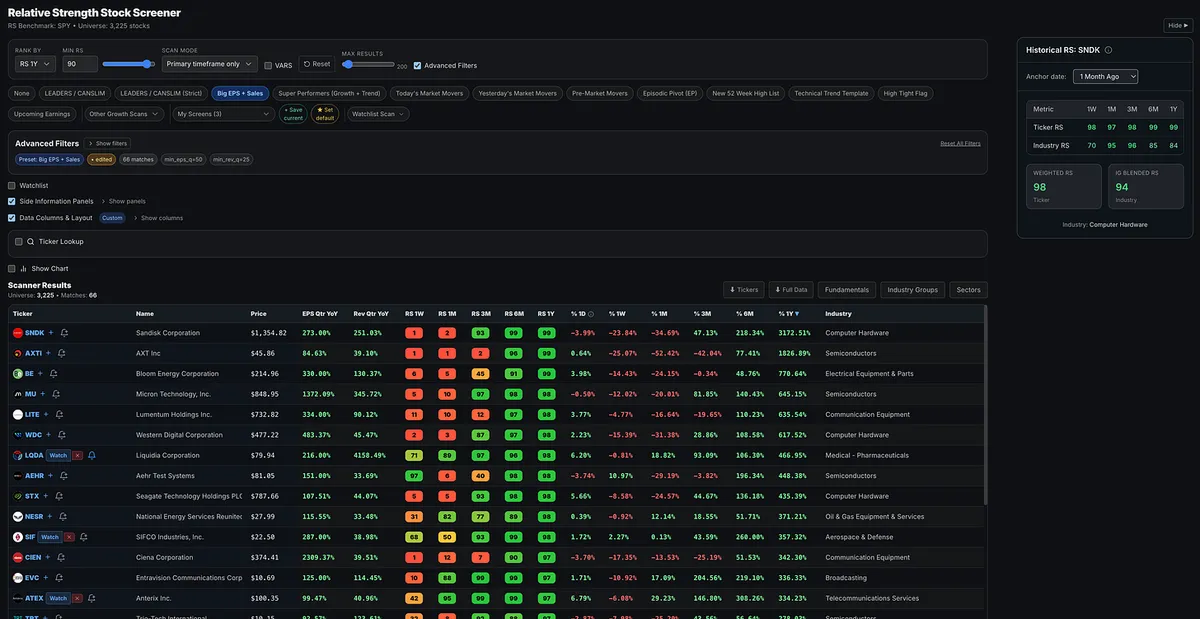
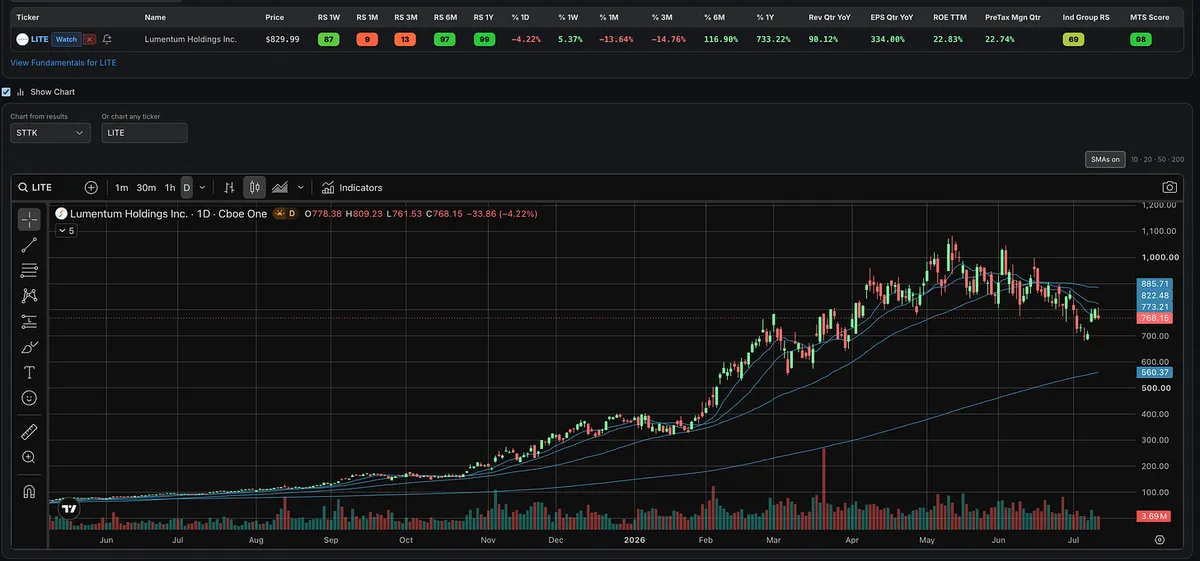
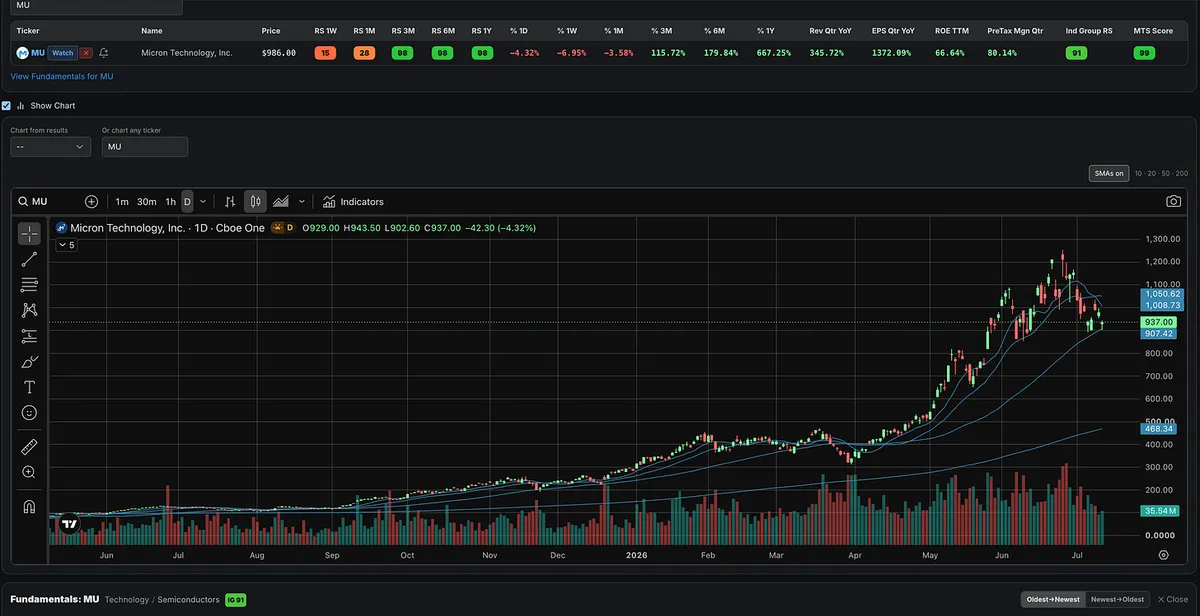
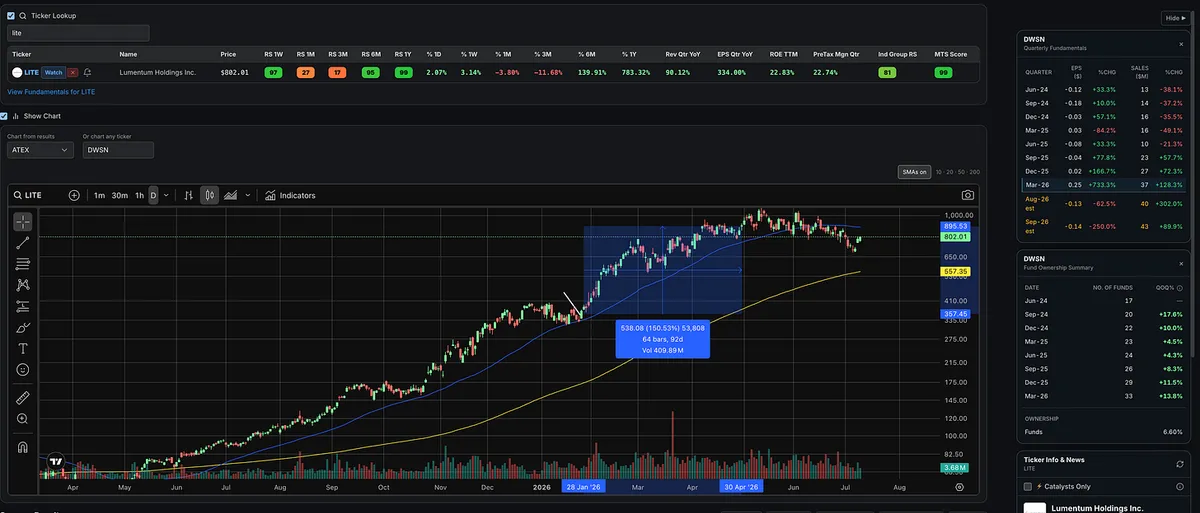
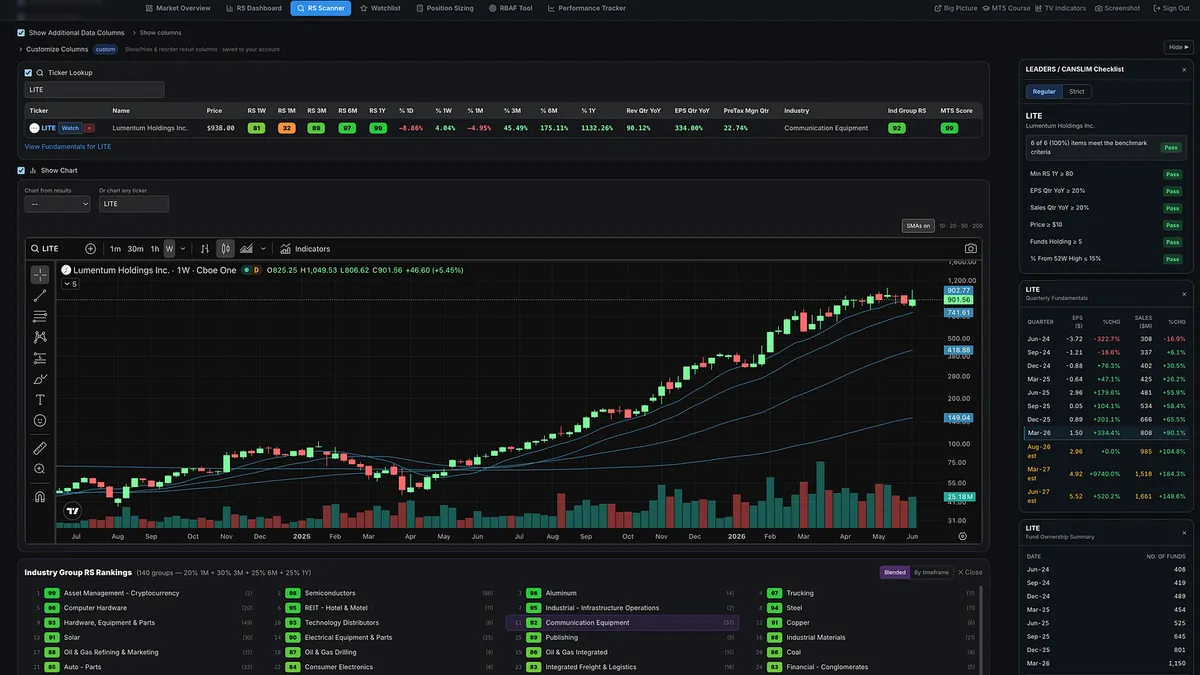
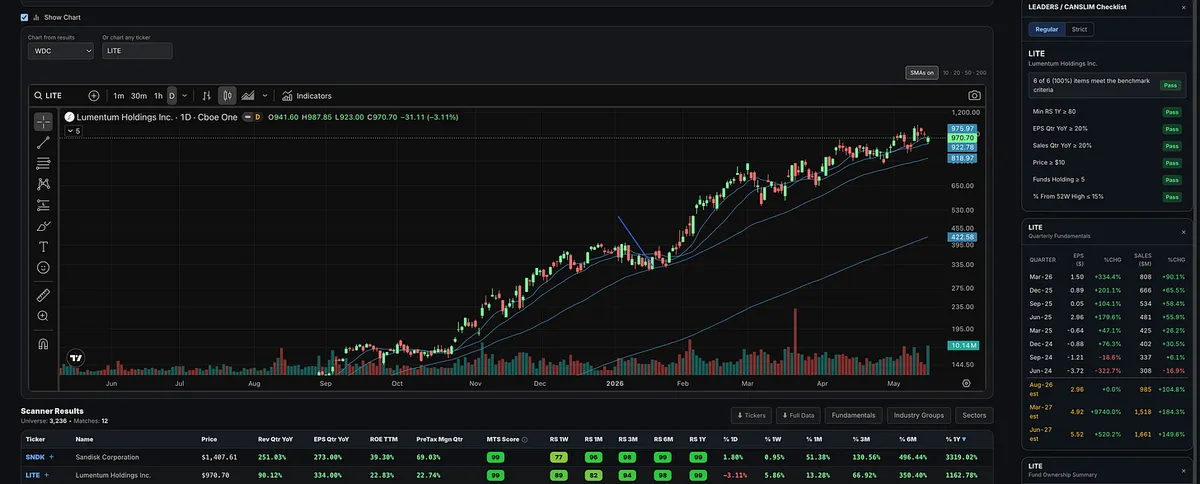
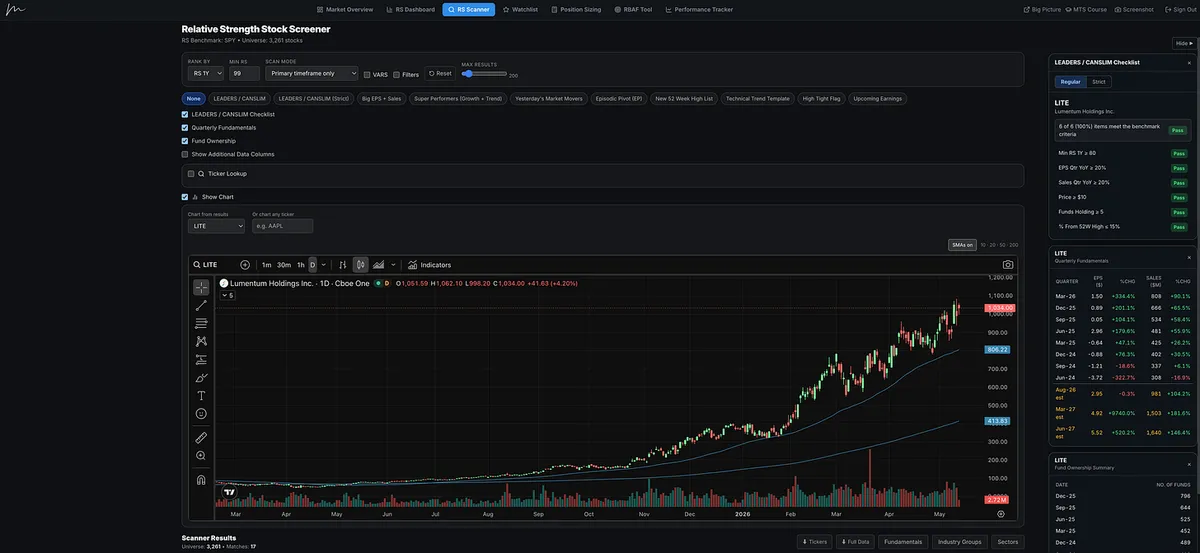
I experienced this firsthand with $LITE and $MU this year.
When I purchased LITE, I had no idea it would become a 100%+ winner. It met my criteria, just like many other stocks I was buying. But I couldn't have predicted which one would deliver that kind of return.
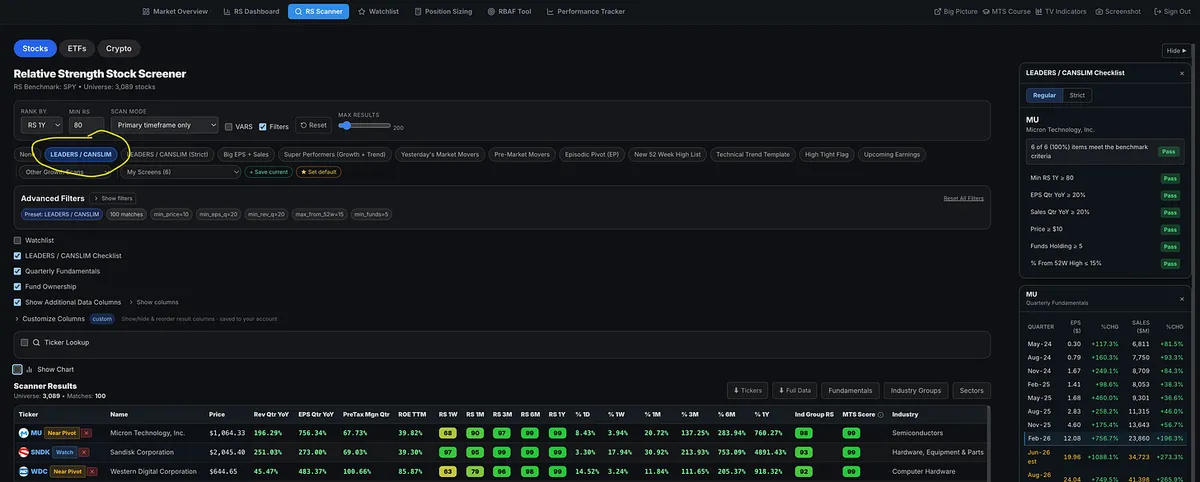
Same with MU. Following my April 22 setup and buy, I knew it had the potential for a significant move. But it wasn't even the strongest leader coming off the market bottom. I never expected the magnitude of its advance.
But... that's the point. You don't know in advance which stocks will become your biggest winners.
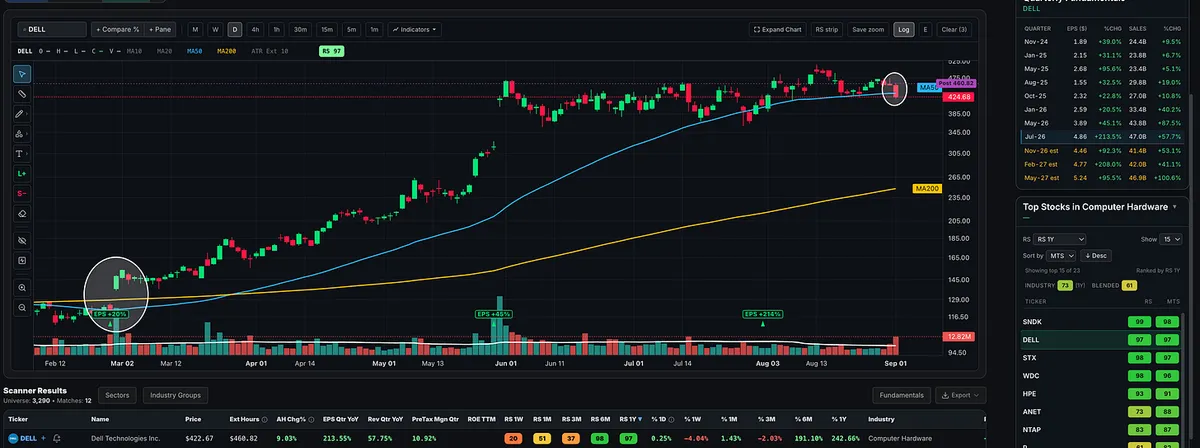
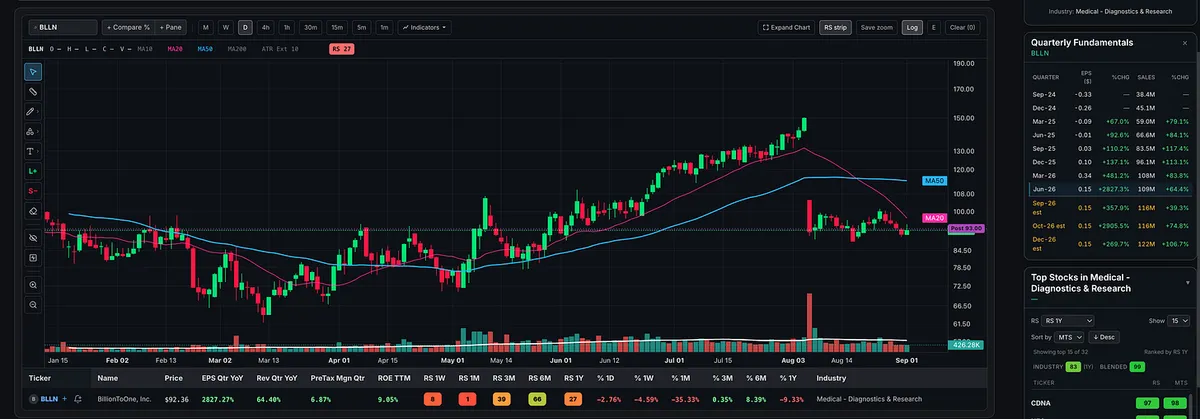
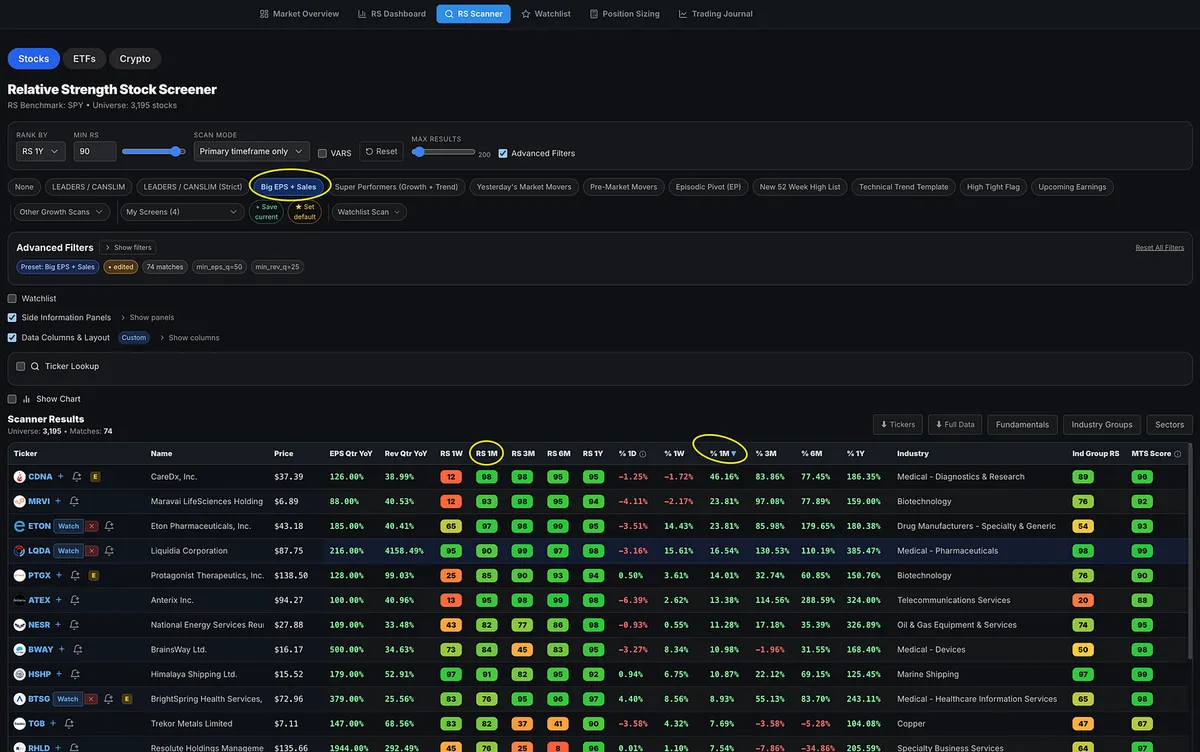
You might eventually build a concentrated portfolio of four or five outstanding stocks, but finding those winners could require buying 10, cutting eight, buying another 10, cutting several more, and repeating the process.
This is exactly why I emphasize progressive exposure and building on success.
You start with your criteria. You manage your risk. You cut what isn't working. And you gradually concentrate capital into the stocks proving themselves.
Concentration should be earned through performance, not based on how convinced you are before entering a trade.
Also, O’Neil is not saying eight out of every ten trades must be losers. Some might produce small gains, others might break even, and some will be losses.
He's saying that even an exceptional stock selection methodology cannot reliably predict which opportunities will become extraordinary winners.
That's why you need both sides of the equation: the discipline to cut unsuccessful trades and the patience to let exceptional winners develop.
The goal isn't to be right on every trade. It's to find the few stocks that can make a meaningful difference in your portfolio.
You might have to buy 10 stocks to find one exceptional winner. That's okay. The other nine are simply part of the process, provided you manage them properly.
Cut what isn't working. Build on what is. And never forget that your biggest winners often reveal themselves only after you've bought them.
That's how you turn a handful of exceptional winners into meaningful portfolio returns.