Momentum Trading Strategy

Notes

Short lessons on momentum trading, every day.

Every note from Substack, in one place: risk, setups, leading stocks, market conditions and the mindset behind them. Search them, browse by topic, or filter by stock.

Showing 1–5 of 5 notes

$INTC ×
View on Substack ↗

Nothing Lasts Forever. Don’t Fall in Love With Any Stock.

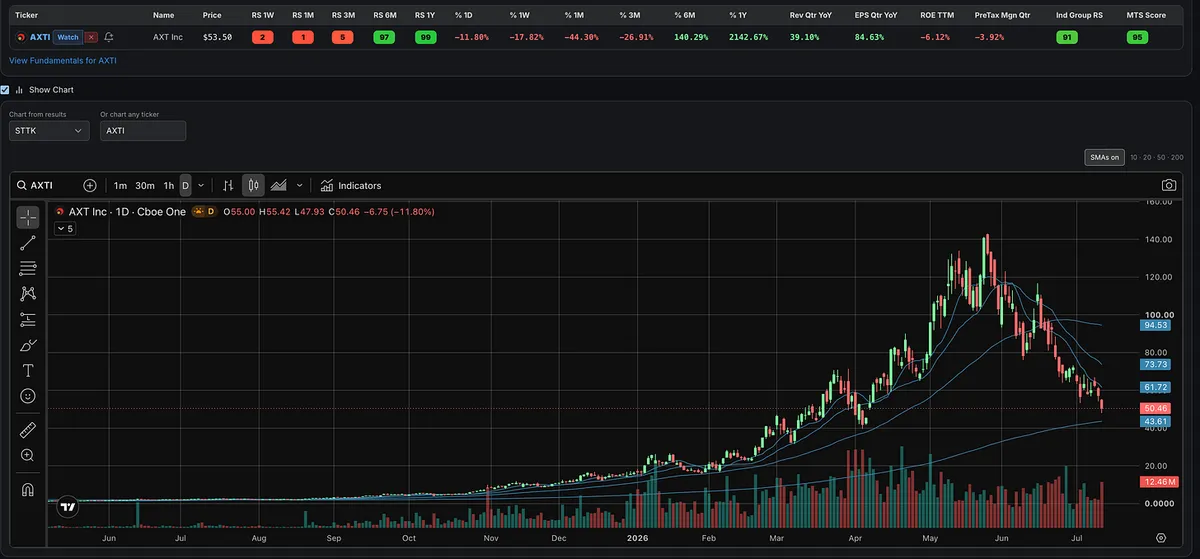
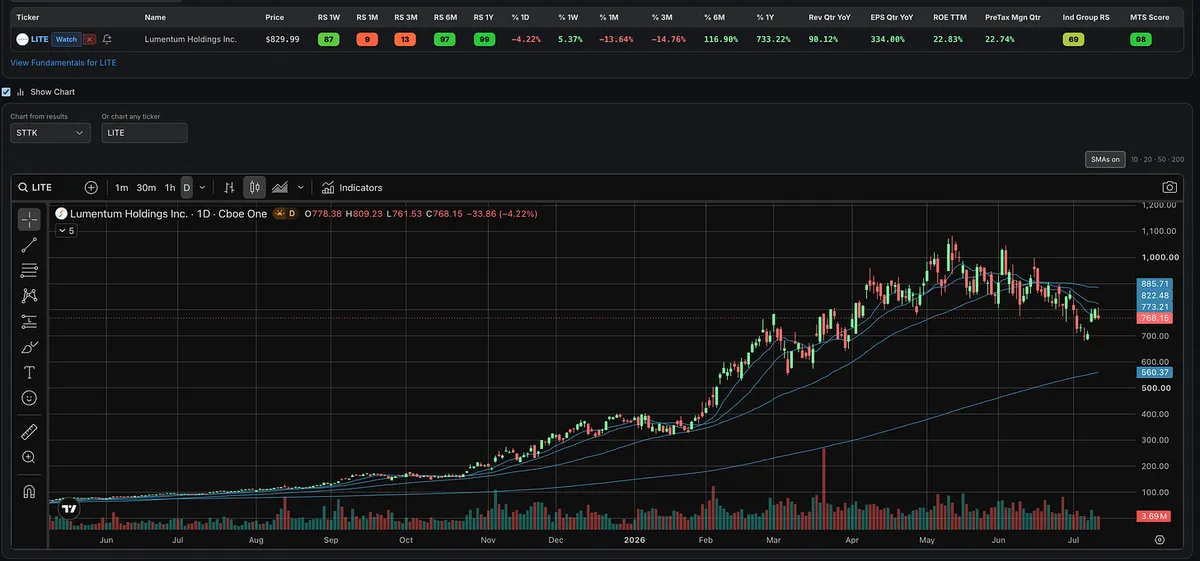
Some of the market’s biggest winners over the past year have now broken down. At least for the moment, their runs appear to be over.

AXTI delivered enormous gains over the last year, but it has now fallen below its 50-day moving average and is heading toward the 200-day. Its 10-day and 20-day lines are declining, and the 50-day is beginning to roll over.

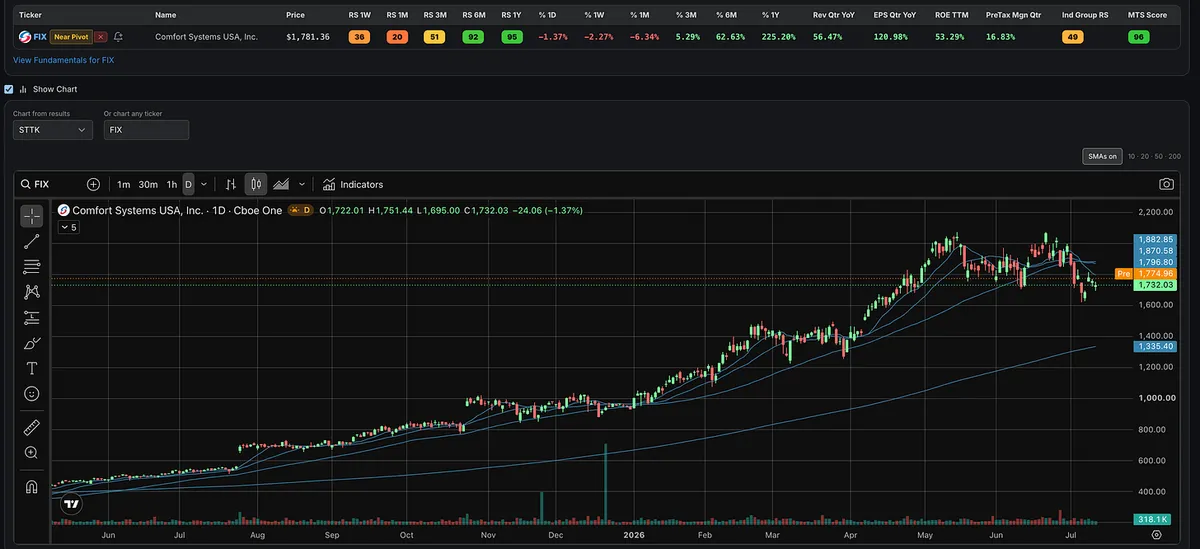
LITE, CIEN, VICR, AAOI, VIAV, TTMI, FIX, COHR, and several other former leaders have also broken down or suffered significant technical damage.

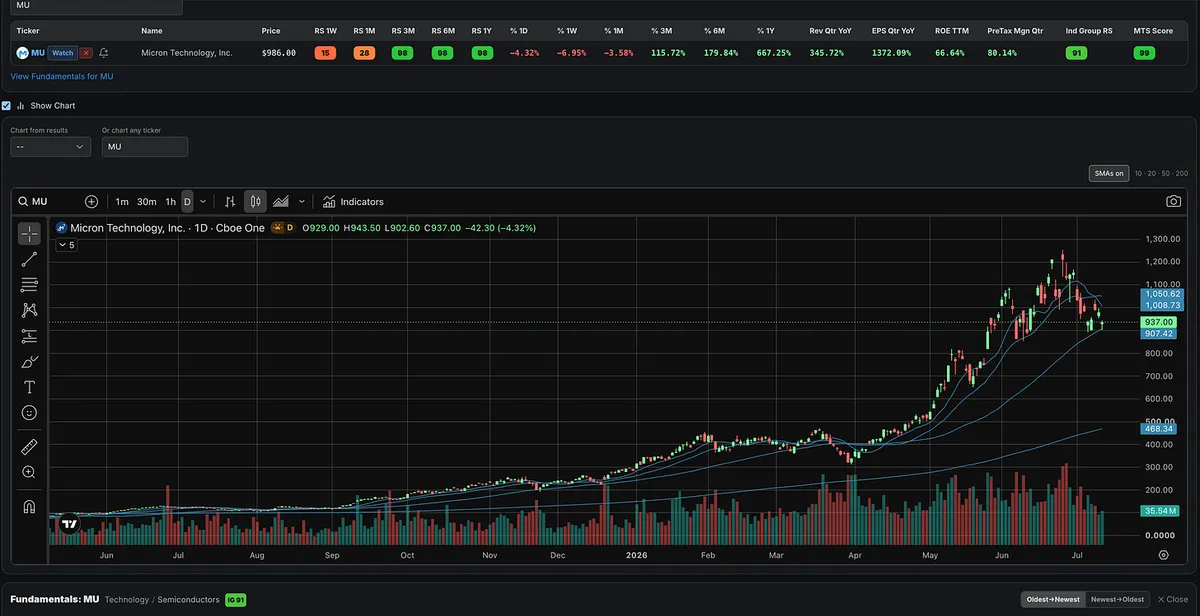
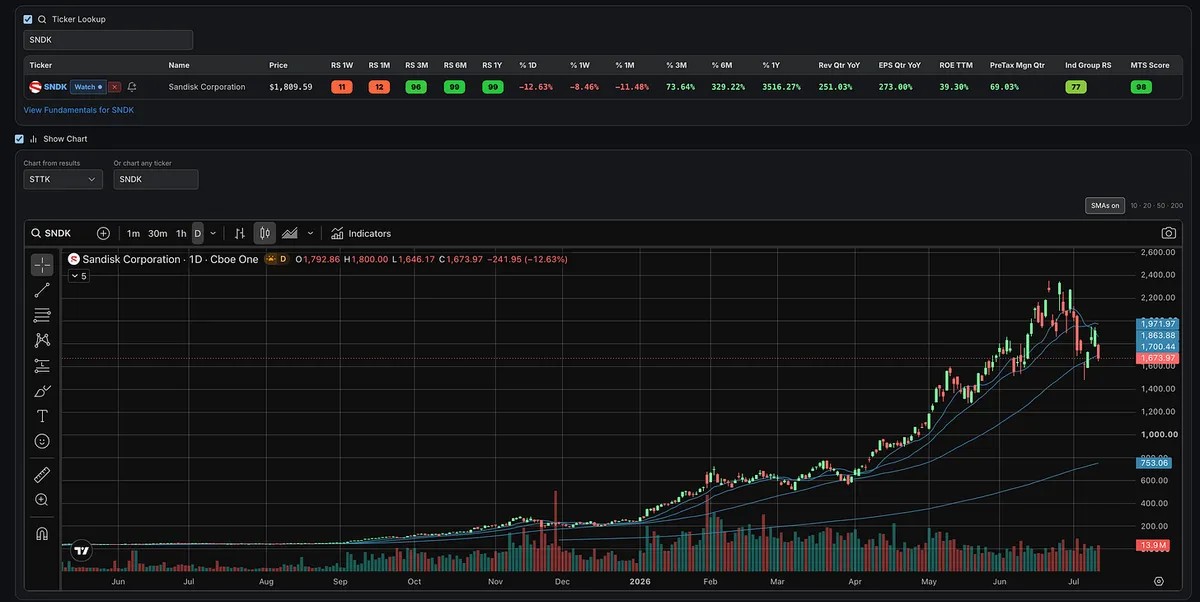
Many more are sitting in the danger zone near their 50-day moving averages. That includes the memory names SNDK, WDC, STX, and MU, along with other hot names from hot groups VPG, MBIS, MXL, LSCC, MRVL, TER, VSH, STM, ADI, INTC, TSM, LRCX, COHU, PDFS, and others.

The bottom line is that many of the stocks that have driven this market, particularly the memory, semiconductor, and telecom names, have either already broken down or are now testing a critical area around their 50-day lines.

I have not needed to share many new tickers from week to week because the same names I have discussed throughout the year continued to lead. There was no reason to constantly search for something new when the existing leaders were still working.

But nothing lasts forever.

Many of the stocks that worked all year are now either ending their runs or approaching a decisive point. Do not fall in love with any stock. Respect the price action and let the market tell you whether the trend is still intact.
View on Substack ↗

The Multi-Bagger Irony

A lot of stock newsletters sell people on the hope of finding the next multi-bagger.

A 100%, 200%, or 300% winner.

Many talk about holding for years to get the big returns.

What people don't realize is this:

By the time you figure out they were full of it, they already made plenty of money selling you the hope.

The funny thing is, I don't even teach or claim to give people multi-baggers.

But many investors would likely get similar or better results by learning how to identify true growth stock leadership, proper setups, institutional demand, and strong price action.

Here are a few names I mentioned in January and early February:

• AAOI +302%

• AXTI +294%

• SNDK +249%

• DELL +214%

• MU +160%

• LITE +155%

• CIEN +147%

• STRL +127%

• STX +126%

• WDC +124%

• INTC +101%

• AMD +101%

These were discussed in the paid subscriber chat and watchlist posts.

But to be clear, this is not what I do here.

I'm not telling you to blindly buy a stock and hold it until it becomes a multi-bagger.

The goal is to teach you how to find leadership, manage risk, identify proper entries, and build a repeatable process.

View on Substack ↗

This Is What an Episodic Pivot Looks Like

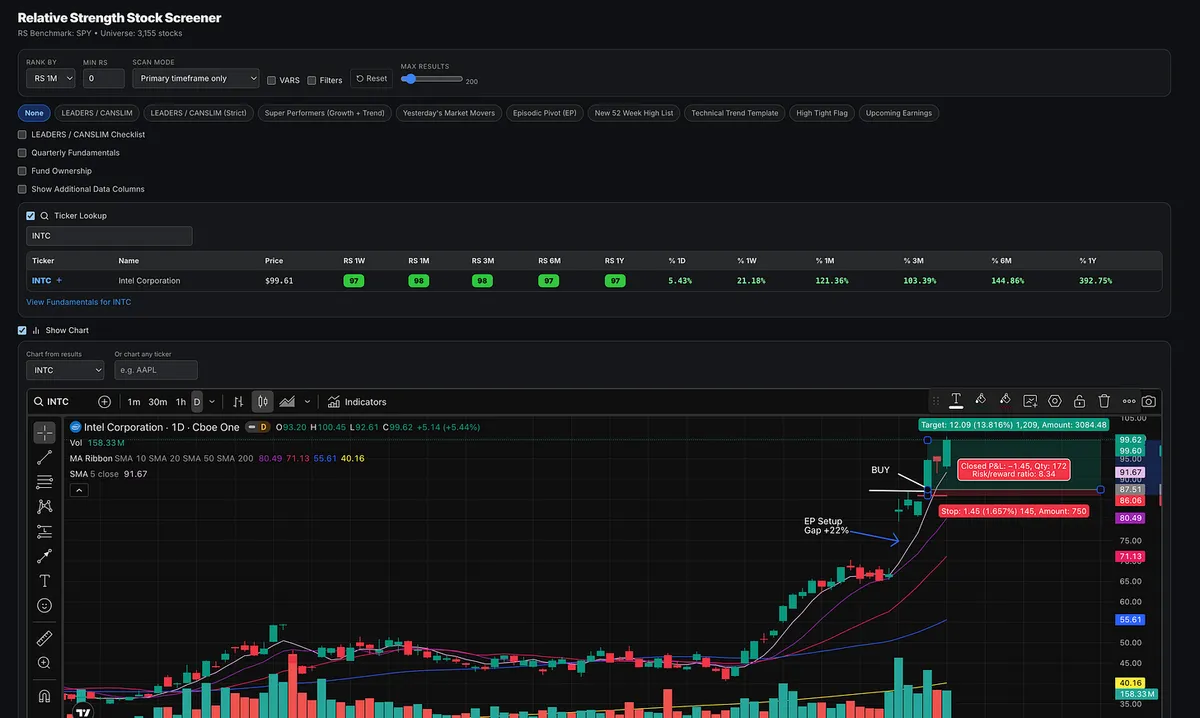
INTC showed up as a clean EP setup.

The stock gapped up +22%, held the gap, then broke out on big volume using an opening range breakout entry.

That is the key.

The gap alone was not the play. After the initial move, price paused, held up, and then pushed to new highs as volume came back in. That gave traders a more precise way to get involved instead of blindly gambling on the gap.

This is why I like combining:

EP catalyst + relative strength + volume expansion + opening range breakout entry

That combination can create a low risk, high reward play.

In this case, the stop was placed at the low of day, giving a clear line in the sand that was much tighter than using the gap-day higher low or previous day low.

This is the type of setup worth studying.

View on Substack ↗

The Chart Said Yes. The Process Said No

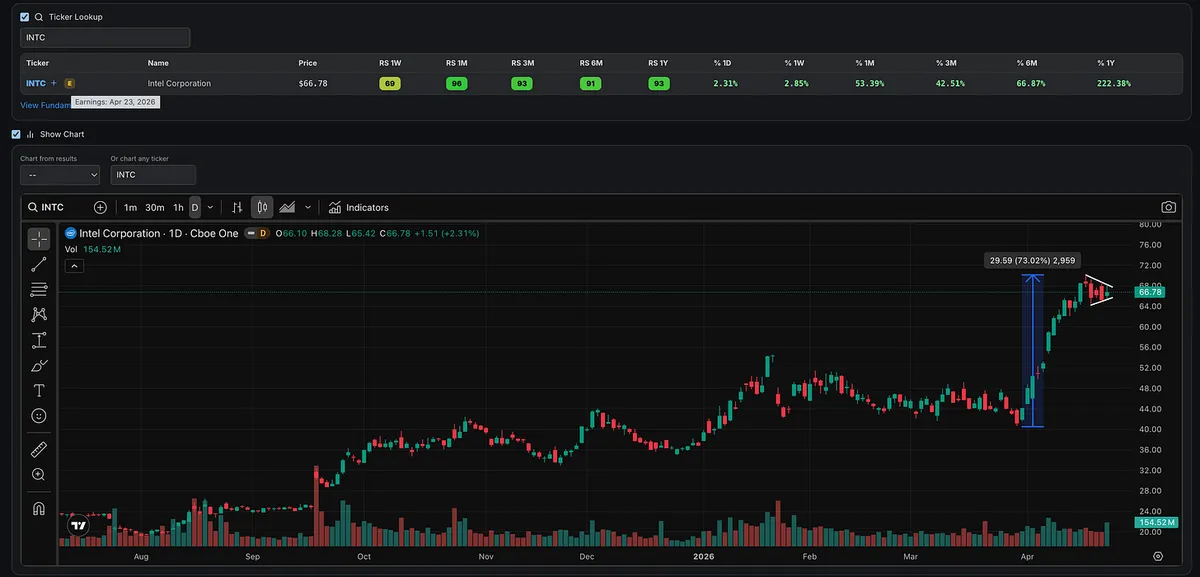
This is exactly the type of setup I look for.

Strong move up. Tight flag/pennant pattern. Volume low in the pullback, then came in at the close.

Everything about this chart was actionable.

But I still said no.

Why?

Because earnings were after the close.

This is where discipline matters most.

Not when the setup is messy. Not when the market is unclear.

But when everything looks perfect… except for one thing.

“Never trade in situations where you don’t have control. For example, I don’t risk significant amounts of money in front of key reports, since that is gambling, not trading.” — Paul Tudor Jones

I wanted to take this trade today.

But that is not part of my process.

The moment you start bending your rules for a “perfect” setup is the moment you start to lose consistency.

Earnings remove control.

Intel can gap up 20%.

It can also gap down 20%.

That’s not trading.

That’s gambling.