Momentum Trading Strategy

Notes

Short lessons on momentum trading, every day.

Every note from Substack, in one place: risk, setups, leading stocks, market conditions and the mindset behind them. Search them, browse by topic, or filter by stock.

Showing 981–1000 of 1230 notes

View on Substack ↗

Why Trading Punishes Closed Minds

You can be very successful in many areas of life without being a seeker of truth.

In politics, people thrive by picking a side and defending it at all costs. In business, strong opinions and conviction can build massive companies. In everyday life, confidence often matters more than accuracy.

Trading is different.

The market does not care about your beliefs, your ideology, or how smart you sound explaining your thesis. It only cares about reality, as expressed through price, volume, and risk.

If you are not open minded, trading will expose you quickly.

You cannot marry opinions. You cannot protect ego. You cannot filter information to support what you already believe. The moment you do, you stop seeing what is actually happening.

Successful traders are constant seekers of truth. They ask, What am I missing? What would prove me wrong? What is the market telling me right now?

That mindset is not optional. It is survival.

The irony is that traits rewarded elsewhere can become liabilities here. Certainty turns into stubbornness. Conviction turns into blindness. Confidence turns into unmanaged risk.

In trading, flexibility puts you on the right side of the market. Humility keeps you solvent. Curiosity uncovers new opportunity.

The market is the final judge. It rewards those who listen and punishes those who argue.

If you want to last, you must stay open.
View on Substack ↗

Why the Best Traders Protect Principal First

One of the most misunderstood ideas in trading is where real risk actually comes from.

George Soros explained it clearly in an old interview.

He talked about how performance does not truly compound until you are no longer risking principal. There is a massive psychological and practical difference between risking your own capital and risking accumulated gains.

When you are risking principal, everything feels heavier. Decisions tighten up. Fear creeps in. You trade smaller, hesitate more, and second guess yourself. That is survival mode.

When you are risking profits, the game changes. You still control risk, but the fear is lower. You can press when the odds are clearly in your favor. That is how real runs happen.

Soros said their rule was simple. They never endangered the principal. When things were not working, they retrenched. They reduced size. They deleveraged. Losses were small and acceptable.

Even on their biggest bets, the downside was limited.

In the famous currency trade that made over a billion dollars, the potential loss was only a few percent. The reward, if right, was many multiples of that. High reward. Low risk. Defined downside.

Here is the part most people overlook.

Until you build a cushion from gains, you often need to be far more selective. You chip away with smaller wins. You move stops to breakeven faster. You take partial profits sooner. You focus on staying in the game and compounding steadily over time.

Once that cushion exists, swinging bigger becomes easier. You are no longer risking survival. You are deploying profits.

That is how Soros, Druckenmiller, and many of the best have always operated. Protect the downside first. Let the upside take care of itself.

Learn to survive. Compounding comes later.

View on Substack ↗

Why the Best Traders Concentrate

Mark Minervini put it bluntly:

“You’re not going to get huge performance consistently if you’re diversified all over the place. If you have a significant edge, diversification does not protect you. It dilutes you.”

Minervini concentrates heavily in his best ideas, sometimes up to 25% of a portfolio, while managing risk aggressively.

David Ryan agreed:

“To make big gains in the stock market, you have to concentrate.”

Ryan typically starts with 10% positions, limits the number of stocks he owns, and only adds to names that are moving higher and building new bases.

“I will only add to positions that are moving higher and performing well.”

The Takeaway

Diversification protects people without an edge. Concentration rewards people who have one, as long as they respect risk.

The best traders did not spread their money thin. They pressed their advantage when the market confirmed they were right.

View on Substack ↗

95% of My Profits Came From One Simple Rule

Dan Zanger once said:

“All the biggest-moving stocks I’ve owned during the past 20 years, where I’ve made 95% of my money, were ones hitting new highs from very solid bases.”

That statement sounds almost too simple. But it cuts straight through a lot of noise.

Most investors spend their time looking for value, bottoms, turnarounds, or what feels cheap. Dan Zanger did the opposite. He focused on strength, not bargains.

And William O'Neil said something very similar. He wanted to buy the best stocks, not the cheapest ones.

View on Substack ↗

The Most Ignored Letter in CANSLIM Is Why This Stock Took Off

Most investors know CANSLIM. Very few actually use all of it.

William O’Neil repeatedly emphasized that the biggest winners are not powered by charts alone, or even great numbers alone. They are driven by something new that creates demand big enough to force institutions to act.

That letter is N.

New product. New service. New technology. New way of doing something the world suddenly needs.

Ironically, this is the letter I see people focus on the least. Even me at times.

Why “New” Matters More Than People Think

Strong earnings and sales can tell you what is happening. The N tells you why it can keep happening.

True super-performers are not just benefiting from a good cycle. They are tied to a structural shift that creates persistent demand. That demand is what supports large sales growth, expanding margins, and long runs in price.

Without that, many stocks end up being decent movers, not generational leaders.

ASML Is a Perfect Real-World Example

ASML is not just another high-quality semiconductor company.

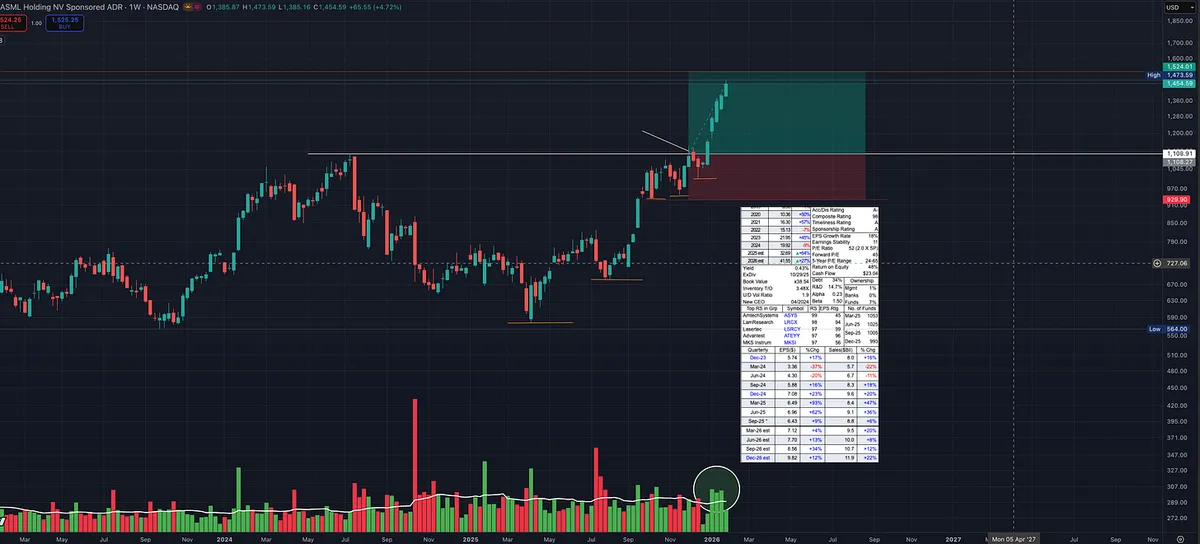
It sits at the center of a new way to manufacture advanced computer chips that the entire industry now depends on. Its extreme ultraviolet lithography technology has become essential for producing leading-edge chips. Without it, progress would have slowed dramatically.

That is the N.

Understanding why ASML matters gives you conviction. It explains why demand is so strong, why customers have little choice, and why the fundamentals continue to confirm the price action.

Now Look at the Stock

Once the story is clear, the chart speaks louder.

  • Clean cup with handle structure

  • Tight action near highs

  • Volume supporting the breakout

  • Relative strength near the top of the market

The fundamentals confirm it:

  • Strong earnings and sales growth

  • Return on equity around 48%

  • Operating margins above 30%

This is price, fundamentals, and N aligning.

The Takeaway

You do not need to predict the future. You do need to understand what is new and why it matters.

That extra work changes how long you hold winners, how you handle pullbacks, and whether you sell too early just because something feels extended.

That is what O’Neil meant by N.

The market eventually makes the decision for you. Your job is to understand why it might keep saying yes.

View on Substack ↗

Winning in Trading Demands Everything and Promises Nothing

Most people fail at trading because they start by treating it like a get rich quick game. When they realize it isn’t, they move on. This happens every cycle. A new group comes in, then quietly leaves.

Because of that, the hard truth is that most people would be better off consistently putting money each month into a simple ETF like SPY or QQQ and letting time do the work.

For the few who stay, the path looks very different.

They get their ass kicked.

They hit the books.

They get their ass kicked again.

They study more, test, execute, and eventually find a method with a real edge.

Just as important, they learn when and how to use that edge. That’s what gives them a chance.

Winning long term at trading requires far more than most people realize. It’s total commitment with no guarantees. It reminds me of a video I showed my boys who compete in sports:

“Winning requires all of you, and more, but it promises you nothing.”

-Lewis Caralla

View on Substack ↗

The Best Stocks Feel Uncomfortable to Buy

A lot of people think a stock is “too extended” because it already looks great.

Strong earnings.

Strong sales.

High relative strength.

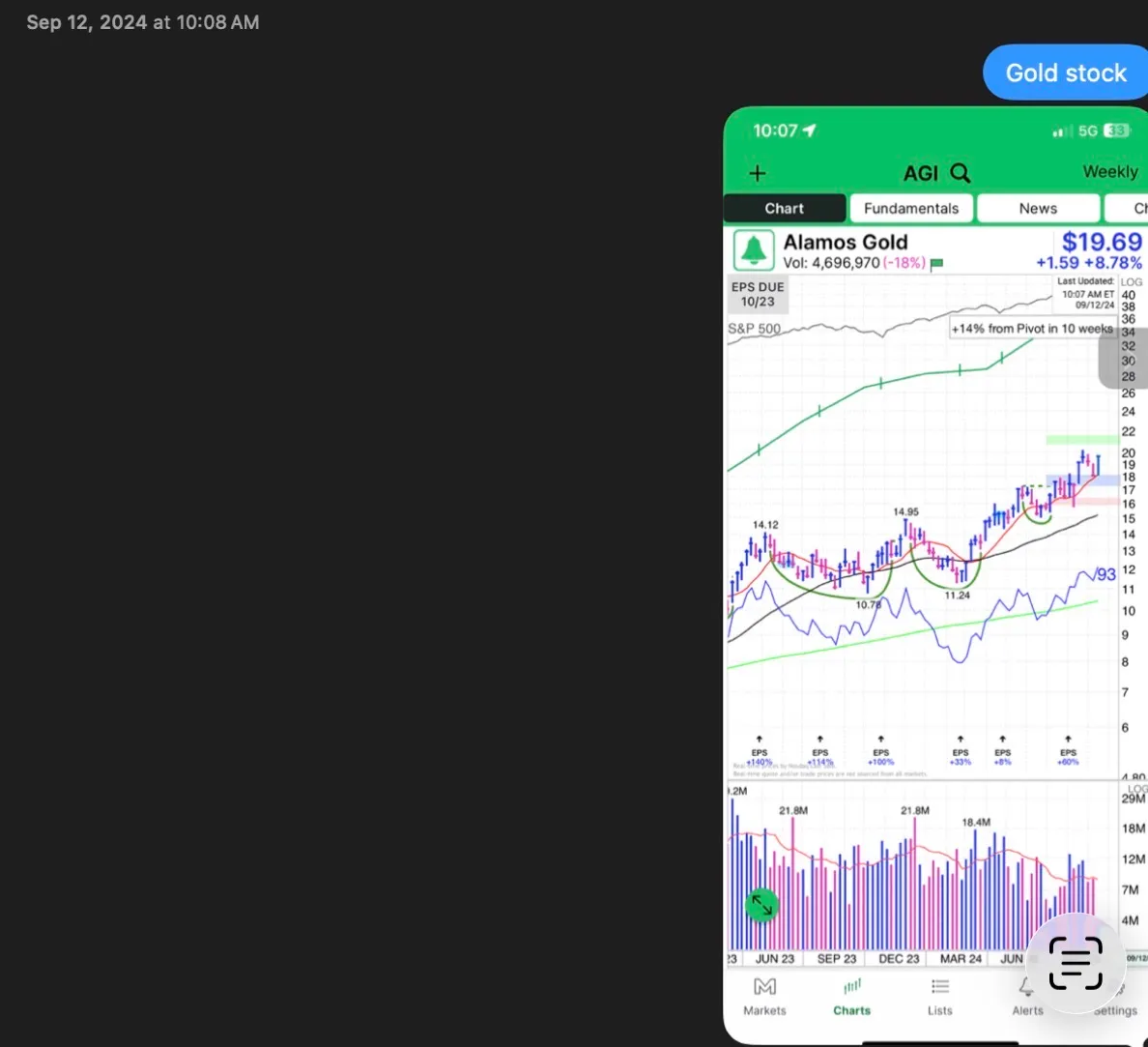
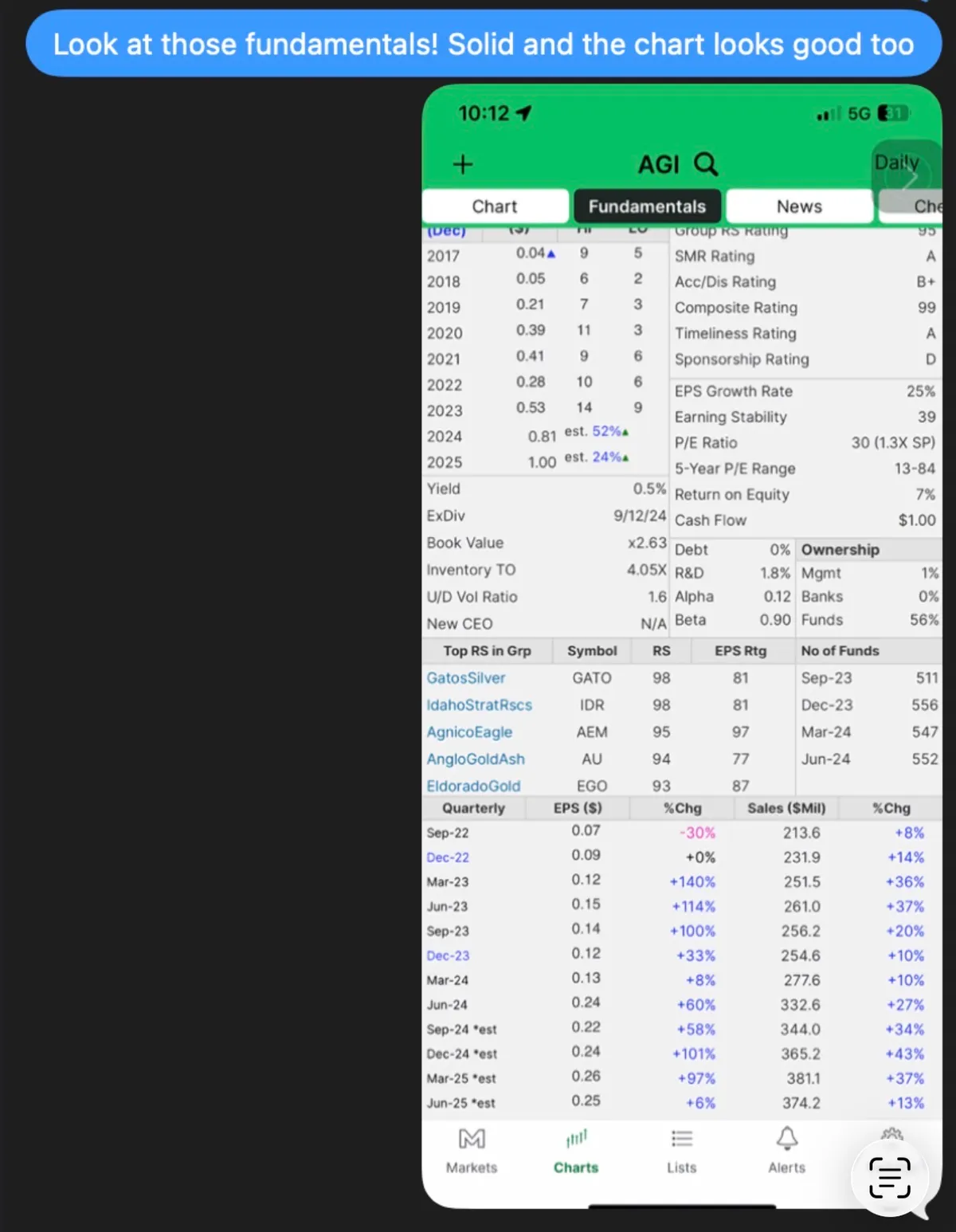
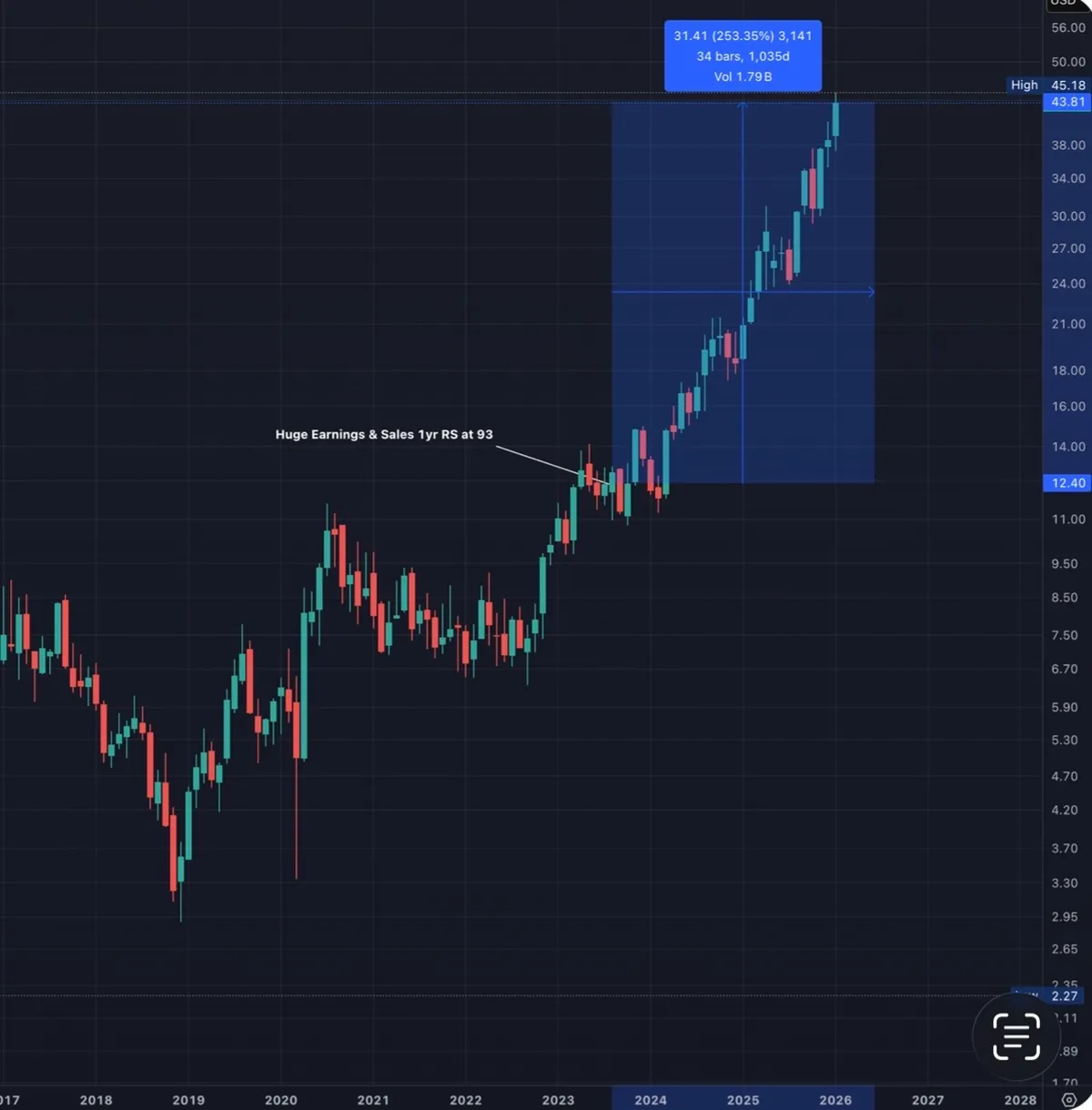
A friend reached out to me today and said he wished he had bought AGI when I texted him about it back in September 2024. That message is what gave me the idea to share this.

Below is AGI in September 2024, and then where it is today.

Back then, his reaction was reasonable:

“Look at those fundamentals. Solid. And the chart looks good too. But the run must be close to over.”

At the time, it already looked like a leader.

High RS.

Big gains off the prior year.

Multiple quarters of strong earnings and sales.

It felt uncomfortable to chase.

It turned out that discomfort was not a warning sign. It was the price of admission.

This is one of the hardest lessons in stock trading. True leaders often look “too good” far longer than most expect.

That tension between what feels extended and what actually keeps working is where many investors get shaken out early.

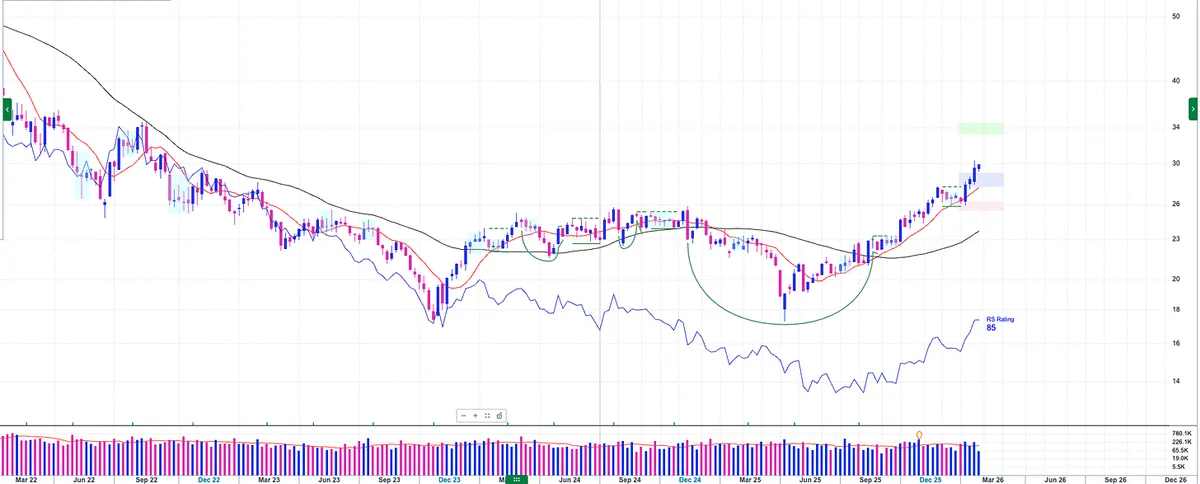
The charts below tell most of the story on their own.

View on Substack ↗

This Will Surprise Most Stock Traders

If you are trying to outperform the market through stock trading, you probably own too many stocks.

William O’Neil addressed this directly in Market Wizards back in 1989. When asked how many stocks an investor should own, his answer was surprisingly small.

Adjusted for inflation, his guidance looks like this today:

$5,000 ($12,981 today): one or two stocks

$10,000 ($25,963 today): three or four

$25,000 ($64,907 today): four or five

$50,000 ($129,815 today): five or six

$100,000+ ($259,000 today): six or seven

Superperformance has never come from owning a long list of average stocks.

It comes from focus.

View on Substack ↗

A Mistake I See Over and Over

A lot of investors are unknowingly trying to run a mutual fund.

They own 15–30 individual stocks. They monitor none of them closely. They underperform the market.

What’s interesting is this usually comes from good intentions. People hear “diversification reduces risk,” then apply it to active stock picking.

That’s where things break.

Diversification works when you are buying the market. It works far less when you are trying to beat it.

Active strategies require focus. They require knowing exactly what you own and why you own it.

When investors blur those two approaches, they often end up with the worst of both worlds: • No market-like simplicity • No stock-picker-level performance

That observation is what led me to write a longer piece on why great investors approached diversification very differently.

👉 Full breakdown here:Why Great Investors Reject Diversification

https://tradingmomentum.substack.com/p/why-great-investors-reject-diversification

ArticleWhy Great Investors Reject Diversification
View on Substack ↗

Why Diversification Has Nothing to Do With CANSLIM

One of the most misunderstood ideas in stock trading is diversification.

Diversification is NOT part of CANSLIM. It is not how superperformance stocks are captured. And it is not how the biggest winners in history were made.

William O’Neil was clear on this. Superperformance comes from concentration in leaders, not from owning a large basket of average stocks.

CANSLIM is built around:

  • Market leadership

  • Strong relative strength

  • Institutional accumulation

  • Proper timing

  • Focused positions

Owning 15–30 stocks is not risk management. It is often a way to avoid making hard decisions.

If your goal is market returns, diversification makes sense. An ETF can do that job efficiently.

But if your goal is outperformance, history points to a different approach.

Fewer stocks. More focus. Better execution.

I break this down in detail here, including what O’Neil and Buffett actually said about diversification and how it fits into a two-bucket approach:

👉 Read the full post:Why Great Investors Reject Diversification

https://tradingmomentum.substack.com/p/why-great-investors-reject-diversification

ArticleWhy Great Investors Reject Diversification
View on Substack ↗

You’ll notice a lot of strong performers inside the IDNA Genomics & Immunology ETF, but I want to be clear about how I approach this area.

Biotech is not my wheelhouse, and I tend to stay selective here. Many biotech names lack consistent earnings and sales, which means they are often traded purely off price action and news catalysts tied to drug data or approvals. That’s a very different game than traditional growth-stock investing.

This is an area where traders like Minervini have expanded over time, and it’s a good example of how many start with a William O’Neil foundation and later branch out once they’ve earned that flexibility through experience.

In my view, biotech should be:

  • Small position size

  • Limited exposure within the portfolio

  • Treated as a tactical trade, not a core holding

This is not where I’d recommend starting. It’s an area you graduate into after proving consistency in safer, earnings-driven growth stocks where risk is easier to define.

Price action always comes first, but process and position sizing matter even more in categories like this.

View on Substack ↗

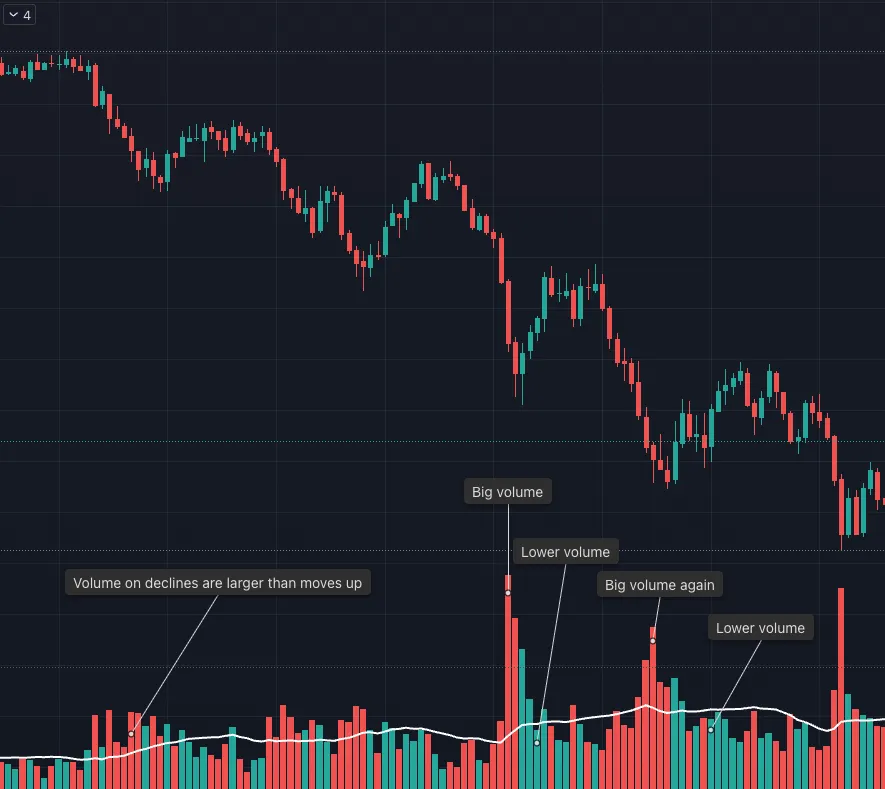
Price Tells the Truth. Volume Confirms.

This is not complicated.

Price is making lower highs and lower lows. That is the definition of a downtrend.

Now look at the volume.

Down moves are occurring on expanding volume. Up moves are happening on lighter volume.

That tells you who is in control.

Sellers are aggressive. Buyers are passive.

Rallies are being sold, not accumulated. Bounces lack commitment and fail quickly. Each push higher is weaker than the last.

There is no reason to outsmart this.

You do not need a prediction. You do not need a narrative. You do not need to call a bottom.

You simply follow what price and volume are confirming.

Lower highs. Lower lows. Heavy volume on declines. Light volume on rallies.

Very simple.

Do not fight it.

Trade with the trend, not your opinion.

View on Substack ↗

Why I Follow Strength And Don’t Fight the Current

If you look at the charts I’m attaching, the message is pretty clear.

Metals and mining didn’t just work for a day or a week. They’ve been in a sustained uptrend.

I’ve been talking about this area for a while now, and week after week it kept showing up at the top of the Relative Strength Dashboard. The same dashboard all premium subscribers have access to.

Most people ignored it.

Some thought it was “extended.” Others stayed focused on areas they felt more comfortable with. A few kept trying to call the top.

Meanwhile, price kept doing what it always does in strong trends.

This is an important lesson:

All boats rise with the tide.

When a major theme is leading, individual opinions don’t matter much. Capital flows into the space. Breakouts work. Pullbacks get bought.

The goal isn’t to predict where a move should go. The goal is to align yourself with where money is actually flowing.

That doesn’t mean you chase blindly or abandon risk management. It means you stop fighting the strongest trend on the board.

Trying to fade leadership because it feels uncomfortable is one of the easiest ways to underperform.

Strong markets reward alignment, not stubbornness.

Go where the strength is. Respect the trend. Let price lead.

Fighting the current might feel smart in the moment, but going with it is what actually pays.

View on Substack ↗

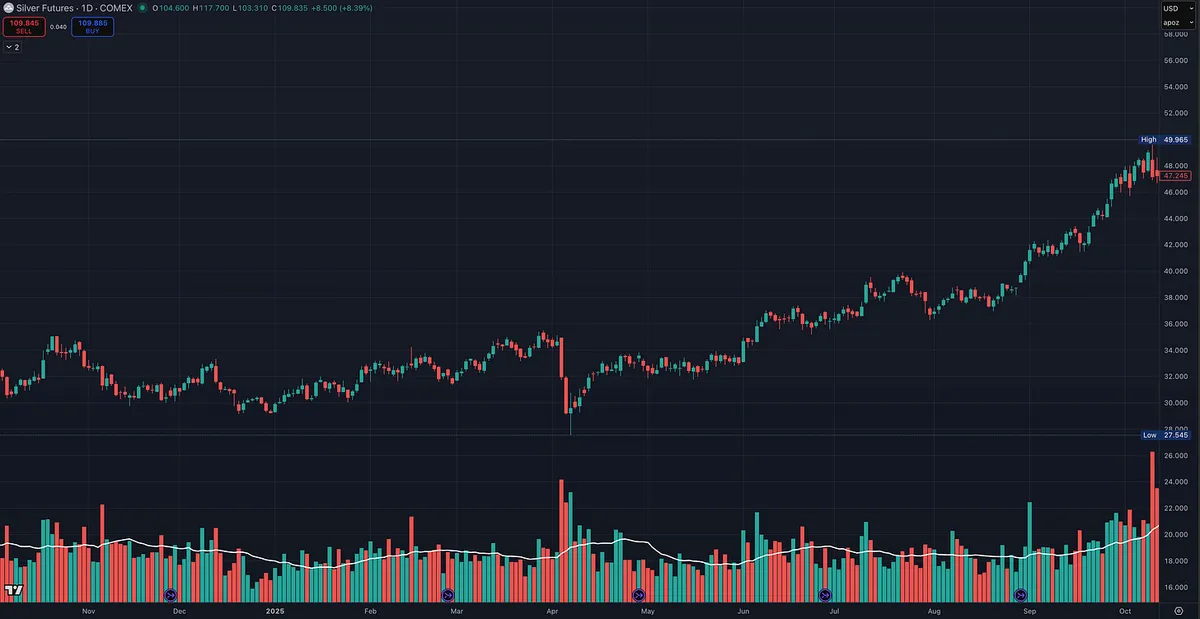
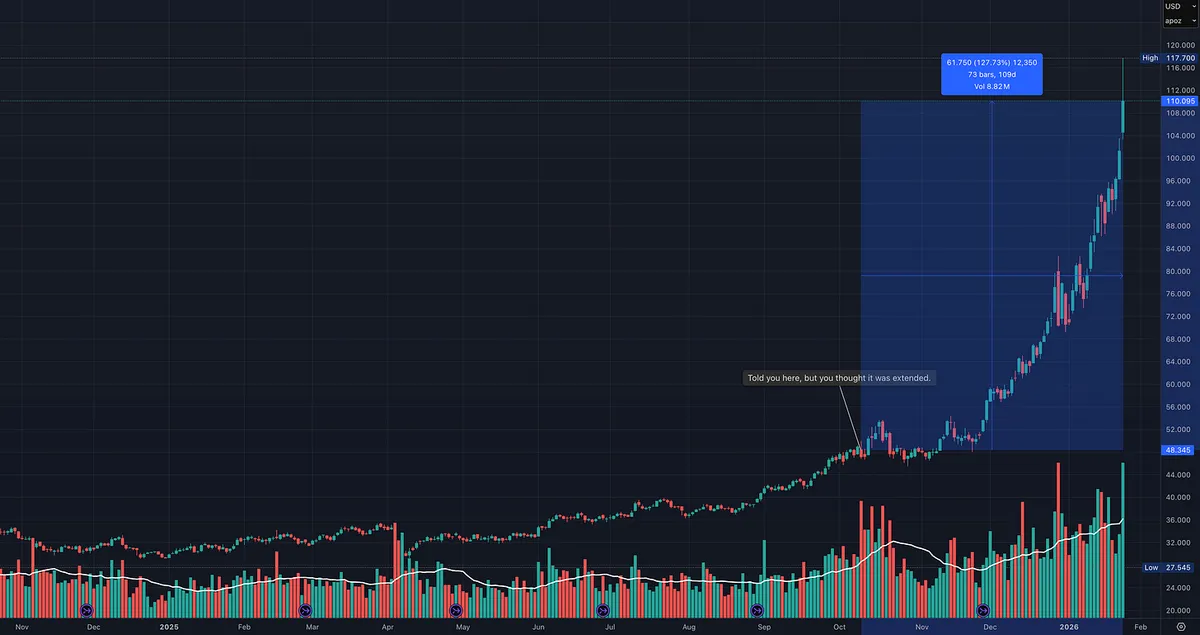
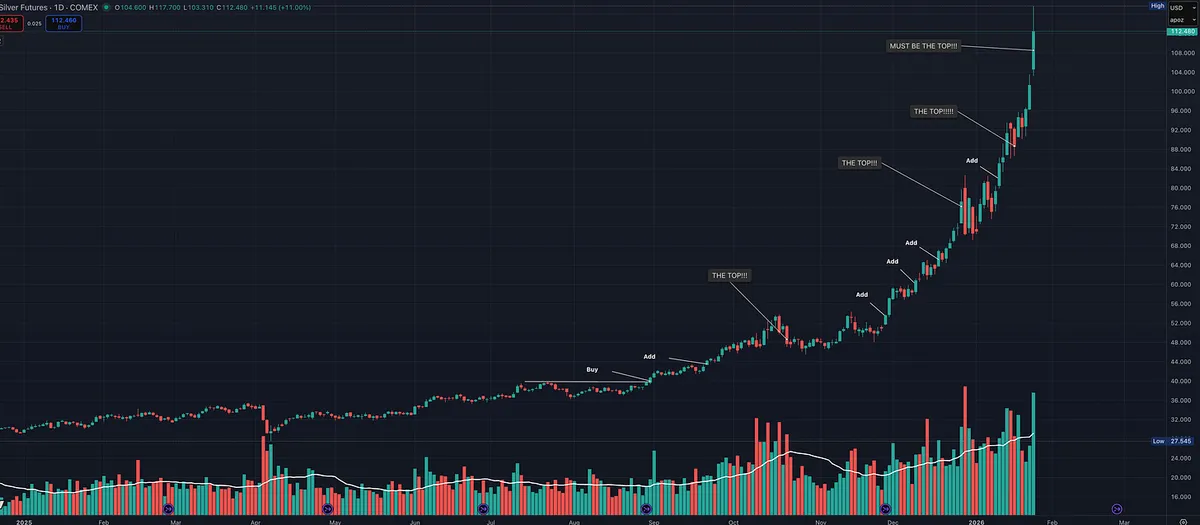
Why I Don’t Try to Call the Top A Lesson From Silver

If you look at the chart I’m attaching, you’ll see something familiar.

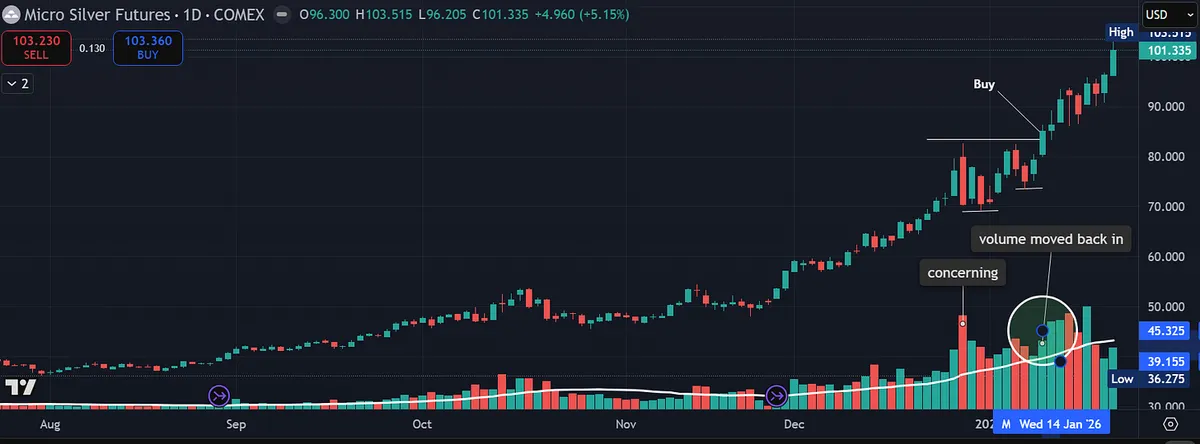
People were calling the top in silver at $50. Then again at $75. Then $90. Now it’s $100+.

The commentary changed. The conviction didn’t.

This is a textbook example of why I don’t try to call tops.

I heard the same arguments back around $80. That’s when I added.

This isn’t about bravado or blind bullishness. It’s about understanding what actually moves markets.

The market does not care about opinions. Not mine. Not yours. Not anyone else’s.

What matters is price.

On the chart, the trend stayed intact. Structure never broke. Higher highs and higher lows continued. Each pullback that “had to be the top” turned into another continuation.

That doesn’t mean you chase price endlessly. I’m not adding here.

But it does mean you stop trying to guess where a trend should end.

Calling tops in strong trends is one of the fastest ways to the poor house.

Anyone who’s studied great traders knows this lesson. They don’t predict turning points. They wait for the market to confirm them.

The trend is your friend until it ends.

Silver will top eventually. Every trend does.

But trying to guess that moment, especially in real time, is a great way to go broke.

If you’re already in a trend, manage risk and respect structure. If you’re not, wait for the next setup.

Price, not opinion, gets the final vote.

View on Substack ↗

Listen to William O’Neil and you hear the balance every trader needs.

He was confident and optimistic, yet deeply humble.

Conviction without arrogance.

Belief without disrespect for the market.

William O'Neil never argued with price. He listened to it. He accepted losses quickly. He stayed hopeful without becoming reckless.

That balance is rare.

Confidence keeps you showing up.

Humility keeps you alive.

Respect the market, and it offers opportunities.

Fight it, and it teaches painful lessons.

The best traders learn both at the same time.

View on Substack ↗

There is always someone on the other side of your trade.

They may know something you do not.

They may see the market differently.

They may simply be managing risk better.

The market does not reward confidence. It rewards humility, discipline, and survival.

Never assume the other side is wrong. Assume you could be.

That mindset keeps you in the game.

View on Substack ↗

A drawdown is not what ends most trading careers.

What ends them is reacting instead of adjusting.

Oversizing. Forcing trades. Trying to make it back quickly. Losing objectivity.

The best traders do the opposite. They reduce size. Step back. Protect capital. Regain clarity.

Cash is a position. Patience is a strategy.

This phase feels uncomfortable because it demands discipline instead of action.

Survive this, and you give yourself a real chance to grow.

View on Substack ↗

Every trader hits this phase. Most do not survive it.

Every trader eventually hits a drawdown.

The ones who last are not smarter. They just respond differently when nothing is working.

Most damage happens after the drawdown begins, not because of it.

I wrote a piece today on how professionals survive these periods without blowing up their capital or confidence.

If you’ve been in a tough stretch lately, this one’s for you.

https://tradingmomentum.substack.com/p/every-trader-faces-a-drawdown-the

ArticleEvery Trader Faces a Drawdown. The Ones Who Survive Know What to Do Next
View on Substack ↗

This Is What a Super Performer Looks Like

This is the type of stock every growth investor studies.

  • Massive earnings growth.

  • Explosive sales acceleration.

  • Expanding margins.

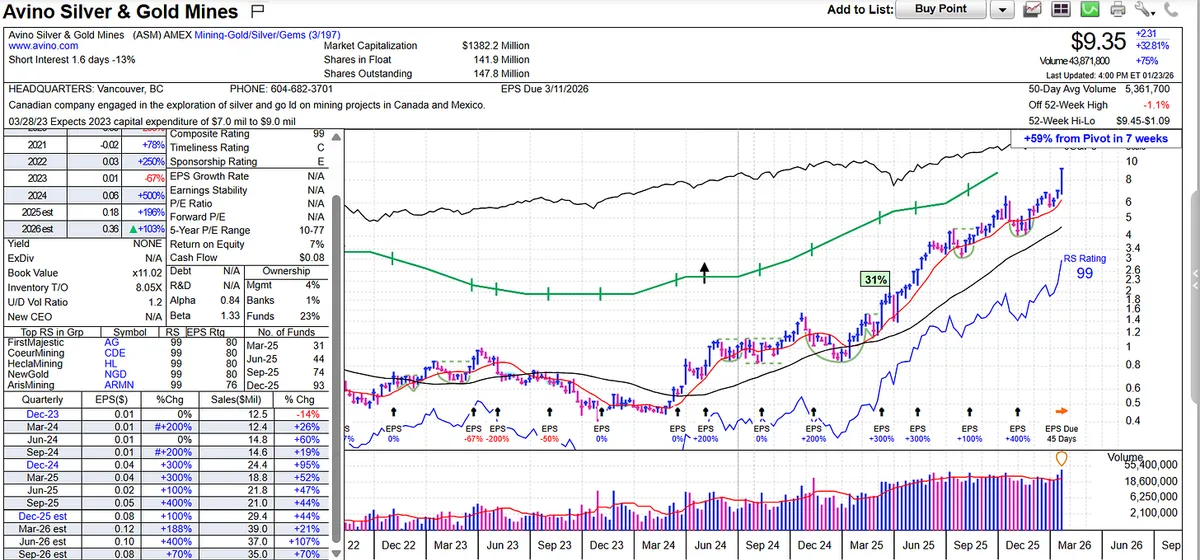
  • RS 88-90 year ago during setup and now 99, placing it among the strongest stocks in the market.

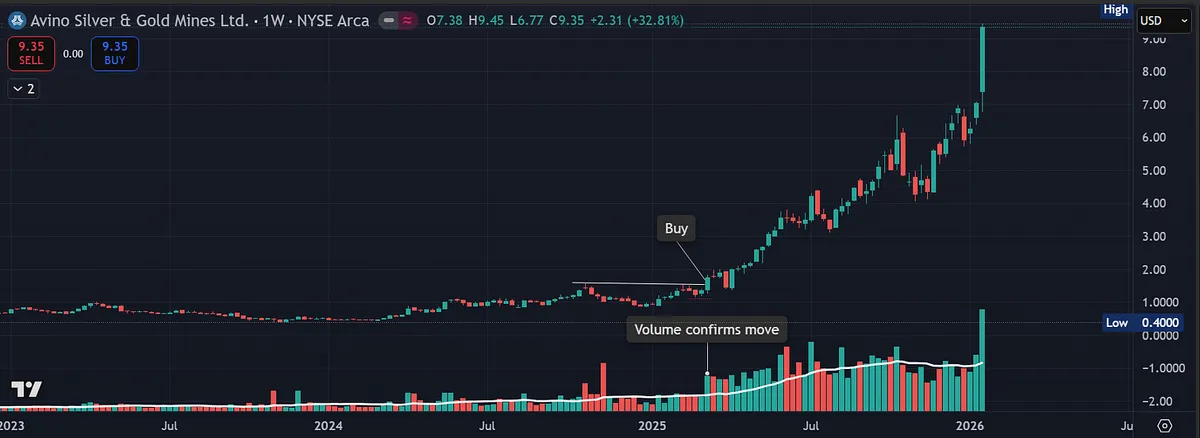
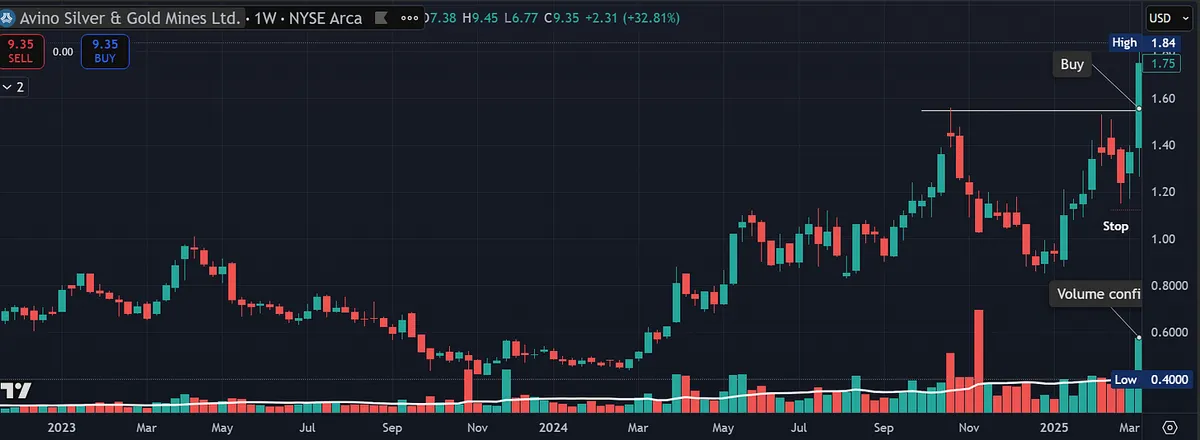
Price action confirms the fundamentals. After a nice base, the stock broke out on heavy volume and has continued to trend higher.

What separates this from most breakouts is context. This is happening inside a hot industry group with accelerating fund ownership.

With all charts attached, I included one that shows what this looked like before the move. Train your eye to recognize that setup in real time. Then compare it to the result. It is a reminder that true leaders often go much further than most expect.

If you want to understand what true leadership looks like structurally, fundamentally, and technically, study this chart.

All charts attached.

View on Substack ↗

When Everyone Called the Top, Price Gave Another Buy

Just a few weeks ago, most people were convinced silver had topped.

That belief felt logical. The move had already been strong. Sentiment was crowded. Commentators were confident. And yet, price did not confirm it.

This is the real lesson.

Your job is not to predict. Your job is to stay neutral and let price and volume determine your actions.

Instead of breaking down, silver did something constructive. Price tightened. Selling pressure eased. Then volume moved back in as price turned higher and pushed through resistance. That action gave another clean entry, even when most people thought the move was finished.

The chart did not argue. It simply offered information.

Trying to call tops is not the game. Following price and volume is.

Yes, silver will eventually top. Every trend does. But fighting a strong trend before price confirms weakness rarely pays. Strength tends to persist longer than most expect.

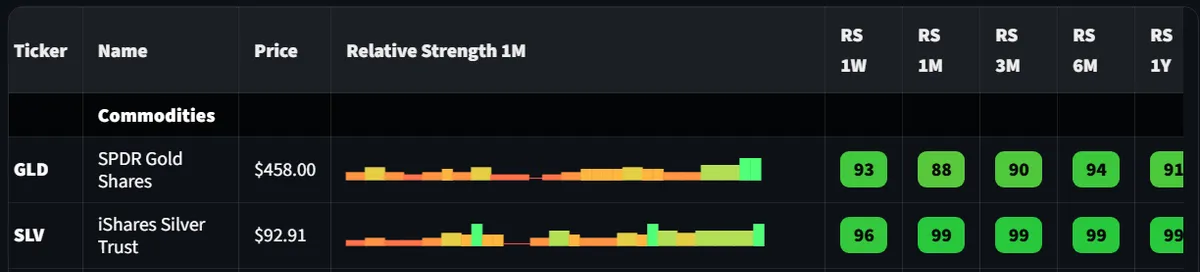
Relative strength in silver has been excellent across multiple timeframes, and the industry group continues to act like a leader. As long as that remains true, the path of least resistance stays higher.

Trade what you see. Not what you believe should happen.