Momentum Trading Strategy

Notes

Short lessons on momentum trading, every day.

Every note from Substack, in one place: risk, setups, leading stocks, market conditions and the mindset behind them. Search them, browse by topic, or filter by stock.

Showing 521–540 of 1226 notes

View on Substack ↗

The Best Traders Didn’t Invent the Game. They Mastered It.

What gives you the better odds?

Trying to find someone who claims they invented a new cutting-edge way to beat the market?

Or learning the same time-tested principles that have worked for generations?

Great athletes don’t invent how to play the game.

They model the greats before them.

They master the basics.

They execute better.

A great surgeon didn’t invent most of what they do.

They studied the craft, repeated the process, and mastered it through years of disciplined execution.

A great businessman is often the same way.

People call them geniuses, but many of them are simply better at executing principles that existed long before they were alive.

Trading is no different.

But for some reason, traders are constantly looking for someone who claims they found a revolutionary new way to beat the market.

I think that is usually the wrong search.

You are far better off mastering what has already worked.

I could package this up and pretend I invented some secret strategy.

I could feed my ego and make it sound like this is all mine.

But that would not be true.

I learned from the greats.

O’Neil. Livermore. Darvas. Minervini. Zanger. And many others.

Just like great ballplayers study the hitters before them, I studied the traders before me.

Then I spent 20 years trading, making mistakes, improving, and learning how to execute the process in real markets.

That is what Momentum Trading Strategy is built around.

A time-tested process passed down from the great traders who came before us.

So ask yourself:

What is more likely to bring you success?

Someone claiming they found a brand-new way to beat the market?

Or putting in the work to master principles that have stood the test of time?

If you are ready to do the work, become a paid subscriber to Momentum Trading Strategy and get access to the full course and the trading software built to support what you learn.

You will get the process, the tools, and the structure to help you find leadership, manage risk, build watchlists, review trades, and start trading with a real plan.

Will you be one that carries the torch forward?
View on Substack ↗

Why Do You Keep Missing the Biggest Winning Stocks?

Most traders spend their time looking for stock tips.

The best traders spend their time looking for stock characteristics.

Strong earnings. Strong sales. Strong relative strength. Strong industry groups. Strong price action.

The funny thing is many of the biggest winners were not hiding.

MU. LITE. SNDK. CIEN.

They were displaying many of the same characteristics long before their biggest moves.

The challenge isn’t finding the information.

The challenge is having a process that helps you recognize it.

I just published a new article walking through the exact screening process I use to find potential market leaders.

If you’ve ever wondered how traders consistently find big winners while everyone else seems to discover them months later, this article is for you.

https://tradingmomentum.substack.com/p/how-i-find-the-biggest-winning-stocks

ArticleHow I Find the Biggest Winning Stocks in the Market
View on Substack ↗

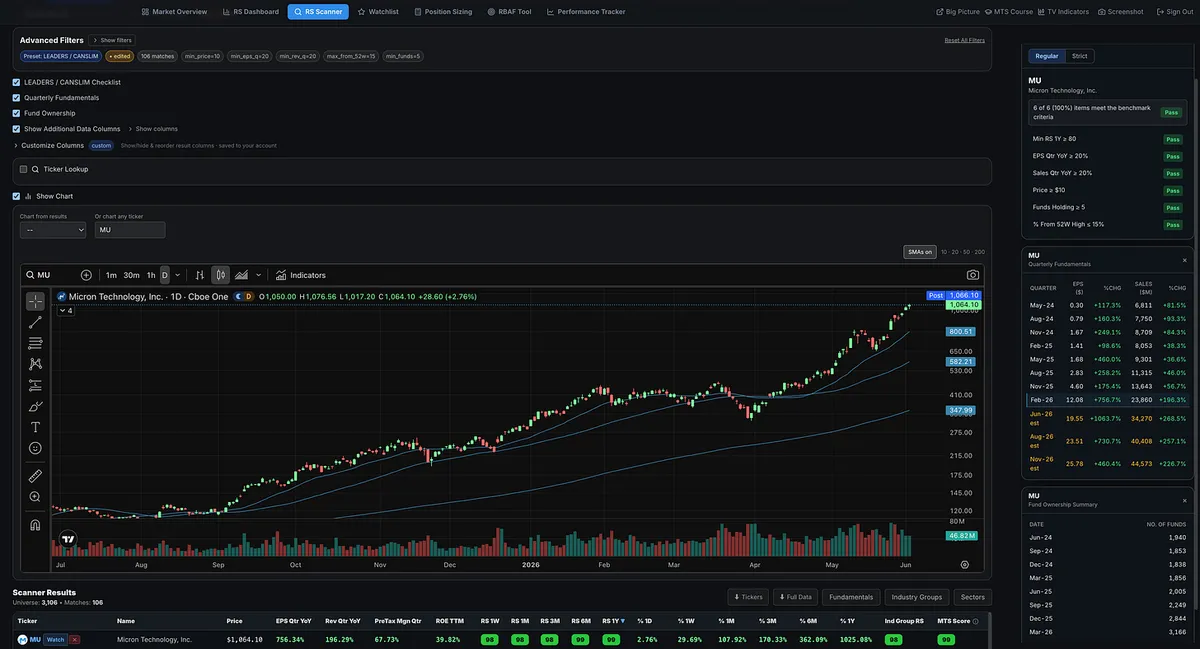
Put MU in the Model Book

Big earnings. Big sales. Big ROE. Big margins.

MU checks nearly every box that has defined many of the market's biggest winners.

• EPS Growth: +756%

• Sales Growth: +196%

• ROE: 39.8%

• Pretax Margin: 67.7%

• Relative Strength: 98–99 across multiple timeframes

• Fund Ownership: Increasing quarter after quarter

This is what institutional accumulation looks like.

Strong fundamentals. Strong sponsorship. Strong price action.

View on Substack ↗

The Multi-Bagger Irony

A lot of stock newsletters sell people on the hope of finding the next multi-bagger.

A 100%, 200%, or 300% winner.

Many talk about holding for years to get the big returns.

What people don't realize is this:

By the time you figure out they were full of it, they already made plenty of money selling you the hope.

The funny thing is, I don't even teach or claim to give people multi-baggers.

But many investors would likely get similar or better results by learning how to identify true growth stock leadership, proper setups, institutional demand, and strong price action.

Here are a few names I mentioned in January and early February:

• AAOI +302%

• AXTI +294%

• SNDK +249%

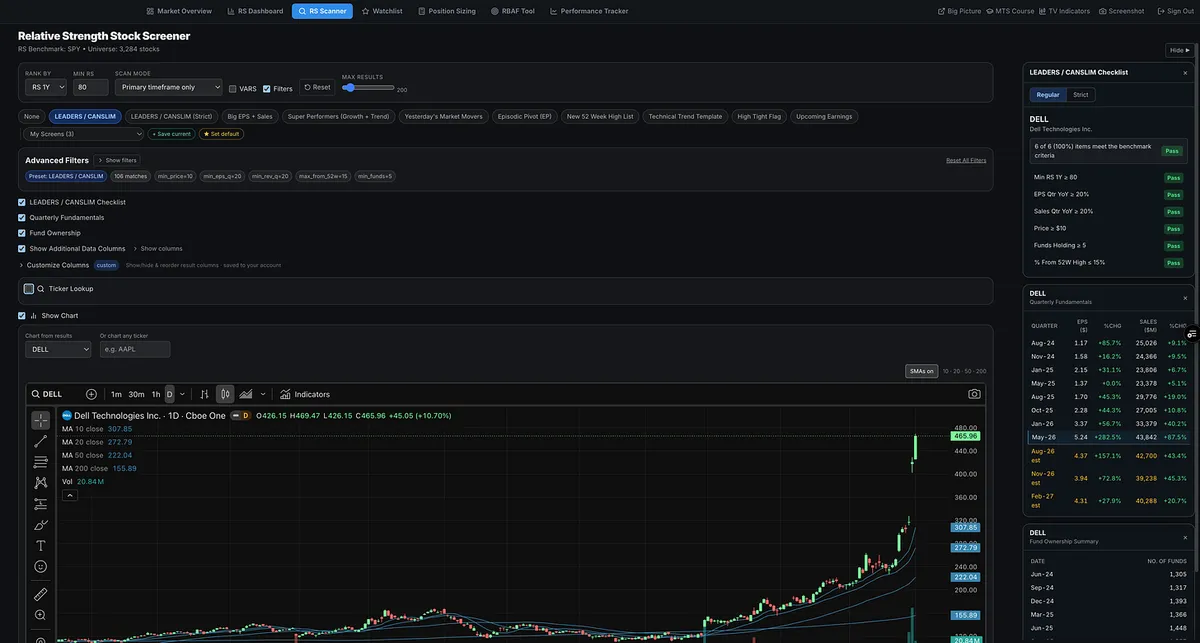
• DELL +214%

• MU +160%

• LITE +155%

• CIEN +147%

• STRL +127%

• STX +126%

• WDC +124%

• INTC +101%

• AMD +101%

These were discussed in the paid subscriber chat and watchlist posts.

But to be clear, this is not what I do here.

I'm not telling you to blindly buy a stock and hold it until it becomes a multi-bagger.

The goal is to teach you how to find leadership, manage risk, identify proper entries, and build a repeatable process.

View on Substack ↗

Copying Traders Won’t Make You Rich. Learning the Way Might.

At this point in my trading, I don’t pay attention to what anyone else is doing.

But recently, I looked around and noticed something interesting.

Some of the traders I learned from, including Dan Zanger, recently were buying many of the same names, around the same areas, using the same types of setups I was seeing.

Names like: SNDK, DELL, MU, LITE

Why?

Because we learned from the same source material.

The same books. The same legends. The same principles. The same market truths.

When you truly learn a strategy, your decisions start to look similar to others who have learned the same way.

To outsiders, it can look like people are copying each other.

But that is not what is happening.

Will you be one of the few who carries the torch forward?

The traders who actually learn the process, study the patterns, understand the risk, and develop their own conviction are the ones who carry the torch forward.

That is how great trading knowledge gets passed down from one generation to the next.

Will you be one that carries the torch forward?
View on Substack ↗

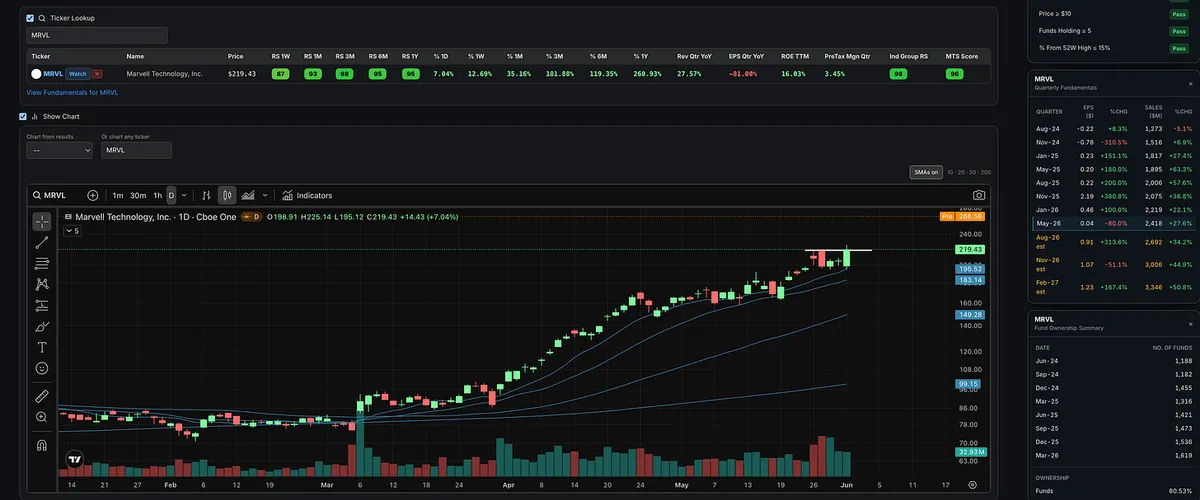
MRVL Big Gap Up.

If you bought the pullback to the 10-day moving average or entered as it broke out to new highs, you are feeling pretty good this morning.

This is why we track leaders and look for proper entries.

These types of entries are discussed in Module 5 of the Momentum Trading Strategy Course, which is free for paid subscribers.

View on Substack ↗

Eventually This Pullback Will Fail

And that's perfectly okay.

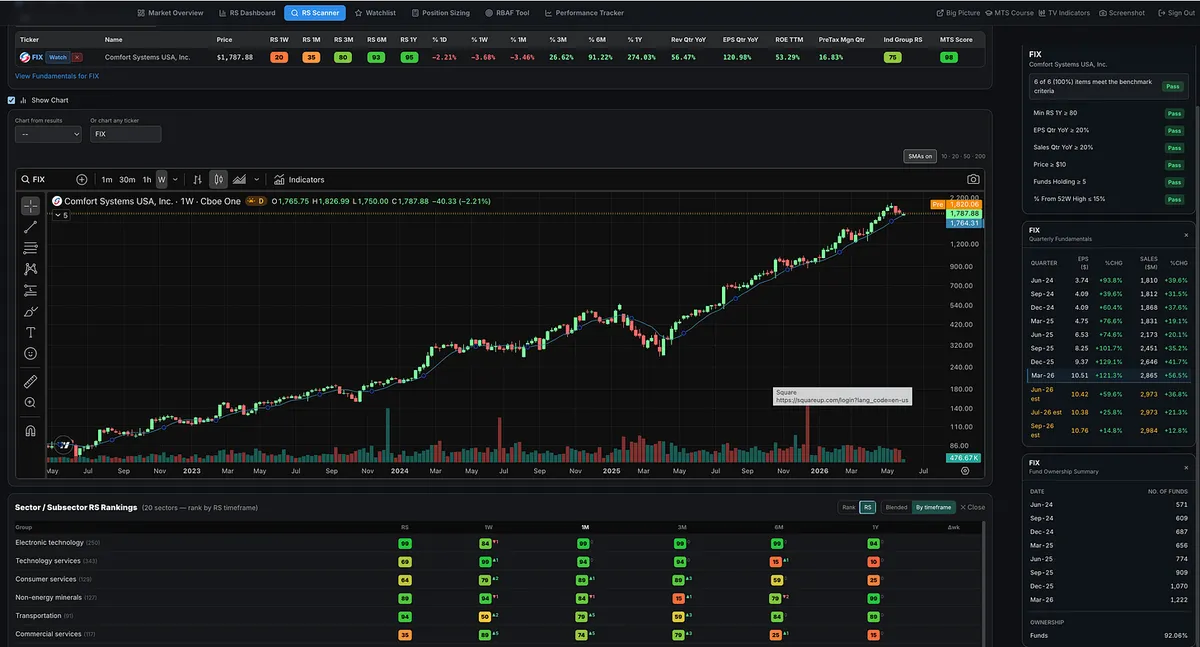
FIX is pulling back toward the 10-week moving average again. I been talking about this name for years and since I first started sharing names with subscribers.

One day, a pullback like this won't work.

One day, I'll buy a leader on a pullback, and it will fail.

I'll take a loss.

That's not a flaw in the strategy.

That's the cost of doing business.

Many new traders make the mistake of thinking they need to know exactly when a stock's run is over.

You don't.

Nobody does.

The goal isn't to predict the end.

The goal is to participate in the trend while it lasts.

Great leaders can keep working much longer than most people think is possible.

So we continue buying proper pullbacks and setups until the stock proves the trend is over.

Sometimes we'll be wrong.

We'll take a small loss and move on.

But if you've been participating throughout the trend, one small loss at the end doesn't erase the gains made along the way.

That's how this works.

We don't need to know when the run will end.

We just need to be willing to participate until it does.

View on Substack ↗

The Market Gave the Green Light

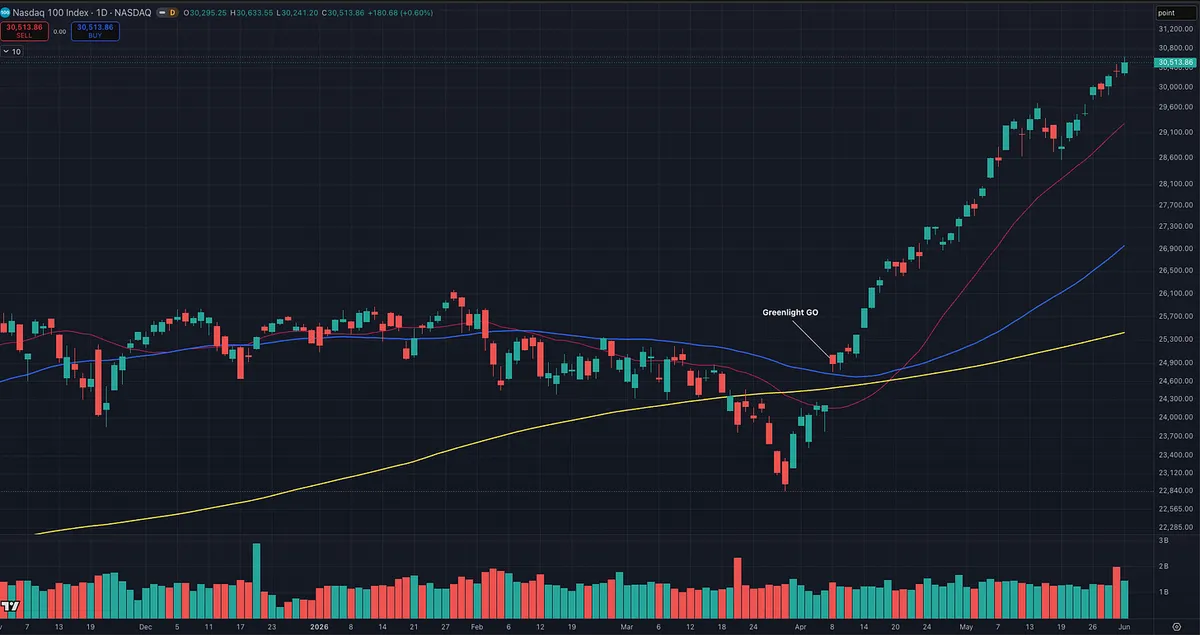
On April 8, the market gapped up above the 50-day and 200-day moving averages on a follow-through day.

That was the green light to start participating again.

Many traders ignored the signal.

Then they complained that there was “nothing to buy.”

Then, after the strongest names started moving, many said the move had already happened and the stocks had already left without them.

But that was not true.

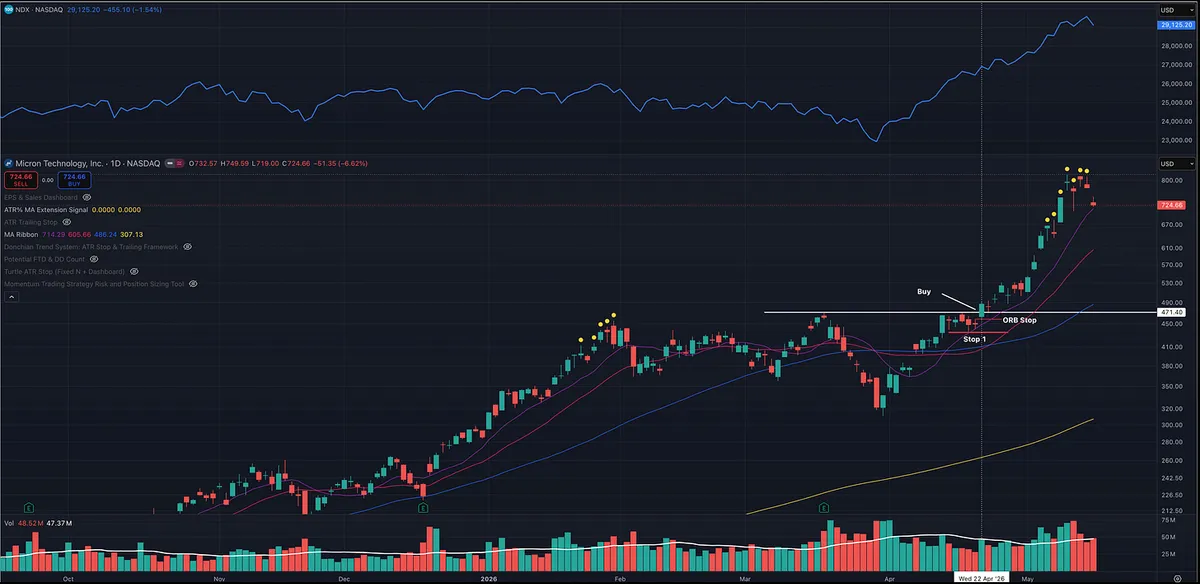
MU was one example I gave that was still setting up on April 22.

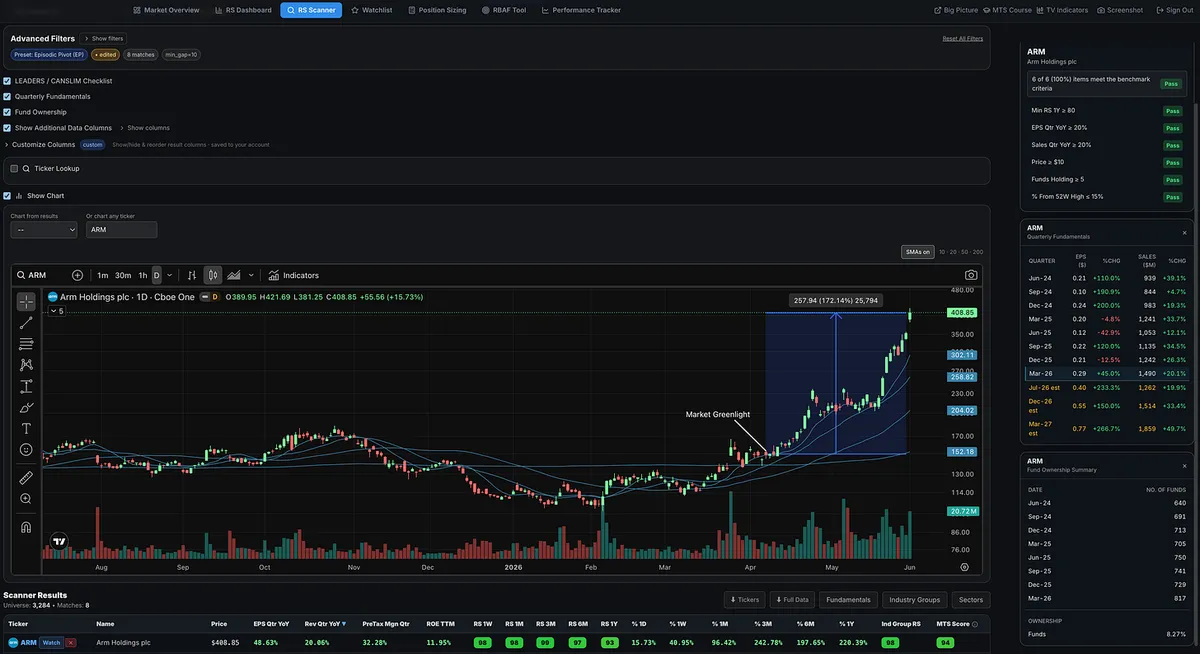
ARM is another example of a later mover that gave traders plenty of time to participate.

After the market confirmed strength, ARM began building momentum, tightened up, held key moving averages, and eventually made a powerful move higher.

This is why following a proven process matters.

The market gave the signal.

Leading stocks showed up before, during and after the market moved.

There were plenty of opportunities for traders who were prepared and knew what they were doing.

This is why we built the Momentum Trading Strategy Course and MTS Software.

The course gives you the foundation.

The software helps you find the leaders.

Stop wasting time guessing.

View on Substack ↗

Are You Missing Stocks by Only Looking for Strength?

I got a good question from a subscriber, and I think many newer traders have probably wondered the same thing.

"If I filter for an MTS Score 80+ (similar to the IBD Composite Rating), am I missing stocks that are just starting to improve from lower levels?"

Yes, that assumption makes sense.

But this is also where growth stock investing and momentum trading can feel counterintuitive.

If you filter for an MTS Score above 80, you may miss some stocks that are just beginning to improve from lower levels.

However, the purpose of that filter is not to find stocks at the bottom.

The goal is to find stocks that have already started proving themselves as leaders.

William O'Neil's research, along with the work of many great growth stock and momentum traders, shows that the biggest winning stocks often display strength before their biggest moves.

They typically already have:

• Strong relative strength

• Big earnings and sales growth

• Strong margins or ROE

• Improving institutional sponsorship

• Leadership within a strong industry group

• Price action near new highs

All before the majority of the move occurs.

Conventional wisdom makes people want to find stocks early at the bottom or near the bottom.

But growth stock investors are usually looking for confirmation that a stock is becoming a true leader.

Many of the stocks that have gone up 100%, 200%, or more over the past few months already had strong ratings above 80 before the majority of the move happened.

CIEN is a good example.

When I first mentioned CIEN back in January, it already had strong ratings and a Relative Strength Rating of 98.

Many people would assume that means they “missed it.”

But from that point, the stock still went up more than 125%.

Strength often comes before more strength.

So yes, a lower MTS Score filter can help you cast a wider net for earlier improvement.

But an MTS Score above 80 is designed to focus on strength, leadership, and confirmation.

We are not trying to buy the weakest stocks before they turn.

We are trying to find the strongest stocks as they prove they are leaders.

The MTS Score is a proprietary leadership rating that evaluates factors such as Relative Strength, EPS growth, Sales growth, ROE, Margins, Industry Group Relative Strength, and other characteristics commonly found in leading stocks.

View on Substack ↗

The Market Is At New Highs. Why Are So Many Investors Still Looking In The Wrong Places?

The Nasdaq-100, S&P 500, Dow, and Russell 1000 all closed at all-time highs this week.

Technology continues to dominate every major sector ranking.

  • Volatility is falling.

  • Breadth is improving.

  • Net new highs are expanding again.

Yet many investors are still searching for opportunities in areas the market is clearly not rewarding.

Before diving into stock screens and trade ideas, step back and study the big picture.

This week's Big Picture Market Pulse breaks down where institutional money is flowing, which industry groups continue to lead, why we're shifting toward a Bull Quiet environment, and what the updated Composite Model is telling us.

The market keeps giving us clues. The question is whether we're paying attention.

📈 Full report available now for paid subscribers.

View on Substack ↗

Technology Continues to Dominate

Looking across the 11 major U.S. sectors, one thing remains remarkably clear: technology continues to lead by a wide margin.

Since the April follow-through, no other sector has come close to matching the performance of XLK. The relative strength advantage has been obvious and consistent every week we've reviewed the data. Leadership continues to be concentrated in technology and the growth-oriented industry groups.

As traders, our job is not to argue with leadership. Our job is to identify where capital is flowing and align ourselves accordingly. The evidence has been remarkably clear. If you have been fighting this leadership or searching for strength in weaker areas of the market, perhaps this should be your wake-up call.

View on Substack ↗

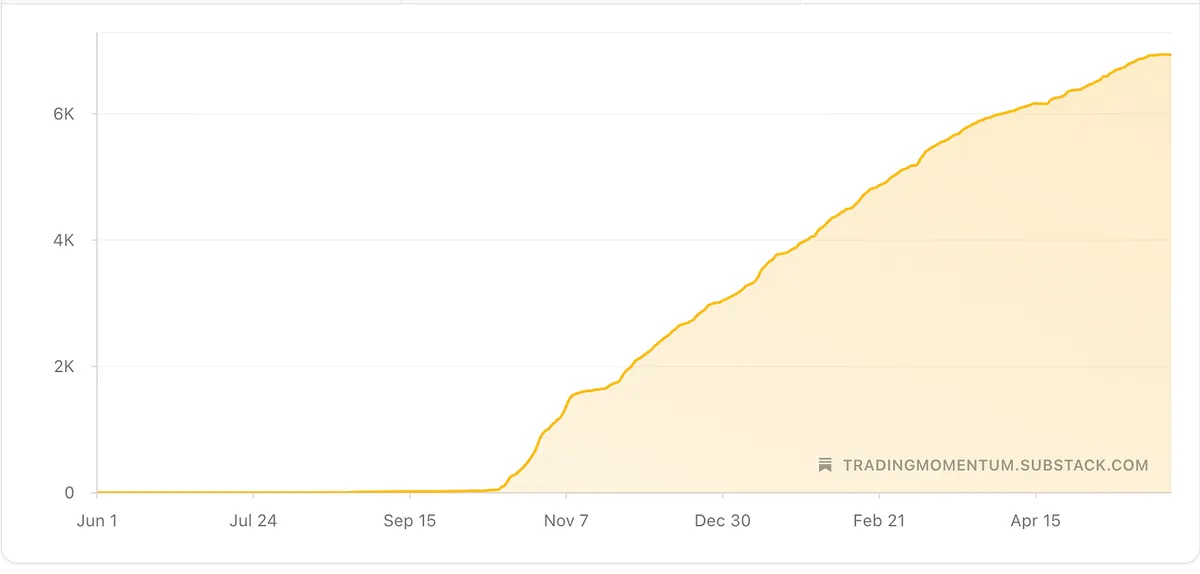
From 0 to #46 New Bestseller

A few months ago, Momentum Trading Strategy didn't exist.

Today:

• 6,900+ subscribers

• #46 New Bestseller on Substack

• #54 in Finance

Thank you to everyone who has subscribed, shared posts, liked articles, commented, provided feedback, and supported the publication.

What started as a few articles about momentum trading and growth stock investing has grown into a complete ecosystem:

• Weekly Big Picture Market Pulse Newsletter

• Momentum Trading Strategy Course

• Relative Strength Stock Screener

• Trading Journal & Analytics

• Risk Management Tools

• MTS Chart Indicators

• Market Overview Dashboard

• Private Chat & Market Commentary

Most importantly, we’re building a community of traders focused on process, discipline, risk management, and continuous improvement.

We’re just getting started.

Thank you for being part of the journey.

View on Substack ↗

Sometimes Great Fundamentals Are Not Enough

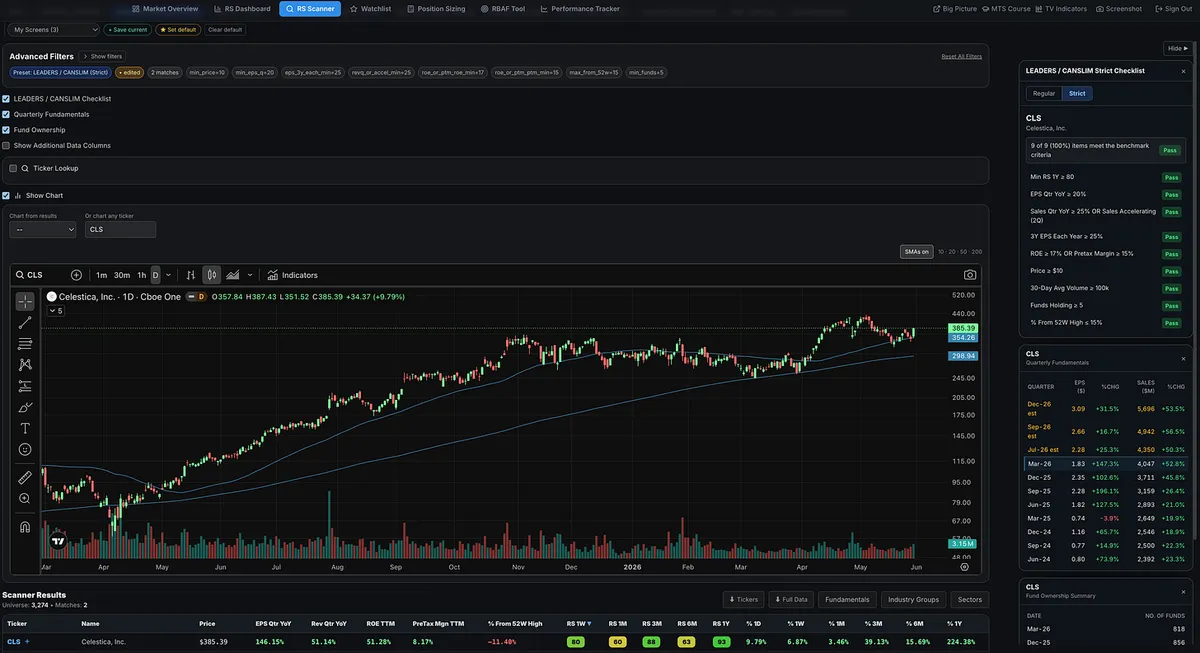
CLS is a perfect example.

The numbers are excellent.

  • Triple-digit EPS growth.

  • Strong sales growth.

  • High ROE.

  • Big estimates.

But since last November, the price action has been wide, choppy, and inconsistent.

Even after the strong move off the April lows, CLS has not been one of the best relative strength leaders compared to other names in the market.

This is why fundamentals matter, but price action and relative strength still decide where capital should go.

The best stocks usually have both:

  • Great numbers

  • Clean price action

  • Strong relative strength

But…. I do like how it found support on the 50MA and has a higher high, higher low pattern.

View on Substack ↗

The Most Overrated Indicator

“I rarely pay any attention to overbought/oversold indicators.” -William O’Neil

A lot of traders see a stock go up and immediately think it is “overbought.”

The greatest stocks in the market often stay overbought for a long time.

That is what strong stocks do.

They keep showing demand.

They keep making new highs.

They keep outperforming the market while everyone else waits for the reversal.

The real question is not:

“Is it overbought?”

The better question is:

“Is this stock under accumulation and showing true leadership?”

That is why I care more about relative strength, and price action than an overbought reading.

The best stocks often look too high before they go much higher.

View on Substack ↗

The Platform Built to Help Traders Trade With a Real Process

I want to say thank you to all of the paid subscribers who have helped make the Momentum Trading Strategy software better.

From feature recommendations, to new ideas, to testing, to finding simple ways to improve the platform, so much of what has been built came directly from your feedback.

You are not just improving the platform for yourself.

You are helping build a better trading tool for everyone who uses it.

Momentum Trading Strategy has grown from a few educational articles into a full course and complete software platform.

A complete trading system with the software to support it.

From understanding the big picture, to finding relative strength leaders, building watchlists, managing risk, planning trades, managing trades, and reviewing results, the goal is simple:

Help traders start trading with a real process.

View on Substack ↗

Most People Don’t Realize How Big This Growth Is

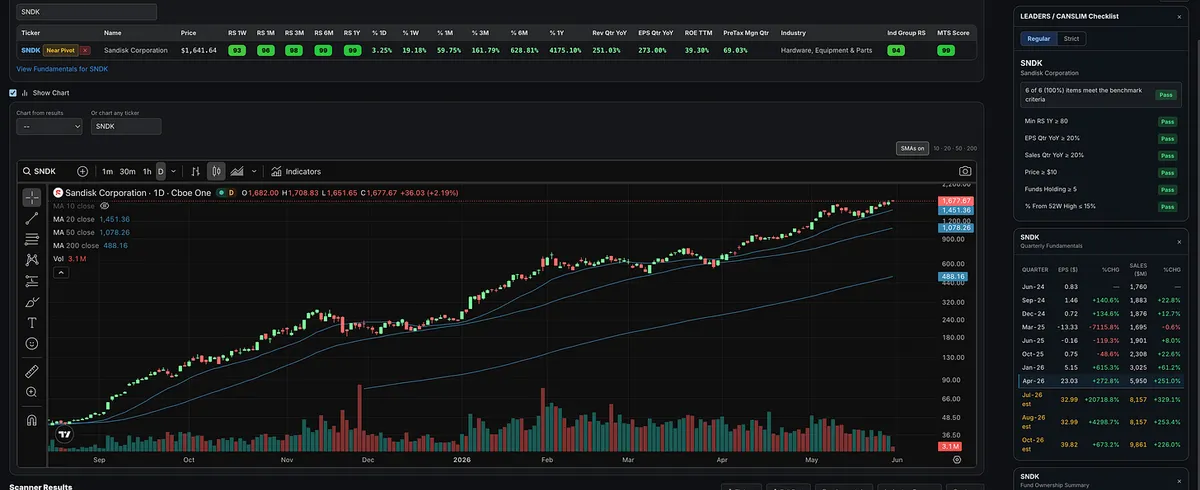
Look at SNDK.

Revenue growth: +251%.

EPS growth: +273%.

ROE: 39%.

Pretax margin: 69%.

This is not normal.

This is the jet fuel behind the price action.

Most traders are looking for cheap stocks.

I’m looking for exceptional companies with exceptional numbers being rewarded by the market.

Big earnings growth.

Big sales growth.

High relative strength.

Strong margins and roe.

These characteristics have led to some of the market’s biggest winning stocks for longer than all of us have been alive.

The names change.

The characteristics do not.

View on Substack ↗

Does It Bounce… or Splat?

Mark Minervini has a simple way of evaluating pullbacks:

Does the stock come bouncing back like a tennis ball?

Or does it go splat like an egg?

That visual is powerful because strong stocks usually act differently after pressure.

After a strong move up, the best stocks often:

• Pull back in an orderly way

• Hold key support

• Tighten up

• Shake out weak holders

• Then rebound with power

Like a tennis ball pushed underwater and released.

Weak stocks do the opposite.

  • They break support.

  • They get loose.

  • They fail to recover.

  • They go splat.

The pullback tells you a lot.

The rebound tells you even more.

When a stock is under pressure, pay close attention.

Does demand show back up?

Does it reclaim key levels?

Does it tighten and build power?

Or does it fall apart?

The reaction tells you everything.