Momentum Trading Strategy

Notes

Short lessons on momentum trading, every day.

Every note from Substack, in one place: risk, setups, leading stocks, market conditions and the mindset behind them. Search them, browse by topic, or filter by stock.

Showing 541–560 of 1226 notes

View on Substack ↗

Most Traders Are Working Too Hard

Ever notice how the harder most people try in the stock market, the worse their results seem to get?

The problem usually isn't effort.

It's where the effort is being spent.

You've probably heard of the 80/20 Principle:

80% of results come from 20% of actions.

The market is no different.

People spend endless hours screening for stocks, searching hidden corners of the market, reading news, and doing more research.

But if you've been following along, many of the strongest names right now are the same names, in the same industry groups, that were showing strength months ago, and in some cases, even a year ago.

That’s why I haven’t been posting many new names recently.

The names that are doing amazing are mostly names I have already mentioned several times since starting this Substack.

The strongest stocks usually tell you they are strong before everyone agrees.

Many traders are just making this harder than it has to be.

And the funny thing is, by constantly searching for “something else,” they often hurt their own results.

They move away from leadership.

They buy weaker names.

They increase their fail rate.

They take more losses.

Because the market is difficult, people assume success requires more complexity.

In reality, success often comes from doing a few simple, boring, important things exceptionally well, over and over again.

Spend some time identifying the 20% that produces 80% of your results.

Then do more of that.

And cut the waste.
View on Substack ↗

Marty Schwartz said:

“I used fundamentals for nine years and got rich as a technician.”

Why?

Because technicians are forced to respect price.

They are forced to respect trend.

They are forced to admit when the market is proving them wrong.

Fundamentals and macro may help explain the story.

But price tells you if the story actually matters.

Price is king.

View on Substack ↗

The Market Does Not Care About Your Macro Opinion

I’m hearing macro guys again screaming about how equities shouldn’t be making new highs.

  • Oil shock.

  • War with Iran.

  • Rising rates.

  • Inflation fears.

It makes me laugh.

This bull market has already climbed through many reasons people said it should fail.

  • Hot CPI and PPI prints.

  • War in the Middle East.

  • An inverted yield curve.

  • Tariffs.

  • Recession calls.

  • Debt fears.

  • Banking stress.

  • Bubble worries.

And still, the market made new all-time highs.

At some point, that should make traders stop and think.

If your model keeps saying stocks should not be going higher, but stocks keep going higher, maybe the problem is not the market.

Maybe the problem is you.

Macro matters. I follow it.

But price, trend, relative strength, and risk management matter more.

The market does not reward the best sounding thesis.

It rewards those who respect price action.

If stocks are breaking out, semiconductors are leading, relative strength is improving, and institutions are accumulating shares, that is information.

You can argue with it.

You can explain why it should not be happening.

Or you can respect it and make some money.

The best traders I study were not married to a macro narrative.

They followed price.

Are you here to make money, or to sound smart?

View on Substack ↗

Most Traders Don’t Have a Strategy Problem

Most traders think they need a better setup.

A better indicator.

A better stock pick.

But usually, that is not the real problem.

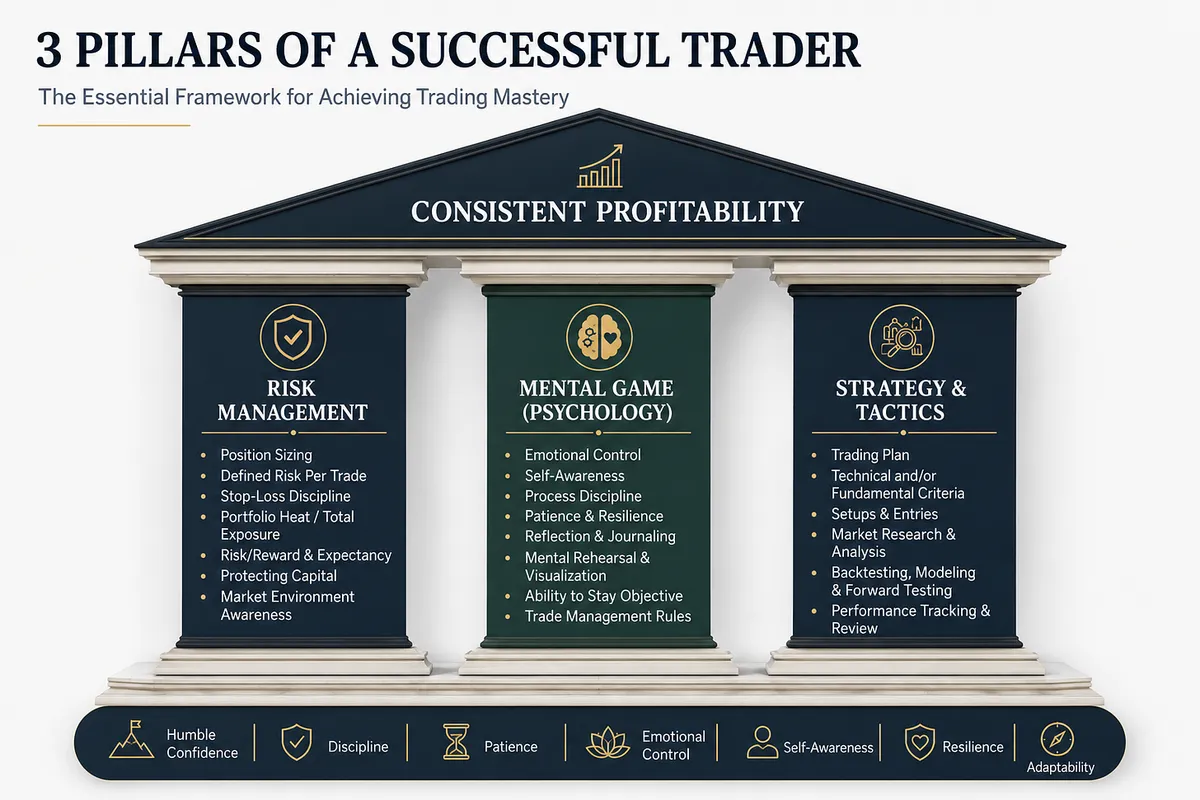
The real problem is that they are weak in one of the three pillars:

  • Risk management.

  • Mental discipline.

  • Strategy & Tactics.

You can have a great setup and still lose if your risk is too big.

You can understand risk and still fail if you cannot follow your rules under pressure.

You can be mentally tough and still struggle if you do not have a strategy with positive expectancy.

Successful trading is not built on one thing.

It is built on all three working together.

That is how you move from random results to consistent profitability.

View on Substack ↗

Sometimes You Have to Burn the Ships

Most people say they want change.

But what they really want is comfort with better outcomes.

They still want to keep every escape route open.

At some point or for most people that does not work.

Sometimes you have to burn the ships.

Not recklessly.

Not emotionally.

Not without a plan.

But decisively.

Because sometimes having no escape is exactly what forces you to become who you said you wanted to become.

When there is no fallback, you stop negotiating with yourself.

You stop making excuses.

You stop waiting for perfect conditions.

You stop pretending you are committed while quietly protecting the old version of your life.

That pressure can feel really uncomfortable.

But sometimes that pressure is needed.

Sometimes desperation is not the enemy.

Sometimes desperation is the fuel.

It forces you to push through, make the necessary changes, do the necessary work, and develop the level of discipline you never would have developed if retreat was always available.

The best traders understand this.

The best entrepreneurs understand this.

There comes a moment where you stop dabbling.

You stop “seeing how it goes.”

You stop keeping one foot in the old identity while pretending you are building a new one.

You decide.

You commit.

You remove the easy exit.

Because sometimes the only way to become the person capable of winning…

Is to make going backward impossible and moving forward the only way.

View on Substack ↗

Most People in the Market Don’t Actually Want to Make Money

That sounds harsh, but it’s true.

Most people involved in the stock market say they want to make money.

But their behavior says otherwise.

They are really there to feel something.

Excitement.

Validation.

Entertainment.

The need to be right.

It is no different than gambling at a casino.

Most people know the odds are stacked against them, yet millions still show up, place bets, and call it fun.

The stock market is no different.

A lot of people say they want profits, but their behavior says they want action.

They don’t want a process or strategy.

They don’t want risk management.

They don’t want rules.

They don’t want to put in the work.

They want the rush.

Because if they truly wanted to make money, they would behave differently.

They would study.

They would track their trades.

They would manage risk.

They would follow rules.

They would stop confusing activity with progress.

And until that changes, the market will keep doing what it has always done:

Transferring money from the emotional to the disciplined.

View on Substack ↗

Module 7 of the Momentum Trading Strategy Course is now live:

Building a Trading Plan & Trade Review

This is the stuff that separates professionals from amateurs.

Great traders do not just find stocks.

They build a plan.

They know why they are taking the trade, where they are entering, where they are wrong, how much they are risking, what they will do if it works, and what they will do if it fails.

That is not optional.

Every great organization, military unit, leader, and operator plans before execution. They also review afterward so they can improve.

Trading is no different.

If you want to trade like a professional, you need a process for:

Planning the trade.

Executing the trade.

Managing the trade.

Reviewing the trade.

Improving from the trade.

That is what Module 7 is all about.

The full video and slides are now available for paid subscribers.

https://tradingmomentum.substack.com/p/momentum-trading-strategy-the-100-443

On SubstackMomentum Trading Strategy: The 100-Year Playbook Behind the Biggest Winning Stocks — Module 7 Building a Trading Plan & Trade Review
View on Substack ↗

The IPO Trap Most Traders Fall For

A lot of people are getting excited about a potential SpaceX IPO.

And I get it.

Big company. Big story. Big hype. Lots of emotion.

But this is where a lot of inexperienced investors get caught.

They buy on day one with no game plan.

No entry strategy.

No risk plan.

No understanding of how IPOs usually trade after the excitement fades.

Could a stock launch and just keep running higher?

Of course.

Anything can happen.

But if you study enough big IPOs, you will see the same thing over and over again.

Many sell off shortly after launch.

Some run for a few days or a few weeks, then roll over.

Some drop 40%, 50%, 60% or more before they ever build a real base.

That does not mean the company is bad.

That does not mean the stock can’t become a huge winner later.

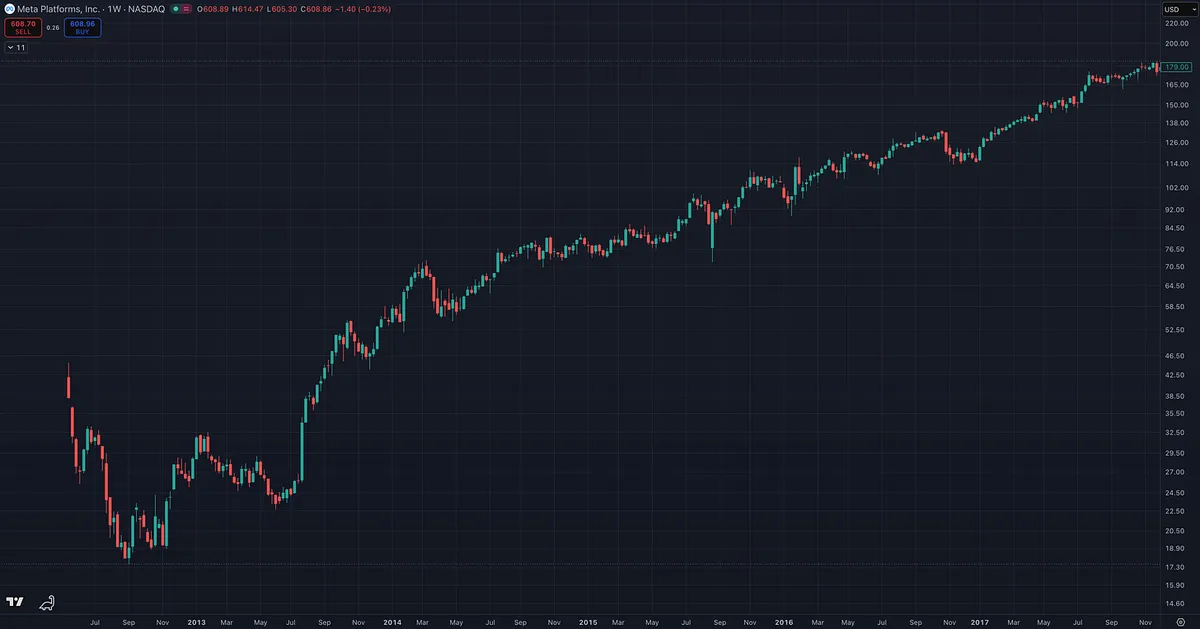
META is a great example. After its IPO, it dropped roughly 60% before eventually recovering, building, and going on a massive run.

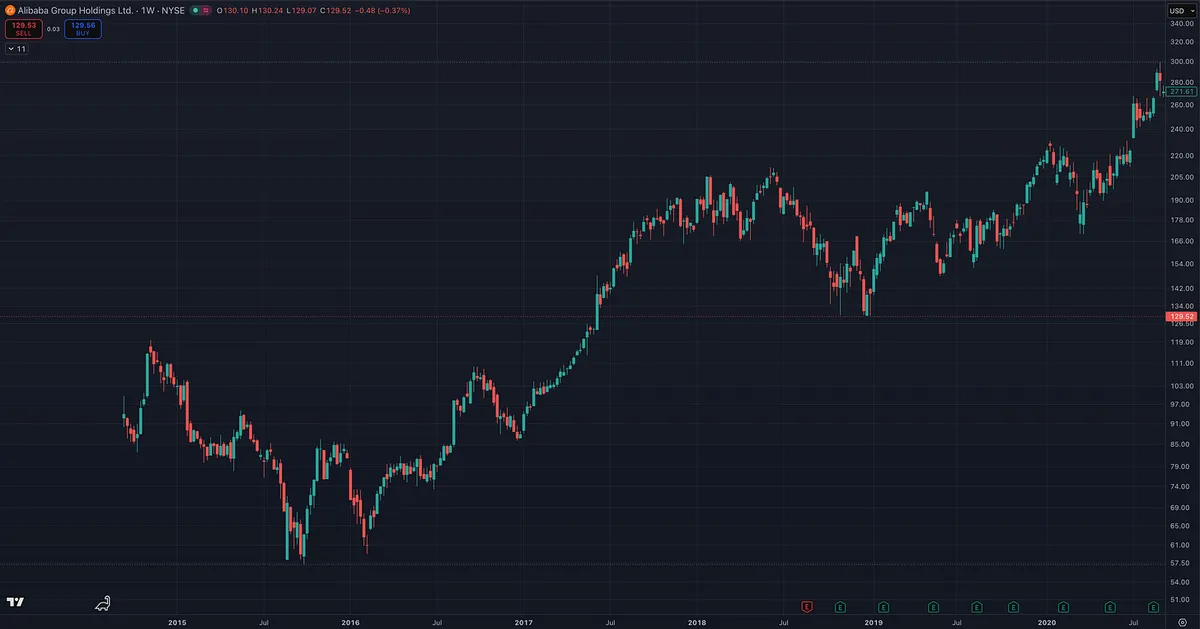
BABA also had an exciting debut, rallied for a few weeks, then eventually dropped more than 50% before later setting up again.

The point is not “never buy IPOs.”

The point is this:

Do not let the story make you abandon the process.

One of the easiest ways the market suckers people in is through big, exciting IPOs.

A great company does not always make a great investment at any price.

And a great company definitely does not mean day one is automatically the right time to buy.

People feel like they have to get in immediately or they will miss it forever.

That is usually not a strategy.

That is FOMO.

Many times, traders would be better off letting the excitement cool, waiting for the first major pullback, watching price digest, and then looking for a real base or proper setup.

Often, the best time to buy is not day one.

It may be 6, 12, or even 18 months later.

So this is just a reminder:

  • Have a plan.

  • Know your risk.

  • And be aware of your emotions.

The market loves to use hype and FOMO against inexperienced investors.

View on Substack ↗

Stop Looking for the Easy Way

If you are not finding success in the market, I’ll challenge you with this:

Stop looking for the easy way.

Put in the effort.

Take the Momentum Trading Strategy Course.

The course covers everything from understanding the market, to stock selection, to precision entries, trade management, risk management, and more.

And don’t half-ass it.

It has many of the same concepts taught in the Master Trader Program, a course that costs $5,000.

The course gives you the foundation.

The Momentum Trading Strategy Web App gives you the tools.

  • A relative strength dashboard.

  • A relative strength stock screener.

  • A watchlist tool.

  • Risk management and position sizing tools.

  • Trade planning features.

  • A performance tracker.

You also get MTS indicators to help with managing your trades.

And every weekend, you get the Big Picture Market Pulse to help you understand the market before stock screening.

Is it the fanciest tool and course in the world?

No.

But it gives you what you actually need.

  • A process.

  • A framework.

  • A way to find leaders.

  • A way to manage risk.

  • A way to review what you are doing.

And right now, you can get access through the annual plan for roughly $10 to $15 per month.

Even if you only find value in one part of it, the cost can justify itself.

The Big Picture Market Pulse can help you understand the market before the trading week starts.

The screener can help you find the strongest stocks in the strongest groups.

The course can give you the trading foundation.

The risk tools can help keep you from blowing up.

The performance tracker can help you learn from your own trades and mistakes.

Then you can take what you learn, practice it in a simulator, build confidence, and fine-tune it around your own personality, timeframe, and process.

After that, start small.

Use money you are willing to lose.

Build skill before size.

That is how you give yourself a real chance at long-term success.

Not by chasing alerts.

Not by looking for shortcuts.

By learning the process and doing the work.

The reason so many people aren’t successful is because they are not doing all of this stuff.

Period.

I did not realize what it really took in the beginning either.

But once you do, you have two choices:

Keep looking for shortcuts and keep losing money.

Or put in the work.

View on Substack ↗

Keep It Simple

A lot of traders make the market more complicated than it needs to be.

I get it.

It feels good to search for the next stock nobody is talking about.

It feels productive to hunt for something new.

But over the last few months, the market has made the message pretty simple:

The same strong names in the same strong groups keep working.

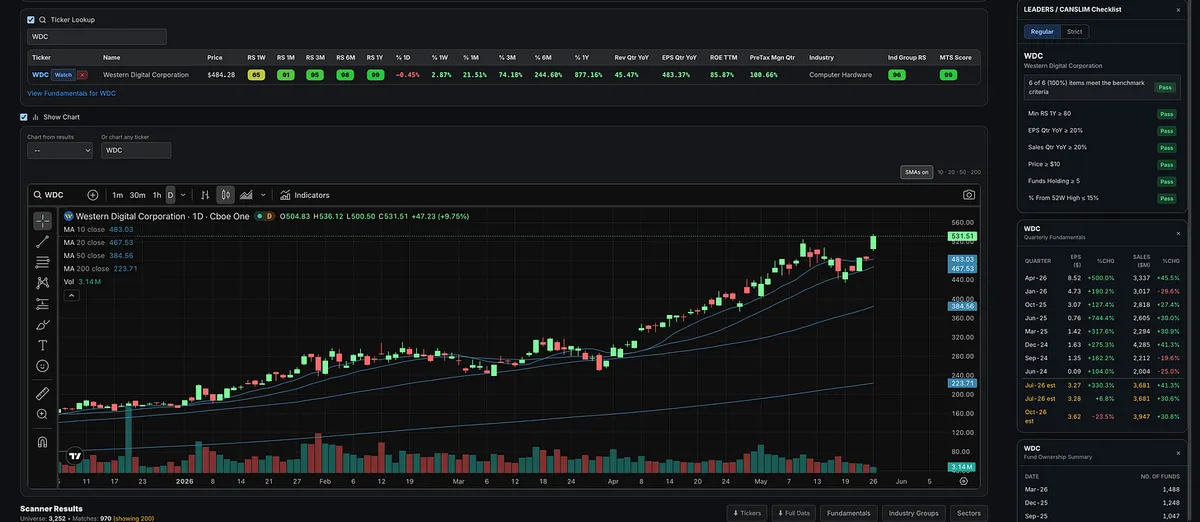
WDC is another one.

It is breaking out to new highs today and has the same characteristics I keep talking about:

  • Big earnings.

  • Big sales.

  • Strong return on equity.

  • Strong margins.

  • A hot industry group.

  • Aligned with the current bull market theme.

  • Fund ownership growing quarter over quarter.

This is not about making the process complicated.

It is about finding the strongest stocks in the strongest groups, tracking them, and staying aligned with them as long as the evidence remains intact.

Most traders do not need more complexity.

They need more discipline following what is already working.

View on Substack ↗

VSH: Price Is King

VSH is one of those names that has been showing up on my relative strength screener.

I have not participated in it.

I have mostly just watched it go higher.

But when you look at the last three quarters, it is easy to understand why the stock has been moving.

  1. Earnings have accelerated.

  2. Sales have accelerated.

  3. It is in a hot industry group.

And the estimates over the next few quarters are large.

That said, it is not perfect.

Pre-tax margins and ROE are not great, and fund ownership has been relatively flat quarter over quarter.

But price is king.

And VSH has been a huge winner for the traders who participated in it.

This is another reminder that the relative strength screener is not there to tell me what I already believe.

It is there to show me what the market is actually rewarding. Simple but powerful tool.

View on Substack ↗

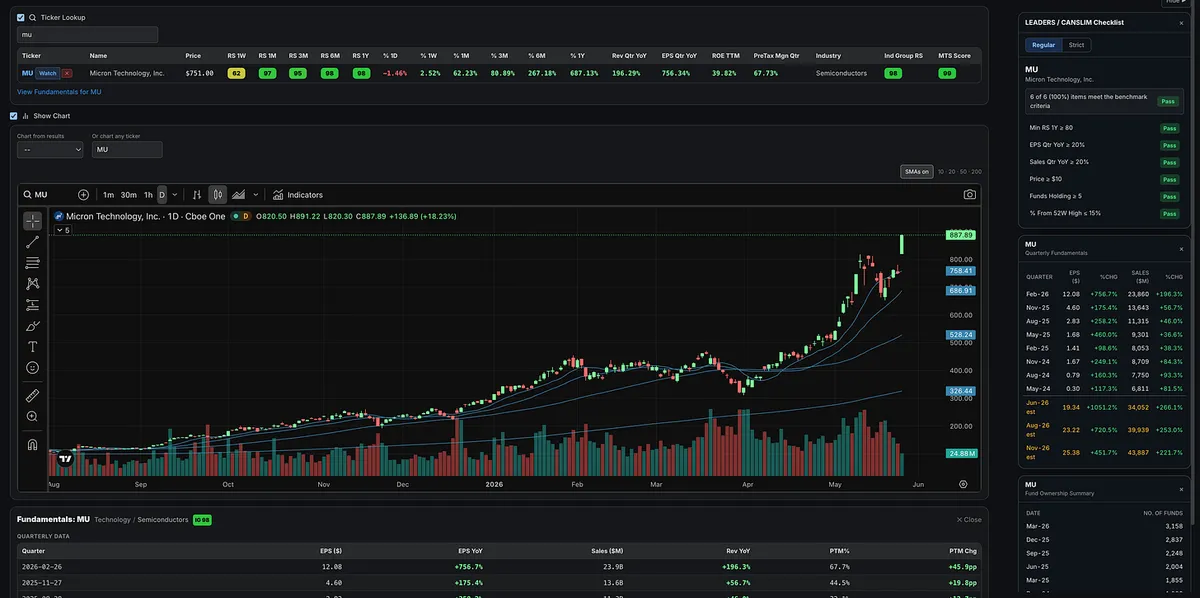
MU Breaks Out Again

I’ve been talking about MU since January.

And now we have another breakout to new highs.

Why have I liked MU?

Same thing I keep saying over and over again.

  • Big earnings.

  • Big sales.

  • Amazing return on equity.

  • Strong margins.

  • A hot industry group.

  • One of the strongest stocks in that group.

  • Aligned with the current bull market theme.

  • Fund ownership also continues to increase quarter over quarter.

Yes, there have been higher-performing relative strength stocks on a pure price basis.

But when you combine fundamentals and price action, there are not many names that come close to MU.

This is not about chasing random names.

It is about identifying super performance characteristics, tracking the leaders, and staying aligned with the strongest stocks in the strongest groups as long as the evidence remains intact.

MU continues to check those boxes.

View on Substack ↗

Fundamentals Build the Thesis. Price Tells You What to Do.

Institutional researcher Milton Berg worked with George Soros and Stanley Druckenmiller.

One thing he has said that I think more traders should pay attention to is that Soros and Druckenmiller may not talk about this much publicly, but they enter and exit positions based on technicals, with fundamentals as the backdrop.

That is not much different from what William O’Neil, Mark Minervini, and many growth stock investors do.

We want the fundamentals.

Big earnings. Big sales. Strong return on equity. Strong margins. Something new. A hot industry group. A stock aligned with the current bull market theme.

But we do NOT enter and exit based on the story alone.

We enter and exit based on what the chart is telling us.

The fundamentals help build the thesis.

The technicals help tell us when institutions are accumulating, when demand is showing up, how risk can be defined, and when the evidence is starting to change.

Soros and Druckenmiller may have looked at different types of fundamentals than a CAN SLIM growth investor, but the principle is very similar:

Use fundamentals to understand the opportunity.

Use price action to manage the trade.

View on Substack ↗

Stock Screening: The Same Names Keep Showing Up

There is no surprise here.

Most of the names I liked in my weekend scanning are the same names we have been talking about for months.

The best stocks usually keep showing up.

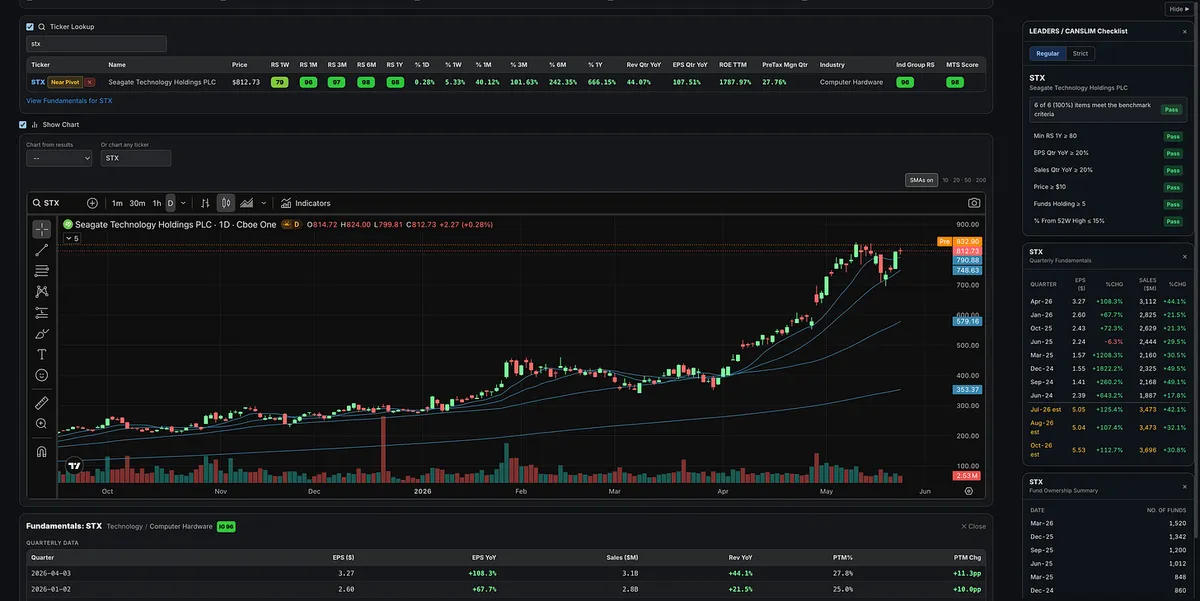
STX is one of them.

It is moving back toward new highs, and it still has a lot of the characteristics I want to see:

  • Strong earnings growth.

  • Strong sales growth.

  • High relative strength.

  • Strong ROE and margins.

  • Increasing fund ownership.

  • A strong industry group.

  • Price action aligned with the current bull market theme.

This is not about finding something obscure.

It is about finding strength, tracking it, and staying aligned with it as long as the evidence remains intact.

Eventually, every trend ends. The setups will stop working, the leaders will break down, and the market will rotate somewhere else.

But if you have been doing this correctly, by the time that happens, the gains from the trend should more than offset the normal losses that come when the move finally ends.

That is the whole point of following leadership.

You are not trying to be right forever.

You are trying to stay aligned while the evidence is there, and then get out when the evidence changes.

View on Substack ↗

The Stock Wasn’t a Secret. The Clues Were Public.

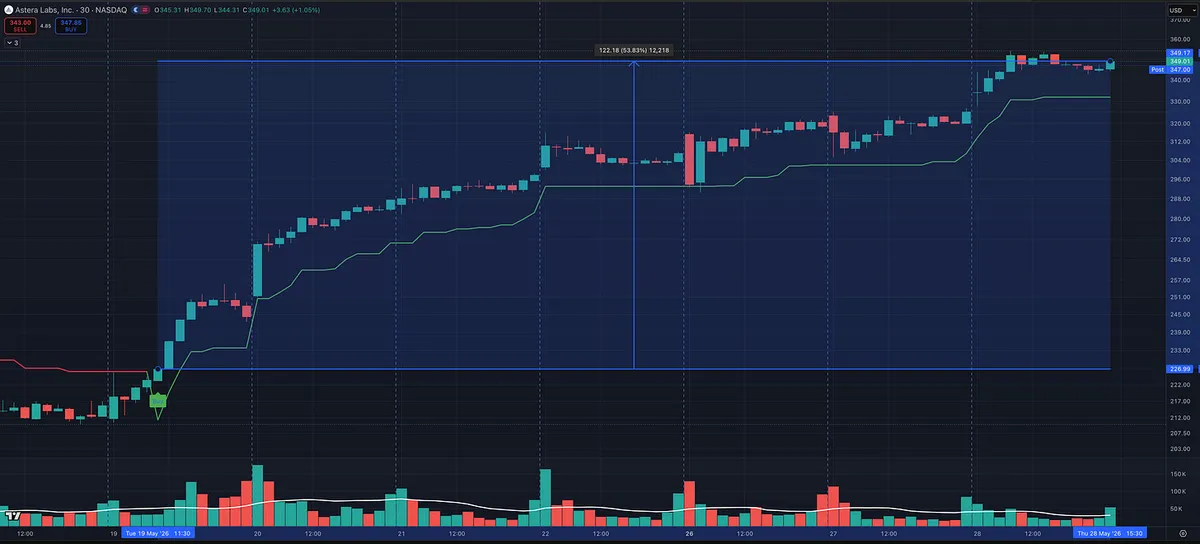
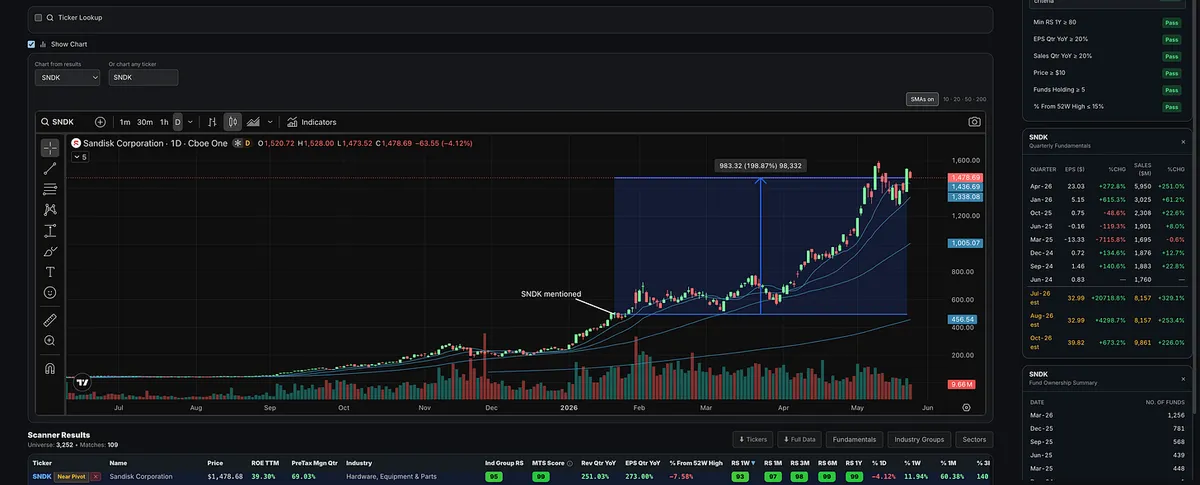
SNDK is now up over 200% since I first mentioned it.

But the lesson is not “buy SNDK.”

The lesson is that big winning stocks usually leave clues before the move becomes obvious.

SNDK had several of the characteristics I look for:

  • Strong relative strength.

  • A hot industry group.

  • Accelerating earnings and sales.

  • Growing fund ownership.

  • Price moving with institutional demand.

This is not some new strategy invented for social media.

It is the same basic system William O’Neil taught for more than 50 years, built on principles that go back to the great traders of the early 1900s.

Find the strongest stocks.

In the strongest groups.

With the strongest growth.

Showing institutional accumulation.

Then wait for a proper setup where risk can be defined.

The names change.

The characteristics do not.