“I don’t feel there is a market to beat. The more I trade, the more I realize that the only thing to beat is myself.” - Richard Bargh
Notes
Short lessons on momentum trading, every day.
Every note from Substack, in one place: risk, setups, leading stocks, market conditions and the mindset behind them. Search them, browse by topic, or filter by stock.
Showing 501–520 of 1226 notes
When You’re in a Slump, Stop Trying to Hit Home Runs
Market Wizard Victor Sperandeo gave one of the best answers I’ve heard on how to deal with a losing streak.
When Jack Schwager asked him how he gets back into trading, Sperandeo compared it to Ty Cobb.
“Ty Cobb once was asked why he never had slumps. He said that whenever he felt himself getting into a slump, he wouldn’t try to get a hit, but he would simply try to make contact with the ball. To relate that concept to trading, when you’re in a slump, try to be patient and wait for a trade that you feel very confident about and keep the bet size small. Your goal should not be to make lots of money but rather to get your confidence back by making correct decisions.” -Victor Sperandeo
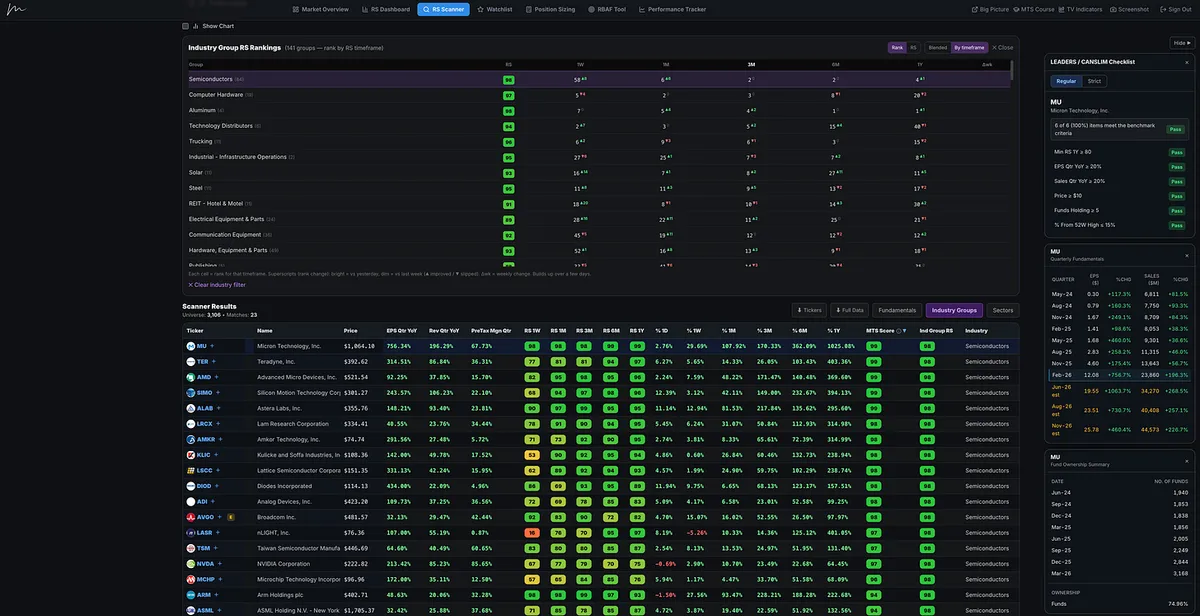
A lot has changed inside the MTS web app over the last month.
Here are a few of the recent updates:
Saved scans.
Custom columns.
Watchlist side panel.
Journal notes and images.
IPO filters.
Sector and industry group exclusions.
Industry group ranking by timeframe.
RS dashboard sorting upgrade.
MTS Scores by timeframe.
Sales Ratings.
Watchlist subcategories.
And this is just from the last month.
Check it out.
https://tradingmomentum.substack.com/p/big-updates-just-dropped-inside-the
Most Traders Don’t Need More Information. They Need the Right Path.
A lot of people ask me where to start.
What books should I read?
What should I study first?
How do I avoid wasting years chasing the wrong things?
I get it, because I was there too.
Most of us did not struggle because we were lazy. We struggled because we were overwhelmed, distracted, and constantly pulled toward the wrong information.
In today’s world, the problem is not a lack of information.
The problem is the abundance of information has made it harder to find the right information.
Back in November, I wrote a post called:
If I Were Starting Over Again: A Beginner’s Roadmap to Growth Stock Investing and Momentum Trading
A lot of new people here probably missed it, so I’m resharing it.
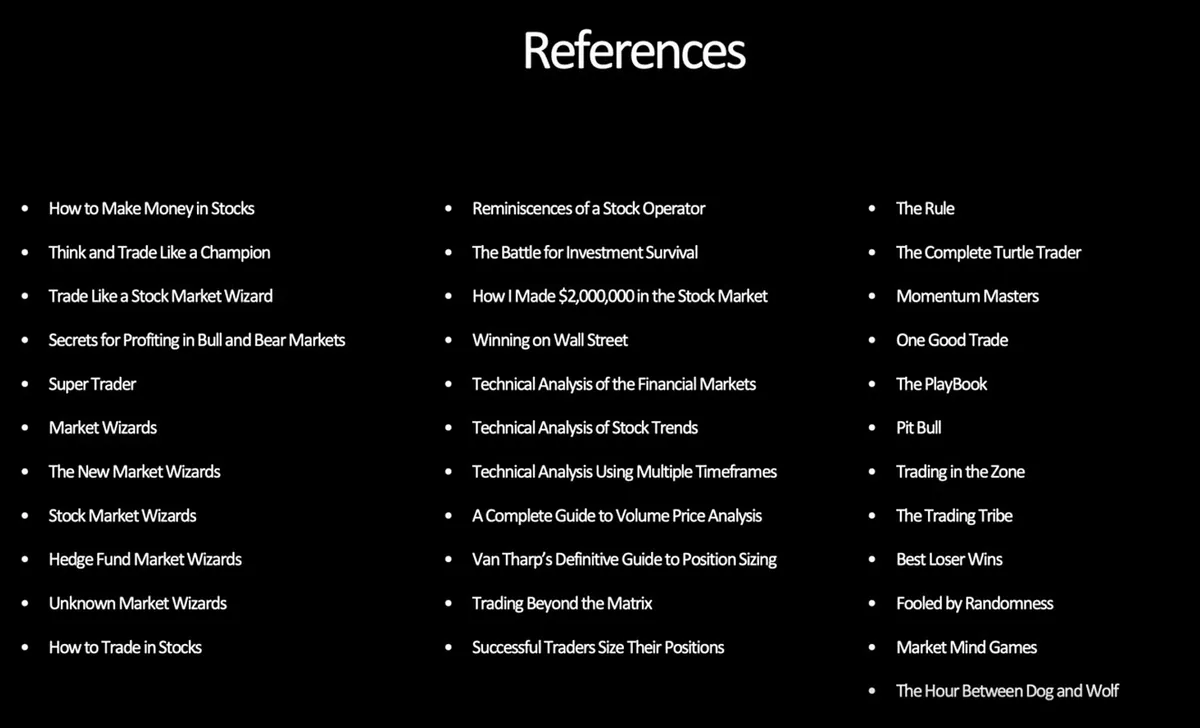
The screenshot below shows just some of the great trading books and references that have had a positive impact on my development over the years.
This post is not everything I have learned. It is not meant to overwhelm you. It is meant to give you a clear starting path, the kind of path I wish I had when I first started.
Many traders spend years failing, struggling, and searching before they finally find the right sources.
This can help shorten that journey.
Not by doing the work for you.
But by pointing you in the right direction before you waste years chasing noise.
If you’re newer to trading, investing, or momentum stocks, start here.
Read the post. Save it. Study the books. Build the foundation first.
https://tradingmomentum.substack.com/p/if-i-were-starting-over-a-beginners
“After a devastating loss, I always play very small and try to get black ink, black ink. It’s not how much money I make, but just getting my rhythm and confidence back.”
-Marty Schwartz
“There are old traders and there are bold traders, but there are very few old, bold traders.” - Ed Seykota
Worried About the Market? Read This First
Most traders don’t need more panic.
They need more understanding.
I took the paywall down on one of my best-performing posts because I’m seeing a lot of worried traders and investors right now.
And honestly, this is exactly why I wrote it.
Most people think market crashes come out of nowhere. They don’t.
The market usually gives warning signs before major tops, and it usually gives confirmation when a new bull market is beginning. Once you learn how to read market structure, the market becomes a lot less emotional.
You stop reacting to every headline.
You stop getting shaken out by every red day.
You stop guessing.
This post breaks down how to recognize major changes in market character using principles from Stan Weinstein, and William O’Neil.
It has been one of my most-read posts for a reason.
If you’ve been feeling worried about the market, start here.
https://tradingmomentum.substack.com/p/how-the-market-warns-you-before-the
Your Trading Is Only as Strong as Your Weakest Link
One reason I see so many traders struggle is because they are usually missing one critical piece of the puzzle.
They become obsessed with setups, but ignore quality stock selection.
Or they get good at finding strong stocks, but have no patience or precision with their entries.
Or they do both well, find great stocks and wait for good setups, but then trade aggressively in a poor market environment and give back weeks or months of progress.
That is the part most people do not want to hear.
The market does not just reward what you are good at.
It exposes what you are weak at.
If your stock selection is weak, the market will punish you.
If your entries are sloppy, the market will punish you.
If your risk management is emotional, the market will punish you.
If you ignore the general market, the market will punish you.
Every piece matters.
The setup matters.
The stock matters.
The entry matters.
The market environment matters.
The position size matters.
The sell rules matter.
The review process matters.
Most traders keep working on the part they already like because it feels good and productive. They study more charts, look for more setups, follow more stock ideas, or keep searching for the next big winner.
The real growth usually comes from working on the part you avoid.
That is probably where the leak is.
If you want to improve, stop asking, “What is the next stock?”
Start asking:
“Where is my process weakest?”
Because the part of your process you avoid is probably the exact part holding you back.
The market will find it eventually.
Better to find it first.
The Nasdaq Fired a Warning Shot. Read This Before Planning Trades.
Before screening or planning trades this week, step back and zoom out.
Read the big picture first.
Friday was not a normal pullback. The Nasdaq-100 dropped 4.77%, the S&P 500 fell 2.64%, volatility spiked, breadth weakened, and leadership shifted defensively.
That is a warning shot that should not be ignored.
The Stage 2 uptrend is still intact, but this is no longer a maximum-aggression environment. When the market changes character, your process has to adjust with it.
The goal is not to predict whether Friday was a one-day outlier or the start of a deeper correction. The goal is to manage risk, protect capital, and let the market confirm the next move.
Stock selection and industry group strength matters, but the general market is still the tide that lifts or lowers most boats.
This week’s Big Picture Market Pulse breaks down the major indexes, volatility, breadth, distribution, relative strength, sector rotation, the Composite Model, and updated exposure levels.
https://tradingmomentum.substack.com/p/the-nasdaq-just-fired-a-warning-shot
Think You Can Ignore the Market? Look at These Screenshots.
One of the questions I get asked most is:
"Why do you put so much emphasis on the general market?"
Because the market sets the environment that almost every stock trades in.
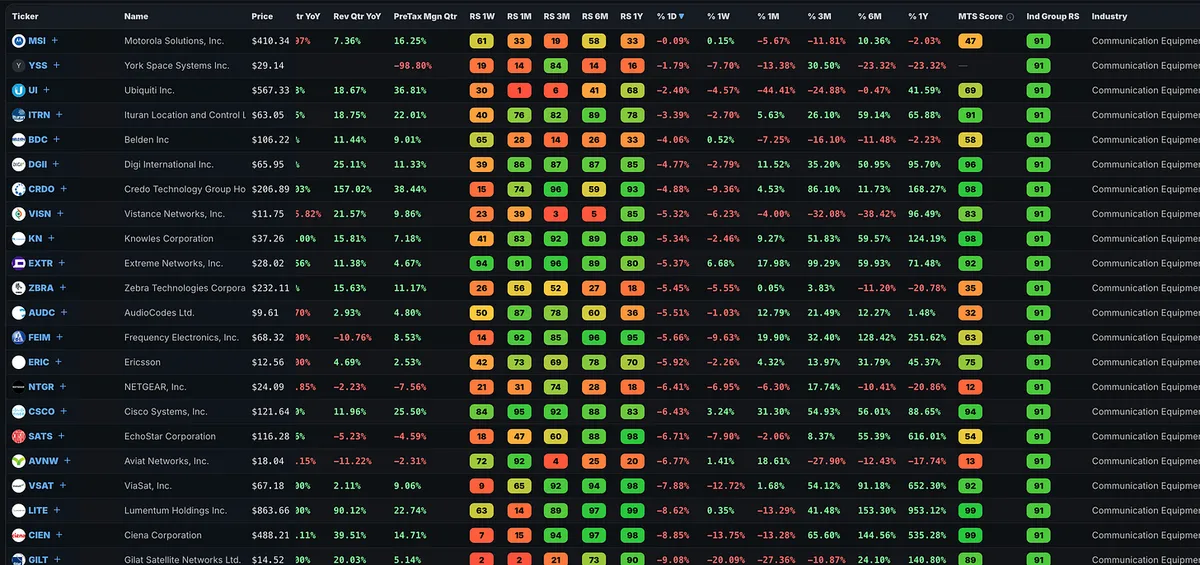
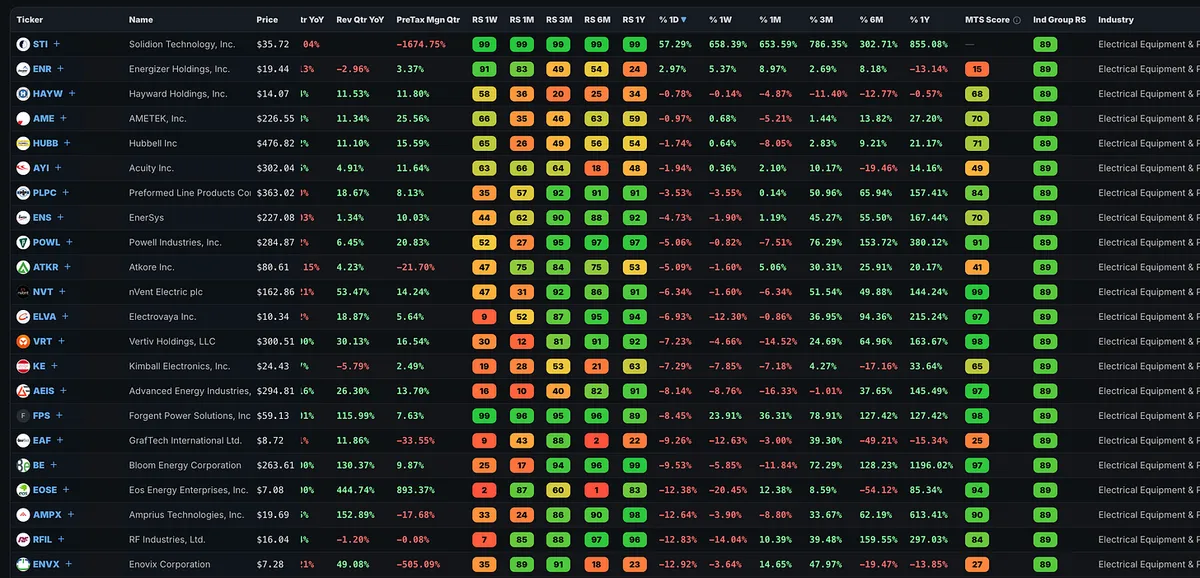
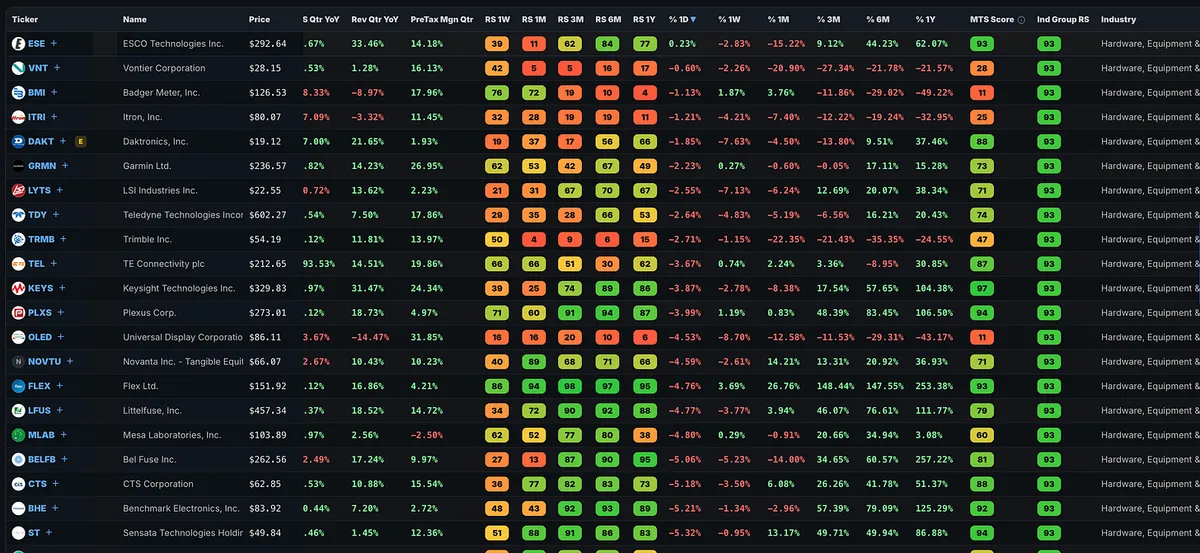
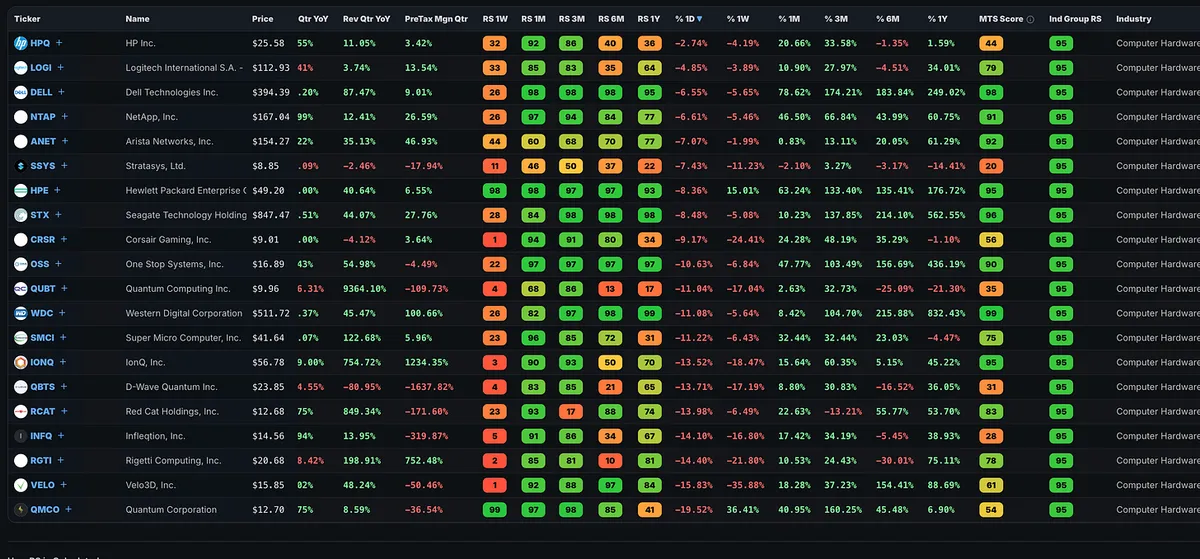
Since the April follow-through day, the market has been led by the Nasdaq, growth stocks, technology (XLK), and AI-related industry groups.
Semiconductors.
Computer Hardware.
Electronic Components.
Communication Equipment.
Computer Data Storage
Telecom
These weren't weak groups trying to catch up.
These were the leaders driving the advance.
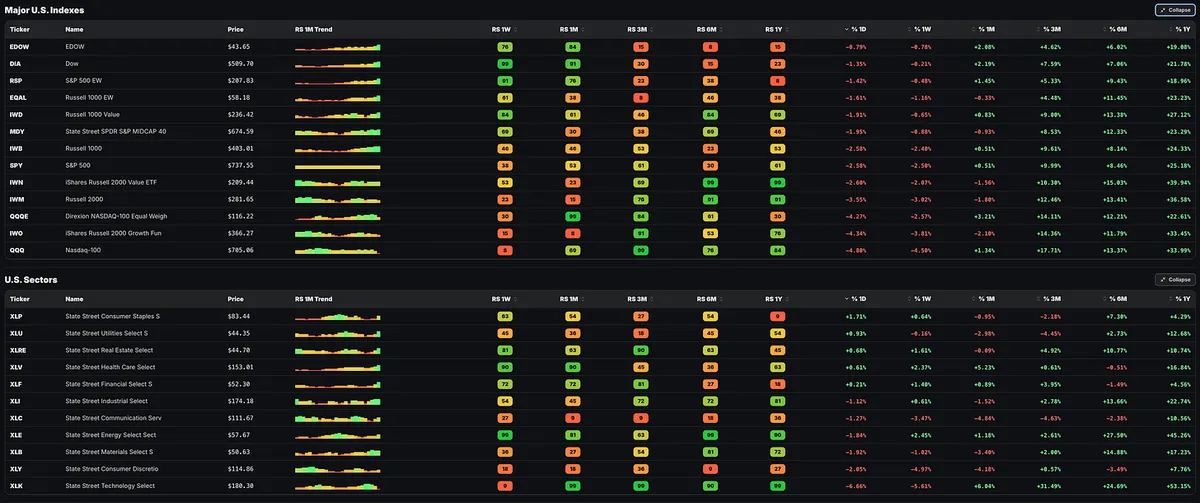
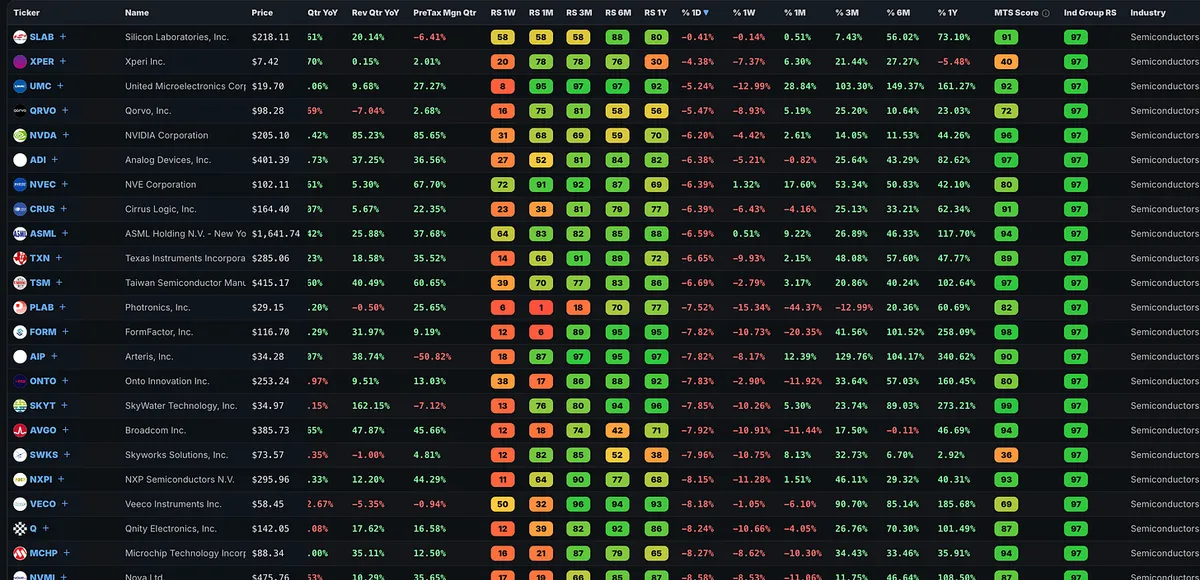
Now look at the screenshots.
On Friday, the Nasdaq fell 4.8% and the S&P 500 dropped 2.64%. Both sliced right through their 20-day moving averages.
If there was ever a time for the strongest stocks to prove they could ignore the market, this was it.
But they didn't.
The same industry groups that had been leading the rally were hit across the board. Many of their top stocks were down 5%, 8%, 10% or more.
How many truly bucked the trend?
Very few.
This is exactly why William O'Neil placed so much importance on the "M" for Market Direction in CAN SLIM. After studying more than a century of the biggest stock market winners, he recognized that even the strongest leaders are heavily influenced by the direction of the general market.
The lesson isn't that you should fear every red day, but you should respect the market.
Stock selection matters.
Industry group selection matters.
But the general market is the tide that lifts or lowers almost every boat.
The screenshots are a perfect reminder that the goal isn't simply to own the strongest stocks.
It's to own the strongest stocks when the wind is at your back.
You Can Get Rich Without Risking Ruin
You can make millions risking half a percent to one percent per trade.
So why are you risking blowing up your account?
That is the part most traders never think through.
They act like they need to risk 10% or more on a single idea to build real wealth. But the best traders understand something most beginners ignore:
Survival comes first.
If you have a real edge, you do not need to bet the farm.
You need to stay in the game long enough for that edge to compound.
A 0.5% to 1% risk per trade may sound boring, but boring is usually what keeps you alive.
Big accounts are not built by one heroic trade.
They are built by protecting capital, cutting losses, letting winners work, and repeating the process over and over again.
Plenty of Market Wizards have turned a few thousand into millions by following this principle.
So why aren’t you?
You Do Not Have to Like Someone to Learn From Them
A lot of people hold themselves back from learning because they take everything too personally.
They think if they do not like someone, they cannot learn from them.
That is a mistake.
Sometimes the person you can learn the most from is also someone you would never choose to spend time with.
Maybe they are arrogant.
Maybe they are difficult.
Maybe their personality annoys you.
Maybe you simply do not like the way they carry themselves.
That does not mean they have nothing to teach you.
Marcus Aurelius understood this well.
In Book 2 of Meditations, he reminds himself that the people he deals with will often be difficult, arrogant, ungrateful, dishonest, jealous, and frustrating.
But the point was not to complain about them.
The point was to prepare himself.
He could not control their character, their attitude, or their behavior. He could only control whether he allowed those things to disturb his own judgment and actions.
You do not have to let someone’s personality block your ability to extract value.
I have had people in my life who were extremely skilled at certain things, but were not great people to be around. I have had bosses in the past who were good at parts of the job, but personally, I could not stand them.
It would have been easy to shut them off completely and say, “I do not like this person, so I am not listening to anything they say.”
But that would have only hurt me.
Instead, I tried to separate the lesson from the person.
I did not have to admire them.
I did not have to agree with everything they did.
I did not have to become like them.
But I could still pay attention to what they were good at and take something useful from it.
Trading is the same way.
There are traders I have learned from who I probably would not get along with personally. Some annoy me. Some communicate in a way I do not like. Some have personalities that do not resonate with me at all.
But they still had lessons worth taking.
A setup.
A risk rule.
A way of thinking.
A way of managing trades.
A way of staying disciplined.
A mistake they made that I could avoid.
If you only allow yourself to learn from people you like, you are limiting your own growth.
You do not need to worship people, but you can extract wisdom from them.
Take what is useful.
Leave what is not.
And keep getting better.
One of the biggest signs of personal growth is being able to learn from someone without needing to like them, follow them, agree with them, or become them.
I challenge you to do the same.
Stop making learning so personal.
Your growth matters more than your opinion of the teacher.
The Hardest Thing in Trading Is Doing Nothing
Jesse Livermore gave this lesson over 100 years ago, and it is still one of the hardest lessons for traders to actually follow:
“It never was my thinking that made the big money for me. It was always my sitting. Got that? My sitting tight!”
Most people read that quote and think Livermore was only talking about holding winning positions.
And yes, that is part of it.
If you find a true market leader, enter correctly, manage risk, and the stock is acting right, you need the patience to let the move develop. Big money is rarely made by constantly jumping in and out of every small fluctuation.
But “sitting tight” means more than just letting your winners run.
It also means sitting and waiting for the right setup.
It means not chasing a stock just because you like the story.
It means waiting for the stock to build properly, tighten up, approach the right area, and show real demand at the right moment.
And sometimes, it means sitting in cash.
That is the part most traders hate.
Many breakout strategies and momentum setups work best when the general market is in a supportive stage two uptrend. When the market is correcting, choppy, or under distribution, even good-looking setups can fail.
The stock may have strong fundamentals.
The chart may look good.
The theme may be powerful.
But if the general market is not supporting growth stocks, the odds change.
Most stocks follow the general market. That means your setup does not exist in isolation. The environment matters.
So patience has three sides:
Sitting with a winner when it is acting right.
Sitting and waiting for the stock to set up properly.
Sitting out when the market is not giving you favorable conditions.
That is why trading is so hard.
Most traders do too much.
The best traders know when to do nothing.
Nervous About a Trade? Your Position Is Too Big.
If you've done your homework, the stock has the characteristics of past market leaders, and it fits your process, but you're still nervous before entering the trade, the answer is usually simple:
Get smaller.
For one trader, that might mean a $100 position. For another, it might mean $1,000, $10,000, or $100,000.
The dollar amount does not matter. What matters is risking an appropriate amount based on your system and your own ability to follow the plan without fear taking over.
Say your system allows you to risk 1% to 2.5% of your total portfolio on a trade, but you still feel pressure, fear, or hesitation. Drop the risk until that feeling goes away.
Maybe that means risking 0.25% of total equity. Maybe it means even less.
That is fine.
If you're constantly checking the position, losing sleep, or second-guessing every tick, your size is too large for your current comfort level.
Reduce it until you're completely comfortable.
Trading is psychological. The right position size is different for every person. Over time, as your confidence and experience grow, your size can grow too.
But the solution to fear is rarely more courage.
It's usually smaller size.
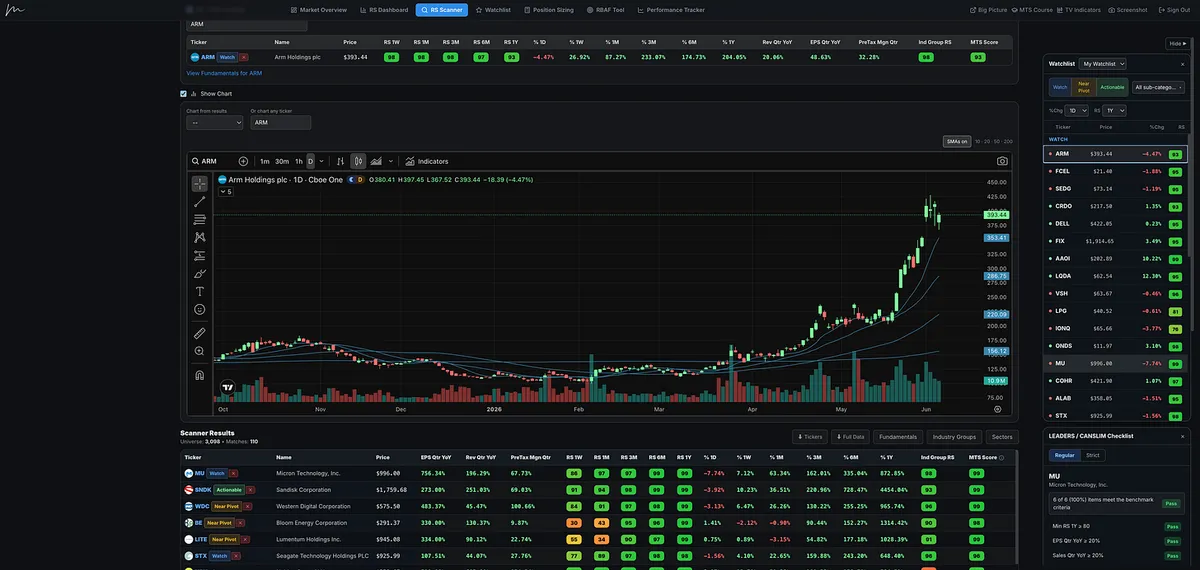
New Feature Added: Watchlists Are Now Inside the RS Screener
Another update has been added to the Relative Strength Stock Screener.
You can now view and manage your watchlists directly inside the screener through the new Watchlist Panel on the right side of the screen.
This means you no longer have to jump back and forth between the Relative Strength Screener and the Watchlist tab. Your watchlists are now accessible while screening, making it easier to review candidates, organize ideas, and move stocks through your workflow.
Everyone Saw the AI Chips. Few Saw the AI Plumbing.
William O’Neil called this the “cousin stock” theory.
When a major theme is working, most traders focus on the obvious leader.
But sometimes the better opportunity is hiding one step away.
The supplier.
The equipment maker.
The parts provider.
The infrastructure company.
O’Neil used Boeing as an example.
Boeing was the obvious winner during the airline boom, but every new jet also needed parts from suppliers. One of those supplier stocks, Monogram Industries, went on to make a massive move.
Same theme. Different angle.
That still happens today.
In the AI boom, Nvidia was the obvious AI leader.
Everyone saw the GPUs.
But AI data centers also need high-speed optical connections to move data between GPUs, servers, switches, and storage systems.
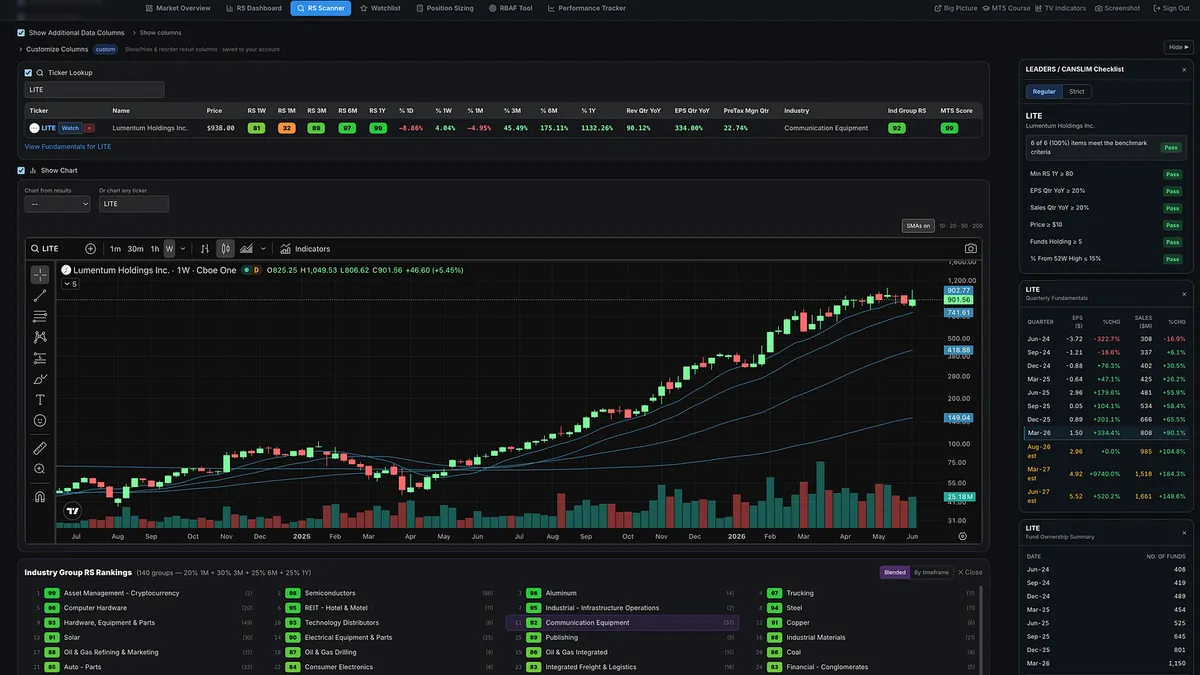
That is where Lumentum (LITE) became a modern cousin/follow-on stock.
LITE does not make Nvidia’s GPU.
It does not need to.
It supplies advanced lasers, optical modules, transceivers, and photonic components that help AI data centers scale.
Then Nvidia made the connection even clearer by announcing a strategic partnership and investment in Lumentum.
NVDA was the obvious leader in 2023–2024.
LITE was a related supplier benefiting from the same AI infrastructure demand, which helped it become one of the leading stocks in 2025–2026.
Most traders ask:
“What stock should I buy?”
Better traders ask:
“What theme is driving the market, which group is leading, and who are the cousin stocks benefiting from the same demand?”
That is where leadership leaves clues.
The crowd usually sees the main story first.
The best traders look for the ecosystem forming around it.
That is why industry group and relative strength matters.
This is why I built the Momentum Trading Strategy RS Scanner.
Not just to find strong stocks, but to help identify the strongest groups, and related names moving with institutional demand.
The Best Traders Usually Live By the Same Rules
Larry Hite said the rules they lived by at Mint Investments were simple:
Never risk more than 1% of total equity on any trade.
Always follow the trends and never deviate from the method.
Risk first.
Trend second.
Process always.
And even though Hite was a systematic trend follower, this is not much different from what O’Neil taught as a techno-fundamental growth stock trader.
Different style.
Same foundation.
Protect your capital.
Trade with the trend.
Stick to your process.
The best traders usually are not doing something wildly different.
They are just better at following the rules most people ignore.
AI Won’t Make You a Better Trader or Growth Stock Investor
AI is great.
I use AI in several of my other businesses, and it is incredibly useful. It helps with content, coding, research, websites, images, and all kinds of tasks that save time. It makes me more productive, and frankly, it allows us to do more with fewer people.
But trading?
I have not seen AI add one single thing to my actual edge.
And deep down, most experienced traders already know this.
The people who have spent years in markets know that the same things that worked 10, 20, and 30 years ago are still what work today.
Charts may look nicer. Platforms are faster. Commissions are lower. Software looks better.
But the game has not changed nearly as much as people want you to believe.
Great traders are still studying price, volume, leadership, fundamentals, risk, entries, exits, position sizing, market environment, and their own behavior.
That is the work.
And that is the part most people want to skip.
So now AI has become the new shortcut.
Before AI, it was indicators.
People wanted the perfect indicator to tell them when to buy and sell. They wanted a signal, an arrow, or a magic formula to replace skill.
Now the same type of person is looking for AI to do the same thing.
But here is the question nobody wants to answer:
Where are all the wildly successful Indicator or AI traders?
If AI is really giving retail traders some incredible edge, where are the people quietly printing money with it?
The truth is, most of the AI hype in trading is being sold to people who do not yet have enough experience to know what they are being sold.
AI can summarize a stock faster, help organize information better, code tools, streamline your workflow, but it is NOT going to magically make you a consistently profitable trader.
Maybe one day AI becomes a real edge in the market, and changes stuff.
But that’s not right now.
The market still rewards what it has always rewarded: discipline, process, strategy, proven setups, risk management, position sizing, and the ability to identify the characteristics of true market leaders.
And the market still punishes people looking for shortcuts.
So yes, use AI.
Use better tools.
Use better software.
Use anything that helps you move faster and stay organized.
But do not confuse a better tool with a better trader.
Sorry to tell you, but there is no shortcut around the real work. If you want to win in this game and make money, you have to actually learn how to play it.
“I consider trend following to be a subset of charting. Charting is a little like surfing. You don’t have to know a lot about the physics of tides, resonance, and fluid dynamics in order to catch a good wave. You just have to be able to sense when it’s happening and then have the drive to act at the right time.” -Ed Seykota
The money is rarely hiding in dead industries.
William O’Neil studied more than 1,000 of America’s greatest stock market winners, and one lesson keeps showing up:
The biggest winners usually come from the strongest industry groups, the strongest market themes, and the newest areas of American innovation.
Railroads. Autos. Airplanes. Radio. Television. Computers. Software. The Internet. Social Media. AI.
Different decade. Same principle.
The market usually does not reward investors for buying what is cheap, old, obvious, or comfortable.
It rewards those who learn to recognize where institutional money is flowing, which groups are leading, and which companies are building something new.
That is why industry group strength matters.
That is why relative strength matters.
That is why “New” is one of the most important parts of CAN SLIM.
Most traders are asking:
“What stock should I buy?”
The better question is:
“What theme is driving this market, which industry group is supporting that theme, and which stocks are leading inside that group?”
That is the game.
Not chasing opinions.
Not buying random breakouts.
Not trying to predict the future.
Finding leadership while it is still being accumulated.
The next great winner probably will not come from the old, well-known areas of the past.
It will likely come from the area of the market changing the future.
The Momentum Trading Strategy RS Scanner was created to help you identify those leaders.