Momentum Trading Strategy

Notes

Short lessons on momentum trading, every day.

Every note from Substack, in one place: risk, setups, leading stocks, market conditions and the mindset behind them. Search them, browse by topic, or filter by stock.

Showing 1201–1220 of 1230 notes

View on Substack ↗

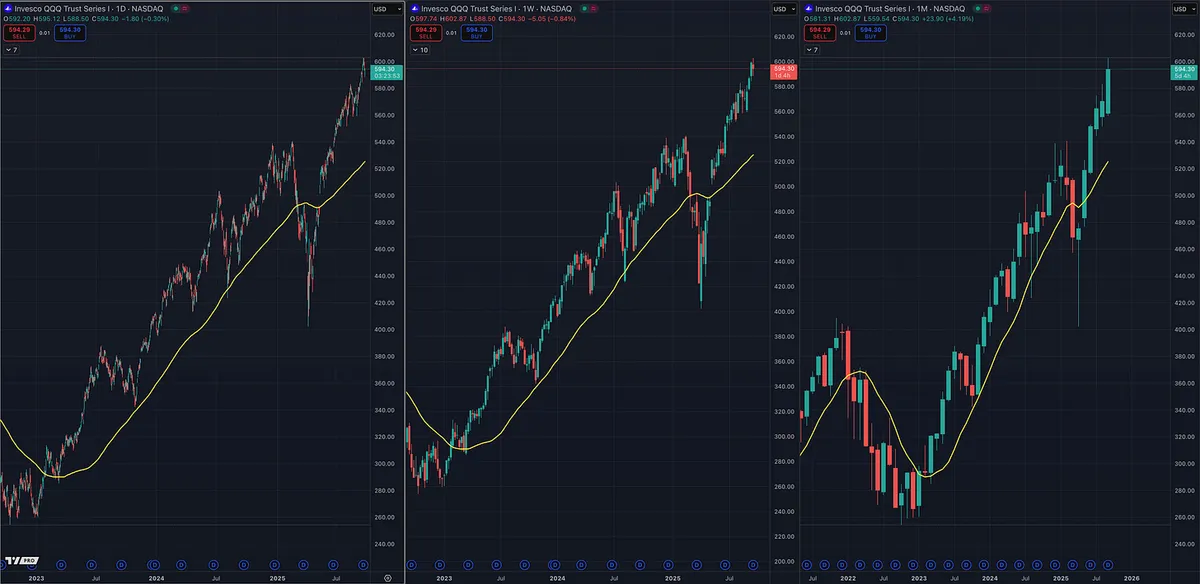
When in doubt, zoom out.

Institutions move on weekly & monthly charts, not just your 5-min candles.

Nothing wrong with lower-timeframe entries (I day & swing trade too) — just align them with the big money trend.

That’s how you stack probabilities.

“The most important rule of trading is to play great defense, not great offense. Never trade against the major trend of the market; you are just fighting the big money, and that’s a game you can’t win.”

— Marty Schwartz, Market Wizards

View on Substack ↗

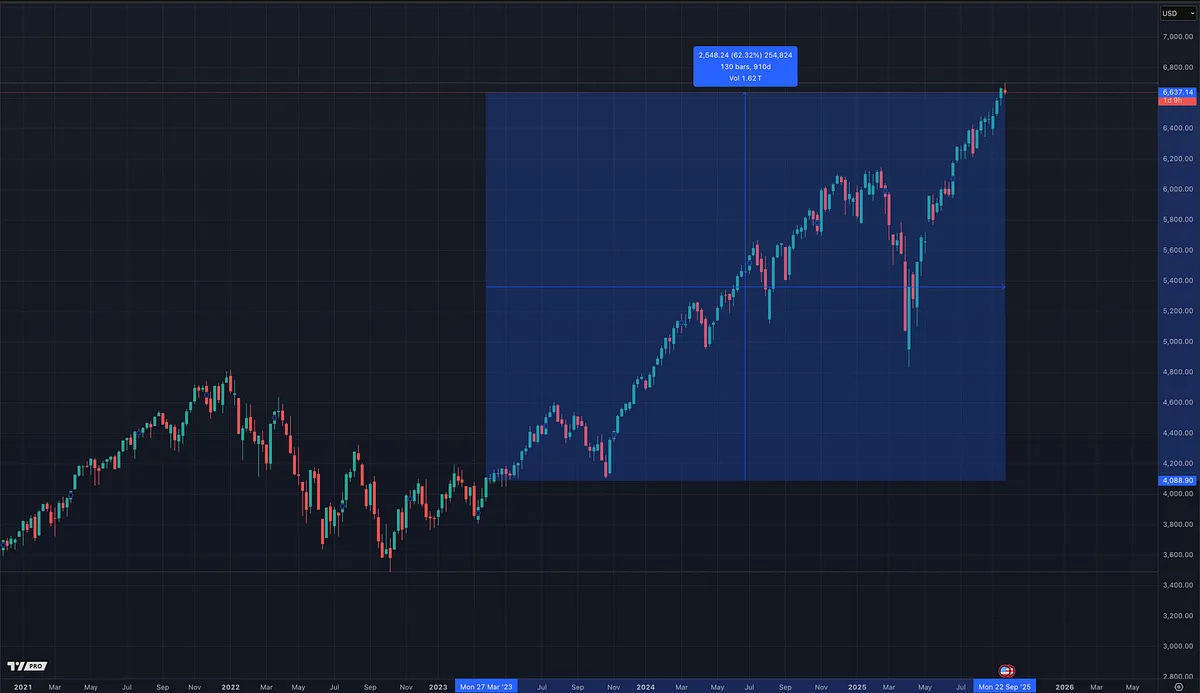
I’ve been hearing “recession is coming” nonstop this entire bull cycle since 2023. If you let that noise dictate your trading or investing, you’ve missed out big.

Markets climb a wall of worry.

Price action is king. No matter the news, forecasts, or narratives — I defer to the tape. The market is the final arbiter of truth.

View on Substack ↗

Everyone’s screaming “Crash is coming!” 🚨

Here’s the thing… if you actually have a strategy, it doesn’t matter.

Stops protect you.

Position sizing saves you.

Patience pays you.

The people panicking? They’re just showing their hand — over-leveraged, no plan, no risk management.

Markets crash. Markets recover. Traders with discipline survive both.

View on Substack ↗

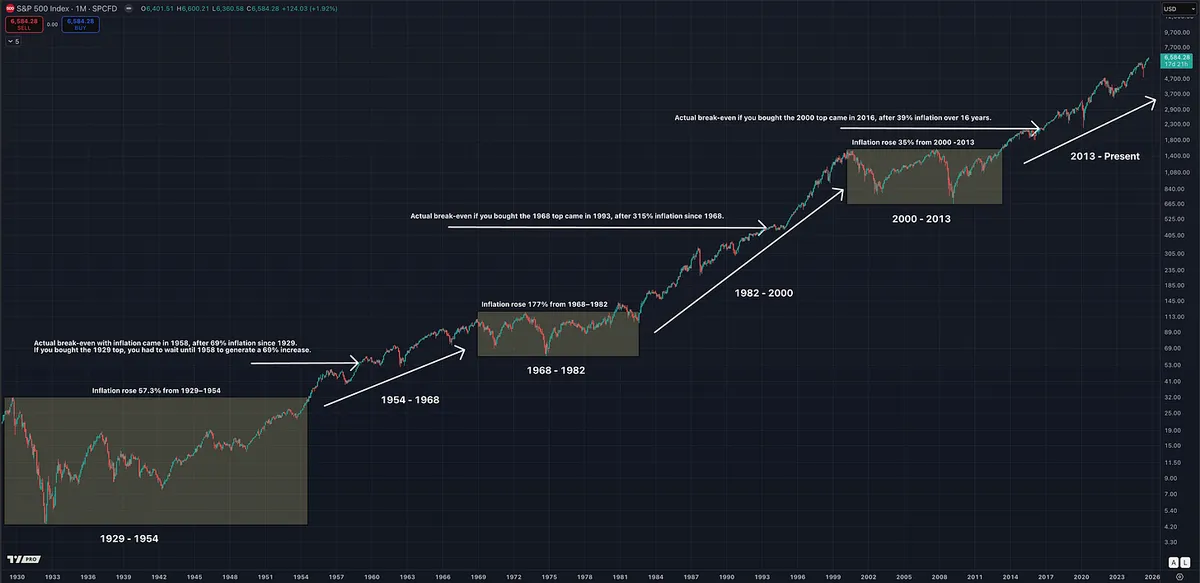
Buying the top doesn’t just cost you time… it costs you decades.

After 1929, real break-even came in 1958.

After 1968, not until the early ’90s.

After 2000, 2016.

Inflation is the silent killer of returns.

View on Substack ↗

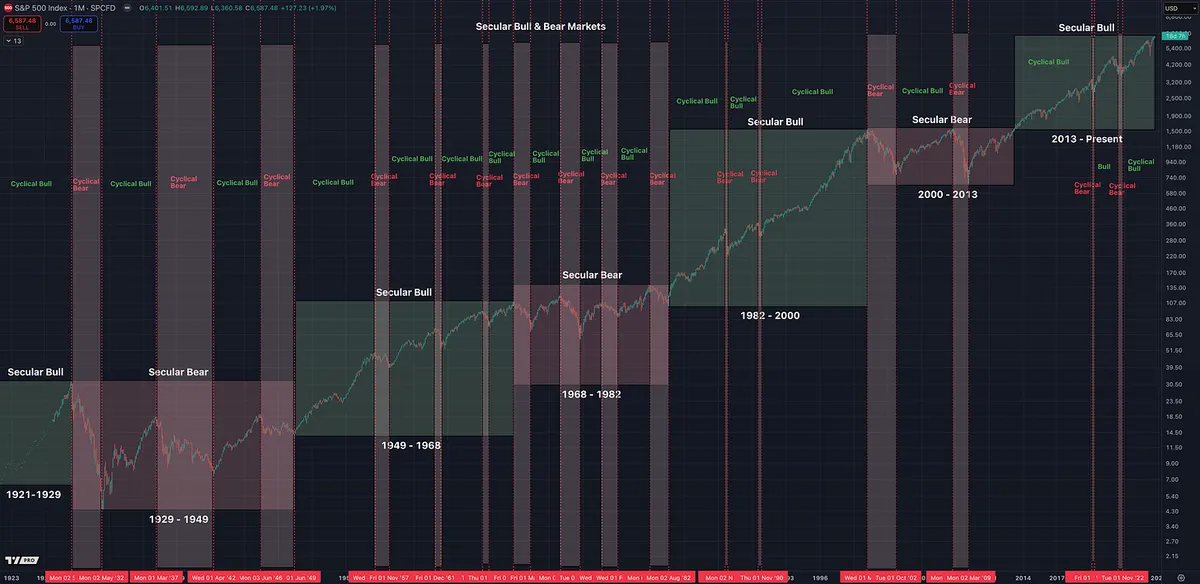
📊 S&P 500 Market Cycles (1921–Present) History shows alternating secular bulls (long uptrends) and secular bears (long sideways/inflation-adjusted declines). Inside each, multiple cyclical bulls & bears play out.

🔹 Secular Bulls: 1921–1929, 1949–1968, 1982–2000, 2013–Present 🔻 Secular Bears: 1929–1949, 1968–1982, 2000–2013

👉 Secular bulls average ~14 years, bears ~15 years. Cyclical bulls run ~4–5 years, bears ~1–2 years. Context matters: buying the top of a secular bull can mean waiting a decade+ just to break even after inflation.

View on Substack ↗

“The most important is discipline—I am sure everyone tells you that. Second, you have to have patience; if you have a good trade on, you have to be able to stay with it. Third, you need courage to go into the market, and courage comes from adequate capitalization. Fourth, you must have a willingness to lose; that is also related to adequate capitalization. Fifth, you need a strong desire to win.” -Gary Bielfeldt

View on Substack ↗

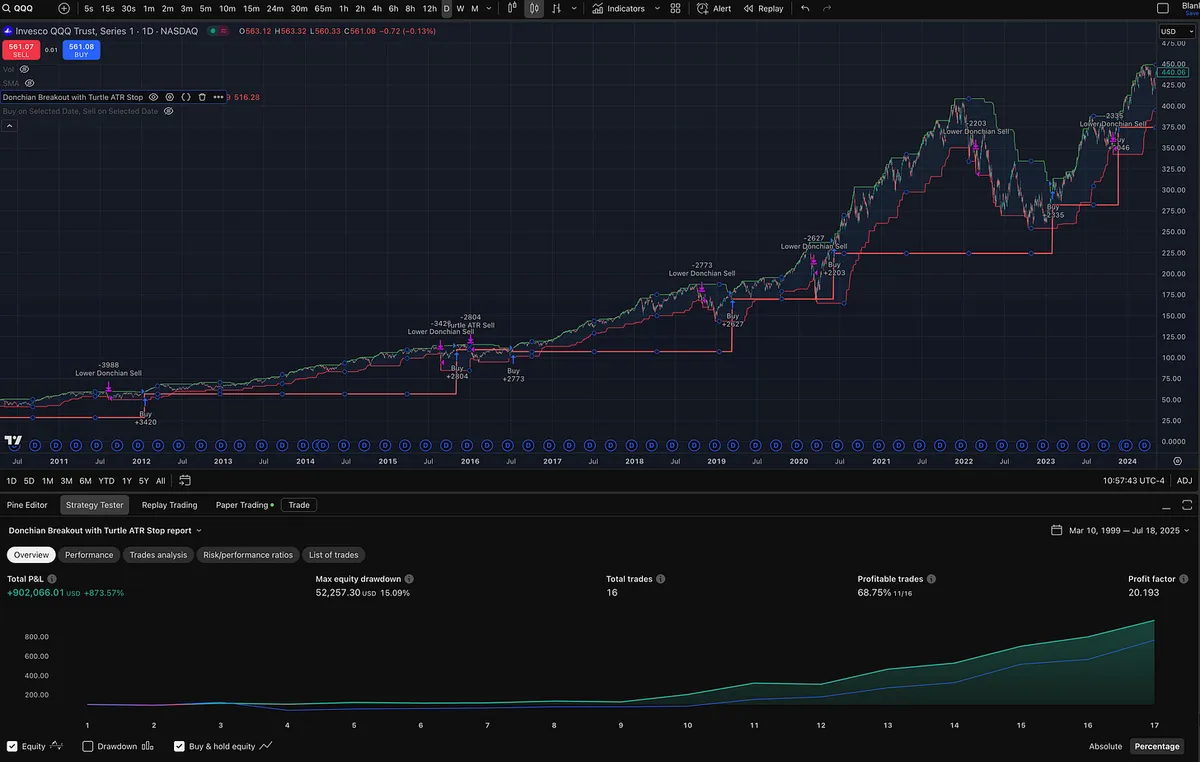
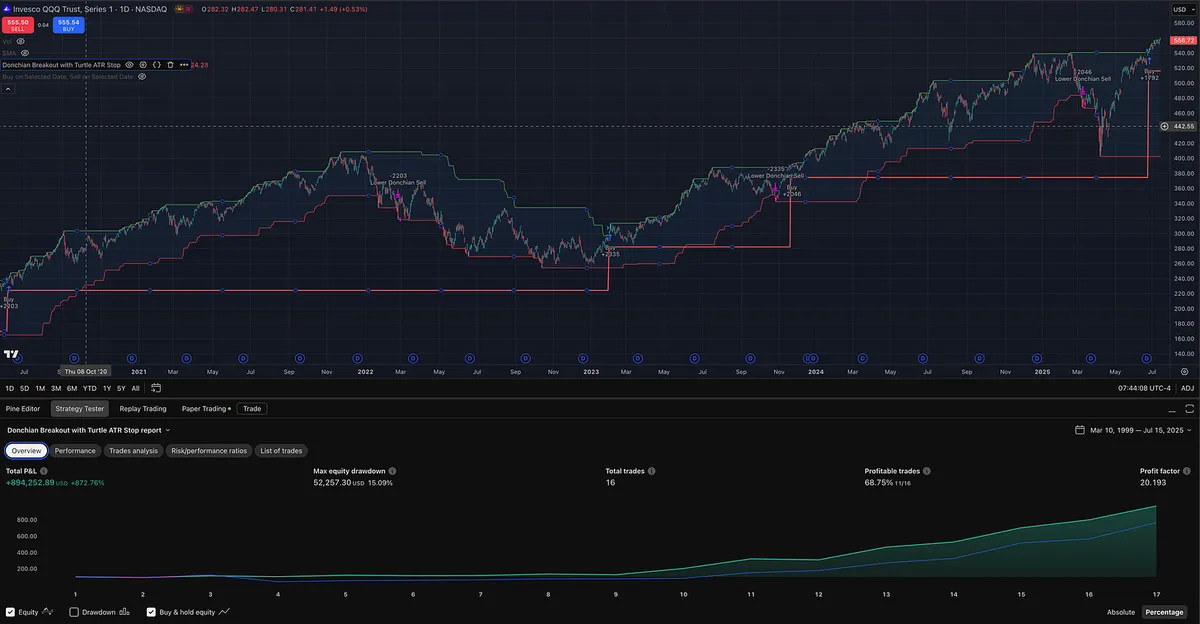
Most X macro chatter is mental masturbation—lots of talk, little action, few excellent results. Most would be better off doing something simple like the Donchian Breakout + ATR Stop Strategy with QQQ: +870% since 1999, -15% drawdown vs. buy-and-hold’s -55%. Simple and works.

View on Substack ↗

📈 Would You Be Happy With These Results? Imagine following a simple rules-based strategy to trade the Nasdaq-100...

✅ +870% total return ✅ 15% max drawdown ✅ Profit factor: 20.19 ✅ 68.75% win rate ✅ Only 16 trades in 26 years

This is the performance of a Donchian Breakout + Turtle ATR Stop strategy trading $QQQ from 1999 to 2025. It also performs well going all the way back to 1985.

No prediction. No guessing. Just trend-following rules that ride big winners and cut losses quickly.

💡Would you trade a system like this? Or stick to buy & hold?

👇 Let me know in the comments.

View on Substack ↗

You don’t need grand slams to build serious wealth.

Most successful investors make their money hitting consistent 2x to 3x base hits—cutting losses quickly, letting winners run, and compounding gains over time. Out of 100 trades or investments, you might catch a 10x or 20x—but it’s almost never the one you expected.

The rookie mistake? Swinging for the fences on every pitch. The pro mindset? Stack small wins, stay in the game, and let time and discipline do the heavy lifting.

Compound a series of 2–3x winners with proper risk management, and you’ll often outperform those endlessly chasing unicorns.

If you’re doing well swinging for grand slams, that’s great—keep going. Just wanted to share another method that might align better with some people's personalities and risk tolerance.

View on Substack ↗

Charlie Munger was absolutely right:

"The big money is not in the buying and selling, but in the waiting."

But here's the nuance most miss:

First, many investors haven’t clearly defined whether they’re short-term traders, swing traders, or long-term investors. Without that clarity, they end up with mismatched expectations and behavior.

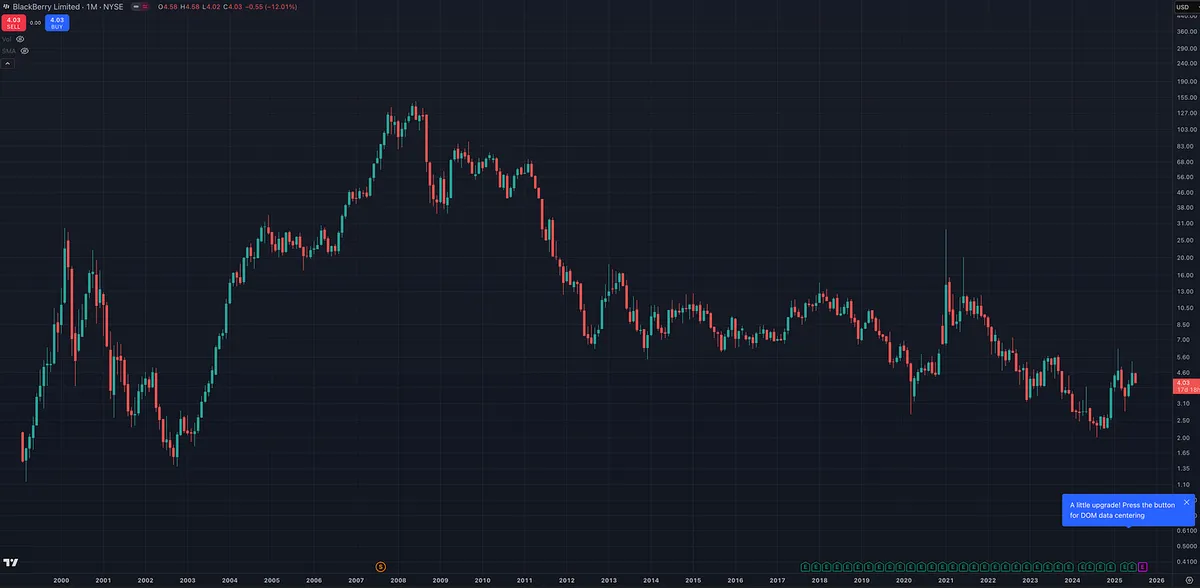
Second, patience alone isn’t the edge—strategic patience is. I know plenty of investors who’ve held losing positions for years, waiting for a turnaround that never comes. That’s not discipline—that’s hope without a plan.

Yes, patience is vital whether you're scalping in seconds or holding world-class businesses for decades. But the edge comes when patience is combined with a complete strategy: knowing what to buy, when to buy, and more importantly—when to sell.

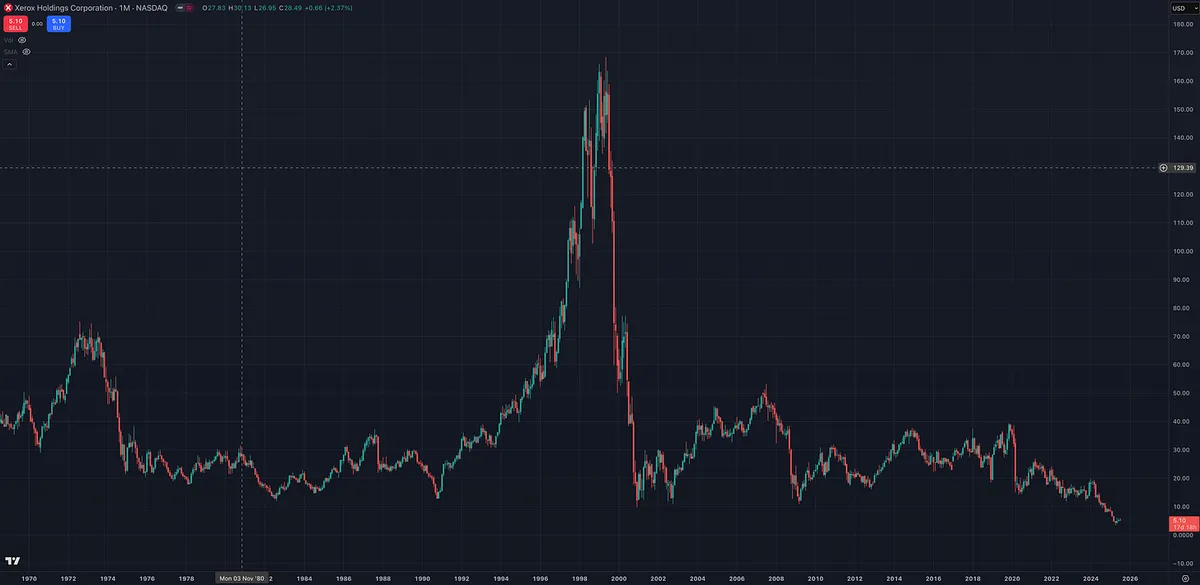
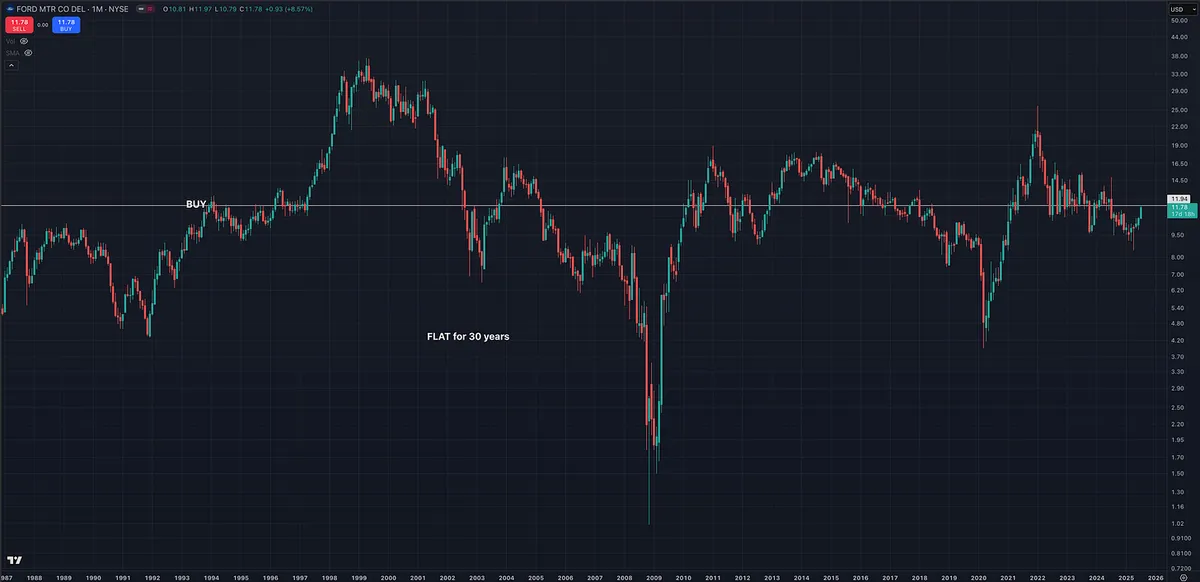
Good companies come and go. Just because a business helped you build wealth doesn’t mean it will continue to do so. You might buy a stock at $20, watch it run 1,000% over two decades, and end up back at breakeven simply because you had no sell rules.

Patience isn’t passive—it’s active, informed waiting with a plan. That’s the real edge.