Momentum Trading Strategy

Notes

Short lessons on momentum trading, every day.

Every note from Substack, in one place: risk, setups, leading stocks, market conditions and the mindset behind them. Search them, browse by topic, or filter by stock.

Showing 741–760 of 1226 notes

View on Substack ↗

The Big Picture Market Pulse is out.

Before diving into individual stocks, step back and understand the environment you’re operating in.

This report breaks down the market from top to bottom, covering major indexes, sector and industry group strength, market internals, and key macro conditions.

If you want to be prepared for the week ahead, start with the big picture.

https://tradingmomentum.substack.com/p/big-picture-market-pulse-march-29

On SubstackBig Picture Market Pulse | March 29, 2026
View on Substack ↗

Why New Highs During Corrections Reveal the Next Leaders

Most traders avoid looking at stocks making new highs during a correction.

That is a mistake.

Because while the market is weak, a small group of stocks starts to act differently.

They hold up. They resist selling. They begin to outperform.

That is where new leaders come from.

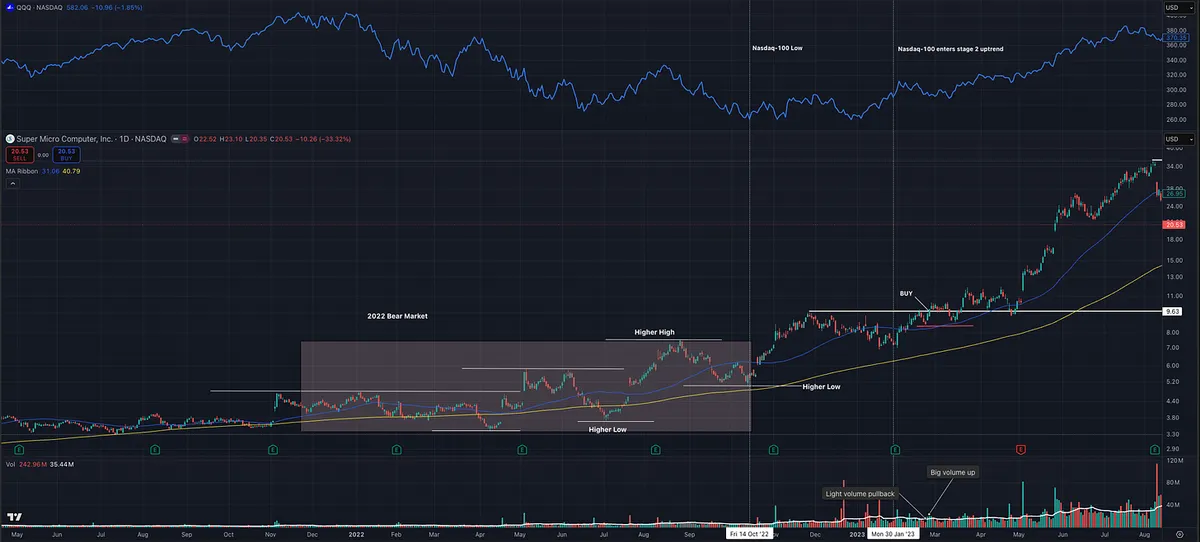
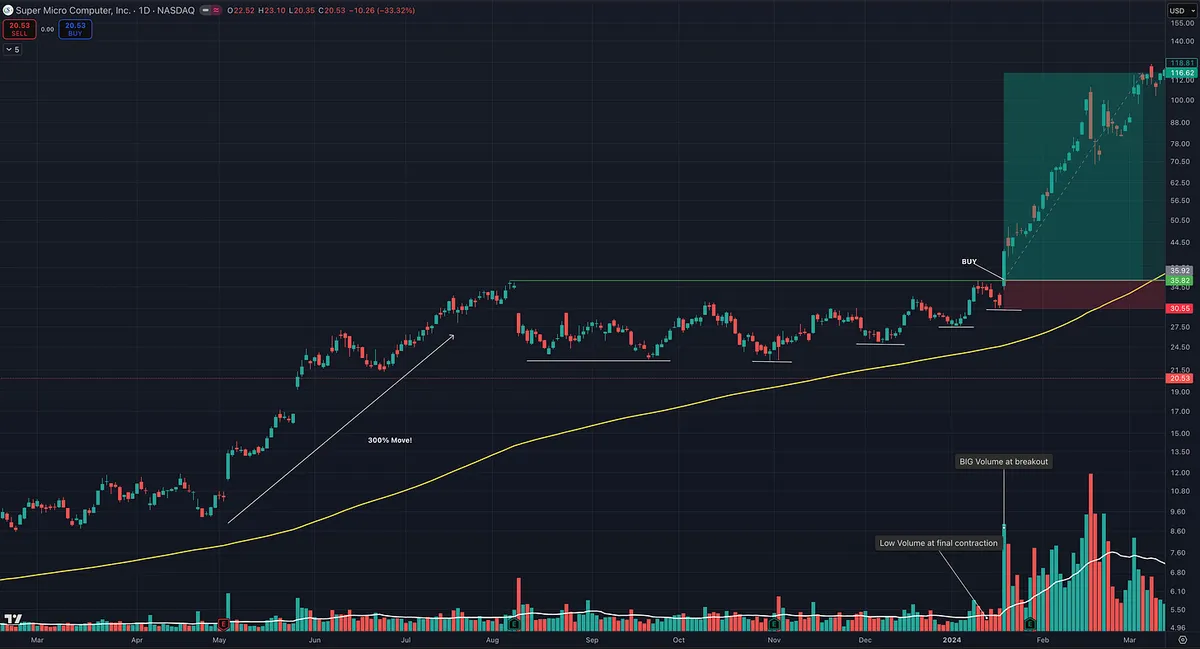
Take SMCI as an example.

In 2022, while the Nasdaq-100 was still declining, SMCI was already making higher highs and higher lows.

That is not normal.

In most corrections, if the index drops 10%, leading growth stocks can drop 20 to 30%.

In 2022, the Nasdaq fell 37% and the S&P 500 dropped 27%.

SMCI only declined about 28% and was already pushing toward new highs by May.

That is your first signal.

Strength during weakness.

That is how you spot potential leaders early.

Then comes the next phase.

The market bottoms and begins to recover.

Indexes reclaim key levels and start making higher highs and higher lows.

Now you have alignment.

The market and the stock are moving in the same direction.

Then you go one level deeper.

The sector.

A new theme emerges. In this case, AI.

Groups like computer hardware begin to lead.

And SMCI is right at the center of that move.

Now you have group strength.

Finally, you look at the stock itself.

Tight price action. Higher highs and higher lows. Above key moving averages.

Volume dries up on pullbacks and expands on advances.

That is institutional accumulation.

Add in strong earnings and sales growth, and everything lines up.

This is how big winners are built.

SMCI moved over 250% in about six months.

Not because it was random.

Because the clues were there early.

Strength first. Then alignment.

That is how you find the next leader before everyone else.

View on Substack ↗

Why Corrections Create the Biggest Winners

Most people fear corrections.

The best traders understand they are necessary.

Mark Minervini once said, “96% of big winners emerge from market corrections.”

That changes how you should see them.

A big correction is not just a pullback. It is a reset.

Weak stocks get cleared out. Institutions reposition. New leadership begins to form.

During this time, the goal is not to force trades.

It is to protect capital.

That is why top traders go to cash.

Not because they are scared, because they understand the cycle.

They are avoiding unnecessary losses while the next opportunities are being built.

Then comes the shift.

Leading stocks tend to lead the market, often showing strength before the market itself has fully turned.

That is where the real opportunity is.

The biggest winners do not come from extended markets.

They come out of corrections.

So instead of fearing them, start respecting them.

Because that is where the next leaders are born.

View on Substack ↗

Why the Best Traders Obsess Over New Highs

Most people look for cheap stocks, thinking value comes from buying low. The best traders do the opposite. They look for strength, and one of the simplest ways to spot it is the 52 week high list, not to chase, but to see where real demand is showing up.

Stocks that hit new highs tend to keep making new highs. That is not random, it signals institutional accumulation. Traders like O’Neil, Minervini, and David Ryan use this to build watchlists of potential leaders, not to blindly buy, but to prepare.

From there, it is about patience. They wait for proper setups, pullbacks, and low-risk entries. Strength is the starting point, not the decision.

The reason this works is structural. At new highs, there is little overhead supply. Most investors are in profit, so fewer sellers create less resistance and allow stronger moves. Below highs, rallies run into trapped sellers, which slows momentum.

So instead of asking what is cheap, ask what is leading. Track the strongest names and wait for your opportunity. The biggest winners do not come from weakness, they come from strength.

Combine a stock hitting new 52 week highs with strong earnings and sales growth, high relative strength, and leadership within a strong industry group, and you have a potential big winner.

View on Substack ↗

Why Stage 2 Is the Only Time You Should Be Trading

Look at the market through one simple lens:

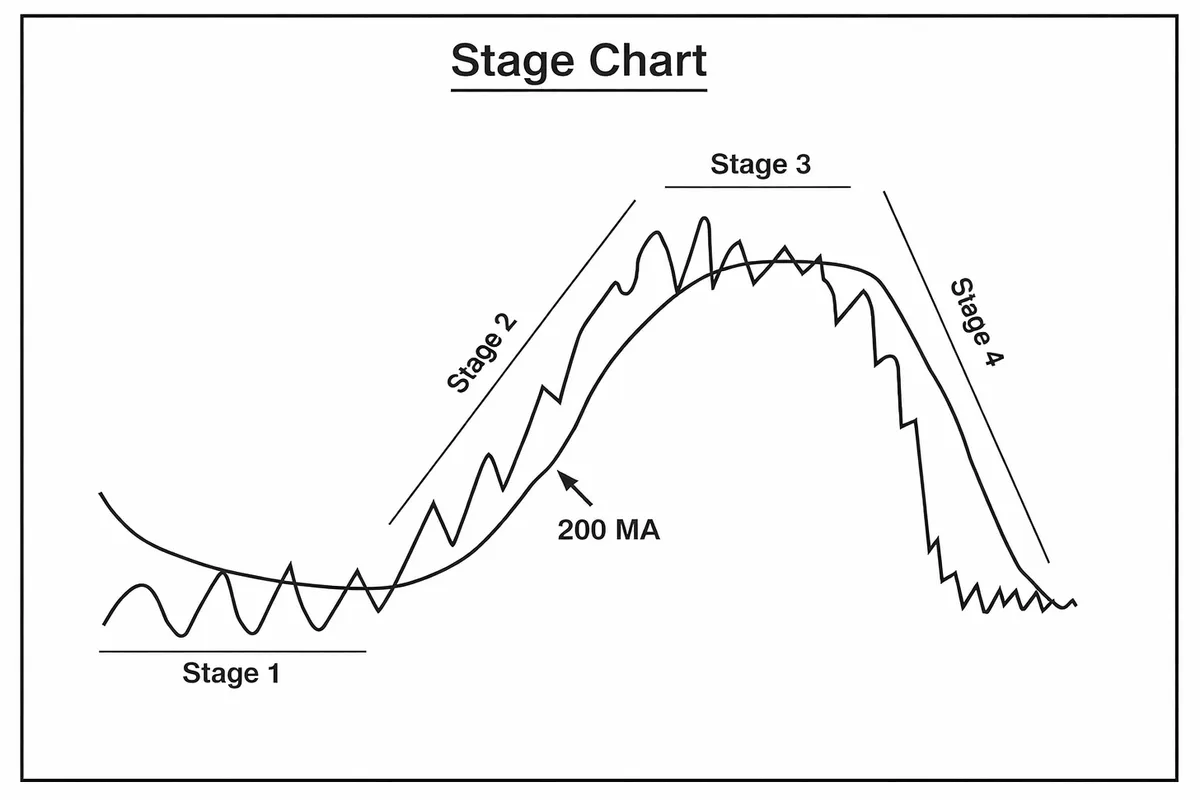
There are only four stages.

Stage 1.

Stage 2.

Stage 3.

Stage 4.

Most traders treat them all the same.

That is the mistake.

Stage 1 is where stocks go nowhere. Choppy. Sideways. No real progress.

You are not building wealth here. You are wasting time.

Stage 2 is where trends begin. Higher highs. Higher lows. Institutions stepping in.

This is where value is created. This is where money is made.

Stage 3 looks exciting. Big moves. Volatility. Headlines.

But underneath, distribution is happening.

Smart money is selling into strength.

You are not gaining an edge here. You are giving it back.

Stage 4 is where stocks break down. Lower highs. Lower lows. Weak closes.

This is where portfolios get destroyed. This is where value disappears.

So ask yourself:

Why trade in all four stages when only one actually pays you?

The best traders do less, not more.

They wait. They focus. They strike in Stage 2.

Because that is the only place you increase value without wasting time.

Everything else is noise.

Or worse.

A slow leak of your account.

View on Substack ↗

Module 4 of the Momentum Trading Strategy course is now live.

This is where everything starts to come together. We break down how to identify true market leaders using both fundamental and technical criteria, walk through real screening processes, and cover the exact chart setups used by top traders over the past 100 years.

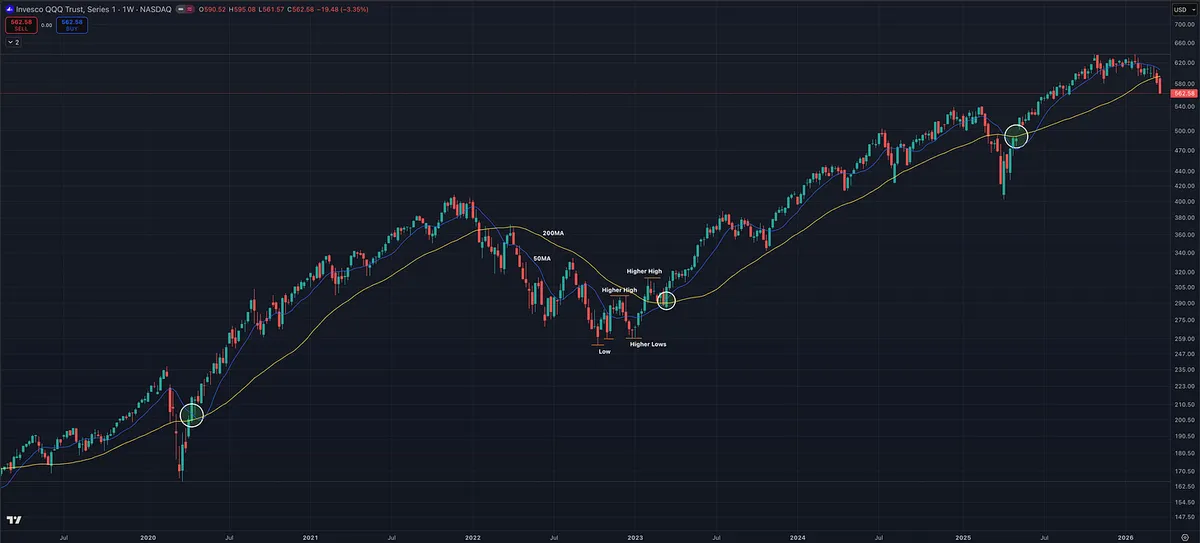
With the market currently trading below the 200-day moving average, conditions are not ideal. This is exactly when you should be learning, refining your process, and preparing.

Better environments will come. The traders who are ready will be the ones who capitalize.

Module 4 is available now for all paid subscribers.

Get prepared.

https://tradingmomentum.substack.com/p/momentum-trading-strategy-the-100-de7

On SubstackMomentum Trading Strategy: The 100-Year Playbook Behind the Biggest Winning Stocks — Module 4
View on Substack ↗

Why Keeping Losses Small Is Everything

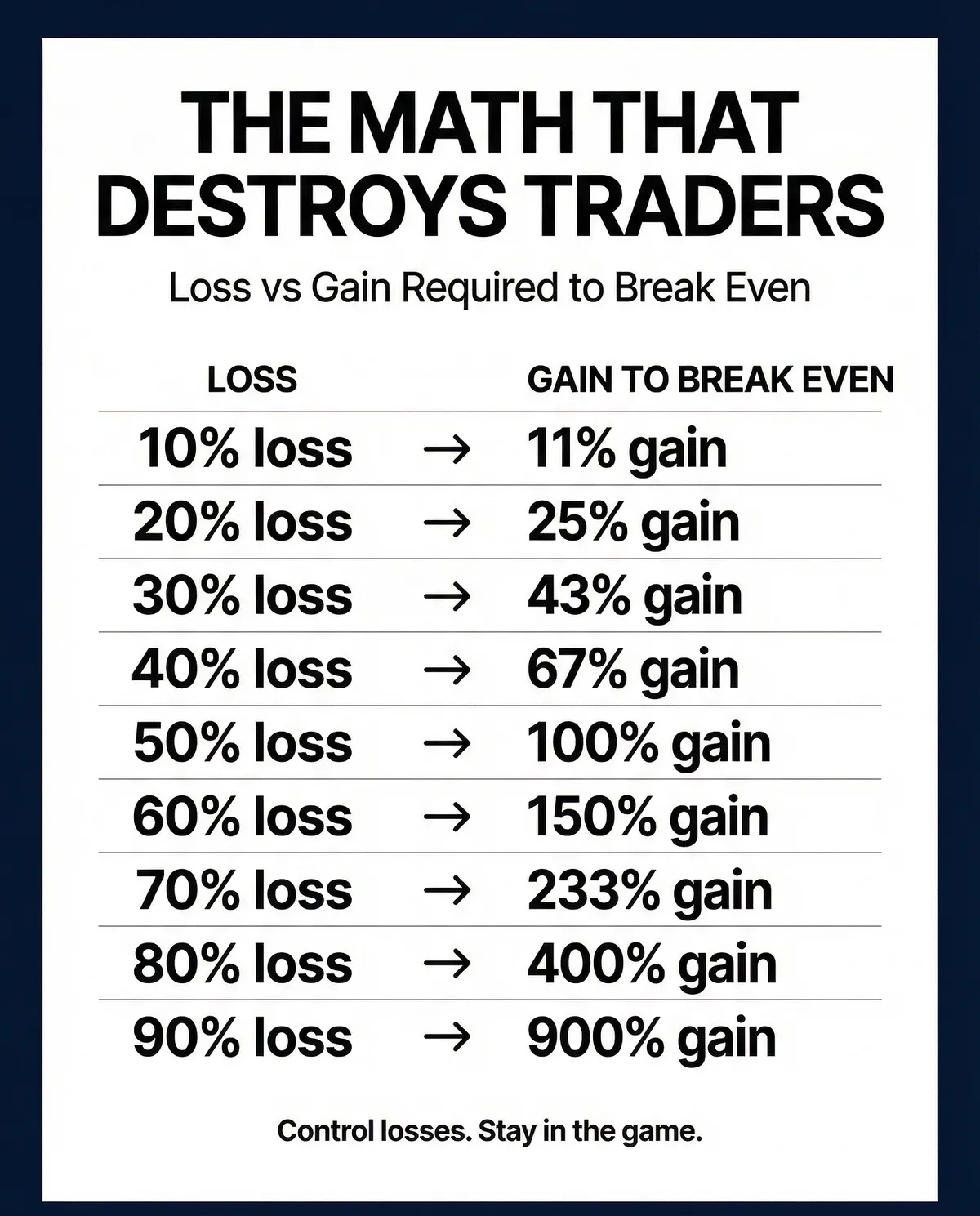
Because the math of recovery is brutal

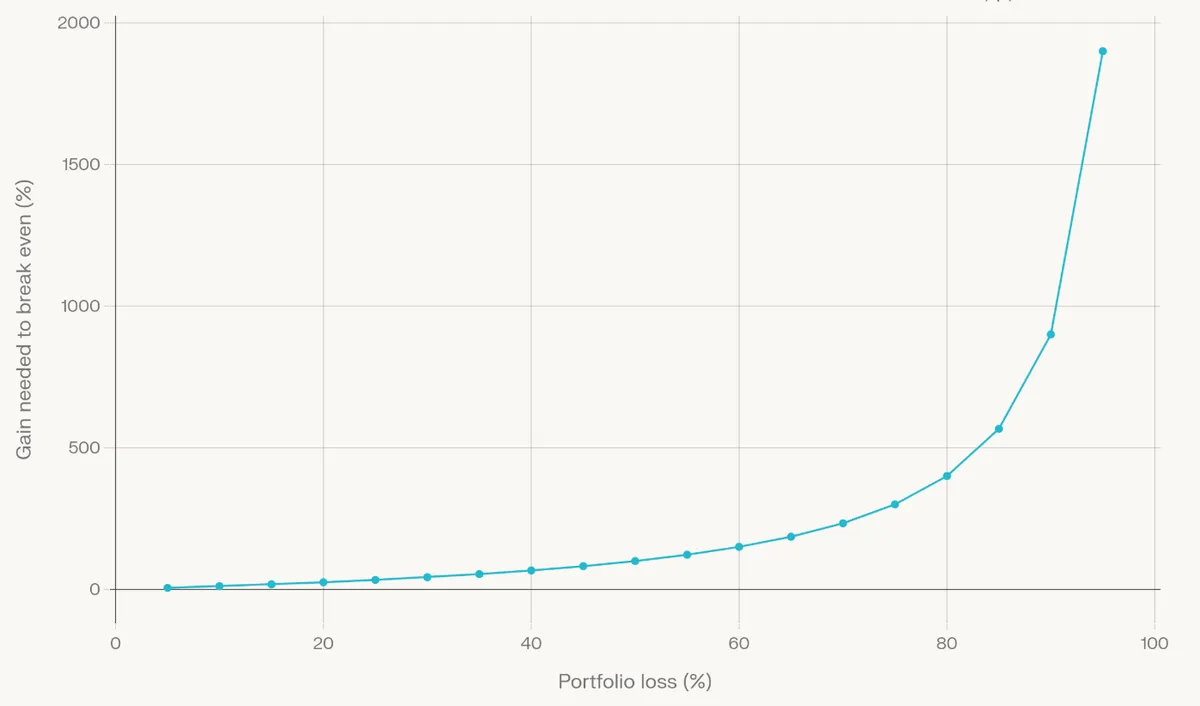
A 50% loss isn’t just painful.

It’s mathematical damage.

William O’Neil said:

"In the 2007–2009 bear market, the S&P 500 fell 58%, meaning that a 140% rebound will be needed for the index to fully recover. And how easy is it for you to make 100%? Maybe it’s time for you to learn what you’re doing, adopt new rules and methods, and stop doing things that create 50% losses."

Most people read that and move on.

But this is where everything changes.

The market does not punish you with losses. It traps you with recovery.

Because the deeper the loss, the harder the climb.

Down 50%? You need 100% just to get back. Down more? Most never make it.

And yet traders do the same things over and over:

They hold and hope. They average down. They ignore sell rules.

They turn manageable losses into account damage.

This is not a strategy problem.

It is a discipline problem. Or a lack of understanding.

The best traders understand one thing early:

They cut losses fast. They protect capital. They stay in the game.

Because once you are down big, the math is no longer on your side.

Maybe it is time to stop doing the things that create 50% losses.

And start doing the things that prevent them.

View on Substack ↗

Stop Reading About the Market. Start Watching It.

A Harvard professor once gave his students a simple assignment: study fish.

They did what most people do. They read books. Took notes. Wrote impressive reports.

He threw them all in the trash.

Then he gave them the real assignment: Sit in front of a fishbowl and watch for hours.

Only then did they begin to understand.

That is the stock market.

Most traders are still in the library.

They read news. Scroll X. Watch YouTube. Chase opinions.

If you want to get better, you need to shift from information to observation.

Watch price. Watch volume. Watch how leading stocks behave. Watch how the indexes act at key levels.

Because the truth is simple:

The market tells you everything. But only if you are actually looking.

The best traders are not guessing. They are observing patterns in real time.

They see when strength is real. They recognize when weakness begins. They feel when conditions shift.

That is how you survive tops. That is how you reenter when everyone is still bearish. That is how you build confidence that is not based on hope.

Do this every day for a few years and you will start to see what most never do. Go through a bull market, a sideways grind, and a bear cycle and your understanding will deepen.

Stay with it for 5 to 10 years.

That is when things really start to click.

View on Substack ↗

10 Reasons Traders Fail (And How to Stop Being One of Them)

If you’ve been struggling, go through this list honestly. Somewhere in here is the leak in your system.

1. Not Cutting Losses This is the big one. Small losses turn into account killers when you refuse to exit. Every great trader protects capital first.

“The elements of good trading are: (1) cutting losses, (2) cutting losses, and (3) cutting losses. If you can follow these three rules, you may have a chance.” — Ed Seykota

2. Averaging Down

“Losers average losers.” — Paul Tudor Jones

Adding to a losing position isn’t conviction. It’s denial.

3. Poor Selection Criteria If you’re trading weak stocks with no strength, don’t expect strong results. Stock selection is part of the edge.

4. Overtrading (Especially in Bad Markets) Not every environment is meant to be traded. Sometimes the best trade is no trade. Overtrading leads to subpar setups and drifting away from your process.

"It's easy to design a Holy Grail system for any one market type... It's insane to expect that trading system to work in all market types." - Dr. Van K. Tharp

5. Not Understanding Risk–Reward You can be right less than 50% of the time and still win, if your winners are bigger than your losers. Most traders have this backwards.

6. No Real Risk Management or Position Sizing Knowing where to stop out means nothing if your size is too big. Risk per trade must be defined before you enter.

7. Constantly Changing Strategies New indicators. New systems. New approaches. System hopping.

8. Lack of Discipline and Patience Waiting is part of the job. Most traders lose because they act when they should be sitting still and they are sitting still when they should be acting. Not following your own rules is a discipline problem. You don’t need better rules, you need to actually follow the ones you already have.

9. No Plan for Managing or Selling Trades Entries get all the attention. But exits determine your P&L.

10. No Understanding of Exposure Pressing when things aren’t working. Playing small when they are. You have to scale with your performance and the market.

“Decrease your trading volume when you are trading poorly; increase your volume when you are trading well.” — Paul Tudor Jones

And One More Thing…

You can follow every rule above perfectly, but if your system has no positive expectancy, none of it matters.

If your strategy doesn’t mathematically work over time, discipline won’t save you.

But here’s the part most people don’t want to hear…

Even if I gave you a proven strategy with a real edge, where all you had to do was click buy and sell, most people would still fail.

Not because the system doesn’t work. Because they won’t follow it.

This is exactly what Richard Dennis proved with the Turtle Traders.

He took ordinary people from completely different backgrounds and taught them a simple, rules-based trend following system. Many of them went on to produce exceptional returns and outperformed seasoned professionals.

At the same time, others failed.

Same rules. Same system. Different outcomes.

The difference was discipline and psychology.

“I always say that you could publish trading rules in the newspaper and no one would follow them. The key is consistency and discipline.” - Richard Dennis

That’s the truth most traders don’t want to hear.

It’s not your indicators. It’s not your system. It’s not that you need more information.

It’s that you’re not doing what you already know you should be doing.

And until you fix that, it will continue to show up in your trading.

“Win or lose, everyone gets what they want out of the market. Some people seem to like to lose, so they win by losing money.”

— Ed Seykota

View on Substack ↗

Why Are You Still Trading This Market?

If you’ve been getting beaten up in this market…

Let me ask you something:

Why are you still trading?

Seriously. Not trying to be a dick, but almost every market wizard or legendary trader who focuses on growth, momentum, and trend has said the same thing:

Market conditions matter.

Maybe it’s time to step back and look at the big picture.

This is something I write about every weekend. And for weeks now, the message has been clear:

  • Reduce exposure

  • Reduce activity

  • Sit in cash

Not because of opinion… But because of what the market is actually doing.

The warning signs have been there.

Don’t take it from me.

Open a book and you’ll see it straight from William O’Neil:

One of the biggest warning signs of a market breakdown is distribution days.

Now look at the charts:

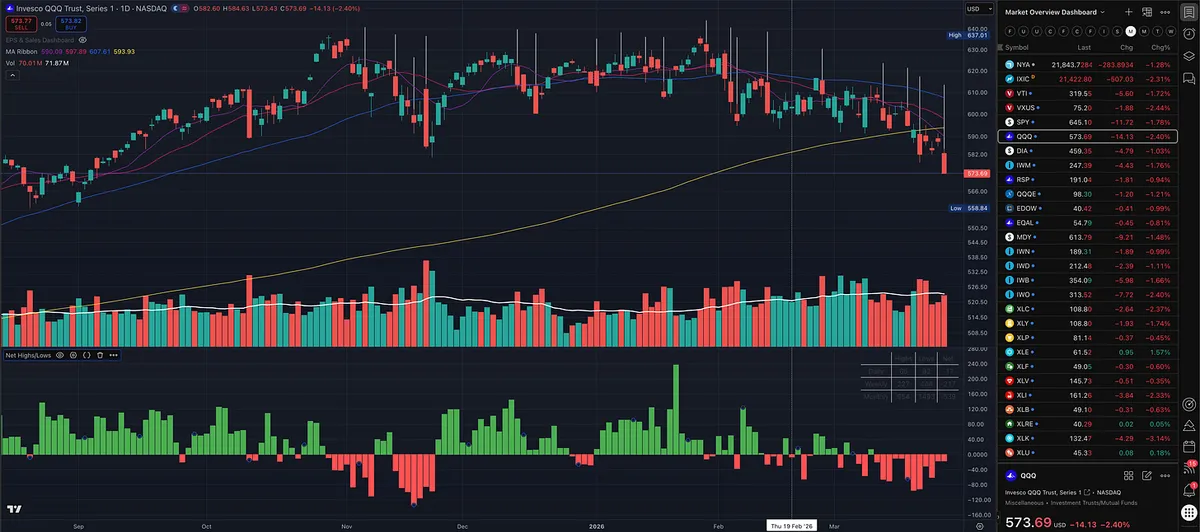
  • The Nasdaq-100 has stacked multiple distribution days, and many throughout this consolidation

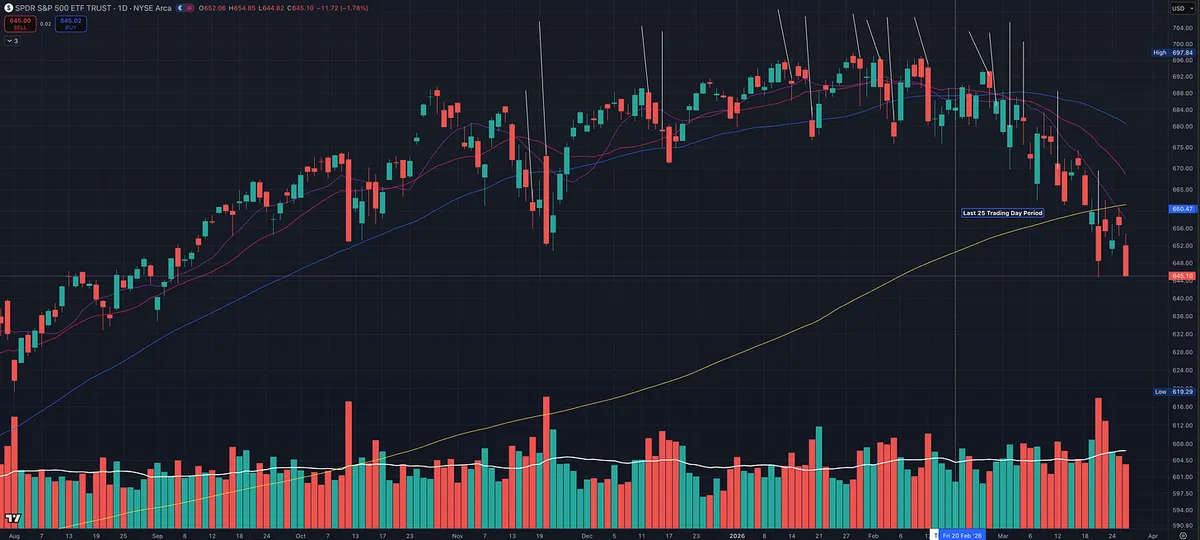
  • The S&P 500 has more over the last ~25 trading days

  • Price has broken prior lows

  • We’ve seen multiple closes below the 200-day moving average

  • The 50-day moving average is declining

  • The new highs vs new lows list is getting overwhelmed by new lows

  • And we’re seeing heavy volume on down days

Put it all together…

This is not a healthy market.

So why self-sabotage by fighting against the current?

Save your capital and mental capital for better conditions.

The market is not hiding anything right now.

It’s telling you exactly what it is.

The question is:

Are you listening?

View on Substack ↗

The One Rule Most Traders Ignore

If you study the biggest winning stocks over the last 100 years, a few things show up again and again.

They had big earnings. They had strong sales growth. They had something new, a product, a theme, a catalyst, and they were often in the hottest sectors driving the bull market.

These characteristics matter. We screen for them. We look for them.

But even with all of that…

There’s one rule you need to fully understand. It’s one of the most important rules in trading.

Never trust the story.

Not the CEO. Not analysts. Not the media. None of it.

And never trust the fundamentals on their own.

Earnings, revenue, projections, none of that matters unless it’s confirmed.

The only thing that matters… is price.

This is where most traders get it wrong. This is where ego creeps in.

You do the research. You find the strong earnings. The big theme. The “next great company.”

You convince yourself it has to work, but if price is going down, the market is telling you something.

There are participants out there with more information, more capital, or simply a different view. Or the market just doesn’t care.

Even if it is a great company, it doesn’t matter until price confirms it.

Price is the truth.

If the fundamentals are real, the chart will show it. If the story is real, price will move.

If it’s not confirmed by price…

It’s not a trade.

Here’s a real example.

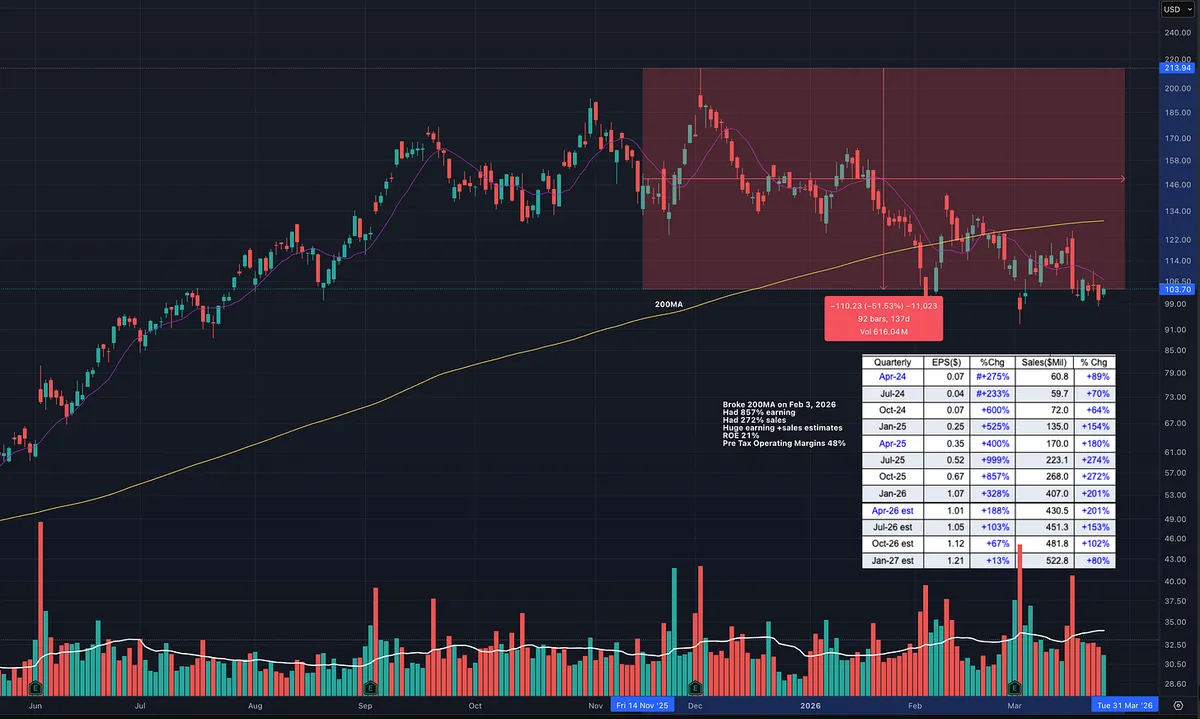
$CRDO had triple-digit earnings and sales growth. Strong estimates. Everything you would want fundamentally.

And yet the stock was below its 200-day moving average and down roughly 50% from its highs.

Price didn’t confirm it.

And that’s the point.

View on Substack ↗

The Hard Truth About Becoming a Profitable Trader

For those pursuing this path or struggling right now… I had a great conversation today and wanted to share part of my response in case it helps someone else.

I truly believe you can do this. If others have done it, there’s no reason you can’t. The path just looks different for everyone.

Over the years working with traders, I’ve seen the roadblocks vary a lot. Some people don’t have a system with a real edge. Others struggle with self-sabotage, letting losses run or hesitating to execute out of fear. Some actually have a solid system but don’t understand position sizing, so they fail.

But the common thread among those who eventually make it is this: they don’t just work hard, they get brutally honest with themselves. They’re willing to identify what they’re doing wrong and fix it.

If you’re not profitable yet, focus on finding the specific thing or things that are holding you back. Then attack that weakness directly and keep refining.

Yes, it can take time. For some it’s a couple of years, for others it’s longer. Five to ten years for many of the best. The difference isn’t just effort, it’s the willingness to improve and take responsibility. A lot of people won’t put in the level of work required, and many never look inward. They just blame the market.

The ones who succeed do neither.

And one last thing. None of this matters if you don’t learn how to be happy now. Like Tom Basso says, enjoy the ride. Most people think happiness comes later, after the success, but if you can’t be content with what you already have, more won’t fix that. You’ll get there and still feel empty.

There are plenty of traders who have mastered the market but built an empty life along the way, constantly trying to fill that gap with attention or validation. Don’t fall into that trap. Build both at the same time.

At the end of the day, trading isn’t just a financial journey, it’s a self-help journey that, for me, made me a better person.

And rule number one in life is simple… be a good dude or dudette.

View on Substack ↗

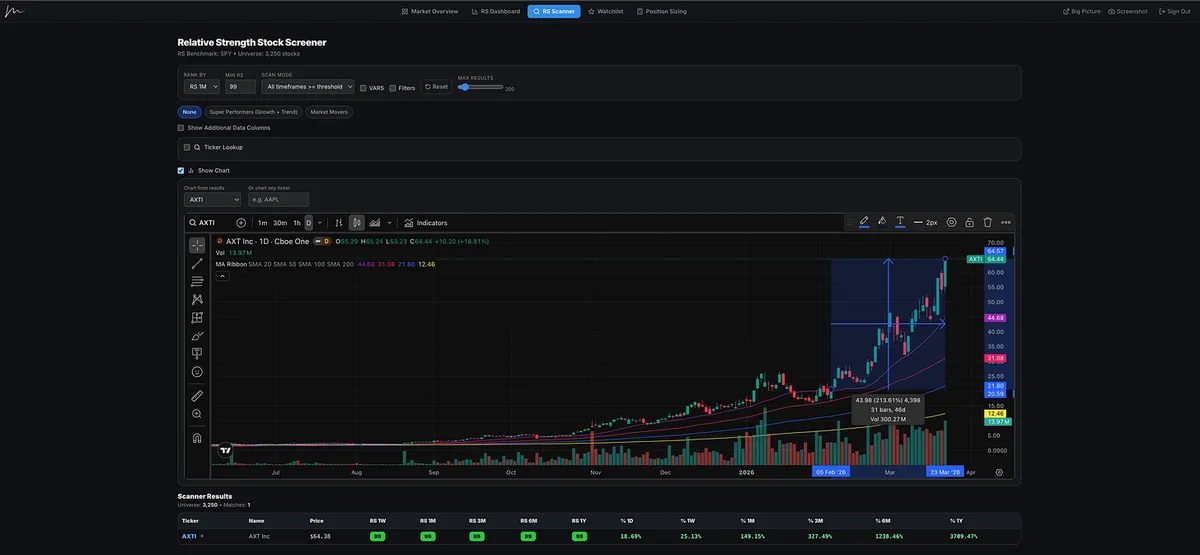
If I Could Only Run 1 Scan the Rest of My Life It Would Be Relative Strength

$AXTI has been absolutely crushing it. It’s been showing up for months and I’ve been sharing it consistently. Up 213% since February 5th.

I didn’t find it. The RS scan did. Nothing fancy.

Many of the biggest names I’ve found and put on your radar all come from this one simple scan.

There’s a reason for that.

It’s why O’Neil made it the L in CANSLIM. It’s why Kristjan Kullamägi focuses on the top 1 to 2 percent across multiple timeframes. It’s why Minervini builds it into his trend template.

The best stocks don’t hide. They show up over and over again.

Relative strength just helps you see it.

👉 Paid subscribers can run this exact scan here: https://tradingmomentum.substack.com/p/the-relative-strength-screener-just

On SubstackThe Relative Strength Screener Just Leveled Up
View on Substack ↗

When Finding Big Winning Stocks, Don’t Forget One Thing: NEW

When people look for winning stocks, they focus on many different fundamental metrics, chart patterns, etc.

But they forget one of the most important drivers of massive moves.

Something new.

New companies. New products or services. New management. New price highs. New industry conditions. New revolutionary technologies. New Catalyst.

This is what creates real demand.

This is what attracts institutions.

This is what fuels the biggest winners.

William O’Neil put it best:

“In our study of the greatest stock market winners, which now spans the period from 1880 through 2008, we discovered that more than 95% of successful stocks with stunning growth in American industry fell into at least one of these categories.”

Think about that.

Over 95 percent.

The market rewards change.

Not stability. Not average. Not “good companies.”

It rewards companies doing something new that the market has not fully priced in yet.

That is where the asymmetry is.

So when you are building your watchlist, ask yourself:

What is new here?

If you cannot answer that question, you might be looking at the wrong stock.

View on Substack ↗

Bear Markets and Big Corrections Create the Next Winners

Most people see a bear market and think loss.

The best investors see preparation.

Every major winner starts the same way. It comes out of a correction. It forms a base. It tightens up while the crowd loses interest.

This is where opportunity is created.

Big corrections reset everything. Weak companies break down. Weak holders get shaken out. What remains are the strongest businesses quietly being accumulated.

That is where you want to focus.

Not on what already ran. Not on what is collapsing.

On what is building.

As volatility contracts and price action tightens, risk decreases. You are no longer chasing extended moves. You are positioning early, when the reward is asymmetric.

Low risk. High potential.

This is the phase most people ignore because it feels slow and uncertain.

But this is where the real money is made.

Bear markets and big corrections are not the enemy.

They are the birthplace of the next leaders.

Do not confuse this with bottom fishing.

We are still waiting for confirmation. A true character change. A confirmed Stage 2 uptrend before capital is deployed aggressively.

Preparation now. Execution later.

View on Substack ↗

Why Breakouts Keep Failing Right Now

Most traders think they’re doing something wrong.

They’re not.

They’re just trading breakouts in a bad market.

William O’Neil made this clear… In bear markets, corrections or sideways markets, most breakout patterns fail.

Not because the pattern is bad, but because the environment is wrong

No institutional buying

No follow through

Just quick failure and downside

So what’s the move?

Not better entries

Not tighter stops

Less trading

Sometimes the highest level play is sitting in cash

Waiting for a real uptrend to return

Because when the market turns… That’s when breakouts actually work

Until then?

Patience is the edge

View on Substack ↗

The Market Has Changed… Are You Paying Attention?

Taken together, the message is clear.

The market has transitioned from rotation to broad based deterioration.

If you look at when each major index peaked, a clear sequence emerges. Leadership has rolled over one area at a time, and now the final pockets of strength are beginning to break.

This is not random.

This is what late stage rotation looks like before it fully unwinds.

What was holding the market together is no longer holding.

Instead of capital rotating within equities, we are now seeing broad weakness across nearly all segments, with energy as one of the few exceptions.

That shift matters.

Because once rotation breaks down, there are fewer places to hide.

I’ve been talking about this in the Big Picture Market Pulse and reducing exposure as the weight of the evidence continued to deteriorate.

The full breakdown, what this means, and how to position from here is covered in this weekend’s update.

Make sure you’re paying attention and understand the big picture before the market opens.

https://tradingmomentum.substack.com/p/big-picture-market-pulse-march-22

On SubstackBig Picture Market Pulse | March 22, 2026
View on Substack ↗

Why You Can’t Find VCPs Right Now (And Why That’s Not a Problem)

Received a great question today about VCPs that I think a lot of traders are struggling with right now.

They mentioned how hard it has been to actually find clean VCP setups, even after studying charts and screening for them.

This is a great question, and honestly what you’re experiencing is completely normal.

The first thing to understand is that most VCPs are not going to look like the textbook examples. The clean, perfectly staged contractions that many show are the exception, not the rule.

Minervini is not teaching you to find a perfect pattern. He is teaching you to recognize behavior.

What you are really looking for is:

  • volatility contraction over time

  • tighter price action

  • controlled pullbacks instead of sharp selloffs

  • volume drying up into the pivot

  • price tightening up the right side of the chart

Those things can show up in many different ways, and often they are subtle.

The second part of this is the environment.

Right now, it is harder to find clean setups. That is not a coincidence.

The best looking VCPs tend to show up earlier in a bull cycle when institutions are aggressively building positions and leadership is expanding. As the market matures, stocks become more extended, price action gets looser, and breakouts become less reliable.

So when you are scanning and thinking “these don’t look like the examples,” that is actually information.

It is telling you that either:

  • the setup is not truly there

  • or the environment is not ideal for it

A good way to think about it is this:

You are not trying to find a perfect VCP. You are trying to identify when supply is being absorbed before a potential expansion move.

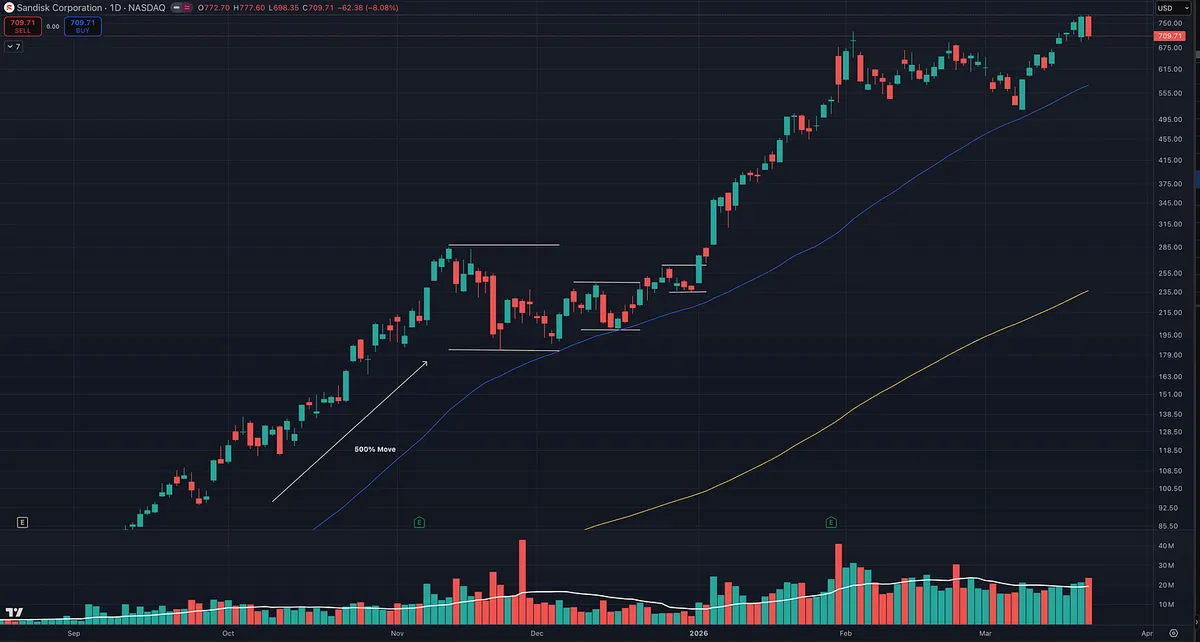
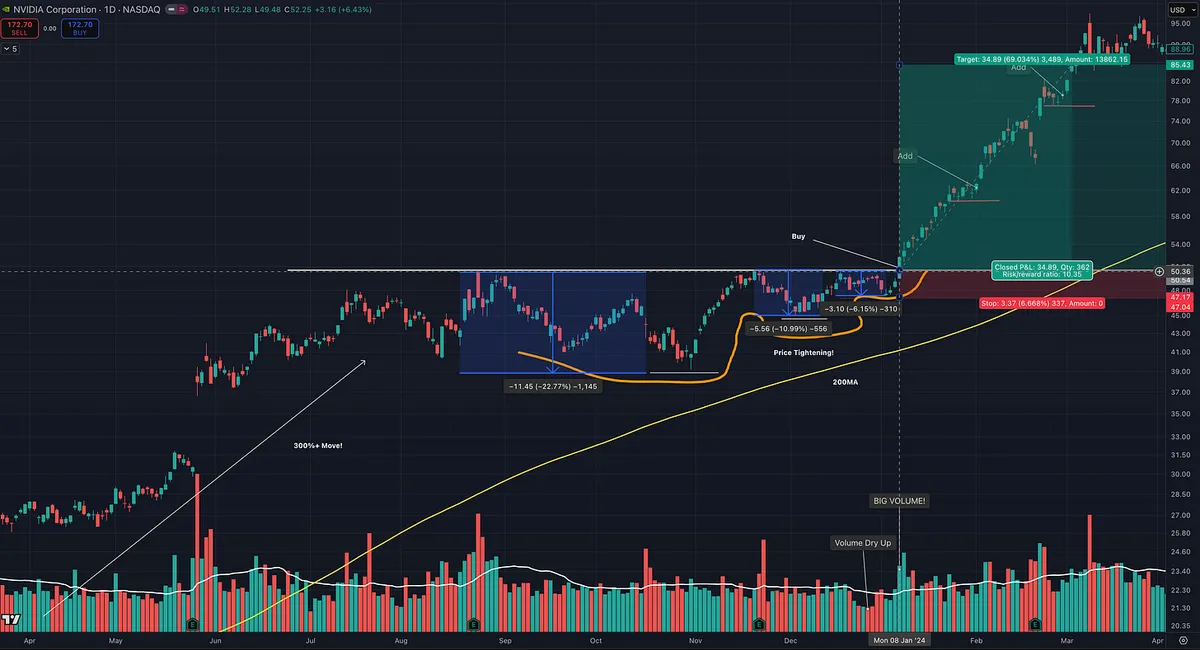
Sometimes that will look very clean like NVDA earlier in 2024 or slightly less perfect like SMCI. Other times it will look much messier, like SNDK in 2025, and require more experience to recognize.

If you are struggling to find them right now, that might not be a skill issue. It is very likely a reflection of the current market conditions.

Over time, you will get better at spotting these. It comes from screen time and reviewing charts over and over. What looks unclear now will start to stand out much more with experience.

Also, you do not need to master every setup to be successful. Some traders naturally see certain patterns better than others.

For example, you might find that:

  • cup with handle setups stand out more to you

  • or flat base breakouts are easier to recognize

That is completely fine.

The goal is not to trade every setup. The goal is to find the ones you can consistently recognize and execute well, and focus on those.

View on Substack ↗

Nobody Believed in Me But One Person Did

When I first started trading, my family didn’t understand it. They weren’t supportive.

And when I walked away from a six figure career to trade full time while launching a skincare brand with my wife, they thought I was even crazier.

My dad. My uncle. My friends. None of them saw the vision.

But I didn’t care.

Because I had support from the one person who mattered most. My wife.

Next week is our anniversary. 19 years of marriage. 4 kids. Ages 16, 14, 12, and 11.

And not once has she ever not supported my trading. Not during drawdowns. Not when I was losing. Not when I was trying to figure it all out.

She has been just as important to my success as the screen time, the books, and the mentorship.

That kind of support is an edge most people will never understand.

Now let’s be real for a second.

When I’m not on here sharing trading ideas, I’m running a skincare brand with my wife. I’m driving kids to soccer, baseball, gymnastics, and horse jumping.

Life is full.

So when someone says they don’t have time to learn trading or build something…

I don’t believe it.

You don’t need more time. You need better priorities.

Cut the Netflix. Cut the scrolling. Cut the things that are giving you nothing back.

Because if you really want this, you will find the time.

And here’s the truth most people need to hear.

It’s powerful to have the right person in your corner.

But it’s not required from everyone.

Not everyone will believe in your vision and that’s fine.

You don’t need approval from the crowd.

Just get after whatever you’re passionate about, whether that’s trading or something else.

Fail. Adjust. Fail again. Adjust again.

Relentless effort with the ability to adapt and change.

What social media doesn’t show you is how many people are doing this quietly.

Grinding. Failing. Learning.

It’s a lonely game more often than not.

But don’t lose sight of what actually matters.

Time and your health are just as valuable, if not more valuable, than money.

I’ve had plenty of opportunities to make more money.

And I’ve chosen not to.

Because I want more time with my wife and my kids.

I spent 15 years grinding hard and ignoring that principle.

Don’t make that mistake.

Don’t be the person with money but no time.

The one who looks up one day and realizes they barely know their own kids.

If you’re lucky enough to have even one person who believes in you…

And you’re present enough to actually live the life you’re building…

That’s more than enough.