Momentum Trading Strategy

Notes

Short lessons on momentum trading, every day.

Every note from Substack, in one place: risk, setups, leading stocks, market conditions and the mindset behind them. Search them, browse by topic, or filter by stock.

Showing 441–460 of 1223 notes

View on Substack ↗

Price Is King. Volume Is Queen.

“Volume reveals activity. Volume reveals the truth behind the price action. Volume validates price.”

-Anna Coulling, A Complete Guide to Volume Price Analysis

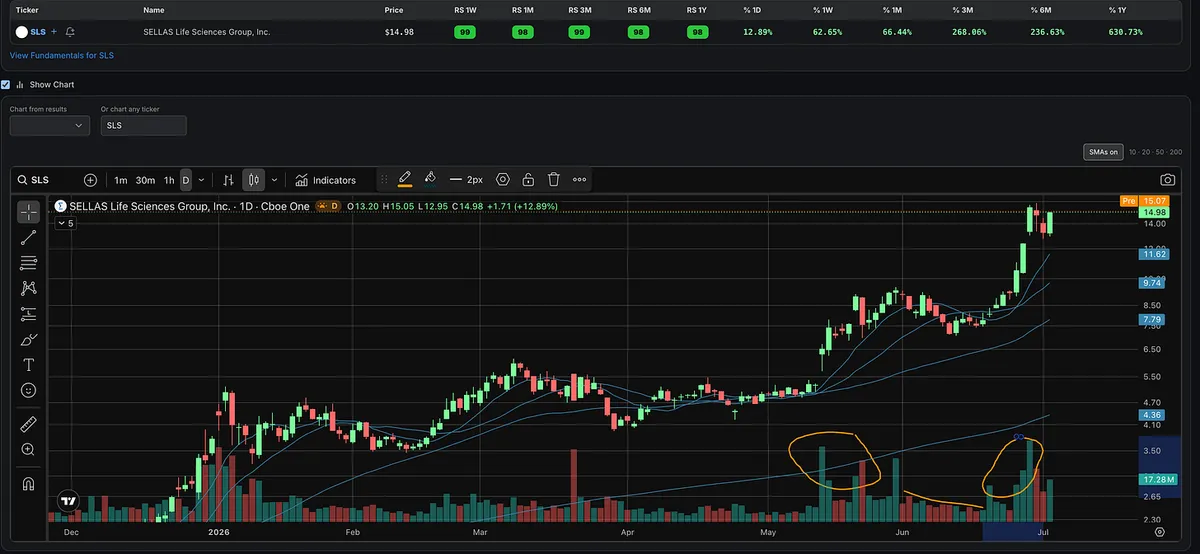
This is exactly what we want to see with price and volume.

First, SLS makes a powerful move higher on big volume.

Then, on the pullback, volume dries up.

That’s important.

It shows selling pressure is not overwhelming demand.

Then volume comes back in as price starts moving higher again.

That is price and volume working together.

Price is king.

Volume is queen.

And when they are working in harmony, traders need to pay attention.

This is a great example of Volume Price Analysis.

View on Substack ↗

The Trend Is Your Friend Until It Ends

“The trend is your friend except at the end where it bends.”

-Ed Seykota

One of the hardest parts of trading is not finding a stock in an uptrend.

It is staying with it long enough to let the trend work.

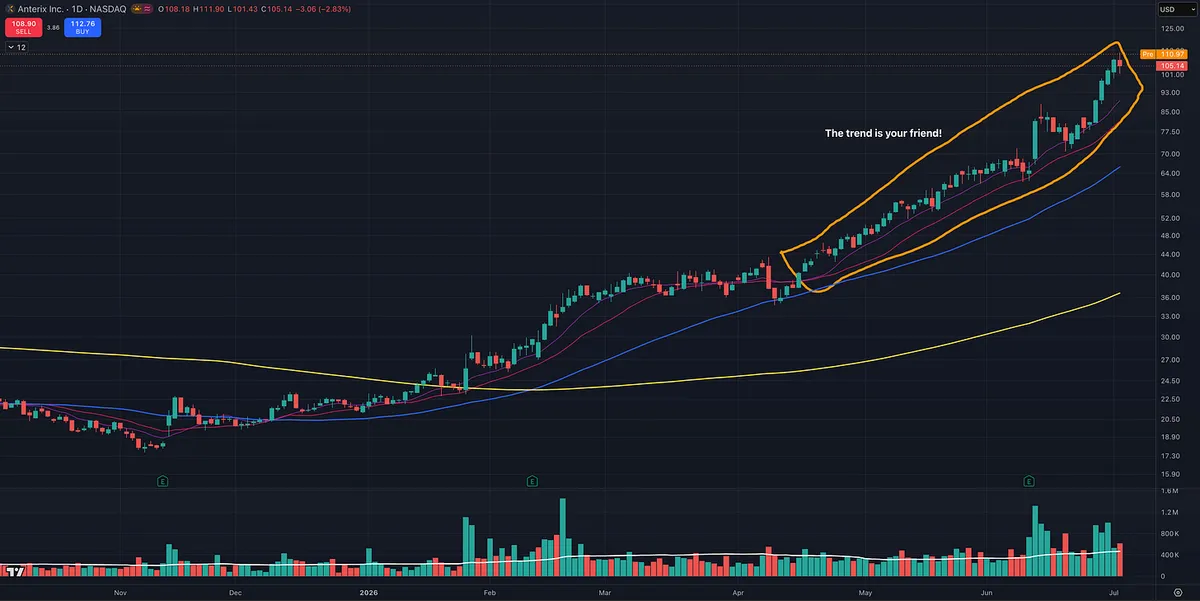
This is where moving averages can help.

When the shorter-term moving averages are layered above the longer-term moving averages, and they are all pointing higher, you usually have a clean, orderly trend.

That helps keep you from overreacting to every small pullback.

Do you need moving averages to see this?

Of course not.

Tight price action, consistent higher highs, higher lows, and controlled pullbacks can tell the same story.

But moving averages give you a visual guide.

They help you stay with strength while the trend is intact.

And they help warn you when the character starts to change.

We do not need to predict the exact top.

We just ride the trend while it is healthy, then recognize when the stock stops acting right.

The trend is your friend.

Until it bends.

View on Substack ↗

Broken Stocks Do Not Need Your Loyalty

A stock does not care that you believe in it.

A stock does not care where you bought it.

A stock does not care how much research you did.

When price breaks down, volume expands, and leadership disappears, the message has changed.

The best traders listen.

The worst traders negotiate.

View on Substack ↗

William O’Neil: Stop Owning Stocks You Barely Understand

“Diversification is a hedge for ignorance. I think you are much better off owning a few stocks and knowing a great deal about them. By being very selective, you increase your chances of picking superior performers. You can also watch those stocks much more carefully, which is important in controlling risk.”

-William O’Neil

Most traders think owning more stocks lowers risk.

But often, it just lowers focus.

The more stocks you own, the less you know about each one.

You stop paying close attention.

You react slower.

You miss the subtle changes in price, volume, and leadership.

The goal is not to own everything.

The goal is to own the right merchandise.

That does not mean you always know the winner in advance.

Sometimes several stocks meet your criteria at the same time.

That is okay.

You let the market sort them out.

Cut the ones that break down.

Reduce or cut the ones that do nothing.

Hold and add to the ones proving themselves.

That is how a focused portfolio is built.

Not by guessing.

Not by owning everything.

By finding leadership, letting winners earn more capital, and managing risk with discipline.

This is one of the core principles behind the Momentum Trading Strategy Course and our Relative Strength Stock Screener.

The big money is rarely made by owning everything.

It is made by owning the right stocks.

View on Substack ↗

The Paul Tudor Jones Risk Rule Every Trader Should Know

“Decrease your trading volume when you are trading poorly; increase your volume when you are trading well.”

-Paul Tudor Jones

Most traders do the exact opposite.

They trade bigger after losses because they want to make the money back.

Then, when they finally get in sync with the market, they reduce their size, trade frequency, and cut winners because they are afraid to lose profits.

That is backward.

The best traders trade their smallest when they are trading poorly and their largest when they are trading their best.

Mark Minervini teaches the same principle. When you are in an abnormal losing streak, scale down your exposure. Do not try to trade bigger to make it back fast. Cut your size, protect your capital, and only pyramid back up when your trading plan starts working again.

This is what Minervini calls Progressive Exposure.

Build on success.

Subtract on setbacks.

Let your results tell you when to press and when to pull back.

This is one of the core risk management principles we teach in Module 6 of the Momentum Trading Strategy Course, available for all paid subscribers.

The market does not reward constant aggression.

It rewards disciplined aggression.

View on Substack ↗

The Weekend Is Over. Find the Strength Before the Open.

Time to get to work.

Before diving into individual stock screening, you need to know two things:

Where is strength actually showing up?

And what type of market environment are we in?

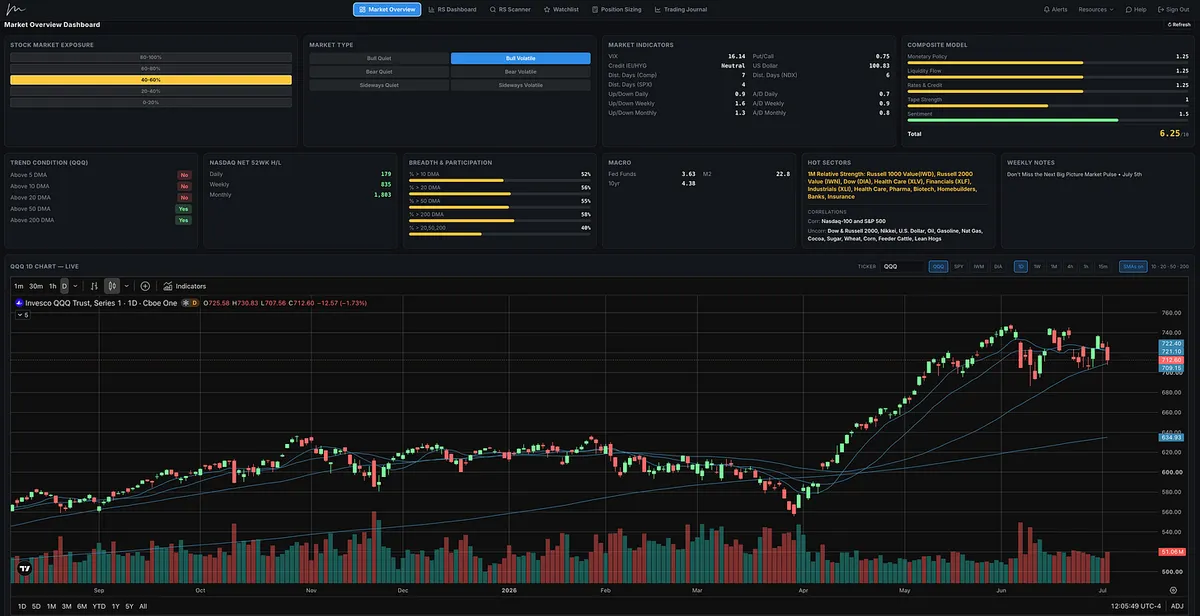
This week’s Big Picture Market Pulse breaks down the rotation that’s happening.

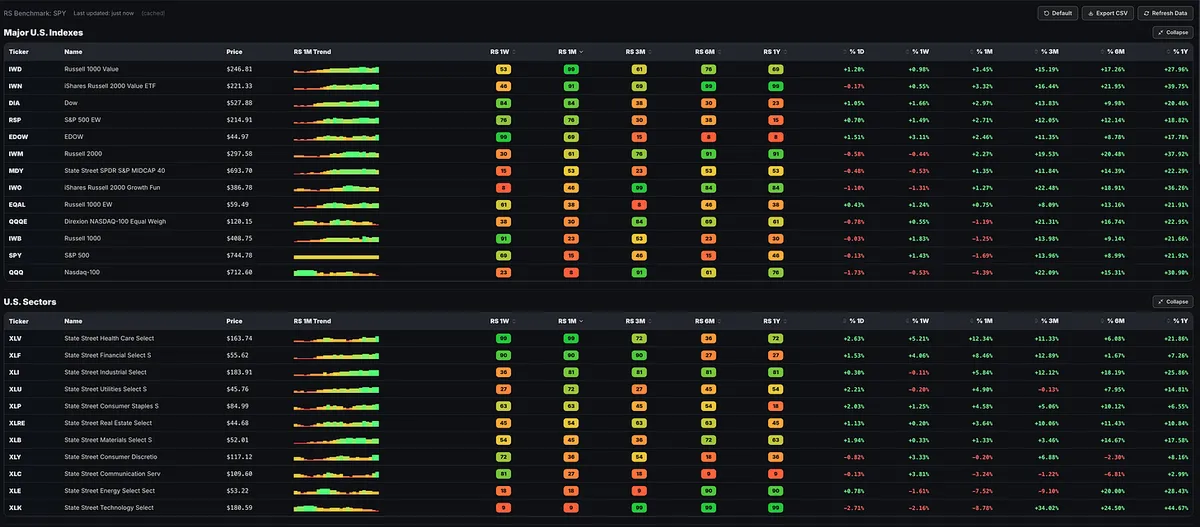
Growth and technology have cooled.

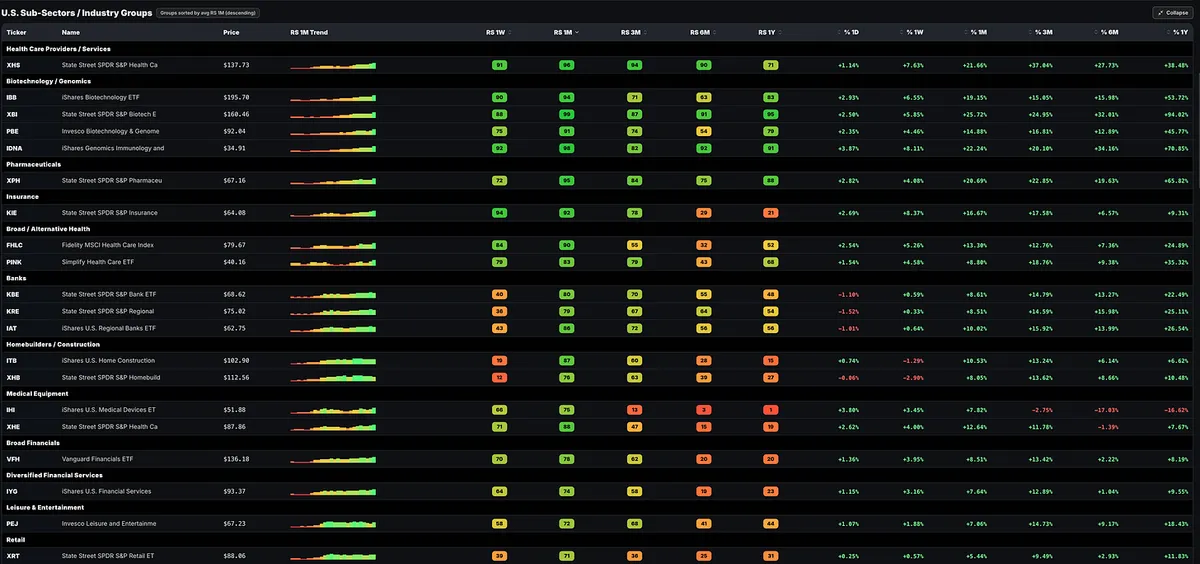
Value, health care, biotech, financials, industrials, and several forgotten areas are showing relative strength.

The bull market is still alive, but leadership has changed.

Before building your watchlist for the week, understand where money is flowing and where leadership is fading.

That is exactly what this week’s report covers.

https://tradingmomentum.substack.com/p/a-tale-of-two-tapes-growth-stocks

On SubstackBig Picture Market Pulse | July 5, 2026: A Tale of Two Tapes: Growth Stocks Cool While the Bull Market Rotates
View on Substack ↗

A Tale of Two Markets

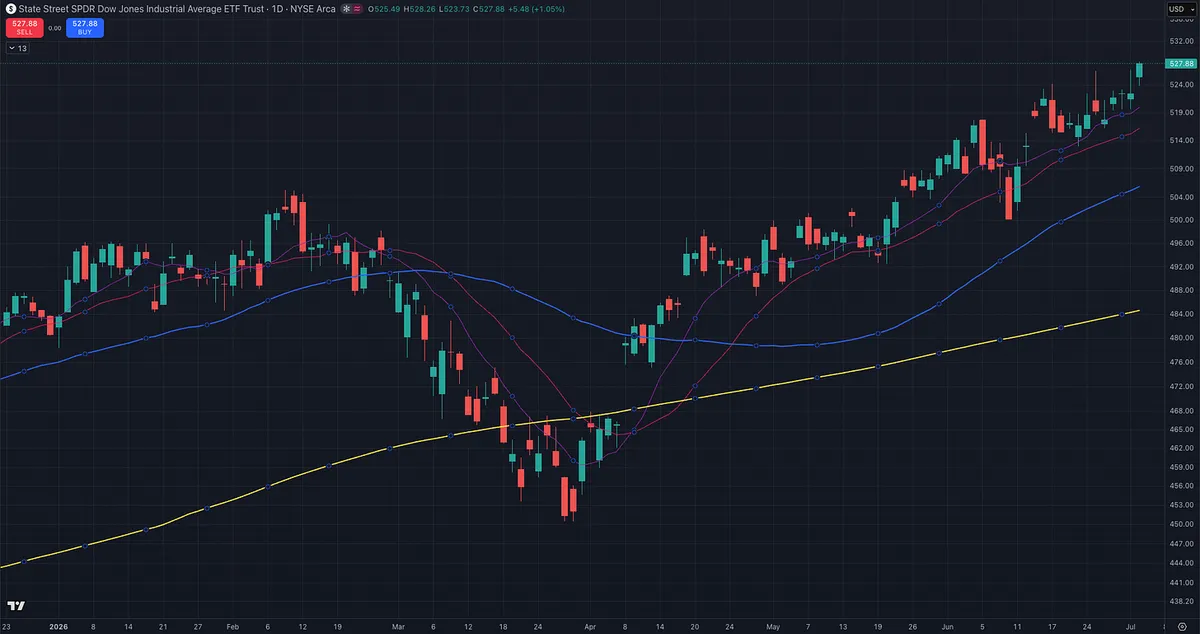
We definitely have two different tapes happening at the same time.

The Dow pushed to all-time highs yesterday, while the Nasdaq-100 dropped about 1.6% and moved back down toward the 50-day.

That is the story right now.

Under the surface, leadership has changed.

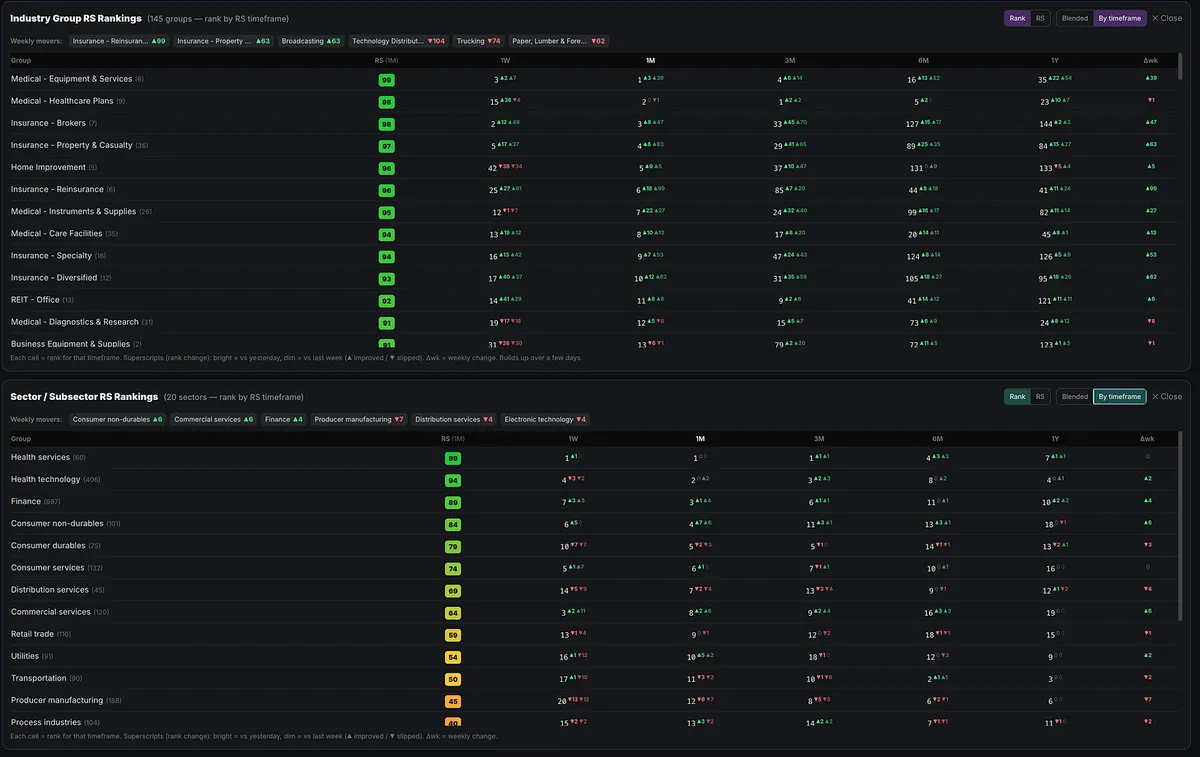
Over the last month, the strongest major indexes have been the Russell 1000 Value, Russell 2000 Value, and the Dow. The leading sectors have been healthcare, financials, and industrials.

When you look at the sub-sectors and industry groups, the strength is showing up in areas like biotech, pharmaceuticals, insurance, banks, homebuilders, medical equipment, and healthcare services.

That is a very different tape than the one we saw off the lows into early June, when technology, semiconductors, cybersecurity, software, and computer hardware were leading the market higher.

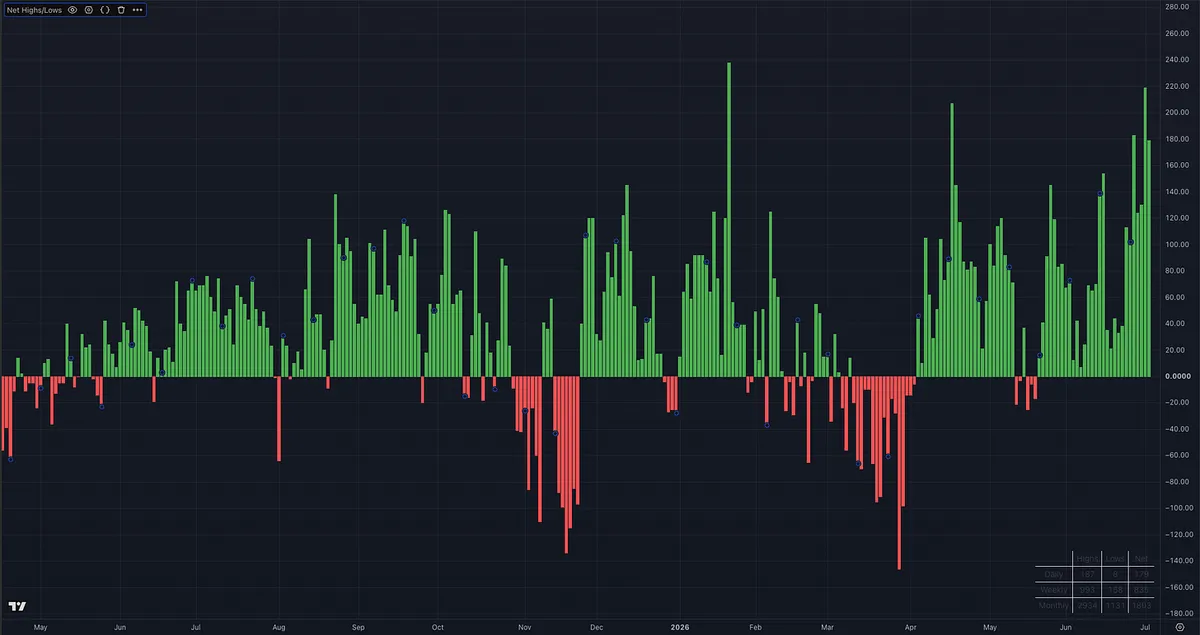
The rotation is not just an opinion either. You can see it in the new highs versus new lows data.

Over the last five trading days, we had 835 more new highs than new lows. Over the last month, that number is over 1,800. That is one of the strongest readings we have seen since the March lows!

Bottom line: the market is not dead.

Leadership is rotating.

The areas that sat out while tech and semiconductors made a massive move are now starting to participate. Under the surface, there is still a lot of strength, but it is showing up in different places.

This is why only watching one index, or only watching your own individual stocks, can be misleading.

Each weekend, when the market is closed, we zoom out and review the bigger picture. That is also why Module 3 of the Momentum Trading Strategy Course focuses heavily on market environment, sector rotation, relative strength, and top-down analysis.

Nothing is perfect in trading, but you are far more likely to catch changes in trend when you combine both top-down and bottom-up analysis.

Individual stock performance tells us a lot.

But so does zooming out and studying the market, sectors, industry groups, breadth, leadership, and key market indicators. Enjoy the long weekend, but before the market opens on Monday, take some time to zoom out.

View on Substack ↗

One of the Most Underrated Parts of MTS

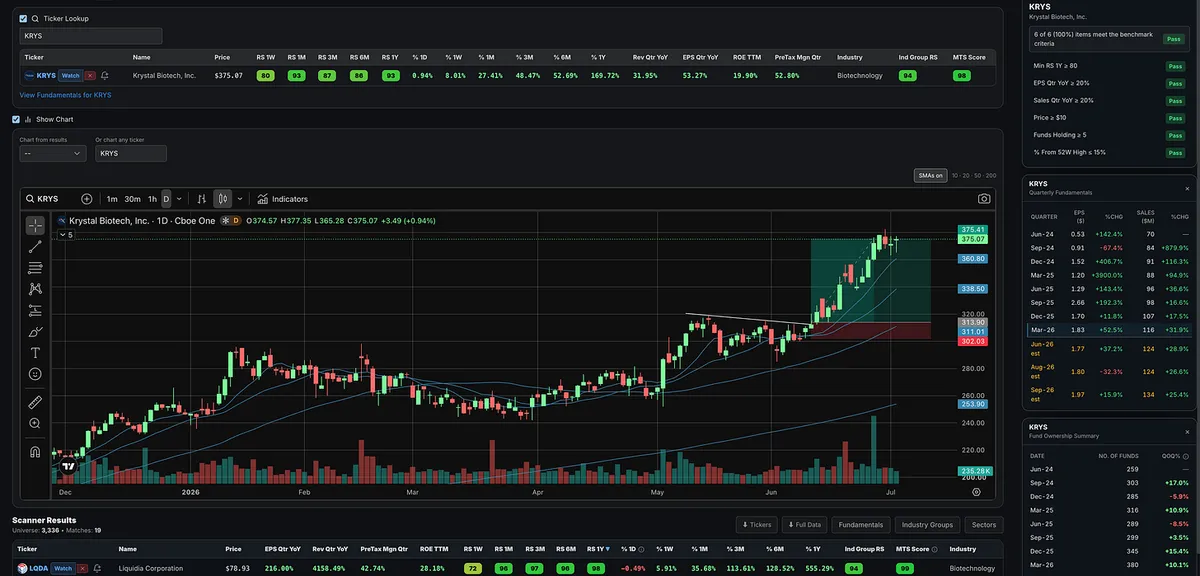
A Substack member brought KRYS to my attention, and to everyone in the group chat, back in May after the earnings catalyst.

This is exactly the type of stock we are trying to find.

Big earnings and sales growth. Strong relative strength. Fund ownership increasing. 19.9% ROE. 52.8% margins.

He also caught what turned out to be a leading industry group earlier than most. That’s important because the best stocks usually come from the best groups.

This is one of the most underrated parts of Momentum Trading Strategy.

It is not just the course, the stock screener, or the market analysis. It is also having like-minded traders sharing quality ideas in a professional way.

View on Substack ↗

Know Your Trading Environment

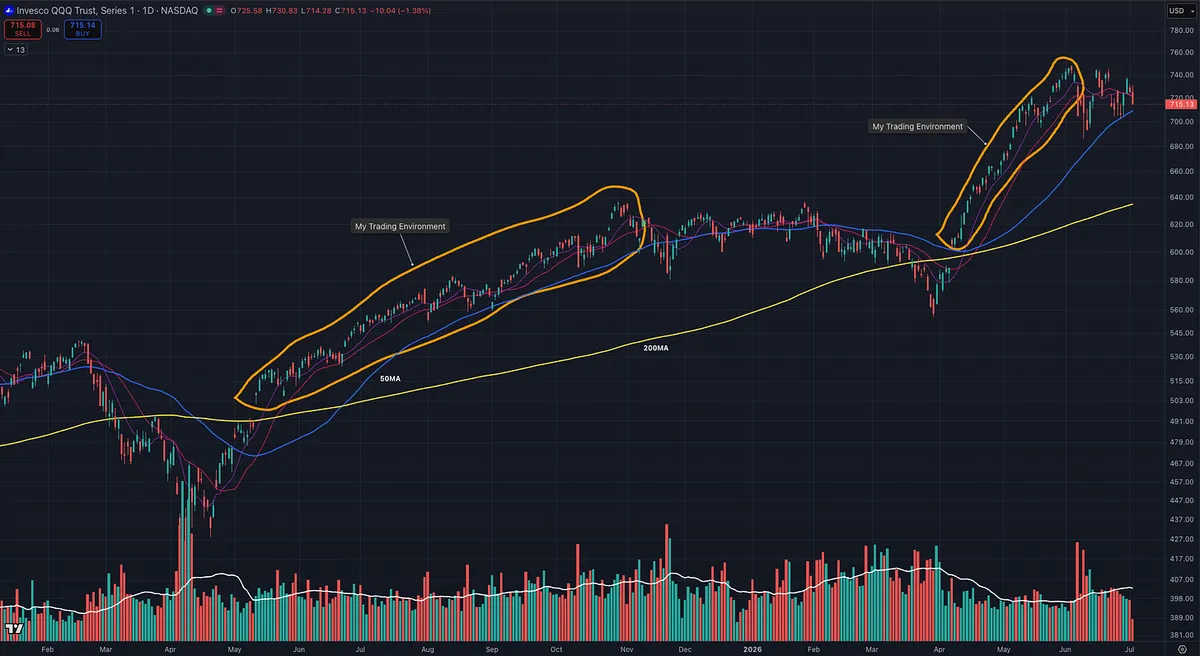
Currently, this is not my ideal type of market.

On the chart attached, I circled the type of market environment I like to see and where I tend to perform my best.

What I look for is price riding above the 10-day and 20-day moving averages, with the moving averages stacked in the right order:

10-day above the 20-day

20-day above the 50-day

50-day above the 200-day

Price should also be making a clear series of higher highs and higher lows. That is what you want to see in a strong uptrend.

When the market is riding the 10/20-day higher like that, breakouts and pullbacks tend to work much better. Individual stock setups follow through, pullbacks are more orderly, and it becomes easier to stay in positions or add to names that are already working.

But when price starts to chop, make lower highs, lower lows, or some combination of both, the environment changes. That is when I usually start to see individual stocks break down, stop acting right, or become much harder to manage from a risk standpoint.

In that type of tape, the best decision is usually to cut back, reduce new trades, lock in some profits, and only hold the strongest names that are still acting right.

Know your trading environment.

View on Substack ↗

LQDA: This Is What a Real Earnings Catalyst Looks Like

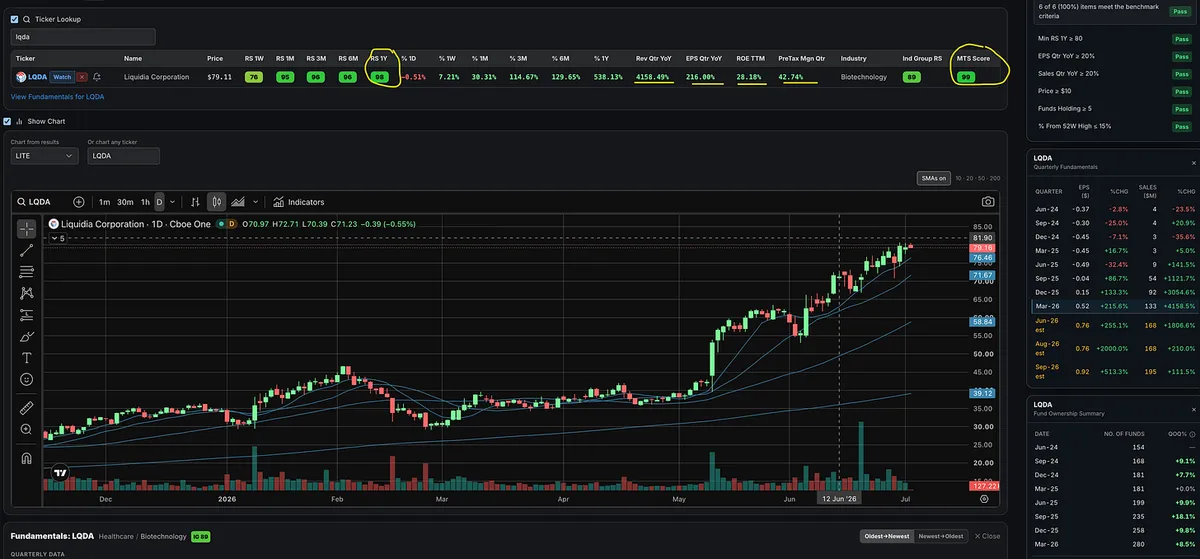
LQDA has had a strong run since the May 11 earnings catalyst.

High relative strength, MTS Score at 99, strong industry group ranking, and major acceleration in earnings, sales, and profitability.

View on Substack ↗

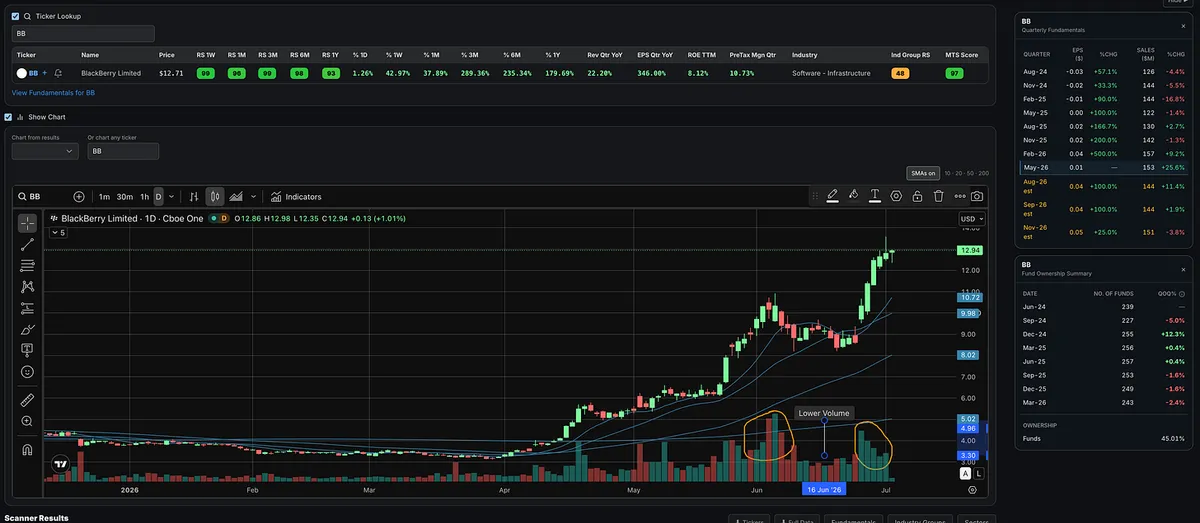
BB is showing the price and volume characteristics I like to see.

Big volume on the upside, followed by lower volume on the pullbacks.

That tells me demand is showing up on strength, while selling pressure has been relatively muted during weakness.

View on Substack ↗

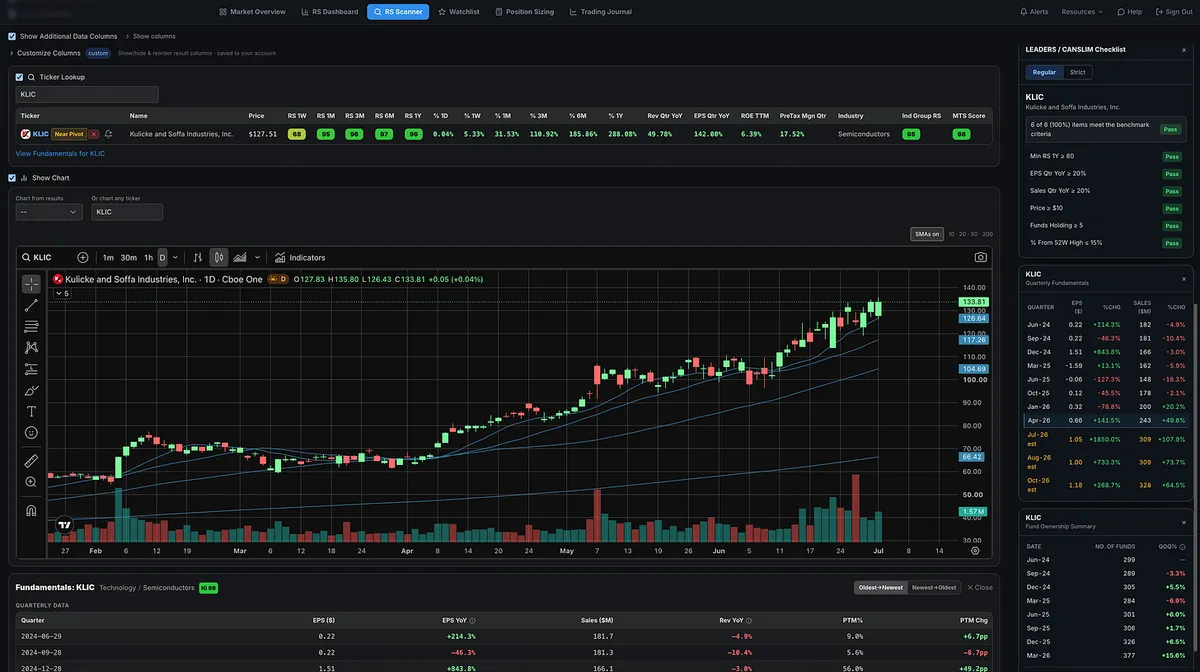
KLIC continues to stand out.

Strong relative strength, and MTS Score at 98.

Growth fundamentals are also accelerating, with big EPS and sales growth showing up in the recent and forward estimates.

Fund ownership is accelerating too.

View on Substack ↗

Is the Momentum Trade Back?

I had someone ask if the momentum trade is back.

My answer is that momentum is improving again, but I would not call it fully back yet.

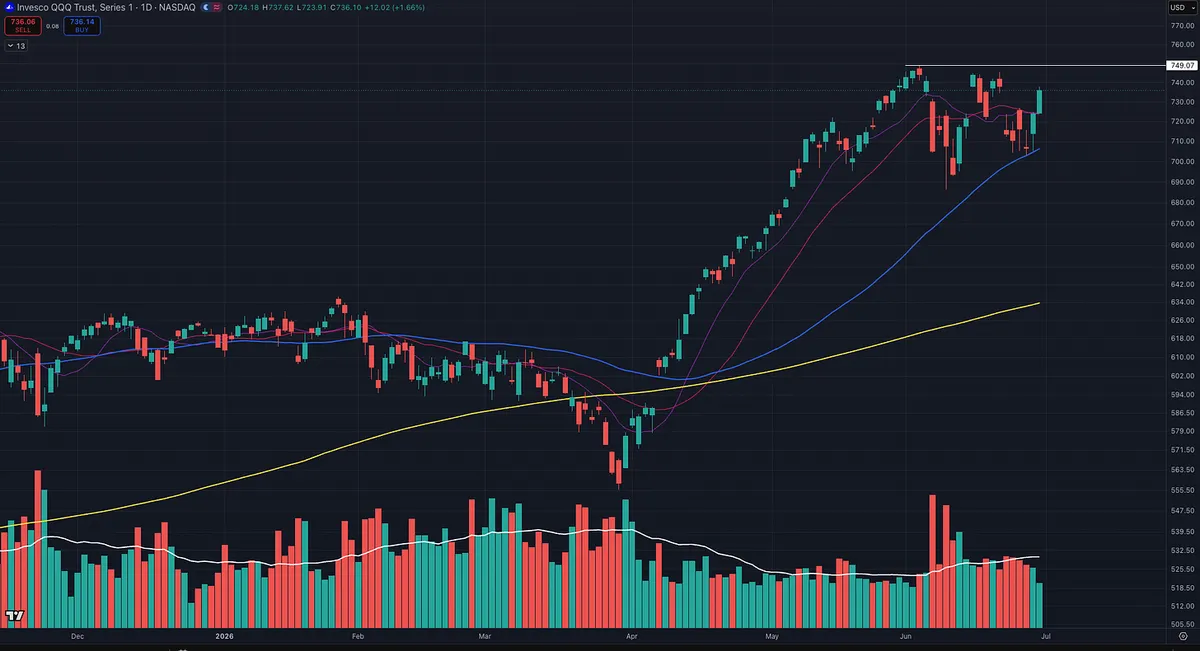
Today we got back above the short-term moving averages, the 10-day and 20-day, which is good. But realistically, we could still reject near the highs again like we did last week and quickly be back in the danger zone.

Since the big down day on June 5th, there has been a clear character change. The tape has been more volatile, choppy, and whippy. This is not the same easy market we had from the April follow-through day into early June.

With that being said, some select growth stocks are acting very well. Ideally, I want to see the indexes and individual leaders moving together, but many times the best stocks start to lead before the market fully confirms.

The key is this: if the market breaks out cleanly, a lot of these leaders could keep working. But if the market rolls back over, many of the names acting well right now will likely get pulled back with it.

So yes, there are opportunities again, but the environment is more difficult.

I also would not be surprised if this turns into another false rally attempt toward new highs. In this type of environment, the pros are usually moving stops to breakeven faster, keeping exposure a little lighter, and being prepared to take more small losses.

The easy environment is likely over for now. I doubt we will see the same smooth trend higher that we had from April into early June. But I could be wrong.

The way I play this is that if my individual stocks are working, I keep trading and look to increase exposure and size. If I start taking more losses, I cut back, reduce trade frequency, and reduce size.

I also try to get my stops to breakeven as quickly as possible, or I sell some into strength sooner and keep the original stop in place. That way, I have financed the risk on the trade, so I am no longer in a position where I can take a loss.

I can then afford to take more flat trades without damaging my account. Sure, the downside is smaller wins if we get follow-through, but that is okay. In these environments, I focus on protecting what I have.

Then, if the market keeps moving higher and breaks out to new highs, that helps clear overhead supply and I can look to add to my winning positions.

This is where individual stock performance determines whether momentum is truly “back again.”

View on Substack ↗

Be Grateful Markets Aren’t Easy

That is what keeps this game enjoyable, even after you have made money. If trading were easy, it would lose a lot of what makes it so rewarding.

The challenge is the reward.

The constant problem-solving, the discipline, the patience, the self-awareness, the emotional control, and the never-ending pursuit of improvement are what make trading so rewarding.

Markets humble everyone, and that’s also what makes improving at this game so meaningful.

View on Substack ↗

The Nasdaq Setup I’d Love to See

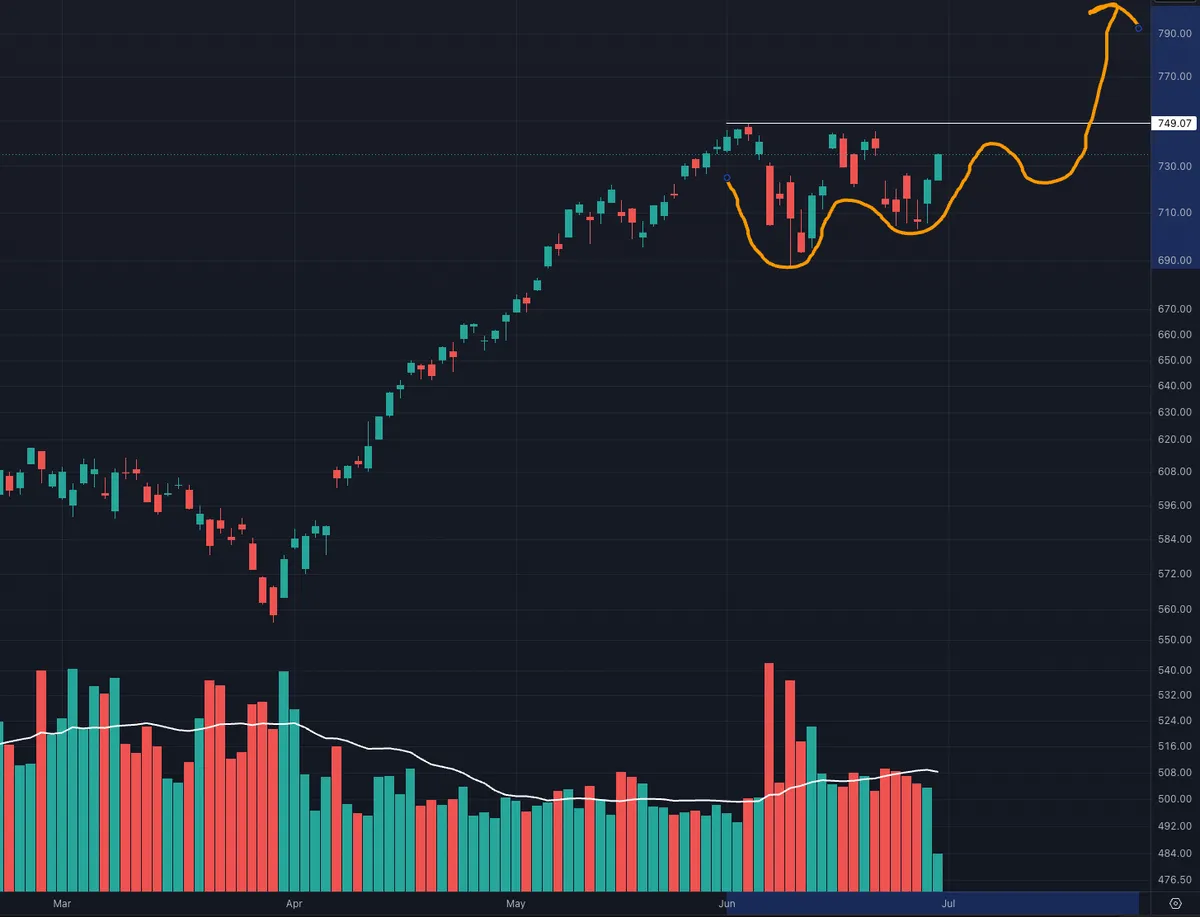
Markets will do what markets will do. With that being said, I would love to see the Nasdaq tighten up and show some VCP-type action before making its next leg higher.

The Nasdaq is now working back toward its prior highs, but the better setup, in my view, would be a little tightening on the right side before breaking out to new highs.

The best breakouts usually come after volatility contracts, selling pressure dries up, and price gets quiet near resistance. That tells you supply is being absorbed.

A few tight days, or even a short and controlled pullback near the prior high, would be great. Then, ideally, I’d like to see a powerful move through new highs on good volume.

View on Substack ↗

The Real Holy Grail in Trading

One of the easiest ways to spot an inexperienced trader is when they act like their strategy is the only way to make money.

Maybe they are not a complete beginner anymore, but they are still inexperienced if they believe their style is the only style that works.

Anyone who has been around this game long enough knows there are many different ways to make millions in the markets.

Read the Market Wizards books and you will see it clearly.

Some of the best traders are discretionary. Some are systematic. Some are quants. Some are fully technical. Some are fully fundamental. Some are techno-fundamental and use both.

There are day traders, swing traders, position traders, macro traders, futures traders, stock traders, options traders, and short sellers who have all built incredible records doing things completely different.

My lane is growth stock momentum trading.

I primarily trade as a swing trader and position trader. I use technicals and fundamentals, and I would say my style is most similar to traders like William O’Neil, Mark Minervini, and Dan Zanger.

That style fits my personality, my strengths, and my lifestyle.

I actually love day trading, but having four kids and businesses outside of trading, I have found that it does not fit the season of life I am in. It can easily pull me into a place that is not healthy or sustainable for me.

So regardless of the method I use, I know someone else can be wildly successful trading a completely different way.

That is why I stay in my lane.

I am here for people who align with my style or want to learn it. I am not here to pretend it is the only way to make money.

That is why I laugh when I see traders on here pushing their method like it is the holy grail.

To experienced traders, that does not look confident.

It looks ignorant.

Because the real pros know the truth.

The common thread between great traders is not that they all trade the same setup, the same timeframe, the same asset class, or the same strategy.

They don’t.

The common thread is risk management, position sizing, discipline, and the ability to admit when they are wrong and cut losses.

That is the real holy grail.

So when you see traders constantly talking about risk, position sizing, cutting losses, protecting capital, and surviving long enough for their edge to play out, pay attention.

Those are usually the ones who actually know what they are talking about.

View on Substack ↗

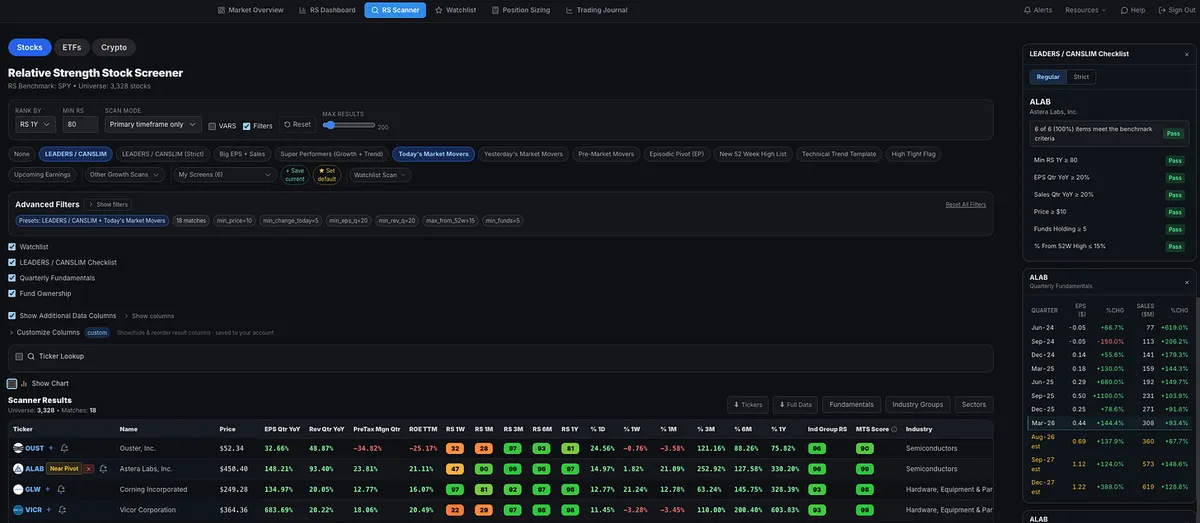
The Screen Behind Today’s Breakout List

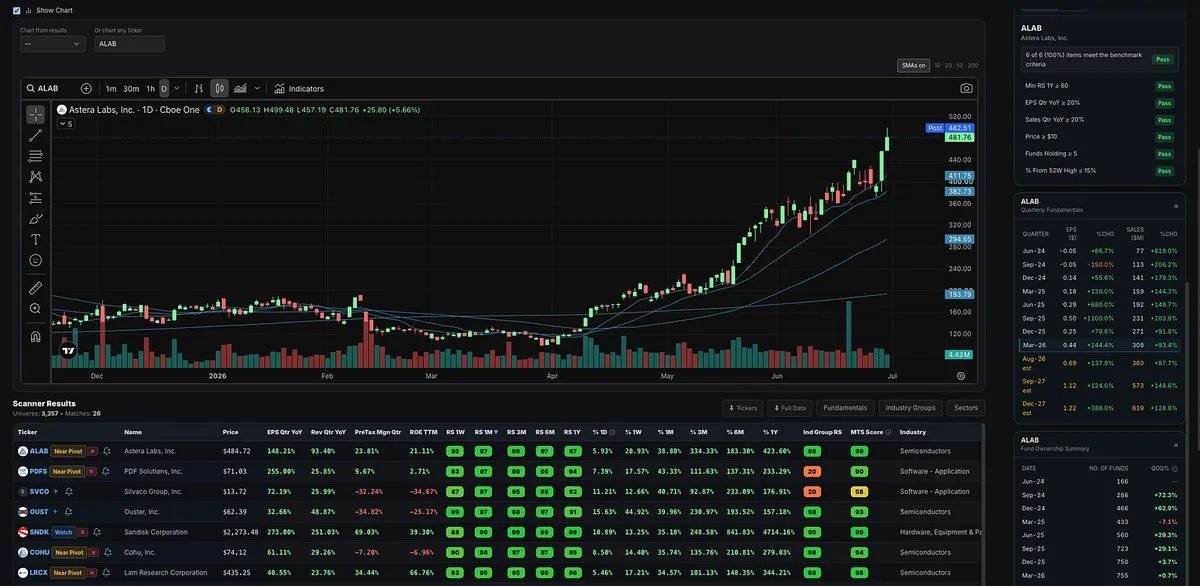
One of my favorite ways to use the Relative Strength Stock Screener is starting with the Leaders / CANSLIM preset, then layering Today’s Market Movers on top of it.

That combo has been surfacing a lot of names I like today.

ALAB is breaking out to new highs.

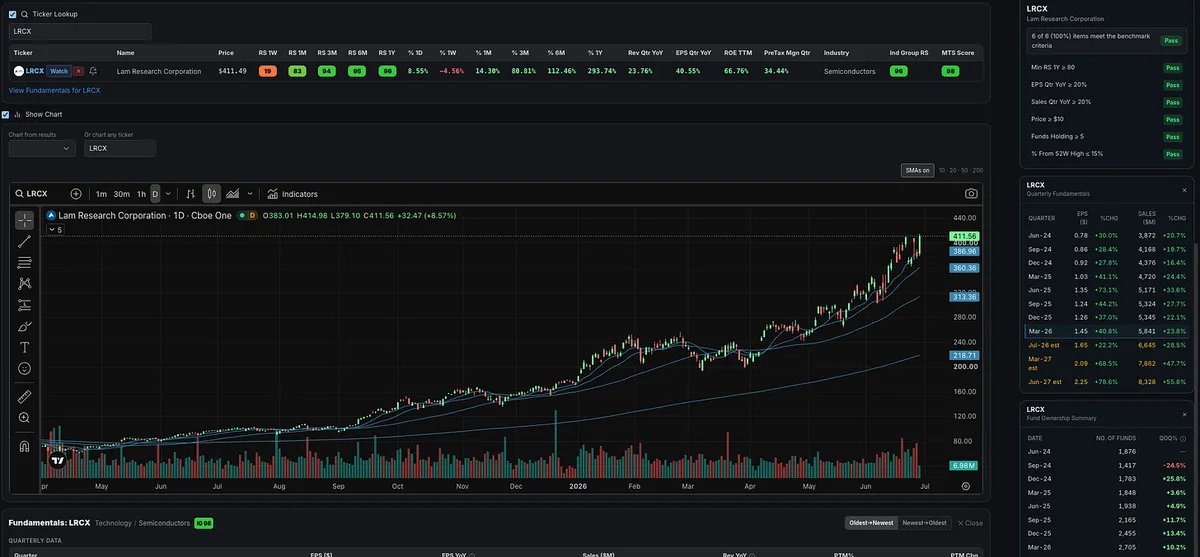
LRCX is breaking out to new highs as I write this.

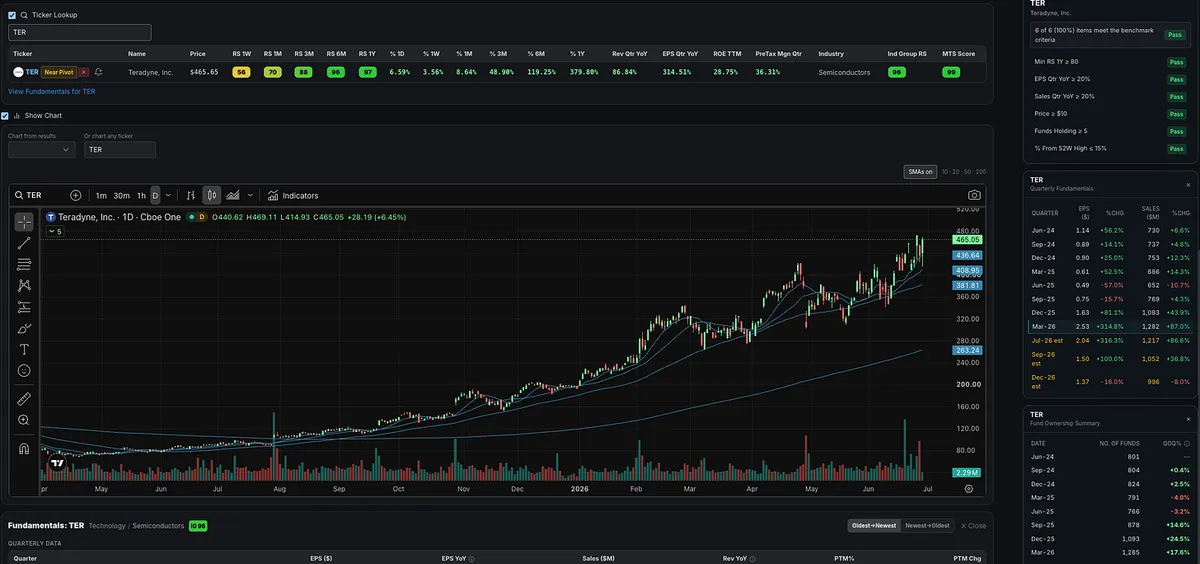
TER is right near new highs.

This is why I like combining leadership filters with current-day strength. It helps narrow the market down to the names that already have strong characteristics and are actually moving right now.

View on Substack ↗

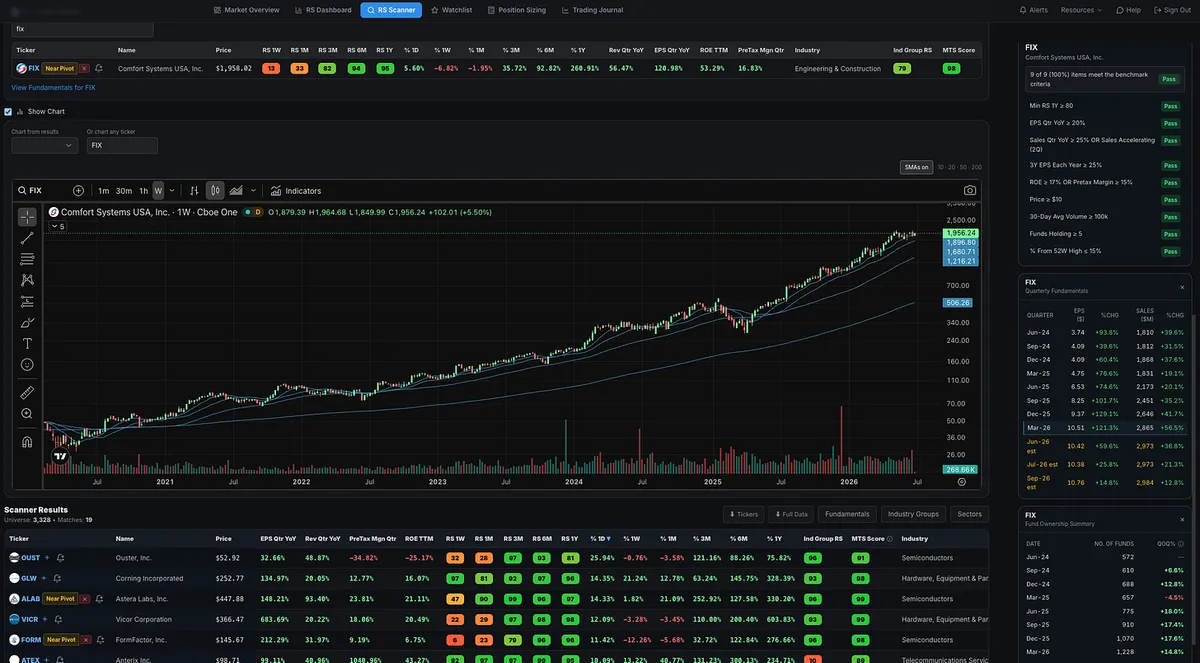
Can’t Stop, Won’t Stop: FIX

Comfort Systems USA (FIX) continues to refuse to end its trend.

Every time the stock looks like it may finally need a deeper reset, buyers show up. It has repeatedly found support around key moving averages, including the 10-week and 50-day area, and continues to hold near highs after a massive multi-year advance.

This is what real leadership often looks like. Strong stocks do not always give easy pullbacks. They ride the short-term moving averages, shake out weak hands, and keep pressing higher while traders wait for a better entry that never comes.

The fundamentals still support the move. FIX continues to show strong earnings growth, strong sales growth, high ROE, and a 98 MTS Score.

At some point, every trend ends.

But until price actually breaks, the message is simple:

The trend is still alive.

View on Substack ↗

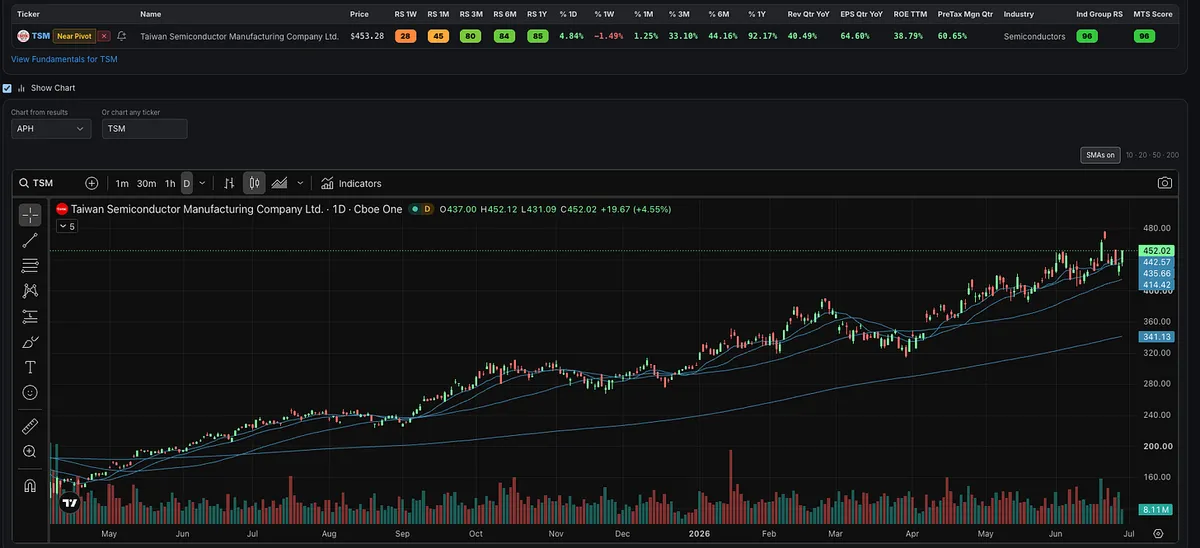
Not All Semis Are Breaking Down

Semiconductors have weakened, but leadership has not disappeared.

A few names are still bucking the trend.

TER, TSM, and LRCX are all acting well, with each either near new highs or breaking out toward new highs today.

Right now, TER, TSM, and LRCX are still showing strength.