Momentum Trading Strategy

Notes

Short lessons on momentum trading, every day.

Every note from Substack, in one place: risk, setups, leading stocks, market conditions and the mindset behind them. Search them, browse by topic, or filter by stock.

Showing 1–2 of 2 notes

$MNST ×
View on Substack ↗

When a stock gets extended, start looking for signs of exhaustion.

Minervini talks about this when discussing selling into strength during late-stage runs.

Here’s a quick checklist I use when a stock has gone vertical:

Reversal / exhaustion signals

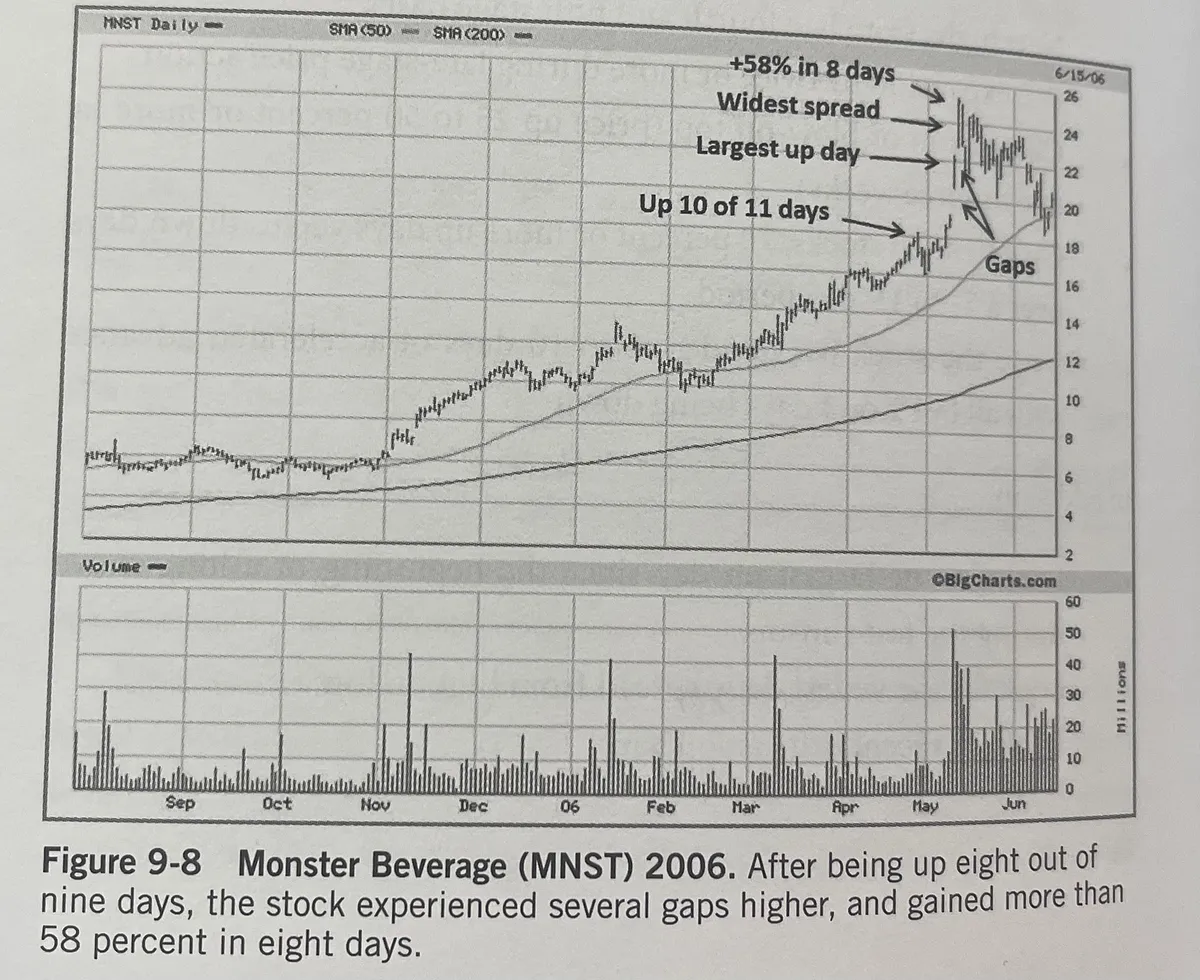
• 70% or more up days over a 7–15 day period

• 6–10 days of rapid advance with only 2–3 down days

• Climax move (price up 25–50% in 1–3 weeks)

• Largest up day of the entire move appears late

• Widest daily spread from high to low

• Multiple gap-ups during the run

Volume warnings

• Heaviest volume of the move on a down day

• High-volume reversal near highs

• Heavy volume but little price progress (churning)

The key idea: institutions usually distribute on the way up while everything still looks great.

By the time weakness is obvious, the move is often already over.

Example below from Minervini showing MNST running +58% in just 8 days before topping.
View on Substack ↗

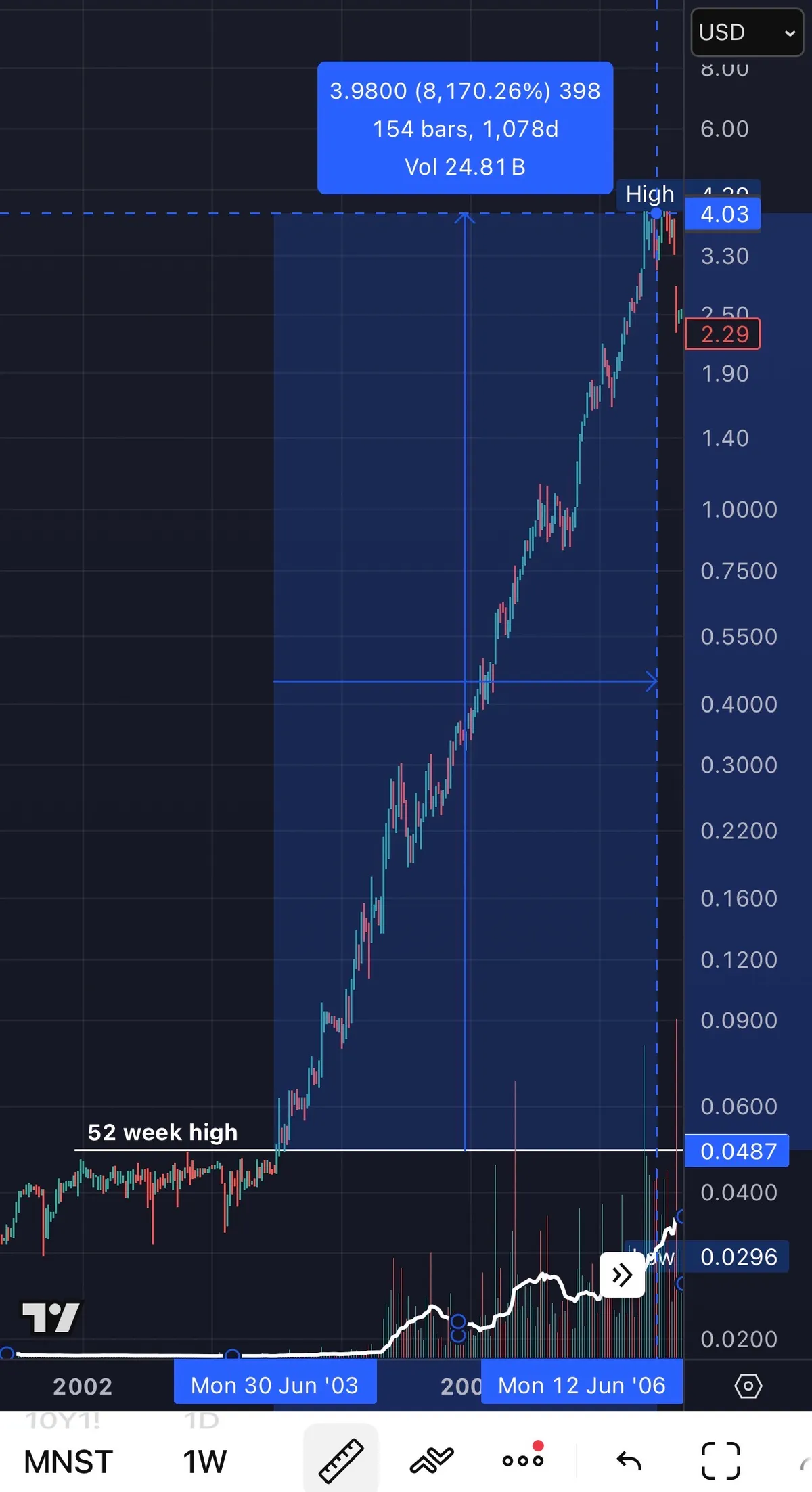
The Only Way a Stock Goes Up 8000 Percent

Most investors are afraid of new highs.

They think the move is over.

They think they are late.

Mark Minervini explains why that thinking is backwards.

He writes:

“Keep in mind that the only way a stock can become a superperformer—moving from, say, $20 to $80 and then to $180—is for that stock to make a series of new highs all the way up.”

That is not opinion. That is how markets work.

A true monster stock must make repeated new highs.

It cannot go from cheap to extraordinary without breaking out again and again.

Minervini gives the example of Monster Beverage:

“Monster Beverage (MNST) registered an all-time high in late 2003. If you were afraid to buy the stock because it appeared too expensive or too ‘high,’ you would have missed a huge opportunity: The stock price advanced 8,000 percent by early 2006.”

Eight thousand percent.

And it started with a new high.

Here is the uncomfortable truth.

If you refuse to buy strength, you automatically eliminate the biggest winners from your portfolio.

Superperformance requires:

Breaking out

Consolidating

Breaking out again

Repeating the process

The stock that feels extended early in a cycle is often just beginning.

The crowd waits for pullbacks that never come.

Professionals understand something different.

Great stocks look expensive before they look obvious.

If you want superperformance, you must get comfortable buying strength.

Because the only way a stock becomes extraordinary is by making new highs all the way up.