Momentum Trading Strategy

Notes

Market Conditions

Reading the overall market and deciding how aggressive to be.

Showing 181–200 of 227 notes

View on Substack ↗

Why I Don’t Try to Call the Top A Lesson From Silver

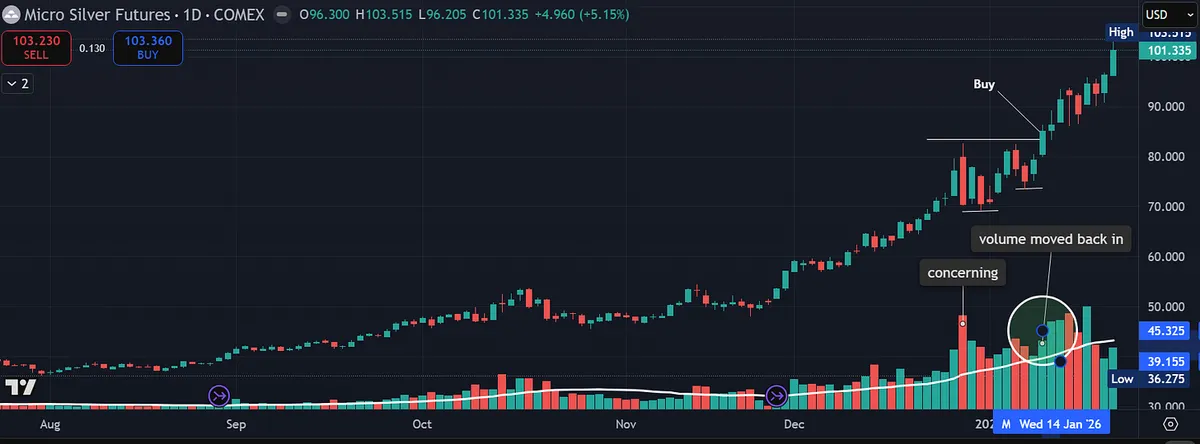
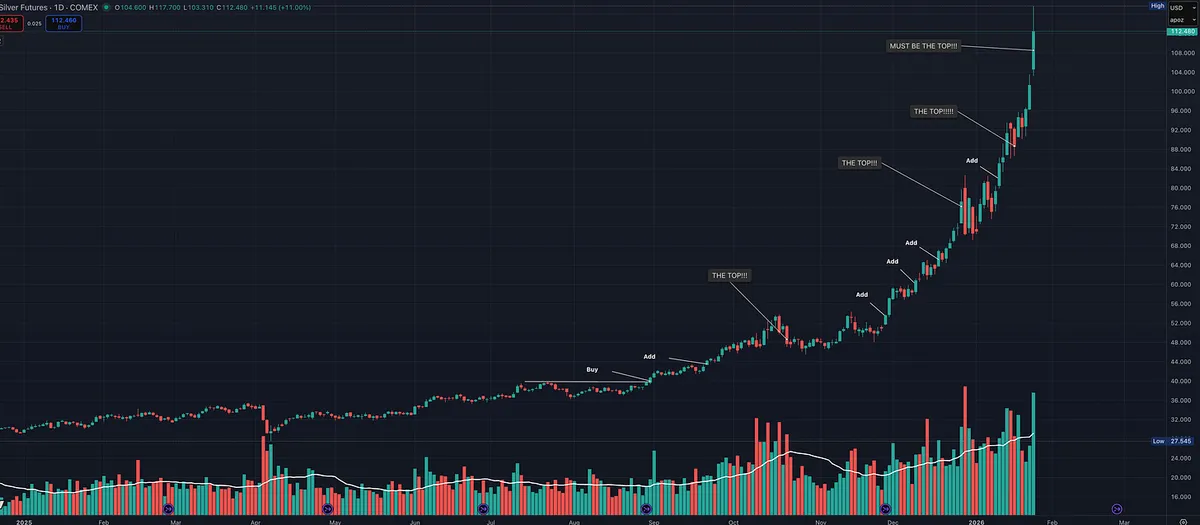
If you look at the chart I’m attaching, you’ll see something familiar.

People were calling the top in silver at $50. Then again at $75. Then $90. Now it’s $100+.

The commentary changed. The conviction didn’t.

This is a textbook example of why I don’t try to call tops.

I heard the same arguments back around $80. That’s when I added.

This isn’t about bravado or blind bullishness. It’s about understanding what actually moves markets.

The market does not care about opinions. Not mine. Not yours. Not anyone else’s.

What matters is price.

On the chart, the trend stayed intact. Structure never broke. Higher highs and higher lows continued. Each pullback that “had to be the top” turned into another continuation.

That doesn’t mean you chase price endlessly. I’m not adding here.

But it does mean you stop trying to guess where a trend should end.

Calling tops in strong trends is one of the fastest ways to the poor house.

Anyone who’s studied great traders knows this lesson. They don’t predict turning points. They wait for the market to confirm them.

The trend is your friend until it ends.

Silver will top eventually. Every trend does.

But trying to guess that moment, especially in real time, is a great way to go broke.

If you’re already in a trend, manage risk and respect structure. If you’re not, wait for the next setup.

Price, not opinion, gets the final vote.
View on Substack ↗

When Everyone Called the Top, Price Gave Another Buy

Just a few weeks ago, most people were convinced silver had topped.

That belief felt logical. The move had already been strong. Sentiment was crowded. Commentators were confident. And yet, price did not confirm it.

This is the real lesson.

Your job is not to predict. Your job is to stay neutral and let price and volume determine your actions.

Instead of breaking down, silver did something constructive. Price tightened. Selling pressure eased. Then volume moved back in as price turned higher and pushed through resistance. That action gave another clean entry, even when most people thought the move was finished.

The chart did not argue. It simply offered information.

Trying to call tops is not the game. Following price and volume is.

Yes, silver will eventually top. Every trend does. But fighting a strong trend before price confirms weakness rarely pays. Strength tends to persist longer than most expect.

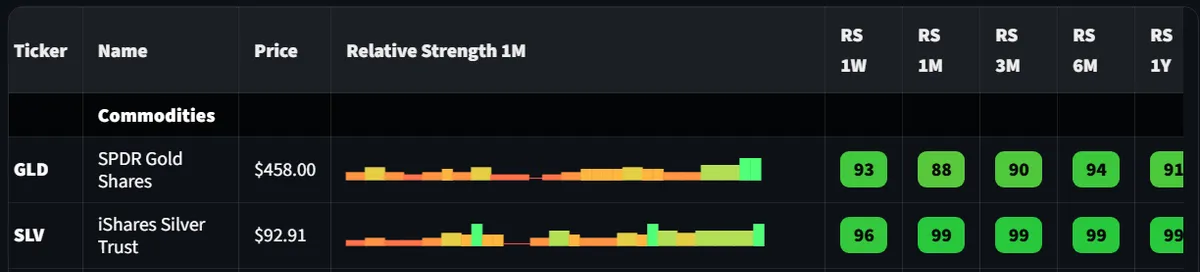
Relative strength in silver has been excellent across multiple timeframes, and the industry group continues to act like a leader. As long as that remains true, the path of least resistance stays higher.

Trade what you see. Not what you believe should happen.

View on Substack ↗

Lesson from Stanley Druckenmiller

Druckenmiller was often early in forming a view.

What he learned the hard way was NOT to fight the trend.

In 1999, he believed the market was topping. Valuations were extreme. The risks were obvious. He tried to short.

Price kept going higher.

He later explained that fighting the trend was the mistake. The market did not care about his logic, and staying aligned with price would have made far more money than trying to be right early.

The lesson was simple.

You can have an opinion. You can see excess building. But you cannot fight the tape.

Druckenmiller learned to wait for price to confirm before pressing a view.

View on Substack ↗

Big Picture Market Pulse is live.

Before screening charts or chasing individual stocks, it’s important to understand what kind of market we’re actually in.

This update breaks down:

  • Why leadership rotation matters

  • How to align risk during consolidation near all-time highs

  • What would change the bullish thesis and force a defensive stance

  • How I’m thinking about patience, selectivity, and preparation for the week ahead

This is the framework I use before looking at individual setups.

Paid subscribers can read the full breakdown here 👇

https://tradingmomentum.substack.com/p/big-picture-market-pulse-january

On SubstackBig Picture Market Pulse - January 24, 2026
View on Substack ↗

Where the Easy Money in Bull Markets Usually Lives

When William O’Neil studied decades of market history, he noticed something important.

The biggest percentage gains in most bull markets tend to occur in the first one to two years coming off a true bear market low.

That’s not because bull markets end after two years. It’s because the early phase is when pessimism is still high, institutions are forced back in, and new leadership breaks out from deep bases.

If you look at long-term charts, the most explosive annual moves often appear early. After that, markets can continue higher, but gains usually become slower, choppier, and more selective as leadership narrows and rotations increase.

The takeaway isn’t to predict tops. It’s to understand where the highest velocity opportunities usually show up and why early bull phases reward preparation, not hesitation.

Knowing where you are in the cycle helps you adjust expectations, risk, and selectivity, not abandon the trend.

View on Substack ↗

Leadership Is Rotating. Your Screener Should Too.

The market has slowed recently, but small- and mid-cap stocks continue to act well. You can see this clearly in the price action, with IWM outperforming both the S&P 500 and the Nasdaq. While the major indexes have struggled to make sustained upside progress, capital has been quietly rotating out of the mega-cap leaders and into smaller names.

This is a normal and healthy part of a market cycle. At some point, every investor has to let go of what worked in the past and focus on where capital is actually flowing today. Leadership does not last forever, and markets reward those willing to adapt.

The Relative Strength Dashboard has been signaling this shift for some time. Strength has been broadening beneath the surface, with smaller stocks and select industry groups steadily moving into leadership while many of the former mega-cap leaders consolidate or lose momentum.

As a result, I’m becoming less interested in crowded mega-cap trades and increasingly focused on areas that are less familiar, less followed, and smaller in size. This is often where new leadership emerges and where the best risk-reward opportunities begin to form.

The good news is that this shift is easy to reflect in your process. A simple adjustment to your screener, such as tightening market cap ranges, float, or shares outstanding, can quickly realign your universe with where the market is allocating capital today.

Markets change. Leadership rotates. Your job is not to predict it, but to recognize it and follow the money.

I have a detailed post coming soon that will walk through the different screens I use to help identify these names.

View on Substack ↗

The Most Ignored Letter in CANSLIM and Why It Is Stopping You Out

If you keep getting stopped out, or you feel like there are no good stocks to buy right now, the problem might not be your entries.

It might be the M.

In CANSLIM, the M stands for Market, and it matters more than most traders want to admit.

When the market is chopping sideways, whipping above and below key moving averages, even the best setups struggle. Breakouts fail. Tight stops get hit. Clean trends disappear. This is exactly the type of environment where traders start questioning their strategy, when in reality the issue is conditions, not skill.

Remember this simple truth:

Most stocks move with the market. All ships rise and fall with the tide.

When indexes are stuck in wide, whipsaw consolidations, individual stocks feel that pressure. That is why so many traders experience death by a thousand paper cuts during these phases. You can do everything right and still lose money because the market is not offering follow through.

This is often a signal to slow down, not force trades.

That does not mean do nothing. It means do the right things.

Set alerts instead of chasing. Study past leaders and bases. Review risk management and position sizing. Let patience become a position.

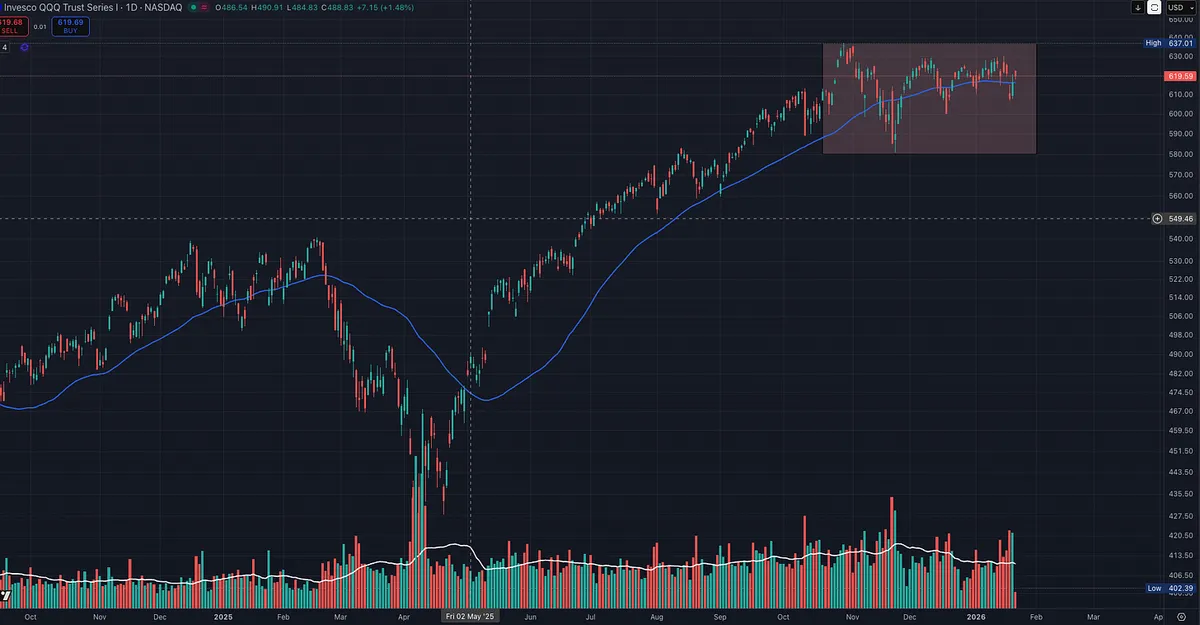
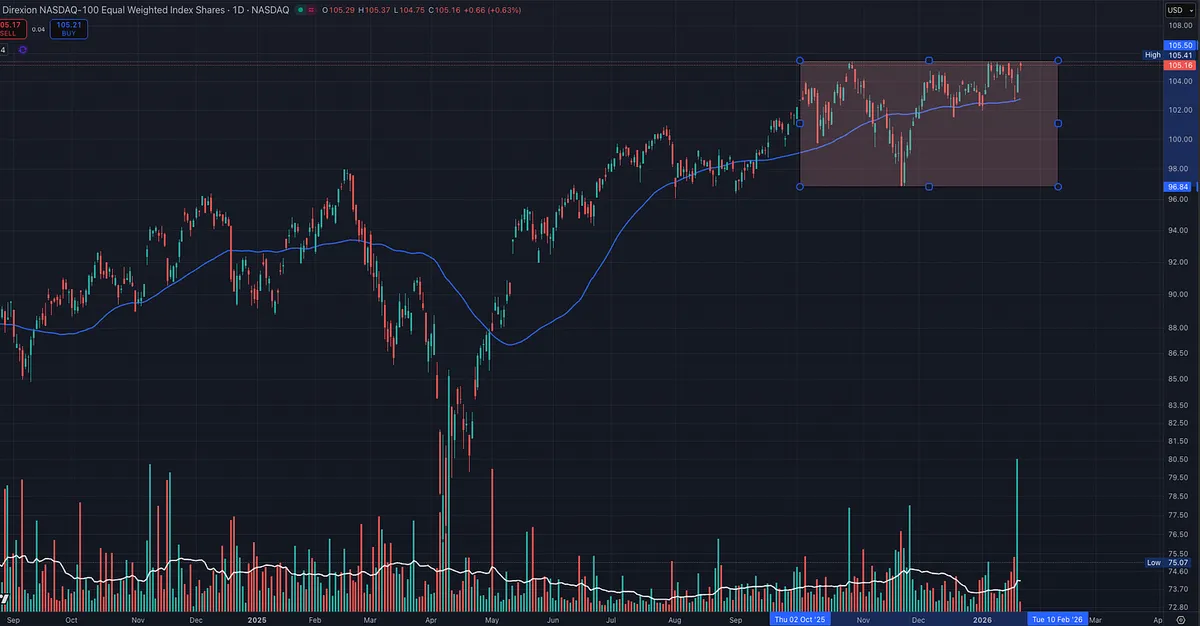
For growth investors especially, many strong CANSLIM names are tightly linked to the Nasdaq and tech leadership. That is why watching QQQ and QQQE matters. QQQ has been locked in a choppy consolidation that has made sustained upside difficult. QQQE, on the other hand, is showing constructive action, compressing with higher lows and pressing toward all time highs.

That divergence is important.

When the market improves, leadership tends to move fast. Being prepared matters more than being early.

If the market is not cooperating, there is no shame in waiting. Some of the best trades come after long periods of frustration, when conditions finally align.

Respect the M. Be patient. And be ready when the tide turns.

View on Substack ↗

When emotions run high, zoom out

I’m a short-term trader.

I run a day trading account. I also run a swing and position trading account built around O’Neil and CANSLIM and I also have an account that does nothing fancy and consistently invests into SPY and QQQ.

You would think someone like me would be the most emotionally affected by short-term market moves.

I’m not.

A 2% down day like today is no big deal. It is not the end of the world, no matter how financial media or influencers try to frame it.

When in doubt, zoom out.

What always surprises me is how emotional people get over pullbacks, corrections, and even full bear markets. Most of these people are not short-term traders. They claim to be long-term investors with long time horizons, yet they panic at exactly the moments that long-term investors should expect.

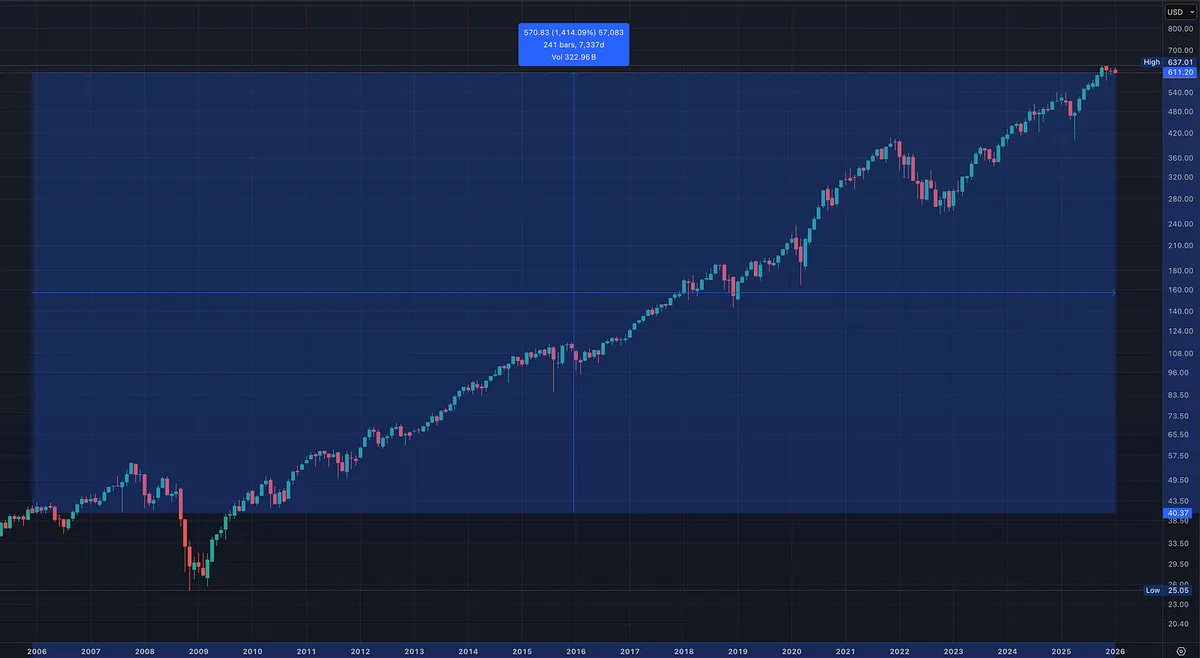
Look at the last 20 years.

  • Tariff scares.

  • COVID.

  • The 2022 bear market.

  • 2018.

  • 2015.

  • 2011.

  • The Great Financial Crisis.

Even with all of that, the Nasdaq-100 is up over 1400% in the last two decades.

That perspective changes everything.

If normal volatility makes you emotional, that is feedback. It usually means one of two things. You are either gambling, struggle emotionally, or you do not truly understand markets or risk management.

Long-term investing is boring. It requires patience, discipline, and the ability to ignore noise.

The market does not reward emotional reactions. It rewards time, consistency, and perspective.

Zoom out.

View on Substack ↗

Most Profitable Traders Spend More Time Doing Nothing

One of the most misunderstood edges in trading is inactivity.

Most traders believe success comes from constant participation. More scans. More trades. More action. That mindset quietly destroys performance.

Markets do not offer opportunity evenly. They compress it.

A large portion of meaningful gains tend to occur in short windows when conditions align. Strong trends. Expanding volume. Clear leadership. Broad participation. Outside of those windows, the market mostly produces noise.

This is why overtrading is so dangerous. You spend capital and emotional energy during low-quality periods and arrive exhausted when the real opportunity finally appears.

Jesse Livermore understood this long before modern markets existed.

“There are only a few times in a year when a trader should make a commitment.”

And

“It was never my thinking that made the big money for me. It was my sitting.”

Great traders internalize this idea. They wait. They observe. They protect capital. They accept boredom as part of the process.

This behavior aligns with how trading returns actually work. Outcomes follow power law dynamics. A small number of trades and a small number of market phases drive most long-term results. The rest are largely irrelevant or harmful.

By staying selective, you preserve capital, confidence, and focus so you can act decisively when conditions improve. You are not trying to force profits from an average market. You are waiting for moments that justify risk.

This is also why many traders feel like they are always late. They burn themselves out during the wrong phases and miss the right ones.

The answer is not trading more.

The answer is knowing when not to trade.

View on Substack ↗

“There are only a few times a year when you should allow yourself to make a commitment at all.” — Jesse Livermore

Many people try to treat trading like a job where they earn a consistent paycheck. That is not how markets work. You may go six months where conditions are not conducive to your strategy, and then make your entire year in a one to three month window.

Livermore said this over a century ago, and it is still true today. Entrepreneurs understand this instinctively, and so do successful traders and investors.

Markets reward patience at every timeframe.

View on Substack ↗

William O’Neil on When to Step Aside

“If you hit a losing streak, and it is not because what you are doing is wrong, that tells you the whole market may be going bad. If you have five or six straight losses, you want to pull back to see if it is time to start moving into cash.” — William O’Neil

Most traders treat a losing streak as a personal problem. They assume it means they are off. That they need to try harder. That they should push through.

O’Neil saw it differently.

Sometimes it is not you. It is the market environment.

When solid setups stop working, when leadership breaks down, when follow-through disappears, the message is not to trade more. The message is to step back.

Five or six losses in a row is not bad luck. It is feedback.

The best traders listen to that feedback.

They reduce exposure. They raise cash. They wait for conditions to improve.

Because no matter how good your strategy is, it only works in the right environment.

The market goes through phases:

• trending

• choppy

• distribution

• correction

Trying to force trades in the wrong phase is how discipline erodes and capital disappears.

Great traders do not measure success by how often they trade. They measure it by when they choose not to.

Sometimes the most profitable position is cash. Sometimes the best trade is waiting.

That is not weakness. That is professional awareness.

If your edge is not being rewarded, listen. Pull back. Protect capital.

The opportunity will come back.

View on Substack ↗

How Market Tops Actually Form: William O’Neil’s Blueprint

Most investors look for the exact top. They want the moment. The headline. The one signal that says, “Get out.”

That is not how real market tops form.

William O’Neil explained it best in Market Wizards. According to O’Neil, major tops in the market averages usually develop in one of two ways:

1. New highs on weak volume When the market pushes to fresh highs on low volume, it is telling you something important. Demand is thinning. Fewer institutions are stepping in. The rally is becoming vulnerable.

2. Heavy volume with little price progress Sometimes volume surges for several days, but prices go nowhere. This is distribution. Big money is selling into strength. The market may not collapse immediately, because the selling has already happened on the way up.

In both cases, the message is the same. The fuel behind the trend is fading.

But O’Neil went further.

Watch the Leaders

Another way to identify a market top is to stop staring at the index and start watching leading stocks.

When the stocks that powered the bull market begin to break down, that is not noise. That is rotation out of risk. That is institutional money leaving the field.

Markets do not collapse randomly. They roll over when leadership disappears.

Follow the Federal Reserve

O’Neil also pointed to monetary policy. Historically, after the Federal Reserve raises rates two or three times, the market often runs into trouble.

Liquidity tightens. Risk appetite contracts. Valuations compress.

It does not cause an immediate crash, but it changes the environment.

Breadth Tells the Truth

Finally, watch market participation.

The advance/decline line tracks how many stocks are rising versus falling. At major tops, a common pattern appears:

• Indexes push to new highs • But fewer stocks are participating • Breadth fails to confirm the rally

When fewer stocks are carrying the market higher, the structure is weakening from the inside.

The Big Picture

Market tops are not events. They are processes.

They form through:

  • thinning demand

  • quiet institutional selling

  • breakdowns in leadership

  • tightening liquidity

  • and deteriorating breadth

By the time the headlines appear, the smart money has already acted.

You do not need to predict the exact top. You need to recognize when the character of the market changes.

That is what separates professionals from spectators.

As O’Neil taught, markets give you the clues. You just have to know where to look.

View on Substack ↗

The Market Advisor Many Market Wizards Paid Attention To

Most market commentary is noise.

The best traders in Market Wizards agreed on that. They also agreed on who to listen to.

Richard Dennis. Bruce Kovner. Michael Marcus. Paul Tudor Jones.

All pointed to Martin Zweig.

Zweig did not predict. He measured risk.

His framework was built on a few non negotiables:

  • Do not fight the tape

  • Do not fight the Fed

  • Press risk only when conditions align

  • Cut losses without hesitation

  • Stay flexible as conditions change

He believed big money is made by riding major trends, not by catching tops or bottoms. You can buy above the low and sell below the high and still capture the real move.

Ego was the real enemy. Small losses were acceptable.

Most of all, he understood patience. When indicators were unclear, he stayed defensive. When they became one sided, he acted decisively.

Doing nothing was a position. Often the right one.

That discipline is why the greatest traders listened then. And why his work still matters now.

If you want to go deeper, read his book Winning on Wall Street.

View on Substack ↗

How William O’Neil Knew a Bear Market Was Coming

William O’Neil was once asked a simple but powerful question:

How do you recognize a bear market before it’s too late?

His answer was just as simple:

“By how well my individual stocks are doing. If, during the bull phase, the leaders start losing, it indicates that a bear market is developing. If I have five or six stocks in a row that get stopped out, a caution flag goes up.”

That’s it. No macro forecasts. No economic predictions. No guessing.

Just the market speaking through price action.

When true leaders stop acting like leaders, something beneath the surface is changing. Institutions quietly step back. Momentum fades. Breakouts fail. Stops get hit one after another.

That’s the market warning you before the indexes ever roll over.

This is why I always say the best risk management tool isn’t a macro indicator. It’s your own trades.

When your best setups stop working, listen.

That’s usually the market telling you it’s time to play defense.

View on Substack ↗

If you trade stocks, you already know this is true:

Your results improve when you understand the environment you are trading in.

Even short-term traders benefit from big-picture context. As Mike Bellafiore explains in The Playbook, professional traders do their homework first. They understand market conditions, leadership, and risk before they focus on execution.

This Big Picture Market Pulse breaks down:

  • Market regime

  • Relative strength leadership

  • Breadth and internal health

  • Liquidity, rates, and sentiment

So whether you day trade, swing trade, or position trade, you are not guessing. You know what type of market you are operating in before you put capital at risk.

👉 Read the full Market Pulse here.

https://tradingmomentum.substack.com/p/big-picture-market-pulse-december

On SubstackBig Picture Market Pulse — December 21, 2025
View on Substack ↗

“Some of the best trades come when everyone gets very panicky. The crowd can often act very stupidly in the markets. You can picture price fluctuations around an equilibrium level as a rubber band being stretched. If it gets pulled too far, eventually it will snap back. As a short-term trader, I try to wait until the rubber band is stretched to its extreme point.”— Linda Bradford Raschke, The New Market Wizards

View on Substack ↗

REMINDER: “Don’t fight the Fed” – Marty Zweig

The One Rule Almost Every Market Wizard Agreed On

There is a reason the large majority of Market Wizards subscribed to Marty Zweig’s newsletter. Zweig wasn’t just another voice on Wall Street. He was the one who gave the world a simple rule that explained entire market cycles:

Don’t fight the Fed.

The best traders in the world built this into their process. When liquidity was flowing and rates were moving lower, they pressed. When the Fed was tightening and raising rates, they pulled back.

The Wizards didn’t obsess over predictions. They watched the tape, respected monetary conditions, and aligned themselves with the primary trend.

And that one rule still works today.

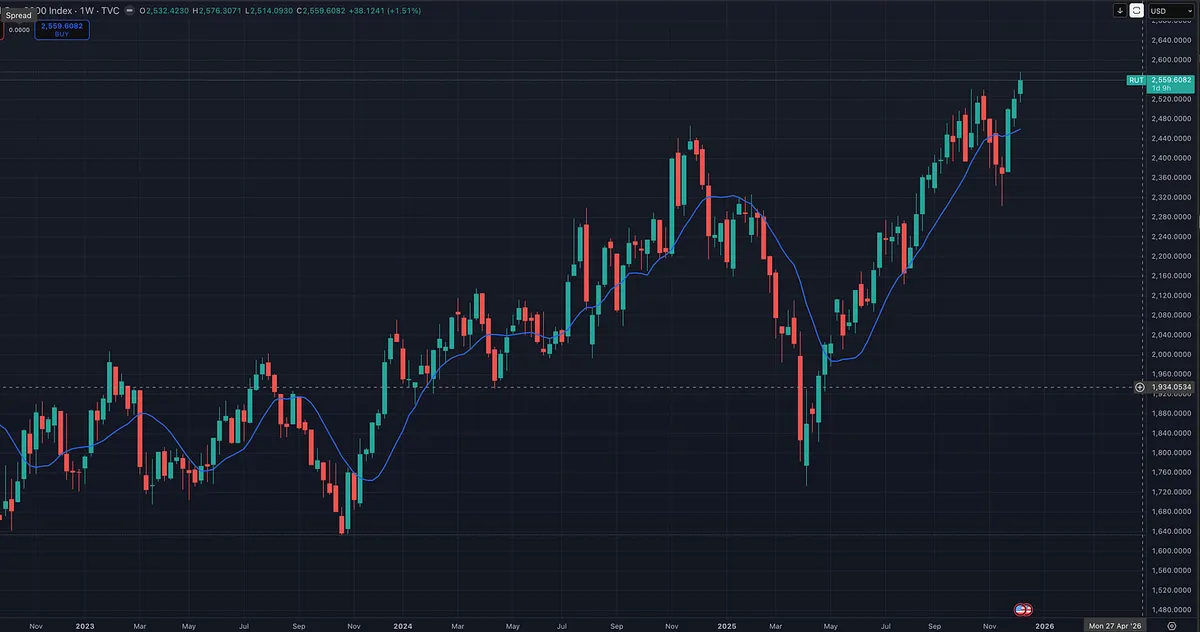
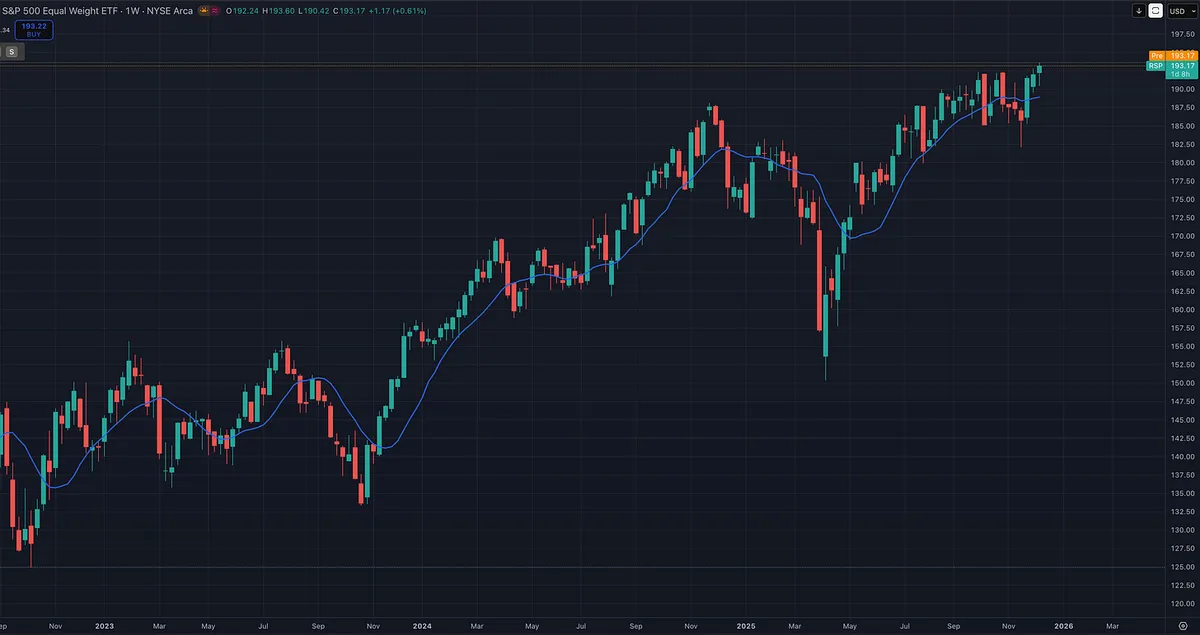
The Russell 2000 is at all-time highs. The Equal Weight S&P 500 is at all-time highs. Every major index is closing in.

While negative media gets more views, the same is true for bearish commentary on social media. That constant doom cycle has caused countless people to miss one of the strongest bull markets happening right in front of them.

Start listening to the market, not the commentators. The tape tells the truth.

View on Substack ↗

I cannot predict what the market will do. No one can. What I can do is observe how the market behaves and how it reacts to information like Fed decisions or major catalysts. Price action tells the truth. Reactions tell you even more. My job is not to guess. My job is to interpret what the market is revealing and take trades only when the risk to reward is firmly in my favor. This is the foundation behind every great trader from O’Neil and Minervini to Zanger and Darvas. They did not predict. They observed, prepared, and acted only when the market confirmed their thesis.

View on Substack ↗

Momentum traders: here is your big picture update for the week ahead.

The new Market Pulse is live covering market conditions, RS leadership, and what to watch into FOMC.

Zoom out before you zoom in. Update your awareness of the big picture before running scanners, refining watch lists, and building your trading plan for the week.

https://tradingmomentum.substack.com/p/market-pulse-december-7-2025-what

On SubstackMarket Pulse — December 7, 2025: What This Week’s Conditions and RS Leadership Are Signaling for Momentum Traders
View on Substack ↗

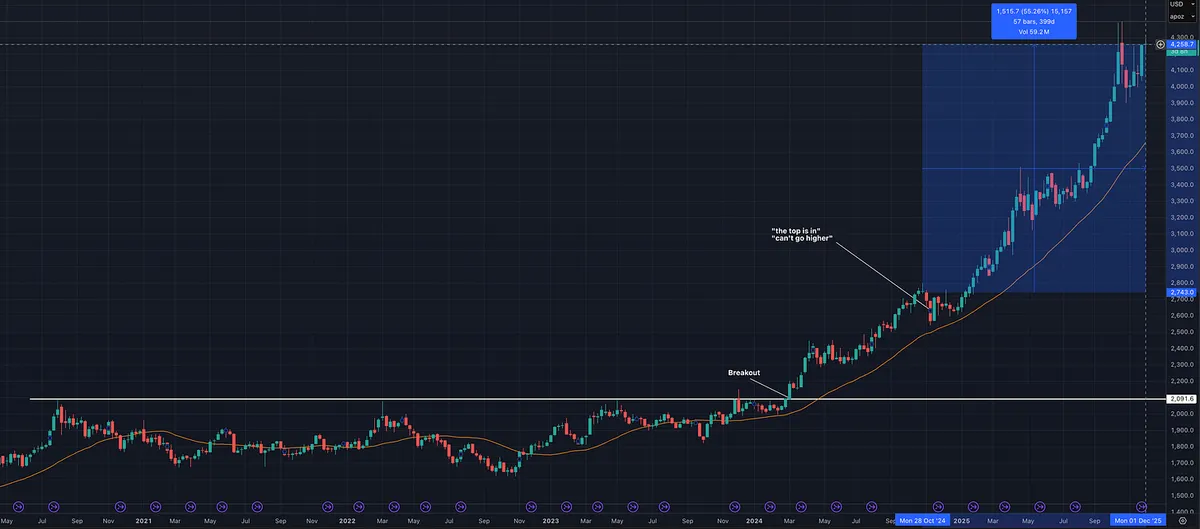
Reflection on Gold: A Lesson in Sentiment Journaling

I remember telling friends and family back in 2024 that it was the year of gold. And I remember just as clearly how everyone insisted the top was in.

But gold kept pushing higher all the way through 2025.

One of the most important lessons I learned years ago is this:

Journal sentiment. Every time you hear strong opinions like “the top is in,” “it can’t go higher,” or “this is the blow off,” write them down. Track the commentary. Capture the mood. Then come back to it months later.

You will be shocked at how often the crowd is wrong.

Doing this has given me more conviction in my process. It helps me trust the setups instead of getting pulled into the noise. And when the market moves in ways that nobody expects, I am no longer surprised. That is just how markets work.

Sentiment lies. Price does not.