Momentum Trading Strategy

Notes

Market Conditions

Reading the overall market and deciding how aggressive to be.

Showing 161–180 of 227 notes

View on Substack ↗

Selective Participation > Constant Trading

Most traders grind all year.

The best returns often come from a few windows.

These charts are the proof.

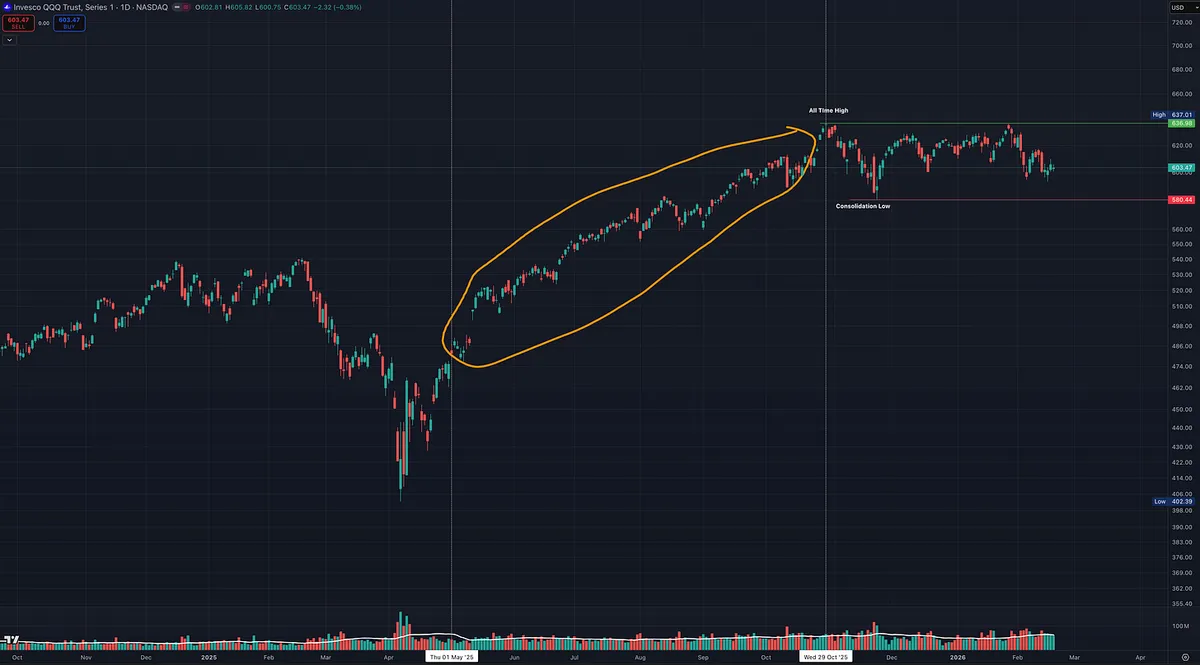
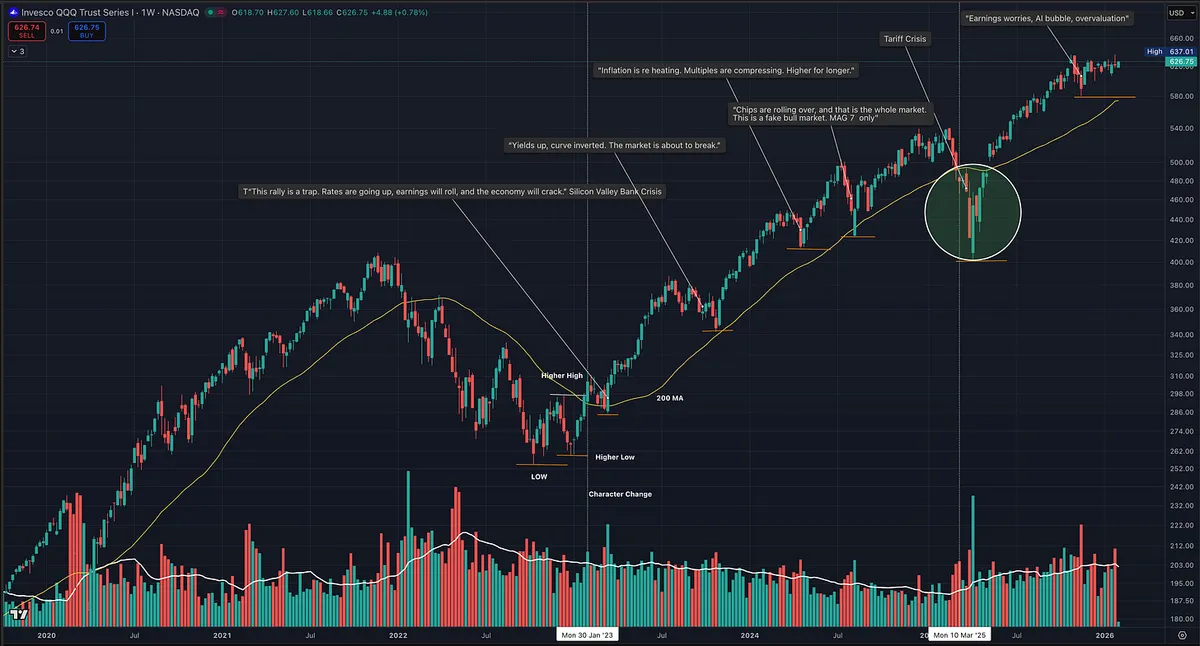
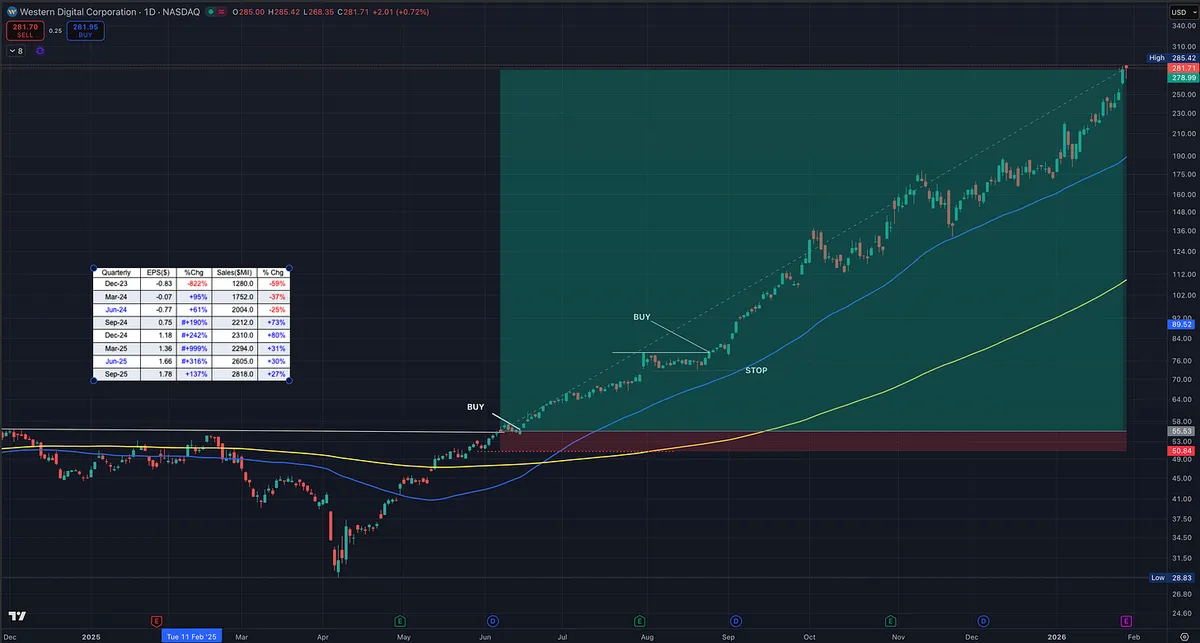
Look at the structure after the April flush:

  • Deep correction

  • Explosive move off the lows

  • Reclaim of key moving averages

  • Higher low

  • Breakout into expansion

  • Sustained trend above rising 20 / 50 / 200

The April flush looked horrible. It created immense fear.

Below the 200-day. Headlines negative. Sentiment weak.

But what actually happened?

QQQ made an explosive move off the lows right at prior major levels. It pulled back, set a higher low, and then accelerated.

That’s character change.

Leaders stopped breaking down. Pullbacks held. Breakouts followed through.

Even entries 15–20% off the lows worked because the environment improved and we got a reset.

From May through September, that move was enough to make the year.

Selective participation means:

Trade less during noise. Save capital for when it’s time to press.

Markets don’t distribute opportunity evenly.

They cluster it.

The edge isn’t trading more.

It’s trading when conditions are exceptional.

Why fight current conditions?

Wait.

We will get another great environment.

View on Substack ↗

Last Year’s Leaders Are Slowing Down

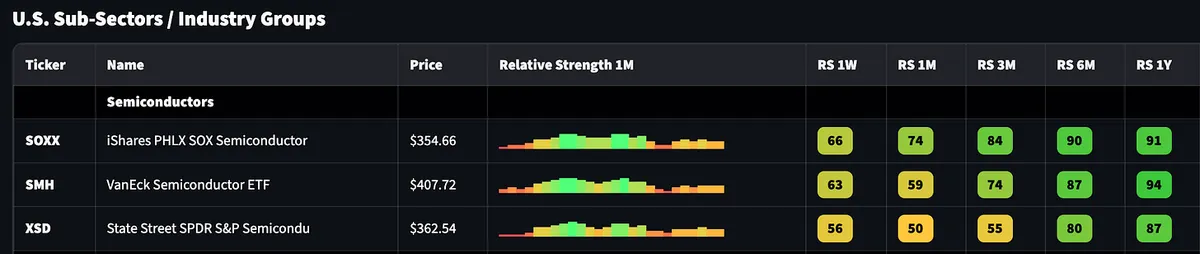
Semiconductors are no longer the clear leaders.

One year relative strength was in the 90s. Three months dropped into the 70s and 80s. Last week printed in the 50s and 60s.

That is deceleration.

Yes, there are still individual winners, but the group is no longer dominant.

Leadership is not about a few stocks making noise. It is about sustained institutional sponsorship across the group.

When the strongest group in the market begins to cool, you do not panic.

You observe.

You rotate with capital.

The question is simple:

Are you still trading last year’s leaders, or are you following where money is flowing now?

Rotation does not announce itself loudly. It shows up in relative strength before most traders feel it in their P&L.

Pay attention to the groups.

View on Substack ↗

Feeling the Death by a Thousand Cuts Market? Here Is What the Rotation Is Really Telling You

The new Big Picture Market Pulse | February 16, 2026 is live.

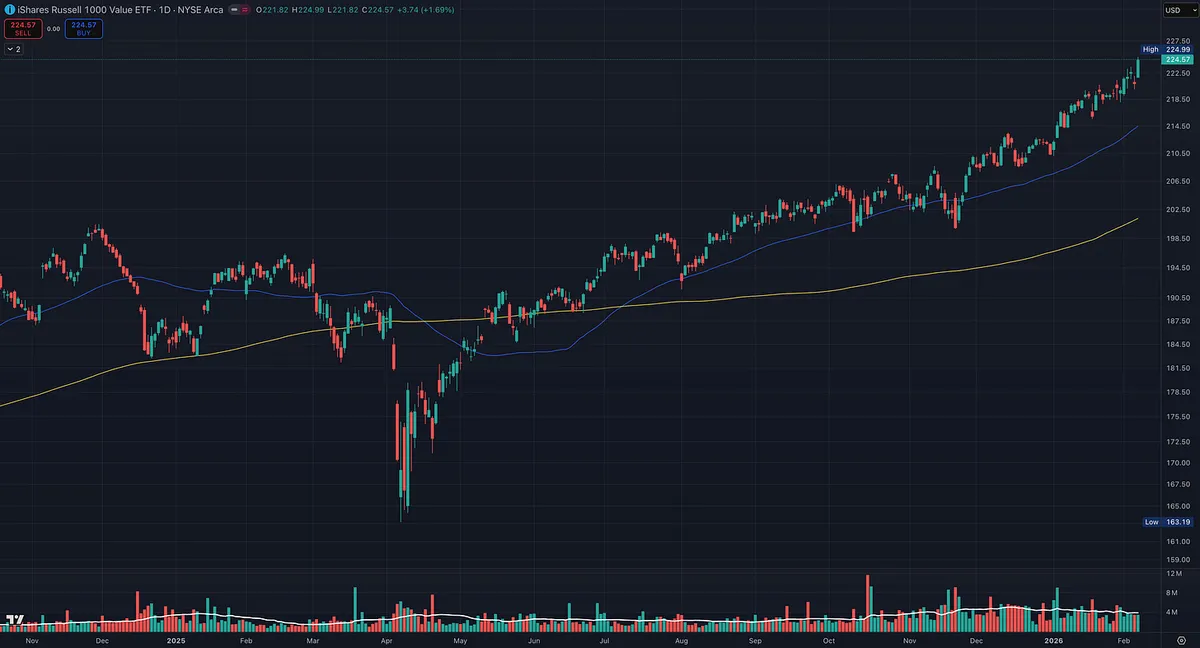
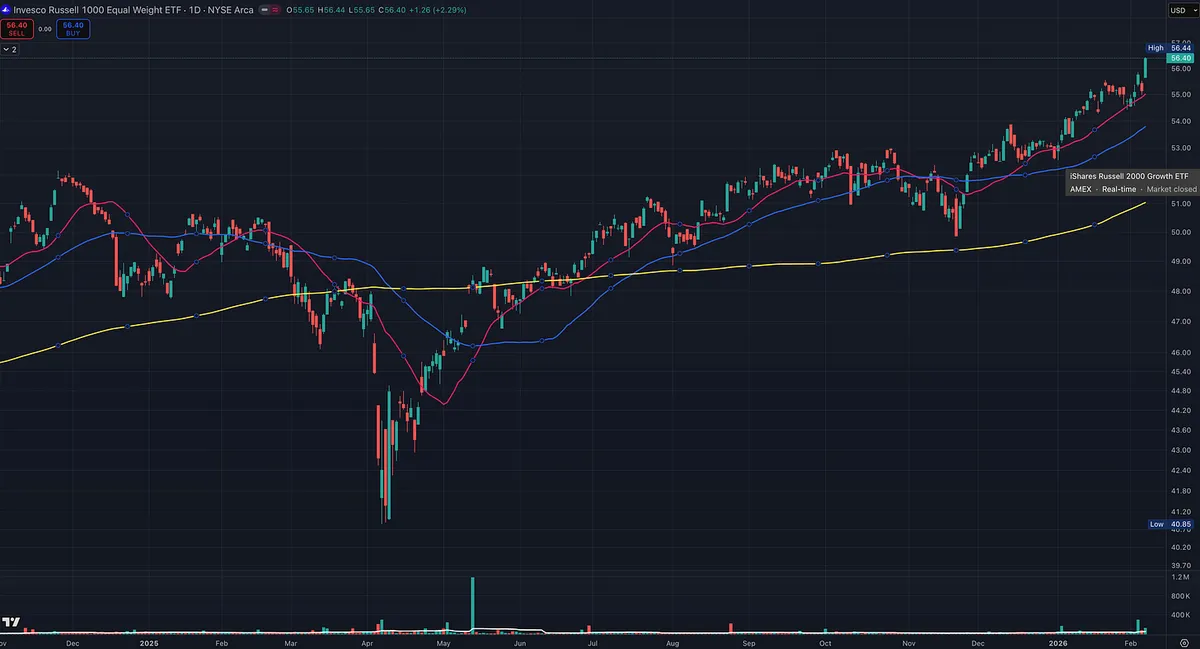
Distribution is building in the Nasdaq. Sector rotation is accelerating beneath the surface. Mega caps are stalling while small caps, mid caps, and value quietly take leadership.

If the market has felt frustrating, choppy, and difficult to make progress in, you are not imagining it. Many traders are stuck trading last cycle’s leaders while capital is flowing elsewhere.

This week’s market analysis breaks down:

• Nasdaq distribution days and what they mean

• Sector rotation into small caps, mid caps, and value stocks

• Market breadth and relative strength trends

• How to adjust exposure in a rotational bull market

• A top down to bottom up trading framework for the week ahead

This is not reactive trading. This is structured preparation.

Top down market analysis followed by bottom up stock screening, scanning, and watchlist refinement.

If you want clarity on market direction, leadership shifts, and how to position for the week instead of reacting emotionally, start here.

https://tradingmomentum.substack.com/p/big-picture-market-pulse-february-01c

On SubstackBig Picture Market Pulse | February 16, 2026
View on Substack ↗

Yesterday’s Leaders Become Tomorrow’s Laggards

You’re late to the party.

Look out below.

The same stocks that went up the most can go down the most.

Technology led the 1998 to 2000 bull market.

From 2000 to 2002, those same leaders became the biggest losers.

During the next bull market, they recovered only a fraction of what they lost.

Financials and housing led from 2003 to 2007.

In 2008, they suffered the steepest declines.

History is clear.

The leaders of one bull market are rarely the leaders of the next.

If history is any guide, former leaders should generally be abandoned as buy candidates during bear market recovery rallies and for the next bull market.

There is one exception.

If leadership stocks or sectors began emerging near the end of the prior bull cycle, they can sometimes continue into the next advance.

But that is not common.

Very often, the next bull market leaders emerge from the most unlikely areas.

They quickly reveal themselves through price.

Strong relative strength. Constructive bases. Powerful breakouts. Institutional demand.

Follow the leaders.

Buy strength.

Avoid laggards.

Because markets reward alignment with emerging leadership, not loyalty to the past.

View on Substack ↗

The Problem With Bubbles That Most Investors Don’t Understand

Everyone screaming “AI bubble” is likely right.

But so what?

Bubbles can last for years.

In the meantime:

Are you sitting on the sidelines scared, missing one of the strongest profit environments of the decade?

Or are you blindly buying every dip pretending it can never end?

Both extremes lose.

Here’s the uncomfortable truth:

Some of the greatest wealth-building periods in history were bubbles.

The 1920s. The dot-com era.

For the disciplined trader or investor, those weren’t disasters.

They were life-changing.

Not because bubbles are safe.

But because strong trends plus expanding emotion create massive opportunity.

The mistake isn’t participating.

The mistake is participating without a plan.

Yes, bubbles eventually pop.

They always do.

But disciplined operators don’t ride them all the way back down.

They exit to cash.

They lock gains.

They protect capital.

Often making more in one bubble cycle than they made in several prior years combined.

Don’t fear bubbles.

Fear being unprepared for them.

Markets are human emotion.

Emotion is not rational.

And bubbles will always exist because human emotions make up the market.

The real question is simple:

Are you trading the bubble…

Or is the bubble trading you?

View on Substack ↗

The Leaders Always Leave First. That Does Not Always Mean The Top Is In.

Jesse Livermore built his fortune trading leading stocks.

“I made most of my money in leading stocks.”

That principle has not changed.

This bull market from late 2022 through now has had clear leadership. Stocks that institutions crowded into. Stocks that drove the indexes. Stocks that felt unstoppable.

And now we are seeing something subtle.

Rotation.

Money moving into metals. Consumer names. Defensive groups. Areas that typically do not lead early in expansion phases.

That gets people nervous.

But here is the nuance most miss.

Rotation does not automatically mean market top.

Sometimes it signals late cycle distribution. Sometimes it signals digestion before the next leg higher. Sometimes bulls simply run much longer than logic suggests.

This is what makes it hard.

The market rarely rings a bell. It shifts character.

Mark Minervini wrote in Trade Like a Stock Market Wizard:

“Market leaders tend to foretell turns to the downside as well.”

Notice what that means.

Leaders tell the story first. Not the headlines. Not the index.

If true leaders stall while the averages grind higher, that is information. If leadership reasserts and breaks to new highs, that is also information.

Rotation is not confirmation. It is context.

The job is not to predict the top. The job is to stay aligned with true leadership and adjust if character changes.

The market whispers before it screams.

Are you listening?

View on Substack ↗

Zooming Out Before Zooming In

After the markets close on Friday, I spend the weekend zooming out to get a clear snapshot of the market before diving back into the micro work.

The Big Picture Market Pulse is part of that top-down process. It helps frame index structure, internal conditions, and the macro backdrop before I shift into a bottom-up process of screening and narrowing thousands of stocks.

Read here:https://tradingmomentum.substack.com/p/big-picture-market-pulse-february-f68

On SubstackBig Picture Market Pulse | February 7, 2026
View on Substack ↗

Put/Call Ratio: Useful, Not Perfect

No indicator works 100% of the time. Put/Call is no exception.

Honestly, I don’t put a ton of weight on sentiment by itself, and most traders don’t. If stocks and setups are working, you can press. If they stop working, that’s usually the first sign of a market shift. Then you start seeing it show up in the indexes, volume, and breadth.

That said, if you are going to look at sentiment, Put/Call is far better than surveys.

Surveys tell you what people say. Put/Call shows how people are actually positioning money.

That’s the key difference.

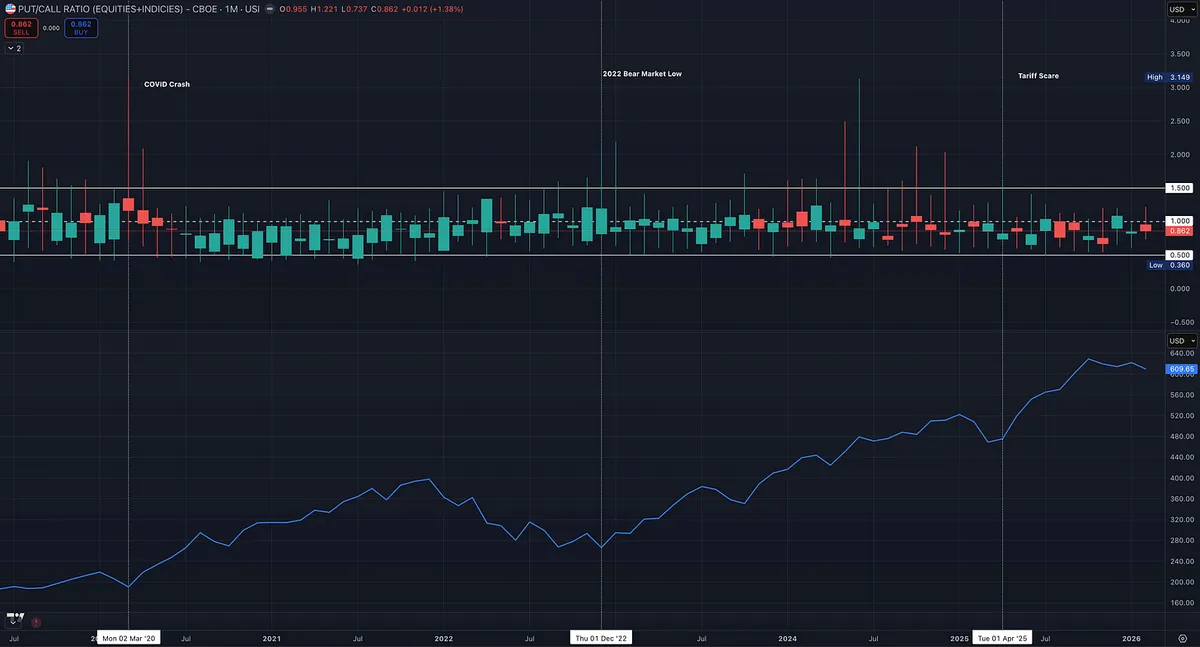
Looking at the longer-term Put/Call chart, you can see how spikes tend to show up around periods of stress or fear, like the COVID crash and the 2022 bear market low.

It’s not perfect though.

A good example is May–June 2024, where we saw a large spike that turned out to be a false signal. My guess is that move was driven by higher-for-longer rate fears, concerns about narrow market leadership, and macro hedging rather than true panic.

That’s why Put/Call should never be used as a standalone signal.

Think of it as:

  • A risk gauge, not a trigger

  • Context, not a call

  • Confirmation, not a strategy

Price still leads. Trend still matters. Sentiment just helps you understand the backdrop.

Positioning beats polling, but execution still beats everything.

View on Substack ↗

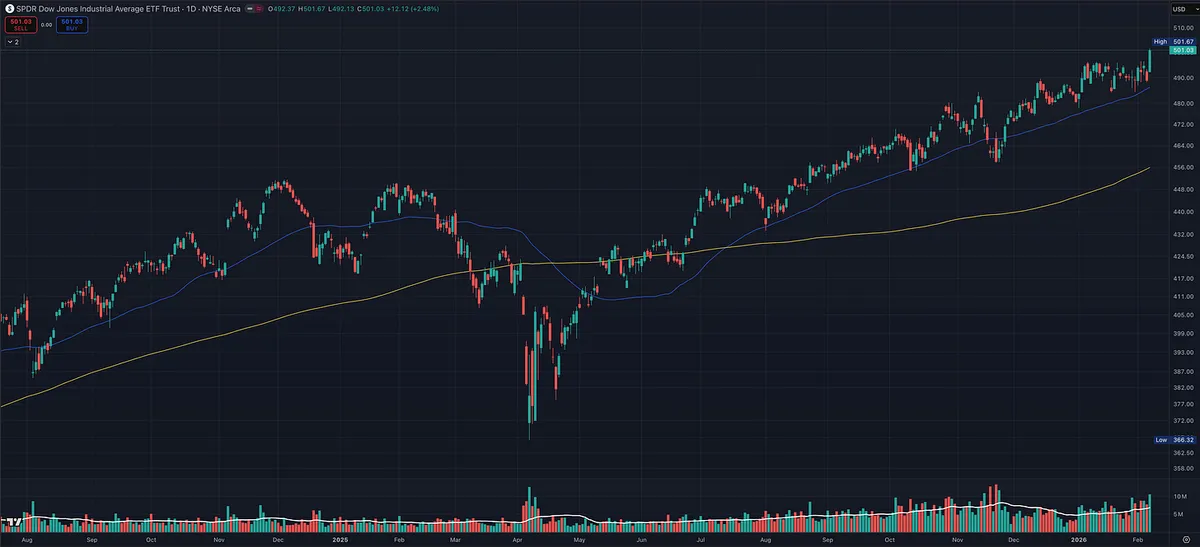
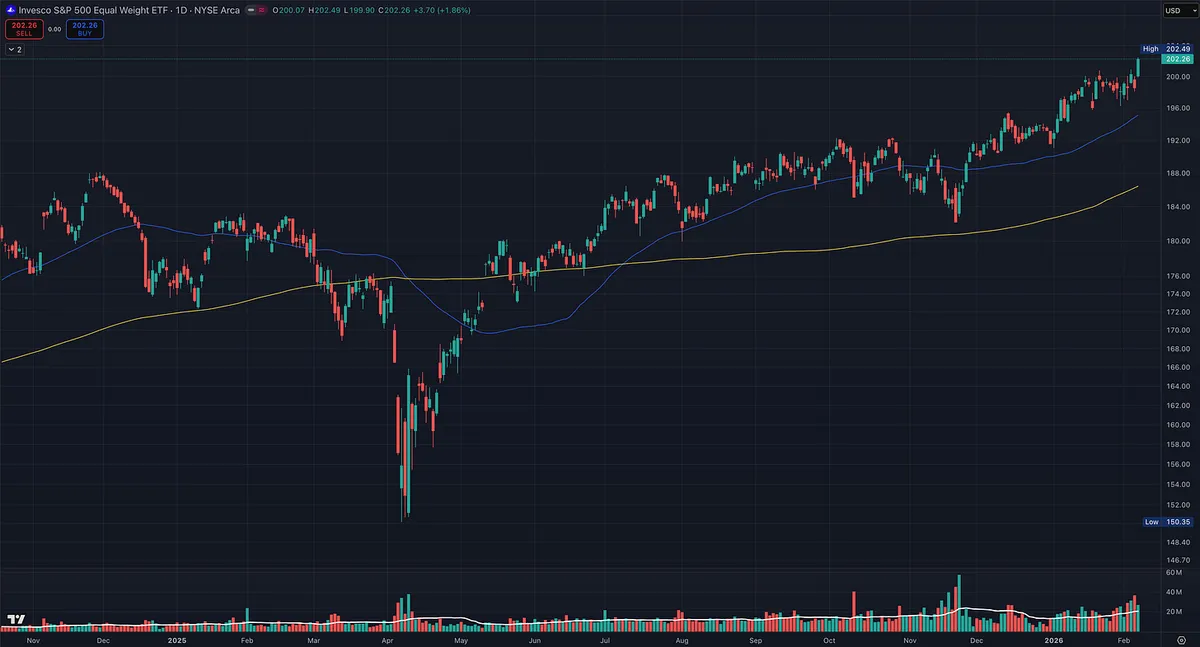
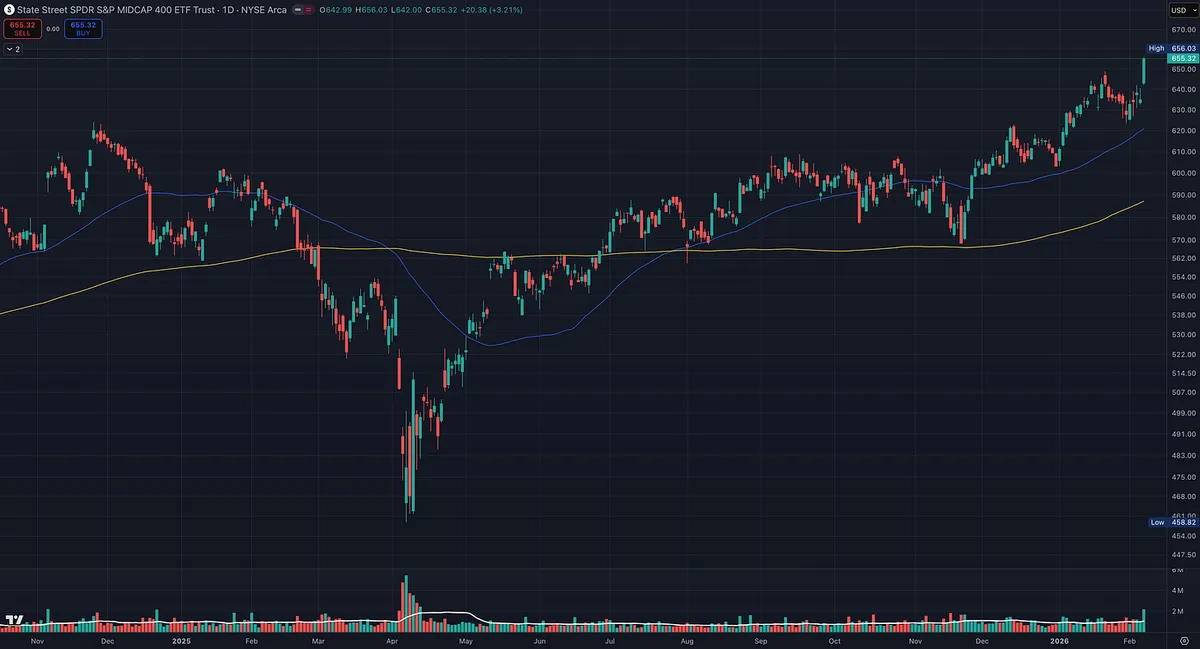
Why This Does Not Look Like a Major Market Top

Major market tops typically occur when all indexes roll over together. Leadership narrows, breadth deteriorates, and downside momentum becomes synchronized across growth, value, small-caps, and large-caps.

In 2022, nearly every major index moved lower in unison, confirming a true bear phase. That is not what we are seeing today. Current weakness in certain areas is being offset by strength in others, reinforcing the view that the market is experiencing rotation rather than broad-based distribution.

View on Substack ↗

Markets Aren’t Rational. They’re Human.

The market is made up of humans.

And humans are not rational.

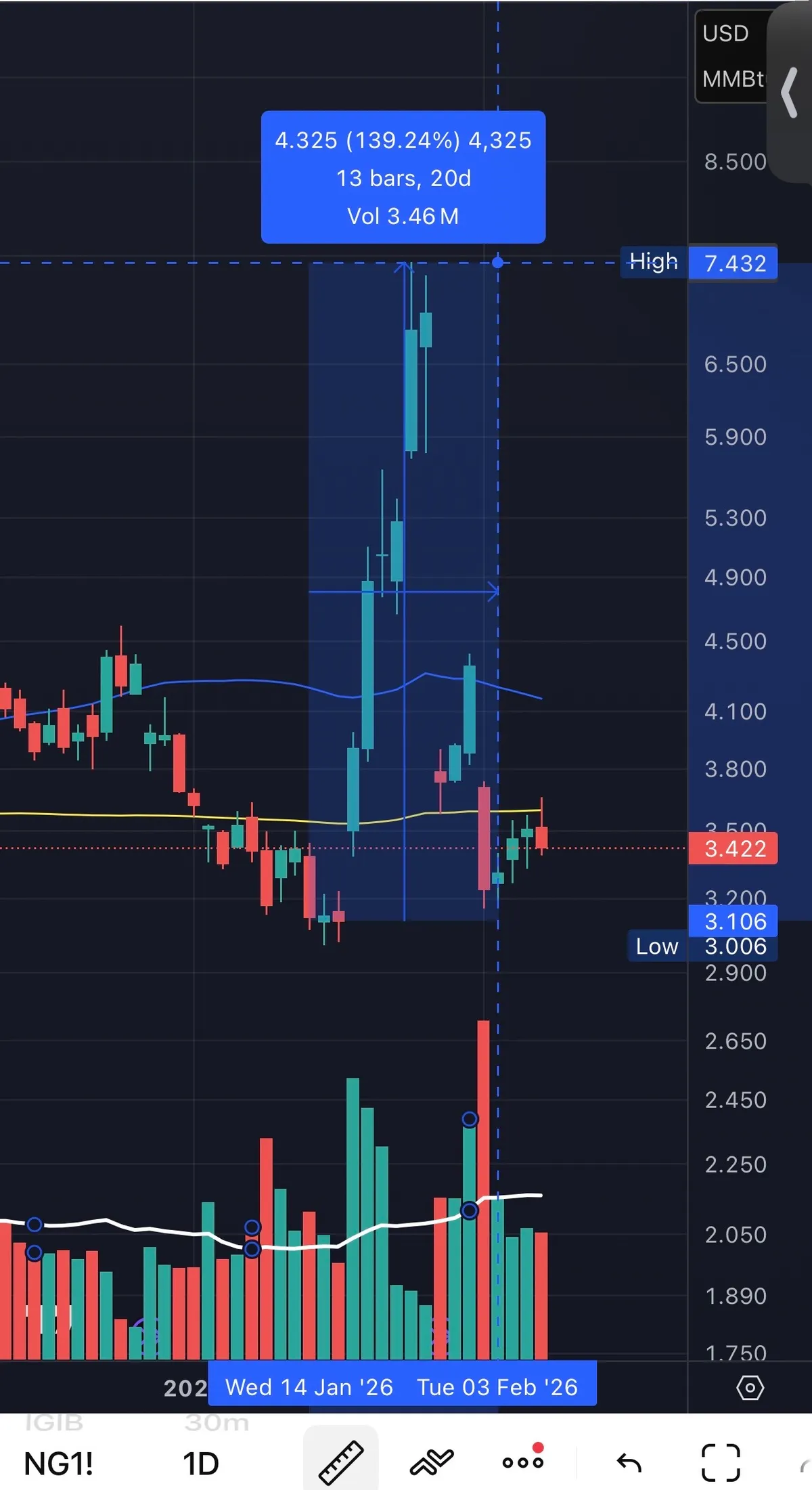
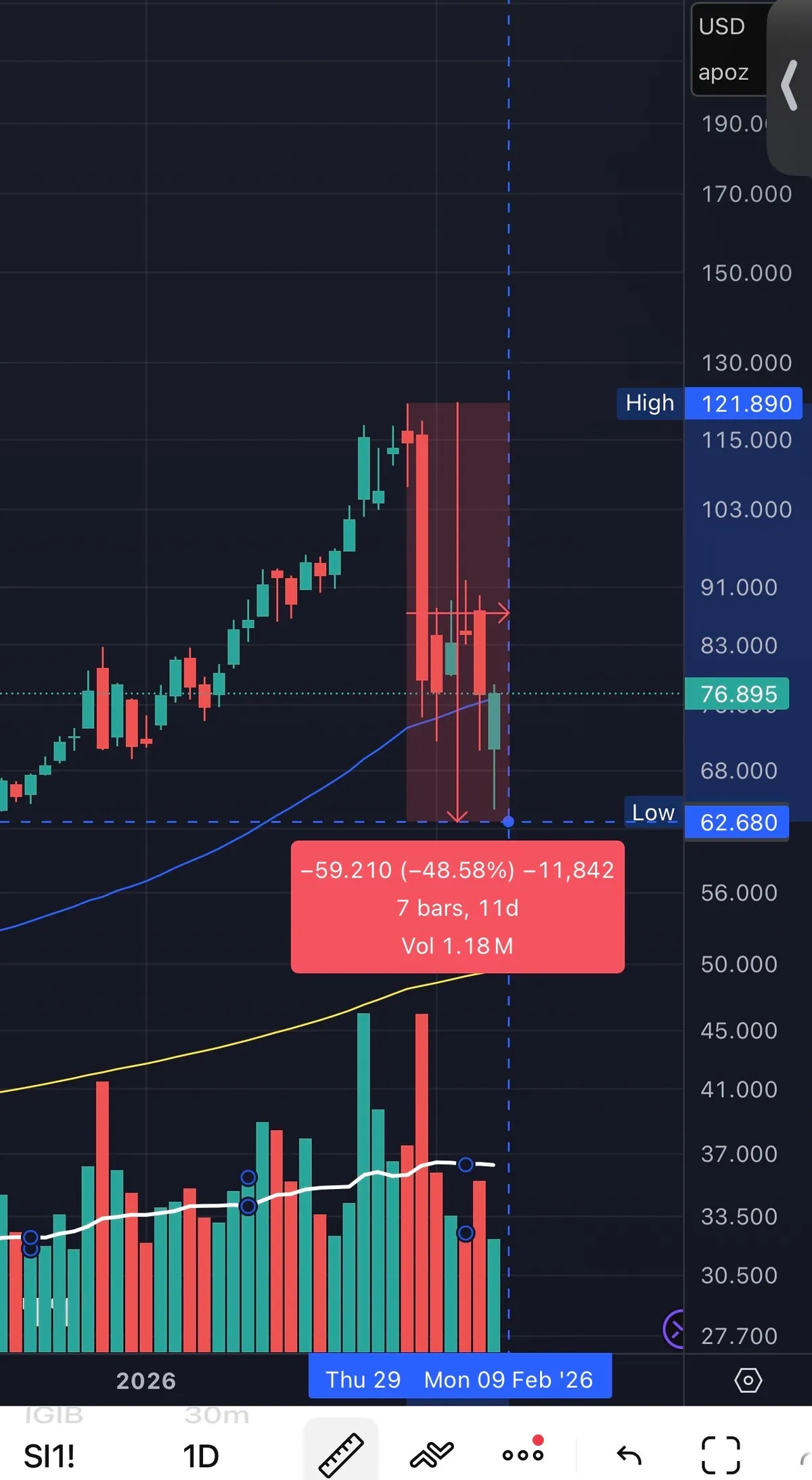
After living through enough events that once seemed unlikely, moves like this no longer surprise me. Not in silver. Not in stocks. Not in crypto.

Extreme moves only feel shocking if you expect people to behave logically under pressure.

They don’t.

Fear, greed, disbelief, and urgency drive decision making far more than models, narratives, or fair value. When enough people are positioned the wrong way, price does not move politely. It moves violently.

Even algorithms and systematic strategies are not immune. Humans design them. Humans monitor them. And under stress, humans override, tweak, or abandon their systems at exactly the wrong time.

That is why massive run ups and sharp collapses are not anomalies. They are a natural expression of human behavior showing up through price.

This is exactly why price and volume matter so much. They reflect what people are actually doing, not what they say they believe.

Irrational behavior will always exist because emotions will always exist.

The mistake is assuming markets should act calmly just because something looks obvious in hindsight.

They never have. And they never will.

Price is simply the scoreboard of collective psychology in real time.

And when sentiment reaches an extreme, the move that shocks most people is often the one that was inevitable all along.

View on Substack ↗

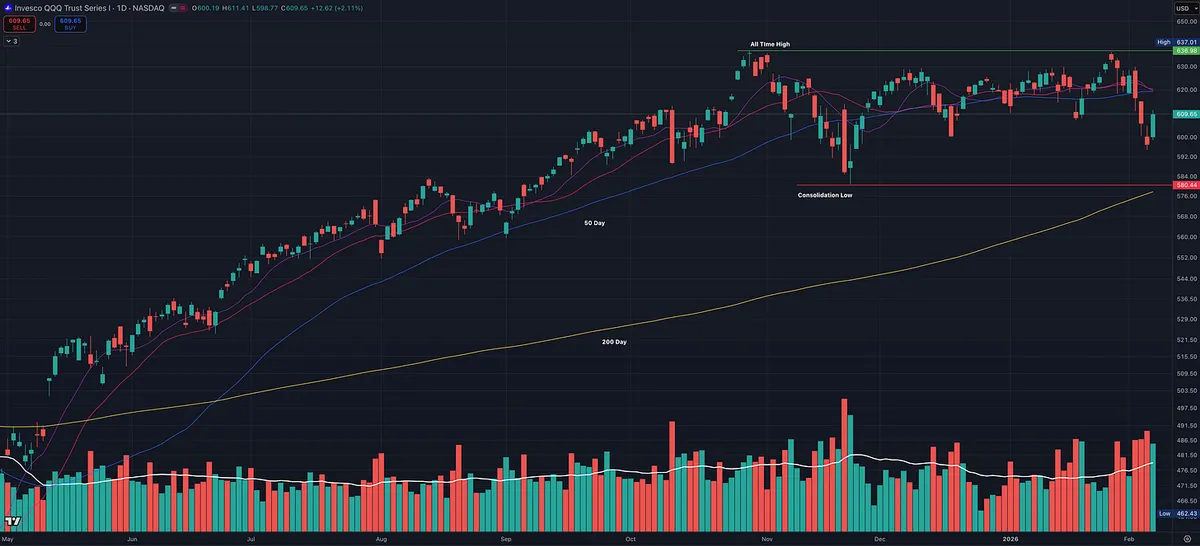
Rotation Example

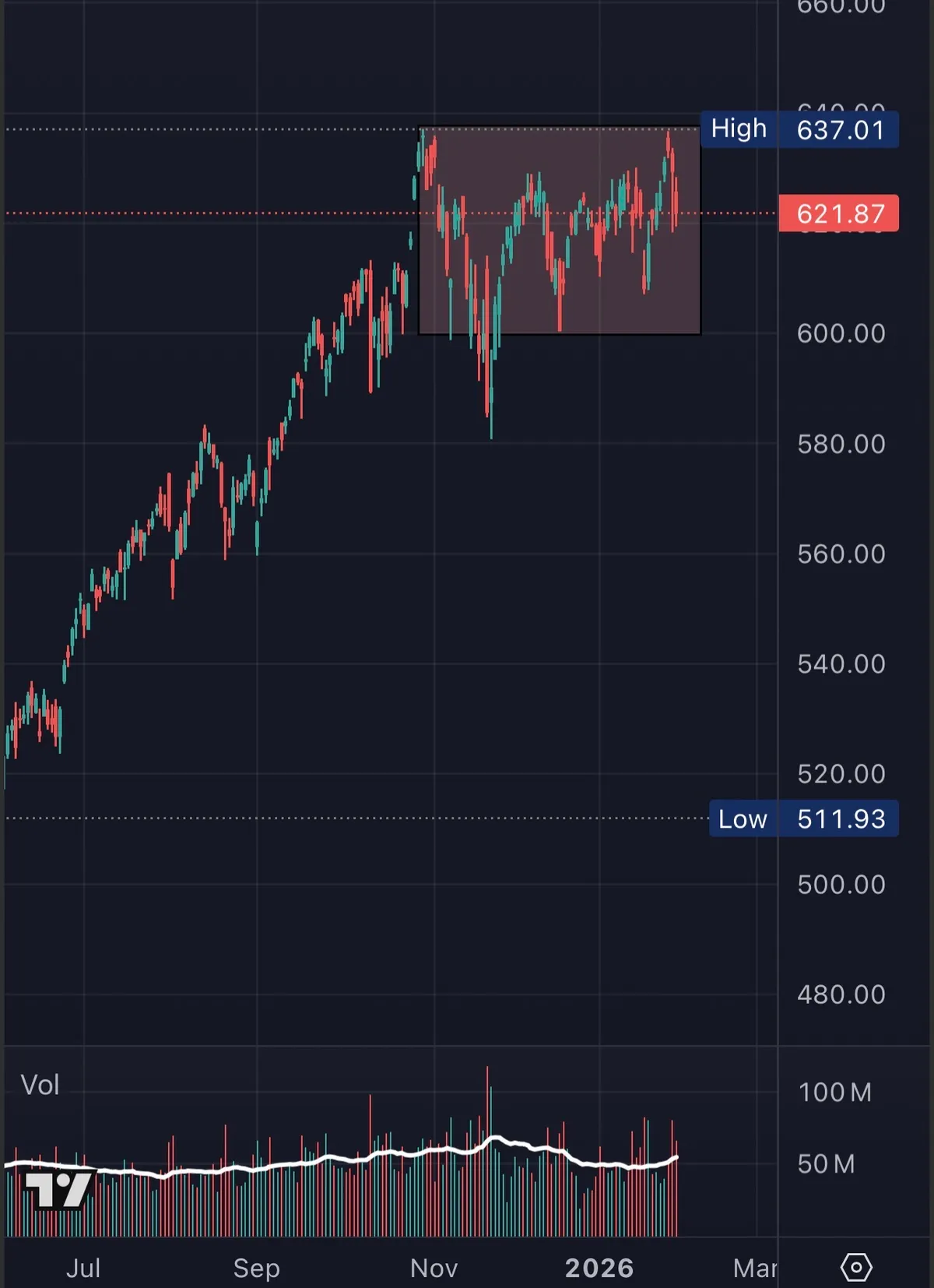
When the market is down, stalling, or consolidating like this, leadership often shifts instead of disappearing.

QQQ looks heavy here and is pulling back within a broader consolidation. In environments like this, money tends to rotate out of higher-beta growth and into more defensive areas.

That’s why consumer staples often show relative strength during periods like this. As risk appetite narrows, capital looks for stability, not necessarily cash.

This is typical rotation, and the relative strength dashboard reflects it, with 3-month RS improving for consumer staples right around the start of the consolidation.

View on Substack ↗

Most Stocks Follow the Market. Period.

Quick reminder.

“Three out of four stocks will go in the same direction as a significant move in the market averages.” William O’Neil

This single idea explains why so many traders struggle.

They obsess over individual stock stories while ignoring what the market itself is doing.

The reality is simple.

When the market is trending higher, the odds are stacked in your favor. When the market is trending lower, even the best looking stocks become harder to own.

This is why market direction matters so much.

When you see a growth stock performing well during a tough market, it usually does even better when the market turns back up. There is rarely any rush to buy.

If the averages are under pressure, I reduce exposure. If the market is confirming, I press my best ideas.

You want to swim with the current, not against it.

You can have perfect fundamentals and clean charts, but if the market is moving the other way, you are swimming upstream.

Most stocks follow the market. Fight that and you fight math.

Respect it and trading gets a lot easier.

View on Substack ↗

The Trader Who Adapts the Fastest Wins

One of the biggest advantages a trader can have is the ability to spot patterns and adapt.

Markets change. What worked a few months ago will eventually stop working. The traders who struggle are the ones married to a single setup or a fixed belief about how the market is supposed to behave.

An edge comes from recognition speed.

The faster you can recognize when breakouts stop working and buying support starts working, the better.

The faster you can recognize when breakouts begin working again, the better.

This is not about abandoning your process.

It is about adjusting execution to current conditions.

There are periods where:

  • Breakouts fail quickly

  • Tight entries near support outperform

  • Mean reversion pays better than momentum

Then conditions shift.

Suddenly:

  • Breakouts hold

  • Follow through improves

  • Momentum strategies regain their edge

The trader who adapts early keeps making money.

The trader who adapts late gives profits back.

The trader who never adapts eventually quits.

Pattern recognition is not a buzzword. It is a skill built through screen time, journaling, and brutal honesty about what is actually working.

Your job is not to predict.

Your job is to observe.

The market leaves clues every week.

Price tells you what is working if you are willing to listen.

Your ability to recognize new patterns, and changing patterns, is not optional.

It is essential.

View on Substack ↗

The Market Rewards Bullish Optimists With Humility

It pays to be an optimist.

One of the biggest lessons of this cycle is simple, but uncomfortable for many traders.

The market has consistently rewarded those who leaned bullish, even through pullbacks, consolidations, and choppy periods.

Since the last bear market low, every meaningful drawdown has eventually resolved higher. Volatility shook people out. Headlines turned bearish. Sentiment got ugly, and yet price kept doing what it tends to do in a bull market.

It moved higher over time.

If you stayed structurally bullish, you were right far more often than wrong.

If you stayed bearish, you mostly sat on the sidelines waiting for a crash that never came.

That does not mean buying blindly or ignoring risk. That is where humility matters.

Bullish optimism only works when paired with the willingness to admit when you are wrong.

Cut losses quickly. Reduce exposure when price breaks structure. Step aside when leadership deteriorates. Respect the market when it tells you you are early or incorrect.

But directionally, the edge has been clear.

Every pullback since the bear market has been an opportunity, not an imminent collapse.

The chart makes this obvious.

You can see the pauses, the shakeouts, the frustrating sideways action, and you can also see that staying aligned with the primary trend paid again and again.

Meanwhile, persistent bears did not lose money. They just did not make any, unless they got run over shorting.

And in trading, opportunity cost is still a cost.

This is not about being permanently bullish. It is about understanding regime.

In a bull market, the market rewards optimism with discipline. In a bear market, it rewards caution and patience.

Right now, the data says optimism with humility has been the winning combination.

And here is the part most people miss.

Eventually, one of these pullbacks will turn into the next real bear market. That is how cycles work.

But it will not matter if you have been making money the entire way up, and you have enough humility to get defensive when price and leadership change character.

Do not let fear keep you from opportunity in a bull market.

And do not let greed keep you from taking profits into strength.

Scale out into extensions. Let the remainder run. Tighten stops as price advances. If the trend stays intact, you stay in. If the market breaks structure, you step aside without hesitation.

Lean bullish. Stay flexible. Let price keep you honest.

View on Substack ↗

Do We Need Lighter Volume on Pullbacks for Index ETFs to Move Higher?

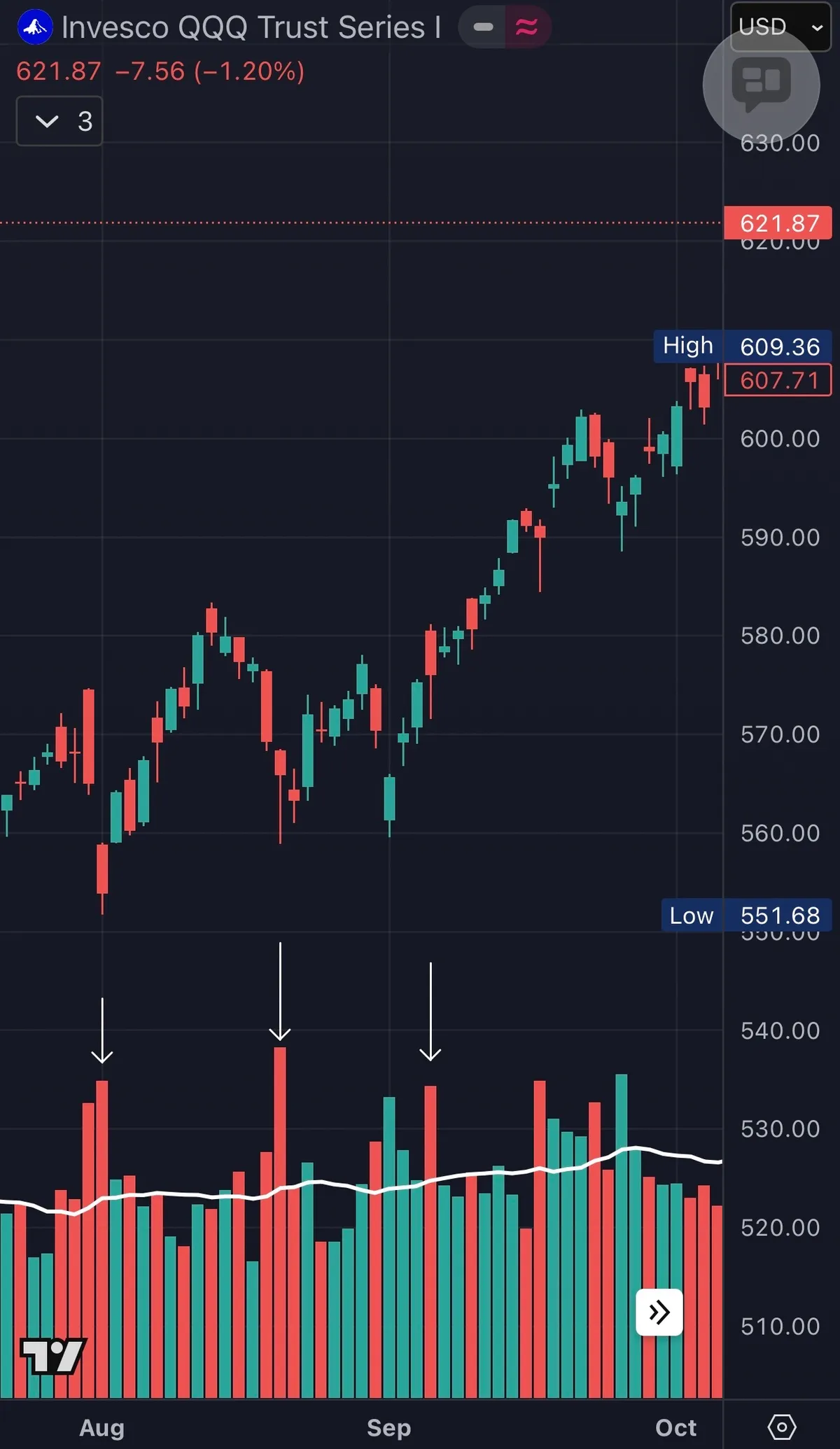
No, lighter volume on pullbacks would be ideal, but it is not required for index ETFs to continue higher.

Throughout this bull market, there have been many instances where volume expanded on pullbacks and price still resolved higher. Over the last couple of years, we have also seen consolidations where volume on down days was larger than volume on the breakout itself, yet price still moved higher. In many of those cases, volume increased as price advanced, just not to the same degree as it did on the pullbacks.

This is why volume must always be viewed in context. Index ETF volume is influenced by ETF flows, options hedging, rebalancing, and systematic strategies, which makes it noisier than volume in individual stocks.

The classic pattern of lighter volume on pullbacks and heavier volume on advances tends to appear more consistently in leading individual stocks, or when trading instruments like NQ futures on lower timeframes. On higher timeframes in strong index uptrends, price behavior and trend structure carry more weight than volume patterns viewed in isolation.

What matters most is when price begins to break character. That happens when price violates key support and fails to recover on heavy volume. In that scenario, selling pressure is gaining control and risk should be reduced or avoided.

During consolidations that are choppy and whipsawing, where down days show higher volume, it is important to remember that volume is only one input. Price remains the primary guide. How to handle these periods is personal and depends on where you are in your trading process. There are multiple valid approaches. Some traders may choose to stay in cash if the action feels uncomfortable. Others may hold due to a solid profit cushion and having already taken partial profits. Some will continue buying pullbacks and selling some into strength until the market ultimately decides direction.

The goal is not to predict outcomes. The goal is to align with price, manage risk, and let the market confirm when conditions change.

View on Substack ↗

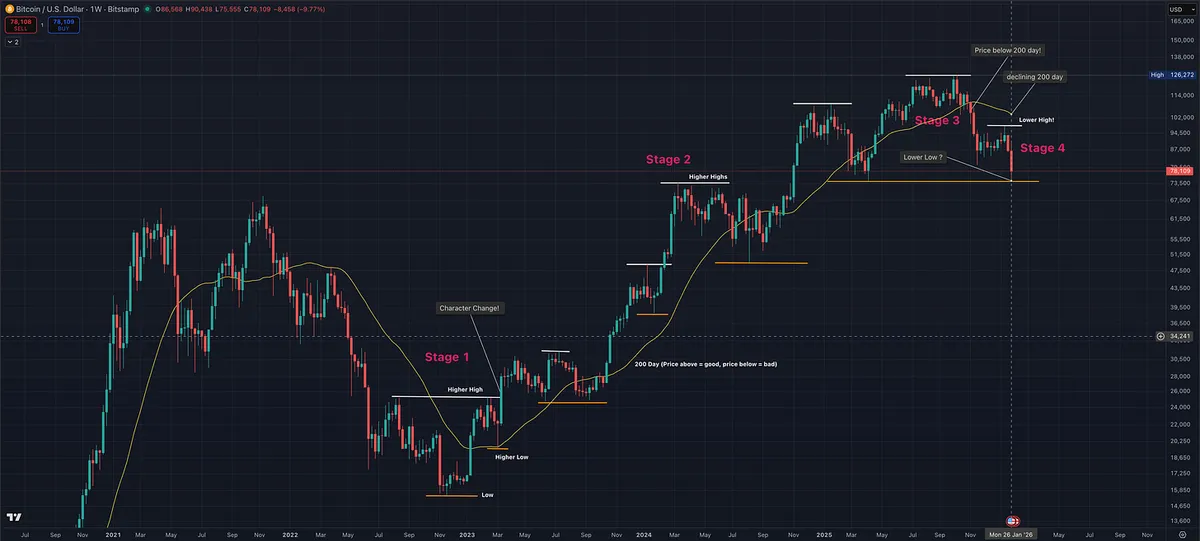
This Is What a Stage 4 Decline Looks Like – A Bitcoin Example

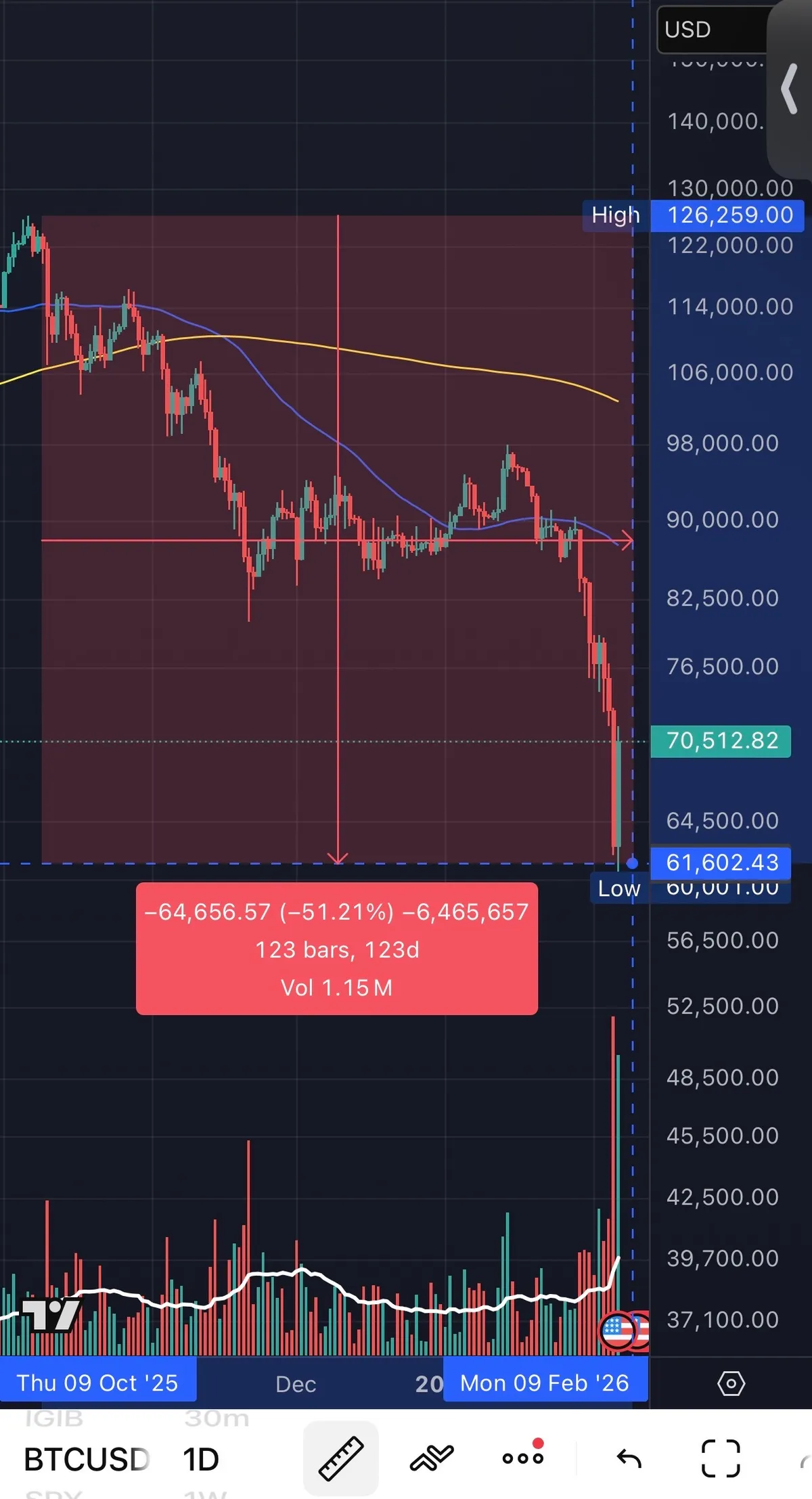
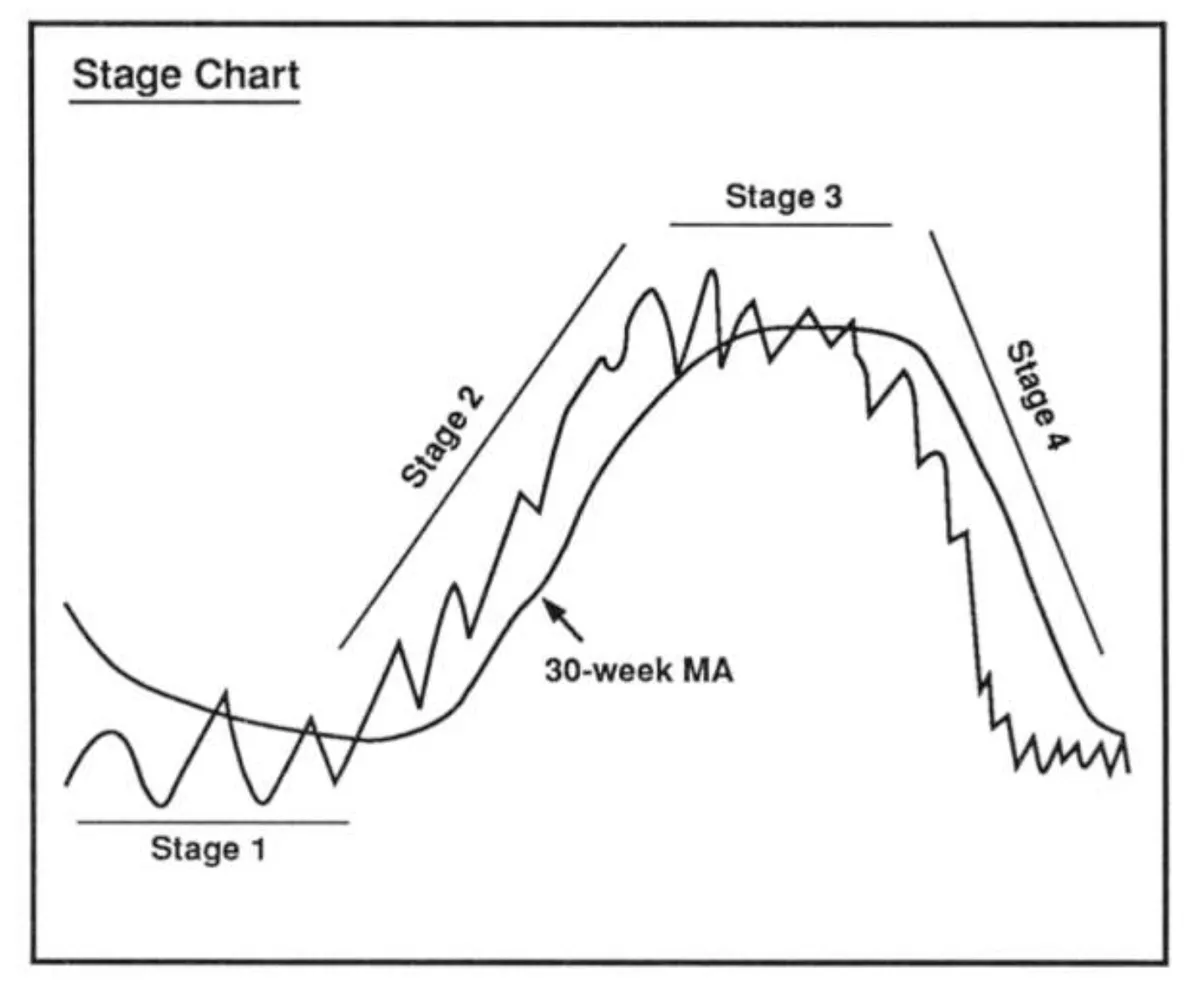
This chart is a textbook example of Stan Weinstein’s Stage Analysis in action.

Despite continued dip buying, the crypto market structure has clearly deteriorated.

Here’s what matters, not the narrative:

  • Price is below the 200-day moving average

  • The 200-day moving average is declining

  • A lower high has already formed

  • Lower lows are now developing

That combination defines a Stage 4 environment.

Stage 4 is not where leadership forms. It is where downside risk expands, rallies fail, and “cheap” prices often continue to get cheaper. This is not what we buy.

What makes this a powerful teaching example is the psychology. Even as structure breaks down, many participants continue to buy dips, anchored to prior highs rather than current trend. Price does not care about narratives. Structure tells the truth.

This is exactly why stage, trend, and long-term moving averages matter. They help keep you aligned with probability instead of emotion.

If price can reclaim the 200-day and the trend begins to repair, the conversation changes. Until then, this remains a Stage 4 decline, and risk should be treated accordingly.

View on Substack ↗

This week’s Big Picture Market Pulse is live.

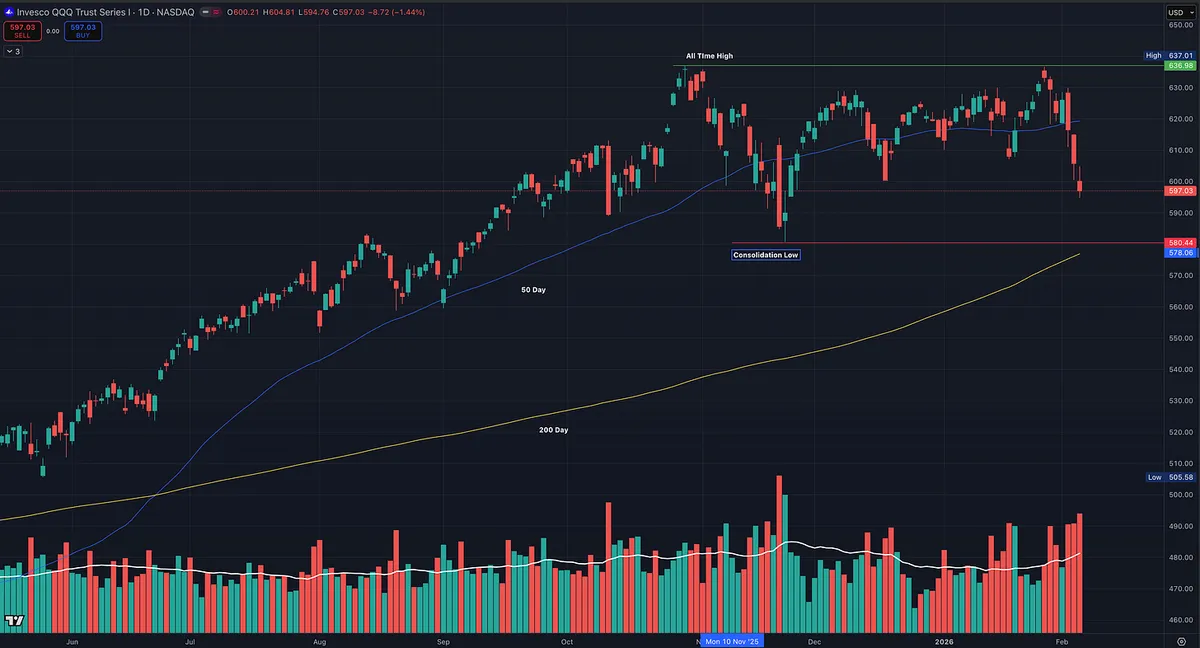
Indexes remain near highs, but conditions under the surface continue to frustrate traders. Failed breakouts, rapid rotation, and a classic digestion phase have made patience more valuable than activity.

In this update, I break down:

  • What the index structure is really telling us

  • Why this is still a constructive but selective environment

  • How to think about exposure, risk, and cash right now

  • What this means going into stock selection and watchlist building

This is not about predictions. It’s about aligning process with the current market regime and avoiding death-by-a-thousand-cuts trading.

Paid subscribers can read the full weekly update below 👇

https://tradingmomentum.substack.com/p/big-picture-market-pulse-february

On SubstackBig Picture Market Pulse | February 1, 2026
View on Substack ↗

Death by a Thousand Cuts

A lot of traders are getting chopped up trying to buy breakouts in this market.

Just look at the Nasdaq.

We’re not far from all-time highs, but the price action has been brutal. Tight ranges, failed moves, and constant reversals. That kind of environment is a killer for clean setups.

When breakouts stop working, forcing trades only makes it worse.

If you don’t have high-quality setups, the best position is cash. Patience is a position.

Listen to your trading. The market gives feedback every day. If your trades aren’t working, cut your size. If they keep failing, cut it again. Eventually, you may need to step aside completely.

When conditions improve, start back small. Let the market prove it’s ready. As setups begin to work again, then you gradually increase size.

Survival comes first. Opportunities always come back.

View on Substack ↗

Breadth Improved. Setups Did Not.

Even with markets near all-time highs and breadth much better than earlier in this bull market, I’m finding fewer quality low-risk, high-reward setups.

Many of the strongest names in the hottest areas are already extended or no longer offering clean entry points. That shrinks the opportunity set, even in a “strong” market.

This is exactly why William O’Neil often said,

“The biggest gains are made in the first two years of a bull market.”

Those periods usually come right after bear markets or major corrections, like the one we saw in April. That’s when leadership resets, new areas emerge, and bases form that allow for clearly defined risk and outsized reward.

Right now, we have improving breadth but constant rotation. Since last fall, the major indexes have been choppy, with leadership shifting between sectors and market caps. That environment makes timing harder and reduces the number of clean growth entries.

High-flying areas like Metals & Mining look great if you’re already involved. But chasing extended leaders late in a move is very different from entering early, when risk is controlled and upside is asymmetric.

Strong markets don’t always produce great setups.

Sometimes patience is the trade.

View on Substack ↗

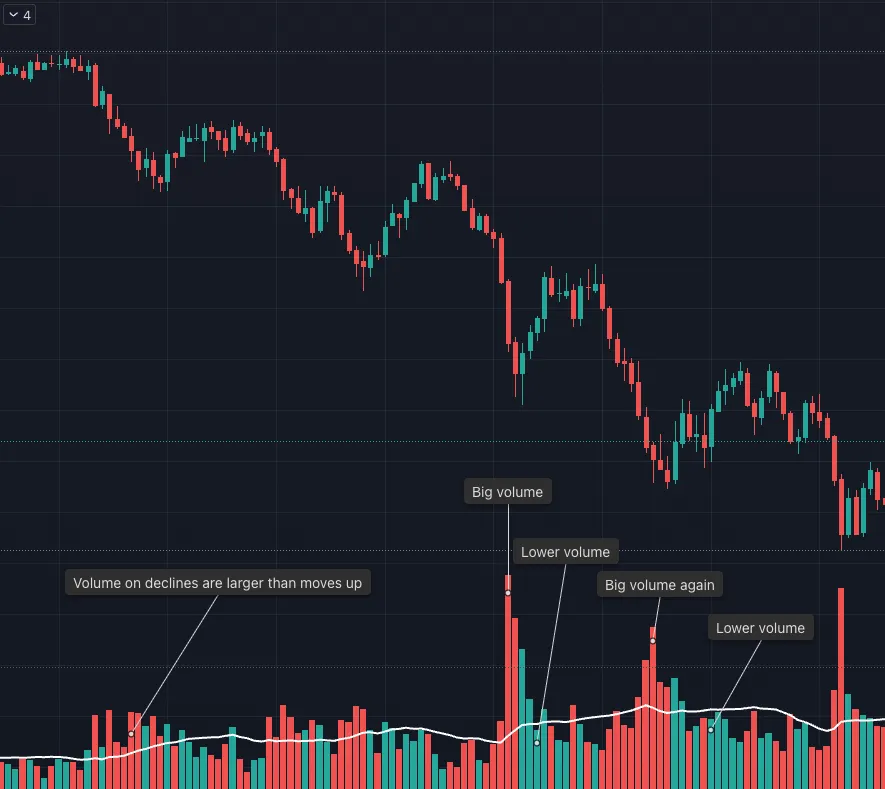
Price Tells the Truth. Volume Confirms.

This is not complicated.

Price is making lower highs and lower lows. That is the definition of a downtrend.

Now look at the volume.

Down moves are occurring on expanding volume. Up moves are happening on lighter volume.

That tells you who is in control.

Sellers are aggressive. Buyers are passive.

Rallies are being sold, not accumulated. Bounces lack commitment and fail quickly. Each push higher is weaker than the last.

There is no reason to outsmart this.

You do not need a prediction. You do not need a narrative. You do not need to call a bottom.

You simply follow what price and volume are confirming.

Lower highs. Lower lows. Heavy volume on declines. Light volume on rallies.

Very simple.

Do not fight it.

Trade with the trend, not your opinion.