Never buy a stock because it appears cheap after getting smashed
Stan Weinstein wrote that in Secrets for Profiting in Bull and Bear Markets. LULU shows why the warning matters.
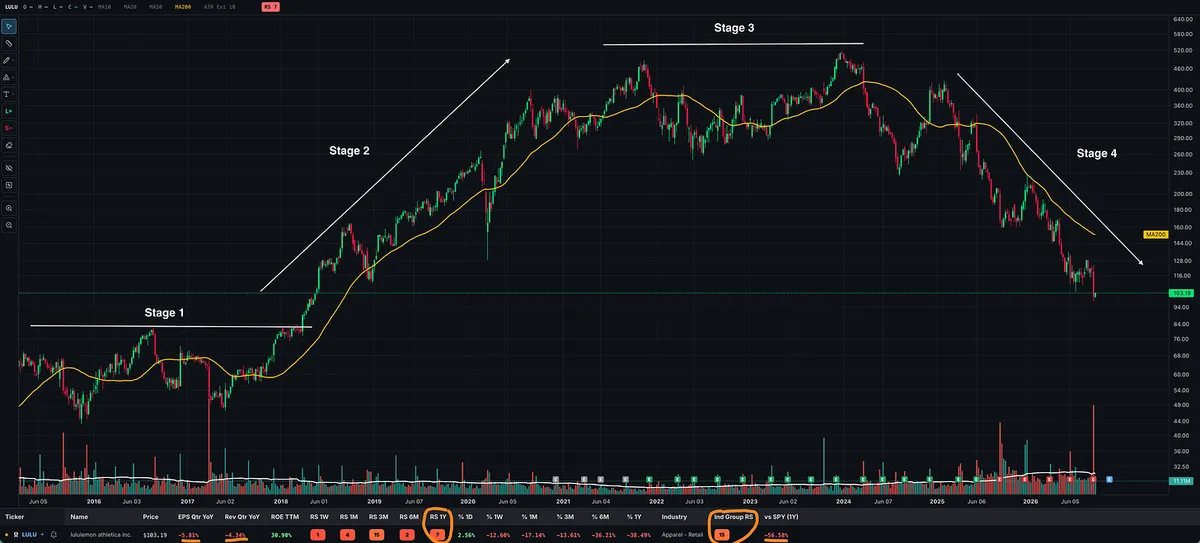
Weinstein’s framework follows four stages:
Stage 1: The base.
Stage 2: The advance.
Stage 3: The topping phase.
Stage 4: The decline.
On this chart, LULU is making lower highs and lower lows beneath a falling moving average.
Yet every lower price can tempt someone into calling it a better deal. They remember the old high, love the brand, and start averaging down while the chart keeps deteriorating.
The old price doesn’t tell you where the decline will end.
Averaging down increases your exposure. It doesn’t turn Stage 4 into Stage 2.
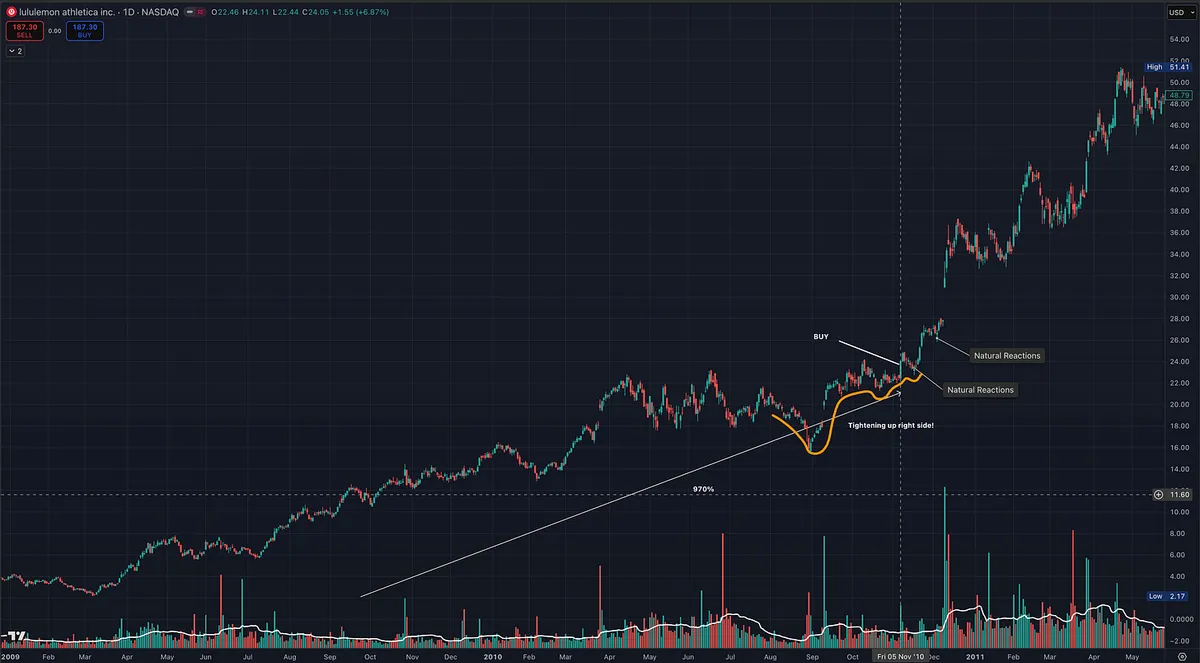
I want to see a proper base develop and evidence of a new advance. A stock has to earn its place back on my buy list.
Being cheaper than it used to be isn’t enough. If the chart is still breaking down, that “discount” can keep getting bigger.