Most Traders Wait Until It Feels Safe. That’s Why They Miss the Move.
The best market opportunities rarely feel comfortable.
They usually show up when the headlines are scary, social media is bearish, your gut feels uncertain, and every “smart” person has a reason why the market should go lower.
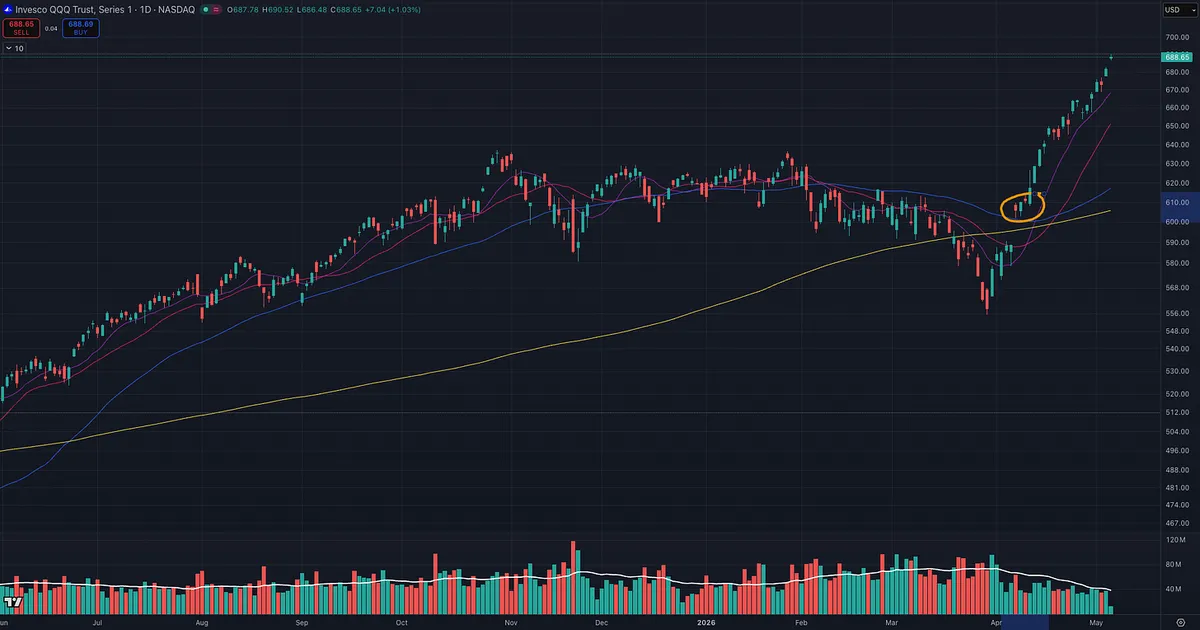
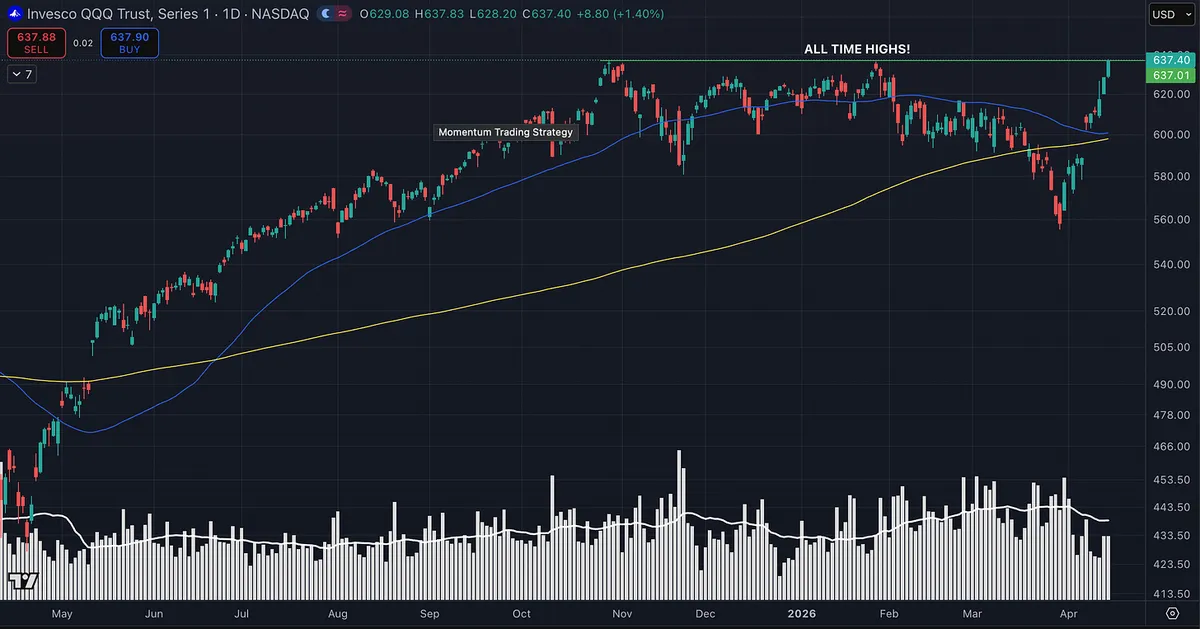
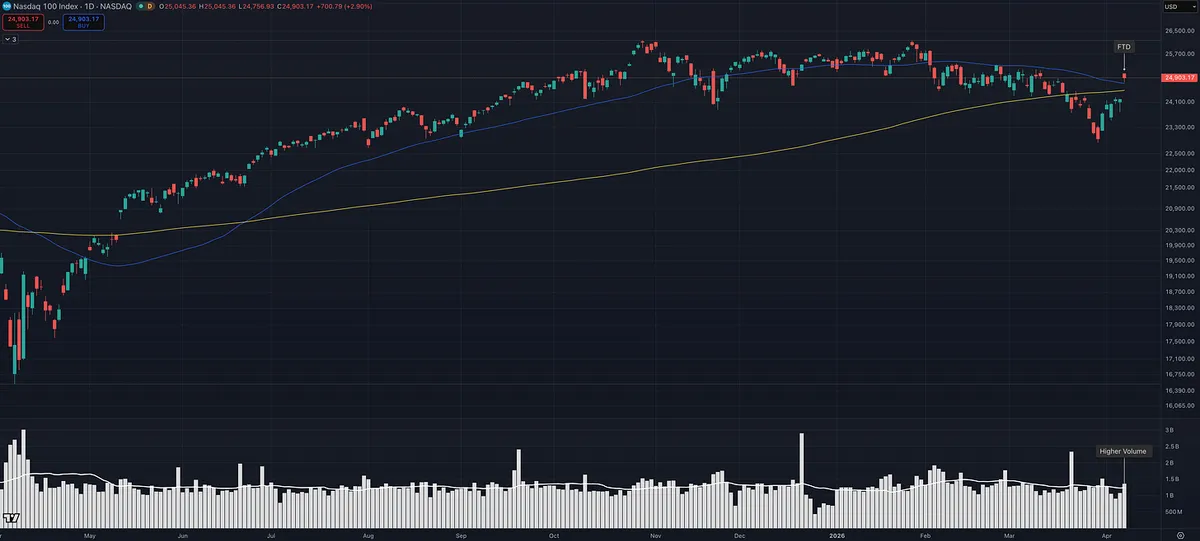
That is exactly what happened back around April 8.
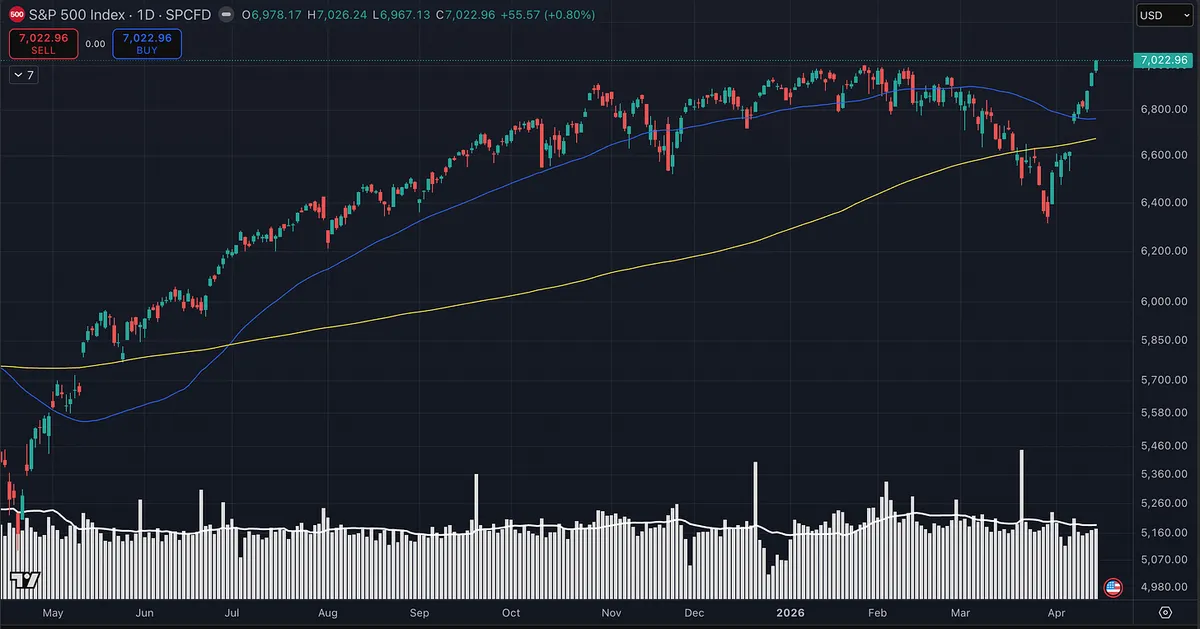
The market had broken down after a multi-month Stage 3. The Nasdaq 100 was below key moving averages. Breadth was horrible. Net new lows were greatly outpacing net new highs. Most traders were scared, and bearish.
Then the market established a low and started moving higher.
For shorter-term swing traders, the early signal may have been price reclaiming the 10-day and 20-day moving averages.
For longer-term traders, the more important signal may have been price reclaiming the 50-day and 200-day moving averages.
The timeframe can be different.
The signal can be different.
But the principle is the same:
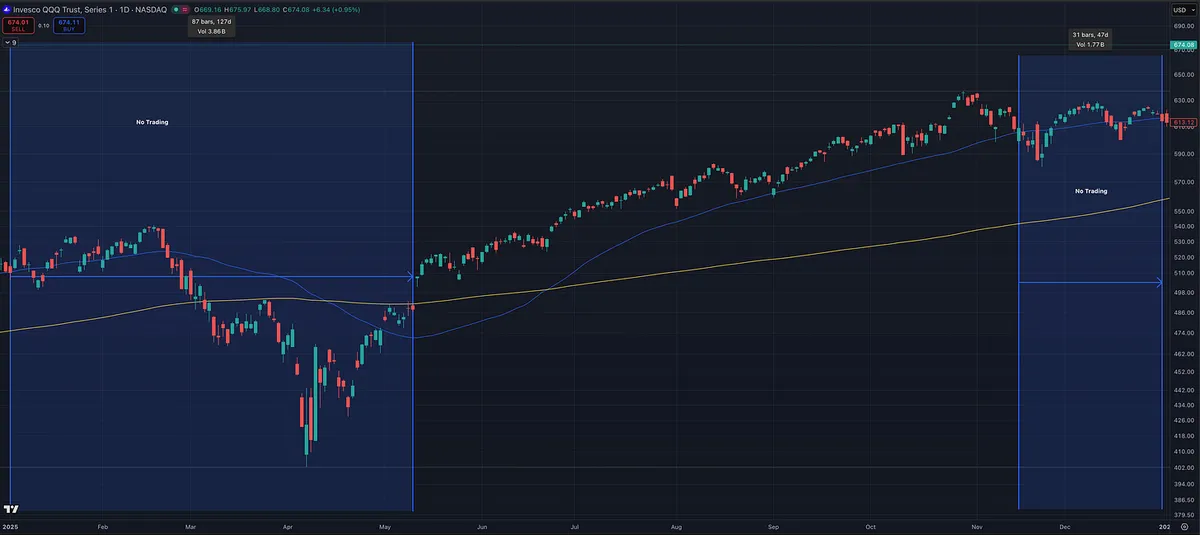
When the market starts improving after fear has already been priced in, those are often some of the best low-risk, high-reward areas to begin making pilot buys.
Not full exposure.
Not reckless buying.
Not blindly calling a bottom.
Just controlled, risk-defined entries when the evidence starts to shift.
Even if you waited until the big gap-up day on April 8, there were still a few days, April 8, April 9, and April 10, where traders had a chance to start getting back involved before the market stormed higher again.
But most people did nothing.
They were paralyzed by fear.
They had reasons.
Geopolitics.
Headlines.
Failed ceasefires.
Recession talk and AI driven job losses.
Inflation and supply chain disruptions.
Social media panic.
Very intelligent analysis explaining why they should stay out.
But the market does not pay you for having intelligent reasons to be scared.
It pays you for understanding risk and reward.
In that area, a trader could have entered with a defined stop around the 50-day or 200-day moving average, risking roughly 2% or less depending on the entry.
From there, the market has already moved roughly 11%.
That is more than five times the risk.
That is the entire point.
You do not need to know the future.
You need a repeatable strategy where the upside is meaningfully larger than the downside.
Even if you are wrong several times, one good trade can pay for the small losses and still leave you profitable.
That is why beginners struggle.
At the exact moment they should be testing the market again, they are frozen.
By the time they finally feel safe, the low-risk entry is gone.
Learn a strategy that has worked for decades.
Study price.
Study how markets move.
Study risk/reward.
Study the greats.
Then follow the process when it matters most.
One final point:
Yes, instinct matters.
Some of the best traders in history developed a real feel for the market and the tape.
But if you are new, your instincts are probably not market intuition yet.
They are fear, recency bias, and emotional self-protection.
Real instinct is earned through thousands of hours, repetition, losses, corrections, and experience.
Until then, trust the process more than your feelings.
That is how you stop reacting like the crowd.
That is how you start thinking like a professional.
This is what we study inside Momentum Trading Strategy.