Momentum Trading Strategy

Notes

Finding Leading Stocks

What to buy: how to find, screen and rank the strongest stocks and industry groups.

Showing 181–200 of 299 notes

View on Substack ↗

The Strongest Stocks Don’t Go Down (Even When the Market Is Falling)

Most traders wait for the market to confirm the move.

By the time it does… the best stocks are already gone.

Dan Zanger explained it simply:

“Leadership stocks will be sitting near new highs while the market is still falling.”

Think about that.

The market looks weak… headlines are negative… everything feels like it’s going lower.

But a few stocks?

They refuse to go down.

They sit near highs. They break out. They explode on earnings and volume.

By the time you’re waiting for the S&P 500 or Nasdaq to break resistance…

The leaders have already moved.

The real tell is this:

• 3–5 stocks holding near highs during a weak market

• Powerful earnings driving explosive moves

• Breakouts on massive volume

• Gap ups while the market is still struggling

That’s where you focus.

On the strongest industry groups… and the strongest stocks within those groups.

They’ll tell you when the market is about to turn.
View on Substack ↗

Strength Tells You Where to Look

AXTI continues to show strong relative strength and trend higher.

This is what leadership looks like:

  • Higher highs

  • Higher lows

  • Strong price action

  • Demand on pullbacks

While most traders chase headlines, the real signal is already on the chart and showing up in relative strength.

And for those who think the window is small, it’s not.

AXTI has been showing up on the Relative Strength screener for months.

This isn’t new.

Shared in the subscriber chat back on February 9th. Now up 200%+.

If you’re not using relative strength to find leaders like this, you’re making trading harder than it needs to be.

View on Substack ↗

This Is What Leadership Looks Like

Most people overcomplicate stock selection.

It’s not that complicated.

Look for strength. Then confirm it.

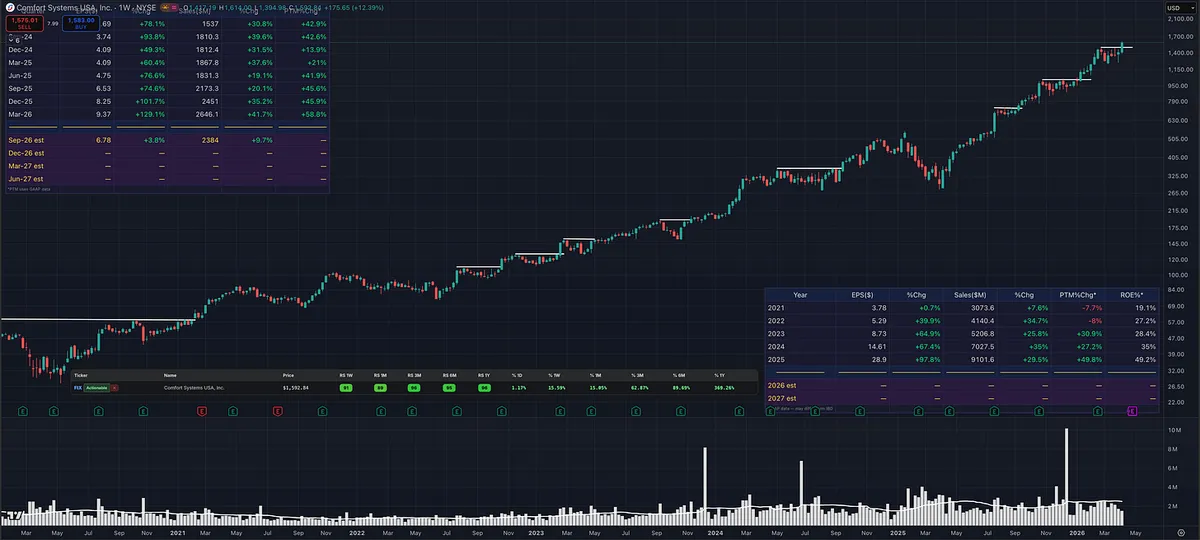
This stock continues to climb.

• EPS growth: +129%

• Sales growth: +41%

• Pre-tax margins: 58%

• ROE: 49%

That’s not normal.

That’s leadership.

And the chart tells the same story.

Since May 2020, it’s been doing one thing:

Higher highs. Higher lows.

The only real shakeout came during last year’s tariff scare.

And what did it do?

Recovered. Continued higher.

Now layer in the most important piece:

Demand.

Fund ownership has more than doubled since fall of 2024.

Institutions are not guessing.

They are building positions.

This is what you want to see:

Strong relative strength. Explosive earnings. Real sales growth. Elite margins. High return on equity and increasing institutional demand.

Find the leaders.

Follow the demand.

View on Substack ↗

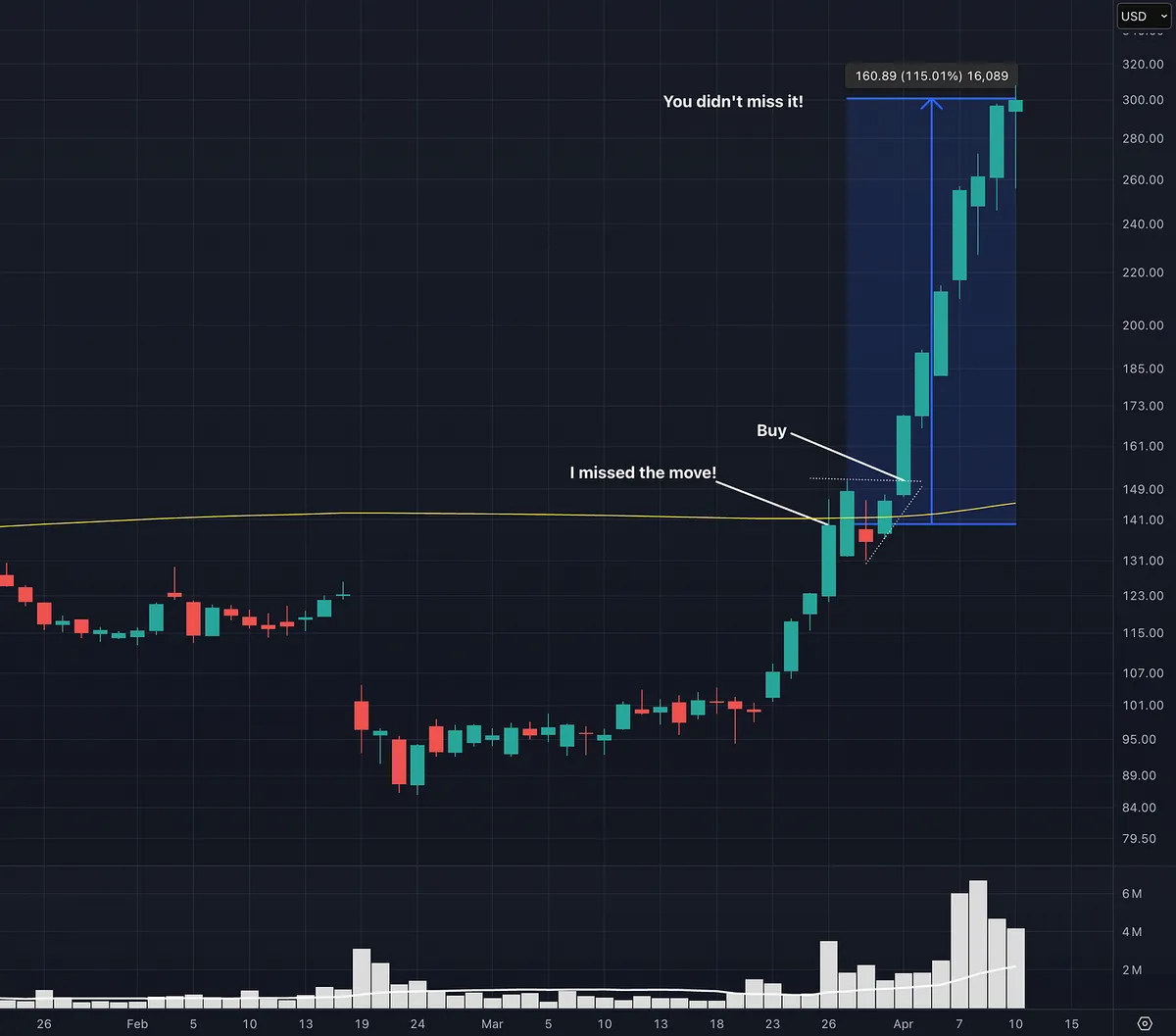
You Didn’t Miss the Move

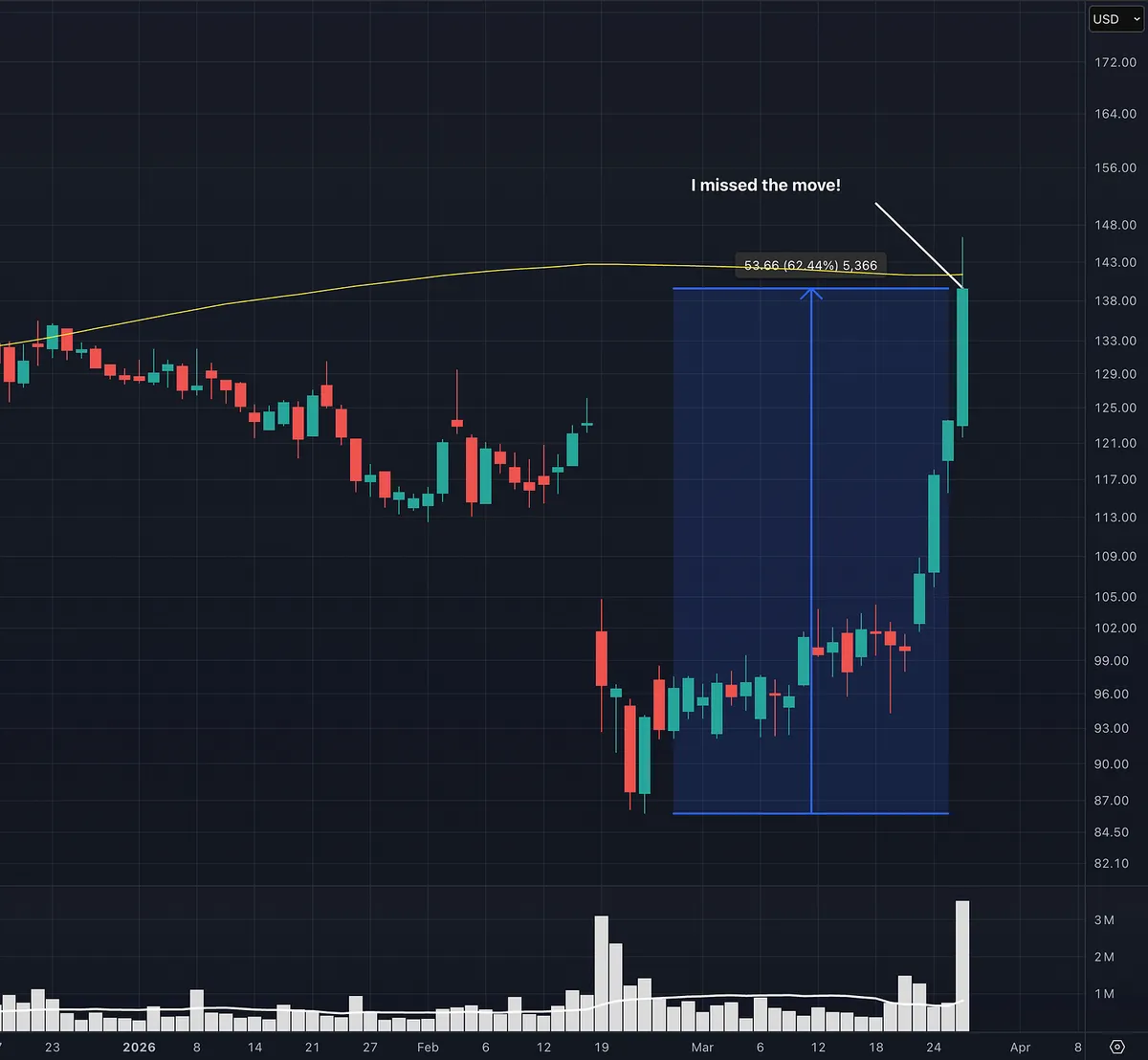
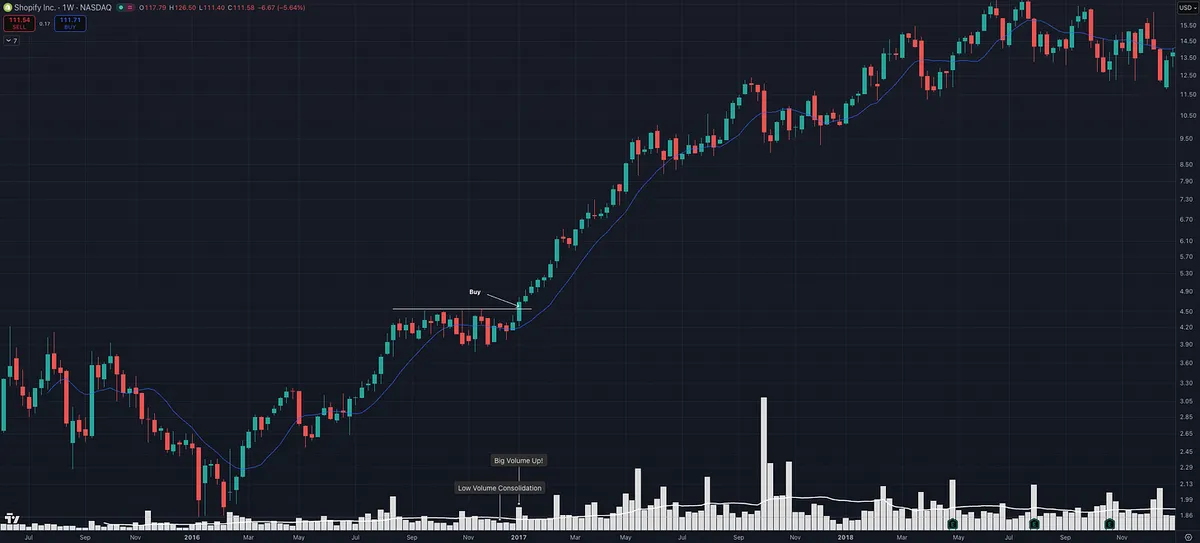
Most traders think they missed it.

The stock is already up. It feels extended. So they move on.

But what they think is “the move”…

Is usually just the signal.

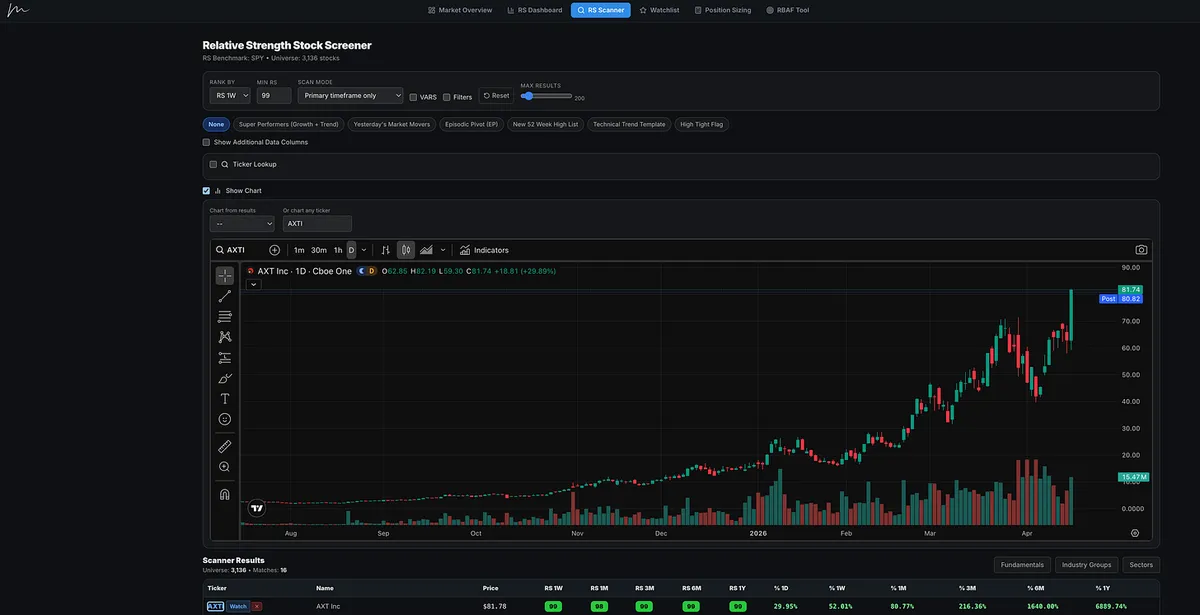
see image 1.

That first push, especially with strong relative strength and volume, is not the end.

It’s the heads-up.

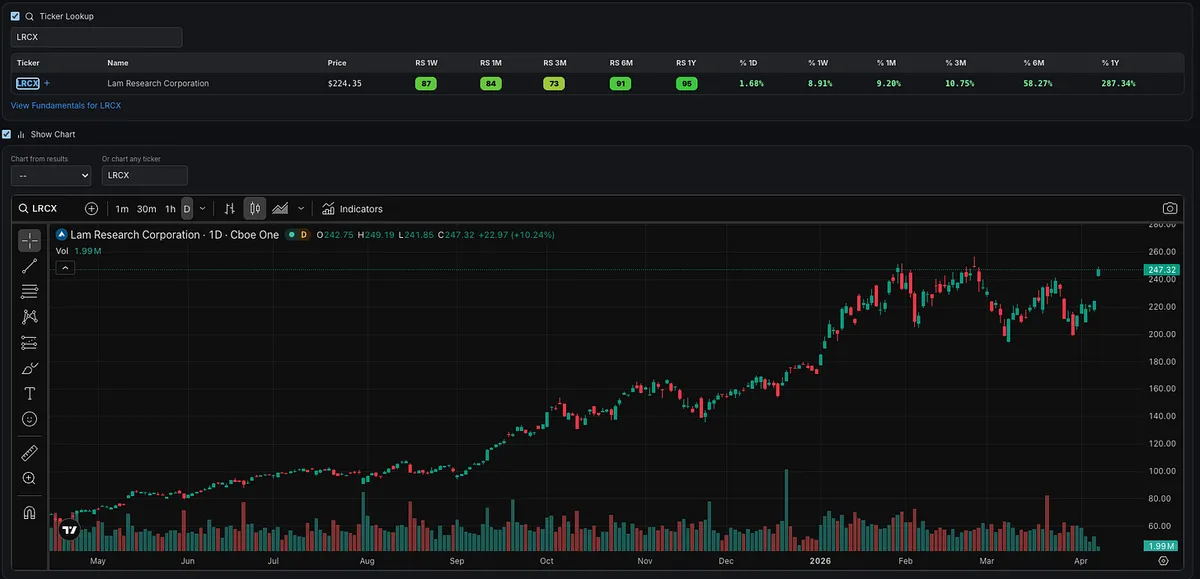
see image 2.

The real move often comes after.

The best stocks don’t move once. They move in stages.

If you’re waiting for it to look comfortable…

You’ll miss it every time.

Follow the strength.

$CAR

View on Substack ↗

The First Thing I Look At Every Single Week (And Why Most Traders Miss It)

After I finish my Big Picture Market Pulse…

I don’t jump into news. I don’t chase ideas. I don’t scroll social media looking for the next hot stock.

I go straight to one thing:

Relative strength.

Because before you can make money in stocks…

You have to know where the money is already going.

Every week, I run my screens across multiple timeframes:

• 1 week

• 1 month

• 3 months

• 6 months

• 1 year

I’m not just looking for stocks that are up.

I’m looking for stocks that are outperforming everything else: the S&P 500, the overall market, and most importantly, all the other stocks in the market.

Because that’s where leadership shows up first.

Most people have it backwards.

They look for “cheap” stocks. They look for what hasn’t moved yet.

But the market doesn’t reward cheap.

It rewards strength.

And the biggest winners in history?

They were already outperforming before they made their real move.

William O’Neil said:

“The best stocks were already doing better than nearly 9 out of 10 others when they were starting out on their most explosive advance yet.”

Mark Minervini said:

“As a general rule, I buy strength, not weakness. True market leaders will always show improving relative strength.”

So after I analyze the market…

I’m asking one question:

Who is actually leading right now?

Not last quarter. Not last year.

Right now.

Because when the market turns… When conditions improve… When institutions start deploying capital…

They don’t buy laggards.

They pile into leaders.

And if you’re not looking at relative strength…

You’re guessing.

This is exactly why I built my relative strength dashboard and stock screener. https://momentumtradingstrategy.app/

Not to give you random ideas…

But to show you, in real time, what’s actually leading and what’s starting to accelerate.

momentumtradingstrategy.appMomentum Trading Strategy
View on Substack ↗

Why I Trade Stocks Instead of the Market

Someone asked me why I focus on stocks instead of just trading indexes or futures.

The answer is simple:

There’s more edge in individual stocks.

That doesn’t mean you can’t trade the market. I trade futures at times too.

But the reality is, the overall market is harder to gain an edge in.

Why?

Because it’s more efficient.

Indexes are massive. They’re a basket of stocks. There are more participants, more eyes, more capital, and more information already priced in.

You can still time it…

But it’s harder.

Individual stocks are different.

They’re less efficient and that’s where opportunity lives.

Now, that edge only exists when a stock is in play.

Not every stock has opportunity. Most are dead money.

The real edge comes from focusing only on the names with clear catalysts and institutional demand.

What causes a stock to be “in play.”

Big earnings and sales surprises. New products. New industries. Shifts in demand or future outlook.

These are catalysts that can catch people off guard.

Institutions discover them. Then they rush in.

When that happens, you get powerful, directional moves that are much easier to capitalize on as a trader.

You’re not just trading the market…

You’re trading the leaders driving it, backed by a catalyst and real demand.

That’s where the biggest opportunities are.

That’s why I always come back to stocks.

View on Substack ↗

The Hardest Buys Are the Best Trades

The stocks that feel the hardest to buy are usually the ones you should be buying.

Why?

Because they’re showing real demand.

David Ryan, protégé of William J. O'Neil, said it best:

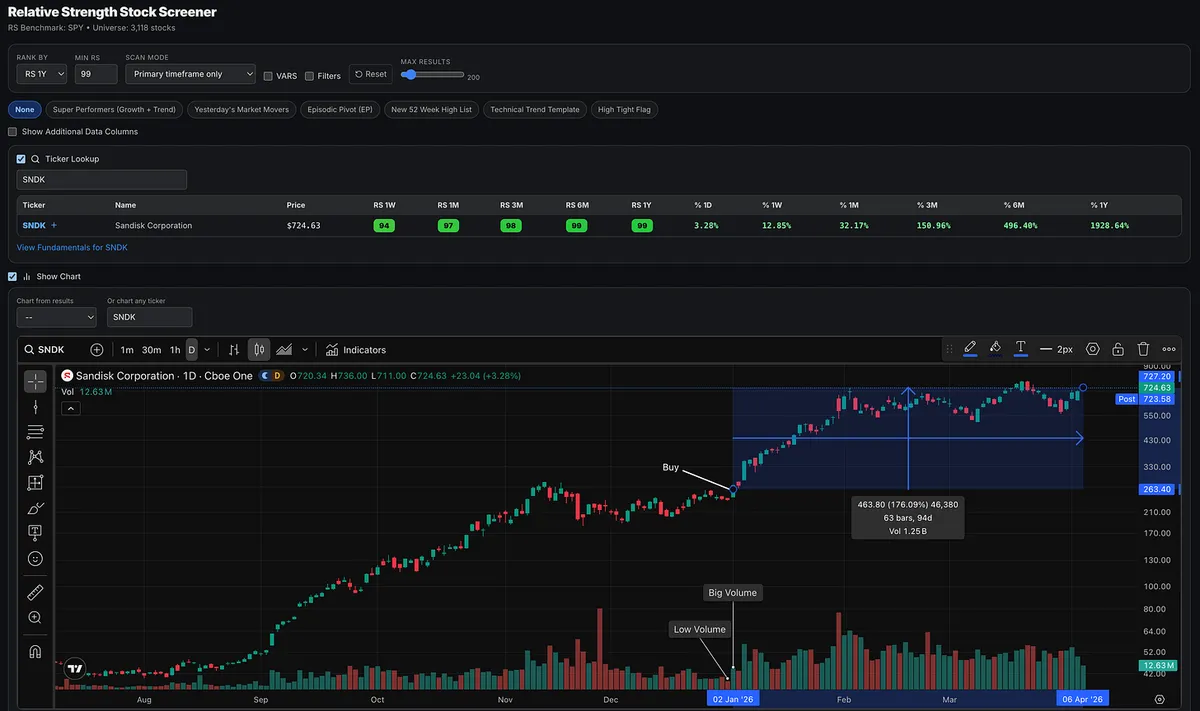
“The stocks that are hard to buy and immediately up that day, even that hour, are the ones that tend to be your biggest winners.”

That’s exactly what you’re seeing in this chart.

Breakout on volume → immediate follow-through.

No hesitation. No pullback or second chance.

Just demand stepping in.

The best stocks are often profitable right away.

Having a profit on day one is one of the best indicators you’re going to make money on the trade.

If you’re sitting there waiting… thinking… hoping for a better price…

You’re probably looking at the wrong stocks.

The real leaders don’t wait.

They move.

And when your timing is right, you’re in the money immediately.

That’s not luck.

That’s alignment with strength.

View on Substack ↗

Nothing New Under the Sun

Most traders think they need a new strategy.

A new indicator. A new system. A new edge.

They don’t.

Because what works today… worked decades ago.

Darvas figured it out long before screens, scanners, or real-time data:

“I started studying the personality of a stock in relation to its industry group. When I read the quotations of GENERAL MOTORS I automatically looked at those of CHRYSLER, STUDEBAKER and AMERICAN MOTORS.”

He wasn’t looking at stocks randomly.

He was studying groups.

He understood something most traders still miss:

Stocks don’t move alone.

They move in clusters.

Industries. Themes. Institutional flows.

And within those groups…

There is always a leader.

That’s where the money is made.

Not in the laggards. Not in the “cheap” names. Not in trying to predict what hasn’t happened yet.

But in:

  • The strongest stocks

  • In the strongest groups

  • Already moving higher

This is not a new concept.

It’s a timeless one.

And today, we just have better tools to see it:

Relative Strength. Industry Group Rankings. Stock Screeners.

Same principle.

Faster execution.

Stay focused on strength.

That’s where the opportunity is.

View on Substack ↗

This Is What Real Leadership Looks Like

It’s not a coincidence.

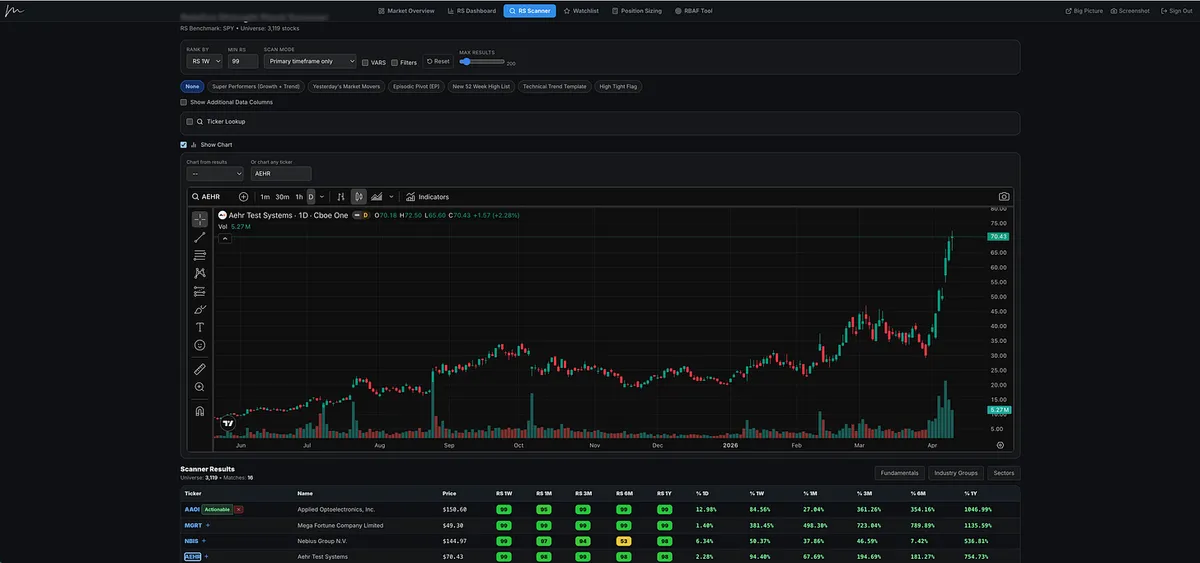
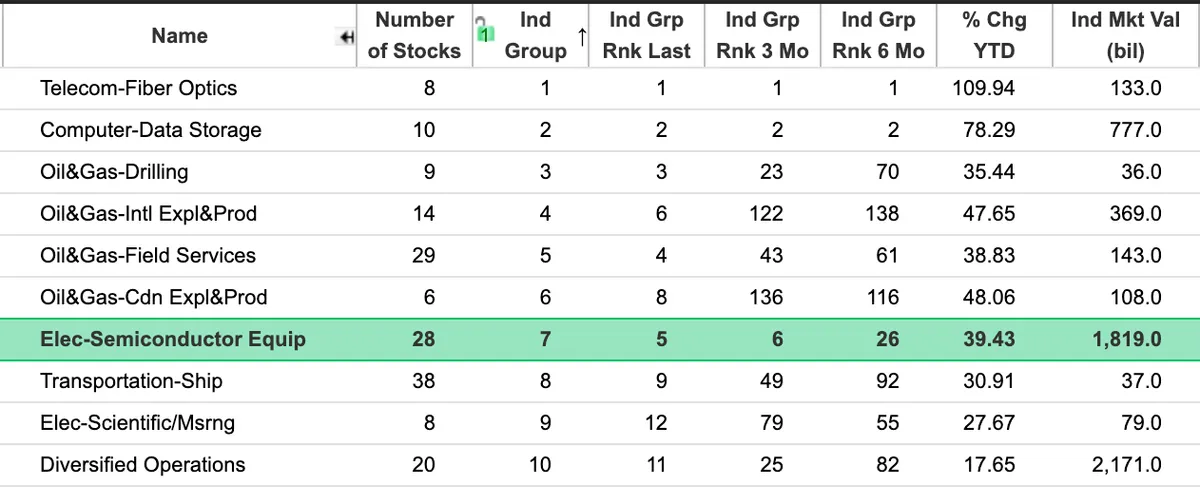
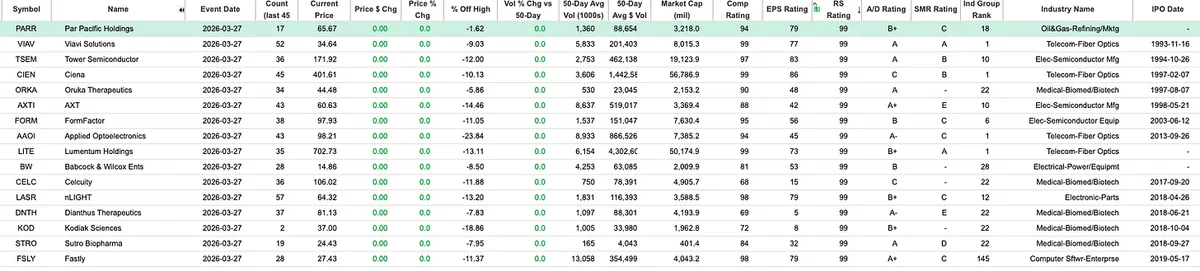
When we look at the Top 10 Industry Groups right now, we’re seeing clear clustering of strength:

  • Telecom: AAOI, LITE, CIEN, VIAV

  • Computer Data Storage: SNDK, WDC, STX

  • Semiconductors: TER, AEIS, AEHR, LRCX

All showing up in the top groups.

This is exactly how leadership reveals itself.

It’s not just one stock. It’s clusters of strength moving together.

When you start seeing multiple names across the same industry groups all:

  • Breaking out

  • Showing strong relative strength

  • Backed by strong fundamentals

That is not random.

That is institutional money flowing into a theme.

This is how real trends work.

Stay focused on where the strength is clustering, just like we teach in the MTS Course. https://tradingmomentum.substack.com/s/mts-course

How do we find the strongest names in the strongest groups?

Relative Strength Stock Screener.

Use it now as part of the MTS Web App https://momentumtradingstrategy.app/

That’s where the opportunity is.

momentumtradingstrategy.appMomentum Trading Strategy
View on Substack ↗

Stop Hunting Cheap Stocks. Start Buying Strength

What has worked in my style of trading has worked for decades.

I am not buying bargains. I am not searching for what looks cheap.

I am buying strength.

Here is the part most people struggle with.

The hardest thing to do is often the right thing to do.

For some reason, even though this approach is simple, it is very difficult in practice. We are wired to look for deals. We want to feel like we are getting something cheap.

Buying an expensive stock feels wrong.

It feels like we missed it. It feels like we are late. It feels risky.

But in reality, strength is often just getting started.

The stocks I focus on are already moving higher. They have strong relative strength, often look expensive, and are being accumulated for a reason.

There is usually a catalyst behind the move. Big earnings. Strong sales growth. A new product or service. A shift in demand.

Something is driving institutional money into the stock.

But the key is not just the story. It is how price behaves.

I want stocks that go up on positive news and refuse to break on negative news. That tells you demand is in control.

I look for clean, tight price action. NOT wide, loose, erratic charts.

Volume matters too.

I want to see expansion on the way up, and contraction on pullbacks and consolidations.

That is the footprint of accumulation.

Above all, I care about the market.

You can find the best stock in the world, but if the general market is weak, it becomes much harder to make money.

Everything works better when the wind is at your back.

The ideal scenario is simple:

The market is strong. The industry group is strong and the stock is a leader within that group.

That alignment is where the biggest moves come from.

This is not a new approach. It is how many of the best traders over the last 100 years have operated.

Strength, not cheapness.

View on Substack ↗

The News Is Loud. Price Pays.

I’ve made money from news catalysts.

Earnings surprises.

FDA approvals.

Government contracts.

But…

Most of my trading comes down to following price and trend.

A lot of the stocks I trade still have strong fundamentals. Big earnings. Strong sales. Expanding margins. Usually something new driving those numbers.

They often check the CANSLIM boxes.

So it’s not that the news doesn’t matter.

But price and volume tell you if institutions are actually acting on it.

That’s what I’m focused on.

I’m not trying to predict the news.

I’m reacting to what price does after it hits.

It’s actually kind of funny.

I don’t trade macro.

I don’t try to figure out geopolitics.

I don’t position based on what I think is going to happen in the world.

I don’t try to predict long term debt cycles or shifts in the global order.

But I do enjoy it.

I’ll listen to it. Watch it. Think about it.

It’s interesting. It’s mentally stimulating.

It’s just not how I make money.

And honestly, I don’t think many traders are consistently successful that way. There are a few. But for most, there are simpler and more repeatable approaches.

For me, it always comes back to the same thing.

Price.

View on Substack ↗

The Next Leaders Are Being Built Right Now

Whenever the market gets messy, I don’t try to force trades.

I go back to the basics. I slow down. I do the homework.

Going through my notes, this stood out:

“Usually leaders that led in a prior cycle don’t lead in the next cycle. Their best move is behind them.” — Mark Minervini

Most people will keep going back to the same names.

The ones that worked before. The ones that made the big moves.

But that’s not where the next opportunity is.

The next leaders are usually different stocks. New names. New stories. New strength.

And this is exactly why we pay attention during corrections.

When the market pulls back, I’m watching closely:

  • Which stocks are holding up

  • Which names are not breaking down

  • Which stocks are hitting relative strength new highs

Because that’s often where the next leaders come from.

They’re showing strength before the market turns.

View on Substack ↗

The Smart Money Shows Its Hand Before the Market Turns

If you knew where the next leaders were before the market turned… you would look at them differently right now.

That is exactly what Mark Minervini teaches.

He focuses on stocks that are not breaking down with the market. In fact, some are quietly doing something even more powerful.

They are holding steady. Moving sideways.

A stock does not need to go up to show strength. It just needs to go down less.

When the market is correcting and a stock is moving sideways, the relative strength line is rising.

This is how true leaders reveal themselves early by outperforming, even before a new uptrend begins.

What this is telling you is simple:

When conditions improve, these stocks are already in position to move first and move fast.

They have been under accumulation while everyone else was distracted.

This is why I screen and track stocks with RS lines hitting new highs.

If you are a paid subscriber, look at this list that I share and update regularly.

View on Substack ↗

Why New Highs During Corrections Reveal the Next Leaders

Most traders avoid looking at stocks making new highs during a correction.

That is a mistake.

Because while the market is weak, a small group of stocks starts to act differently.

They hold up. They resist selling. They begin to outperform.

That is where new leaders come from.

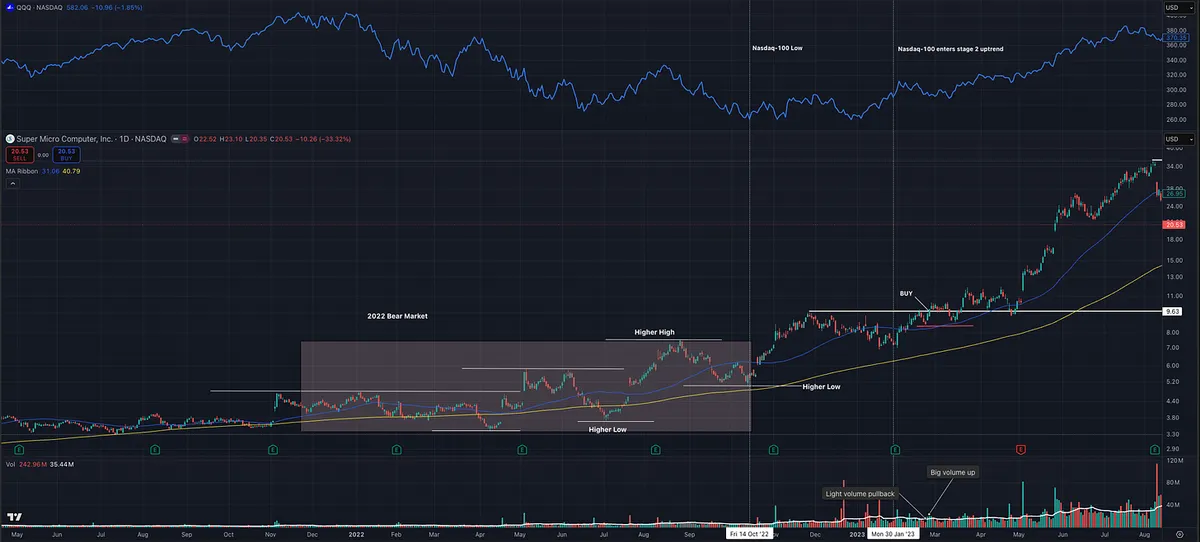
Take SMCI as an example.

In 2022, while the Nasdaq-100 was still declining, SMCI was already making higher highs and higher lows.

That is not normal.

In most corrections, if the index drops 10%, leading growth stocks can drop 20 to 30%.

In 2022, the Nasdaq fell 37% and the S&P 500 dropped 27%.

SMCI only declined about 28% and was already pushing toward new highs by May.

That is your first signal.

Strength during weakness.

That is how you spot potential leaders early.

Then comes the next phase.

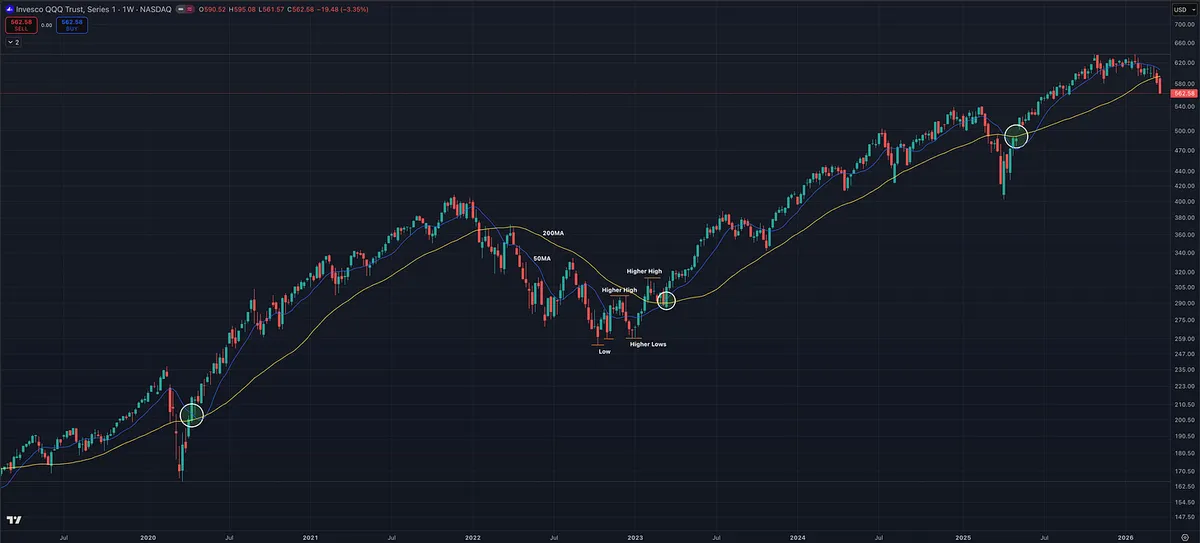
The market bottoms and begins to recover.

Indexes reclaim key levels and start making higher highs and higher lows.

Now you have alignment.

The market and the stock are moving in the same direction.

Then you go one level deeper.

The sector.

A new theme emerges. In this case, AI.

Groups like computer hardware begin to lead.

And SMCI is right at the center of that move.

Now you have group strength.

Finally, you look at the stock itself.

Tight price action. Higher highs and higher lows. Above key moving averages.

Volume dries up on pullbacks and expands on advances.

That is institutional accumulation.

Add in strong earnings and sales growth, and everything lines up.

This is how big winners are built.

SMCI moved over 250% in about six months.

Not because it was random.

Because the clues were there early.

Strength first. Then alignment.

That is how you find the next leader before everyone else.

View on Substack ↗

Why Corrections Create the Biggest Winners

Most people fear corrections.

The best traders understand they are necessary.

Mark Minervini once said, “96% of big winners emerge from market corrections.”

That changes how you should see them.

A big correction is not just a pullback. It is a reset.

Weak stocks get cleared out. Institutions reposition. New leadership begins to form.

During this time, the goal is not to force trades.

It is to protect capital.

That is why top traders go to cash.

Not because they are scared, because they understand the cycle.

They are avoiding unnecessary losses while the next opportunities are being built.

Then comes the shift.

Leading stocks tend to lead the market, often showing strength before the market itself has fully turned.

That is where the real opportunity is.

The biggest winners do not come from extended markets.

They come out of corrections.

So instead of fearing them, start respecting them.

Because that is where the next leaders are born.

View on Substack ↗

Why the Best Traders Obsess Over New Highs

Most people look for cheap stocks, thinking value comes from buying low. The best traders do the opposite. They look for strength, and one of the simplest ways to spot it is the 52 week high list, not to chase, but to see where real demand is showing up.

Stocks that hit new highs tend to keep making new highs. That is not random, it signals institutional accumulation. Traders like O’Neil, Minervini, and David Ryan use this to build watchlists of potential leaders, not to blindly buy, but to prepare.

From there, it is about patience. They wait for proper setups, pullbacks, and low-risk entries. Strength is the starting point, not the decision.

The reason this works is structural. At new highs, there is little overhead supply. Most investors are in profit, so fewer sellers create less resistance and allow stronger moves. Below highs, rallies run into trapped sellers, which slows momentum.

So instead of asking what is cheap, ask what is leading. Track the strongest names and wait for your opportunity. The biggest winners do not come from weakness, they come from strength.

Combine a stock hitting new 52 week highs with strong earnings and sales growth, high relative strength, and leadership within a strong industry group, and you have a potential big winner.

View on Substack ↗

The One Rule Most Traders Ignore

If you study the biggest winning stocks over the last 100 years, a few things show up again and again.

They had big earnings. They had strong sales growth. They had something new, a product, a theme, a catalyst, and they were often in the hottest sectors driving the bull market.

These characteristics matter. We screen for them. We look for them.

But even with all of that…

There’s one rule you need to fully understand. It’s one of the most important rules in trading.

Never trust the story.

Not the CEO. Not analysts. Not the media. None of it.

And never trust the fundamentals on their own.

Earnings, revenue, projections, none of that matters unless it’s confirmed.

The only thing that matters… is price.

This is where most traders get it wrong. This is where ego creeps in.

You do the research. You find the strong earnings. The big theme. The “next great company.”

You convince yourself it has to work, but if price is going down, the market is telling you something.

There are participants out there with more information, more capital, or simply a different view. Or the market just doesn’t care.

Even if it is a great company, it doesn’t matter until price confirms it.

Price is the truth.

If the fundamentals are real, the chart will show it. If the story is real, price will move.

If it’s not confirmed by price…

It’s not a trade.

Here’s a real example.

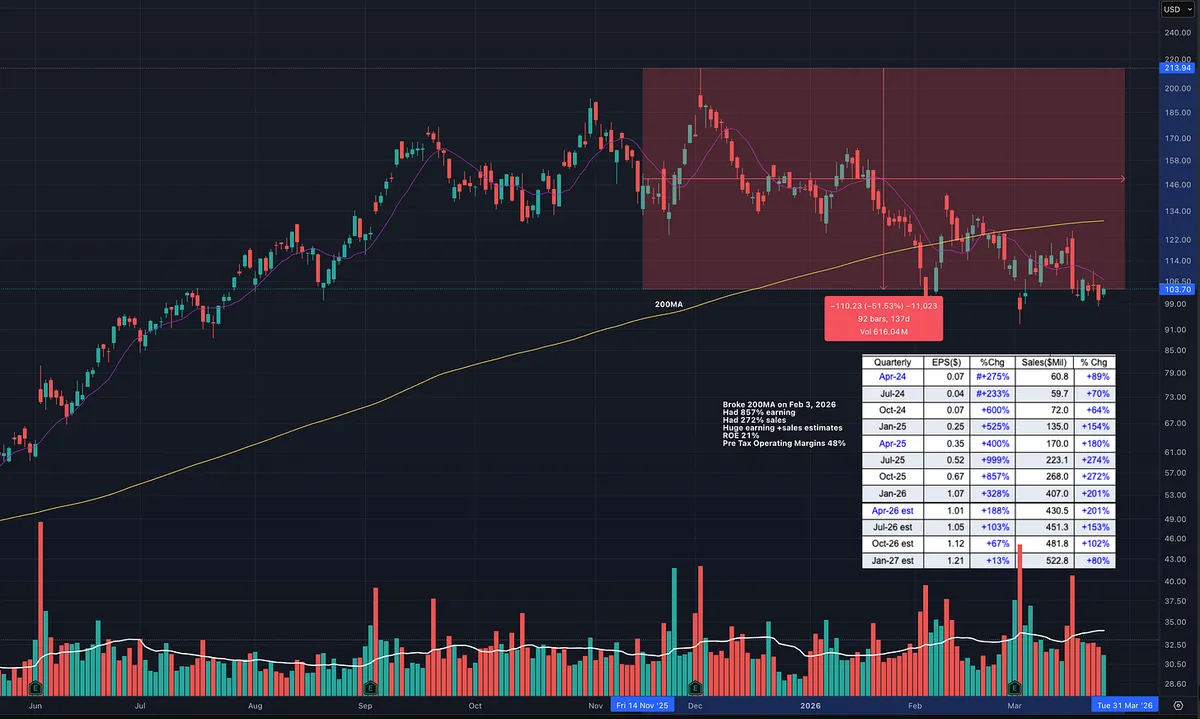
$CRDO had triple-digit earnings and sales growth. Strong estimates. Everything you would want fundamentally.

And yet the stock was below its 200-day moving average and down roughly 50% from its highs.

Price didn’t confirm it.

And that’s the point.

View on Substack ↗

If I Could Only Run 1 Scan the Rest of My Life It Would Be Relative Strength

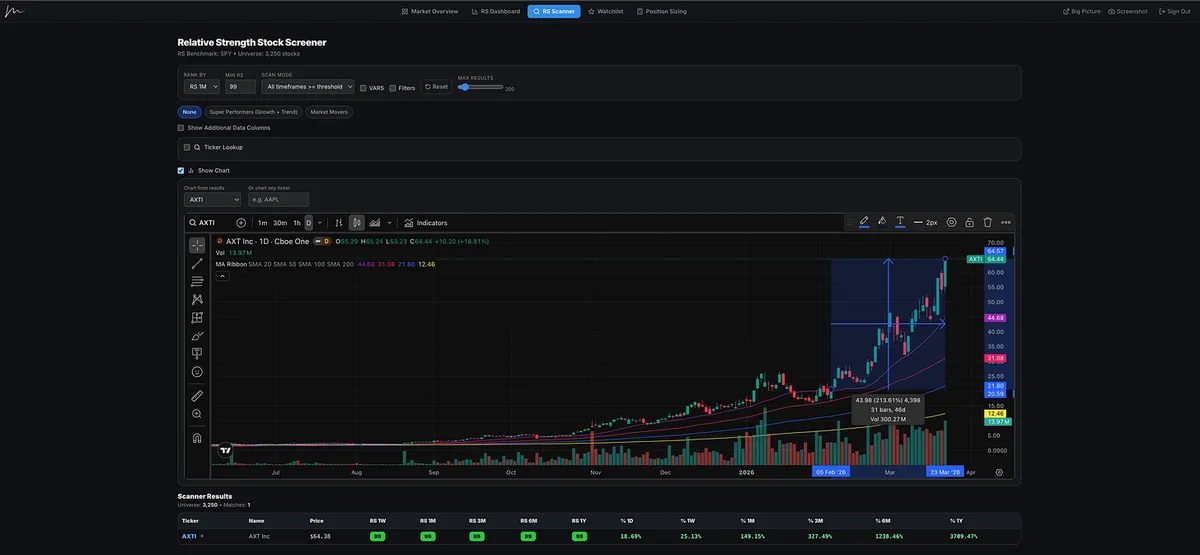
$AXTI has been absolutely crushing it. It’s been showing up for months and I’ve been sharing it consistently. Up 213% since February 5th.

I didn’t find it. The RS scan did. Nothing fancy.

Many of the biggest names I’ve found and put on your radar all come from this one simple scan.

There’s a reason for that.

It’s why O’Neil made it the L in CANSLIM. It’s why Kristjan Kullamägi focuses on the top 1 to 2 percent across multiple timeframes. It’s why Minervini builds it into his trend template.

The best stocks don’t hide. They show up over and over again.

Relative strength just helps you see it.

👉 Paid subscribers can run this exact scan here: https://tradingmomentum.substack.com/p/the-relative-strength-screener-just

On SubstackThe Relative Strength Screener Just Leveled Up
View on Substack ↗

When Finding Big Winning Stocks, Don’t Forget One Thing: NEW

When people look for winning stocks, they focus on many different fundamental metrics, chart patterns, etc.

But they forget one of the most important drivers of massive moves.

Something new.

New companies. New products or services. New management. New price highs. New industry conditions. New revolutionary technologies. New Catalyst.

This is what creates real demand.

This is what attracts institutions.

This is what fuels the biggest winners.

William O’Neil put it best:

“In our study of the greatest stock market winners, which now spans the period from 1880 through 2008, we discovered that more than 95% of successful stocks with stunning growth in American industry fell into at least one of these categories.”

Think about that.

Over 95 percent.

The market rewards change.

Not stability. Not average. Not “good companies.”

It rewards companies doing something new that the market has not fully priced in yet.

That is where the asymmetry is.

So when you are building your watchlist, ask yourself:

What is new here?

If you cannot answer that question, you might be looking at the wrong stock.

View on Substack ↗

Bear Markets and Big Corrections Create the Next Winners

Most people see a bear market and think loss.

The best investors see preparation.

Every major winner starts the same way. It comes out of a correction. It forms a base. It tightens up while the crowd loses interest.

This is where opportunity is created.

Big corrections reset everything. Weak companies break down. Weak holders get shaken out. What remains are the strongest businesses quietly being accumulated.

That is where you want to focus.

Not on what already ran. Not on what is collapsing.

On what is building.

As volatility contracts and price action tightens, risk decreases. You are no longer chasing extended moves. You are positioning early, when the reward is asymmetric.

Low risk. High potential.

This is the phase most people ignore because it feels slow and uncertain.

But this is where the real money is made.

Bear markets and big corrections are not the enemy.

They are the birthplace of the next leaders.

Do not confuse this with bottom fishing.

We are still waiting for confirmation. A true character change. A confirmed Stage 2 uptrend before capital is deployed aggressively.

Preparation now. Execution later.