Momentum Trading Strategy

Notes

Finding Leading Stocks

What to buy: how to find, screen and rank the strongest stocks and industry groups.

Showing 1–3 of 3 notes

$CAR ×
View on Substack ↗

Why Waste Time on B+ Stocks When A+ Stocks Exist?

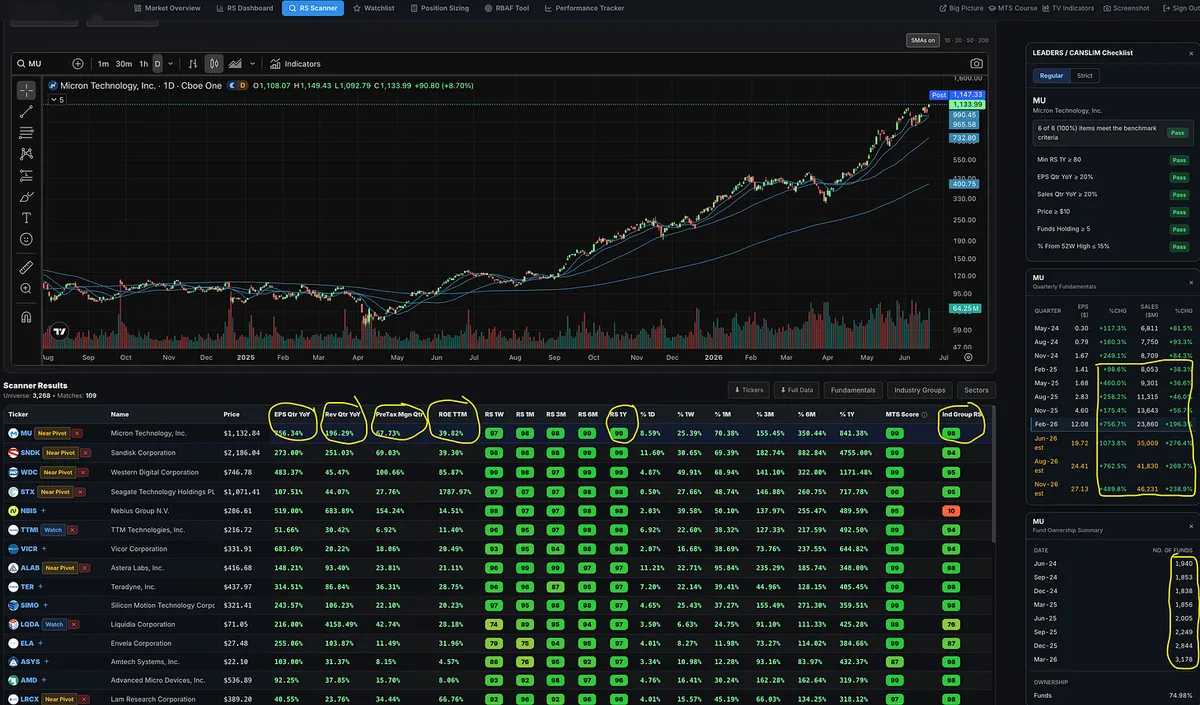
This is the type of screen I care about most.

  • Strong sales.

  • Strong earnings.

  • Strong margins and/or ROE.

  • Top-tier relative strength.

  • A leading industry group.

  • Funds increasing quarter after quarter.

  • And most importantly, price confirming with higher highs and higher lows.

That is an A+ growth stock profile.

This is not some new idea either.

This is what O’Neil taught. It is what Minervini looks for. It is what David Ryan studied. It is what Dan Zanger used.

The details may vary from trader to trader, but the foundation is very similar.

Remember, institutions drive major sustained moves. Retail does not.

When I see rising sales, rising earnings, good margins and/or ROE, and funds increasing quarter over quarter, I know the stock has the ingredients of a potential major growth leader.

Then price has to confirm it.

Plenty of names have strong fundamentals, but price is saying NO.

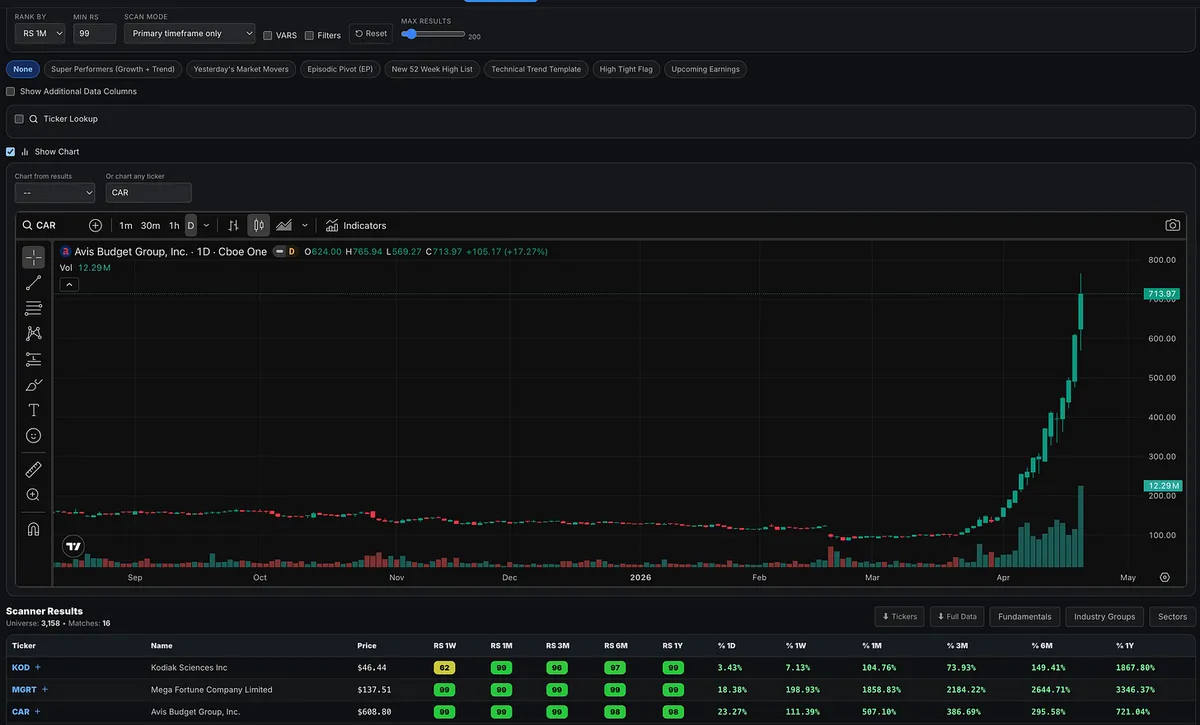
Plenty of names have price moving higher, but without the sales, earnings, margins, ROE, or institutional support behind it, the move is less likely to last. Think CAR in April 2026.

And yes, this is an ideal screen.

Most of the time, you will not get every single ingredient. That is okay.

Sometimes I trade stocks with big sales and earnings growth, but margins or ROE are not great yet. Sometimes fund ownership is flat instead of rising. Those stocks can still work.

But I know they are NOT as high quality as a stock that has everything lining up at once.

So if there are big liquid names showing all the characteristics, why waste time forcing trades in lower-quality stocks?

When the fundamentals are strong, funds are building positions, the group is acting well, and price is confirming, that is where I want my focus.
View on Substack ↗

This Is Not A Normal Rally: Inside CAR’s Wild Short Squeeze

What a wild ride.

Since April 1, Avis Budget Group (CAR) has ripped nearly 400% higher, trading more like a speculative momentum name than a traditional rental car business.

This isn’t about a great quarter or a few positive headlines.

This is what happens when positioning collides with supply.

The setup was there.

A large percentage of shares were sold short, while a concentrated group of holders controlled most of the stock.

Once buyers stepped in and price started moving, short sellers were forced to cover.

That covering pushed price higher.

Which forced more covering.

And just like that, a feedback loop formed.

At some point, the narrative flipped.

It stopped being about what the business is worth…

…and became about how far positioning could push it.

Under the surface, the business didn’t change in three weeks.

Avis Budget Group is still operating in the same cyclical, capital-intensive industry, with the same long-term dynamics.

There’s no meaningful growth shift here.

The move was driven by positioning.

From the sidelines, it’s easy to feel like you missed the trade of the year.

But the same mechanics that launch a squeeze…

…can unwind just as fast.

Once shorts are covered and late buyers become the marginal holders, liquidity often disappears on the way down.

What feels like a once-in-a-lifetime move on the way up…

can turn into a sharp lesson in downside volatility.

So how do you actually find these?

Start with what most people ignore:

Float and short interest.

Squeezes are not driven by valuation.

They are driven by supply and positioning.

A simple framework:

Tier 1: Ultra-tight float names

  • Float: 1M to 25M

  • Short interest: 20-30%+

These are your classic small float squeezes.

But CAR didn’t fit that mold.

Its float was closer to 34–35 million shares.

Too big for most “low float” scans.

But the key was how crowded the short side was:

  • ~8–9 million shares sold short

  • Roughly 50–60% of the float

That’s an explosive setup.

Then comes the trigger.

You don’t just buy because short interest is high.

You wait for:

  • A powerful upside move

  • Massive volume expansion

  • A clear shift in behavior

That’s when demand overwhelms supply.

That’s when squeezes start.

CAR checked every box.

And once it started moving…

The feedback loop took over.

For traders, this is the takeaway:

Float.

Short interest.

Watching for that big price and volume surge.

View on Substack ↗

You Didn’t Miss the Move

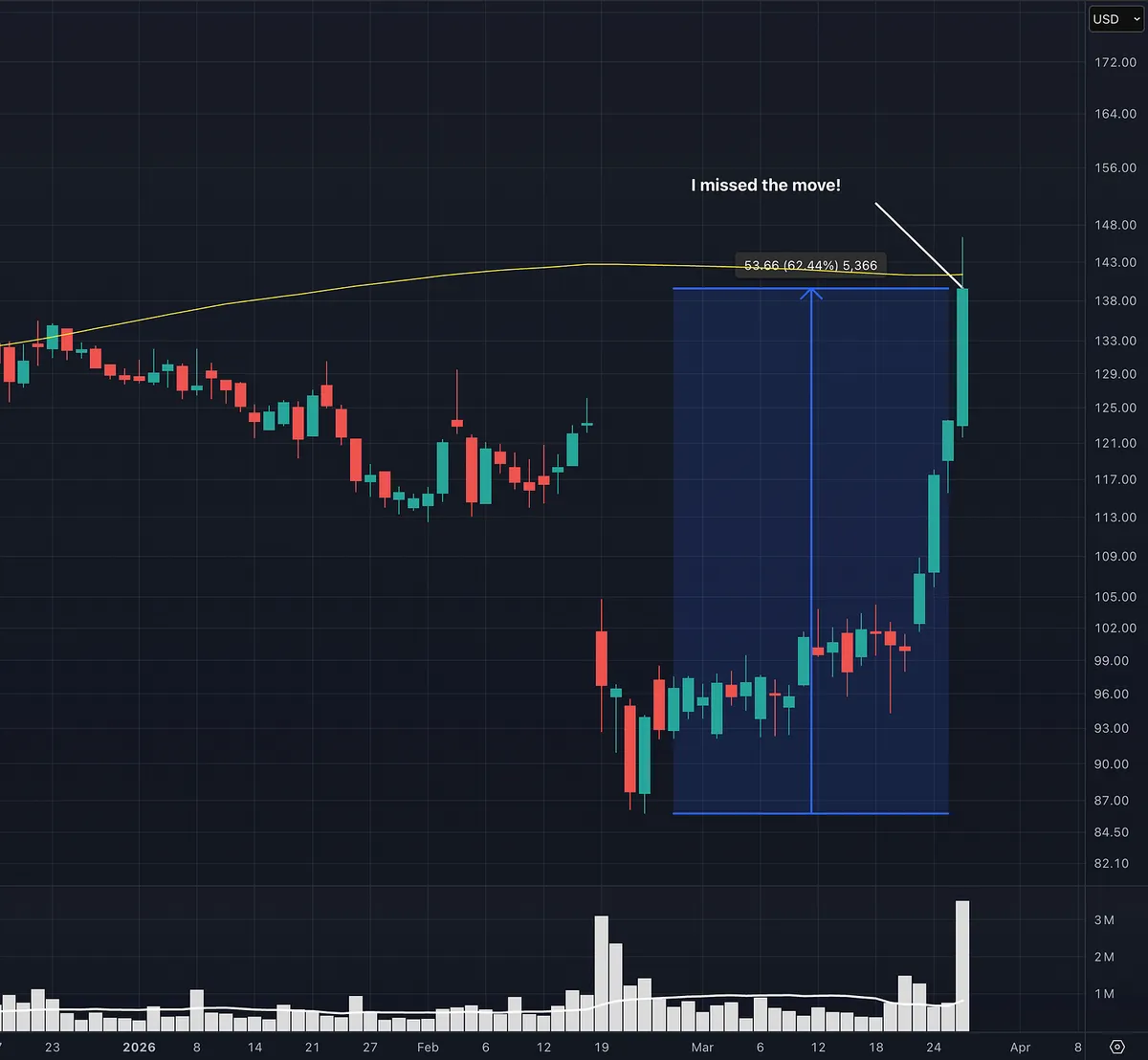
Most traders think they missed it.

The stock is already up. It feels extended. So they move on.

But what they think is “the move”…

Is usually just the signal.

see image 1.

That first push, especially with strong relative strength and volume, is not the end.

It’s the heads-up.

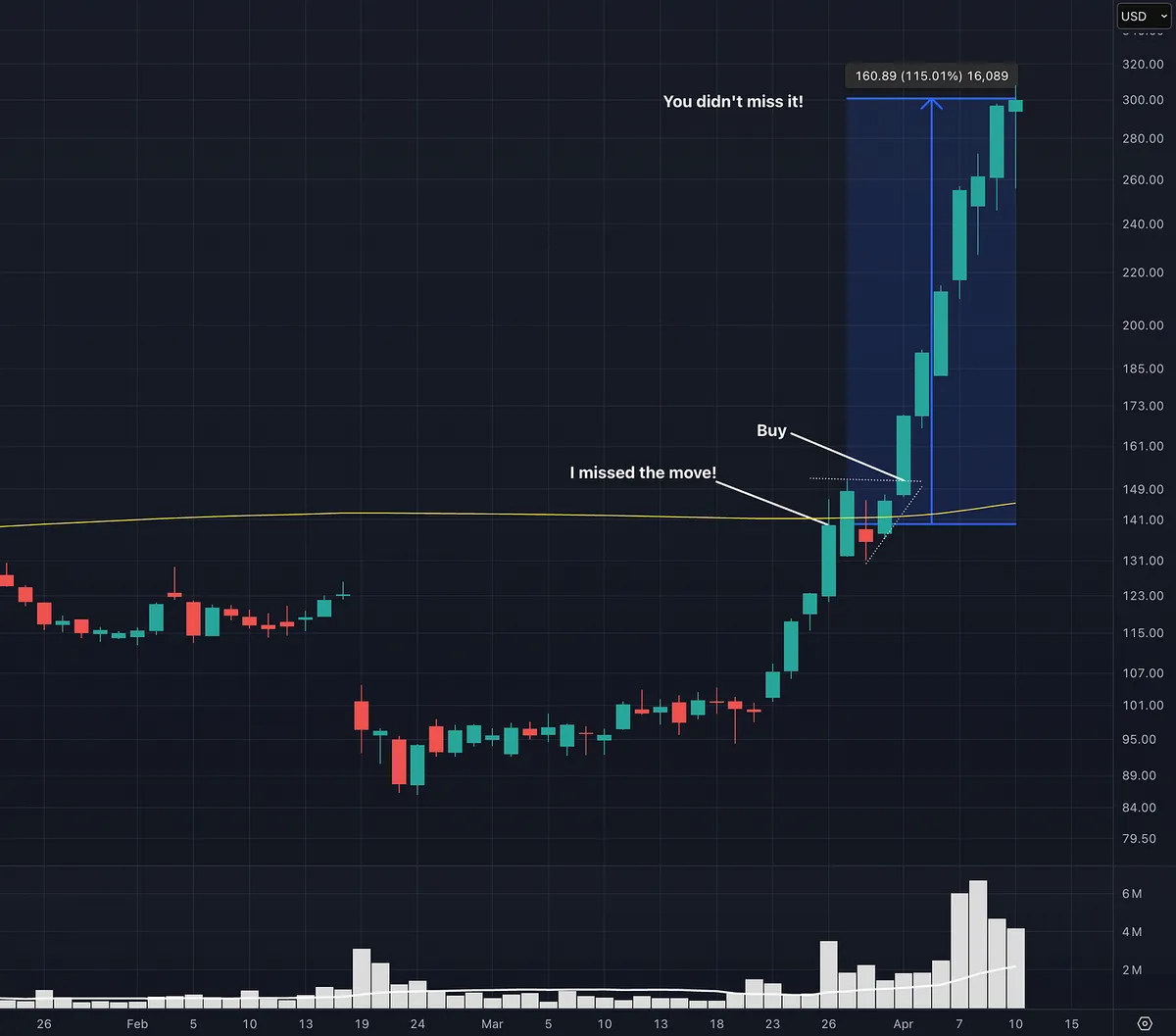
see image 2.

The real move often comes after.

The best stocks don’t move once. They move in stages.

If you’re waiting for it to look comfortable…

You’ll miss it every time.

Follow the strength.

$CAR