Momentum Trading Strategy

Notes

Selling & Holding Winners

Managing a trade after it starts working: when to take profits, how to stay in big winners, and when to exit.

Showing 81–95 of 95 notes

View on Substack ↗

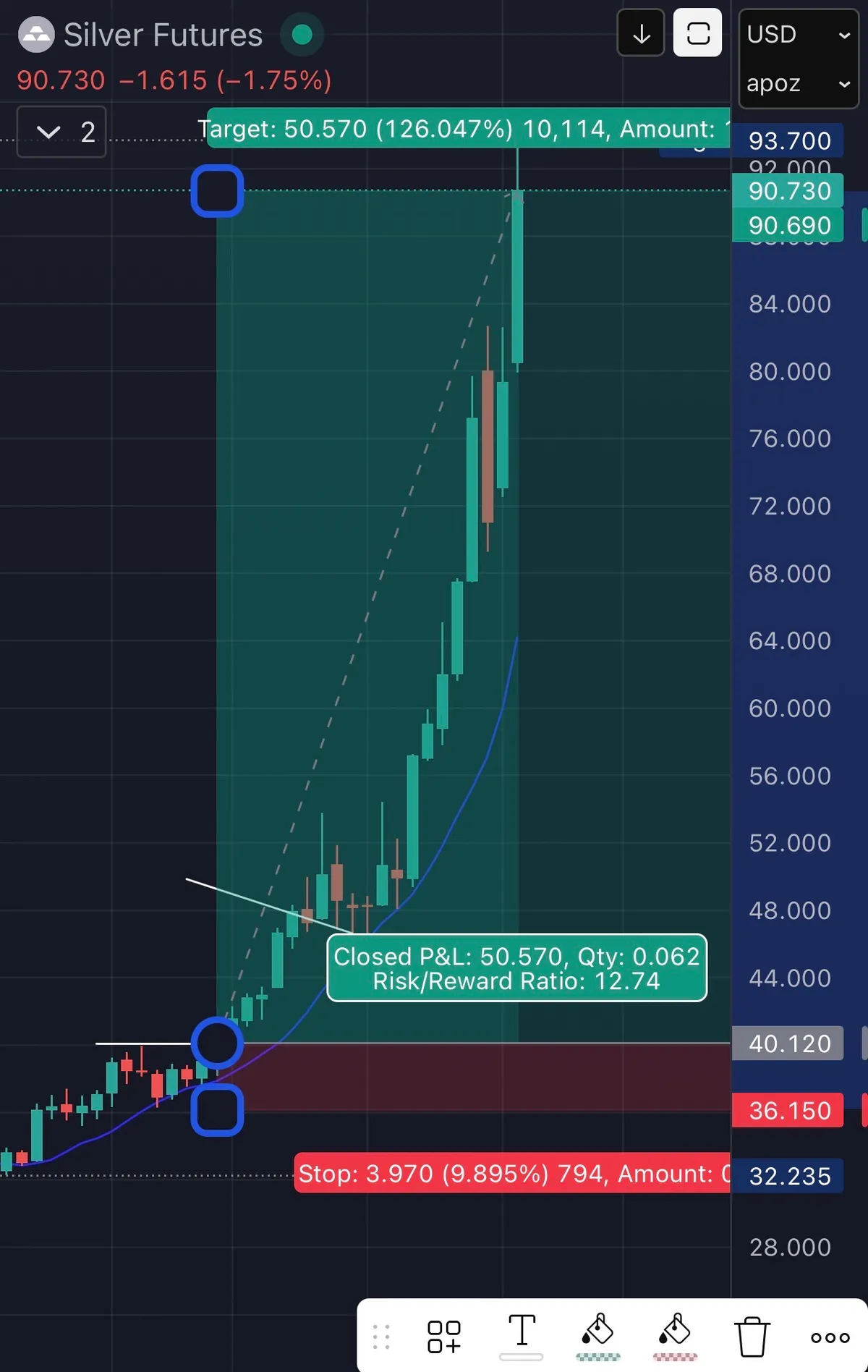
Silver Didn’t Care What Anyone Said. It Just Paid the Patient.

What a run for Silver.

And here is the part most traders still get wrong.

In October and November, people were screaming that the top was in.

End of December, same thing again.

Did any of that matter?

No.

Price did not confirm it. Structure did not break. The trend never failed.

Nobody knows where the top is. That is not an opinion. That is a fact.

So instead of predicting, you manage the trade.

Here is what made this one easy to hold:

Since the weekly candle on November 24, 2025, every single week has made a higher low.

Eight weeks in a row. This week looks like nine.

As long as that structure is intact, there is zero technical reason to exit.

That is how professionals think.

Not:

“Is this the top?”

But:

“Has the trend actually broken?”

Big difference.

Yes, you sell some into strength.

Yes, you lock in profit.

Yes, you move stops to breakeven.

And then you do the hardest part.

You let the rest run.

This trade was not hard because of the chart.

It was hard because of emotion.

Once risk is removed and profits are protected, the only enemy left is your own need for certainty.

The market never promised certainty. It only offered structure.

And the structure stayed bullish.

So ask yourself:

Do you want to feel smart by calling tops?

Or do you want to get paid by staying with trends?

Because this is how real money is made.

Not by prediction.

By discipline.

By patience.

By letting winners run.
View on Substack ↗

Stop Predicting. Start Profiting.

The one mindset shift that separates amateurs from consistent winners

Do you want consistency?

Do you want less stress?

Do you want long-term, professional-level performance?

Then read this.

Most traders are obsessed with predictions. Targets. Price forecasts. “Where will it go next?”

That feels right. It feels intelligent. It feels like control.

But it is the exact habit that keeps people from real performance.

The best traders are not trying to predict.

In fact, they know they do not have a clue what will actually happen next.

You see it everywhere. Endless market calls. Exact price targets. Confident opinions about the future.

And beginners feel comforted by that certainty.

But it is all wrong.

The real edge is not in being right.

It is in how you respond.

As Stanley Druckenmiller said it simply:

“I never predict. I just react.”

That is why I do not put profit targets on my charts.

I trade patterns that have shown positive expectancy over time.

I know that, on average, my winners are larger than my losers with these setups.

But any single trade could be a 1.5R outcome. A loser.

Or it could be a 10R outlier.

There is no way to know which one it will be in advance.

So I remove the illusion of control.

I enter knowing two things only.

My entry.

My stop.

That is it.

From there, I react.

If price breaks out, stalls, and collapses back into my stop, I am out. No debate.

If price moves higher and begins forming higher lows and higher highs, I move my stop to break even and trail structure.

If price goes vertical into a blow-off top, I sell into strength.

No hoping.

No forecasting.

No emotional attachment to a target that exists only in my head.

Just information. Then action.

Here is the truth most traders never accept.

You do not get paid for being right about the future.

You get paid for managing risk and acting on what the market is giving you right now.

Paul Tudor Jones explained this perfectly in Market Wizards:

“Don’t be too concerned about where you got into a position. The only relevant question is whether you are bullish or bearish on the position that day. Always think of your entry point as last night’s close. I can always tell a rookie trader because he will ask me, ‘Are you short or long?’… Next he will ask, ‘Where are you long from?’ Who cares where I am long from? That has no relevance to whether the market environment is bullish or bearish right now, or to the risk/reward balance of a position at that moment.”

This is the difference.

You stop hoping trades hit your prediction.

You stop fighting price because it “should” do something.

You stop turning small losses into large ones just to defend an idea.

You trade what is happening, not what you want to happen.

If you want better results, you do not need a new indicator.

You need a new relationship with uncertainty.

React. Do not predict.

View on Substack ↗

One of the Hardest Parts of Trading Is Not What You Think

A real world lesson every trader can learn from

One of the hardest parts of trading is not finding the right stock or timing the perfect breakout. It is knowing how to manage a winning trade once you finally have one.

Most traders struggle with this. They sell too early, hold too long, or give back huge gains because they do not have a clear exit plan. Almost every painful trading mistake can be traced back to poor trade management.

Today I shared a complete breakdown of how professionals handle this, using a real world example that teaches the entire lesson in one chart. If you have ever wondered how to stay in a trend, protect profits, or recognize when the move is truly over, this is the post to read.

https://tradingmomentum.substack.com/p/how-to-manage-a-winning-trade-a-complete

ArticleHow to Manage a Winning Trade: A Complete Guide Using ELF Beauty (ELF)
View on Substack ↗

Growth Investors: The CAVA Chart Is the Perfect Reminder

If you ever needed a real-world example of why we do NOT hold once a breakdown begins, CAVA is it.

This was a textbook CANSLIM winner with triple digit earnings growth, double digit sales, strong RS, and institutional sponsorship. Everything a model book stock should have.

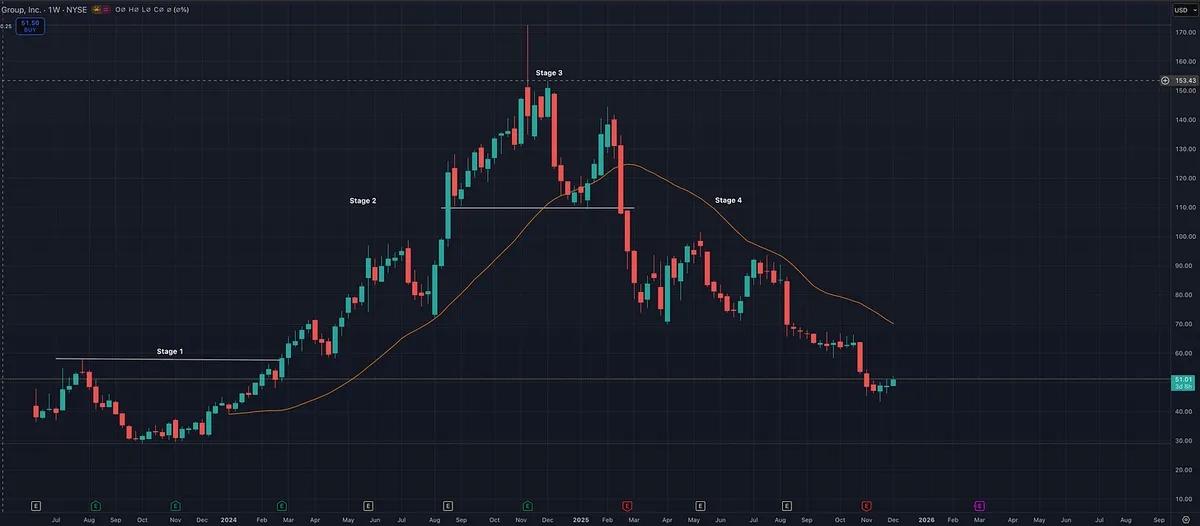
And yet, the chart still went through all four stages exactly as Weinstein describes:

Stage 1: Base with early accumulation Stage 2: Strong advancing trend Stage 3: Loss of momentum and choppy distribution Stage 4: Breakdown followed by a sustained downtrend

The most important lesson?

Stocks tend to go much higher than we expect in Stage 2 and much lower than we think possible in Stage 4.

This is why successful growth traders sell weakness instead of hoping strength returns.

Fundamentals did not save it, and at the time of the breakdown the earnings and sales still looked great with +150 percent EPS growth and +28 percent revenue growth. The story did not save it. The theme did not save it.

Only price saves you, and price clearly told you when the party was over.

The chart is the final judge.

Use CAVA as a reminder of this rule:

There is no good stock except one going up in price.

And as William O’Neil famously said: “All stocks are bad unless they go up.”

You only want to participate in Stage 2 uptrends.

View on Substack ↗

Stop Obsessing Over Your Entry Price. Paul Tudor Jones Shows Why.

Most people never break out of thinking about trades in terms of their entry price. Pros think in terms of conditions, risk, and what the market is doing right now. Paul Tudor Jones explained it perfectly in Market Wizards.

Here is one of the most important trading quotes you will ever read:

“Don’t be too concerned about where you got into a position. The only relevant question is whether you are bullish or bearish on the position that day. Always think of your entry point as last night’s close. I can always tell a rookie trader because he will ask me, “Are you short or long?” Whether I am long or short should have no bearing on his market opinion. Next he will ask (assuming I have told him I am long), “Where are you long from?” Who cares where I am long from? That has no relevance to whether the market environment is bullish or bearish right now, or to the risk/reward balance of a long position at that moment.” -Paul Tudor Jones

View on Substack ↗

Financing Your Risk: A Minervini and Soros Method

How I use the low cheat setup, partials, and breakeven stops to trade with house money

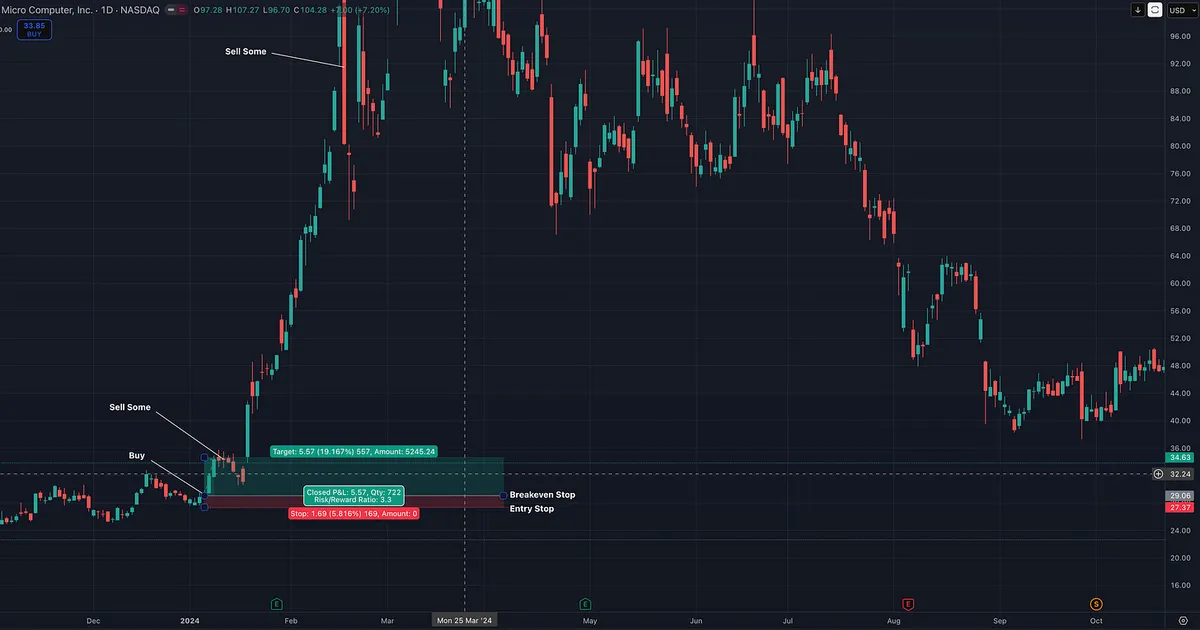
This SMCI chart from 2024 is a perfect example of what I mean when I say I like to finance my risk.

I bought using a classic Minervini low cheat entry. That means I was not waiting for a flat-base breakout at new highs. I entered lower in the base as price turned back up, forming a higher low and then a higher high. It is a tactical way to enter earlier when you see constructive higher-high and higher-low structure developing.

Once the trade began working and I hit roughly three times my initial risk, I sold a portion into strength. This locked in profit and reduced my emotional burden. When price pulled back, formed another higher low, and then pushed to a fresh high, that is when I moved my stop to breakeven. At that point the remaining position was operating on house money.

This idea lines up perfectly with something George Soros said in his 60 Minutes interview: “It’s very different when you’re risking your principal than when you’re risking your profits.”

That is the entire logic behind financing your risk. Lock in gains early when structure allows, remove exposure, and let the rest of the trade run without emotional drag.

Minervini gave me the entry tactics. Soros gave me the psychology. Together they create a simple edge: Protect the downside, pay for the trade early, and let the market decide how big the winner becomes.

View on Substack ↗

“I set protective stops at the same time I enter a trade. I normally move these stops in to lock in a profit as the trend continues. Sometimes, I take profits when a market gets wild. This usually doesn’t get me out any better than waiting for my stops to close in, but it does cut down on the volatility of the portfolio, which helps calm my nerves. Losing a position is aggravating, whereas losing your nerve is devastating.”  -Ed Seykota

View on Substack ↗

Yesterday was a great reminder of how combining multiple timeframes can create a low-risk, high-reward swing setup.

I didn’t buy just because price reclaimed the 50-day MA. The 50-day is just an area of interest, not a signal.

Instead, I waited for:

✅ Higher low

✅ Higher high

✅ Supportive tape + volume

This let me define risk tightly, take partials into strength, and let the rest of the position run, essentially financing the trade with early gains.

As Soros said, “It’s very different when you’re risking your principle than when you’re risking your profit.”

Full breakdown here ↓

https://tradingmomentum.substack.com/p/a-low-risk-high-reward-entry-off

ArticleA Low-Risk, High-Reward Entry Off the 50-Day
View on Substack ↗

Nicolas Darvas, in How I Made $2,000,000 in the Stock Market, explained one of the most profound realizations of his trading career, that consistent success didn’t come from being right all the time, but from making more when right than losing when wrong.

He accepted that no system could predict markets perfectly, even the best traders might only be correct half the time. What mattered was risk management and the ability to protect capital when wrong while compounding profits when right.

Darvas also displayed a remarkable level of self-awareness. He recognized his emotional weakness, his tendency to sell too soon out of fear, and designed a systematic solution to overcome it. As he wrote:

“There was only one answer to this danger: My profits had to be bigger than my losses.

I had learned from experience that my most difficult problem was to discipline myself not to sell a rising stock too quickly. I always sold too quickly because I am a coward. Whenever I bought a stock at 25 and it rose to 30, I became so worried it might go back that I sold it. I knew the right thing to do but I invariably did the opposite.

I decided that since I could not train myself not to get scared every time, it was better to adopt another method. This was to hold on to a rising stock but, at the same time, keep raising my stop-loss order parallel with its rise. I would keep it at such a distance that a meaningless swing in the price would not touch it off. If, however, the stock really turned around and began to drop, I would be sold out immediately. This way the market would never be able to get more than a fraction of my profits away.”

👉 Read more → https://tradingmomentum.substack.com/p/nicolas-darvas-the-dancer-who-outsmarted

ArticleNicolas Darvas: The Dancer Who Outsmarted Wall Street and the Timeless Lessons That Still Work Today
View on Substack ↗

You don’t need grand slams to build serious wealth.

Most successful investors make their money hitting consistent 2x to 3x base hits—cutting losses quickly, letting winners run, and compounding gains over time. Out of 100 trades or investments, you might catch a 10x or 20x—but it’s almost never the one you expected.

The rookie mistake? Swinging for the fences on every pitch. The pro mindset? Stack small wins, stay in the game, and let time and discipline do the heavy lifting.

Compound a series of 2–3x winners with proper risk management, and you’ll often outperform those endlessly chasing unicorns.

If you’re doing well swinging for grand slams, that’s great—keep going. Just wanted to share another method that might align better with some people's personalities and risk tolerance.

View on Substack ↗

Charlie Munger was absolutely right:

"The big money is not in the buying and selling, but in the waiting."

But here's the nuance most miss:

First, many investors haven’t clearly defined whether they’re short-term traders, swing traders, or long-term investors. Without that clarity, they end up with mismatched expectations and behavior.

Second, patience alone isn’t the edge—strategic patience is. I know plenty of investors who’ve held losing positions for years, waiting for a turnaround that never comes. That’s not discipline—that’s hope without a plan.

Yes, patience is vital whether you're scalping in seconds or holding world-class businesses for decades. But the edge comes when patience is combined with a complete strategy: knowing what to buy, when to buy, and more importantly—when to sell.

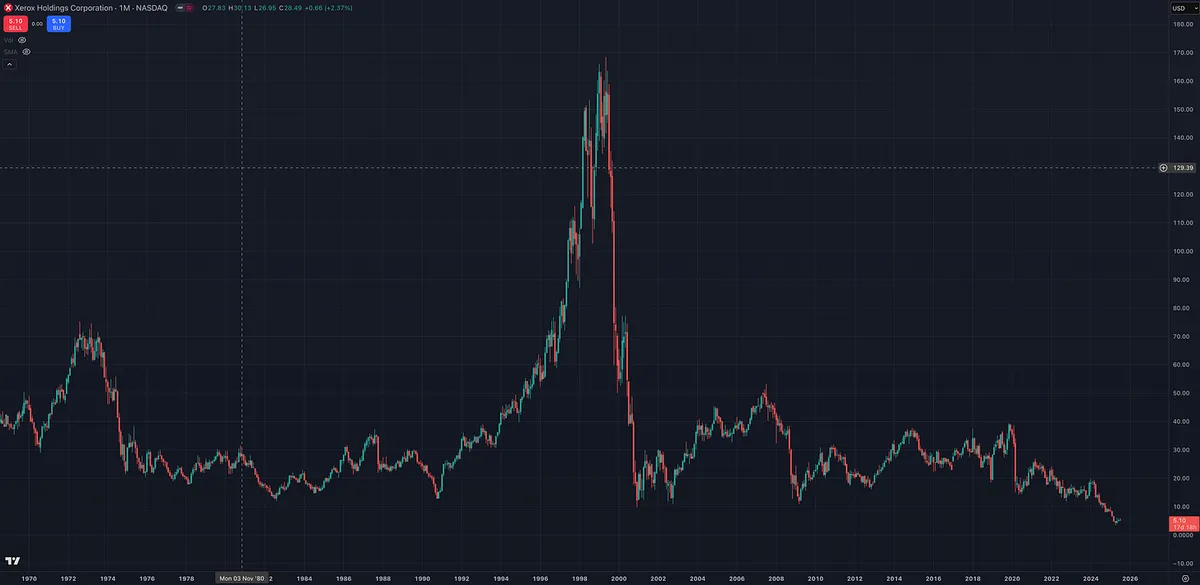
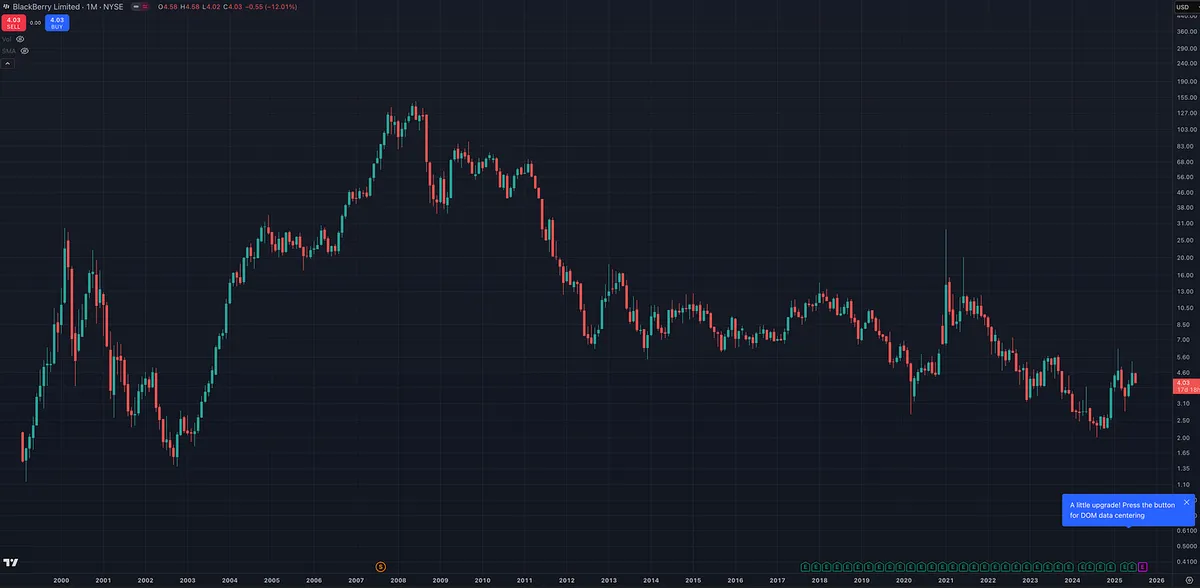
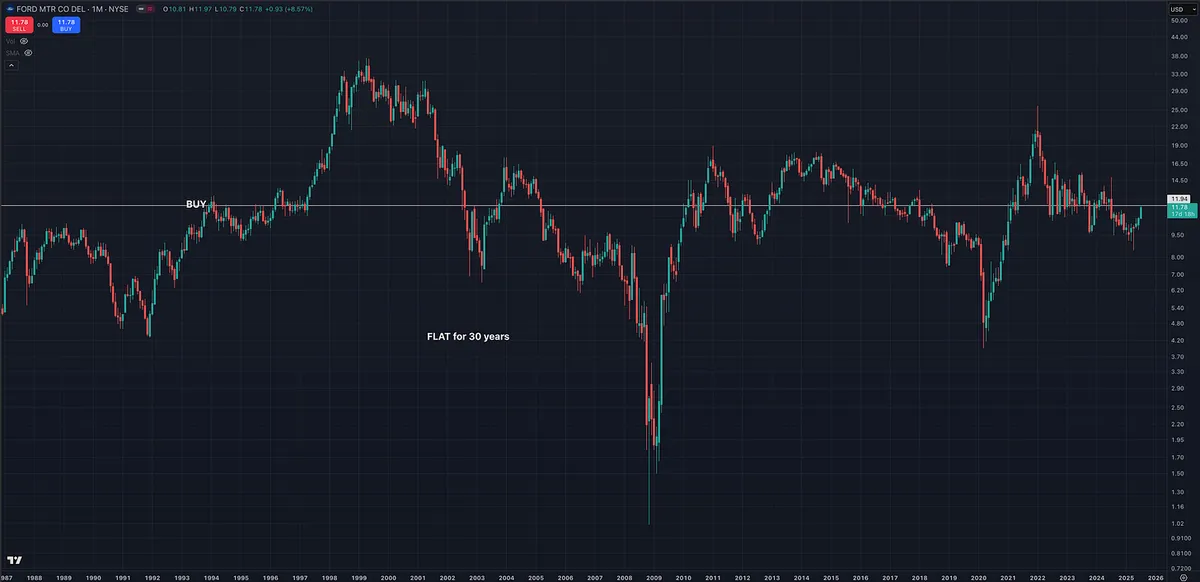
Good companies come and go. Just because a business helped you build wealth doesn’t mean it will continue to do so. You might buy a stock at $20, watch it run 1,000% over two decades, and end up back at breakeven simply because you had no sell rules.

Patience isn’t passive—it’s active, informed waiting with a plan. That’s the real edge.