Momentum Trading Strategy

Notes

Selling & Holding Winners

Managing a trade after it starts working: when to take profits, how to stay in big winners, and when to exit.

Showing 1–3 of 3 notes

$LITE ×
View on Substack ↗

Nothing Lasts Forever. Don’t Fall in Love With Any Stock.

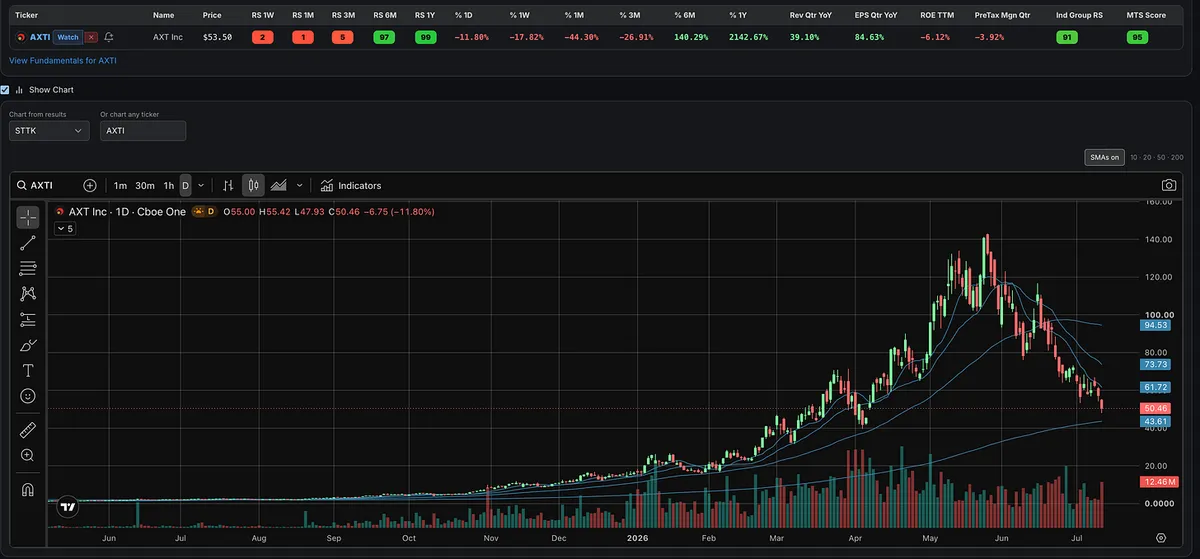
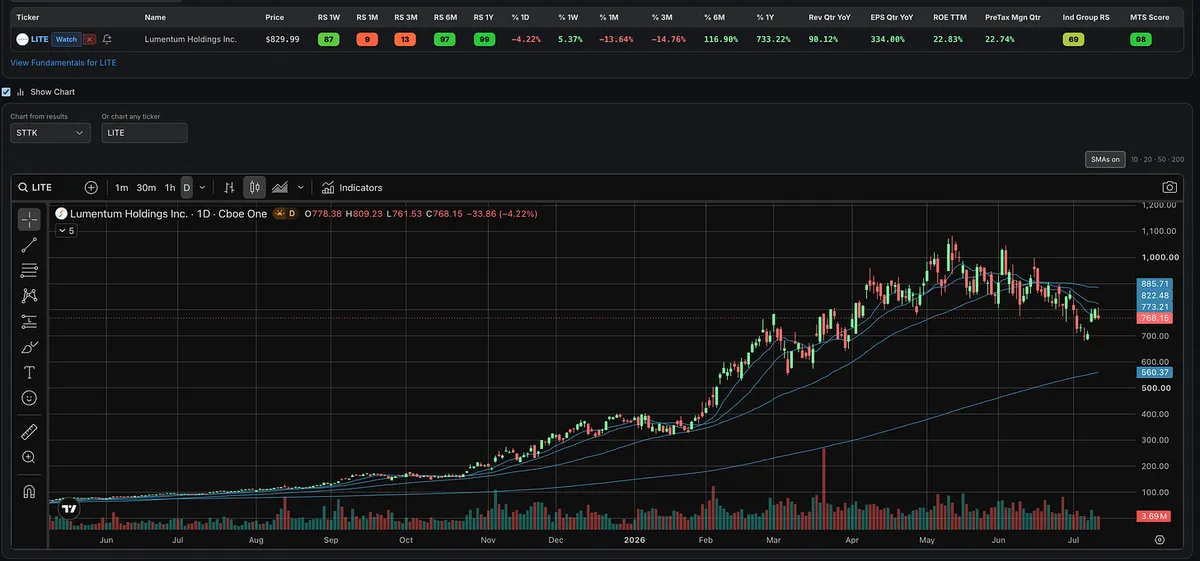
Some of the market’s biggest winners over the past year have now broken down. At least for the moment, their runs appear to be over.

AXTI delivered enormous gains over the last year, but it has now fallen below its 50-day moving average and is heading toward the 200-day. Its 10-day and 20-day lines are declining, and the 50-day is beginning to roll over.

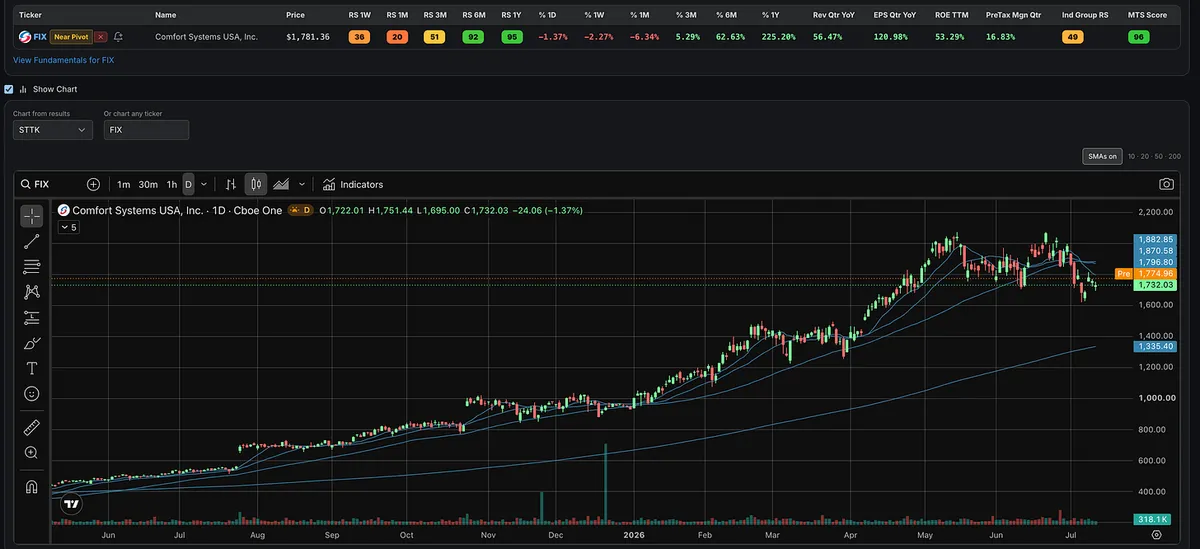
LITE, CIEN, VICR, AAOI, VIAV, TTMI, FIX, COHR, and several other former leaders have also broken down or suffered significant technical damage.

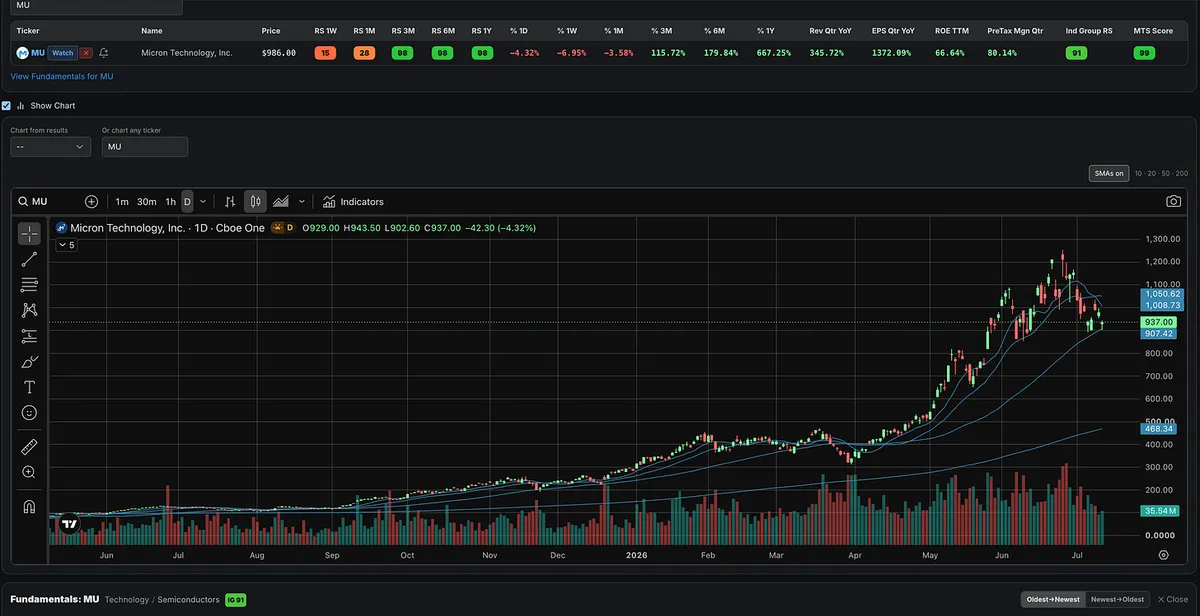
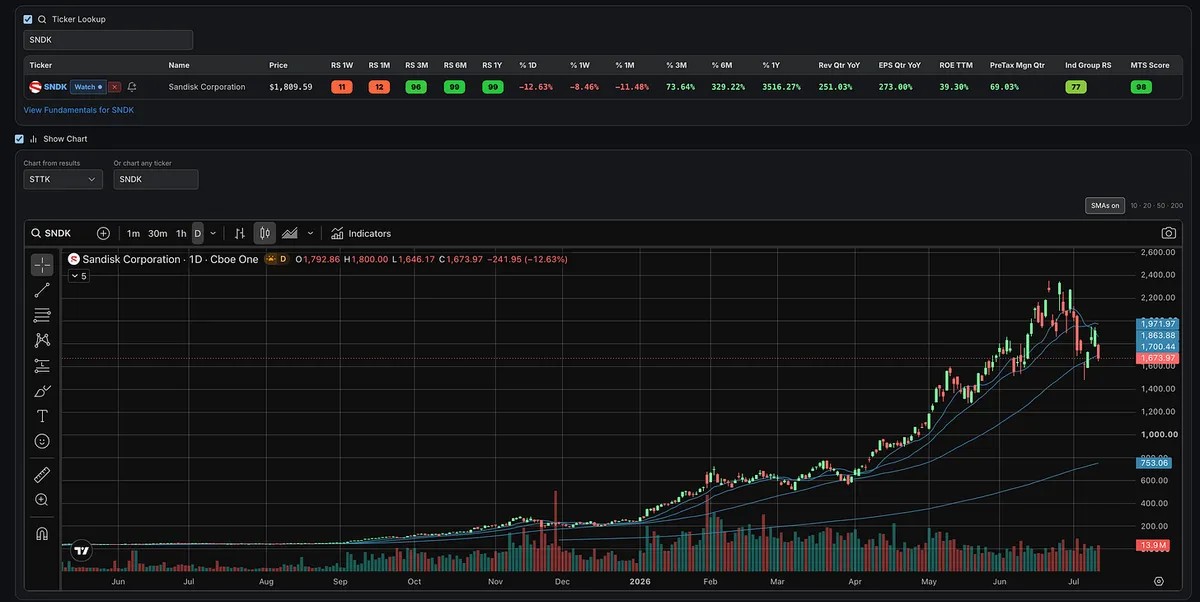
Many more are sitting in the danger zone near their 50-day moving averages. That includes the memory names SNDK, WDC, STX, and MU, along with other hot names from hot groups VPG, MBIS, MXL, LSCC, MRVL, TER, VSH, STM, ADI, INTC, TSM, LRCX, COHU, PDFS, and others.

The bottom line is that many of the stocks that have driven this market, particularly the memory, semiconductor, and telecom names, have either already broken down or are now testing a critical area around their 50-day lines.

I have not needed to share many new tickers from week to week because the same names I have discussed throughout the year continued to lead. There was no reason to constantly search for something new when the existing leaders were still working.

But nothing lasts forever.

Many of the stocks that worked all year are now either ending their runs or approaching a decisive point. Do not fall in love with any stock. Respect the price action and let the market tell you whether the trend is still intact.
View on Substack ↗

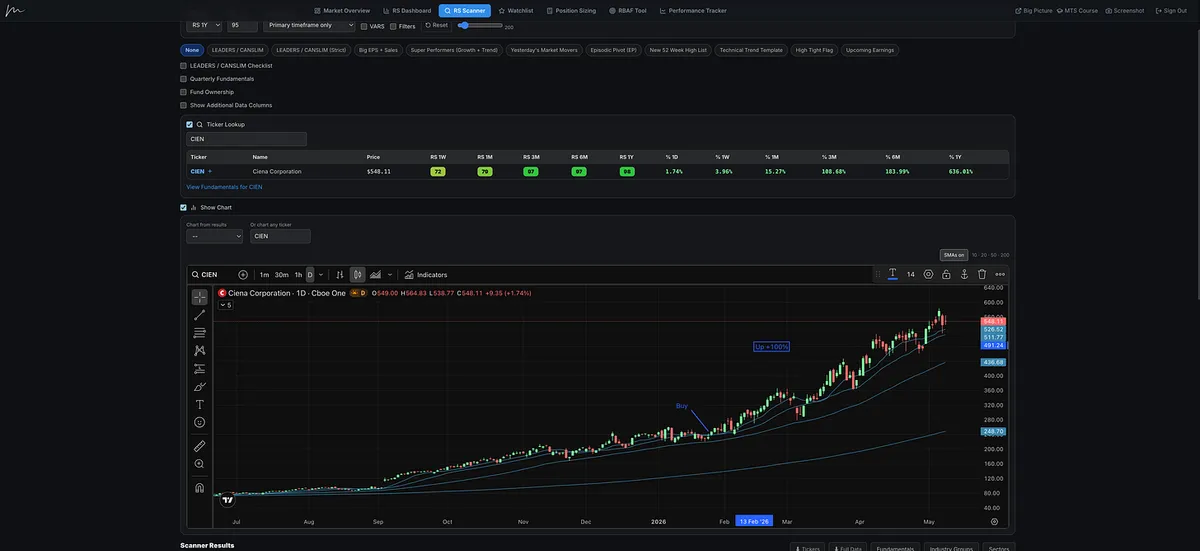
What Soros Taught Druckenmiller About Big Winners, and Why CIEN Is the Point

One of the biggest misconceptions in trading is that you need to be right all the time.

You do not.

What you need is the ability to keep losses small when you are wrong and press your advantage when you are right.

That is one of the biggest lessons Stanley Druckenmiller described learning from George Soros in Jack Schwager’s The New Market Wizards.

Druckenmiller said Soros taught him that when conviction is high, “you have to go for the jugular.”

He also called Soros “the best loss taker I’ve ever seen.”

That combination is powerful:

Be aggressive when you are right.

Walk away quickly when you are wrong.

I have made plenty of wrong calls on individual stocks. I am wrong often.

But the goal is not to be right on every name.

The goal is to structure your trading so the small losses stay small, and the winners have enough room to pay for the losers and then some.

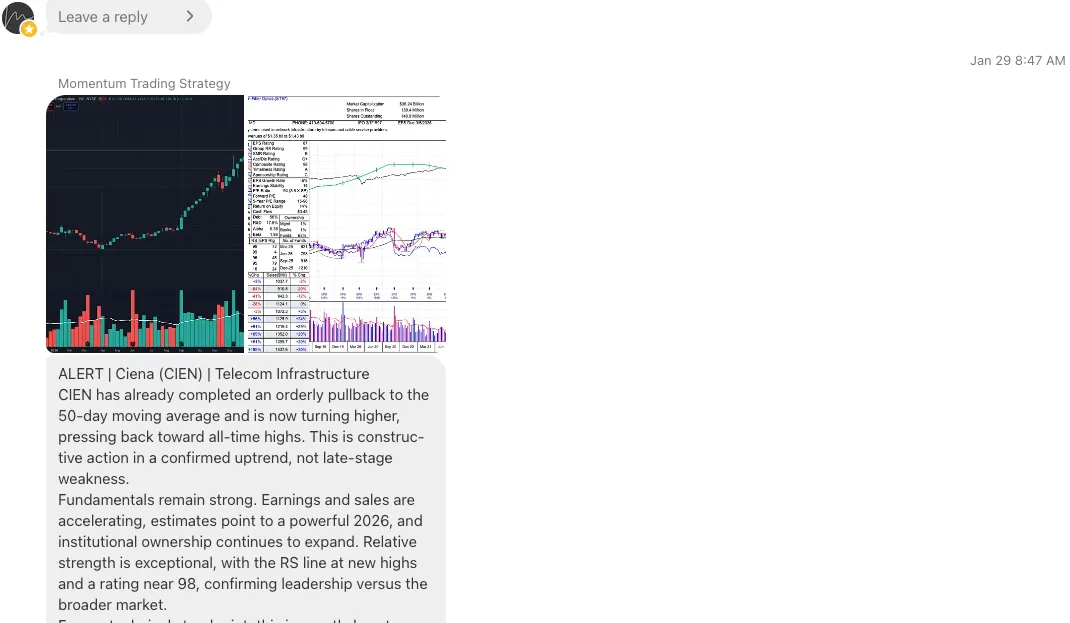
That is why a winner like CIEN, along with names like LITE and SNDK, matters so much in my trading strategy.

I mentioned CIEN earlier because it had the kind of relative strength, leadership, and constructive price action I look for.

Since then, it has continued to show why holding real leaders matters.

One real leader can make up for a lot of small losses.

But only if you do two things:

  • Cut the trades that are not working.

  • Hold the trades that are.

That is the hard part.

Most traders do the opposite.

They give losing trades too much room and cut winning trades too quickly.

The best traders understand the math is not about being right all the time.

It is about making sure that when you are right, it actually matters.

View on Substack ↗

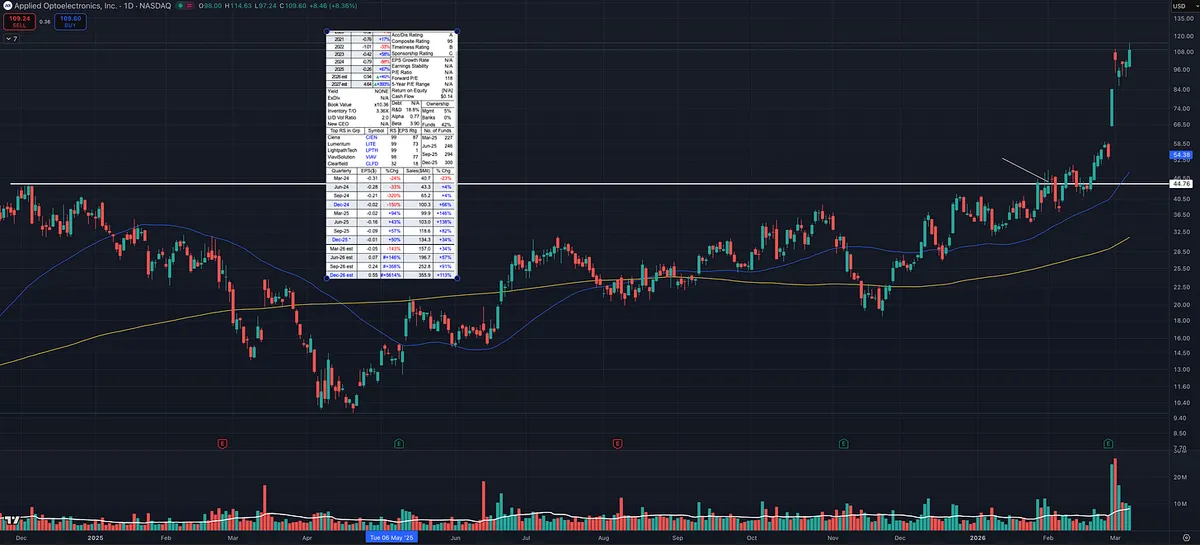
Why I Mentioned AAOI Before Earnings

Someone asked why I mentioned AAOI in early February with earnings coming up.

First, the stock checked several boxes I look for.

It was in a HOT group (telecom) showing strong relative strength across multiple timeframes. I had already seen success with LITE and CIEN, which are in the same space. It reminded me of past industry runs like the computer data storage group when SNDK, MU, WDC, and STX all moved together.

AAOI also had:

• Strong earnings and sales acceleration

• Rising forward estimates

• Accelerating fund ownership

• Tight price action on the right side of the chart

• Trading near new 52 week highs

Since that mention the stock has moved about 150%, but the trade management is the important part.

I normally do NOT buy a stock a few days before earnings. There is too much risk and no time to build a cushion.

I follow the advice from Paul Tudor Jones:

“Never trade in situations where you don’t have control. For example, I don’t risk significant amounts of money in front of key reports, since that is gambling, not trading.”

In this case there were about three weeks before the report, which gave the trade time to work.

From the original buy, the stock moved roughly 30% before earnings.

At that point the plan becomes simple:

• Trim a large portion before the report

• Lock in gains and reduce risk

• Hold a smaller position into earnings

Even great stocks can drop 15–20% overnight on earnings.

By trimming beforehand, the position already has a profit cushion, so the remaining shares carry much less risk.

This is something I learned studying the playbooks of William O’Neil, Mark Minervini, and David Ryan.

The goal isn’t predicting earnings.

The goal is managing risk while letting strong stocks work in your favor.