Momentum Trading Strategy

Notes

Risk Management & Position Sizing

Notes whose main point is limiting losses and deciding how much to buy and how much to risk on each trade.

Showing 161–180 of 224 notes

View on Substack ↗

You Don’t Need a Lottery Ticket to Get Rich in the Market

A lot of people are chasing parabolic moves, hoping to strike it rich on one or two big bets.

That’s not how professionals do it.

They’re willing to gamble large chunks of capital on a single idea. Bitcoin. Silver. A speculative biotech. The next hot AI name. If it works, they feel like a genius. If it doesn’t, the account takes real damage.

This is not a professional approach.

William O’Neil studied the biggest winners in history, but what often gets overlooked is that he didn’t build his fortune on home runs alone. He had plenty of base hits and doubles along the way.

The big winners get written about.

The consistency is what built the wealth.

You can get extremely wealthy compounding many trades where you risk 5% to make 15–20%. You don’t need to be in the parabolic phase. You don’t need to go all in. You don’t need to swing for the fences.

Consistency plus asymmetric risk-reward does the heavy lifting.

Study the great traders and you’ll notice something important. None of them made it from one or two trades. They stacked wins over time. They accepted drawdowns. They stayed disciplined. And yes, the big winners showed up occasionally too.

But they never relied on them.

Treating the market like an easy lottery ticket isn’t just lazy, it’s expensive. This game rewards patience, process, and compounding. Not hope.

The goal isn’t one life-changing trade.

The goal is a repeatable edge that compounds.

That’s how real wealth is built.
View on Substack ↗

Never Argue With Price

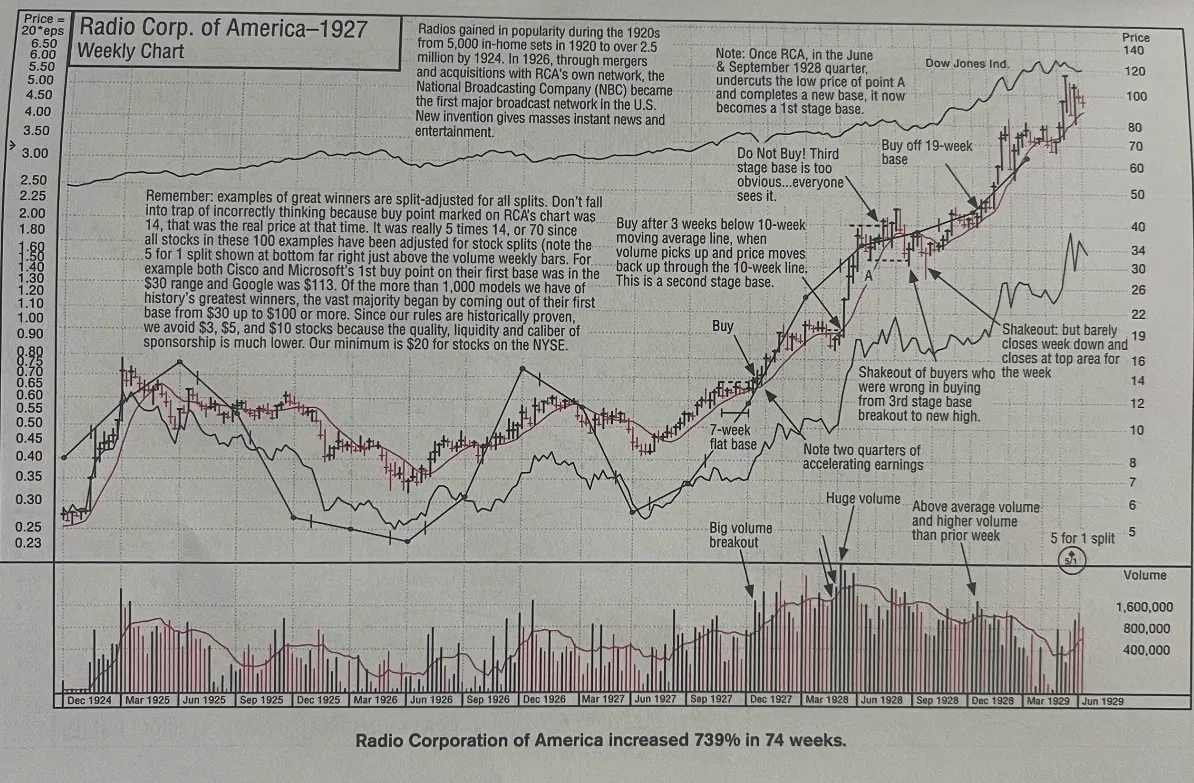
William O'Neil studied the biggest winning stocks going back to the 1880s and built the CANSLIM framework from that research.

What most people miss is this:

those stocks met the criteria before their big runs, not after.

Even then, many stocks that look perfect on fundamentals still fail.

In strong markets, even elite CANSLIM traders might win 60% of the time. More often it’s 40–50%. In poor markets, it’s even less. And yet, fortunes have been made winning just 35–40% of trades.

So why does the system fail for so many?

Because they don’t cut losses fast.

O’Neil understood that price action is truth. Fundamentals help guide you toward potential winners, but they guarantee nothing. Price is the final judge.

As he said:

“There are no good stocks unless they go up in price. If they go down instead, you have to cut your losses fast.”

That’s why charts and price action always come first.

Another legendary trader with a very different style came to the exact same conclusion. Ed Seykota built his success around trends and risk control, not prediction.

He said:

“In order of importance to me are:

(1) the long-term trend,

(2) the current chart pattern, and

(3) picking a good spot to buy or sell.

Those are the three primary components of my trading. Way down in very distant fourth place are my fundamental ideas, and quite likely, on balance, they have cost me money.”

Different styles. Same truth.

Price is the most important factor because it reflects reality.

Charts tell you what institutions are actually doing.

Fundamentals explain stories. Price tells you whether they’re right.

Never argue with price.

Respect the trend.

Cut losses fast.

That’s how traders survive long enough to win big.

View on Substack ↗

How Professional Traders Handle Earnings Season

It’s earnings season, and you’ll see plenty of stocks setting up just days before their reports.

The chart looks great.

Price action is tight.

Earnings and sales estimates look strong.

And yet, most professional traders will pass. I do too.

Why? Because risk comes first.

Earnings are not a normal trading environment. They are a news event. Price can gap sharply higher, or it can gap down far beyond any logical stop. Once the report hits, you lose control of risk.

Yes, big gains are possible when earnings surprise to the upside. But large, instant losses are just as possible, and they have nothing to do with your setup or discipline.

That’s not trading. That’s gambling.

If you are already in a position heading into earnings, the smart move is risk reduction. Sell enough to lock in profit so a bad reaction cannot hurt you. If the stock reacts well, you still participate. If it doesn’t, you survive.

If you are not already in the stock, patience is usually the best decision.

This is how many top traders handle it. William O’Neil, Mark Minervini, David Ryan, and Dan Zanger don’t try to predict earnings. They let the report hit and then watch how institutions react.

What they look for is confirmation. A strong post-earnings move higher on heavy volume. Then a controlled pullback on lighter volume. That’s where risk comes back into your hands and where high-probability entries are found.

As Paul Tudor Jones said, “Never trade in situations where you don’t have control. I don’t risk significant amounts of money in front of key reports, since that is gambling, not trading.”

Risk first.

Let price confirm.

Opportunities always come back.

View on Substack ↗

Death by a Thousand Cuts

A lot of traders are getting chopped up trying to buy breakouts in this market.

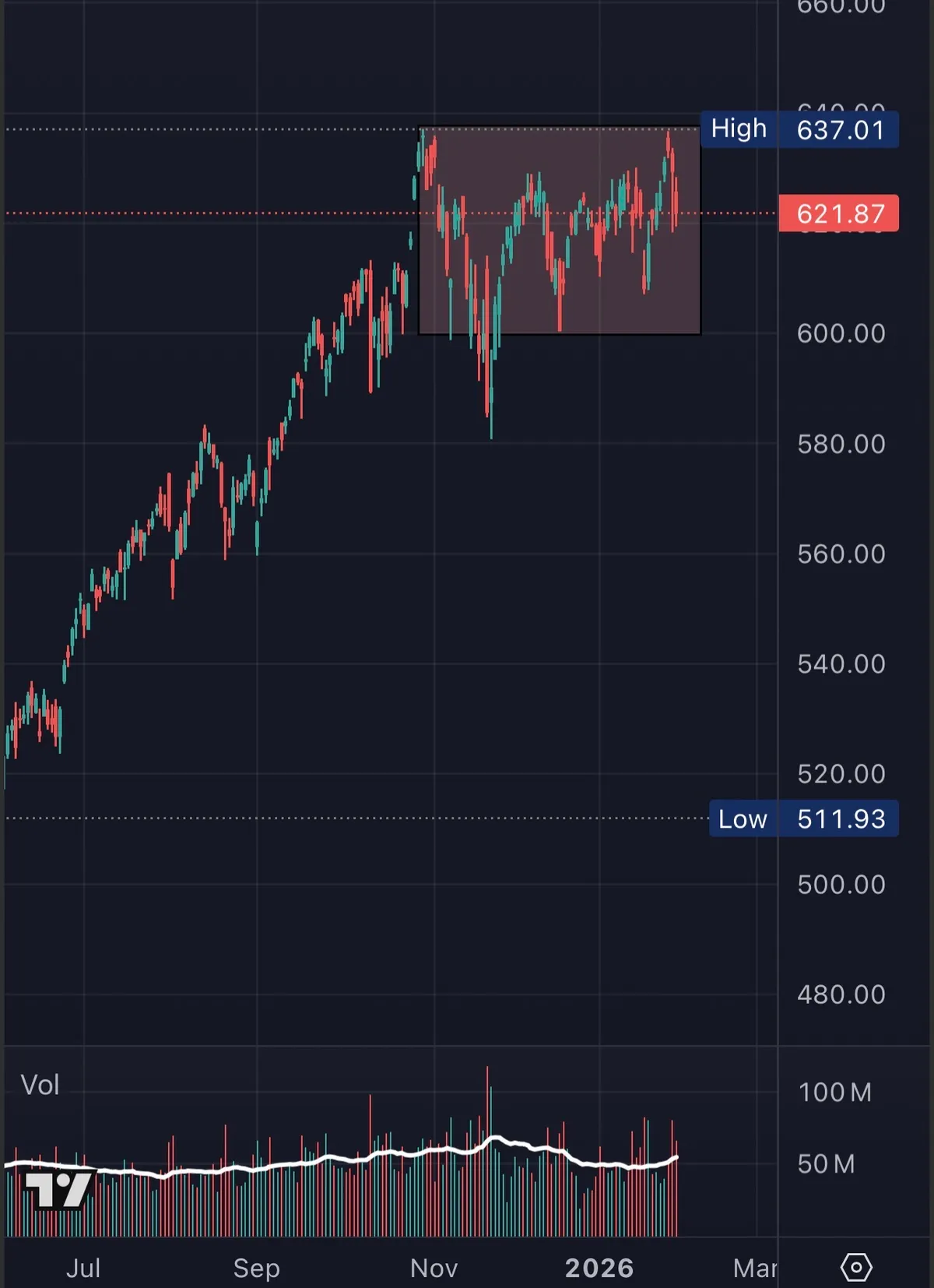
Just look at the Nasdaq.

We’re not far from all-time highs, but the price action has been brutal. Tight ranges, failed moves, and constant reversals. That kind of environment is a killer for clean setups.

When breakouts stop working, forcing trades only makes it worse.

If you don’t have high-quality setups, the best position is cash. Patience is a position.

Listen to your trading. The market gives feedback every day. If your trades aren’t working, cut your size. If they keep failing, cut it again. Eventually, you may need to step aside completely.

When conditions improve, start back small. Let the market prove it’s ready. As setups begin to work again, then you gradually increase size.

Survival comes first. Opportunities always come back.

View on Substack ↗

How Most Traders Manage to Buy the Top and Sell the Bottom

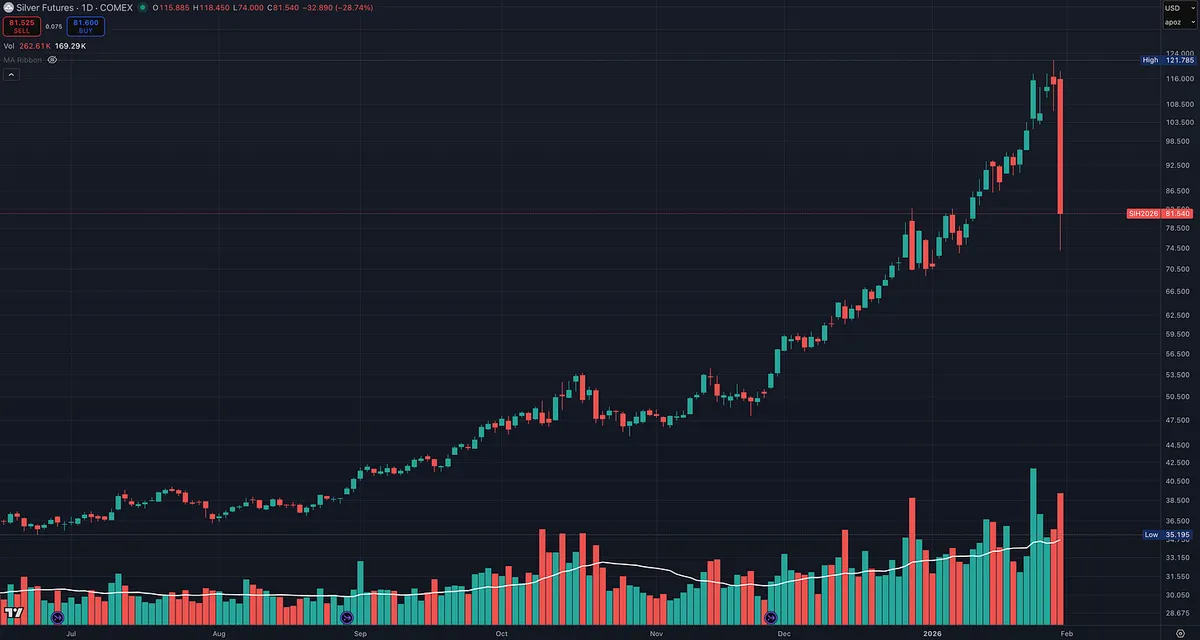
One of the most painful stories in markets plays out the same way every cycle, and silver is no exception.

Some traders sat on the sidelines for months. They watched price grind higher day after day. Eventually the move felt unbearable to miss, so they finally jumped in, usually near the highs.

Now price crashes down.

Instead of cutting the loss, they convince themselves it will come back. They tell themselves they’ll just wait it out. Maybe even add more lower to “get a better average.”

But this is how tops and bottoms are made.

Buying late strength turns into holding weakness. Hope replaces discipline. Rallies feel like confirmation, but they’re often just pauses before more downside.

Eventually, after weeks or months of frustration, the position is dumped near the lows. Not because the trader planned it, but because they’re exhausted. And that’s when the promise gets made: “I’m never trading silver again.”

This pattern shows up in every major market cycle.

It always has.

And it always will.

The lesson isn’t about silver.

It’s about respecting price, managing risk, and never letting emotion decide when you enter or exit.

View on Substack ↗

A Lesson From Silver

A good reminder on the dangers of buying blindly into parabolic moves.

Silver is down nearly 30% today.

Markets rarely go straight up forever. They usually climb the stairs on the way up and fall out a window on the way down.

Parabolic moves feel safest at the top because everyone agrees. That’s usually when risk is highest.

This is why cutting losses quickly matters. This is why chasing extended price action rarely ends well.

Strong trends reward patience on the way up. They punish complacency on the way down.

Respect risk. Always.

View on Substack ↗

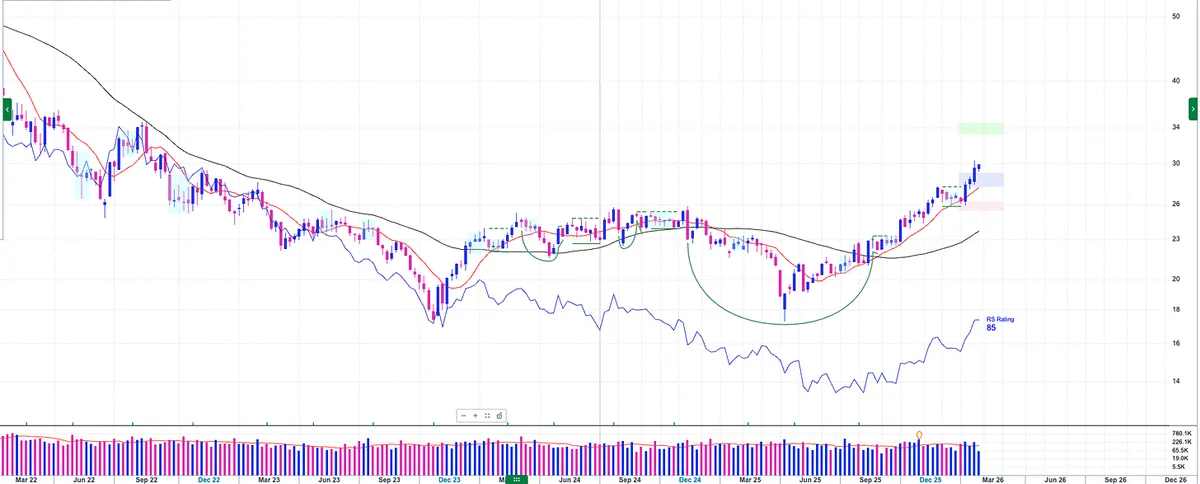
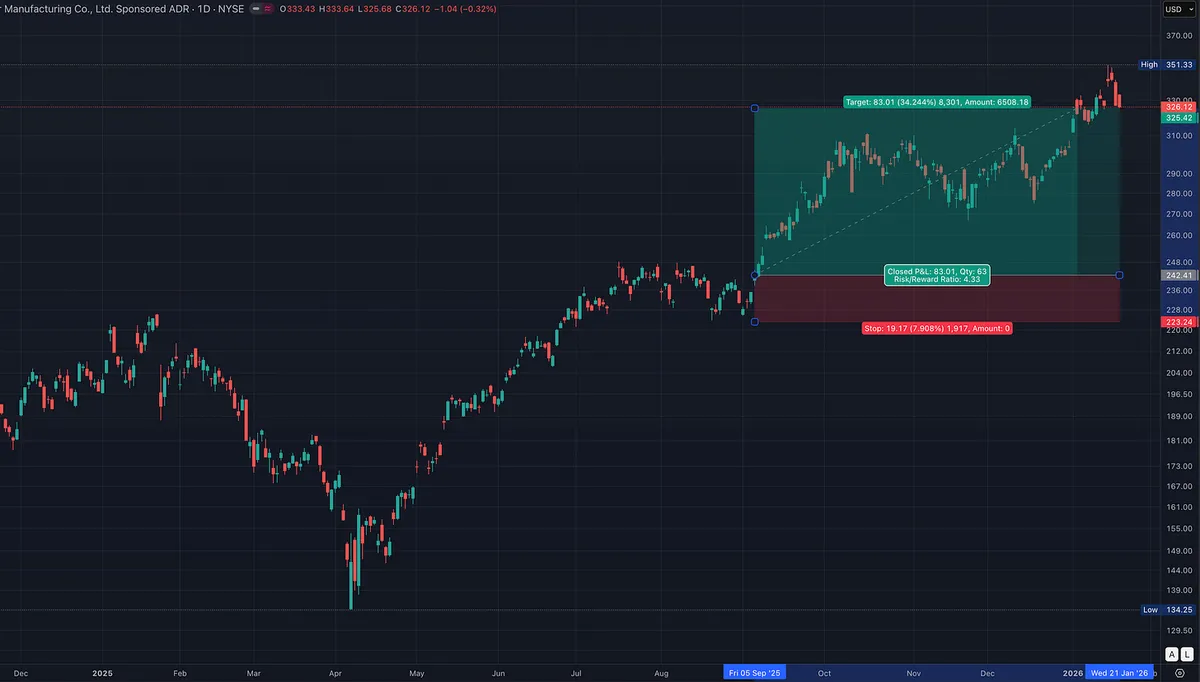
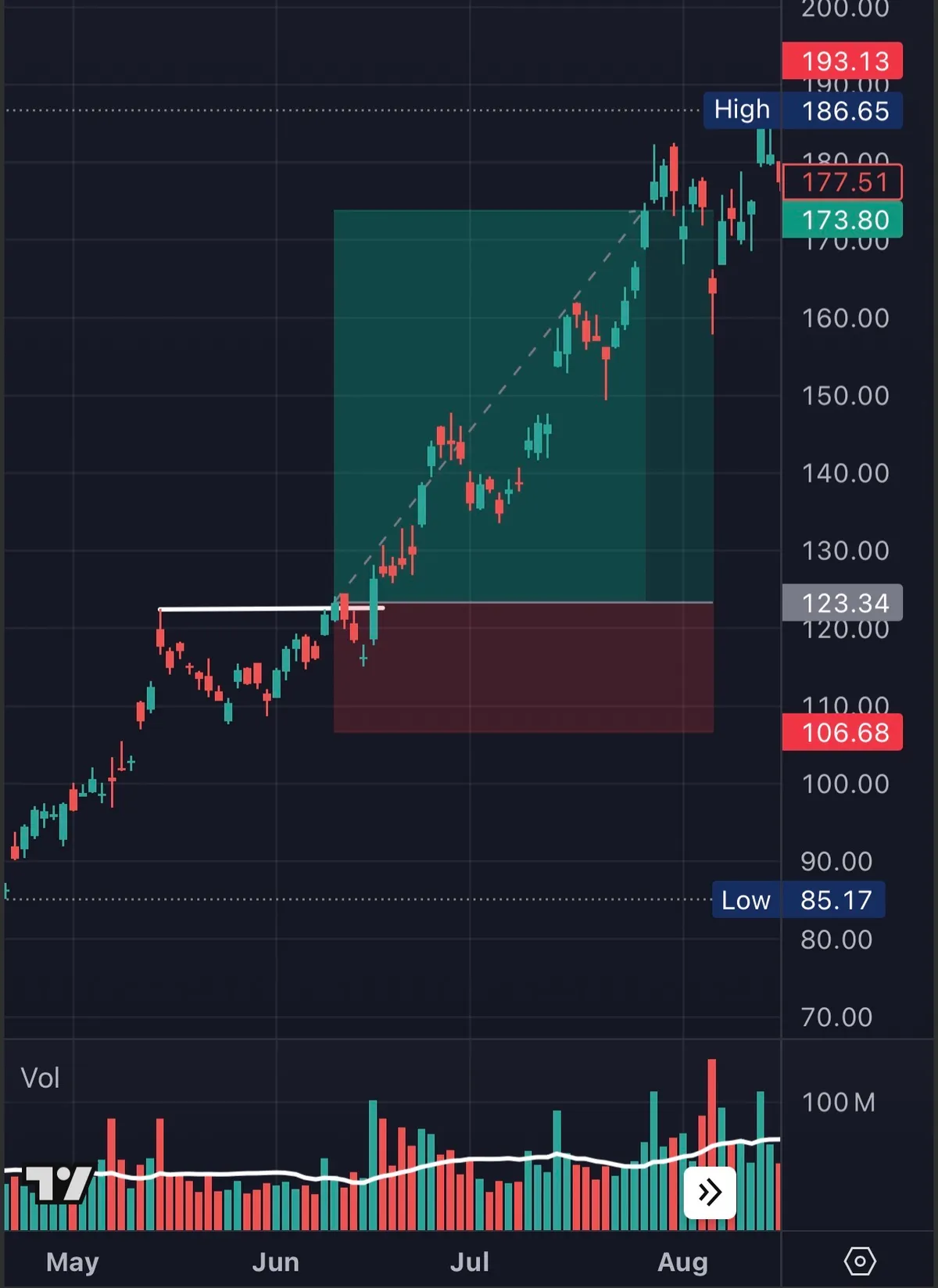
KLAC is a chart every trader should study.

Strong trend. 50 day acting as support. Higher lows. Tightening price. Low volume during consolidation.

This is what real leadership looks like.

But the most important lesson here isn’t the breakout itself. It’s how risk was structured and financed once the trade started working.

Selling some into strength, reducing risk, and letting the market pay for future risk is what separates professionals from everyone else.

I broke this down in detail here, including how traders like Soros and Minervini think about financing risk at the trade level:

https://tradingmomentum.substack.com/p/how-professionals-finance-risk-and

Save the chart. Study it. The framework matters more than the ticker.

ArticleHow Professionals Finance Risk and Why Most Traders Never Do
View on Substack ↗

Most Traders Manage Risk. Professionals Finance It.

Most traders think risk management is about being careful.

Professionals think about who is paying for the risk.

If you’re still risking your original principal on every trade, you’re playing a different game than the best traders in the world.

This is how traders like Soros and Minervini think about financing risk in real markets, using structure, partial profits, and positioning so the market pays for future risk.

Full breakdown with charts and examples here:

https://tradingmomentum.substack.com/p/how-professionals-finance-risk-and

ArticleHow Professionals Finance Risk and Why Most Traders Never Do
View on Substack ↗

Why the Best Traders Protect Principal First

One of the most misunderstood ideas in trading is where real risk actually comes from.

George Soros explained it clearly in an old interview.

He talked about how performance does not truly compound until you are no longer risking principal. There is a massive psychological and practical difference between risking your own capital and risking accumulated gains.

When you are risking principal, everything feels heavier. Decisions tighten up. Fear creeps in. You trade smaller, hesitate more, and second guess yourself. That is survival mode.

When you are risking profits, the game changes. You still control risk, but the fear is lower. You can press when the odds are clearly in your favor. That is how real runs happen.

Soros said their rule was simple. They never endangered the principal. When things were not working, they retrenched. They reduced size. They deleveraged. Losses were small and acceptable.

Even on their biggest bets, the downside was limited.

In the famous currency trade that made over a billion dollars, the potential loss was only a few percent. The reward, if right, was many multiples of that. High reward. Low risk. Defined downside.

Here is the part most people overlook.

Until you build a cushion from gains, you often need to be far more selective. You chip away with smaller wins. You move stops to breakeven faster. You take partial profits sooner. You focus on staying in the game and compounding steadily over time.

Once that cushion exists, swinging bigger becomes easier. You are no longer risking survival. You are deploying profits.

That is how Soros, Druckenmiller, and many of the best have always operated. Protect the downside first. Let the upside take care of itself.

Learn to survive. Compounding comes later.

View on Substack ↗

Why the Best Traders Concentrate

Mark Minervini put it bluntly:

“You’re not going to get huge performance consistently if you’re diversified all over the place. If you have a significant edge, diversification does not protect you. It dilutes you.”

Minervini concentrates heavily in his best ideas, sometimes up to 25% of a portfolio, while managing risk aggressively.

David Ryan agreed:

“To make big gains in the stock market, you have to concentrate.”

Ryan typically starts with 10% positions, limits the number of stocks he owns, and only adds to names that are moving higher and building new bases.

“I will only add to positions that are moving higher and performing well.”

The Takeaway

Diversification protects people without an edge. Concentration rewards people who have one, as long as they respect risk.

The best traders did not spread their money thin. They pressed their advantage when the market confirmed they were right.

View on Substack ↗

This Will Surprise Most Stock Traders

If you are trying to outperform the market through stock trading, you probably own too many stocks.

William O’Neil addressed this directly in Market Wizards back in 1989. When asked how many stocks an investor should own, his answer was surprisingly small.

Adjusted for inflation, his guidance looks like this today:

$5,000 ($12,981 today): one or two stocks

$10,000 ($25,963 today): three or four

$25,000 ($64,907 today): four or five

$50,000 ($129,815 today): five or six

$100,000+ ($259,000 today): six or seven

Superperformance has never come from owning a long list of average stocks.

It comes from focus.

View on Substack ↗

A Mistake I See Over and Over

A lot of investors are unknowingly trying to run a mutual fund.

They own 15–30 individual stocks. They monitor none of them closely. They underperform the market.

What’s interesting is this usually comes from good intentions. People hear “diversification reduces risk,” then apply it to active stock picking.

That’s where things break.

Diversification works when you are buying the market. It works far less when you are trying to beat it.

Active strategies require focus. They require knowing exactly what you own and why you own it.

When investors blur those two approaches, they often end up with the worst of both worlds: • No market-like simplicity • No stock-picker-level performance

That observation is what led me to write a longer piece on why great investors approached diversification very differently.

👉 Full breakdown here:Why Great Investors Reject Diversification

https://tradingmomentum.substack.com/p/why-great-investors-reject-diversification

ArticleWhy Great Investors Reject Diversification
View on Substack ↗

Why Diversification Has Nothing to Do With CANSLIM

One of the most misunderstood ideas in stock trading is diversification.

Diversification is NOT part of CANSLIM. It is not how superperformance stocks are captured. And it is not how the biggest winners in history were made.

William O’Neil was clear on this. Superperformance comes from concentration in leaders, not from owning a large basket of average stocks.

CANSLIM is built around:

  • Market leadership

  • Strong relative strength

  • Institutional accumulation

  • Proper timing

  • Focused positions

Owning 15–30 stocks is not risk management. It is often a way to avoid making hard decisions.

If your goal is market returns, diversification makes sense. An ETF can do that job efficiently.

But if your goal is outperformance, history points to a different approach.

Fewer stocks. More focus. Better execution.

I break this down in detail here, including what O’Neil and Buffett actually said about diversification and how it fits into a two-bucket approach:

👉 Read the full post:Why Great Investors Reject Diversification

https://tradingmomentum.substack.com/p/why-great-investors-reject-diversification

ArticleWhy Great Investors Reject Diversification
View on Substack ↗

You’ll notice a lot of strong performers inside the IDNA Genomics & Immunology ETF, but I want to be clear about how I approach this area.

Biotech is not my wheelhouse, and I tend to stay selective here. Many biotech names lack consistent earnings and sales, which means they are often traded purely off price action and news catalysts tied to drug data or approvals. That’s a very different game than traditional growth-stock investing.

This is an area where traders like Minervini have expanded over time, and it’s a good example of how many start with a William O’Neil foundation and later branch out once they’ve earned that flexibility through experience.

In my view, biotech should be:

  • Small position size

  • Limited exposure within the portfolio

  • Treated as a tactical trade, not a core holding

This is not where I’d recommend starting. It’s an area you graduate into after proving consistency in safer, earnings-driven growth stocks where risk is easier to define.

Price action always comes first, but process and position sizing matter even more in categories like this.

View on Substack ↗

A drawdown is not what ends most trading careers.

What ends them is reacting instead of adjusting.

Oversizing. Forcing trades. Trying to make it back quickly. Losing objectivity.

The best traders do the opposite. They reduce size. Step back. Protect capital. Regain clarity.

Cash is a position. Patience is a strategy.

This phase feels uncomfortable because it demands discipline instead of action.

Survive this, and you give yourself a real chance to grow.

View on Substack ↗

Every trader hits this phase. Most do not survive it.

Every trader eventually hits a drawdown.

The ones who last are not smarter. They just respond differently when nothing is working.

Most damage happens after the drawdown begins, not because of it.

I wrote a piece today on how professionals survive these periods without blowing up their capital or confidence.

If you’ve been in a tough stretch lately, this one’s for you.

https://tradingmomentum.substack.com/p/every-trader-faces-a-drawdown-the

ArticleEvery Trader Faces a Drawdown. The Ones Who Survive Know What to Do Next
View on Substack ↗

The Fastest Way to Lose Is to Focus on Money

One of the biggest mistakes traders make is focusing on making money before they focus on making good trades.

Money is an outcome. Process is the input.

If your position size is large enough to make you emotional, it is too large. When size is too big, fear and greed take over. You hesitate on entries, cut winners early, let losers run, and abandon your rules at the worst possible time.

The solution is simple. Reduce your position size so small that the outcome barely matters.

When the pressure is gone, you can finally focus on what actually improves performance: Entry quality Risk management Following your rules Reducing mistakes

This is how skill is built.

Once you can execute your process consistently and you start to see positive expectancy, then and only then do you increase size. Gradually. Intentionally. Without changing the way you trade.

Most people skip this step. They jump straight into trading big size because they want results fast. The problem is they never last long enough to see their system work. Or worse, they find out it does not work after they have already lost too much capital to continue.

The traders who survive and eventually thrive all do the same thing. They protect their capital. They master the process. They let size come last.

View on Substack ↗

Why Risk Management Really Matters

Risk management and position sizing are everything.

Not because they help you avoid losses but because they give you the ability to try again.

Sometimes the right stock does not work on the first attempt.

Or the second.

Lose small.

Lose small again.

Try again.

Then it finally goes.

One big winner pays for the earlier losses and then some.

Without proper position sizing, most traders never get that chance. They get scared, widen stops, or quit right before the move happens.

Risk management keeps you in the game long enough for probabilities to work.

Lose. Lose. Lose. Win big.

That is not failure. That is the business of trading.

View on Substack ↗

Why Charts Matter More Than Predictions

One of the biggest misunderstandings about charting is that it is about predicting the future.

It is not.

Charts exist to help us define risk.

Markets do not move in straight lines. They move in swings. Advances and pullbacks. Higher highs and higher lows in uptrends. Lower highs and lower lows in downtrends.

This behavior shows up everywhere.

On monthly charts. On weekly charts. On daily and intraday charts.

The structure looks different in size, but not in nature.

This is what people mean when they say markets are fractal.

The same stair step behavior repeats across all timeframes.

That repetition is not random. It is the result of human behavior cycling between optimism and fear.

This is why technical frameworks like Elliott Wave matter, not because they forecast exact prices, but because they help identify structure.

And structure is what allows us to do the most important thing in trading.

Manage risk.

Paul Tudor Jones once explained it this way:

“The reason he has been so successful is that the Elliott Wave theory allows one to create incredibly favorable risk/reward opportunities. That is the same reason I attribute a lot of my own success to the Elliott Wave approach.”

Notice what he emphasized.

Not prediction. Not certainty. Risk and reward.

When markets move in waves, they naturally create logical areas where a trade idea is wrong.

That is why we use charts to define a clear buy and a clear stop.

The entry aligns with strength and structure. The stop defines where the pattern breaks.

If the pattern holds, the upside can be many multiples of the risk. If it fails, the loss is small and controlled.

This is where the fractal nature of markets becomes a tool, not a theory.

A pullback on a daily chart functions the same way as a pullback on a weekly chart. A breakout failure looks the same across timeframes.

That consistency is what allows traders to survive long enough to compound.

Charts are not about being right. They are about knowing when you are wrong.

View on Substack ↗

10 Jesse Livermore Quotes That Still Run the Market

Markets change. Technology changes. Instruments change. Human behavior does not.

More than a century ago, Jesse Livermore distilled the market down to a handful of rules rooted in psychology, discipline, and price behavior. What is remarkable is not how old these ideas are, but how perfectly they still describe modern markets. If you study the great traders who came after him, the Market Wizards, you will find these same principles repeated again and again in different words. Different styles, same foundation.

  1. Markets vs opinions “Markets are never wrong, opinions often are.” Price is the final authority, not forecasts or beliefs.

  2. Cut losses immediately “Profits always take care of themselves, but losses never do.” This is the foundation of all real risk management.

  3. Never average down “Never average losses. Let that thought be written indelibly upon your mind.” Averaging down destroys capital and judgment.

  4. Wait for confirmation “Do not anticipate and move without market confirmation. Being a little late in your trade is your insurance that you are right.” Confirmation beats prediction every time.

  5. Big money is made by sitting “The real money made in speculating has been in commitments showing a profit right from the start.” Great trades work early and are held, not micromanaged.

  6. Let winners run “As long as a stock is acting right, and the market is right, do not be in a hurry to take a profit.” Most traders exit winners far too early.

  7. Speculation is a business “Anyone who is inclined to speculate should look at speculation as a business and treat it as such, not as a gamble.” Rules and process separate professionals from gamblers.

  8. Few opportunities matter “There are only a few times a year when you should allow yourself to make a commitment at all.” Overtrading destroys edge.

  9. Follow leaders, not laggards “If you cannot make money out of the leading active issues, you are not going to make money out of the stock market.” Leadership is where real money flows.

  10. Patience is the edge “It was never my thinking that made the big money for me. It was my sitting.” Patience compounds returns.

These ten rules quietly sit beneath nearly every successful trading approach that followed. You will hear them echoed by trend followers, growth investors, macro traders, and discretionary operators alike. The language changes, the charts change, but the principles remain untouched. Markets still reward discipline, patience, and alignment with price.

Ignore these rules and the market will eventually teach them to you the expensive way. Internalize them, and you begin to see price differently. Not as noise, but as information.

Markets reward patience, regardless of timeframe.