Watch What They Do. Not What They Say.
People ask why I pay more attention to the put/call ratio (PCC) than popular sentiment surveys.
It’s the same reason I study price instead of letting someone on television tell me what to think.
I care less about what investors say and more about what they actually do with their money.
The PCC compares put option activity with call option activity. Higher readings can reflect greater fear or caution, while lower readings can reflect greater optimism. It isn’t perfect, but it gives me a window into actual market behavior rather than simply asking investors how they feel.
The VIX gives me another perspective. It reflects the volatility being priced into S&P 500 options. It isn’t a direct measure of money flowing into or out of the market, but it shows what options market participants are actually pricing, rather than what they’re telling a survey.
I use both for context, not as standalone buy or sell signals.
Price still gets the final vote.
And this goes far beyond indicators.
Trading has a way of teaching you very quickly how much of what people say is bullshit. A compelling story is not evidence. Someone sounding certain does not make them right. If you can easily be influenced by what everyone around you thinks, trading is going to be a very difficult game.
Now, you might say: “But you’re a growth momentum trader. Aren’t you buying stocks when everyone else is buying them?”
Sometimes, absolutely.
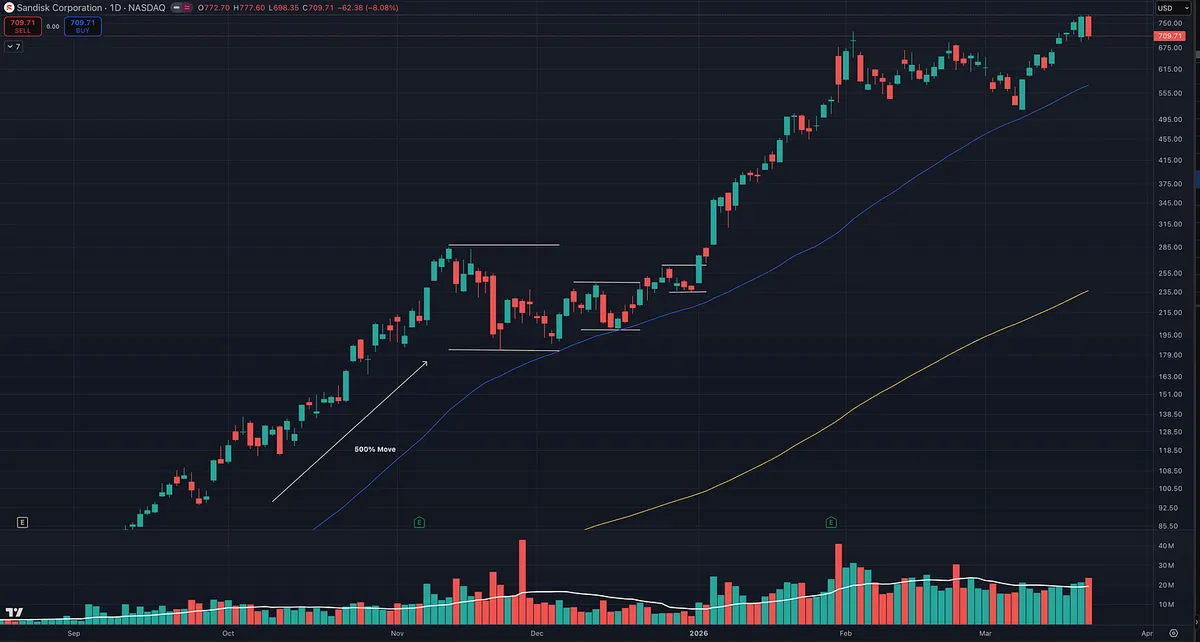
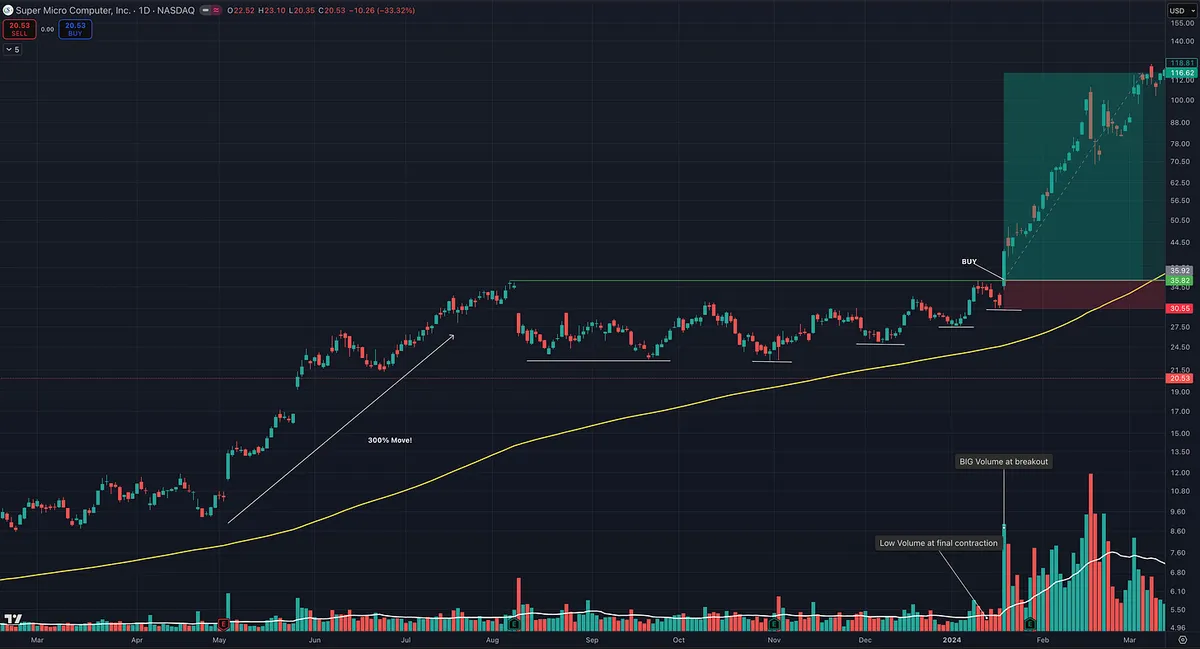
My style of trading is heavily influenced by William O’Neil, Mark Minervini, Dan Zanger, and David Ryan. I’m looking for growth stocks with characteristics such as big earnings and sales growth, high relative strength, strong price and volume action, leadership within strong industry groups, and proper technical setups.
Sometimes the stock everyone is talking about is exactly the stock I want to own.
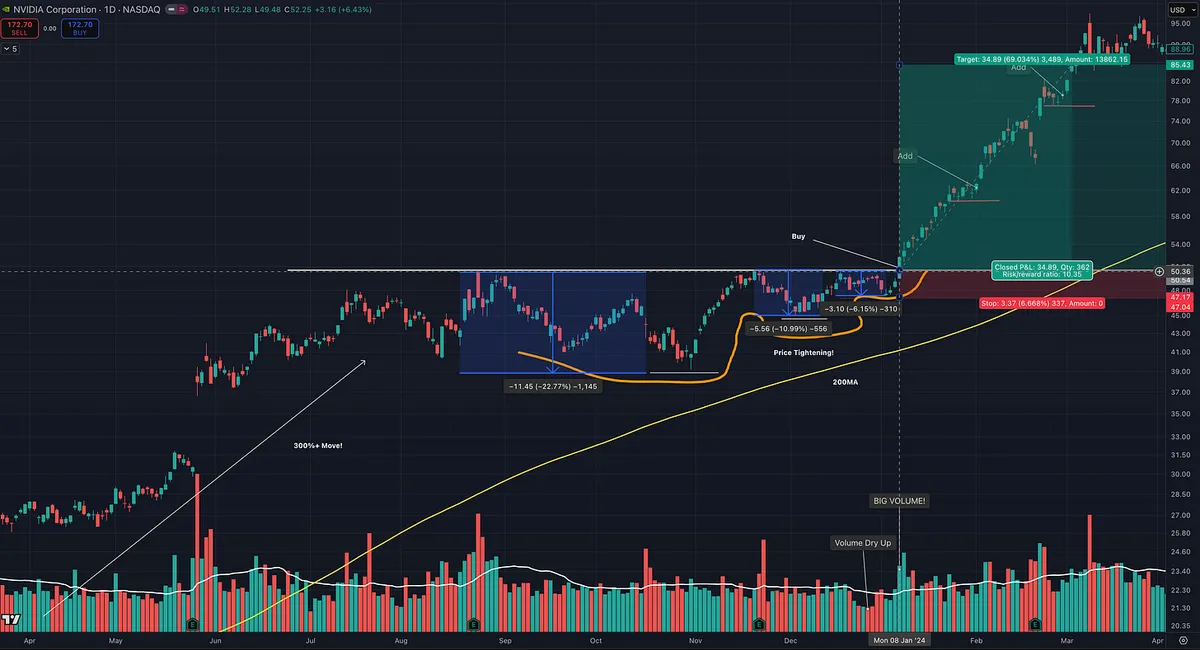
I bought NVDA in early 2024 when it was one of the biggest stories in the market because the evidence supported it. Big earnings. Big sales. High relative strength. New highs. A powerful market theme. A strong industry group.
It met the criteria.
Other times, the stock everyone is talking about doesn’t meet my criteria, and I’m perfectly comfortable watching it go without me.
The purpose isn’t to disagree with the crowd.
That’s just another form of letting the crowd control your thinking.
The goal is to develop enough independence that whether everyone agrees with you or disagrees with you becomes largely irrelevant.
You follow the evidence.
You follow your process.
And you make your own decision.
There’s a funny but revealing YouTube clip I’m going to share below showing just how powerful the human desire to conform can be. People begin standing up simply because everyone around them is standing up.
As you watch it, ask yourself:
Would I eventually stand up too, even if I had no idea why everyone was doing it?
Then ask yourself the trading version.
Am I buying because I see a legitimate opportunity, or because everyone else is excited?
Am I selling because the evidence changed, or because everyone around me is scared?
Am I holding because my analysis still supports the trade, or because someone else keeps reassuring me?
Trading can be a lonely game. Even when you have a great community around you, ultimately it’s you, your decisions, and the market.
You have to learn to lead yourself.
Let the crowd have its opinions. Let your process guide your decisions.