Momentum Trading Strategy

Notes

Lessons from Legendary Traders

Notes built around one named market figure's own words or story, such as O'Neil, Livermore, Minervini, Seykota, Druckenmiller, Tudor Jones or other Market Wizards.

Showing 81–100 of 263 notes

View on Substack ↗

Trading Has Always Been a Study of Human Nature

Bernard Baruch was one of the great old Wall Street operators.

He made a fortune in the market, became known as a Wall Street legend, and later advised presidents.

But one of his best lessons still applies today:

“Above all else, in other words, the stock market is people. It is people trying to read the future.”

That was true 100 years ago.

It is still true today.

The tools changed. The speed changed. The tickers changed. The platforms changed.

But fear, greed, hope, ego, impatience, and crowd behavior did not.

That is why the same mistakes keep repeating.

Baruch also wrote:

“One could say that my whole career in Wall Street proved one long process of education in human nature.”

That is still trading.

The market may look different.

But the game is still people trying to read the future.
View on Substack ↗

The Mistakes That Quietly Destroy Trading Accounts

William O’Neil’s “21 Costly Common Mistakes Most Investors Make” is one of those sections worth revisiting no matter where you are in your trading journey.

If you are newer, it will probably open your eyes to mistakes you may not even realize you are making yet.

If you are more experienced, it is a great refresher to see where you may be slipping, cutting corners, or slowly drifting away from the rules that protect your account.

Because a lot of underperformance does not come from what you do not know.

It comes from what you keep doing wrong.

  • The loss you refused to cut.

  • The stock you bought because it looked cheap.

  • The winner you sold too early.

  • The loser you gave too much room.

  • The position you averaged down on because you did not want to admit you were wrong.

  • The trade you took from someone else’s conviction instead of your own process.

O’Neil put it simply:

“The reason people either lose money or achieve mediocre results in the stock market is they simply make too many mistakes.”

In my latest article, I break down O’Neil’s 21 costly mistakes.

Read it here:

https://tradingmomentum.substack.com/p/the-21-mistakes-that-quietly-destroy

Because the goal is not just to find better stocks.

The goal is to become a better operator.

View on Substack ↗

Don’t Be One of Them

William O’Neil once said:

“I’ve known at least a dozen educated and otherwise intelligent people who were completely wiped out solely because they would not sell and cut a loss.”

Don’t be one of them.

Most traders do not fail because they are unintelligent. Many fail because they cannot do the one thing every great trader eventually learns to do:

  • Accept being wrong.

  • Cut the loss.

  • Move on.

View on Substack ↗

The Trading Secret O’Neil Learned From a Book You Can Still Read Today

One of the most important lessons William O’Neil taught was the importance of having sell rules.

What I find fascinating is where he learned some of those lessons.

O’Neil talked about in 1960 picking up Jesse Livermore’s How to Trade in Stocks and learning the importance of having sell rules, averaging up, and pyramiding into winning trades.

He did NOT learn that while attending Harvard Business School.

He learned it from a book that all of us can still read today.

That is one of the biggest lessons I keep coming back to.

When you study the great traders, you are not chasing some secret that is locked away behind Wall Street doors.

You are studying the same ideas they studied.

O’Neil learned from Livermore.

Minervini studied O’Neil, Livermore, and others.

And we can study all of them today.

The knowledge is not hidden.

The hard part is studying them seriously, and then having the discipline to apply what they taught.

That is why I keep pointing back to the great books and the great traders.

Because the lessons are there.

They always have been.

View on Substack ↗

The Wall Street Figure the Market Wizards Paid Attention To

One thing that stood out to me while reading Jack Schwager’s Market Wizards was how often some of the greatest traders of the modern era mentioned the same analyst they respected and followed:

Marty Zweig.

Bruce Kovner.

Michael Marcus.

Richard Dennis.

Paul Tudor Jones.

Different traders. Different styles. Different markets. Same respect for Zweig’s work.

That is what made me pick up Winning on Wall Street.

My foundation has always been built primarily on William O’Neil, CAN SLIM, and Mark Minervini’s work. But Zweig helped me understand the “M” in CAN SLIM, market direction, at a deeper level.

O’Neil taught the importance of understanding the general market. Even Mike Bellafiore has written about why day traders need to understand the big picture. Zweig helped me connect those ideas with monetary policy, the Fed, market momentum, sentiment, and tape action.

That is one of the reasons I expanded my own Big Picture Market Pulse and why I do it every weekend.

This article breaks down Marty Zweig’s most important rules and why they still matter for growth stock investors, momentum traders, and anyone trying to stay aligned with the market’s major trend.

https://tradingmomentum.substack.com/p/marty-zweigs-rules-dont-fight-the

ArticleMarty Zweig’s Rules: Don’t Fight the Fed, Don’t Fight the Tape, and Don’t Fight Yourself
View on Substack ↗

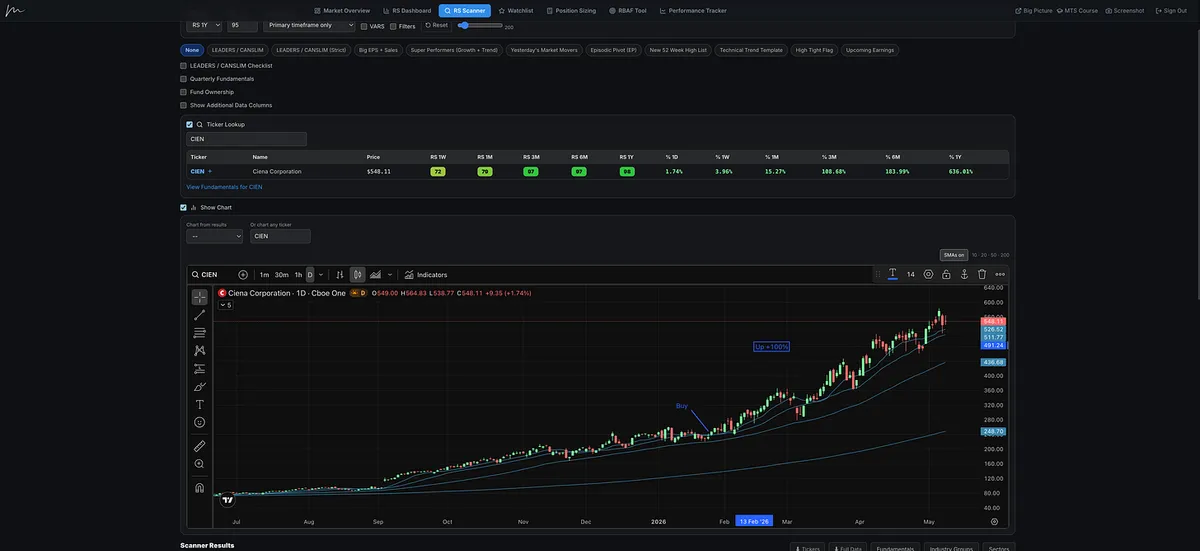
What Soros Taught Druckenmiller About Big Winners, and Why CIEN Is the Point

One of the biggest misconceptions in trading is that you need to be right all the time.

You do not.

What you need is the ability to keep losses small when you are wrong and press your advantage when you are right.

That is one of the biggest lessons Stanley Druckenmiller described learning from George Soros in Jack Schwager’s The New Market Wizards.

Druckenmiller said Soros taught him that when conviction is high, “you have to go for the jugular.”

He also called Soros “the best loss taker I’ve ever seen.”

That combination is powerful:

Be aggressive when you are right.

Walk away quickly when you are wrong.

I have made plenty of wrong calls on individual stocks. I am wrong often.

But the goal is not to be right on every name.

The goal is to structure your trading so the small losses stay small, and the winners have enough room to pay for the losers and then some.

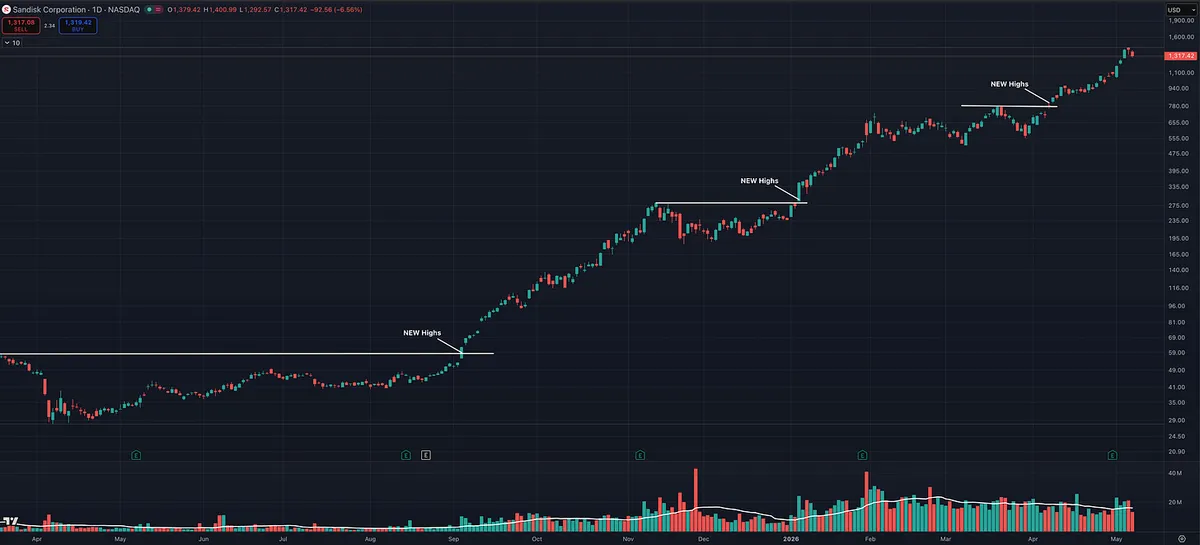
That is why a winner like CIEN, along with names like LITE and SNDK, matters so much in my trading strategy.

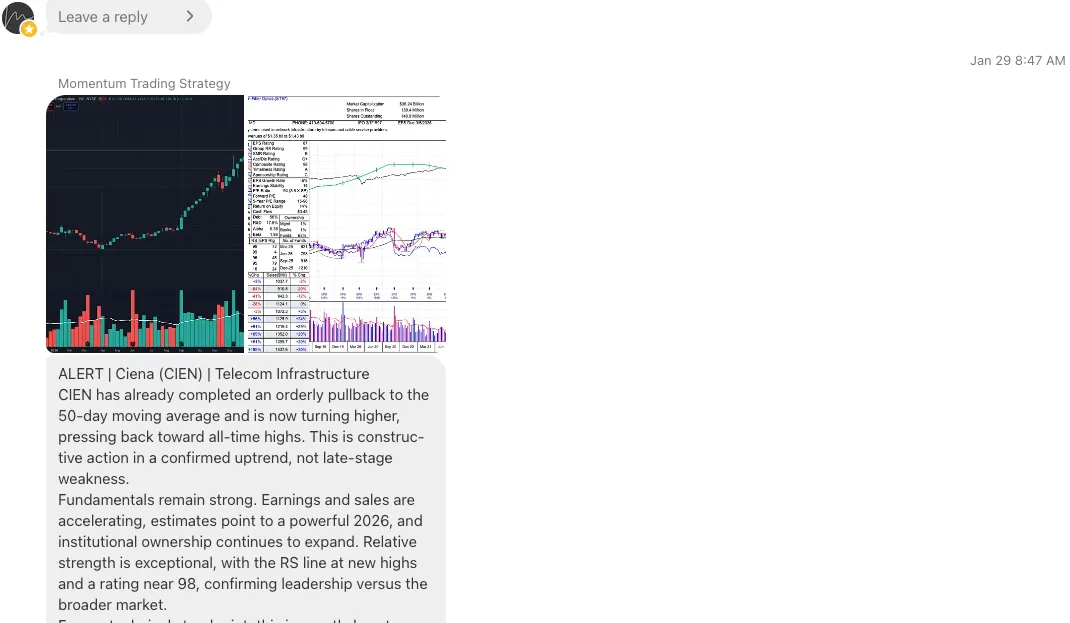
I mentioned CIEN earlier because it had the kind of relative strength, leadership, and constructive price action I look for.

Since then, it has continued to show why holding real leaders matters.

One real leader can make up for a lot of small losses.

But only if you do two things:

  • Cut the trades that are not working.

  • Hold the trades that are.

That is the hard part.

Most traders do the opposite.

They give losing trades too much room and cut winning trades too quickly.

The best traders understand the math is not about being right all the time.

It is about making sure that when you are right, it actually matters.

View on Substack ↗

The Market Wizards Lesson Most Traders Ignore

If you’re wondering why I put so much emphasis on risk management and position sizing, it’s because when you study the traders in Market Wizards, that is one of the few themes almost everyone seems to agree on.

Entries matter.

Stock selection matters.

Market direction matters.

BUT if you cannot manage risk, size positions correctly, and survive the inevitable losing streaks, none of the rest matters for long.

William Eckhardt, the mathematician and legendary futures trader who worked with Richard Dennis and helped develop the famous Turtle Trading experiment, said it clearly when asked what he would do differently if he were starting out again:

“I would concentrate more on money management. To my regret, it was something that I ignored in my early years. Ironically, even though money management is more important than the price model, mathematically, it’s the more tractable problem.”

He also said:

“You shouldn’t plan to risk more than 2 percent on a trade.”

That is why risk management is not some side topic.

It is the foundation.

A trader can have great ideas and still fail if the position size is wrong.

A trader can have a real edge and still blow up if the risk is too large.

The goal is not just to find winning trades.

The goal is to stay in the game long enough for your edge to compound.

View on Substack ↗

The Growth Stock Blueprint Traders Have Studied for More Than 60 Years

One of the most influential growth stock investing frameworks ever created came from William J. O’Neil’s How to Make Money in Stocks.

CAN SLIM helped shape how generations of momentum traders and growth investors think about earnings, leadership, relative strength, institutional demand, market timing, and risk management.

My new article breaks down the CAN SLIM playbook and why it still matters for finding true market leaders before they become obvious.

Read it here:

https://tradingmomentum.substack.com/p/the-canslim-growth-stock-playbook

ArticleThe CANSLIM Growth Stock Playbook Behind America’s Biggest Winners
View on Substack ↗

The Tape Tells All

Stan Weinstein’s quote, “The Tape Tells All,” is not just a clever market phrase.

It is his entire philosophy.

What he means is that price and volume often reveal the truth before the news does.

By the time the average investor reads the headline, hears the earnings story, or reacts to the exciting fundamental news, the market has usually already begun discounting it.

The tape is where supply and demand show up first.

A stock breaking out of a long base on heavy volume is not random.

A stock falling below support while the news still looks good is not random.

A stock outperforming the market while the fundamentals still look unimpressive is not random.

That is the market leaving clues.

Weinstein’s point is that the chart reflects what investors are actually doing, not what they are saying. Price, volume, relative strength, support, resistance, and a key moving average (200 daily MA) help reveal whether institutions are accumulating, distributing, or ignoring a stock.

The tape does not care about opinions.

It does not care about what sounds cheap.

It does not care about what the crowd thinks should happen.

It shows what is happening.

That is why Weinstein says the job is to learn how to listen properly.

Not to predict.

Not to argue.

Not to chase headlines.

Read the tape. Respect the trend. Follow the evidence.

View on Substack ↗

Only Traders Understand This Kind of Pain

This story Mark Weinstein told in Market Wizards always makes me laugh.

Only another trader would really understand this.

But underneath the humor, there is a serious lesson. Even some of the best traders went through the same growing pains and made the same mistakes most of us make early on.

And when you read a story like this, you can see the pain usually comes from exactly what Module 6 of the Momentum Trading Strategy Course is going to cover:

Risk management and position sizing.

Almost all the mental stress and pain we experience in trading comes from violating risk management and position sizing principles.

Mark Weinstein, as great as he became, experienced those mistakes early in his career as well:

“Before that trade, I had nearly $1.5 million in my trading account. So I was losing nearly 10 percent of my equity level prior to the trade each day. I was devastated. I felt like I was wounded in a trench and watching myself bleed to death. The market went limit-down five days in a row, and I lost over $600,000. On the fifth day, I remember sitting in a park holding hands with a girl I had picked up, literally crying on her lap. I was practically in a psychotic state. I thought about getting out of the business altogether. I started to think that what everybody was telling me was true, maybe it was just luck that I had made money all those years. I worried that if I continued trading, I could wind up losing it all, and being forced to go back to some job I didn’t like.”

The lesson is simple:

Cut losses fast.

Do not size too big.

Know where you will get out before you get in, and follow the plan.

Prepare for contingencies because things will go wrong.

Risk management and proper position sizing are not optional.

They are the foundation.

View on Substack ↗

Euphoria Is as Dangerous as Fear

Richard Dennis was asked in Market Wizards:

“So you are able to avoid the emotional trap?”

His answer was gold:

“Yes, but the flip side is that I also avoid the emotional elation when things are going well. There is no way to play just one side of that street. If you feel too good when things are going well, then inevitably you will feel too bad when they are going poorly. I wouldn’t claim that I realized that after three years of trading, but after you’ve done it for twenty years, it either drives you crazy, or you learn to put it into perspective.”

-Richard Dennis

Most traders think managing emotions only matters when they are losing, but it matters just as much when you are winning.

Get too high during the good streaks, and the market will humble you.

View on Substack ↗

He Won 3 Years in a Row… Then Broke the Only Rule That Matters

Everyone talks about David Ryan and his three U.S. Investing Championship wins.

But almost nobody asks what happened next.

He came back the fourth year.

And something changed.

Not his knowledge. Not his skill. Not his experience.

His focus.

He put pressure on himself to perform again. Started thinking about results instead of process. Took larger position sizes than normal. Deviated from what made him successful in the first place.

Two big losses later…

He finished the year flat.

That’s one of the most important lessons in trading.

Even the best can fall off their process.

Not because they forgot how to trade…

But because they stopped doing what works.

This is where most traders get it wrong.

They think success comes from finding better setups, better indicators, better entries.

It doesn’t.

It comes from doing the same things… over and over… with discipline.

Position sizing correctly. Managing risk. Following your system.

That’s it.

The moment you start focusing on outcomes…

You start forcing trades. You size too big. You break your rules.

And the edge disappears.

This is the paradox of trading:

If you focus on the process, you usually get the results.

If you focus on the results, you almost guarantee you won’t.

Ryan didn’t lose his edge.

He just stopped following it.

After that, he went back to his process. Back to proper sizing. Back to discipline.

And the next year?

He finished 2nd.

View on Substack ↗

Same Principles. Different Voices.

“My favorite book is How to Make Money in Stocks by William O’Neil. For me, it’s the stock market Bible.” — Dan Zanger

He didn’t stop there.

  • How to Trade in Stocks

  • Reminiscences of a Stock Operator

Different books. Same core principles.

The edge isn’t finding new information.

It’s mastering the same concepts over and over again.

View on Substack ↗

The One Rule That Changed Minervini’s Entire Trading Career

Most traders spend all their time trying to find the perfect entry.

They think that’s where the money is made.

It’s not.

In Stock Market Wizards, Mark Minervini said:

“Containing your losses is 90 percent of the battle.”

Read that again.

Not entries. Not stock picking. Not indicators.

Losses.

When Minervini studied his results, he didn’t find that his winners were the problem.

He found that his losers were.

Big losses were doing all the damage.

Cutting those losses didn’t hurt his performance.

It transformed it.

Over a large sample of trades:

A -5% loss is nothing.

A -6% loss is nothing.

A -7% loss is nothing.

They are just business expenses.

But one -25% or -30% loss?

That wipes out multiple winning trades.

That’s what keeps traders stuck.

Most traders think:

“If I cut my losses tight, I’ll miss the big winners.”

Reality:

The best stocks don’t need a lot of room.

They work quickly.

They show strength early.

And if they don’t?

You’re probably wrong.

The difference between average traders and elite traders is simple:

They refuse to take big losses.

They keep every loss small and controlled.

And over time, that one decision compounds into massive performance.

You don’t need to be right all the time.

You just need to make sure when you’re wrong, it doesn’t matter.

View on Substack ↗

Why Smart People Fail at Trading (And What Steve Cohen Looks For Instead)

One of the most important traits in trading has nothing to do with intelligence.

It’s risk.

Steve Cohen said it best:

“I’m looking for people who are not afraid to take risks.”

That’s it.

Not the smartest. Not the most educated.

The ones willing to take risk.

And he doubled down on it when talking about why some people never make it:

“…he refuses to make his own decisions.”

That’s the difference.

And it’s exactly why so many brilliant people fail in this game.

They can analyze. They can break down data. They can build models.

But when it’s time to act?

They hesitate. They freeze or they don’t take the trade at all.

Because trading isn’t about knowing.

It’s about doing.

Great traders aren’t just thinkers…

They’re decision makers.

They’re comfortable putting capital at risk. They trust themselves. They act when it matters.

That’s leadership.

And that’s where most people fall short.

They approach trading like employees.

Looking for confirmation. Looking for permission. Looking for someone to tell them what to do.

That doesn’t work here.

In trading, you are the decision maker.

You have to own it.

Now this doesn’t mean reckless risk.

It’s not about gambling or going all in.

It’s calculated risk.

Defined risk. Position sizing. A plan.

But at some point, you still have to pull the trigger.

That’s the line that separates traders from everyone else.

You can teach strategy. You can teach setups. You can teach risk management.

But you can’t force someone to act under pressure if they don’t want to.

View on Substack ↗

How Dan Zanger Turned $10K Into $18 Million With Simple Chart Patterns

Most traders look at charts every day and still miss the real move.

The edge usually is not more indicators. It is learning to recognize a small number of explosive patterns again and again.

Dan Zanger did not trade on hope. He focused on repeatable setups, managed risk, and pressed when the odds were in his favor.

That is still how top traders operate today.

Simple patterns. Strong trends. Ruthless discipline.

If you are serious about becoming a better trader, read this:

👉 https://tradingmomentum.substack.com/p/dan-zangers-golden-rules-for-trading

Study it. Screenshot it. Re-read it.

ArticleDan Zanger’s Trading Strategy: Chart Patterns, Breakouts & 10 Golden Rules
View on Substack ↗

Standing on the Shoulders of Momentum Giants

Mark Minervini learned from the traders who came before him, like William O’Neil, William L. Jiler, and Richard Love, and he has said many times that he stands on the shoulders of giants. We are no different.

The momentum lineage runs from Jesse Livermore and Gerald Loeb, to William O’Neil and Nicolas Darvas, to Mark Minervini, David Ryan, and Dan Zanger. This is the tradition that shaped the Momentum Trading Strategy Course and how we trade.

That is why I am featuring Mark Minervini in my latest article and breaking down his SEPA blueprint, with modern examples you can actually trade.

Read it here: https://tradingmomentum.substack.com/p/the-minervini-blueprint-the-sepa

ArticleThe Minervini Blueprint: The SEPA Framework And Volatility Contraction Pattern That Turn Small Accounts Into Superperformers
View on Substack ↗

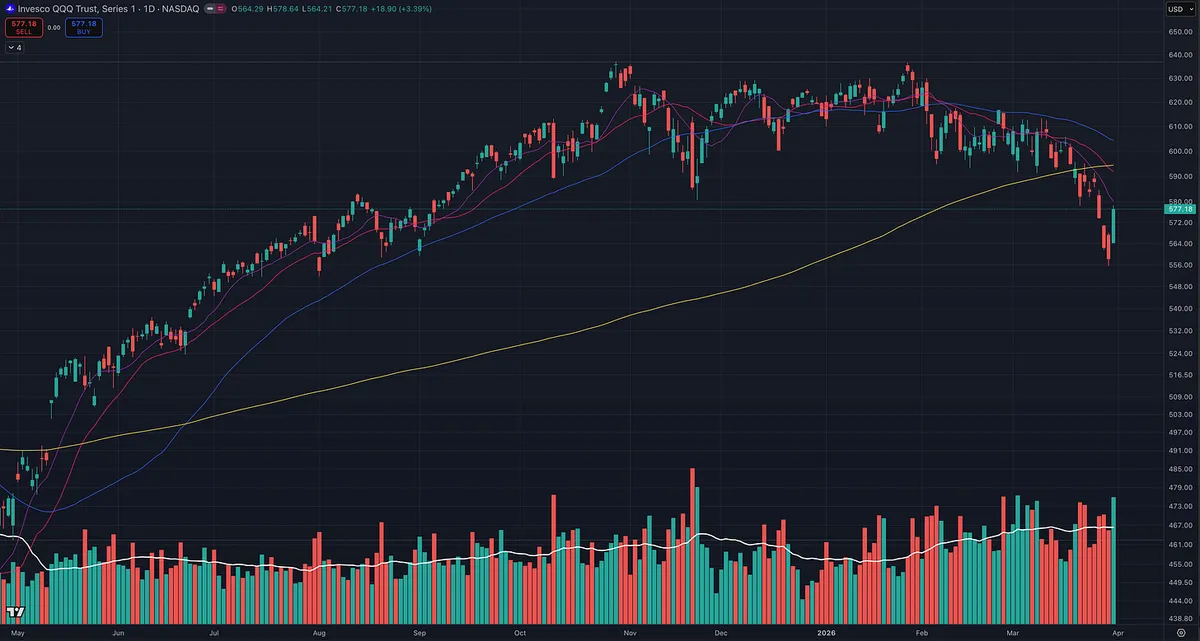
What Is a Follow Through Day? The Signal William O’Neil Used to Get Back Into the Market

Most traders try to call the bottom. William O’Neil didn’t. He waited for confirmation, and that confirmation is called a follow through day.

After a market correction, you will almost always get a bounce. The problem is most of those bounces fail. So O’Neil studied over 100 years of market winners and found that real bull markets don’t start quietly, they start with power backed by volume.

A follow through day only counts if it happens at the right time. It must come on day 4 through day 7 of a rally attempt. Anything earlier is usually just a reflex bounce and far less reliable.

Then you need price strength. A major index like the Nasdaq or S&P 500 should rise roughly 1.5% to 2% or more. Earlier in O’Neil’s work 1% was acceptable, but over time that threshold increased to filter out weaker signals.

Finally, and most important, you need volume confirmation. The day’s volume must come in higher than the prior day, ideally above average. That is what tells you institutions are stepping in, not just retail noise.

This concept comes directly from O’Neil’s research in, where he found that this combination of timing, price, and volume often marked the early stages of a real market uptrend.

Here is the nuance most people miss. A follow through day is not a guarantee and it is not a signal to go all in. In fact, O’Neil would tell his traders they didn’t need to suddenly increase exposure. You could start very small. Just buy something. Begin testing the market.

Even when a follow through day checks all the boxes, you still proceed carefully. One of the biggest mistakes is jumping in too early or too aggressively before a proper signal is confirmed. Another is ignoring weak volume. If the index moves up but volume is light, that is a red flag. It suggests institutions are not behind the move.

You also want to see broad participation. A real uptrend is not carried by a handful of stocks. If only a few names are working, the rally is fragile and just as important, you have to watch what happens after the follow through day. If the market cannot build on it and quickly rolls over, that tells you the signal failed.

As O’Neil emphasized, a follow through day is just the beginning. You still need to see continued strength to confirm the uptrend.

Anyone can buy a bounce. Professionals wait for proof.