Momentum Trading Strategy

Notes

Lessons from Legendary Traders

Notes built around one named market figure's own words or story, such as O'Neil, Livermore, Minervini, Seykota, Druckenmiller, Tudor Jones or other Market Wizards.

Showing 101–120 of 263 notes

View on Substack ↗

If You Can’t Name the Stage… You Shouldn’t Be in the Trade

Most traders overcomplicate the market.

More indicators. More opinions. More noise.

But the truth is, the market has been operating the same way for decades.

And Stan Weinstein gave us one of the cleanest frameworks to understand it in Secrets for Profiting in Bull and Bear Markets

“One glance is worth a thousand earnings reports.” -Stan Weinstein

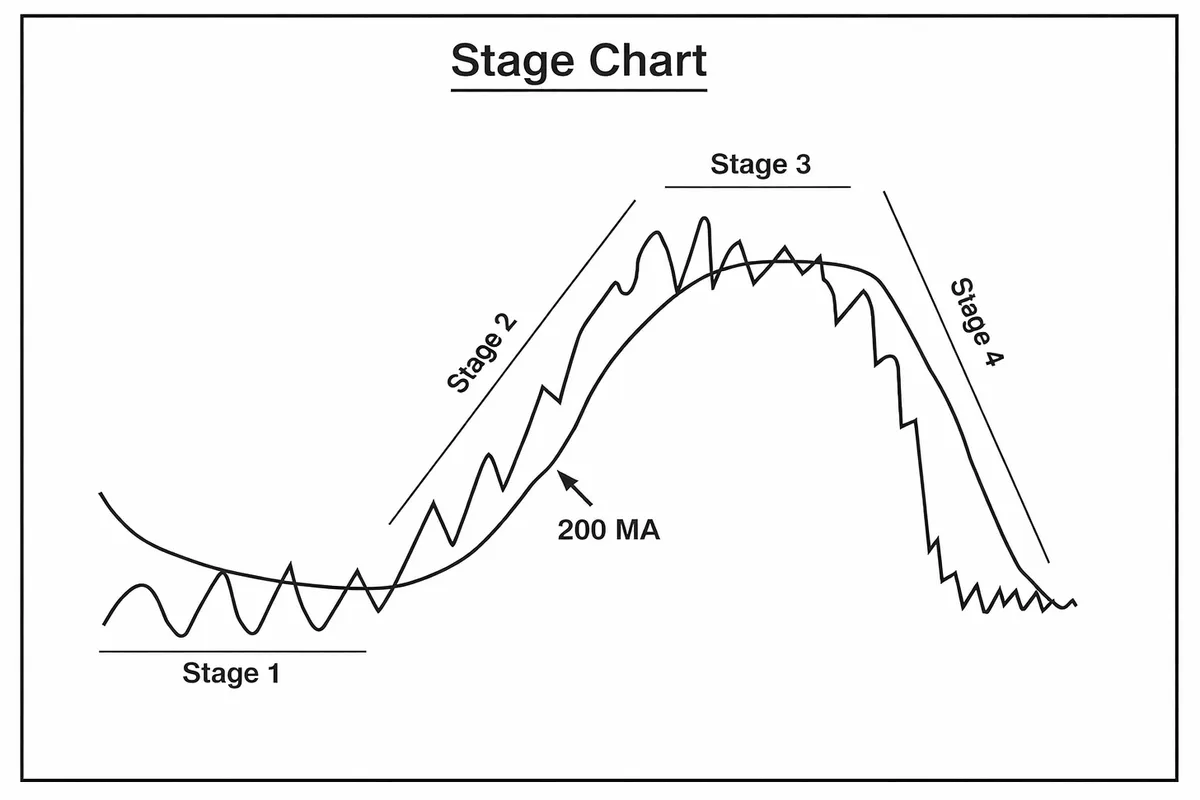
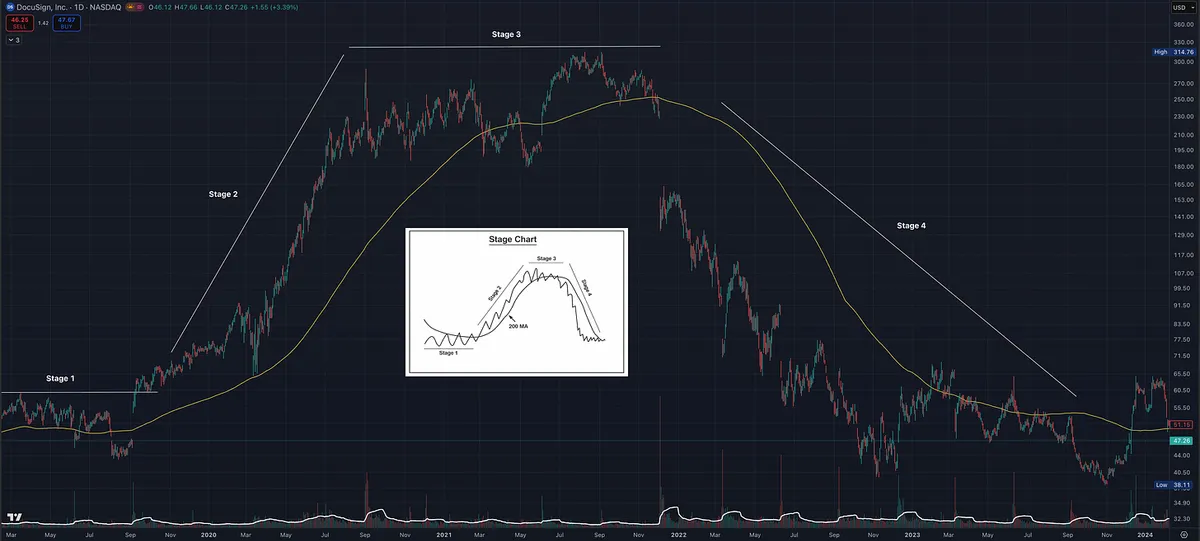
Stan Weinstein broke every stock into four stages.

Stage 1: Basing This is where a stock goes sideways. Quiet. Boring. Institutions are accumulating but price is not moving much yet.

Stage 2: Advancing This is the money phase. Price breaks out, trends higher, and demand is in control. This is where strong stocks separate from the rest. Higher highs, higher lows.

Stage 3: Topping Momentum slows. Volatility increases. The trend starts to stall as distribution begins under the surface.

Stage 4: Declining The downtrend. Lower highs, lower lows. Broken structure. This is where capital gets destroyed. Price is below the 200MA and the moving average starts declining.

Here’s the key.

You don’t need to trade all four stages.

You only need one.

Stage 2.

Weinstein made it clear that the goal is to align with strength, not anticipate it.

One of the simplest ways to identify a true Stage 2 uptrend:

Price is above key moving averages.

The 50 day is above the 150 day.

The 150 day is above the 200 day.

That alignment tells you institutions are in control and the trend is working.

This concept didn’t come out of nowhere.

Weinstein built on the work of Richard Schabacker, who studied price behavior as far back as the 1930s. The best traders don’t reinvent. They refine.

Mark Minervini took this same foundation and made it a core part of his process.

Same principle.

Different generations.

Nothing new.

If the stock is not clearly in Stage 2, you are forcing it.

And forced trades are where most losses live.

Name the stage first.

Then decide if it’s worth your attention and capital.
View on Substack ↗

As Jim Rogers put it,

“I just wait until there is money lying in the corner, and all I have to do is go over there and pick it up.”

This is not that type of market environment.

With roughly 75% of stocks following the general market direction, there is no edge in fighting the current. Patience and cash is a position.

Protect capital now so you are ready to take advantage of better conditions when they appear.

For a full breakdown of the current market environment, including indexes, sectors, and internals, read this week’s Big Picture Market Pulse.

https://tradingmomentum.substack.com/p/big-picture-market-pulse-march-29

On SubstackBig Picture Market Pulse | March 29, 2026
View on Substack ↗

How William O’Neil Spotted Institutional Selling Before Market Corrections

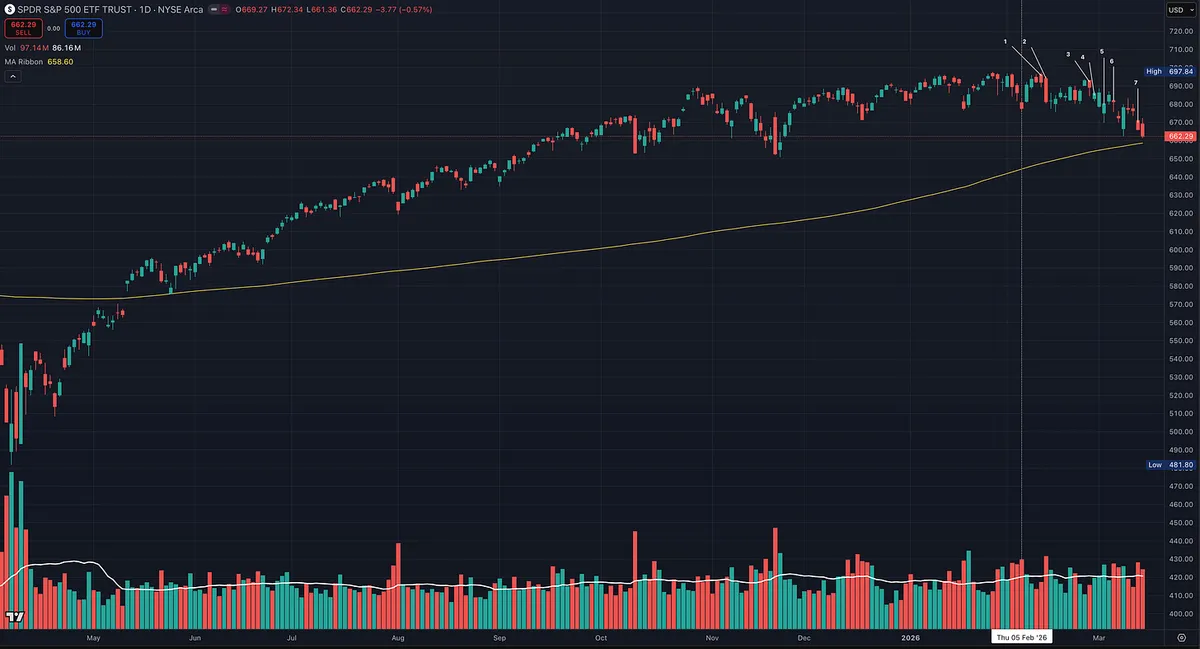
One of the simplest but most powerful concepts from William O’Neil’s How to Make Money in Stocks is something called distribution days.

A distribution day occurs when a major market index closes lower than the previous day on higher volume.

Price down + volume up.

Why does that matter?

Because volume reveals institutional activity.

Large mutual funds, hedge funds, and pension funds cannot quietly sell billions of dollars worth of stock. When they begin exiting positions, it often shows up as market declines on heavier volume.

That’s what distribution days are designed to detect.

O’Neil tracked these over roughly 20–25 trading days. When they begin to cluster, it can signal that institutional selling pressure is building beneath the surface of the market.

A simple way to think about it:

0–2 distribution days Healthy uptrend

3–4 distribution days Early warning

5–6 distribution days Institutional selling showing up

7+ distribution days Market under pressure

O’Neil typically monitored distribution days on the Nasdaq Composite and the S&P 500.

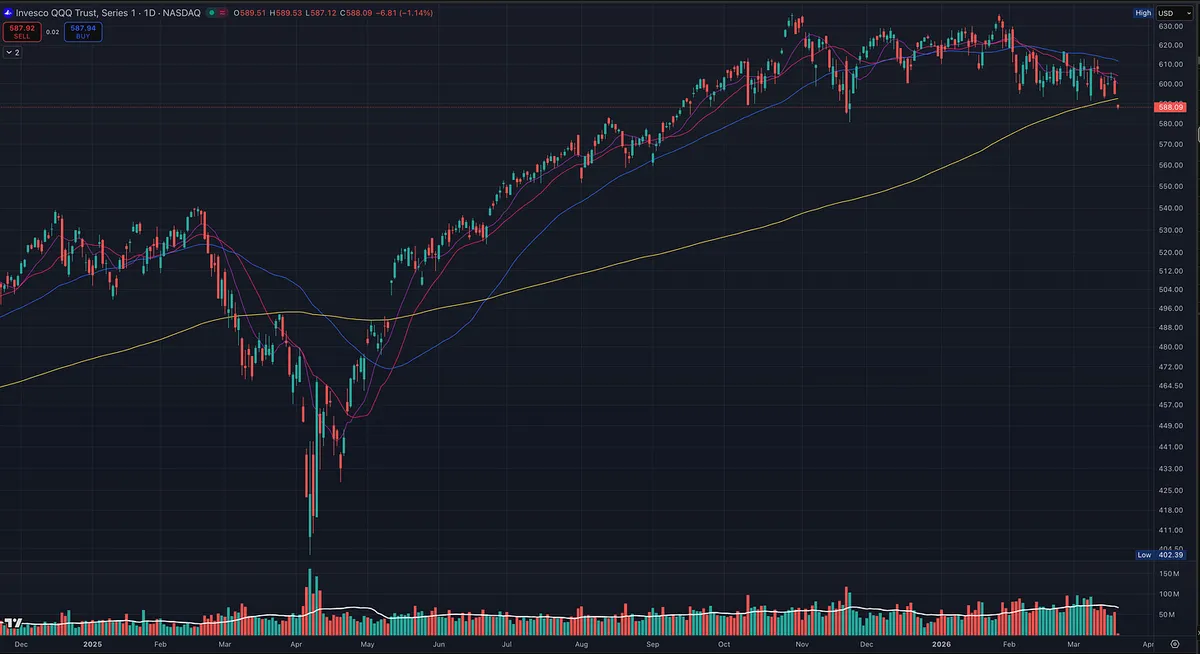
In my own process, I also include the Nasdaq 100 to capture what the large-cap growth leaders are doing.

When distribution begins appearing across multiple indexes at the same time, it often tells you something important:

Institutions may be selling.

And when institutions sell, the market eventually feels it.

View on Substack ↗

The Real Secret to Winning Big in the Stock Market

Most traders think success comes from being right most of the time.

It doesn’t.

In fact, trying to be right all the time is what destroys many accounts.

William O’Neil said it best:

“The whole secret to winning big in the stock market is not to be right all the time, but to lose the least amount possible when you’re wrong.”

Great traders understand this.

They don’t try to avoid losses.

They control them.

Small losses are simply the cost of doing business.

Because when you keep losses small, something powerful happens.

Just a few big winners can more than make up for many small mistakes.

That’s the math behind superperformance.

Cut losses quickly.

Let winners grow.

And remember.

You don’t need to be right all the time.

You just need to make sure that when you’re wrong, it doesn’t hurt much.

View on Substack ↗

Stop Letting Big Winners Turn Into Small Winners

Minervini’s “Breakeven or Better” Rule

One of the biggest mistakes traders make is this.

They finally catch a big winner…

Then they watch half the profit disappear because they never adjusted their stop.

Mark Minervini teaches a simple rule to prevent this.

Breakeven or Better.

Here’s how it works.

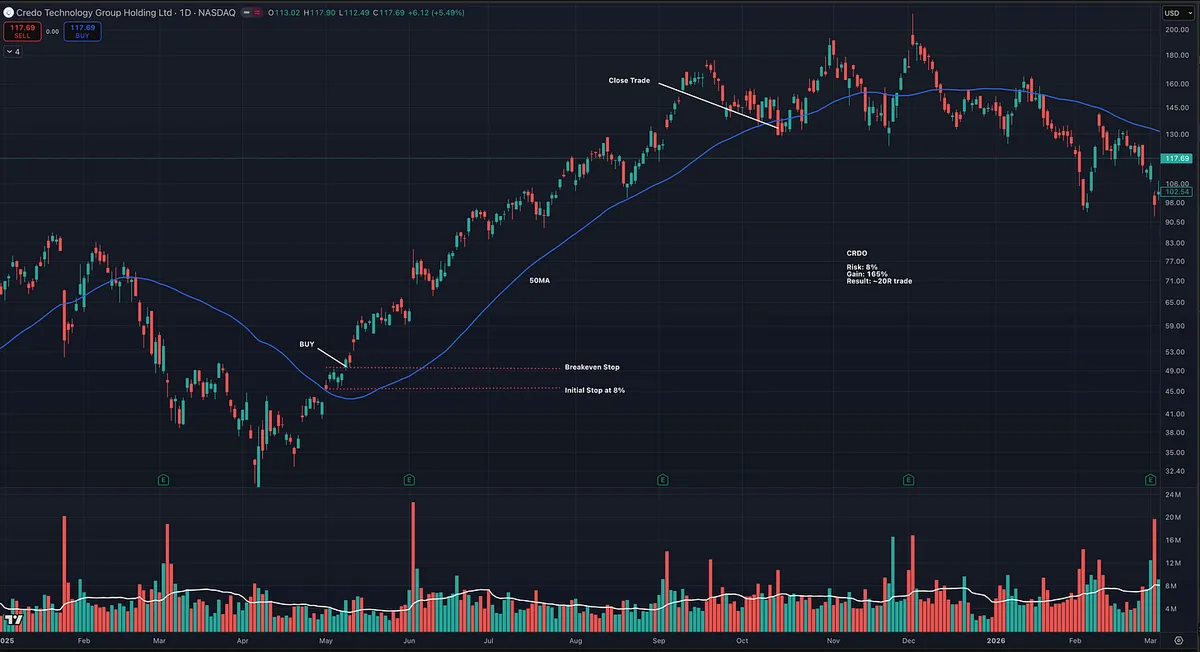
Let’s say you buy a stock at $50 coming out of a base.

You set your initial stop 8% lower at $46 to control risk.

Now the trade begins to work.

The stock moves 8%… then 16%… then 24% higher.

While price is rising, something important is happening behind the scenes.

The 50-day moving average is rising too.

Eventually the 50-day line catches up to your breakeven price of $50.

At that moment the trade changes.

Your stop is no longer the original stop.

Your stop now becomes the 50-day moving average.

From that point forward the rule becomes simple.

Breakeven or Better.

Many traders will wait for a close below the 50-day before exiting.

Some even watch how the stock closes by the end of the week to avoid getting shaken out.

The key idea is this.

The 50-day moving average becomes your trailing stop.

It rises with the trend and protects your profits while still giving the stock room to move.

The chart below shows an example using CRDO.

Initial risk: 8% Total gain captured: 165%

That’s roughly a 20R trade.

This is how traders stay in large multi-month winners without giving everything back.

The goal is not to sell the exact top.

The goal is simple.

Never let a good gain turn into a loss.

View on Substack ↗

One of the most powerful trading ideas I’ve ever seen comes from Ed Seykota.

He called it the “discrepancy report.”

Here’s the idea. 

You build a trading system with clear rules: 

• entries 

• position sizing 

• risk management 

• exits 

Then you compare two things every day. 

  1. What your system said to do.

  2. What you actually did.

The difference between those two is the discrepancy report.

And that report tells you everything you need to know about your trading. 

Did you skip valid trades? 

Did you chase something not in your system? 

Did you hold a loser longer than your rules allow? 

Did you size bigger than your plan? 

If there is no discrepancy, you followed your system. 

If there is a discrepancy, you didn’t. 

Ed Seykota’s point was simple: 

When traders see discrepancies, they have two options. 

  1. Improve the system. 

  2. Improve themselves. 

Most traders choose a third option. 

They ignore the discrepancy. 

But that gap between what you planned and what you actually did is where almost every trading problem lives. 

Not in the strategy. 

In the execution.

View on Substack ↗

One of the most brutally honest quotes ever said about trading

Ed Seykota once said:

“Win or lose, everybody gets what they want out of the market. Some people seem to like to lose, so they win by losing money.”

At first that sounds ridiculous.

Why would anyone want to lose?

But if you have spent enough time trading… you start to realize how true it is.

Some traders say they want to be profitable.

Yet their behavior says something very different.

They refuse to cut losses. They chase trades from FOMO. They oversize positions trying to get rich quickly. They abandon their system after a few losses. They break rules because they got away with it last time.

Consciously they want profits.

But subconsciously they want something else.

Excitement. Validation. Action. Being right. Hope.

The market gives people exactly what their behavior demands.

That is why this quote is so powerful.

It forces traders to ask a very uncomfortable question:

What do I actually want from the market?

Because if your behavior does not change…

Your results will not either.

And most traders do not need another strategy.

They need the discipline to execute the one they already have.

View on Substack ↗

Mark Minervini’s Position Sizing Guidelines

One of the biggest differences between amateur traders and professionals is how they manage risk and position size.

Many traders focus entirely on finding the right stock.

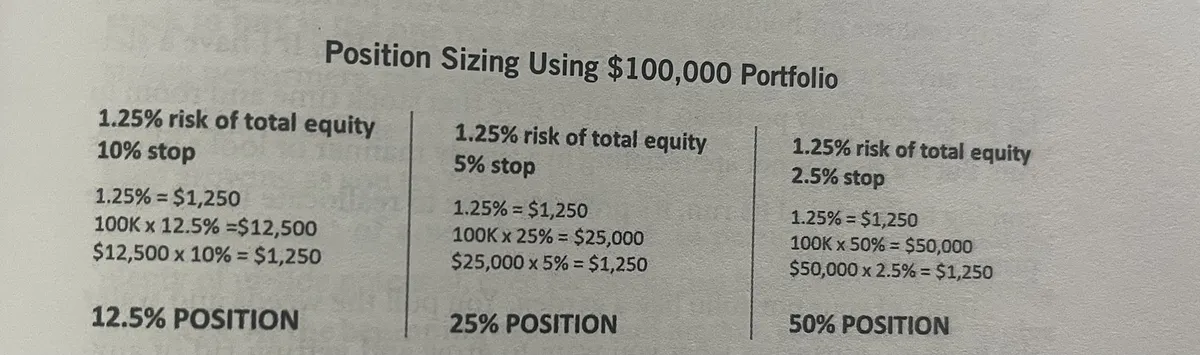
But traders like Mark Minervini emphasize that position sizing and risk control are just as important as stock selection.

In Think and Trade Like a Champion, Minervini outlines several practical guidelines for managing position size and portfolio risk.

Here are the key principles.

Risk Per Trade

Minervini typically risks about:

1.25% – 2.5% of total equity per trade

This means if a trade hits your stop, the total loss should only represent a small percentage of your overall portfolio.

This approach keeps a string of losing trades from doing serious damage to your capital.

Maximum Stop Size

Stops should generally not exceed about 10%.

However, in most cases Minervini notes that average losses should be closer to 5–6%.

Keeping losses small is critical because it allows you to stay in the game long enough to catch the big winners.

Position Size Limits

Even in strong conviction trades, Minervini avoids excessive concentration.

His guidelines include:

• Never take a position larger than 50% of the portfolio

• Ideal position size in top ideas: 20–25%

This allows a trader to press their best ideas while still maintaining diversification.

Number of Positions

Minervini also keeps the number of positions relatively focused.

Typical portfolio structure:

• 10–12 positions for individual traders

• 16–20 positions for larger professional portfolios

This ensures that the portfolio is concentrated enough to benefit from winners, but not so concentrated that one mistake causes major damage.

The Bigger Lesson

The real takeaway from these guidelines is simple.

Successful traders don’t just focus on what to buy.

They also focus heavily on:

• How much to buy

• How much to risk

• How many positions to hold

Because in the end, position sizing is how you survive long enough to generate super performance.

View on Substack ↗

The High Tight Flag: A Rare Pattern from O’Neil That Minervini Calls the Power Play

One of the most explosive setups in growth stock trading is the High Tight Flag.

This pattern was originally described by William O’Neil in How to Make Money in Stocks and is also studied by traders like Mark Minervini, who emphasizes similar explosive momentum patterns in his work.

O’Neil pointed out that the High Tight Flag is extremely rare, appearing in only a handful of stocks during an entire bull market.

But when it appears and works correctly, the results can be extraordinary.

What Defines a High Tight Flag

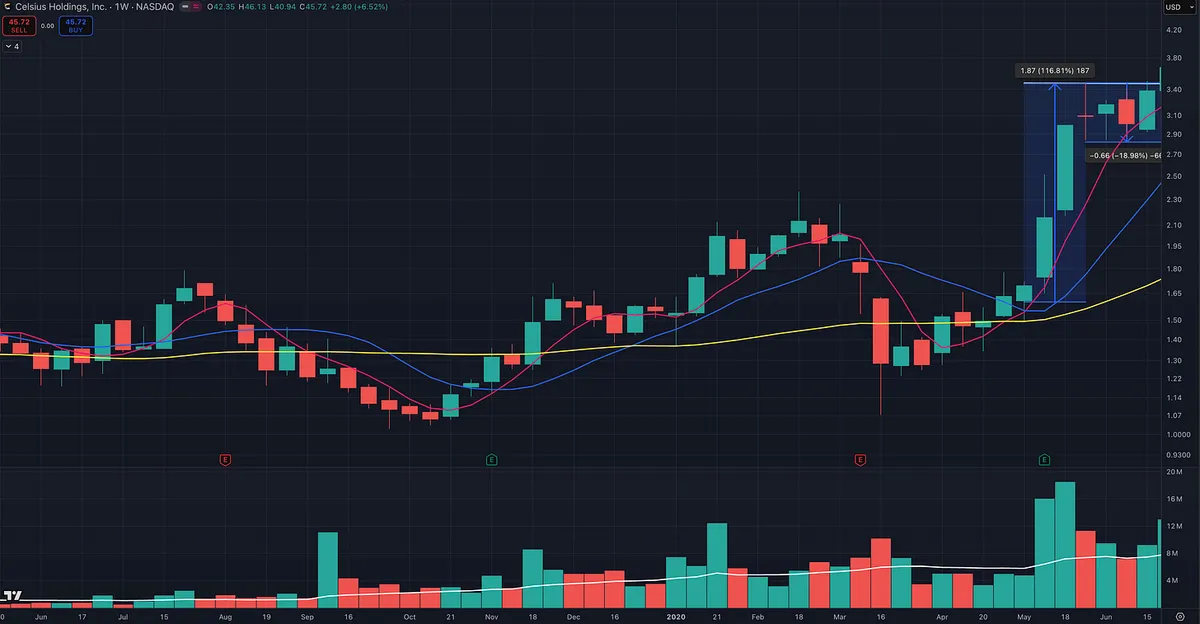
The pattern begins with a massive price advance.

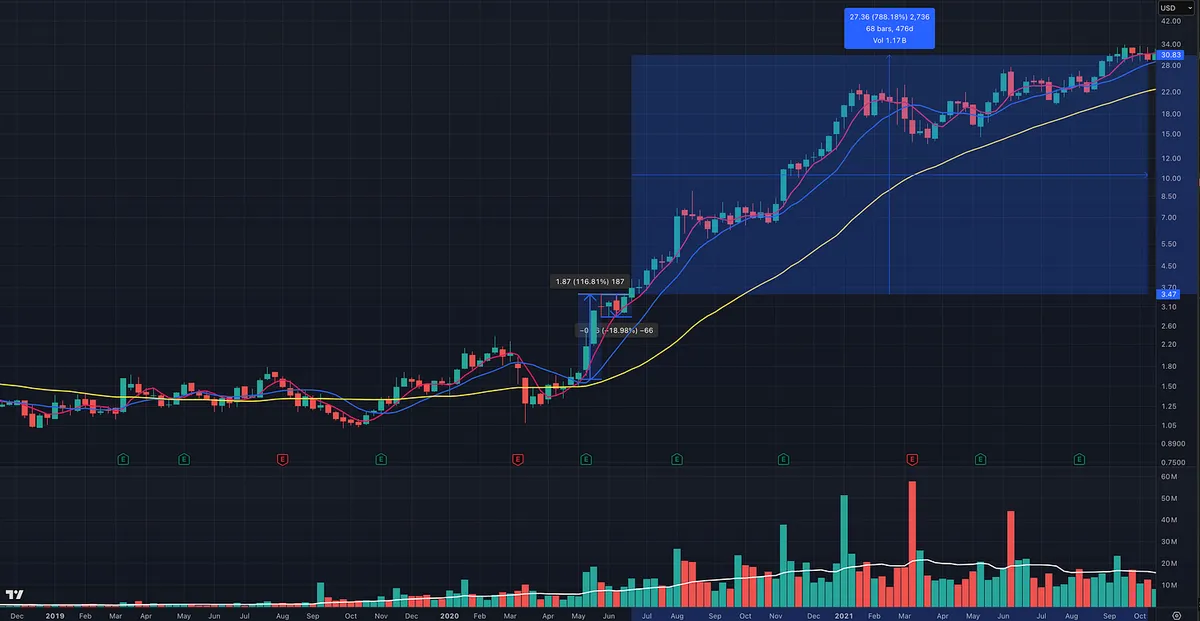
The stock typically rises about 100% to 120% within 4 to 8 weeks.

That type of move signals powerful institutional demand entering the stock.

After that explosive run, the stock does not collapse.

Instead, it moves sideways in a tight range, usually correcting only about 10% to 25%.

This consolidation typically lasts about 3 to 5 weeks.

That tight sideways action forms the “flag” portion of the pattern.

Why the Pattern Is Powerful

The High Tight Flag works because it reveals something unusual.

A stock that can double in a very short period of time and then refuse to give back those gains is showing that demand is overwhelming supply.

Institutions are often accumulating shares during the tight consolidation.

When the stock eventually breaks out of that sideways range, it can lead to another powerful advance.

O’Neil noted that some stocks have gone on to rise 200% or more after forming this pattern.

Why It’s Often Misinterpreted

Many traders believe they see High Tight Flags everywhere, but true High Tight Flags are very rare.

The move must be extremely fast. The consolidation must remain relatively tight and the pattern usually forms over a short time frame.

If the pullback is too deep or the consolidation drifts sideways for too long, it usually isn’t the real thing.

That rarity is exactly what makes the pattern so valuable.

When a true High Tight Flag appears, it often signals a powerful new market leader early in a major move.

View on Substack ↗

Why Knowing the Rules Isn’t Enough

Richard Dennis once said:

“I always say that you could publish trading rules in the newspaper and no one would follow them. The key is consistency and discipline. Almost anybody can make up a list of rules that are 80 percent as good as what we taught people. What they couldn’t do is give them the confidence to stick to those rules even when things are going bad.”

This explains one of the biggest misconceptions about trading.

The problem isn’t that traders don’t know the rules.

Most traders already know them.

Cut losses quickly. Let winners run. Control position size. Trade with the trend.

None of these ideas are secrets.

The real challenge is following those rules when emotions get involved.

It’s easy to follow a plan when everything is working.

It’s much harder to stick to that same plan during a drawdown, after a series of losses, or when a trade moves against you.

That’s where discipline separates successful traders from everyone else.

Winning traders don’t just have rules.

They have the consistency and confidence to follow them even when the market tests them.

Because in the end, trading success isn’t about knowing the right rules.

It’s about executing them over and over again, no matter what the market throws at you.

View on Substack ↗

The Best Traders Know When Not to Trade

Some of the greatest traders in history all share the same lesson.

You do not need to trade in every market environment.

“You don’t have to be in the market all the time.” William O’Neil

“Not trading when there was no market movement was, in fact, one of the most important rules of all. No trending market, no profit.” Richard Dennis

“Sometimes your best trades are the ones you don’t make.” Linda Bradford Raschke

“Most people will not wait for the environment to tip itself off. They will walk into the forest when it is still dark, while I wait until it gets light.” Mark Weinstein

“The general market direction is the most important factor in determining whether most stocks will rise or fall.” Stan Weinstein

Different strategies. Different timeframes. Different markets.

But the wisdom is the same.

Successful traders understand that environment matters.

More traders lose money by forcing trades in the wrong market conditions than by having poor setups or bad stock selection.

An edge is not constant activity.

The edge comes from recognizing when conditions are favorable for your strategy and having the patience to wait until they are.

Are you trading when you should, or are you trading in the wrong conditions?

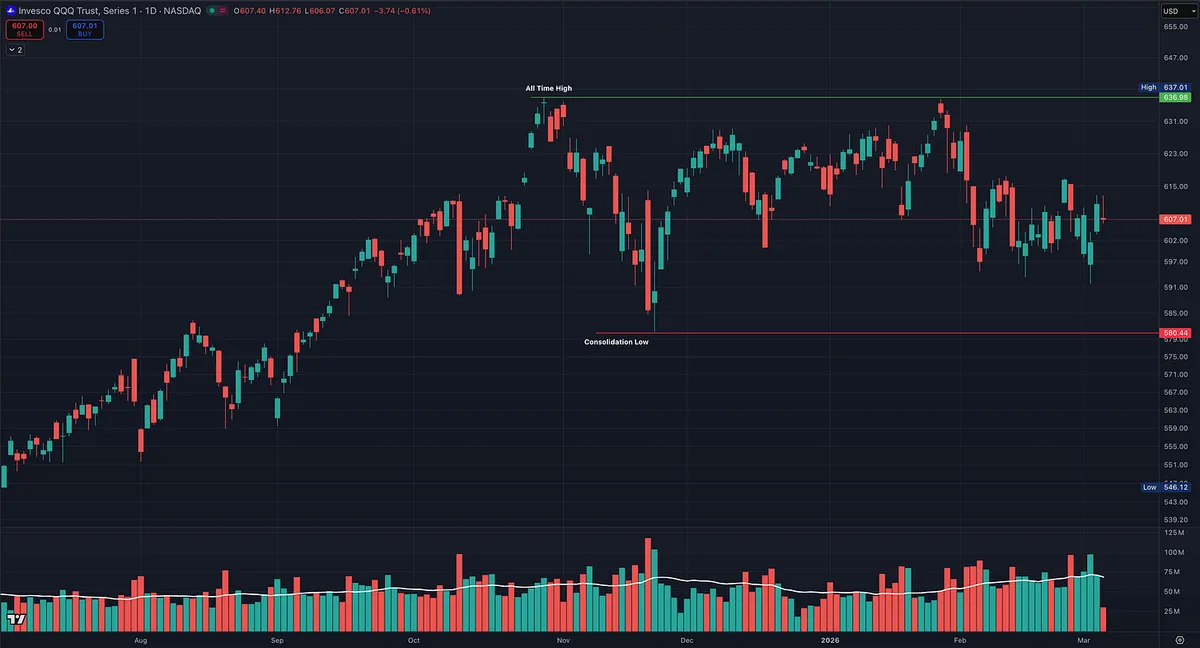
Chart below shows how market environments shift through the stages.

View on Substack ↗

The One Skill That Separates Pros From Amateurs

If you want to become a great trader, read this:

“Although the cheetah is the fastest animal in the world and can catch any animal on the plains, it will wait until it is absolutely sure it can catch its prey. It may hide in the bush for a week waiting for just the right moment. It will wait for a baby antelope, and not just any baby antelope, but preferably one that is also sick or lame. Only then, when there is no chance it can lose its prey, does it attack.

That, to me, is the epitome of professional trading.” -Mark Weinstein

If you’re not getting results, get more selective.

Wait for better market conditions.

Trade the best names, in the strongest industry groups, with the best setups.

Be patient.

Start acting like a cheetah.

View on Substack ↗

Under Trade, Under Trade, Under Trade

“First, I would say that risk management is the most important thing to be well understood. Under trade, under trade, under trade is my second piece of advice. Whatever you think your position ought to be, cut it at least in half. My experience with novice traders is that they trade three to five times too big. They are taking 5 to 10 percent risks on a trade when they should be taking 1 to 2 percent risks.”  -Bruce Kovner

View on Substack ↗

The Small Loss Rule

“If you can’t take a small loss, sooner or later you will take the mother of all losses.” — Ed Seykota

This is one of the most important lessons in trading.

The market does not punish you for being wrong.

It punishes you for staying wrong too long.

Small losses are simply the cost of doing business. Every professional trader takes them.

The difference between successful traders and struggling ones is simple:

• Pros cut losses quickly

• Amateurs hope losses come back

Hope is not a strategy.

Capital preservation is.

Take the small loss.

Protect your capital so you can stay in the game long enough to catch the big winners.

View on Substack ↗

Standing on the Shoulders of Giants

Isaac Newton once wrote:

"If I have seen further, it is by standing on the shoulders of giants."

Trading works the same way.

William O’Neil studied Jesse Livermore, Gerald Loeb, and the success of the Dreyfus Fund.

Mark Minervini studied O’Neil and Love.

Kristjan Kullamägi studied O’Neil.

Different generations. Different markets.

But the same core foundations.

Price. Volume. Momentum. Supply and demand. Risk management. Human psychology.

Maybe each trader adds their own twist.

But the core ideas are the same ones that have been around for decades.

Which is why the ego and hype in trading can be ridiculous.

Everyone wants to claim they discovered something revolutionary.

Those of us who have been doing this long enough know the truth.

Almost nobody is inventing anything new.

The best traders are simply executing timeless principles better than everyone else.

Study the giants.

Execute the principles.

And maybe, if you are lucky, you leave a small improvement for the next generation.

View on Substack ↗

Wait for Stage 2

“The perfect time to enter the stock is when it breaks out above resistance.” — Stan Weinstein

A timeless reminder.

The best trades do not happen when a stock is falling.

They happen when a stock completes a base and breaks out into a new Stage 2 advance.

That is when probability shifts in your favor.

Patience is part of the strategy.

The goal is not to catch every move.

The goal is to catch the right stage of the move.

View on Substack ↗

A Good Reminder in Tough Markets

“When things aren’t going right, don’t push, don’t press.”

— Richard Dennis

A good reminder in markets like this.

When conditions aren’t right, the best move is often patience.

Not every environment is meant for heavy trading.

Sometimes, cash is a great position.