Momentum Trading Strategy

Notes

Trading Psychology & Mindset

The inner game: the emotions, beliefs and habits that decide whether a trader follows a plan.

Showing 161–180 of 235 notes

View on Substack ↗

The Dividend Lie That Keeps Investors Poor

Imagine this.

You invest $250,000 into a stock paying a 4% dividend. That’s about $830 per month in income.

Six months later, the stock is down 30%.

Your position is now worth $175,000. You’re down $75,000.

But instead of focusing on that, you say:

“It’s not that bad. We’ve made almost $5,000 in dividends.”

You focus on the income. You ignore the drawdown. You remind yourself the dividends are reliable.

They’re also taxable.

And when doubt shows up, the final excuse appears:

“The stock will come back. They always do.”

Be honest. If you explained this clearly to any Market Wizard, would they buy it?

Or would they hear what it really is, a $75,000 loss being rationalized by a few checks?

This is how most dividend investors think.

Income feels like progress. Drawdowns feel temporary. Price feels irrelevant. Yield feels like protection.

Dividends don’t fix bad entries, broken trends, or poor allocation. They often just delay the decision that actually matters.

A 3 to 4 percent yield does not offset a 30 to 40 percent drawdown. It only makes the loss easier to tolerate.

Price is reality, and confusing comfort with discipline is how capital quietly disappears.

View on Substack ↗

Why Starting With Too Much Money Is One of the Biggest Trading Mistakes

Many of the traders featured in Market Wizards built their fortunes starting with only a few thousand dollars or a reasonably sized account.

That is not a coincidence.

One of the biggest problems in trading happens when someone enters the market with a large amount of money after being very successful in another career. In many cases, they are almost guaranteed to lose it.

Trading is a high performance skill. Like elite athletics or surgeons, it demands precision, repetition, and emotional control. But unlike most high paying careers, trading directly attacks your emotions every single day.

Ego. Fear. Overconfidence. The need to be right. The pain of loss.

Those pressures scale with account size.

That is why starting small matters.

As Richard Dennis put it, “Trade small because that’s when you are as bad as you are ever going to be.”

When you are new, your process is incomplete. Your discipline is untested. You do not yet know how you will react when trades go against you. Trading small protects you while you are still learning.

If you cannot trade well with a small account, adding more money will not fix the problem. It will magnify it. Larger size increases emotional pressure and makes it far more likely that you abandon rules at exactly the wrong time.

This is why so many great traders emphasize starting small.

If you can consistently manage risk, follow rules, and grow a few thousand dollars, the skill is real. If you cannot do that, you will not suddenly succeed with a few million.

The market does not care how successful you were elsewhere. It only rewards discipline, humility, and execution.

And those traits are best developed when the stakes are small.

View on Substack ↗

Markets Aren’t Rational. They’re Human.

The market is made up of humans.

And humans are not rational.

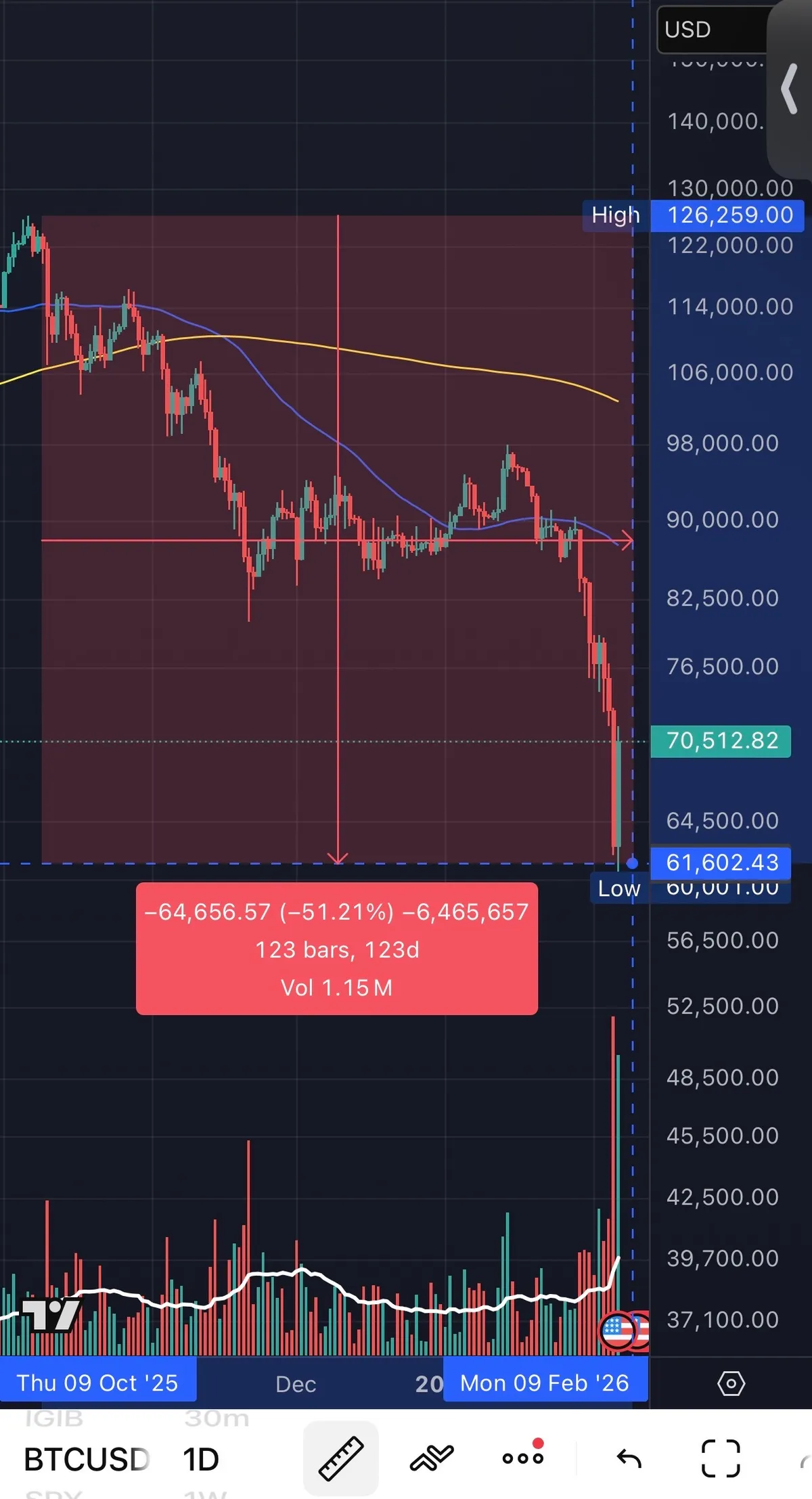
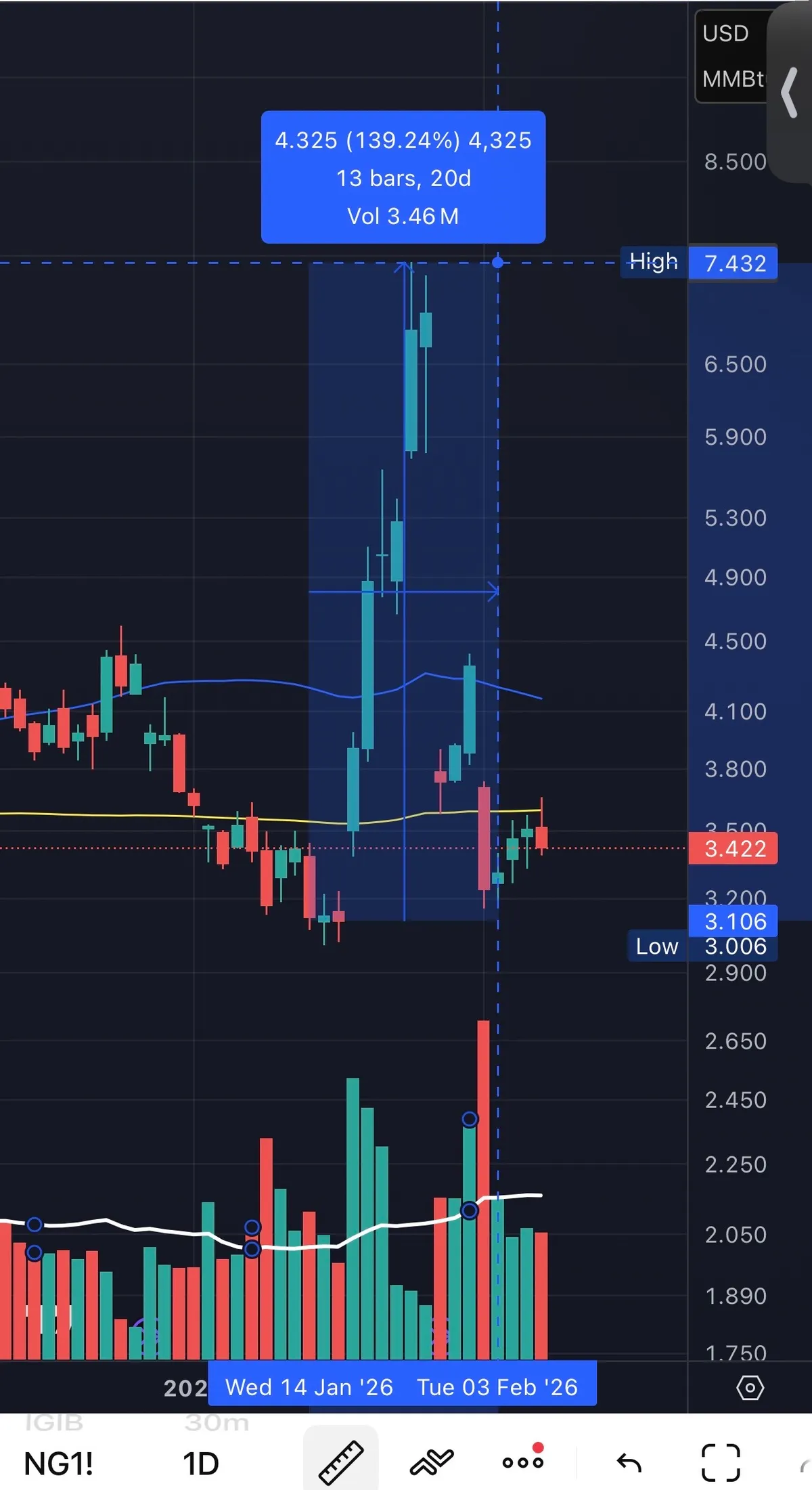
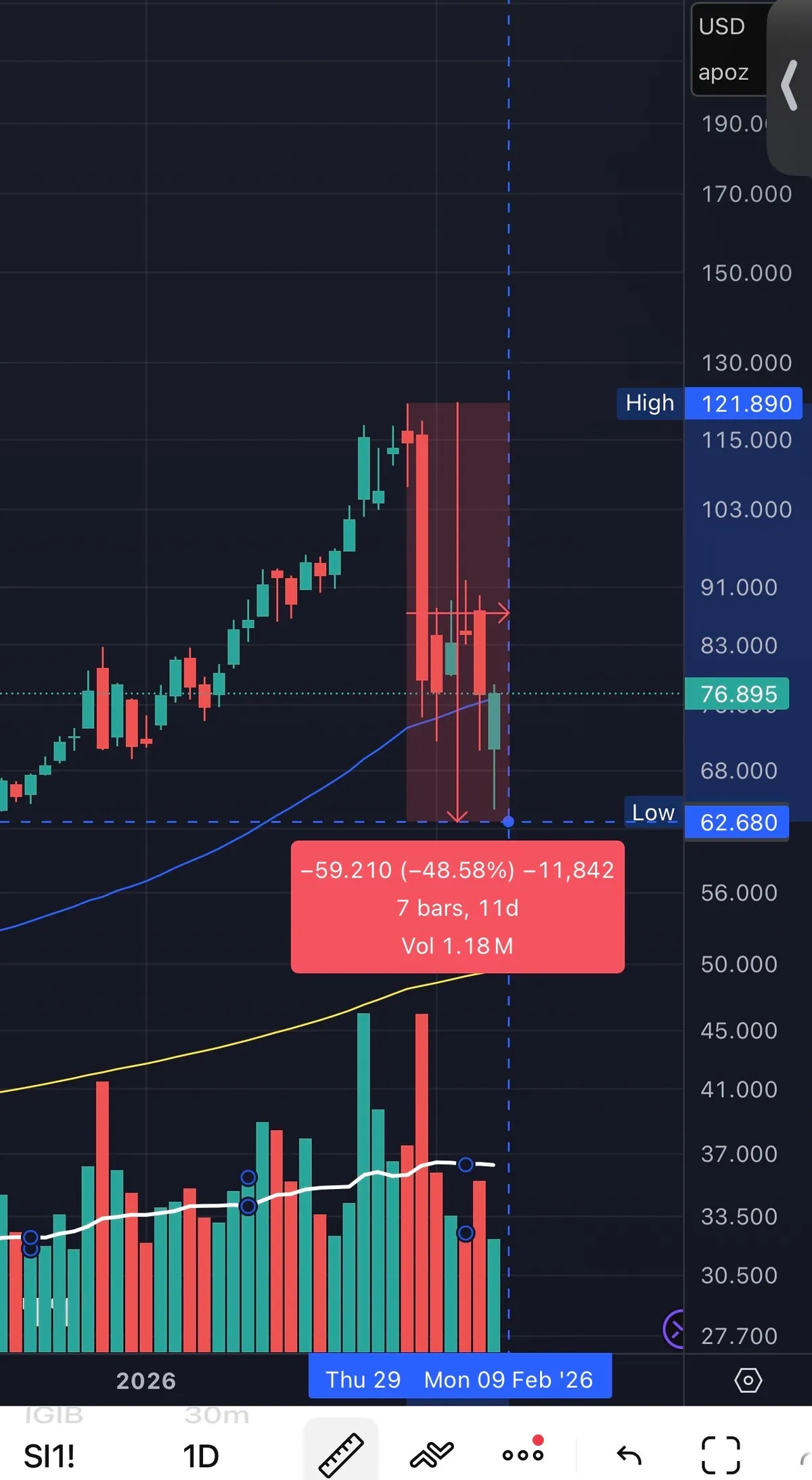
After living through enough events that once seemed unlikely, moves like this no longer surprise me. Not in silver. Not in stocks. Not in crypto.

Extreme moves only feel shocking if you expect people to behave logically under pressure.

They don’t.

Fear, greed, disbelief, and urgency drive decision making far more than models, narratives, or fair value. When enough people are positioned the wrong way, price does not move politely. It moves violently.

Even algorithms and systematic strategies are not immune. Humans design them. Humans monitor them. And under stress, humans override, tweak, or abandon their systems at exactly the wrong time.

That is why massive run ups and sharp collapses are not anomalies. They are a natural expression of human behavior showing up through price.

This is exactly why price and volume matter so much. They reflect what people are actually doing, not what they say they believe.

Irrational behavior will always exist because emotions will always exist.

The mistake is assuming markets should act calmly just because something looks obvious in hindsight.

They never have. And they never will.

Price is simply the scoreboard of collective psychology in real time.

And when sentiment reaches an extreme, the move that shocks most people is often the one that was inevitable all along.

View on Substack ↗

A Hard Truth About Trading

“Win or lose, everybody gets what they want out of the market. Some people seem to like to lose, so they win by losing money.”

— Ed Seykota

This quote isn’t about intelligence or strategy. It’s about behavior.

Some traders say they want to make money, but their actions say otherwise. They ignore risk, refuse to cut losses, chase excitement, or need to be right more than they need to be profitable.

The market doesn’t reward opinions or ego. It rewards discipline, self-awareness, and the ability to do the boring things consistently.

If you’re losing money, it’s worth asking a hard question: Are your actions aligned with what you say you want from the market?

Because the market will always give you exactly what your behavior is designed to produce.

View on Substack ↗

The Most Underrated Trading Edge Has Nothing to Do With Charts

Exercise, quality sleep, and a healthy diet are some of the easiest ways to improve your trading.

Most people do not want to hear this.

They would rather I share setups, indicators, or technical trading tactics. Those things matter, but this is the part almost everyone ignores.

And it is massively underrated.

These three habits combined give you:

  • Mental clarity

  • Improved focus

  • Better emotional control

  • Stronger stress management

  • Faster decision making

The list of benefits is long.

Trading is a performance activity. If your brain is foggy, your sleep is inconsistent, and your energy crashes mid-day, no setup in the world is going to save you.

Poor sleep leads to impulsive decisions.

Poor nutrition leads to low energy and bad focus.

No exercise leads to elevated stress and emotional overreactions.

That shows up as:

  • Chasing entries

  • Hesitating on exits

  • Ignoring stops

  • Overtrading on chop days

The market already provides enough stress on its own. You do not need to handicap yourself before the bell even rings.

You can have the best strategy in the world and still underperform if your body and mind are not aligned.

This is not motivational talk.

This is practical edge.

Clean inputs create clean decisions.

If you want to improve your trading without changing a single thing, start here.

View on Substack ↗

You Don’t Need to Be Right to Make Money in the Market

I always laugh when I see people talking trash because someone said they were long or short a stock and price went the other direction.

What those people don’t understand is this.

You don’t need to be right very often to be successful in the market.

In fact, many of the best Market Wizards were only right about 30% of the time.

Let that sink in.

You can be long a stock for a few weeks, get into the money, sell some into strength, and raise stops. When the stock eventually turns against you, you get stopped out.

And guess what.

You still made money.

Meanwhile, the comment section lights up.

“See, he was wrong.”

“How does he feel now?”

LOL.

Those reactions are the tell. They reveal who has never managed risk, never scaled out of a position, and never understood how professionals actually trade.

Real trading is not about calling tops and bottoms.

It is not about being right on every opinion.

It is not about ego.

It is about position sizing, risk management , and protecting capital.

If you can:

  • Cut losses fast

  • Let winners work

  • Take money off the table into strength

  • Raise stops as price moves in your favor

You can be wrong more than you are right and still make very good money.

The people obsessed with being “right” are the same ones who hold losers too long, never lock in gains, and trade opinions instead of price.

They are almost guaranteed to struggle long term.

The market does not pay you for being right.

It pays you for managing risk.

And that is why the loudest critics are almost always the least profitable.

View on Substack ↗

The Market Rewards Bullish Optimists With Humility

It pays to be an optimist.

One of the biggest lessons of this cycle is simple, but uncomfortable for many traders.

The market has consistently rewarded those who leaned bullish, even through pullbacks, consolidations, and choppy periods.

Since the last bear market low, every meaningful drawdown has eventually resolved higher. Volatility shook people out. Headlines turned bearish. Sentiment got ugly, and yet price kept doing what it tends to do in a bull market.

It moved higher over time.

If you stayed structurally bullish, you were right far more often than wrong.

If you stayed bearish, you mostly sat on the sidelines waiting for a crash that never came.

That does not mean buying blindly or ignoring risk. That is where humility matters.

Bullish optimism only works when paired with the willingness to admit when you are wrong.

Cut losses quickly. Reduce exposure when price breaks structure. Step aside when leadership deteriorates. Respect the market when it tells you you are early or incorrect.

But directionally, the edge has been clear.

Every pullback since the bear market has been an opportunity, not an imminent collapse.

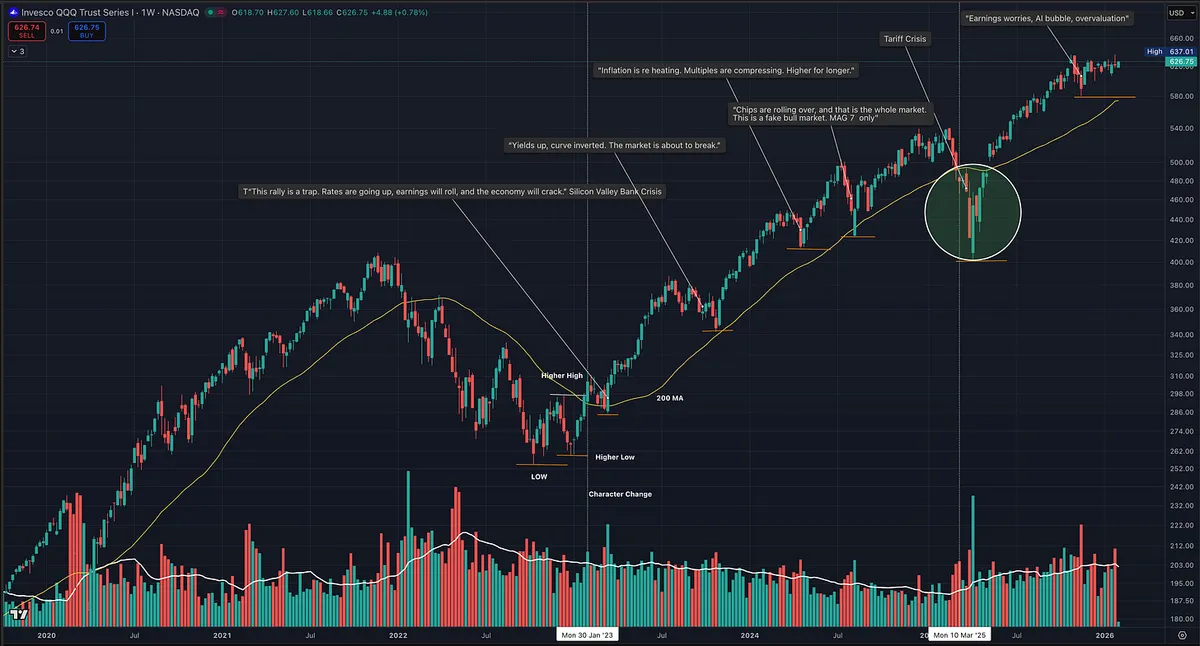
The chart makes this obvious.

You can see the pauses, the shakeouts, the frustrating sideways action, and you can also see that staying aligned with the primary trend paid again and again.

Meanwhile, persistent bears did not lose money. They just did not make any, unless they got run over shorting.

And in trading, opportunity cost is still a cost.

This is not about being permanently bullish. It is about understanding regime.

In a bull market, the market rewards optimism with discipline. In a bear market, it rewards caution and patience.

Right now, the data says optimism with humility has been the winning combination.

And here is the part most people miss.

Eventually, one of these pullbacks will turn into the next real bear market. That is how cycles work.

But it will not matter if you have been making money the entire way up, and you have enough humility to get defensive when price and leadership change character.

Do not let fear keep you from opportunity in a bull market.

And do not let greed keep you from taking profits into strength.

Scale out into extensions. Let the remainder run. Tighten stops as price advances. If the trend stays intact, you stay in. If the market breaks structure, you step aside without hesitation.

Lean bullish. Stay flexible. Let price keep you honest.

View on Substack ↗

You Don’t Lose Money From Bad Analysis. You Lose Money From Needing to Be Right.

Marty Schwartz turned $40,000 into over $20 million trading futures while never experiencing more than a 3% drawdown.

Let that sink in.

In Market Wizards, he said something that should make every over-analytical trader uncomfortable:

“I used fundamentals for nine years and got rich as a technician.”

Before that transformation, Schwartz was an analyst. And he openly admitted that his obsession with analysis and being right is exactly what held him back.

That lesson matters.

Yes, I personally conduct top-down and bottom-up analysis to understand the broader environment (the M in CANSLIM). After 20 years in the market, that context helps me, but here’s the honest truth:

It’s not required to be successful.

For beginners, individual stocks will guide you far more than macro forecasts ever will. Strong price action, relative strength, earnings momentum, and clean technical structures do most of the heavy lifting.

Most traders don’t struggle because they lack information. They struggle because of emotion and overanalysis.

They spend weeks researching a name. They build a narrative. They fall in love with their thesis and when price moves against them, they can’t cut the loss because doing so would mean admitting they were wrong.

That’s how small losses turn into big ones.

You don’t need to be an economist. You don’t need to predict markets. You don’t need to be right.

You need low-risk, high-reward setups, disciplined execution, and the humility to step aside when conditions aren’t favorable.

When in doubt, there is absolutely nothing wrong with being in cash.

The number one rule has never changed:

Don’t lose money.

Everything else is secondary.

View on Substack ↗

You Don’t Need a Lottery Ticket to Get Rich in the Market

A lot of people are chasing parabolic moves, hoping to strike it rich on one or two big bets.

That’s not how professionals do it.

They’re willing to gamble large chunks of capital on a single idea. Bitcoin. Silver. A speculative biotech. The next hot AI name. If it works, they feel like a genius. If it doesn’t, the account takes real damage.

This is not a professional approach.

William O’Neil studied the biggest winners in history, but what often gets overlooked is that he didn’t build his fortune on home runs alone. He had plenty of base hits and doubles along the way.

The big winners get written about.

The consistency is what built the wealth.

You can get extremely wealthy compounding many trades where you risk 5% to make 15–20%. You don’t need to be in the parabolic phase. You don’t need to go all in. You don’t need to swing for the fences.

Consistency plus asymmetric risk-reward does the heavy lifting.

Study the great traders and you’ll notice something important. None of them made it from one or two trades. They stacked wins over time. They accepted drawdowns. They stayed disciplined. And yes, the big winners showed up occasionally too.

But they never relied on them.

Treating the market like an easy lottery ticket isn’t just lazy, it’s expensive. This game rewards patience, process, and compounding. Not hope.

The goal isn’t one life-changing trade.

The goal is a repeatable edge that compounds.

That’s how real wealth is built.

View on Substack ↗

How Most Traders Manage to Buy the Top and Sell the Bottom

One of the most painful stories in markets plays out the same way every cycle, and silver is no exception.

Some traders sat on the sidelines for months. They watched price grind higher day after day. Eventually the move felt unbearable to miss, so they finally jumped in, usually near the highs.

Now price crashes down.

Instead of cutting the loss, they convince themselves it will come back. They tell themselves they’ll just wait it out. Maybe even add more lower to “get a better average.”

But this is how tops and bottoms are made.

Buying late strength turns into holding weakness. Hope replaces discipline. Rallies feel like confirmation, but they’re often just pauses before more downside.

Eventually, after weeks or months of frustration, the position is dumped near the lows. Not because the trader planned it, but because they’re exhausted. And that’s when the promise gets made: “I’m never trading silver again.”

This pattern shows up in every major market cycle.

It always has.

And it always will.

The lesson isn’t about silver.

It’s about respecting price, managing risk, and never letting emotion decide when you enter or exit.

View on Substack ↗

Why Trading Punishes Closed Minds

You can be very successful in many areas of life without being a seeker of truth.

In politics, people thrive by picking a side and defending it at all costs. In business, strong opinions and conviction can build massive companies. In everyday life, confidence often matters more than accuracy.

Trading is different.

The market does not care about your beliefs, your ideology, or how smart you sound explaining your thesis. It only cares about reality, as expressed through price, volume, and risk.

If you are not open minded, trading will expose you quickly.

You cannot marry opinions. You cannot protect ego. You cannot filter information to support what you already believe. The moment you do, you stop seeing what is actually happening.

Successful traders are constant seekers of truth. They ask, What am I missing? What would prove me wrong? What is the market telling me right now?

That mindset is not optional. It is survival.

The irony is that traits rewarded elsewhere can become liabilities here. Certainty turns into stubbornness. Conviction turns into blindness. Confidence turns into unmanaged risk.

In trading, flexibility puts you on the right side of the market. Humility keeps you solvent. Curiosity uncovers new opportunity.

The market is the final judge. It rewards those who listen and punishes those who argue.

If you want to last, you must stay open.

View on Substack ↗

Winning in Trading Demands Everything and Promises Nothing

Most people fail at trading because they start by treating it like a get rich quick game. When they realize it isn’t, they move on. This happens every cycle. A new group comes in, then quietly leaves.

Because of that, the hard truth is that most people would be better off consistently putting money each month into a simple ETF like SPY or QQQ and letting time do the work.

For the few who stay, the path looks very different.

They get their ass kicked.

They hit the books.

They get their ass kicked again.

They study more, test, execute, and eventually find a method with a real edge.

Just as important, they learn when and how to use that edge. That’s what gives them a chance.

Winning long term at trading requires far more than most people realize. It’s total commitment with no guarantees. It reminds me of a video I showed my boys who compete in sports:

“Winning requires all of you, and more, but it promises you nothing.”

-Lewis Caralla

View on Substack ↗

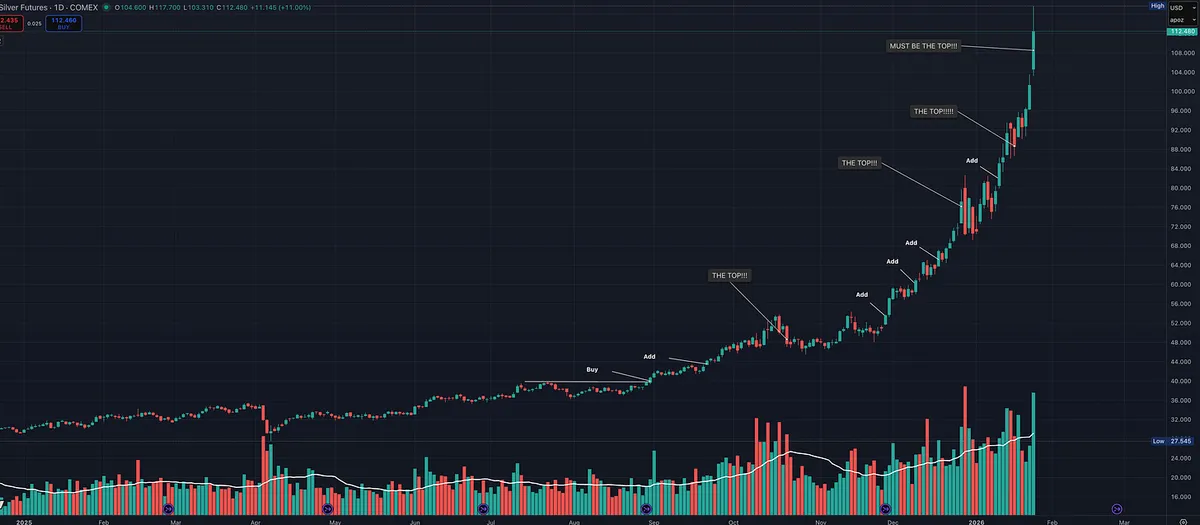
Why I Don’t Try to Call the Top A Lesson From Silver

If you look at the chart I’m attaching, you’ll see something familiar.

People were calling the top in silver at $50. Then again at $75. Then $90. Now it’s $100+.

The commentary changed. The conviction didn’t.

This is a textbook example of why I don’t try to call tops.

I heard the same arguments back around $80. That’s when I added.

This isn’t about bravado or blind bullishness. It’s about understanding what actually moves markets.

The market does not care about opinions. Not mine. Not yours. Not anyone else’s.

What matters is price.

On the chart, the trend stayed intact. Structure never broke. Higher highs and higher lows continued. Each pullback that “had to be the top” turned into another continuation.

That doesn’t mean you chase price endlessly. I’m not adding here.

But it does mean you stop trying to guess where a trend should end.

Calling tops in strong trends is one of the fastest ways to the poor house.

Anyone who’s studied great traders knows this lesson. They don’t predict turning points. They wait for the market to confirm them.

The trend is your friend until it ends.

Silver will top eventually. Every trend does.

But trying to guess that moment, especially in real time, is a great way to go broke.

If you’re already in a trend, manage risk and respect structure. If you’re not, wait for the next setup.

Price, not opinion, gets the final vote.

View on Substack ↗

Listen to William O’Neil and you hear the balance every trader needs.

He was confident and optimistic, yet deeply humble.

Conviction without arrogance.

Belief without disrespect for the market.

William O'Neil never argued with price. He listened to it. He accepted losses quickly. He stayed hopeful without becoming reckless.

That balance is rare.

Confidence keeps you showing up.

Humility keeps you alive.

Respect the market, and it offers opportunities.

Fight it, and it teaches painful lessons.

The best traders learn both at the same time.

View on Substack ↗

There is always someone on the other side of your trade.

They may know something you do not.

They may see the market differently.

They may simply be managing risk better.

The market does not reward confidence. It rewards humility, discipline, and survival.

Never assume the other side is wrong. Assume you could be.

That mindset keeps you in the game.

View on Substack ↗

A drawdown is not what ends most trading careers.

What ends them is reacting instead of adjusting.

Oversizing. Forcing trades. Trying to make it back quickly. Losing objectivity.

The best traders do the opposite. They reduce size. Step back. Protect capital. Regain clarity.

Cash is a position. Patience is a strategy.

This phase feels uncomfortable because it demands discipline instead of action.

Survive this, and you give yourself a real chance to grow.

View on Substack ↗

Every trader hits this phase. Most do not survive it.

Every trader eventually hits a drawdown.

The ones who last are not smarter. They just respond differently when nothing is working.

Most damage happens after the drawdown begins, not because of it.

I wrote a piece today on how professionals survive these periods without blowing up their capital or confidence.

If you’ve been in a tough stretch lately, this one’s for you.

https://tradingmomentum.substack.com/p/every-trader-faces-a-drawdown-the

ArticleEvery Trader Faces a Drawdown. The Ones Who Survive Know What to Do Next
View on Substack ↗

The Fastest Way to Lose Is to Focus on Money

One of the biggest mistakes traders make is focusing on making money before they focus on making good trades.

Money is an outcome. Process is the input.

If your position size is large enough to make you emotional, it is too large. When size is too big, fear and greed take over. You hesitate on entries, cut winners early, let losers run, and abandon your rules at the worst possible time.

The solution is simple. Reduce your position size so small that the outcome barely matters.

When the pressure is gone, you can finally focus on what actually improves performance: Entry quality Risk management Following your rules Reducing mistakes

This is how skill is built.

Once you can execute your process consistently and you start to see positive expectancy, then and only then do you increase size. Gradually. Intentionally. Without changing the way you trade.

Most people skip this step. They jump straight into trading big size because they want results fast. The problem is they never last long enough to see their system work. Or worse, they find out it does not work after they have already lost too much capital to continue.

The traders who survive and eventually thrive all do the same thing. They protect their capital. They master the process. They let size come last.

View on Substack ↗

What a Leading Trading Coach Learned About Top Traders

“Generally, I find that top traders believe:

• Money is not important

• It is OK to lose in the markets

• Trading is a game

• Mental rehearsal is important for success

• They’ve won the game before they start.”

— Van K. Tharp, Market Wizards

When money stops being the focus, risk stays controlled.

When losing is accepted, discipline improves.

When trading becomes a game, emotion loses its grip.

By the time a great trader places a trade, the hard work is already done.

Execution is simply the final step.

View on Substack ↗

Stop Chasing Money. Start Building Skill.

Most traders obsess over outcomes.

P&L. Big winners. Fast money.

That obsession is usually the reason they struggle.

The best traders flip the priorities completely.

They do not focus on making money first.

They focus on process.

Here is the mindset shift that changes everything.

Instead of trying to make money → focus on preserving capital

Your job is survival first. Capital is opportunity. Once it is gone, the game is over.

Instead of hunting home runs → follow a repeatable process

Big winners are a byproduct, not the goal. Consistent execution is what creates them.

Instead of cutting winners and holding losers → cut losers fast and let winners run

Losses are the cost of doing business. Winners are where the edge shows up.

Instead of buying weak stocks → buy strong stocks

Strength attracts more strength. Leaders outperform laggards for a reason.

Instead of trying to get rich quick → compound over time

Small edges, applied over and over, beat one lucky trade every time.

Make these changes and you may realize how much less stressful and more enjoyable trading becomes.

When your focus shifts from money to process, pressure fades. Decisions get clearer. Emotions quiet down.

Then something interesting happens.

Trades begin to compound quietly in the background, building into an account you once thought was unrealistic.

Not because you chased it.

But because you finally focused on doing the right things, consistently.