The $1,000 Car Payment Is Keeping People Poor
A lot of people complain about money while living paycheck to paycheck.
And I’m not talking about people in poverty.
I’m talking about middle-class and upper-middle-class Americans making good incomes while driving $100,000 vehicles, fully loaded Suburbans, Escalades, Mercedes, BMWs, Audis, and other status symbols they can barely justify.
They make money.
Just not enough money to support the lifestyle they are trying to maintain.
That is the trap.
So many people are stuck in the materialistic rat race of keeping up with the Joneses and because so much of society does it, it feels normal.
But normal does not mean sustainable.
How many of those same people have millions saved by their 40s or 50s?
Not many.
The problem is not always income.
The problem is that every time income goes up, liabilities go up with it.
Bigger house.
Bigger car.
Bigger payment.
Bigger lifestyle.
Same financial stress.
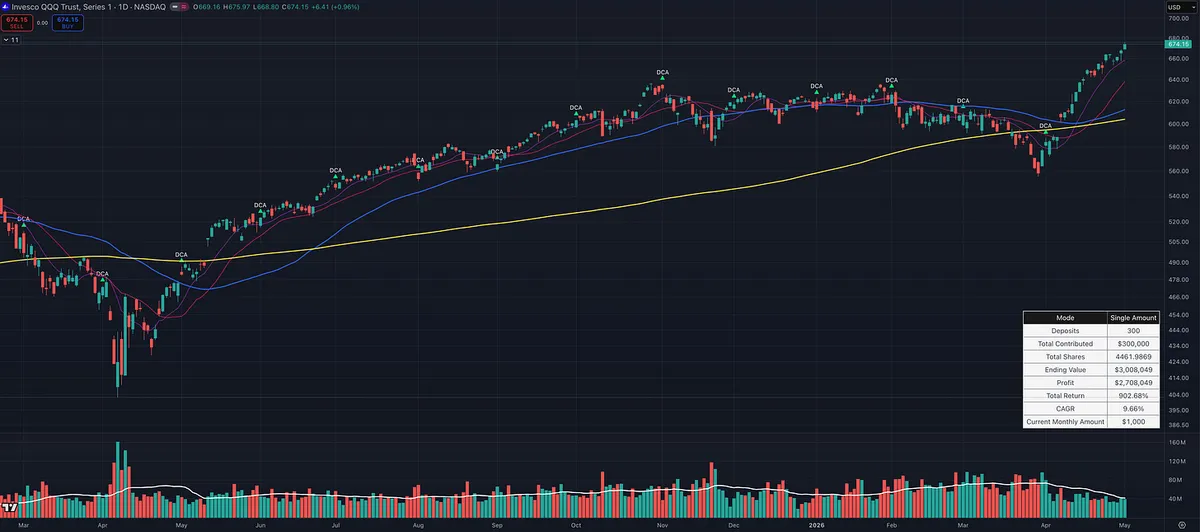
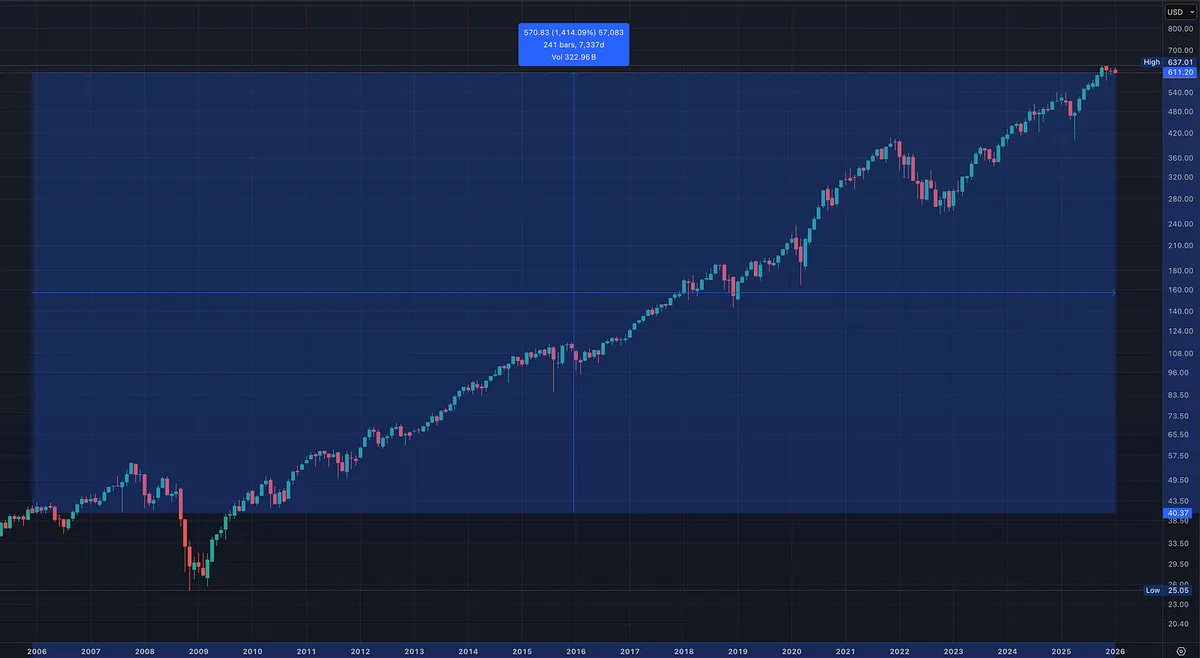
Now look at the chart.
$1,000 invested every month into QQQ over this 25-year period would have required $300,000 in total contributions.
That is not some impossible number.
That is the equivalent of a luxury car payment redirected into ownership instead of consumption.
The result?
Roughly $3 million.
The person who chose the car has a depreciating asset.
The person who chose discipline has a life-changing portfolio.
Past returns do not guarantee future results, and QQQ may not repeat this exact return.
BUT that is not the main point.
The point is that consistently buying productive assets beats consistently financing depreciating assets.
I’m a momentum growth trader. I own businesses that generate income. I do not rely only on passive index investing.
But even I deeply respect the power of compounding like this over time.
Even William O’Neil, long before ETFs became mainstream, understood that mutual funds could be a powerful vehicle for long-term growth when held over years.
Most people do not need a complicated strategy to change their financial future.
They need discipline.
Live on 80% of what you make.
Save and invest 20%. (yes, the 80/20 rule)
At a minimum, pay yourself first with 10% every month.
As you make more, save more.
But most people do the opposite.
They make more and add more liabilities.
That is the never-ending rat race.