
Momentum Trading Strategy

Notes

Trading Psychology & Mindset

The inner game: the emotions, beliefs and habits that decide whether a trader follows a plan.

Showing 61–80 of 235 notes

View on Substack ↗

The Traders Who Can't Lose Will Never Win

"I've missed more than 9,000 shots in my career."

- Michael Jordan

Michael Jordan didn't become one of the greatest athletes of all time because he avoided failure. He became great because he was willing to keep taking the next shot after missing the last one.

Trading is no different.

One of the hardest psychological hurdles for new traders is accepting that losing is part of the profession. They expect a good strategy to produce mostly winners. Then reality arrives. Even exceptional trading systems can generate long strings of losing trades.

That is why Tom Hougaard titled his book Best Loser Wins.

The best traders are not the people who avoid losses. They are the people who have conditioned themselves to handle losses without losing confidence, discipline, or the willingness to execute the next valid setup.

Think about the greatest athletes.

A player misses several times in a row. The crowd starts groaning. Social media piles on. Commentators question their decisions.

The elite players still want the ball.

They trust the process that made them successful over thousands of attempts, not the outcome of the last few possessions or games.

Great traders think the same way.

They know a losing trade says very little about the quality of their edge. Their focus is on executing a strategy with positive expectancy over hundreds of trades, not judging themselves by the last one.

If every loss feels personal, you'll hesitate on the next entry.

If you hesitate on the next entry, you'll eventually miss the handful of trades that produce the majority of your returns.

Your goal is not to become someone who never loses.

Your goal is to become someone who can lose repeatedly without losing discipline.

Condition yourself to be wrong often.

Execute anyway.

This is also why position sizing is so important. Proper position sizing keeps any single loss from doing enough financial or emotional damage to prevent you from taking the next valid setup.

It allows you to keep taking the shot.

Because just like Michael Jordan had to keep shooting after a miss, every great trader must be able to keep executing after a loss.
View on Substack ↗

One of the biggest mistakes traders make isn’t buying the wrong stock.

It’s becoming emotionally attached to an idea.

Eventually, what began as an investment thesis becomes part of your identity.

You see it everywhere:

  • Gold bugs.

  • Tesla loyalists.

  • Bitcoin maximalists.

  • Crypto communities.

The asset doesn’t matter. The psychological mistake is always the same: people stop evaluating the evidence and start defending the belief.

Legendary traders like Stanley Druckenmiller and Paul Tudor Jones have spoken about this for years. They can research an idea, build enormous conviction, and expect it to play out over the next 18 months, then exit days or weeks later when the evidence changes.

The best traders didn’t survive because they were always right.

They survived because they knew when to change their minds.

Strong opinions. Weakly held.

View on Substack ↗

You Can Lead a Trader to the Truth, but You Can’t Make Them Follow It

You have probably heard the saying:

You can lead a horse to water, but you cannot force it to drink.

That definitely applies to trading and investing.

  • You can teach someone the importance of cutting losses.

  • You can explain position sizing, risk management, expectancy, and the dangers of overtrading.

  • You can give them a proven strategy, specific rules, historical examples, and lessons from some of the greatest traders who ever lived.

But you cannot force them to follow any of it.

Richard Dennis, one of the greatest traders featured in Market Wizards, understood this perfectly:

“I always say that you could publish trading rules in the newspaper and no one would follow them.”

That is the uncomfortable truth.

Many traders do not fail because the information was unavailable.

  • They fail because they refuse to consistently do what the information requires.

  • They want the winning stocks without the discipline.

  • They want the returns without accepting the losses.

  • They want the confidence without putting in the work.

The market can teach you the same lesson repeatedly, but eventually, you must decide whether you are actually going to learn it.

The knowledge is available.

The rules are available.

The water is right in front of you.

But nobody can make you drink.

View on Substack ↗

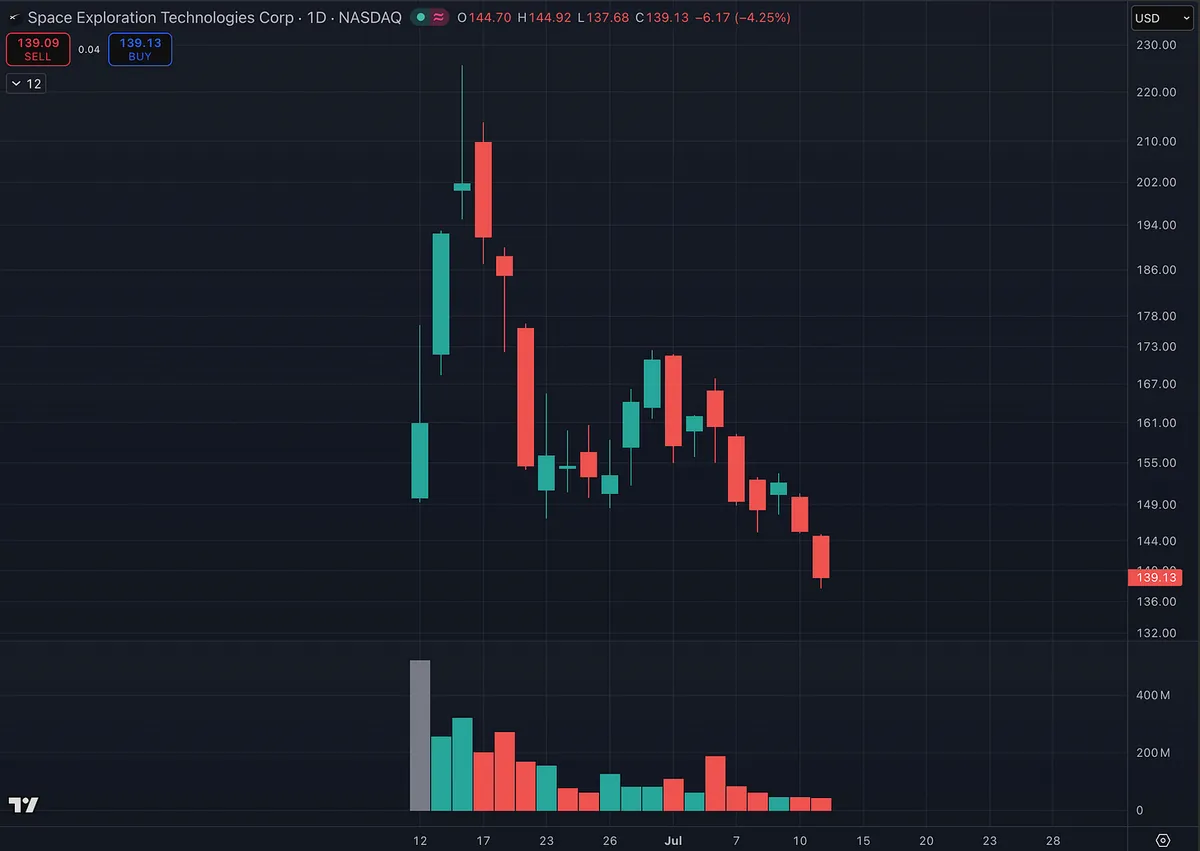
But SpaceX Was Different... Right?

SpaceX surged after its IPO, the hype exploded, and anyone warning about chasing it probably sounded overly cautious.

Now, the entire move has been erased.

The company may be different.

Human emotion is not.

This is exactly why I wrote this.

Quoting Momentum Trading StrategyThe IPO Trap Most Traders Fall For A lot of people are getting excited about a potential SpaceX IPO. And I get it. Big company. Big story. Big hype. Lots of emotion. But this is where a lot of inexperienced investors get caught. They buy on day one with no game plan. No entry strategy. No risk plan. No understanding…
View on Substack ↗

Comparison Is the Thief of Trading Progress

You have probably heard the saying, “Comparison is the thief of joy.”

It is also one of the biggest traps in trading.

I have seen traders finally turn the corner, become profitable, improve their discipline, and make real progress, yet still live in a constant state of frustration.

Why?

Because instead of appreciating how far they have come, they are focused on someone making more money, posting bigger gains, or progressing faster.

That comparison can destroy your confidence and pull you away from the process that is actually working.

Keep the blinders on.

Focus on your execution, your discipline, your risk management, and your own growth.

When you see someone doing better than you, do not use their success as evidence that you are behind. Use it as proof of what is possible.

Be grateful that they are showing you how much potential still exists.

Then leave it there.

Get back to your own work, your own process, and your own journey.

As Tom Basso often says, “enjoy the ride.”

View on Substack ↗

The Fastest Way to Improve at Trading Is to Stop Trying to Make Money

Most struggling traders don’t have a strategy problem.

They have a sizing problem.

They’re risking enough money that every trade becomes emotional. They hesitate on losses, move their stops, hold winners too long, sell too early, and obsess over every tick.

Then they wonder why they can’t follow the system they already know.

The solution is simple, but most people are too stubborn to do it:

Trade smaller.

Reduce your position size and overall portfolio risk to the point where you almost don’t care whether any individual trade works.

Long term, you can’t trade tiny forever. Eventually, your winners need to be large enough to meaningfully grow your account. That’s why position sizing and risk management are so important.

But when you’re still building confidence, your primary goal should not be to make as much money as possible.

Your goal should be to execute correctly.

Smaller size gives you more reps with less emotional pressure. It becomes easier to:

Take losses without hesitation.

Respect your initial stops.

Sell some into strength.

Avoid holding too long out of greed.

Stop regretting a sale just because the stock keeps running.

Follow your process instead of reacting to your emotions.

Ironically, once you stop trying so hard to make money, you may surprise yourself and start making more of it.

But the bigger win is that you begin building confidence in yourself and in the system.

A lot of traders ignore this advice. They spend five years or even ten trading too large, breaking rules, repeating the same mistakes, and letting emotion control every decision.

Some quit.

Others finally hit rock bottom and decide that enough is enough.

The traders who make meaningful progress in 18 months to 2 years usually aren’t more talented.

They’re simply less stubborn.

They accept that the goal at the beginning isn’t to maximize profits.

It’s to master the process.

Once consistent execution becomes second nature, increasing your size is the easy part.

Confidence isn’t built through one huge winner.

It’s built by doing the right thing, over and over again.

View on Substack ↗

America Is Still the Trade

O’Neil’s entire investing philosophy was built around the idea that America’s greatest stock market winners came from innovation, entrepreneurship, new industries, new products, and people willing to take risk.

He believed that for decades.

Warren Buffett has consistently believed it too.

And that is what I think is so important.

You are talking about two completely different types of investors.

O’Neil was a growth stock investor who studied America’s biggest winning stocks, new industries, new products, institutional demand, earnings growth, relative strength, and price action.

Buffett is a value investor who built his career around buying great businesses and holding them for the long term.

Different styles.

Different systems.

But both men understood the same bigger truth:

America still produces opportunity.

And I believe they were both right.

That belief in American business, American innovation, and American entrepreneurship still matters today.

From railroads to autos, from airplanes to computers, from semiconductors to the internet, and now into AI, robotics, software, energy, medical technology, and whatever comes next, America has continued to create massive opportunities for investors and entrepreneurs.

That does not mean America has no problems.

Of course it has problems.

Debt is a problem. Taxes are a problem. Political dysfunction is a problem. Inflation, regulation, division, and constant fear are all real issues.

But as traders and investors, we cannot let politics, emotion, or personal beliefs get in the way of making money.

I am looking at this the same way I look at stocks.

  • Where is the leadership?

  • Where is the relative strength?

  • Where is the innovation?

  • Where are the biggest winners still being created?

For those of you reading this outside the United States, this is not a political statement or some “America is better than everyone else” speech.

This is about capital allocation.

If I lived in another country, I would still want my capital invested wherever I believed the best risk/reward opportunity existed. If another market became the best place to invest, I would invest there too.

But for now, the long-term trend is still clear.

America is still the place where many of the world’s biggest companies, biggest innovations, and biggest wealth-building opportunities are being created.

This is the same lesson I teach with individual stocks.

Follow the trend.

Do not argue with the market.

Do not let your opinions get in the way of what is actually happening.

“The trend is your friend until it ends when it bends.”

- Ed Seykota

And right now, betting against American innovation, American business, and American entrepreneurship still looks like a lower-probability bet to me.

The American dream may look different than it used to.

It may be harder for some people than it should be.

But American opportunity is still alive.

The question is whether you are going to complain about the problems or position yourself to benefit from the opportunities that still exist.

View on Substack ↗

No One Is Coming to Save You. Learn to Invest.

William O’Neil wrote in How to Make Money in Stocks:

“Today it’s not enough for you to just work and earn a salary. To do the things you want to do, go where you want to go, and have the things you want to have in your life, you must save and invest intelligently. The income from your investments and net gains you can make will, in time, let you reach your goals and provide you real security.”

I believe that is still 100% true today.

Through all the negativity, the media, politics, debt, taxes, wars, inflation, and constant fear being pushed at people every day, one thing has not changed.

It is still up to you.

You can complain about the system, or you can learn how to use the opportunities that still exist inside it.

Yes, people are being left behind. Yes, there is a growing debt problem. Yes, it feels like politicians on both sides of the aisle are not making a huge difference in the average person’s life.

And yes, no matter who is in office, you are probably still going to be taxed an outrageous amount, with very little of that money feeling like it actually comes back to improve your life.

But that does not change the responsibility you have over your own life.

  • You still have to learn.

  • You still have to save.

  • You still have to invest.

  • You still have to build skills.

  • You still have to take personal responsibility.

  • You still have to stop waiting for someone else to fix your life.

That is one of the biggest lessons in O’Neil’s work. He was not just teaching people how to buy stocks. He was teaching people that they had to take control of their financial future.

Working hard matters, but working hard alone is usually not enough. At some point, you have to learn how money works. You have to learn how markets work. You have to learn how great companies grow. You have to learn how to put capital to work intelligently.

That does not mean you need to become a professional trader. It does not mean you need to take reckless risk. It means you need to understand that saving, investing, and building wealth are skills.

And like any skill, they can be learned.

  • So learn to trade.

  • Learn to invest.

  • Start a business.

  • Build a skill.

  • Invest in yourself.

But do not sit around waiting for the perfect economy, the perfect government, the perfect policy, or the perfect time.

That will likely never come.

The opportunity is still here.

You just have to take responsibility and go after it.

View on Substack ↗

Broken Stocks Do Not Need Your Loyalty

A stock does not care that you believe in it.

A stock does not care where you bought it.

A stock does not care how much research you did.

When price breaks down, volume expands, and leadership disappears, the message has changed.

The best traders listen.

The worst traders negotiate.

View on Substack ↗

Be Grateful Markets Aren’t Easy

That is what keeps this game enjoyable, even after you have made money. If trading were easy, it would lose a lot of what makes it so rewarding.

The challenge is the reward.

The constant problem-solving, the discipline, the patience, the self-awareness, the emotional control, and the never-ending pursuit of improvement are what make trading so rewarding.

Markets humble everyone, and that’s also what makes improving at this game so meaningful.

View on Substack ↗

The Talent Has Them

Ed Seykota once said:

“Good traders have a special talent for trading just as good musicians and good athletes have talents for their fields. Great traders are ones who are absorbed by the talent. They don’t have the talent, the talent has them.”

That is the difference.

Good traders may have skill.

Great traders are consumed by the craft.

They study it.

They live it.

They think about markets when nobody is watching.

They review mistakes most people would rather forget.

They are not casually interested in trading.

They are absorbed by it.

And that is why they keep improving long after most people quit.

View on Substack ↗

The Traders I’d Bet On

If I had to bet on which traders were most likely to make it, I wouldn’t automatically bet on the smartest ones.

I’d bet on the ones with:

• Belief

• Grit

• Resilience

• Adaptability

• Confidence

• Humility

• Self-awareness

• Discipline

• A willingness to work hard

Because trading is not just about knowing the rules.

It is about becoming the kind of person who can actually follow them.

View on Substack ↗

Your Trading Is Too Complicated

Steve Jobs built around focus and simplicity.

Say no. Remove what does not matter. Make the product so clean that the user knows exactly what to do.

Elon Musk has pushed a similar idea from an engineering angle.

Question everything. Delete what is unnecessary. Simplify.

Trading is not much different.

Most traders think the market is an intellectual battle.

More indicators. More opinions. More news. More podcasts. More setups. More screens. More tickers.

But more information does not always create better decisions.

A lot of the time, it creates hesitation, confusion, and emotional noise.

The brain under pressure does not need more complexity.

It needs clarity.

That is one of the biggest psychological traps in trading.

Complexity feels intelligent.

Simplicity feels too basic.

So traders keep adding more and more to their process because it gives them the feeling of control.

But feeling in control and actually being in control are two different things.

  • Understand the general market environment.

  • Find the strongest stocks in the strongest groups.

  • Wait for proper setups.

  • Define your risk.

  • Size correctly with proper position sizing strategies.

  • Cut losses.

  • Sit with winners.

  • Repeat.

That is not sexy.

But it works a lot better than constantly adding more fluff to avoid doing the boring simple things.

Steve Jobs simplified products.

Elon Musk simplifies systems.

Traders should simplify their process.

View on Substack ↗

Uncommon Results Require Uncommon Behavior

Momentum and growth stock trading can look like following the herd.

In one sense, it is.

We are trying to identify where money is flowing, where leadership is developing, and where institutions are accumulating shares. We want to be in the strongest stocks when the market is rewarding strength.

But the actual strategy and execution are almost the complete opposite of how most people trade and invest.

Most people have no real game plan.

  • They buy because they like a story.

  • They chase tips.

  • They average down.

  • They hold and hope.

  • They do not manage risk.

  • They do not know where they are wrong.

  • They do not have sell rules.

  • They do not have a real process for position sizing, entries, exits, or exposure.

So while growth stock investors may seem like we are part of the herd, in reality, this style represents a very small part of the overall market.

The majority of investors are not operating this way.

That is one reason I believe so many U.S. Investing Champions and Market Wizards have used some version of this approach. They are not just buying strong stocks. They are applying rules, risk management, discipline, and a repeatable process.

And I think this applies to most areas of life.

  • Most people say they want freedom, but they are terrified of taking ownership of their future.

  • Most people think starting a business is risky, but I think relying entirely on one paycheck can be risky too.

  • Most people know they should eat better, exercise, and take care of themselves, but they do not consistently do it.

The person who does usually ends up with a very different life.

The point is not to be contrarian just for the sake of being contrarian.

The point is this:

If you are doing things the same way as the majority, there is a good chance you are going to get the same results as the majority.

In the market, finding strong stocks is only part of it.

The real separation comes from having a strategy, system, and process when most people do not.

Whether it is trading, business, health, or life, the rule is usually the same:

If you want uncommon results, you cannot follow common behavior.

View on Substack ↗

The Trading Account That Saved Me From Myself

I love trading and markets.

Some people might even call it an obsession.

But a long time ago, I analyzed my own trading data and realized something important:

Most of my money came from a small number of trades.

The A+ setups. The best market environments. The times when I was extremely selective.

The rest of my trades?

Small losses. Flat trades. Small gains. A lot of activity that did not really move the needle.

So why take them at all?

Because I love the markets.

But here’s the key: I separated that activity from my serious trading account.

I have my primary account, where I only want my best ideas, best setups, proper position sizing, and strict risk management.

Then I have a smaller account where I can stay engaged, test ideas, experiment, and have fun.

It is money I am willing to lose. If that account went to zero, it would not affect my wealth, my mindset, or my real trading process.

I think a lot of traders could benefit from this kind of honesty.

Many people say they are trading to make money, but their behavior says they are really trading for action.

For excitement. For stimulation. For the feeling of being involved.

And if you are not aware of that, it can cause a lot of damage.

Sometimes the answer is not pretending you suddenly have perfect patience.

Sometimes the answer is building a system around who you actually are.

Know yourself.

Know which trades actually make you money.

Know when you are trading for edge and when you are trading for fun.

View on Substack ↗

Trading Might Be the First Thing You’ve Ever Truly Failed At

A lot of successful people struggle with trading because it may be the first thing they have ever truly failed at.

Not struggled with.

Failed at.

In most areas of life, hard work usually creates progress.

  • You study more, you improve.

  • You work harder, you get better.

  • You stay disciplined, and eventually, results show up.

Trading does not work that cleanly.

You can study all weekend and still lose money Monday.

You can take a perfect setup and still get stopped out.

You can make a great trade and give it all back because of one emotional decision.

That is hard for successful people to accept.

So they look for a way out.

  • “The market is rigged.”

  • “This is gambling.”

  • “Nobody really makes money doing this.”

Sometimes that is easier than admitting the truth:

“I am not good at this yet.”

I do think success in other areas of life can help you in trading.

The grit, discipline, work ethic, ability to adapt, and willingness to learn all matter.

My time in the military helped shape that.

Earning the Ranger tab taught me how to keep going when things really suck.

Starting our first business with only a few thousand dollars and building it into a million-dollar business taught me how to adapt, solve problems, and survive the early years when most people quit.

Those traits that made me succesful in those endevors obviously helped me in trading, but I have also seen people with the same type of success come to trading and fail horribly.

But I never approached trading like, “I was successful in these other areas, so I will automatically be successful here.”

That is the mistake.

The traits can transfer.

The ego cannot.

If you bring discipline, humility, patience, and the willingness to learn, your past success can help you.

If you bring entitlement, overconfidence, and the belief that success somewhere else guarantees success in the market, trading will humble you fast.

There is a reason a high school dropout or security guard can become a multimillion-dollar trader, while plenty of doctors, lawyers, dentists, executives, and business owners fail.

The market does not care about your resume.

Almost every great trader I have studied started with failure.

  • They lost money.

  • They overtraded.

  • They got emotional.

  • They repeated the same mistakes until the pain forced them to change.

The ones who made it did not treat failure as proof that trading does not work.

  • They treated it as feedback.

  • They built rules.

  • They learned risk management.

  • They stopped trying to be right and started trying to survive long enough to get good.

That is the difference.

The market will humble everyone.

The traders who make it are not the ones who avoid failure.

They are the ones who learn from it, stay humble yet determined, and keep showing up with less ego and more discipline. For many, they need to love the game to keep showing up.

View on Substack ↗

You Do Not Have to Like Someone to Learn From Them

A lot of people hold themselves back from learning because they take everything too personally.

They think if they do not like someone, they cannot learn from them.

That is a mistake.

Sometimes the person you can learn the most from is also someone you would never choose to spend time with.

Maybe they are arrogant.

Maybe they are difficult.

Maybe their personality annoys you.

Maybe you simply do not like the way they carry themselves.

That does not mean they have nothing to teach you.

Marcus Aurelius understood this well.

In Book 2 of Meditations, he reminds himself that the people he deals with will often be difficult, arrogant, ungrateful, dishonest, jealous, and frustrating.

But the point was not to complain about them.

The point was to prepare himself.

He could not control their character, their attitude, or their behavior. He could only control whether he allowed those things to disturb his own judgment and actions.

You do not have to let someone’s personality block your ability to extract value.

I have had people in my life who were extremely skilled at certain things, but were not great people to be around. I have had bosses in the past who were good at parts of the job, but personally, I could not stand them.

It would have been easy to shut them off completely and say, “I do not like this person, so I am not listening to anything they say.”

But that would have only hurt me.

Instead, I tried to separate the lesson from the person.

I did not have to admire them.

I did not have to agree with everything they did.

I did not have to become like them.

But I could still pay attention to what they were good at and take something useful from it.

Trading is the same way.

There are traders I have learned from who I probably would not get along with personally. Some annoy me. Some communicate in a way I do not like. Some have personalities that do not resonate with me at all.

But they still had lessons worth taking.

A setup.

A risk rule.

A way of thinking.

A way of managing trades.

A way of staying disciplined.

A mistake they made that I could avoid.

If you only allow yourself to learn from people you like, you are limiting your own growth.

You do not need to worship people, but you can extract wisdom from them.

Take what is useful.

Leave what is not.

And keep getting better.

One of the biggest signs of personal growth is being able to learn from someone without needing to like them, follow them, agree with them, or become them.

I challenge you to do the same.

Stop making learning so personal.

Your growth matters more than your opinion of the teacher.

View on Substack ↗

The Hardest Thing in Trading Is Doing Nothing

Jesse Livermore gave this lesson over 100 years ago, and it is still one of the hardest lessons for traders to actually follow:

“It never was my thinking that made the big money for me. It was always my sitting. Got that? My sitting tight!”

Most people read that quote and think Livermore was only talking about holding winning positions.

And yes, that is part of it.

If you find a true market leader, enter correctly, manage risk, and the stock is acting right, you need the patience to let the move develop. Big money is rarely made by constantly jumping in and out of every small fluctuation.

But “sitting tight” means more than just letting your winners run.

It also means sitting and waiting for the right setup.

It means not chasing a stock just because you like the story.

It means waiting for the stock to build properly, tighten up, approach the right area, and show real demand at the right moment.

And sometimes, it means sitting in cash.

That is the part most traders hate.

Many breakout strategies and momentum setups work best when the general market is in a supportive stage two uptrend. When the market is correcting, choppy, or under distribution, even good-looking setups can fail.

The stock may have strong fundamentals.

The chart may look good.

The theme may be powerful.

But if the general market is not supporting growth stocks, the odds change.

Most stocks follow the general market. That means your setup does not exist in isolation. The environment matters.

So patience has three sides:

  • Sitting with a winner when it is acting right.

  • Sitting and waiting for the stock to set up properly.

  • Sitting out when the market is not giving you favorable conditions.

That is why trading is so hard.

Most traders do too much.

The best traders know when to do nothing.