Momentum Trading Strategy

Notes

Trading Psychology & Mindset

The inner game: the emotions, beliefs and habits that decide whether a trader follows a plan.

Showing 41–60 of 235 notes

View on Substack ↗

The Funny Thing About Making Money in the Market

You would think the best way to make more money in trading is to focus on making money.

For me, the opposite has been true.

The more I’ve focused on protecting capital, controlling risk, cutting losses, and avoiding unnecessary damage, the more money I’ve actually made.

That mindset changes everything.

Instead of asking:

“How much can I make on this trade?”

You start asking:

“How much can I lose if I’m wrong?”

That one shift leads to better position sizing, tighter discipline, fewer emotional decisions, and a much greater ability to stay in the game when conditions get difficult.

Paul Tudor Jones put it perfectly:

“Don’t focus on making money; focus on protecting what you have.” — Paul Tudor Jones

View on Substack ↗

Can You Handle 11 Losses in a Row?

One of the biggest reasons beginner traders fail is not because their strategy has no edge.

They simply cannot handle the losing streaks that mathematically come with it.

A 50% win rate does not mean:

Win → Loss → Win → Loss → Win → Loss

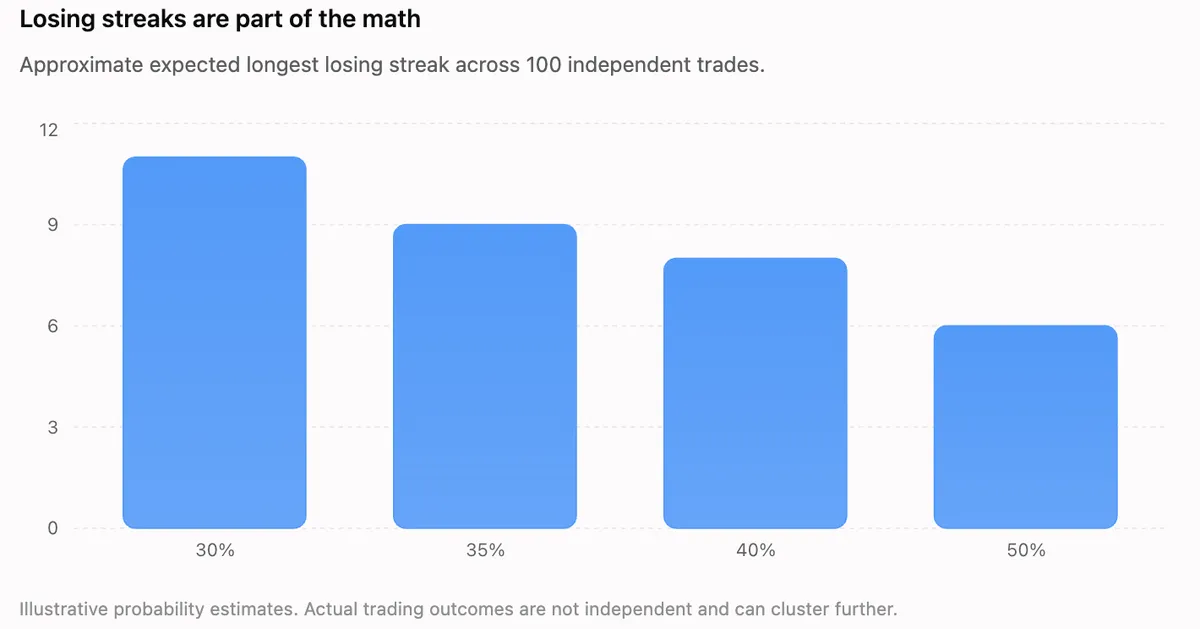
Just like flipping a coin, wins and losses cluster. Over 100 trades, a 50% system can reasonably experience around 6 consecutive losses. Drop the win rate to 30% to 35%, like the type of system Kristjan Kullamägi has openly discussed, and losing streaks of roughly 9 to 11 trades become completely plausible.

Can you take 11 losses in a row and still take trade #12?

Most beginners can't.

First, they're positioned too large, so the drawdown becomes financially painful. Second, they emotionally lose confidence, abandon the strategy, widen stops, revenge trade, or start jumping from one system to another.

Minervini specifically teaches that you want to build failure into your system by keeping losses small enough that you can afford to be wrong repeatedly. When results deteriorate, he says to reduce exposure, not increase it, and then pyramid back up when your trading starts working again. Stanley Druckenmiller does the same thing!

That is why position sizing and progressive exposure matter so much.

Small when you're wrong. Bigger when you're right.

Having an edge isn't enough.

You have to survive long enough, financially and emotionally, for the edge to play out.

View on Substack ↗

This May Be the Most Important Trading Article I’ve Ever Written. It May Also Be the Least Popular.

I would not be surprised if this article gets fewer likes, comments, and reads than almost anything else I publish.

That is also part of the problem.

Everyone wants the setup, the stock, the screen, the entry, or the next big market call. Far fewer traders are willing to do the harder work of understanding themselves, building a process they can actually follow, and confronting the behaviors that quietly destroy otherwise profitable systems.

Richard Dennis, Paul Tudor Jones, Ed Seykota, Larry Hite, and Van Tharp all understood this in different ways.

If you are serious about succeeding in trading for the long run, I think this is one of the most important things you can understand.

Read it here:https://tradingmomentum.substack.com/p/why-most-traders-fail-even-with-a

ArticleWhy Most Traders Fail Even With a Winning System: The Edge Almost Everyone Ignores
View on Substack ↗

Most Traders Press the Gas at Exactly the Wrong Time

I see this cycle play out over and over again.

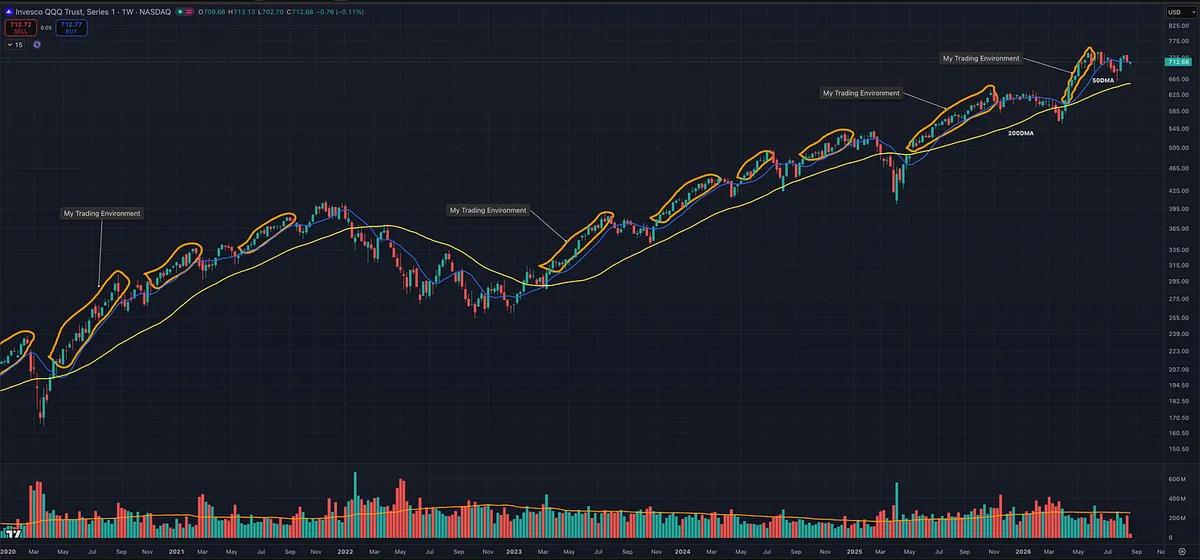
The circled areas on this chart show the environments when traders should be pressing the gas.

The market is in a clean uptrend. Week after week, it is making higher highs and higher lows. Price is at all-time highs and above both the 50-day and 200-day simple moving averages. This is a weekly chart with the daily moving averages plotted.

Yet this is when many beginners hesitate.

They miss the move, are afraid to enter, or simply lack the experience to recognize when the odds are in their favor.

Then the environment changes.

Price action becomes more difficult, and suddenly they are desperately searching for stocks and forcing activity. They are trying to make up for the move they already missed.

Eventually, the difficult period wears them out. Many traders are at that point right now.

Then the next uptrend begins.

They are too frustrated, exhausted, or afraid to capitalize on it. Their confidence and excitement only return after the move has already progressed, usually near the end.

Then the entire cycle repeats.

Pressing the gas does not mean abandoning risk management. It means progressively increasing exposure when the market is rewarding you and pulling back when it is not.

Let the market environment determine your exposure, not boredom, fear, regret, or the need for activity.

View on Substack ↗

Most Traders Love the Wrong Part of Trading

One of the shortest answers in Market Wizards may also be one of the most important.

Ed Seykota was asked:

“What traits do you look for to identify the winning trader personality?”

His response:

“1. He/she loves to trade; and 2. He/she loves to win.”

Most people love the idea of trading.

The money. The freedom. The excitement.

Far fewer love the actual process: studying, preparing, managing risk, following rules, and constantly improving.

Winning traders love the game, but they also love winning enough to do what the game requires.

Simple answer. Brutally accurate.

View on Substack ↗

Dan Zanger Studied the Same Playbook

Dan Zanger points directly to William O’Neil’s How to Make Money in Stocks as one of the books he studied repeatedly while learning to trade.

After years of reading it alongside other classic trading books and applying those lessons to real-time charts, Zanger said:

“Things started to gel for me.”

And when you look at what Zanger searches for, the overlap with O’Neil is obvious:

Leading stocks with high relative strength.

Strong price action.

Heavy volume.

Big earnings.

Strong sales growth.

Classic chart patterns.

But Zanger’s story also reinforces the part traders often overlook:

Knowledge means very little without discipline.

The principles have been around for decades.

As Zanger puts it, you need the “fortitude to stick to the rules.”

Knowing the system is one thing. Having the discipline to actually follow it is what makes the difference.

View on Substack ↗

A 70% Win Rate Means Almost Nothing

Social media has trained traders to worship the wrong number:

Win rate.

Everyone wants the trader who is always right. The person who nails every call. The system with a 70%, 80%, or 90% win rate.

But then you read the Market Wizards books and discover something interesting.

Some of the greatest traders in history were wrong a lot. Many were wrong more often than they were right.

And they still made fortunes.

Why?

Because trading doesn’t pay you for being right.

It pays you for positive expectancy.

A trader can win 40% of the time, keep losses small, make 3R, 5R, or 10R on the big winners, and build an incredible track record.

Another trader can win 80% of the time, take tiny profits, refuse to cut losses, and eventually give it all back.

That’s why win rate by itself tells me almost nothing.

And I think the obsession with being right usually comes from something deeper.

Fear of losing. Fear of being wrong. Ego. Insecurity. The need for certainty.

The market doesn’t care about any of that.

Over a large enough sample of trades, your track record is the report card.

Stop trying to prove how often you’re right.

Learn how to lose small when you’re wrong and make enough when you’re right that being wrong doesn’t matter.

View on Substack ↗

If You’re Complaining About This Market, What Are You Going to Do in a Bear Market?

This market is sitting near all-time highs.

Major indexes are above key moving averages. Breadth is strong. Net new highs are outpacing net new lows. Leadership is broadening. There is plenty of evidence that buyers still have control.

And somehow, people are still complaining about how “hard” the market is.

That actually made me laugh, because it raises a much bigger question:

What are you going to do when a real bear market shows up?

Not if. When.

We will have another 2022. We will have another prolonged bear market. At some point, we will probably live through something much worse.

And 2022 wasn’t even some historic market catastrophe. It was a pretty normal bear market.

If normal volatility, corrections, pullbacks, failed breakouts, and a few frustrating weeks are enough to shake you out mentally, the problem probably isn’t the market.

Maybe you need to spend more time studying the market and its history. Or maybe the market isn’t the problem. Maybe it’s time to look inward.

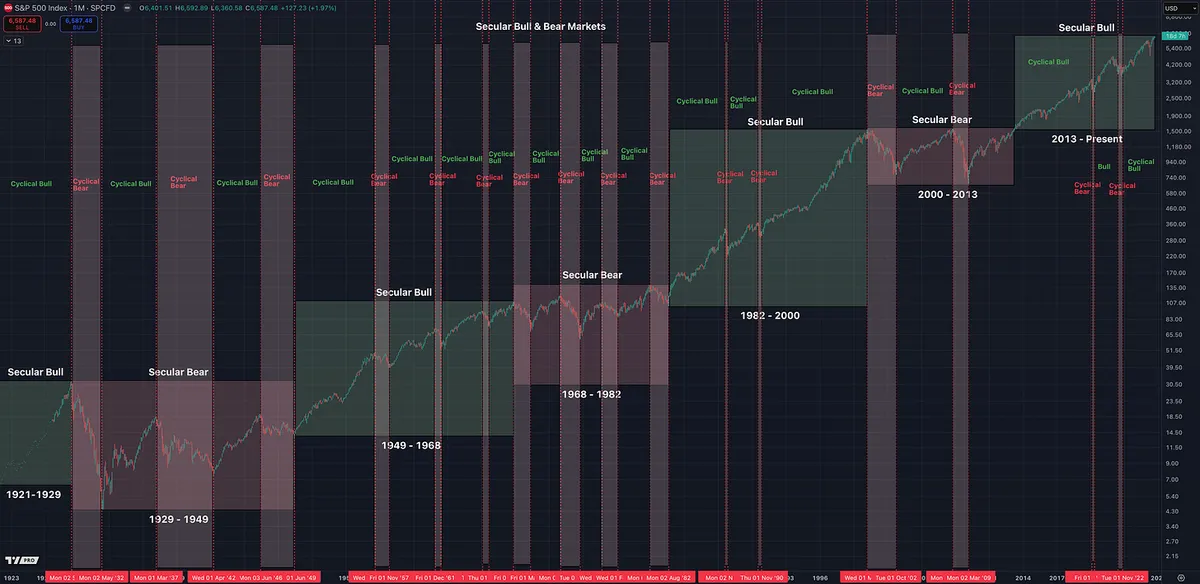
We are in a secular bull market and a cyclical bull market at the same time. It doesn’t get much better than this.

A lot of people who started trading over the last 15 or 20 years have never experienced a true secular bear market. Sure, they’ve lived through bear markets like 2020 and 2022, but those occurred inside a much larger secular bull cycle.

Eventually, that larger cycle will shift too.

I don’t say that to scare anyone. I say it because traders need to understand that markets move through cycles, and the conditions we’ve grown accustomed to will not last forever.

Study market history. Study bull markets. Study bear markets. Learn what changes when the larger cycle changes. And learn what normal, healthy market movement actually looks like.

Because if you think this is hard, eventually the market is going to show you what hard really looks like.

View on Substack ↗

What If Part of You Doesn’t Actually Want to Win?

This might be one of the most uncomfortable ideas in Market Wizards.

“Are you implying that some people actually want to lose on a subconscious level because it fulfills some other positive intention? How common is that?”

“Half the traders I work with have problems of this nature. I think it’s very common.”

—Dr. Van K. Tharp, Market Wizards

Tharp wasn’t saying traders consciously sit down and decide they want to lose.

He was describing internal conflict. You can consciously want to make money while another part of you wants excitement, wants to avoid failure, wants approval, wants to prove something, or is uncomfortable with the success you say you want. These competing motivations can operate subconsciously and create behaviors that sabotage your trading.

He gives the example of a trader who could consistently make about $75,000 a year, but whenever he became more successful, he would begin sabotaging himself. Tharp believed the trader had subconsciously associated greater success with becoming like his successful but alcoholic father. After working through that conflict, Tharp says the trader made $650,000 in roughly two months.

Think about how this might show up in trading.

You finally get momentum, then suddenly oversize. You abandon your rules after a winning streak. You turn a good trade into a gamble. You keep repeating a mistake you already know is a mistake.

Sometimes the next breakthrough isn’t another technical trading book.

Sometimes you need to figure out why you keep doing the things you already know you shouldn’t be doing.

View on Substack ↗

The Market Can Go Much Higher Than You Think. And Much Lower Than You Can Imagine.

One of the most important trading skills I’ve developed over the years did not come naturally to me.

I had to force myself to learn it.

In Market Wizards, Jack Schwager asked legendary trader Bruce Kovner what separated him from the average trader.

Kovner said one of his greatest strengths was his ability to “imagine configurations of the world different from today” and actually believe they could happen.

That sounds simple.

It isn’t.

Most investors are anchored to what just happened.

After a correction, they remember the losses, the bad headlines, the economic problems and all the reasons the market supposedly shouldn’t go higher.

Then the market starts turning.

A follow-through day appears. Price begins moving powerfully higher. Leading stocks start reclaiming moving averages and breaking out of bases.

But people hesitate.

“How can the market possibly go higher from here?”

Then it goes higher.

The exact opposite happens during major declines.

A stock falls 30%, and people say it can’t possibly fall another 30%.

The market drops 20%, and suddenly everyone is calling it cheap.

They keep trying to decide where the market should stop instead of watching what the market is actually doing.

Then it keeps falling.

One of the biggest changes in my trading came when I started forcing myself to accept a simple truth:

Anything is possible.

That does not mean predicting crazy outcomes.

It means refusing to mentally eliminate them.

If my process tells me the market is improving, price is confirming it, and quality stocks are setting up, I want to be able to pull the trigger even when the prevailing narrative tells me the market has no business going higher.

And when distribution starts piling up, leaders begin breaking down and price starts telling me something is wrong, I want to be able to reduce exposure even while everyone around me is still euphoric.

Kovner described great traders as independent, extremely contrary and disciplined enough to take appropriate position sizes.

That mindset is important because the market does not care what seems reasonable.

It does not care what economists think fair value should be.

It does not care how far something has already risen or fallen.

Your job is not to decide what the market is going to do.

Your job is to recognize what it is doing, manage your risk and execute your process.

The moment you truly accept that the market can go much farther than you think possible, you stop trying to impose your opinion on it.

And you start listening to it.

View on Substack ↗

The Best Trading Advice I Ever Got Sounds Completely Backwards

Assume every trade is going to be a loser.

That sounds pessimistic, but it’s not. It’s one of the best pieces of advice I’ve ever received in trading.

You find a stock that checks every box.

Big earnings growth. Big sales growth. Strong margins or return on equity. High relative strength. A beautiful cup with handle. Then price starts breaking out through the handle on heavy volume.

Everything looks perfect.

Buy it.

But still assume the trade will fail.

Why?

Because when you assume the trade could be a loser, you stop trying to predict what happens next and start focusing on what you can actually control.

Your process.

You size the position correctly. You define your risk. You know where you’re wrong before you enter. You don’t overbet because you’re convinced “this is the one.” You don’t pile on too much leverage because the setup looks perfect.

And if it fails?

You already planned for that.

If it works?

Great. Now you manage the winner.

The aim is to make sure no single trade matters enough to hurt you when you’re wrong.

Such a simple mindset shift.

But it had an enormous impact on my trading.

View on Substack ↗

The Best Traders Look Wrong All the Time

To every beginner who thinks they understand the market after making a few good calls, you probably do not know nearly as much as you think.

If the greatest traders showed you every trade, every idea, every market read, and every stop-out with 100% transparency, many of you would think they were terrible.

They are wrong far more often than most people realize.

Not just on individual trades, but on market direction, timing, themes, and ideas. Many are wrong more often than they are right.

The difference is that their systems already account for being wrong.

They remain successful because of their consistency, discipline, risk management, position sizing, and willingness to exit quickly when the market proves them wrong.

Mark Minervini recently shared that he was short the S&P 500. He was wrong, closed the position, and openly admitted it. That is not weakness. That is what professional trading looks like.

People also attack Michael Burry every time one of his calls is wrong, as though a single incorrect idea erases an entire career. I do not trade or invest the way he does, but I know traders who use similar asymmetric strategies and have been highly successful for decades with win rates near 20%.

They are wrong roughly 80% of the time and still produce exceptional returns because their losses are controlled while their winners can be enormous.

That is the point most beginners miss.

Your win rate means very little without understanding the size of your average win, the size of your average loss, and how consistently you execute your strategy.

Social media has trained people to judge traders by whether their latest opinion was correct. The market judges them by how they manage uncertainty across hundreds of decisions.

If your first reaction when a successful trader is wrong is to call them washed up, call them a fraud, or claim they have lost their edge, then you still do not understand how this game works.

You do not need to be right all the time.

You need to lose small when you are wrong, make significantly more when you are right, and repeat that process with discipline.

View on Substack ↗

Most Traders Don’t Have an Information Problem. They Have an Effort Problem.

“You can lead a horse to water, but you can’t make it drink.”

There has never been more trading information available.

Books. Courses. Screeners. Software. Podcasts. Interviews. Market history. Risk tools.

Yet most traders still refuse to do the work required to become consistently profitable.

They want the winning stock without learning how to find it.

They want confidence without preparation.

They want discipline without rules.

They want results without reviewing their trades, studying charts, understanding market conditions, mastering position sizing, or building a repeatable process.

I used to share stocks I was watching, entry levels, stop locations, and trade-management ideas. Many of those stocks went on to gain hundreds of percent.

But I eventually realized I wasn’t creating better traders.

I was creating dependence.

So I built a course to teach people how to find their own stocks. Then I built software to give them the tools to scan, analyze, manage risk, and review their performance.

But none of it matters if they refuse to use it.

The course cannot help you if you don’t take it.

The software cannot help you if you don’t learn it.

The rules cannot protect you if you keep breaking them.

This message isn’t for everyone.

It’s for the 1%.

Also, the 1% can be anybody.

Kristjan Kullamägi was a security guard before turning a few thousand dollars into more than $100 million.

Mark Minervini was broke and a junior-high school dropout before becoming one of the greatest stock traders of his generation.

The market doesn’t care where you came from.

It doesn’t care about your education, gender, religion, ethnicity, job title, or social status.

It cares about what you consistently bring to it:

Preparation. Discipline. Risk management. Emotional control. Relentless review.

The 1% isn’t a group you are born into.

It is a group you choose to join through your actions.

View on Substack ↗

The Skill That Separates Profitable Traders From Everyone Else

Most people think great traders are great winners.

They’re not.

They’re great losers.

That sounds backwards until you realize what actually destroys trading accounts.

It isn’t bad entries.

It isn’t bad indicators.

It isn’t even bad strategies.

It’s the inability to lose well.

The market doesn’t reward being right. It rewards managing being wrong.

The trader who refuses to take a 6% loss eventually takes a 30% loss.

The trader who keeps averaging down eventually blows up.

The trader who protects their ego instead of their capital eventually has neither.

The irony is that the better you become at accepting small losses, the bigger your winners become.

Why?

Because you’re no longer afraid.

You’re free to take the next setup.

You’re free to size up when conditions are favorable.

You’re free to let your winners compound because you know a loss isn’t a personal failure. It’s simply the cost of doing business.

Tom Hougaard built an entire book around this idea: Best Loser Wins. His central argument isn’t that great traders avoid losing. It’s that they lose differently. They accept losses without emotional attachment and without trying to “get even.”

The goal isn’t to become a better winner.

The goal is to become an elite loser.

Because in trading, the people who lose the best…

Win the most.

View on Substack ↗

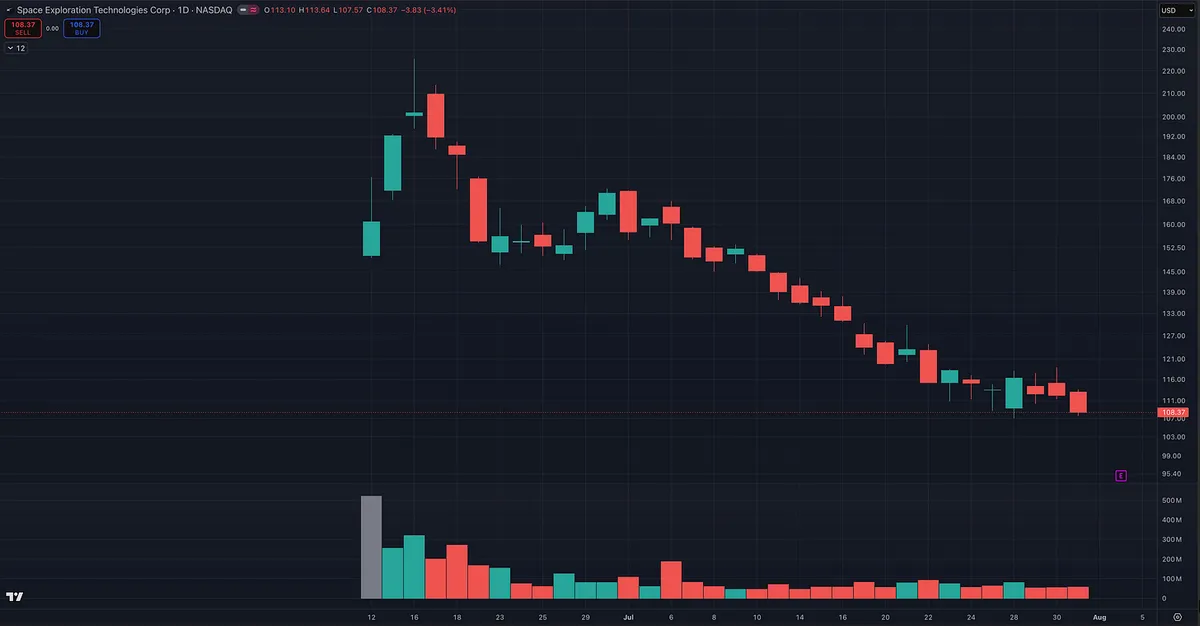
What Happened to All the SpaceX Buyers?

If you study market history, run even a basic backtest, or conduct any serious research, you quickly realize that blindly buying hype is usually a bad bet.

I may own SPCX one day. I think SpaceX could ultimately become an incredible public company.

But liking the company and liking the setup are two completely different things.

Buying a heavily hyped IPO straight out of the gate and simply holding it is not what I consider a low-risk, high-reward opportunity.

There is very little price history, no established base, and often no logical place to define your risk.

The better opportunity frequently comes later, after the initial excitement fades, price discovery takes place, and the stock has time to build a real base.

That entry could come six, twelve, or even eighteen months later at a lower price. Sometimes many years later.

It could also come at a higher price, after the stock has proven itself and offered a proper setup.

I do not need to own the first move.

I want the move that gives me the best combination of confirmation, defined risk, and potential reward.

But human nature will continue to repeat itself.

People will continue chasing hype, convincing themselves that this time is different, and laughing at experienced traders who warn them to be patient.

They will say the older traders do not understand the opportunity.

Then the market will teach the same lesson it has been teaching for more than a century.

Quoting Momentum Trading StrategyThe IPO Trap Most Traders Fall For A lot of people are getting excited about a potential SpaceX IPO. And I get it. Big company. Big story. Big hype. Lots of emotion. But this is where a lot of inexperienced investors get caught. They buy on day one with no game plan. No entry strategy. No risk plan. No understanding…
View on Substack ↗

You Do Not Have to Become a Market Wizard

The human mind is constantly searching for an excuse.

It wants the easy path. It will give you every reason why you cannot achieve superperformance in the market.

You do not have enough time.

You did not start early enough.

You are not smart enough.

The odds are too low.

But your mind rarely wants to confront the more uncomfortable possibility:

If other ordinary people learned how to do this, maybe you can too.

That does not mean it will be easy.

It will require sacrifice. It will take years of study, hard work, screen time, mistakes, review, and persistence.

But here is what I think many traders completely underestimate:

You do not need to become a legendary Market Wizard to dramatically change your life.

You may never produce the returns of Mark Minervini, William O’Neil, or the traders featured in the Market Wizards books.

That does not mean you cannot beat the market.

It does not mean you cannot make hundreds of thousands, or even millions of dollars, over a lifetime of disciplined trading and investing.

Saying there is no point in trading unless you become a Market Wizard is like saying there is no point in starting a business unless it becomes Facebook, Amazon, or Apple.

That is obviously ridiculous.

There are millions of successful business owners and millionaires whose names you will never know.

They did not build the next Amazon.

They simply built something profitable, stayed consistent, and created financial freedom for themselves and their families.

Trading is no different.

There are thousands of traders who studied the legendary traders I write about, adopted their principles, and made life-changing money.

Most of them will never appear in a book.

They will never be interviewed on television.

They will never become famous.

But they still won.

Your biggest obstacle may not be the market.

It may be your false perception of what is possible.

Limiting beliefs protect you from the discomfort of trying. If you convince yourself success is impossible, you never have to risk failing.

But you also guarantee that you will never discover what you were capable of becoming.

You do not have to become one of the greatest traders in history.

You only have to become far better than you are today.

That alone may be enough to change your life.

View on Substack ↗

The Moment You Think You’re Great, You’re in Trouble

“Don’t be a hero. Don’t have an ego. Always question yourself and your ability. The second you think you’re very good, you’re dead.”

- Paul Tudor Jones

One of the most dangerous moments in trading often comes after a string of wins.

Confidence quietly becomes ego, and it happens so subtly that you may not notice until it is too late. You lose respect for the market, stop listening to price, and begin loosening your rules because you believe you have become that good.

The market always finds a way to punish this. You may get away with it for a while, which only strengthens the ego and makes the eventual fall even worse.

But this is also what I love most about the market.

Eventually, if you survive long enough, you develop a healthy respect for it. You find the balance between having deep confidence in your system and enough humility to understand that anything can happen.

You can usually tell the difference between a newer trader who has not learned this lesson yet and an experienced trader who has.

The experienced trader may be confident.

But he never stops respecting the market.

View on Substack ↗

The Juice Isn't Always Worth the Squeeze

One of the biggest mistakes traders make is believing they always need to be trading.

Nothing works in every market environment all of the time. The key is recognizing what type of environment you're in and adapting accordingly.

Can you still find trades in difficult markets? Absolutely. There are almost always opportunities, and I've made money in environments like this before. But they're harder to find, there are fewer of them, and the probabilities are simply lower.

That's exactly why I spent this week in the Appalachian Mountains with my wife and four kids. Stepping away didn't hurt my portfolio one bit.

After a great few months, there was no reason to fight the market just to stay busy. That reminded me of an old saying:

The juice isn't always worth the squeeze.

If you took advantage of the favorable environment when the odds were in your favor, you don't need to force trades now.

Sometimes the highest-probability decision is to hold cash, protect your gains, and wait for the market to confirm a healthier environment with genuine leadership.

The market will still be there.

View on Substack ↗

Why Some Traders Panic During Market Pullbacks

If you are freaking out during market pullbacks, corrections, or bear markets, or constantly trying to force trades to work in those environments, it may be because you missed the market move when conditions were actually good.

I have written and talked about this several times.

The market climbs a wall of worry.

The best opportunities often appear while most people are still nervous, skeptical, or waiting for everything to feel safe.

By the time everyone finally starts getting bullish, the trend is often much closer to the end than the beginning.

If you participated in April and May into early June, you should not care much about what the market is doing right now.

You participated when conditions were favorable. Now you can protect your gains, reduce exposure, and patiently wait for the next proper opportunity.

As growth stock investors, we are trend followers.

We are not trying to buy the exact bottom, sell the exact top, or predict every market turn.

We are trying to capture the middle meat of the move, which is often the most profitable portion.

That may sound like we are simply following everyone else, but we are not.

Most people do not participate when they should.

They hesitate while conditions are improving, finally become confident after the move is obvious, and then begin forcing trades because they feel like they missed out.

The answer is not to chase harder.

Participate when conditions are favorable.

Protect your capital when they deteriorate.

Then remain patient until the market gives you another proper opportunity.