Momentum Trading Strategy

Notes

Lessons from Legendary Traders

Notes built around one named market figure's own words or story, such as O'Neil, Livermore, Minervini, Seykota, Druckenmiller, Tudor Jones or other Market Wizards.

Showing 141–160 of 263 notes

View on Substack ↗

Stay With the Trend Until It Ends

“The trend is your friend until the end when it bends.” Ed Seykota

This is where most traders get it wrong.

They assume a big move means it is over. They look for reasons to fade strength. They try to be early instead of aligned.

Seykota traded the opposite way.

Once a trend is established, the job is not to predict the end. It is to stay with it.

Strong trends often pause. They consolidate. They shake out weak hands.

That does not mean the move is finished.

The trend remains your friend until price proves otherwise.

Not until it feels extended. Not until it looks obvious. Only when it actually bends.

View on Substack ↗

Trading Is Not an IQ Test

Some of the most intelligent analysts in the world cannot make money trading their own analysis.

They understand the market. They see the logic. They know the fundamentals.

What they struggle with is execution.

In Market Wizards, Michael Marcus explained making more money trading someone else’s analysis than the analyst ever could themselves.

The knowledge was not the problem. Behavior was.

Trading does not reward intelligence alone. It rewards emotional control.

A trader can take partial knowledge and succeed. An analyst with superior knowledge can still fail.

The difference is discipline, risk control, and the ability to follow a system when things feel uncomfortable.

That is emotional intelligence.

View on Substack ↗

Follow the Leaders

“Follow the leaders.” Jesse Livermore

Livermore did not waste time on laggards.

He focused on stocks already proving themselves.

Leaders show strength first.

They attract demand first.

They move because demand is already there.

Weak stocks stay weak.

Cheap stocks stay cheap.

Hope does not change that.

Leadership is not a prediction. It is evidence.

Your job is to recognize it and align with it.

View on Substack ↗

Strength Looks Wrong to Most People

“What seems too high and risky to the majority generally goes higher, and what seems low and cheap generally goes lower.”

William J. O’Neil

This is where most traders get trapped.

They want bargains.

They want comfort.

They want to feel safe.

Strong stocks feel uncomfortable.

They look extended.

They feel late.

Weak stocks feel reasonable.

They look cheap.

They promise value.

O’Neil understood that price action tells the truth first.

Strength attracts more strength.

Weakness attracts more weakness.

That is why selection matters more than price.

“You want to buy the best merchandise in town.”

William J. O’Neil

Leadership is rarely cheap.

And cheap stocks are rarely leaders.

View on Substack ↗

Do Not Fight Direction

“The trend is your friend.”

Ed Seykota, Market Wizards

Most traders get hurt trying to be early.

They fade strength.

They buy weakness.

They look for the turn before it exists.

Seykota did not need to predict.

Direction was enough.

When price is moving in one direction,

that information matters more than opinions.

You do not need to catch the top.

You do not need to call the bottom.

You need to participate while the trend is intact

and step aside when it changes.

Do not fight the current.

Go with it.

View on Substack ↗

Know Your Exit First

“I know where I’m getting out before I get in.”

Bruce Kovner, Market Wizards

Most traders do the opposite.

They focus on the entry.

They imagine the upside.

They assume they will figure the rest out later.

Kovner knew that later is too late.

If you do not know where you are wrong,

you do not know how much you are risking.

And if you do not know how much you are risking,

the trade already controls you.

Professionals decide risk first.

Everything else is secondary.

That is how losses stay small

and decisions stay calm.

View on Substack ↗

Why Averaging Down Fails

“Losers average losers.”

Paul Tudor Jones, Market Wizards

This is how it actually happens.

You average down.

And you get away with it.

Then you do it again.

And again.

Most of the time there is no real reason.

You did not want to take the loss.

You thought your timing was off.

You saw a lower price and added.

And very often, it works.

You get out at breakeven.

Sometimes you even make money.

That success is the problem.

Because it teaches you that delaying the loss is acceptable.

So the behavior repeats.

Until one time it does not bounce.

The position is too big.

The loss is too deep.

At that point you are no longer managing risk.

You are managing damage.

That is how small losses turn into massive ones.

That is how accounts lose 80 percent.

That is how accounts get blown.

Not from one bad trade.

From getting away with the same mistake too many times.

The market eventually collects.

View on Substack ↗

Accept That Anything Can Happen

“Anything can happen.” -Mark Douglas

Most traders struggle because they secretly believe the market owes them certainty.

Douglas understood the opposite.

The moment you truly accept that anything can happen:

  • fear loses its grip

  • losses stop feeling personal

  • execution becomes calm

You stop trying to control outcomes

and start controlling risk and behavior.

That is where consistency begins.

Not in prediction.

In acceptance.

View on Substack ↗

“When a stock acts right, you don’t argue with it.”

-Jesse Livermore

Most traders argue with the market.

They explain why a strong stock should not be going up.

They justify holding weak ones because of fundamentals and opinions.

They argue that the market is wrong.

Livermore understood something simple and difficult.

Price is the final judge.

Strength is information.

Weakness is information.

Your job is not to debate it.

Your job is to respond correctly.

View on Substack ↗

“Buy the best merchandise available, not the poorest.” -William O’Neil

This single line explains why I am willing to buy stocks that look “overpriced.”

Most people are trained to look for cheap stocks. Low P/E. Big discounts. What feels safe.

The problem is that the market does not reward what feels safe.

The biggest winners are rarely cheap. They look expensive because they are growing fast, attracting capital, and already being accumulated by institutions.

Price is information.

Strong stocks trade at premium valuations because demand is overwhelming supply. That is not a warning sign. That is often the point.

Cheap stocks are usually cheap for a reason. Slowing growth. Weak demand. Broken trends. Hope instead of momentum.

I would rather pay up for strength than gamble on weakness.

Over time, the market pays you for owning the best merchandise, not the bargain bin.

That is how real leaders are built.

View on Substack ↗

A Hard Truth About Trading

“Win or lose, everybody gets what they want out of the market. Some people seem to like to lose, so they win by losing money.”

— Ed Seykota

This quote isn’t about intelligence or strategy. It’s about behavior.

Some traders say they want to make money, but their actions say otherwise. They ignore risk, refuse to cut losses, chase excitement, or need to be right more than they need to be profitable.

The market doesn’t reward opinions or ego. It rewards discipline, self-awareness, and the ability to do the boring things consistently.

If you’re losing money, it’s worth asking a hard question: Are your actions aligned with what you say you want from the market?

Because the market will always give you exactly what your behavior is designed to produce.

View on Substack ↗

The One Stock Filter Behind Almost Every Big Winner

“From the early 1950s through 2008, the average RS Rating of the best performing stocks before their major run ups was 87. In other words, the best stocks were already doing better than nearly nine out of ten others when they were starting out on their most explosive advance yet.” — William O’Neil

👉 Read the full post here: https://tradingmomentum.substack.com/p/why-relative-strength-is-the-fastest

ArticleWhy Relative Strength Is the Fastest Way to Find Big Winning Stocks
View on Substack ↗

Different Entry Methods I Learned in Minervini’s Master Trader Program

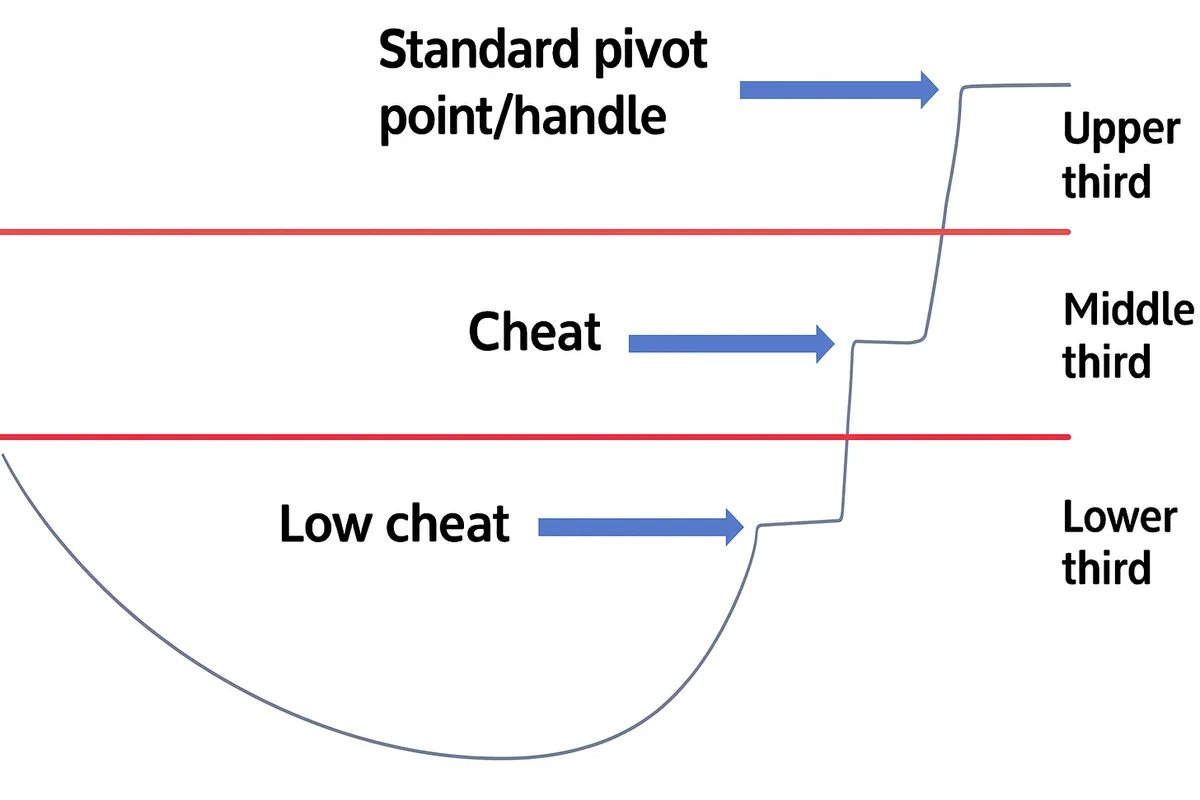
There isn’t just one way to buy a base.

Strong stocks often give multiple entry opportunities, each with a different risk profile.

Low cheat. Early entry near the lower third of the base. Highest failure rate, smallest dollar risk, biggest upside if it works.

Middle cheat. Entry as price tightens in the middle of the base. Better confirmation, still favorable risk to reward, often near moving average support.

Standard pivot or handle breakout. Upper third entry. Highest probability of follow through in the right market, but widest stop and most risk if it’s your first entry.

The key is not which entry is “best.”

The key is understanding how each one changes risk, position size, and trade management.

View on Substack ↗

Listen to William O’Neil and you hear the balance every trader needs.

He was confident and optimistic, yet deeply humble.

Conviction without arrogance.

Belief without disrespect for the market.

William O'Neil never argued with price. He listened to it. He accepted losses quickly. He stayed hopeful without becoming reckless.

That balance is rare.

Confidence keeps you showing up.

Humility keeps you alive.

Respect the market, and it offers opportunities.

Fight it, and it teaches painful lessons.

The best traders learn both at the same time.

View on Substack ↗

Lesson from Stanley Druckenmiller

Druckenmiller was often early in forming a view.

What he learned the hard way was NOT to fight the trend.

In 1999, he believed the market was topping. Valuations were extreme. The risks were obvious. He tried to short.

Price kept going higher.

He later explained that fighting the trend was the mistake. The market did not care about his logic, and staying aligned with price would have made far more money than trying to be right early.

The lesson was simple.

You can have an opinion. You can see excess building. But you cannot fight the tape.

Druckenmiller learned to wait for price to confirm before pressing a view.

View on Substack ↗

The Difference Between a Tip and a Professional Idea

“Few people ever make money by trading on the occasional tips or recommendations of others.” — Jesse Livermore

Livermore was not saying ideas are useless. He was warning people about how they use them.

There is a big difference between how experienced traders share ideas and how newer traders consume them. Professionals talk in themes, sectors, and names, but every trader still does their own work. They plan their own entry, define their own risk, and decide how to manage the trade with confidence. The idea is just a starting point, not an instruction.

Newer traders often do the opposite. They hear a name, feel urgency, and treat it like a signal. They buy because they trust someone else’s process more than their own. When the trade moves against them, they do not know where they are wrong, what to do next, or why they were in the trade to begin with.

That difference matters.

This is why I share watchlists, hot areas, sectors, themes, and sometimes individual stocks, but not as blind buy or sell signals. The intent is education. Sometimes someone mentions a stock I missed. I go do the homework. I build my own plan. Sometimes it aligns closely with how they are trading it. Sometimes it does not. Either way, the decision is mine.

As you gain experience, tips stop feeling like answers and start feeling like prompts. That is when they become useful. That is also what Livermore was warning people about over a century ago.

Signals are easy to give. Education is harder.

One creates dependency. The other builds confidence.

Learn to fish.

View on Substack ↗

Why Great Investors Buy at New Highs

In an old interview, William O’Neil talked about the people who had the biggest impact on his thinking.

One name stood out: Jack Dreyfus.

Dreyfus ran an extremely successful fund, and O’Neil had the opportunity to study his actual trades in detail.

What surprised him most?

When he reviewed the fund’s biggest winners, a clear pattern emerged.

The largest gains came from stocks that were purchased as they were breaking out from new highs.

This flies directly in the face of what most investors are taught.

Many people feel uncomfortable buying stocks at new highs or all-time highs. It feels risky. It feels late. It feels like you are chasing.

But O’Neil’s research showed the opposite.

When you are buying the right stocks, in the right market, strong breakouts to new highs are often where the biggest institutional moves begin.

New highs are not a reason to avoid a stock.

They are often the signal that something important is happening.

The market does not reward comfort. It rewards strength.

And historically, the strongest stocks tend to show that strength first… at new highs.

View on Substack ↗

What a Leading Trading Coach Learned About Top Traders

“Generally, I find that top traders believe:

• Money is not important

• It is OK to lose in the markets

• Trading is a game

• Mental rehearsal is important for success

• They’ve won the game before they start.”

— Van K. Tharp, Market Wizards

When money stops being the focus, risk stays controlled.

When losing is accepted, discipline improves.

When trading becomes a game, emotion loses its grip.

By the time a great trader places a trade, the hard work is already done.

Execution is simply the final step.

View on Substack ↗

10 Jesse Livermore Quotes That Still Run the Market

Markets change. Technology changes. Instruments change. Human behavior does not.

More than a century ago, Jesse Livermore distilled the market down to a handful of rules rooted in psychology, discipline, and price behavior. What is remarkable is not how old these ideas are, but how perfectly they still describe modern markets. If you study the great traders who came after him, the Market Wizards, you will find these same principles repeated again and again in different words. Different styles, same foundation.

  1. Markets vs opinions “Markets are never wrong, opinions often are.” Price is the final authority, not forecasts or beliefs.

  2. Cut losses immediately “Profits always take care of themselves, but losses never do.” This is the foundation of all real risk management.

  3. Never average down “Never average losses. Let that thought be written indelibly upon your mind.” Averaging down destroys capital and judgment.

  4. Wait for confirmation “Do not anticipate and move without market confirmation. Being a little late in your trade is your insurance that you are right.” Confirmation beats prediction every time.

  5. Big money is made by sitting “The real money made in speculating has been in commitments showing a profit right from the start.” Great trades work early and are held, not micromanaged.

  6. Let winners run “As long as a stock is acting right, and the market is right, do not be in a hurry to take a profit.” Most traders exit winners far too early.

  7. Speculation is a business “Anyone who is inclined to speculate should look at speculation as a business and treat it as such, not as a gamble.” Rules and process separate professionals from gamblers.

  8. Few opportunities matter “There are only a few times a year when you should allow yourself to make a commitment at all.” Overtrading destroys edge.

  9. Follow leaders, not laggards “If you cannot make money out of the leading active issues, you are not going to make money out of the stock market.” Leadership is where real money flows.

  10. Patience is the edge “It was never my thinking that made the big money for me. It was my sitting.” Patience compounds returns.

These ten rules quietly sit beneath nearly every successful trading approach that followed. You will hear them echoed by trend followers, growth investors, macro traders, and discretionary operators alike. The language changes, the charts change, but the principles remain untouched. Markets still reward discipline, patience, and alignment with price.

Ignore these rules and the market will eventually teach them to you the expensive way. Internalize them, and you begin to see price differently. Not as noise, but as information.

Markets reward patience, regardless of timeframe.