Momentum Trading Strategy

Notes

Lessons from Legendary Traders

Notes built around one named market figure's own words or story, such as O'Neil, Livermore, Minervini, Seykota, Druckenmiller, Tudor Jones or other Market Wizards.

Showing 41–60 of 263 notes

View on Substack ↗

Mark Minervini’s Brutally Honest Formula for Success

think this is one of the best pieces of advice Minervini has ever shared because it addresses the biggest obstacle most traders face: their ego.

Yes, Minervini built on William O’Neil’s foundation, and many of the core principles are very similar. But this mindset advice stands on its own:

“I think it’s time to repeat my personal formula for success;

  1. Admit you suck.

  2. Believe you can be great.

  3. Find someone great.

  4. Shut up and listen.” -Mark Minervini

There is a lot of wisdom packed into those four lines.

1. Admit you suck. Not because you’re incapable, but because honest self-assessment is where improvement begins. If you think you already know enough, you’ve stopped learning.

2. Believe you can be great. Humility without confidence leads to quitting. Confidence without humility leads to arrogance. You need both.

3. Find someone great. Success leaves clues. There is no reason to reinvent what already works. O’Neil learned from earlier market operators. Minervini learned from O’Neil. David Ryan learned from O’Neil. The greatest traders almost always stand on someone else’s shoulders before developing their own style.

4. Shut up and listen. This is the step many people skip. They want to debate every rule, modify every technique, and create their own system before they’ve ever mastered one that has already been proven.

The irony is that the traders who eventually develop unique approaches are often the very ones who first spent years following someone else’s proven methodology with discipline. They earned the right to innovate because they first learned what actually works.

That lesson is as valuable today as it was when O’Neil first started teaching CAN SLIM.
View on Substack ↗

The Moment You Think You’re Great, You’re in Trouble

“Don’t be a hero. Don’t have an ego. Always question yourself and your ability. The second you think you’re very good, you’re dead.”

- Paul Tudor Jones

One of the most dangerous moments in trading often comes after a string of wins.

Confidence quietly becomes ego, and it happens so subtly that you may not notice until it is too late. You lose respect for the market, stop listening to price, and begin loosening your rules because you believe you have become that good.

The market always finds a way to punish this. You may get away with it for a while, which only strengthens the ego and makes the eventual fall even worse.

But this is also what I love most about the market.

Eventually, if you survive long enough, you develop a healthy respect for it. You find the balance between having deep confidence in your system and enough humility to understand that anything can happen.

You can usually tell the difference between a newer trader who has not learned this lesson yet and an experienced trader who has.

The experienced trader may be confident.

But he never stops respecting the market.

View on Substack ↗

I Read the New Market Wizards Book Days After It Came Out. The Most Important Lesson Was That There Was Nothing New.

I read the newest Market Wizards book within a few days of its release.

I loved it, just like I loved the earlier books.

But honestly, I did not learn a single major lesson that I had not already learned from the older ones.

Does that mean reading it was a waste of time?

Not at all.

We do not stop working out once we get in shape. We keep training to maintain it.

We do not master a craft once and then walk away from it. We keep practicing, reviewing, and sharpening the same core skills.

Trading is no different.

Some books are not valuable because they introduce a brand-new idea. They are valuable because they reinforce the truths that matter most.

That is how I viewed the newest Market Wizards book.

The fact that it did not contain some revolutionary new secret was actually the biggest takeaway.

It showed, once again, that the most important market principles do not change. Risk management, discipline, patience, adaptability, emotional control, and protecting capital continue to be passed down from one generation of great traders to the next.

Many of today’s Market Wizards grew up reading the original Market Wizards books themselves.

Now they are repeating many of the same lessons in their own words, through their own experiences.

That is not a weakness.

That is confirmation.

The market changes. The participants change. The technology changes.

But the core truths of successful trading remain remarkably consistent.

Sometimes the most important thing a new book can teach you is that the old lessons are still the right ones.

View on Substack ↗

Everyone Tells You to Diversify. Buffett, Druckenmiller, and O’Neil Said the Opposite.

Many investors believe strongly in diversification and do not understand why I prefer to concentrate my capital in a select few names, ideally the strongest market leaders.

But I did not come up with this idea out of nowhere.

Some of the most respected investors and traders in history have expressed the same belief. Maybe these three quotes explain it better than I can.

Stan Druckenmiller said:

“Put all your eggs in one basket and watch the basket carefully.”

William O’Neil said:

“Diversification is a hedge for ignorance. I think you are much better off owning a few stocks and knowing a great deal about them. By being very selective, you increase your chances of picking superior performers. You can also watch those stocks much more carefully, which is important in controlling risk.”

Warren Buffett said:

“Diversification is protection against ignorance. It makes little sense if you know what you are doing.”

Concentration does not mean blindly putting everything into one stock and hoping for the best.

It means being highly selective, knowing what you own, understanding why you own it, controlling your risk, and allocating more capital to your best ideas instead of spreading it across dozens of mediocre ones.

Diversification may reduce the damage caused by being wrong, but excessive diversification can also dilute the rewards of being right.

I would rather closely follow a small number of exceptional market leaders than own a large collection of mediocre stocks I barely understand.

View on Substack ↗

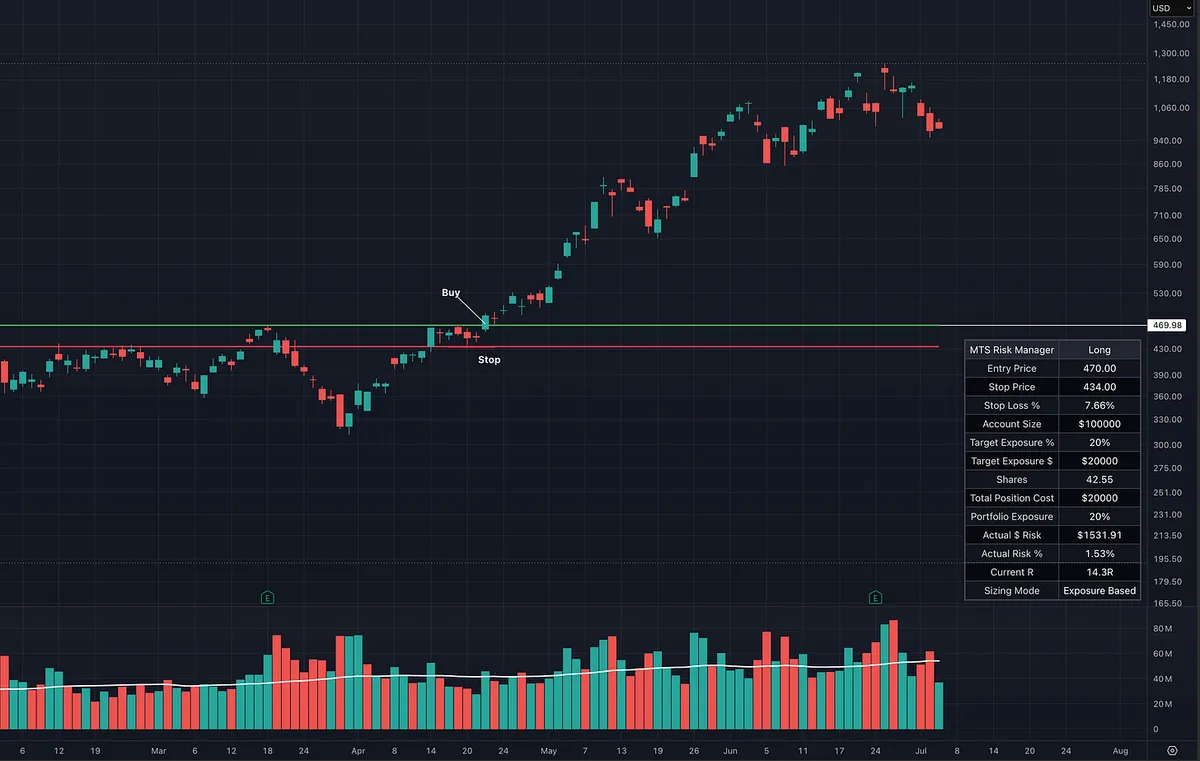
Position Size Like a Market Wizard

Using Bruce Kovner’s stop-loss principle to plan the trade before the trade begins.

“Whenever I enter a position, I have a predetermined stop. That is the only way I can sleep. I know where I’m getting out before I get in. The position size on a trade is determined by the stop, and the stop is determined on a technical basis.” - Bruce Kovner

Watch the video on Substack →
View on Substack ↗

The Market Wizard Rule Most Traders Ignore

One of the biggest lessons from Market Wizards is that great traders do not enter positions casually. They know where they are wrong before they ever get in. Bruce Kovner explained this perfectly when he said:

“Whenever I enter a position, I have a predetermined stop. That is the only way I can sleep. I know where I’m getting out before I get in. The position size on a trade is determined by the stop, and the stop is determined on a technical basis.”

- Bruce Kovner

View on Substack ↗

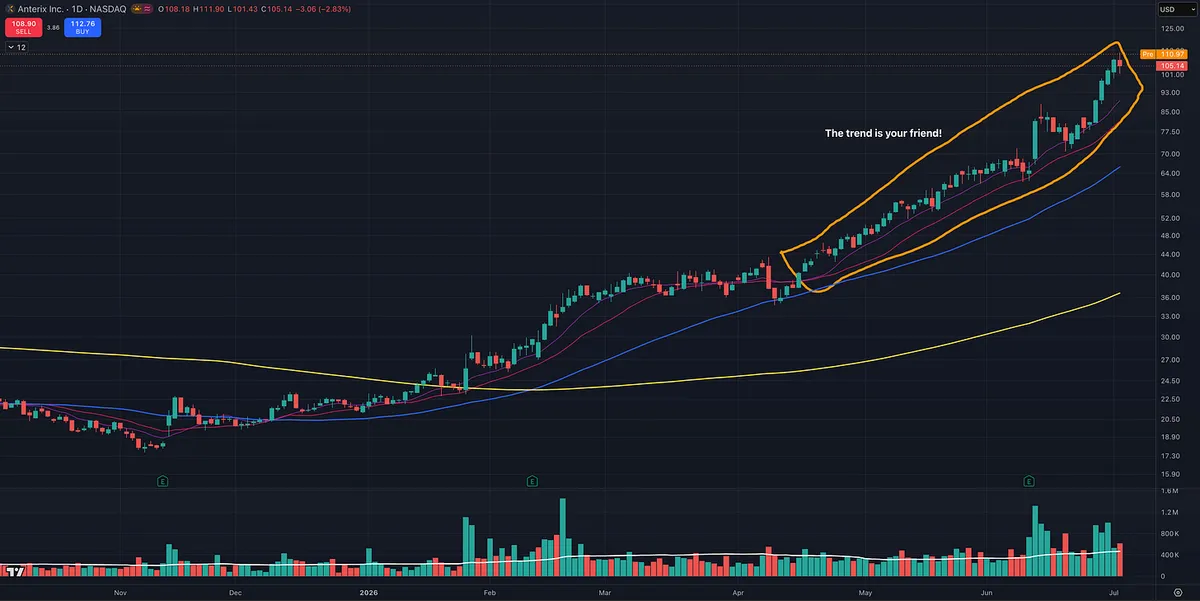
The Trend Is Your Friend Until It Ends

“The trend is your friend except at the end where it bends.”

-Ed Seykota

One of the hardest parts of trading is not finding a stock in an uptrend.

It is staying with it long enough to let the trend work.

This is where moving averages can help.

When the shorter-term moving averages are layered above the longer-term moving averages, and they are all pointing higher, you usually have a clean, orderly trend.

That helps keep you from overreacting to every small pullback.

Do you need moving averages to see this?

Of course not.

Tight price action, consistent higher highs, higher lows, and controlled pullbacks can tell the same story.

But moving averages give you a visual guide.

They help you stay with strength while the trend is intact.

And they help warn you when the character starts to change.

We do not need to predict the exact top.

We just ride the trend while it is healthy, then recognize when the stock stops acting right.

The trend is your friend.

Until it bends.

View on Substack ↗

William O’Neil: Stop Owning Stocks You Barely Understand

“Diversification is a hedge for ignorance. I think you are much better off owning a few stocks and knowing a great deal about them. By being very selective, you increase your chances of picking superior performers. You can also watch those stocks much more carefully, which is important in controlling risk.”

-William O’Neil

Most traders think owning more stocks lowers risk.

But often, it just lowers focus.

The more stocks you own, the less you know about each one.

You stop paying close attention.

You react slower.

You miss the subtle changes in price, volume, and leadership.

The goal is not to own everything.

The goal is to own the right merchandise.

That does not mean you always know the winner in advance.

Sometimes several stocks meet your criteria at the same time.

That is okay.

You let the market sort them out.

Cut the ones that break down.

Reduce or cut the ones that do nothing.

Hold and add to the ones proving themselves.

That is how a focused portfolio is built.

Not by guessing.

Not by owning everything.

By finding leadership, letting winners earn more capital, and managing risk with discipline.

This is one of the core principles behind the Momentum Trading Strategy Course and our Relative Strength Stock Screener.

The big money is rarely made by owning everything.

It is made by owning the right stocks.

View on Substack ↗

The Paul Tudor Jones Risk Rule Every Trader Should Know

“Decrease your trading volume when you are trading poorly; increase your volume when you are trading well.”

-Paul Tudor Jones

Most traders do the exact opposite.

They trade bigger after losses because they want to make the money back.

Then, when they finally get in sync with the market, they reduce their size, trade frequency, and cut winners because they are afraid to lose profits.

That is backward.

The best traders trade their smallest when they are trading poorly and their largest when they are trading their best.

Mark Minervini teaches the same principle. When you are in an abnormal losing streak, scale down your exposure. Do not try to trade bigger to make it back fast. Cut your size, protect your capital, and only pyramid back up when your trading plan starts working again.

This is what Minervini calls Progressive Exposure.

Build on success.

Subtract on setbacks.

Let your results tell you when to press and when to pull back.

This is one of the core risk management principles we teach in Module 6 of the Momentum Trading Strategy Course, available for all paid subscribers.

The market does not reward constant aggression.

It rewards disciplined aggression.

View on Substack ↗

M = Market Direction

“If you’re wrong about the direction of the general market, and

that direction is down, three out of four of your stocks will plummet along

with the market averages, and you will certainly lose money big time, as

many people did in 2000 and again in 2008.” -William O’Neil

View on Substack ↗

Risk/Reward Changes With Every Candle

Paul Tudor Jones said:

“I can always tell a rookie trader because he will ask me, “Are you short or long?” Whether I am long or short should have no bearing on his market opinion. Next he will ask (assuming I have told him I am long), “Where are you long from?” Who cares where I am long from? That has no relevance to whether the market environment is bullish or bearish right now, or to the risk/reward balance of a long position at that moment.” -Paul Tudor Jones

That is one of the most important lessons in trade management.

The market does not care where you got in.

Your original entry does not determine whether the trade is still good today.

What matters is the current evidence.

  • Is the market still acting right?

  • Is the stock still acting right?

  • Has the setup matured?

  • Has the risk/reward changed?

Too many traders anchor to their entry price, their original thesis, or someone else’s position.

But the only question that matters is whether the trade still makes sense right now.

Not yesterday.

Not at your entry.

Right now.

View on Substack ↗

The Talent Has Them

Ed Seykota once said:

“Good traders have a special talent for trading just as good musicians and good athletes have talents for their fields. Great traders are ones who are absorbed by the talent. They don’t have the talent, the talent has them.”

That is the difference.

Good traders may have skill.

Great traders are consumed by the craft.

They study it.

They live it.

They think about markets when nobody is watching.

They review mistakes most people would rather forget.

They are not casually interested in trading.

They are absorbed by it.

And that is why they keep improving long after most people quit.

View on Substack ↗

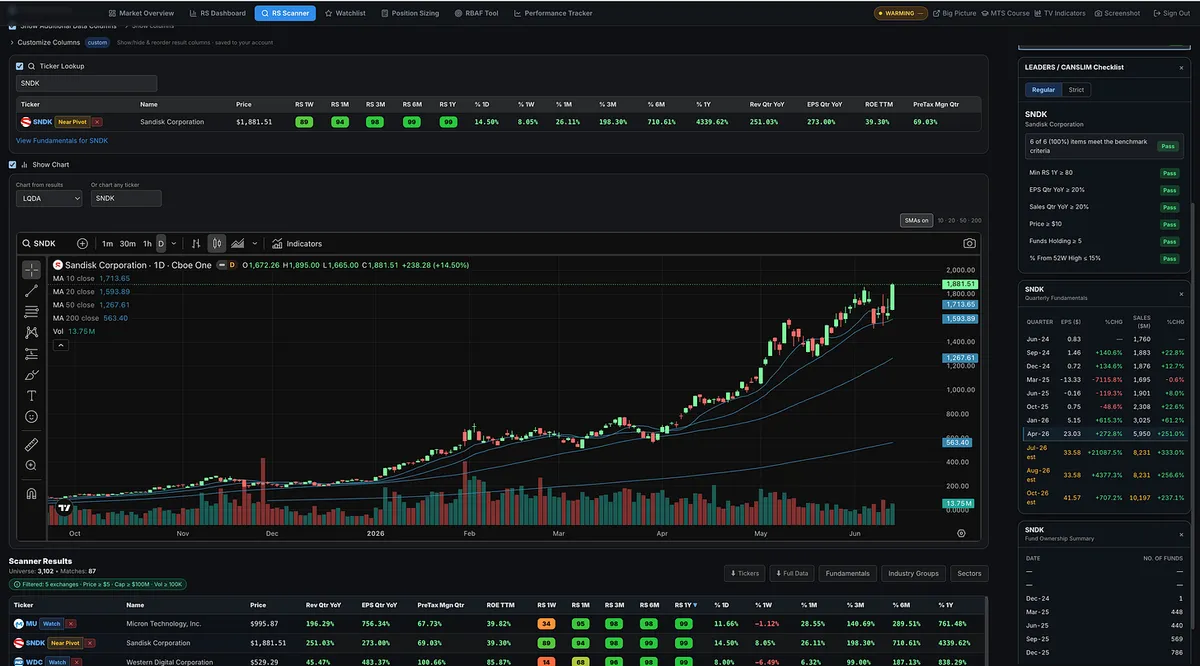
SNDK Is Showing the Kind of Relative Strength Marty Schwartz Looked For

SNDK is doing something serious traders pay attention to.

It is making new highs while the broader market is not.

This is the type of relative strength Marty Schwartz looked for. Stocks that can push into new high ground when the market itself is not making new highs are often giving you an important clue.

This is just one of many golden nuggets Marty Schwartz shared in his book Pit Bull, and we wrote about several of them in this article:

https://substack.com/@tradingmomentum/p-201342828

ArticleHow Marty “Pit Bull” Schwartz Turned $40K Into $20M Without Big Drawdowns
View on Substack ↗

When You’re in a Slump, Stop Trying to Hit Home Runs

Market Wizard Victor Sperandeo gave one of the best answers I’ve heard on how to deal with a losing streak.

When Jack Schwager asked him how he gets back into trading, Sperandeo compared it to Ty Cobb.

“Ty Cobb once was asked why he never had slumps. He said that whenever he felt himself getting into a slump, he wouldn’t try to get a hit, but he would simply try to make contact with the ball. To relate that concept to trading, when you’re in a slump, try to be patient and wait for a trade that you feel very confident about and keep the bet size small. Your goal should not be to make lots of money but rather to get your confidence back by making correct decisions.” -Victor Sperandeo