Momentum Trading Strategy

Notes

Lessons from Legendary Traders

Notes built around one named market figure's own words or story, such as O'Neil, Livermore, Minervini, Seykota, Druckenmiller, Tudor Jones or other Market Wizards.

Showing 201–220 of 263 notes

View on Substack ↗

High Win Rates Are a Red Flag

One thing that always stood out to me from reading the Market Wizards books is that most of the traders interviewed did not have high win rates. The same is true when you study the best momentum, swing, and position traders today.

High win rates are not common among the best performers.

The traders who succeed over decades aren’t winning most of the time. They’re winning big when they’re right and keeping losses small when they’re wrong. That asymmetry is what drives long-term success, not an impressive-looking percentage.

Yet many of these traders made extraordinary amounts of money.

Why? Because they focused on asymmetry, not accuracy.

When someone leads with a 75% or 80% win rate, my first reaction isn’t admiration. It’s caution. High win rates often hide small profit targets, excessive risk, or strategies that break down when market conditions change or when less experienced traders try to replicate them.

The best traders aren’t obsessed with being right. They focus on finding low-risk, high-reward opportunities that produce positive expectancy over time. They cut losses quickly and let winners run.

Most operate with win rates around 30 to 45 percent, and in strong market environments maybe 50 to 65 percent at best.

They accept frequent small losses, wait patiently, and press hard only when the odds are clearly in their favor.

That mindset, more than any indicator or system, is what keeps them in the game long term.
View on Substack ↗

Confidence Without Arrogance

“You are never really confident in this business, because you can always be wiped out pretty quickly. The way I trade is: live by the sword, die by the sword. There is always the potential that I could get caught with a big position in a fluke move. On the other hand, there is no doubt in my mind that I could walk into any market in the world and make money.” — Tom Baldwin, Market Wizards

This quote captures one of the hardest balances in trading.

You need real confidence in your ability. The kind that comes from experience, repetition, and surviving different market environments.

At the same time, you must respect risk. Markets can turn fast. No amount of skill makes you immune to bad luck, sudden volatility, or structural shocks.

The best traders understand both sides.

They trust their edge, but they never assume they are invincible. They size positions with humility. They stay aggressive only when conditions allow it.

That balance between confidence and restraint is what keeps traders in the game long enough to actually win.

View on Substack ↗

The Mindset That Kept Marty Schwartz Winning

One of the greatest traders of all time had a rule that sounds simple but is incredibly hard to live by.

“Every year, I start off poor.” — Marty Schwartz

He didn’t mean broke. He meant mentally reset.

Schwartz understood that past profits are dangerous. They create confidence. Confidence turns into comfort. And comfort leads to mistakes.

So he treated every new year as a reset.

Not because his account went to zero, but because he refused to assume his edge would automatically carry forward.

When things were working, he pressed. When they stopped working, he cut back immediately.

After strong winning periods, he reduced size on purpose. Not because he lost conviction, but because he knew success can distort judgment.

He never assumed yesterday’s edge would work tomorrow.

That’s the difference.

Most traders don’t fail because they lack skill. They fail because they stop respecting the conditions that made them profitable.

As a new year approaches, it’s worth asking:

If you had to start again from your original account size, could you still grow it?

That question alone can change how you trade.

View on Substack ↗

The One Line That Changed How I See the Market

There is a line in Market Wizards that completely reshaped how I think about stocks.

William O’Neil studied the investors who were consistently making real money. Not one or two lucky trades, but sustained, repeatable success. He went back and examined the actual stocks these investors were buying and laid them all out in front of him.

Then he noticed something that surprised him.

Not some.

Not most.

Every single stock had been bought when it was making a new high.

That realization changed everything.

These were not cheap stocks.

They were not beaten down.

They were not “value plays” waiting to be discovered.

They were already moving higher.

The biggest winners were showing strength before the crowd believed in them. They were being accumulated while most people were still waiting for a pullback that never came.

This completely flipped the traditional way of thinking.

Instead of asking, “How low can this go?”

The better question became, “Is this stock proving itself right now?”

That insight became the foundation of what later evolved into CAN SLIM and the idea that price itself contains information. Not opinion. Not forecasts. Not stories. Actual demand.

The market speaks through price.

And when a stock pushes into new highs, it is not a warning sign.

It is evidence.

Evidence that institutions are stepping in.

Evidence that supply is being absorbed.

Evidence that something important is happening beneath the surface.

The hardest part is psychological. Buying strength feels uncomfortable. It feels late. It feels wrong. But history shows that the biggest winners rarely look cheap at the moment that matters most.

That lesson hasn’t changed.

The market still rewards strength.

View on Substack ↗

Larry Hite on Risk and Volatility

Larry Hite once shared a lesson from Ed Seykota that perfectly captures the reality of risk management:

“You can risk 1 percent of your capital, you can risk 5 percent, or you can risk 10 percent. But the more you risk, the more volatile your results will be.”

It’s a simple truth many traders overlook. Higher risk doesn’t just increase potential returns. It magnifies drawdowns.

Position sizing isn’t about being conservative. It’s about staying in the game long enough for your edge to actually play out.

View on Substack ↗

Gary Bielfeldt on Trading Like a Poker Pro

Gary Bielfeldt, a Market Wizard, often said that his edge in the markets came from understanding probabilities long before he ever traded a stock. He learned it at the poker table.

In poker, you don’t play every hand. You fold most of them. You only commit real money when the odds are stacked in your favor. And when they are, you press your advantage.

Trading is no different.

Most people lose because they feel compelled to always be in the market. They trade out of boredom, emotion, or the fear of missing out. Professionals wait. They pass on mediocre setups. They conserve capital. They understand that not losing is just as important as winning.

When the odds are clearly in their favor, they act decisively. Position size increases. Conviction rises. But when the trade doesn’t look right, they step aside without hesitation. No ego. No revenge trading. Just discipline.

The lesson is simple:

• Don’t play every hand.

• Protect your capital.

• Be patient.

• Press hard only when the probabilities are clearly on your side.

That mindset, not indicators or predictions, is what separates consistent traders from gamblers.

View on Substack ↗

Many ask how I trade differently between my day trading account and my swing/position account.

This is the cleanest explanation I’ve found, from Market Wizards, quoting Mark Weinstein.

Swing & Position Trading

“Although the cheetah is the fastest animal in the world and can catch any animal on the plains, it will wait until it is absolutely sure it can catch its prey. It may hide in the bush for a week, waiting for just the right moment. It will wait for a baby antelope, and not just any baby antelope, but preferably one that is also sick or lame. Only then, when there is no chance it can lose its prey, does it attack. That, to me, is the epitome of professional trading.”

That’s how I treat swing and position trades.

Extreme selectivity. Patience. Waiting for the right setup under the right conditions.

Fewer trades. Higher conviction. Asymmetric payoff.

I’m looking to trade the best CANSLIM names only: big earnings, big sales, top industry groups, clear institutional accumulation, and high relative strength.

Day Trading

“When I trade at home, I often watch the sparrows in my garden. When I feed them bread, they take just a little piece at a time and fly away. They keep on flying back and forth, taking small bits of bread. They may have to make a hundred stabs at a piece of bread to get what a pigeon gets at one time, but that is why a pigeon is a pigeon. You will never be able to shoot a sparrow, it is just too fast. That is the way I day trade.”

Day trading is different.

Quick profits. Raise stops. Leave a portion to run. Repeat.

I’m still trading momentum, but the focus shifts to stocks in play: news catalysts, earnings, new highs, gaps, heavy volume, and high RVOL. Speed and execution matter more than perfection.

Different timeframes. Different filters. Same discipline.

View on Substack ↗

“Some of the best trades come when everyone gets very panicky. The crowd can often act very stupidly in the markets. You can picture price fluctuations around an equilibrium level as a rubber band being stretched. If it gets pulled too far, eventually it will snap back. As a short-term trader, I try to wait until the rubber band is stretched to its extreme point.”— Linda Bradford Raschke, The New Market Wizards

View on Substack ↗

“Learn to take losses. The most important thing in making money is not letting them get out of hand. And don’t increase your position size until you’ve doubled or tripled your capital. Most people make the mistake of betting bigger as soon as they start making money. That’s a quick way to get wiped out.”— Marty Schwartz, Market Wizards

View on Substack ↗

“Human nature never changes. Therefore, the stock market never changes. Only the faces, the pockets, the suckers, the manipulators, the wars, the disasters, and the technologies change. The market itself never changes. How can it? Human nature never changes, and human nature runs the market — not reason, not economics, and certainly not logic. It is our human emotions that drive the market, as they do most other things on this planet.”

— Jesse Livermore: World’s Greatest Stock Trader by Richard Smitten

View on Substack ↗

REMINDER: “Don’t fight the Fed” – Marty Zweig

The One Rule Almost Every Market Wizard Agreed On

There is a reason the large majority of Market Wizards subscribed to Marty Zweig’s newsletter. Zweig wasn’t just another voice on Wall Street. He was the one who gave the world a simple rule that explained entire market cycles:

Don’t fight the Fed.

The best traders in the world built this into their process. When liquidity was flowing and rates were moving lower, they pressed. When the Fed was tightening and raising rates, they pulled back.

The Wizards didn’t obsess over predictions. They watched the tape, respected monetary conditions, and aligned themselves with the primary trend.

And that one rule still works today.

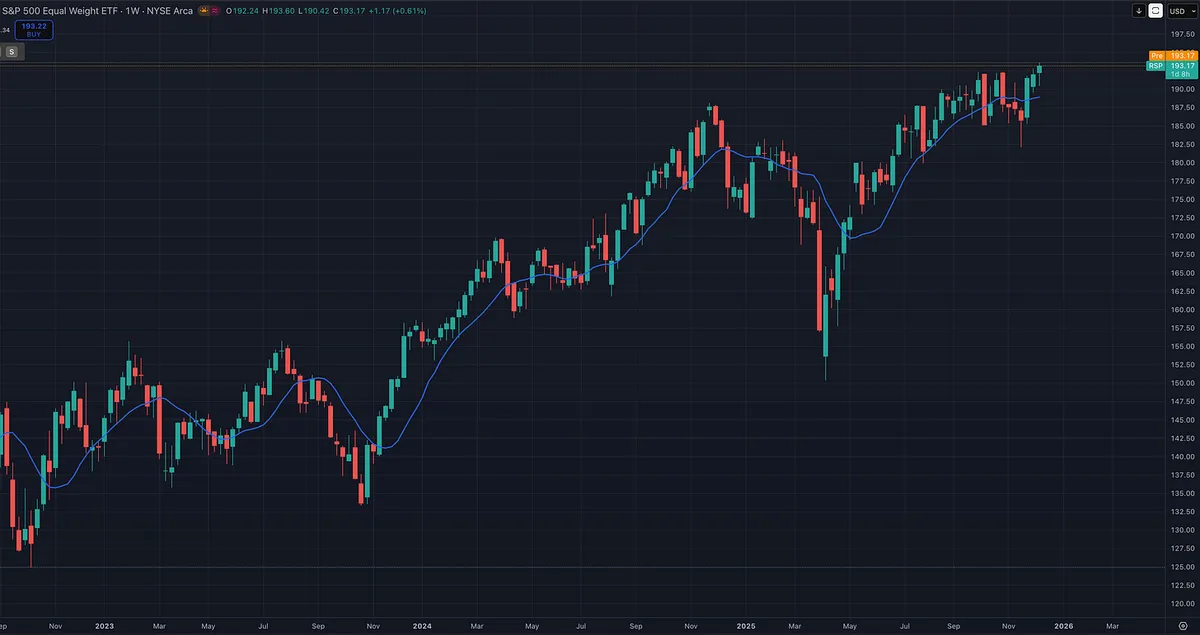
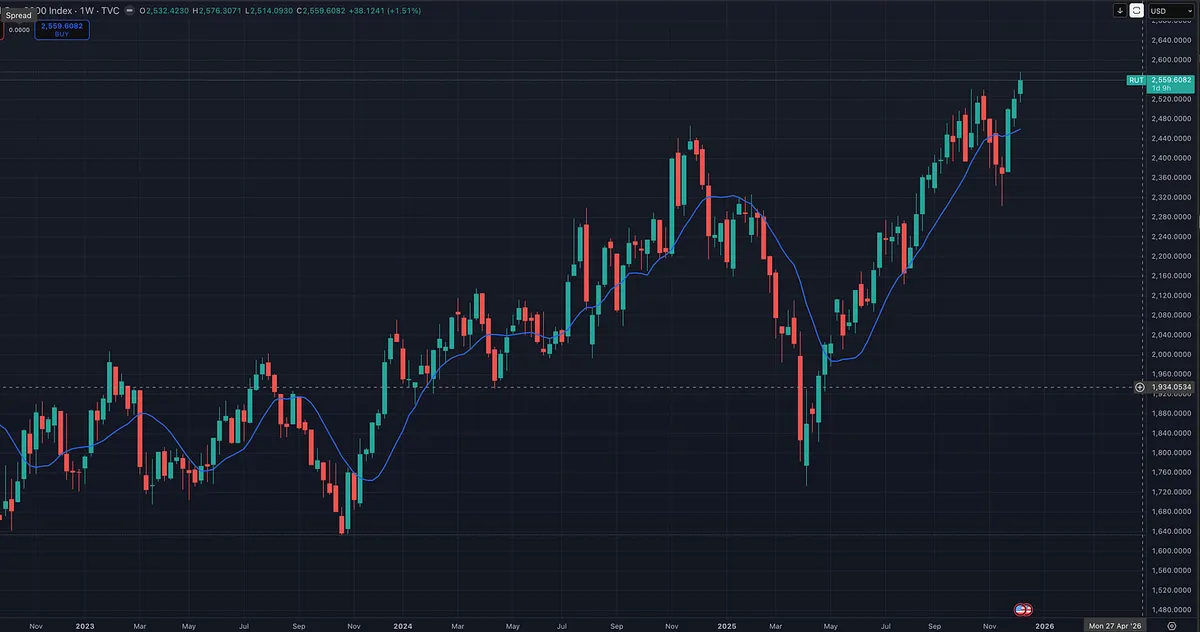
The Russell 2000 is at all-time highs. The Equal Weight S&P 500 is at all-time highs. Every major index is closing in.

While negative media gets more views, the same is true for bearish commentary on social media. That constant doom cycle has caused countless people to miss one of the strongest bull markets happening right in front of them.

Start listening to the market, not the commentators. The tape tells the truth.

View on Substack ↗

“I Rarely Pay Any Attention to Overbought/Oversold Indicators.” William O’Neil

Most traders hesitate when a stock looks “overbought.” O’Neil built his entire career on doing the opposite.

After studying more than 100 years of the greatest market winners, he realized something almost nobody wants to accept:

The biggest leaders spend most of their advances looking overbought. They break out to new highs while RSI is elevated. They stay extended for weeks or months. They never give you the oversold dip everyone waits for.

If you use overbought or oversold indicators to time CANSLIM type stocks such as big earnings, big sales, high relative strength, and leading sectors, you will almost always talk yourself out of the best trades.

These stocks run because institutions are accumulating them, not because RSI is comfortable.

The truth:If you wait for strong stocks to look not overbought, you will never own a true market leader.

This is why momentum traders like Darvas, O’Neil, Minervini, and Zanger focus on strength, not comfort.

Strong stocks tend to stay strong. Weak stocks tend to stay weak.

Everything else is noise.

View on Substack ↗

Paul Tudor Jones and the Psychology You Need to Win

Trading is similar to competitive sports in that it requires a strange mix of confidence and humility.

You need confidence to take risk, pull the trigger, and believe you can win.

You need humility to respect the market, cut losses fast, and stay a student.

Confidence moves you forward.

Humility keeps you alive.

Treat competition like it matters, but never let ego run the show.

Care enough to improve, but not so much that it controls you.

You can see this balance clearly in the 1980s Paul Tudor Jones documentary. He shows real humility toward the market, a constant fear of being wrong, and deep respect for risk. At the same time he has total confidence, a fierce competitive spirit, and the belief that he can win. That combination is what makes him dangerous.

The best traders believe they can do anything another person can do.

They also know they are not special yet and still have a lot to learn.

Hold both truths at once.

That balance builds a dangerous trader.

https://youtu.be/0Fsa4sOJwh4?si=QvZFV7rfo-QZSrgr

youtube.com- YouTube
View on Substack ↗

Stop Obsessing Over Your Entry Price. Paul Tudor Jones Shows Why.

Most people never break out of thinking about trades in terms of their entry price. Pros think in terms of conditions, risk, and what the market is doing right now. Paul Tudor Jones explained it perfectly in Market Wizards.

Here is one of the most important trading quotes you will ever read:

“Don’t be too concerned about where you got into a position. The only relevant question is whether you are bullish or bearish on the position that day. Always think of your entry point as last night’s close. I can always tell a rookie trader because he will ask me, “Are you short or long?” Whether I am long or short should have no bearing on his market opinion. Next he will ask (assuming I have told him I am long), “Where are you long from?” Who cares where I am long from? That has no relevance to whether the market environment is bullish or bearish right now, or to the risk/reward balance of a long position at that moment.” -Paul Tudor Jones