
Trading articles/Why Your Win Rate Is Lying to You
Feb 19, 2026 · Momentum Trading Strategy
Why Your Win Rate Is Lying to You
The uncomfortable truth about risk management, drawdowns, and why expectancy matters more than being right
Originally published on Substack.
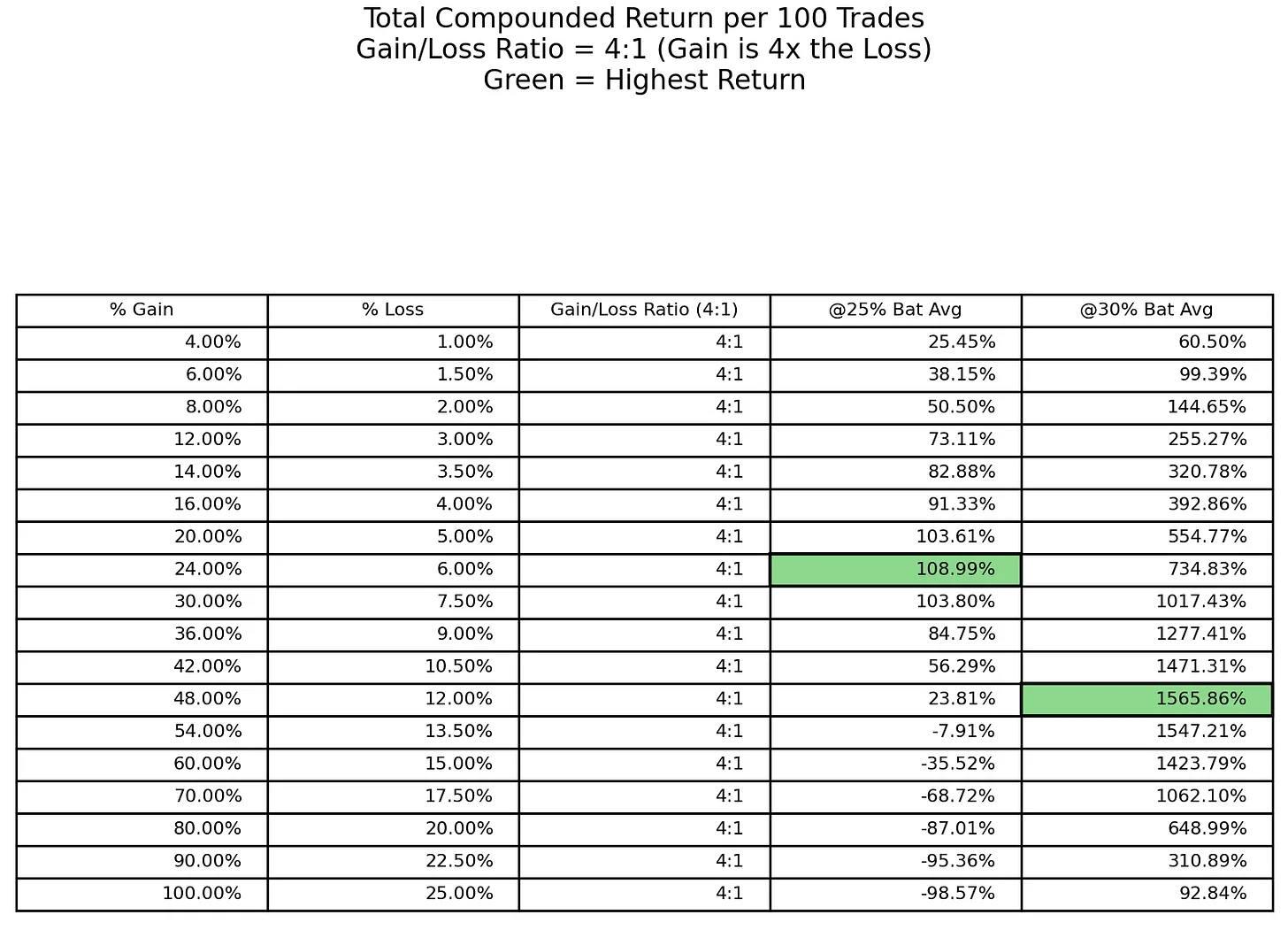
If you trade, you care about being right.
You track your win rate.
You count how many trades you got correct this week.
You feel confident after going 7 out of 10.
You feel frustrated after going 4 out of 10.
That feels logical.
It feels like progress.
It feels like skill.
But here is the uncomfortable truth.
Win rate alone tells you almost nothing about whether you will make money.
You can win 70 percent of your trades and slowly bleed your account.
You can win 40 percent of your trades and compound capital aggressively.
The difference is not accuracy.
The difference is risk control.
And most traders never truly understand that.
Your Batting Average Means Nothing Without Risk Control
Most traders obsess over win rate.
They want to be right most of the time.
They believe a high batting average equals success.
It does not.
Trading is not about being right.
It is about asymmetric outcomes.
Every trade should start with one question:
How much am I willing to lose?
That number must be defined before you enter.
That is your risk.
Now the only thing that matters is how your average winner compares to that risk.
If you risk 1 unit and consistently make 2 or 3 units when you are right, the math shifts in your favor.
If occasionally you make 8, 10, or 15 units on a single trade, your entire equity curve changes.
This is not opinion.
It is arithmetic.
The Math Behind Risk Reward and Win Rate
Below are four different payoff structures across 10 trades.
The win rates are the same.
Only the risk reward ratio changes.
Watch what happens.
1 to 1 Risk Reward
Win rate alone is not enough.
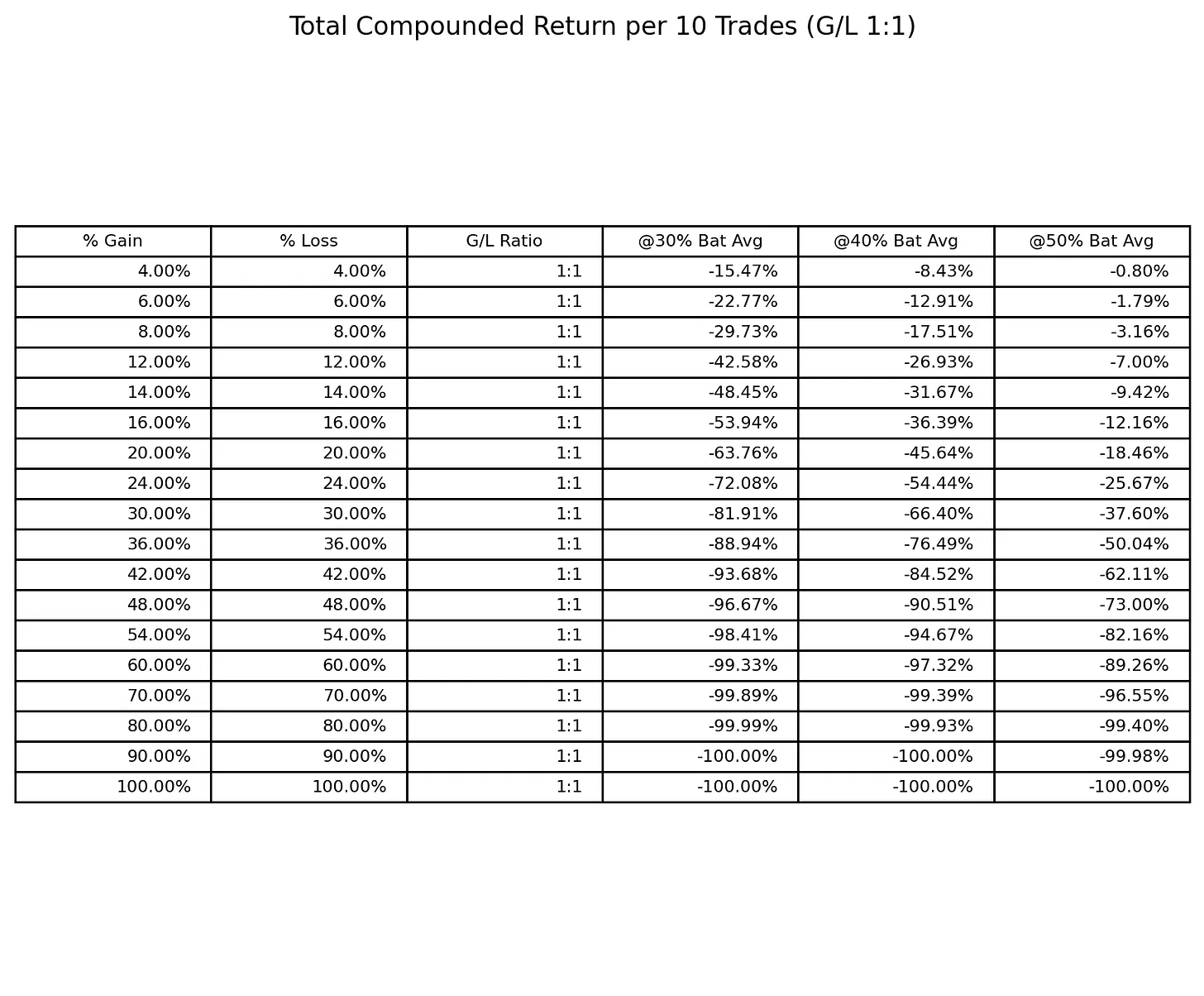
At 50 percent accuracy you still lose money.
Equal percentage wins and equal percentage losses do not compound to zero.
They compound downward.
This alone should permanently change how you think about trading.
2 to 1 Risk Reward
Asymmetry begins to shift the math.
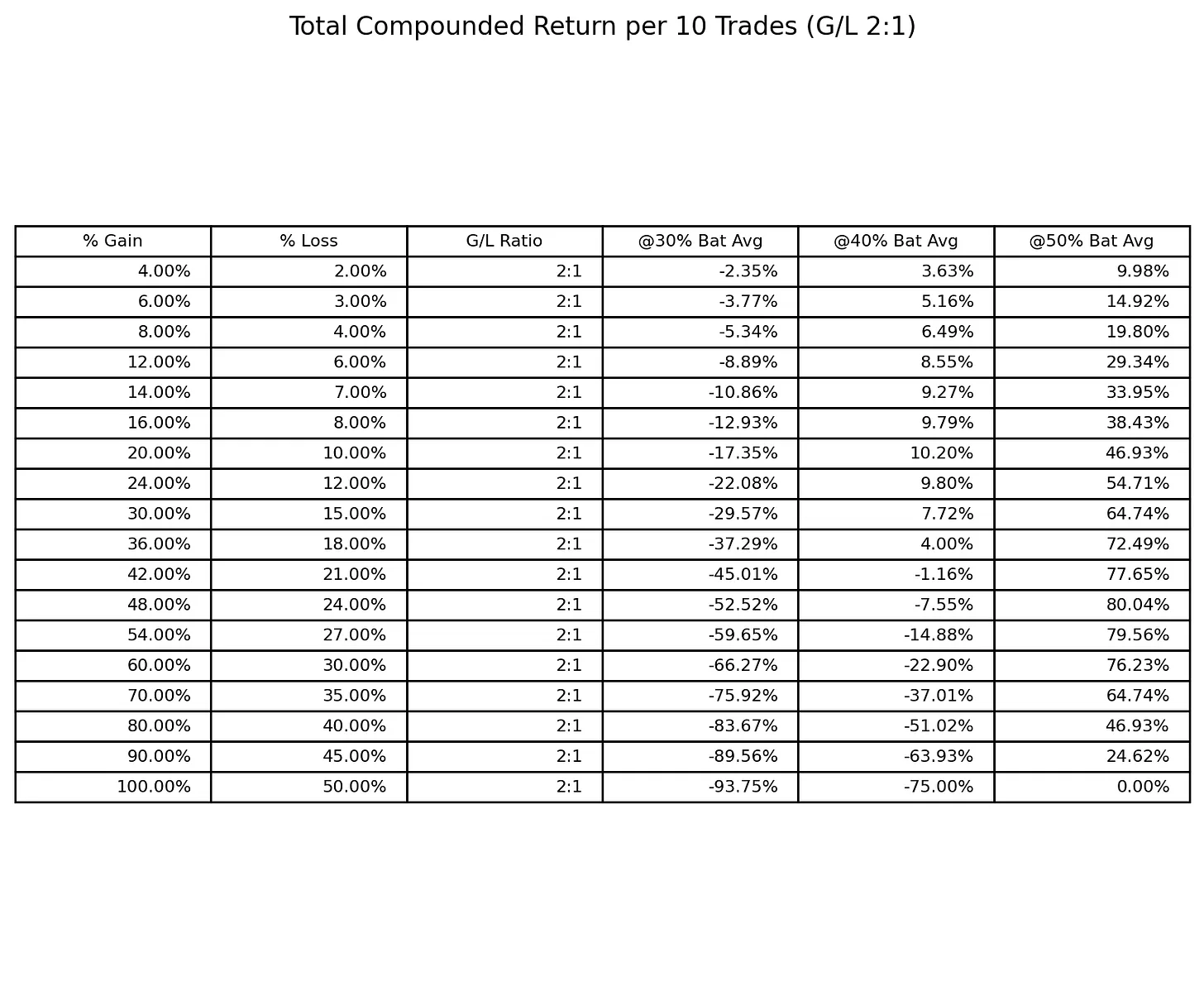
Now look at 40 percent accuracy.
You are profitable.
You are wrong more than you are right.
Yet your capital grows.
This is where professional trading begins.
3 to 1 Risk Reward
Compounding accelerates when average wins materially exceed average losses.
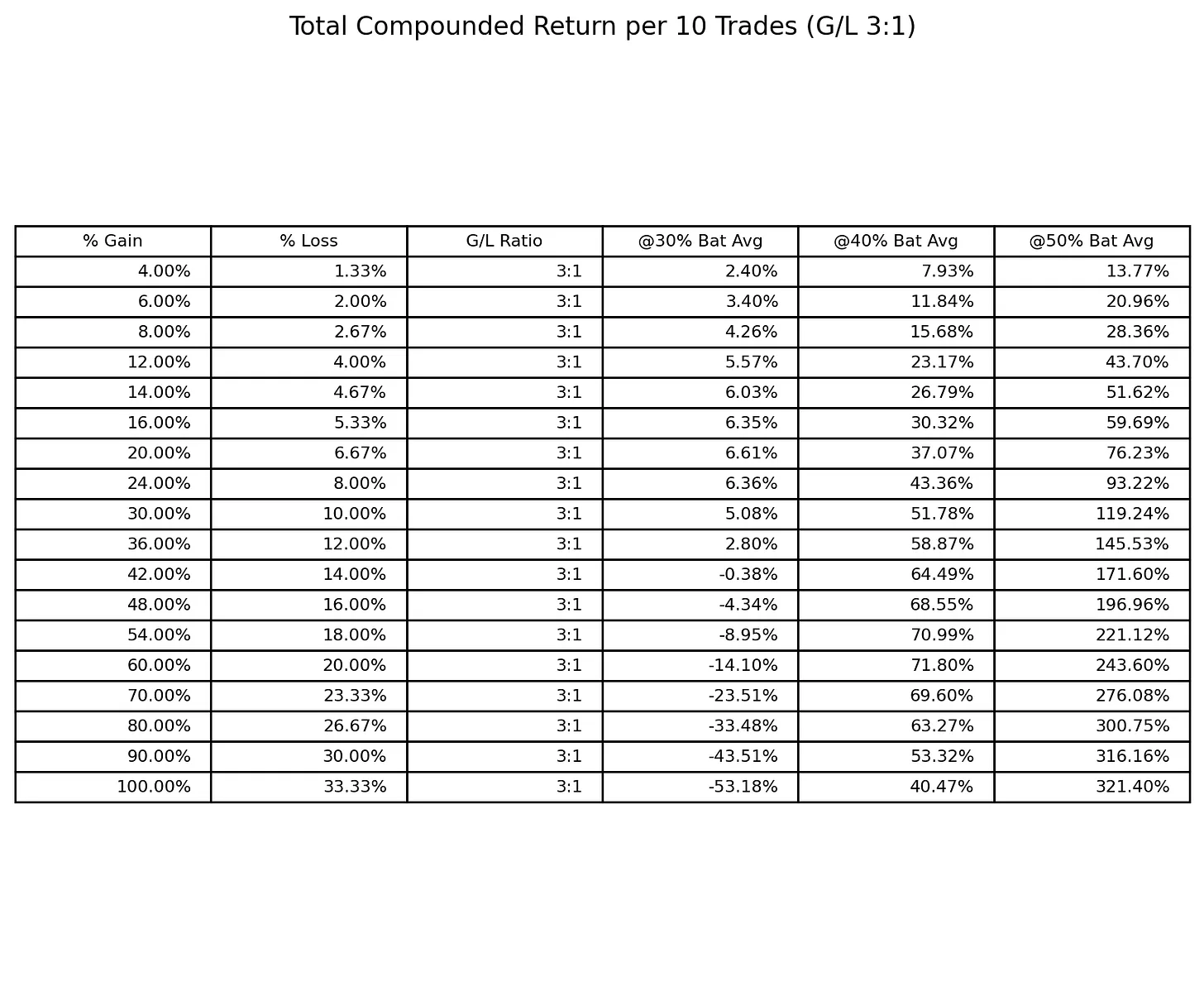
At 30 to 40 percent win rates, compounding becomes powerful.
You are not trying to win often.
You are trying to win disproportionately.
This is expectancy in action.
5 to 1 Risk Reward
Same accuracy. Completely different outcome.
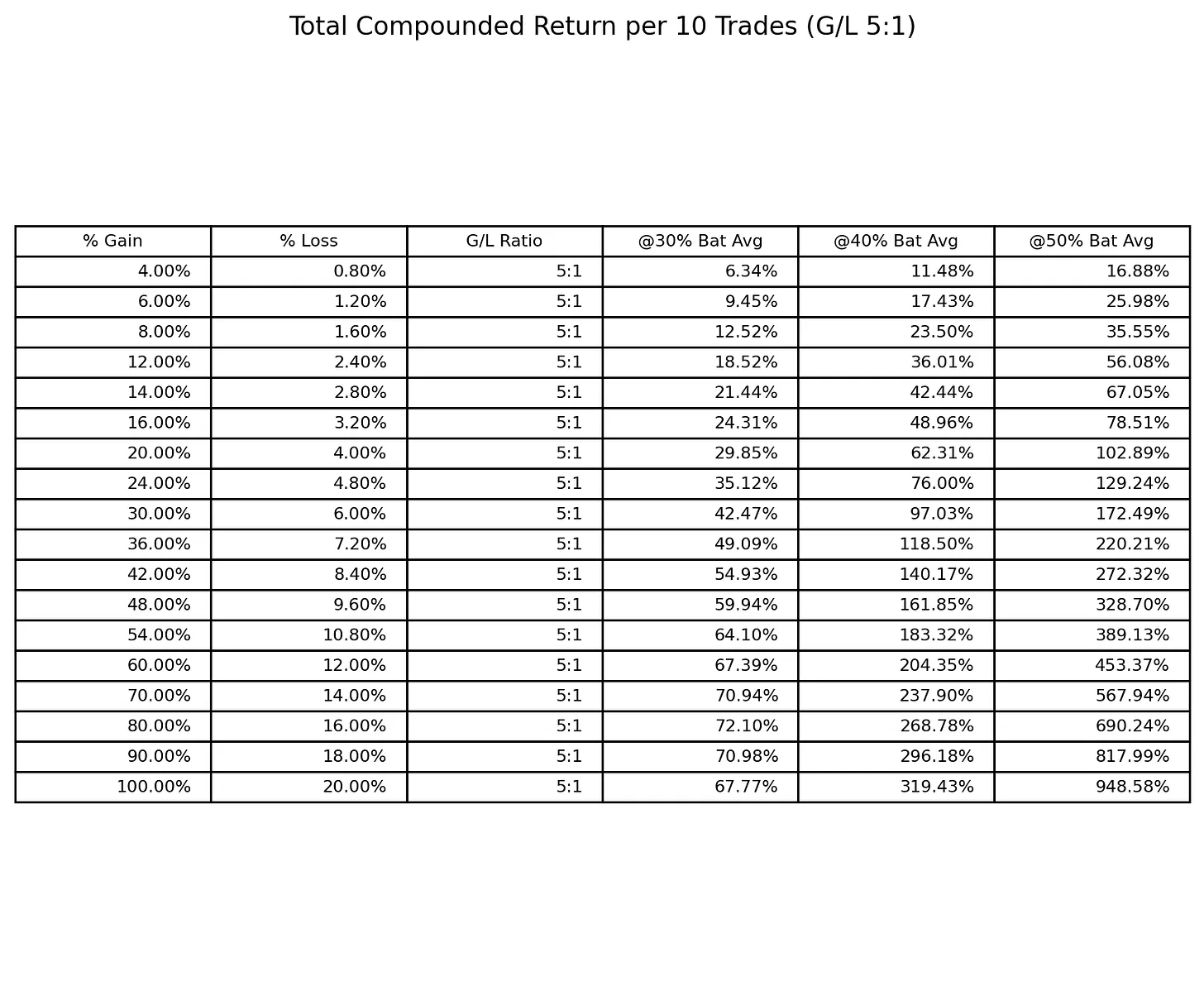
Nothing changed except payoff structure.
Same trader.
Same win rate.
Radically different results.
If you understand this, you understand the foundation of long term profitability.
Expectancy Is the Real Scorecard
Over a large sample of trades, your results are driven by expectancy.
Expectancy is the average amount you can expect to make or lose per trade.
It includes:
Small losses
Break even trades
Modest winners
And occasionally, a large outlier
The outliers matter most.
One large asymmetric winner can erase many controlled losses.
That is how equity curves expand.
Professionals do not chase being right.
They engineer positive expectancy.
The Hidden Destroyer: Drawdowns
Now let’s talk about something even more important.
Drawdowns.
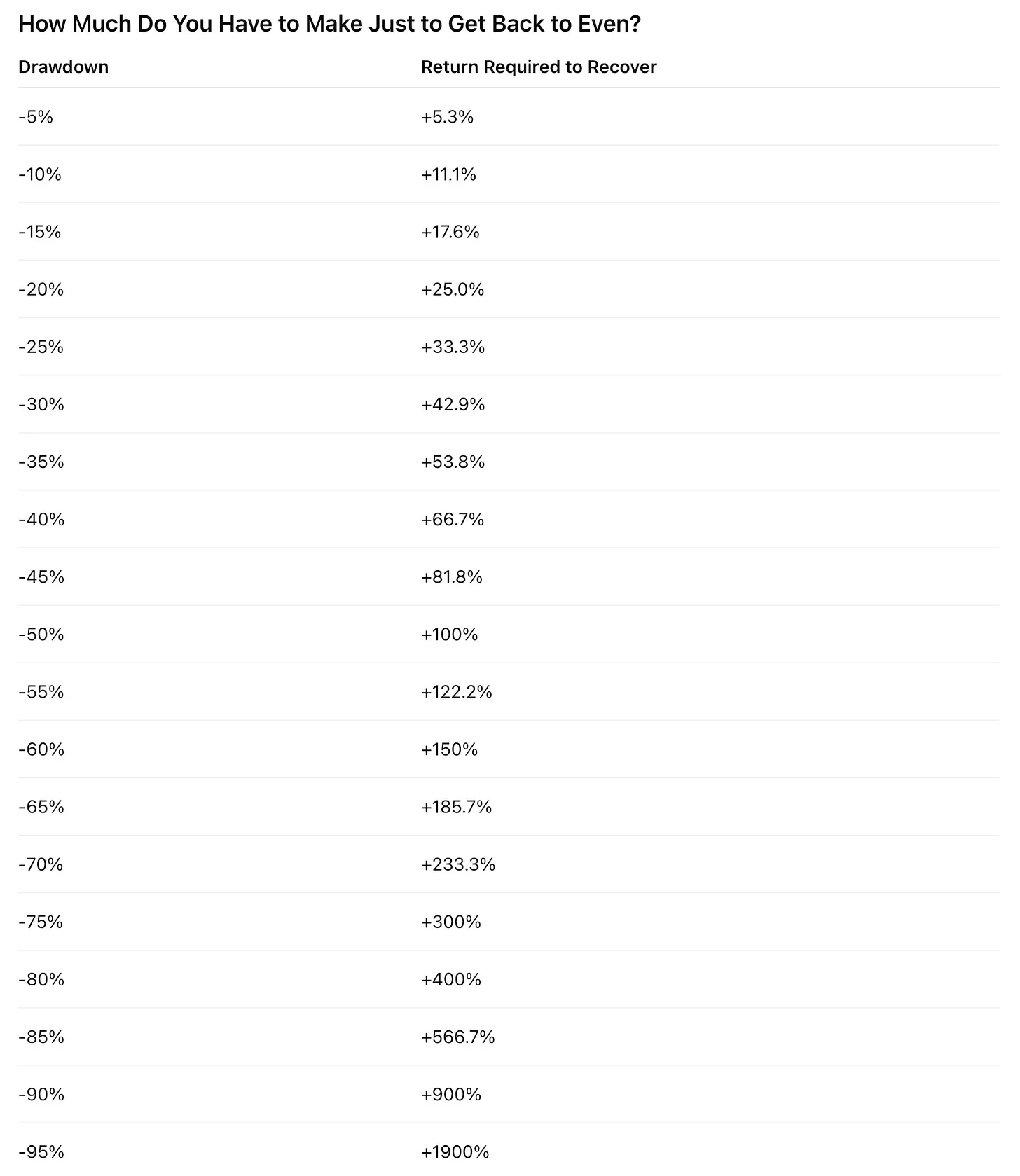
If you lose 10 percent, you need 11.1 percent to recover.
Lose 20 percent, you need 25 percent.
Lose 30 percent, you need 42.9 percent.
Lose 50 percent, you need 100 percent.
Lose 70 percent, you need 233 percent.
Lose 80 percent, you need 400 percent.
Lose 90 percent, you need 900 percent.
Losses are not linear.
They accelerate against you.
Large drawdowns destroy compounding.
They damage confidence.
They force emotional decisions.
They change behavior.
Small losses preserve capital.
Small losses preserve clarity.
Small losses preserve opportunity.
Risk control is not defensive.
It is aggressive over the long term.
The Shift That Changes Everything
Amateurs focus on how much they can make.
Professionals focus on how little they can lose.
If your losses are small and controlled, and your winners are allowed to expand, you do not need a high win rate.
You need discipline.
You need consistency.
You need a process.
When you stop obsessing over batting average and start focusing on risk reward and long term expectancy, trading becomes a probability game.
Not an emotional one.
Control the downside.
Let the math work over time.
Final Truth
A 70 percent win rate with poor risk control is gambling.
A 40 percent win rate with positive expectancy is a business.
William O’Neil has stated that even in strong bull markets his win rate topped out around 60 percent.
Mark Minervini has publicly said he often trades around 50 percent, and in tougher markets closer to 40 percent.
Many U.S. Investing Champions operate in the 30 to 40 percent range.
Several of the traders featured in Market Wizards have discussed similar numbers, particularly trend followers and breakout traders.
They are not winning most of the time.
They are winning disproportionately.
You do not need to be right often.
You need to:
Keep losses small.
Avoid large drawdowns.
Let winners expand.
Occasionally capture a double, triple, or 5 to 10R move.
Small losses are a business expense.
Large losses are a career risk.
That is the difference between gambling and running a process.
Real Example
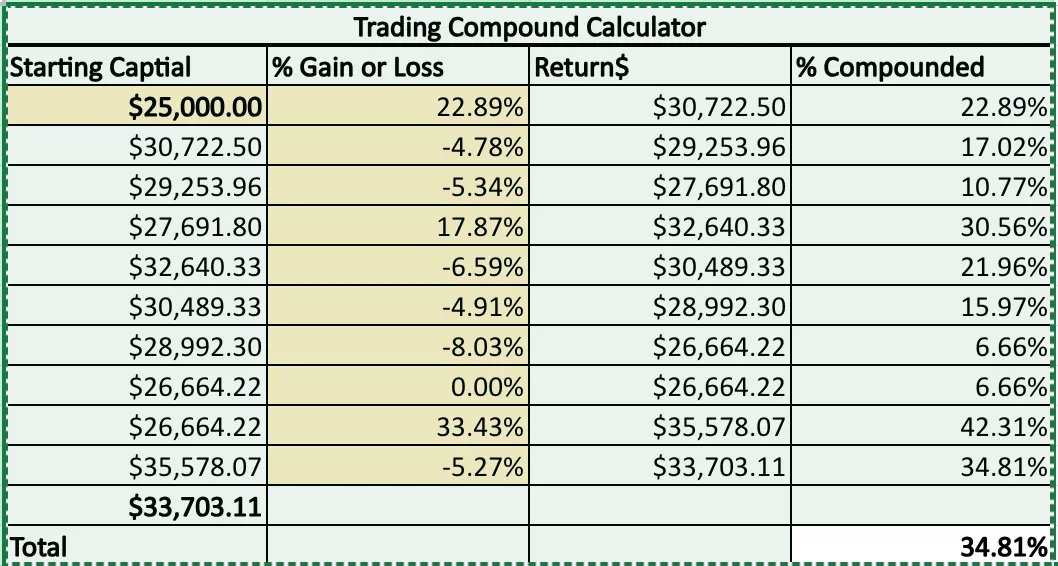
Here is a 10-trade sequence.
Win rate: 33%
Average win: 24.73%
Average loss: 5.82%
Gain/Loss ratio: 4.25 to 1
Expectancy: +4.36% per trade
Total compounded return: +34.81%
The trader was wrong 6 times.
Right only 3 times.
One trade was flat.
And still compounded capital by nearly 35 percent.
That is what positive expectancy looks like.
Low accuracy.
High asymmetry.
Strong outcome.
More in Risk Management
All Risk Management articles →
Oct 11, 2026 · Risk Management
How Many Stocks Should You Own? The Mistake That Can Cost You Your Biggest Winners
What William O'Neil, Mark Minervini, and the Market Wizards teach us about portfolio concentration, position sizing, cash management, and knowing when to stop trading.
- Momentum Trading
- Investing
- CANSLIM
- Trading
- position trading
- Growth Stock Trading
- Portfolio Heat
- David Ryan
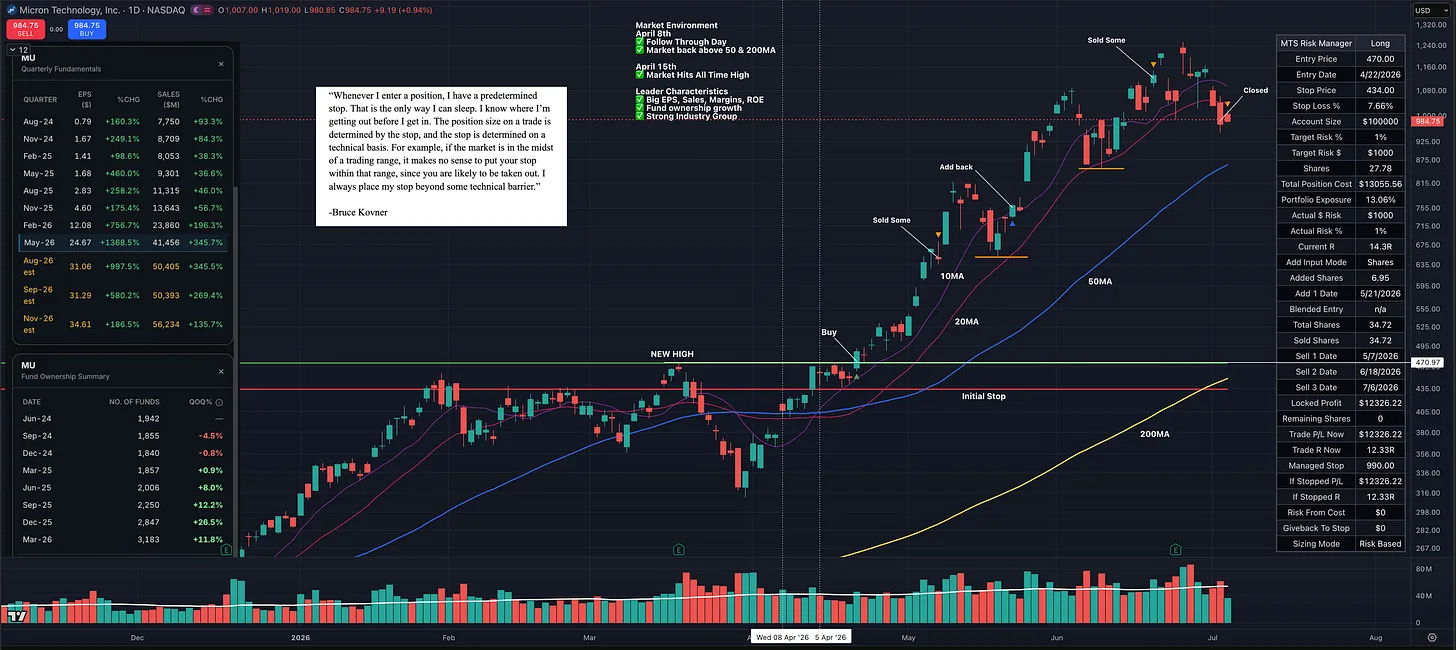
Jul 7, 2026 · Risk Management
Position Size and Manage Risk Like a Market Wizard
Using Bruce Kovner’s stop-loss principle to plan the trade before the trade begins.
- growth stocks
- Momentum Trading
- fundamental analysis
- Learn Trading
- technical analysis
- Investing
- CANSLIM
- Trading
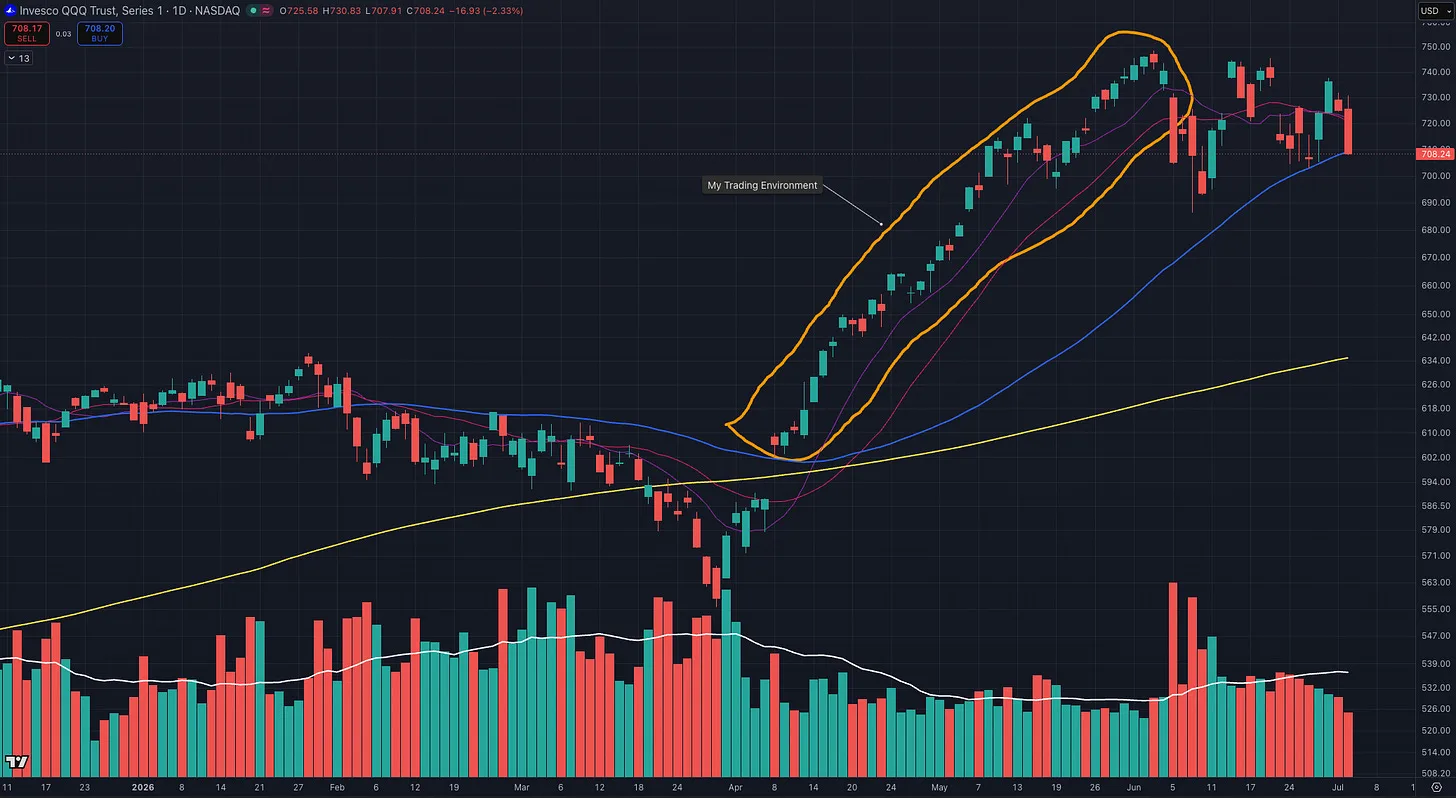
Jul 2, 2026 · Risk Management
Why Great Traders Can Seem Bipolar in Choppy Markets
The best traders are not changing their minds because they are confused. They are changing their exposure because the market evidence has changed.
- Momentum Trading
- progressive exposure
- Learn Trading
- CANSLIM
- Trading
- position trading
- Growth Stock Trading
- stock trading