
Trading articles/Why Great Traders Can Seem Bipolar in Choppy Markets
Jul 2, 2026 · Momentum Trading Strategy
Why Great Traders Can Seem Bipolar in Choppy Markets
The best traders are not changing their minds because they are confused. They are changing their exposure because the market evidence has changed.
Originally published on Substack.
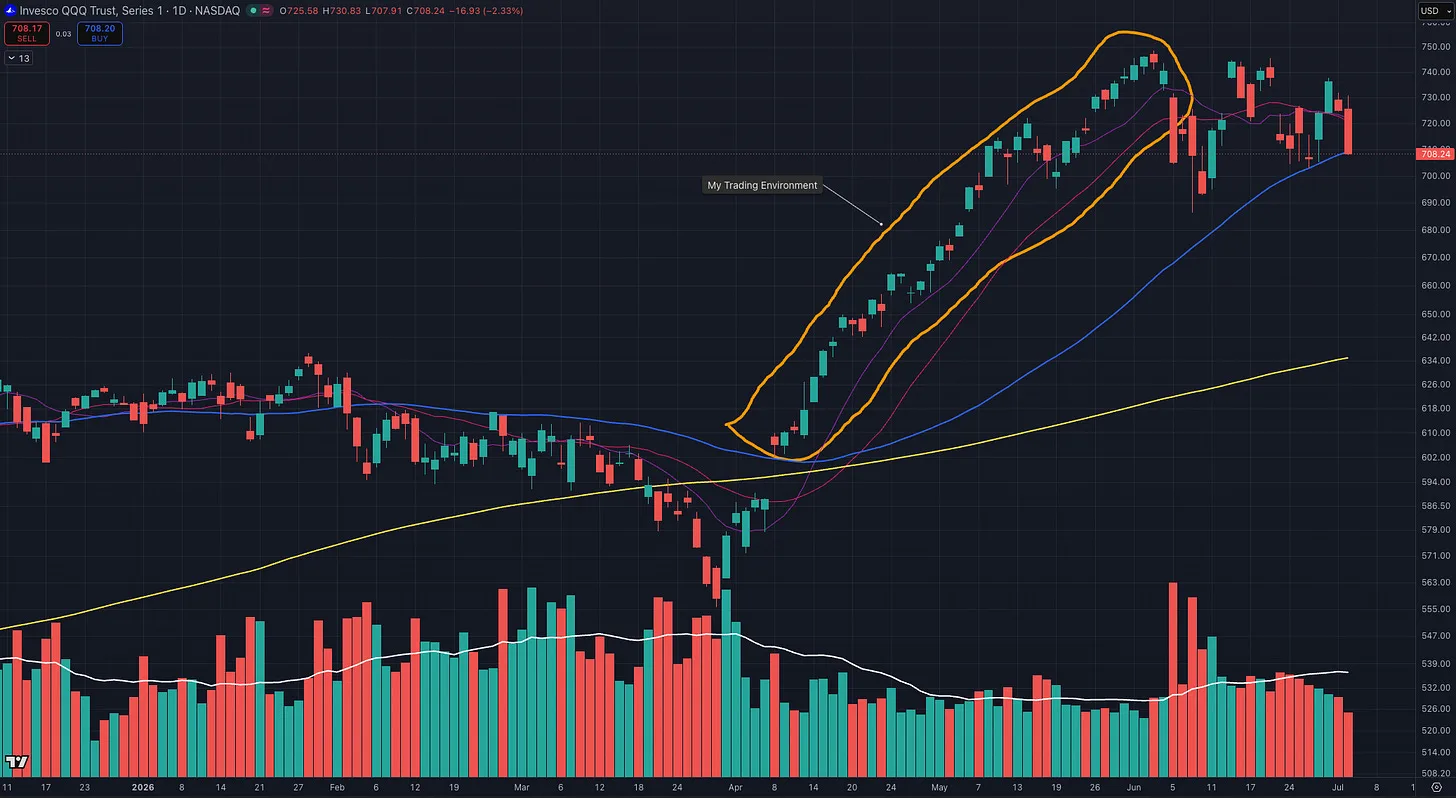
Why Flexibility Looks Like Confusion
The best traders can seem bipolar in a choppy, sideways market. One day they may sound bullish. A few days later, they may sound cautious or even bearish.
To the amateur, that looks like confusion. They think the constant shifting from bullish to bearish is a flaw. In reality, it is often one of the clearest signs that a trader is actually paying attention.
In a clean Stage 2 uptrend, a great trader will usually look much more consistent with what many on social media call “high conviction.” Price is trending higher, moving averages are stacked properly, leaders are working, and breakouts are following through.
In that type of environment, the trader may stay bullish for weeks or even months while everyone else is worried the market has already gone too far, or they allow news and opinions to influence them.
But when the market starts chopping sideways, crossing back and forth through moving averages, whipsawing traders, and failing to make clean progress, that same trader will look much less consistent. They may appear to have almost no strong conviction at all.
That is not a flaw.
That is the trader responding to price.
Price Action Over Opinion
Steve Lescarbeau said it well in Stock Market Wizards:
“I react to what happens in the market.”
That is the key. Price action is more important than opinions, news, predictions, or personal bias. When the evidence changes, a good trader changes with it.
Tom Baldwin made a similar point in Market Wizards:
“If I saw something to change my mind, I would adjust.”
Paul Tudor Jones is a great example of this. In Market Wizards, Jack Schwager described how Jones shifted from being strongly bearish and heavily short to bullish after the market failed to follow through lower. Schwager called it a “180-degree shift in opinion” and said it showed the flexibility behind Jones’ success.
That is not being wishy-washy.
That is being aligned with the market and price.
The Real Risk Is Not Adjusting
William O’Neil also emphasized how important the general market is. In Market Wizards, he said:
“Three out of four stocks will go in the same direction as a significant move in the market averages.”
That matters because even great individual stock setups can fail when the market environment turns hostile. A breakout that works beautifully in a clean uptrend can fail almost immediately in a choppy market. The setup may look the same, but the environment is different.
David Ryan learned this lesson the hard way. When asked what went wrong during a rough stretch, he said:
“I continued to play as aggressively as I had during the bull market.”
That is the real danger.
The market changes, but the trader does not.
How Great Traders Avoid Getting Chopped Up
The real question is how do the best traders avoid getting chopped up?
That is where progressive exposure and position sizing come in. I cover this in Module 6 of the Momentum Trading Strategy Course, and Mark Minervini also talks a great deal about this concept in his course.
When trades stop working, breakouts fail, and more stocks hit stops, the trader reduces exposure. They trade less. They size down. They stop forcing mediocre setups and only focus on A+ opportunities.
This might mean going from 80% exposure to 60%, then 40%, then mostly or fully cash if the market continues to deteriorate. It is not about making one dramatic all-in or all-out decision. It is about letting the results of your trades and the action of the market guide your level of aggression.
Paul Tudor Jones explained the position sizing side of this well in Market Wizards:
“When I am trading poorly, I keep reducing my position size.”
That is what disciplined traders do when the tape gets difficult. They do not keep pressing just because they were bullish last week. They adjust.
When the market starts proving itself again by making higher highs and higher lows, reclaiming key moving averages, and showing real leadership, they start increasing exposure again.
More setups start working. Breakouts begin following through. Pullbacks become more orderly. Risk becomes easier to manage.
Colm O’Shea put it simply in Hedge Fund Market Wizards:
“Traders who are successful over the long run adapt.”
That is the entire point.
In a trending market, conviction looks steady.
In a choppy market, discipline can look bipolar.
The best traders understand this.
The question is, do you?
Keep Building Your Trading Foundation
If you are ready to build a real foundation as a growth stock investor or momentum trader, I have over 15 hours of video lessons inside the Momentum Trading Strategy Course.
The course is built around many of the same principles taught by the Market Wizards, William O’Neil, Mark Minervini, David Ryan, Jesse Livermore, Stan Weinstein, and other great traders, but organized specifically for growth stock investors and momentum traders.
And even if you already have experience, a strong foundation is always worth reviewing. I have read many of these same books multiple times over the last 20 years, and I still continue to learn from them.
More in Risk Management
All Risk Management articles →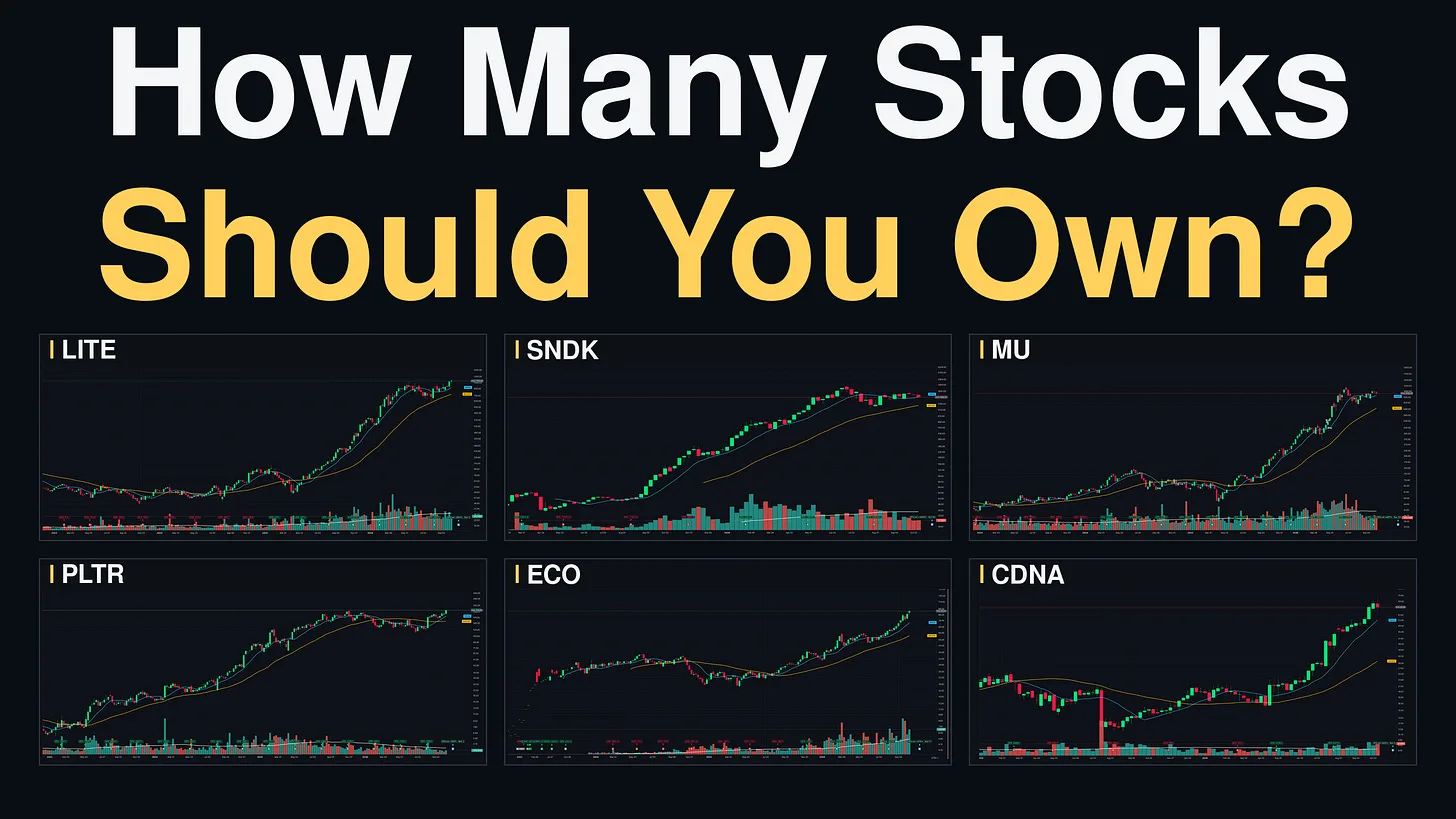
Oct 11, 2026 · Risk Management
How Many Stocks Should You Own? The Mistake That Can Cost You Your Biggest Winners
What William O'Neil, Mark Minervini, and the Market Wizards teach us about portfolio concentration, position sizing, cash management, and knowing when to stop trading.
- Momentum Trading
- Investing
- CANSLIM
- Trading
- position trading
- Growth Stock Trading
- Portfolio Heat
- David Ryan
Jul 7, 2026 · Risk Management
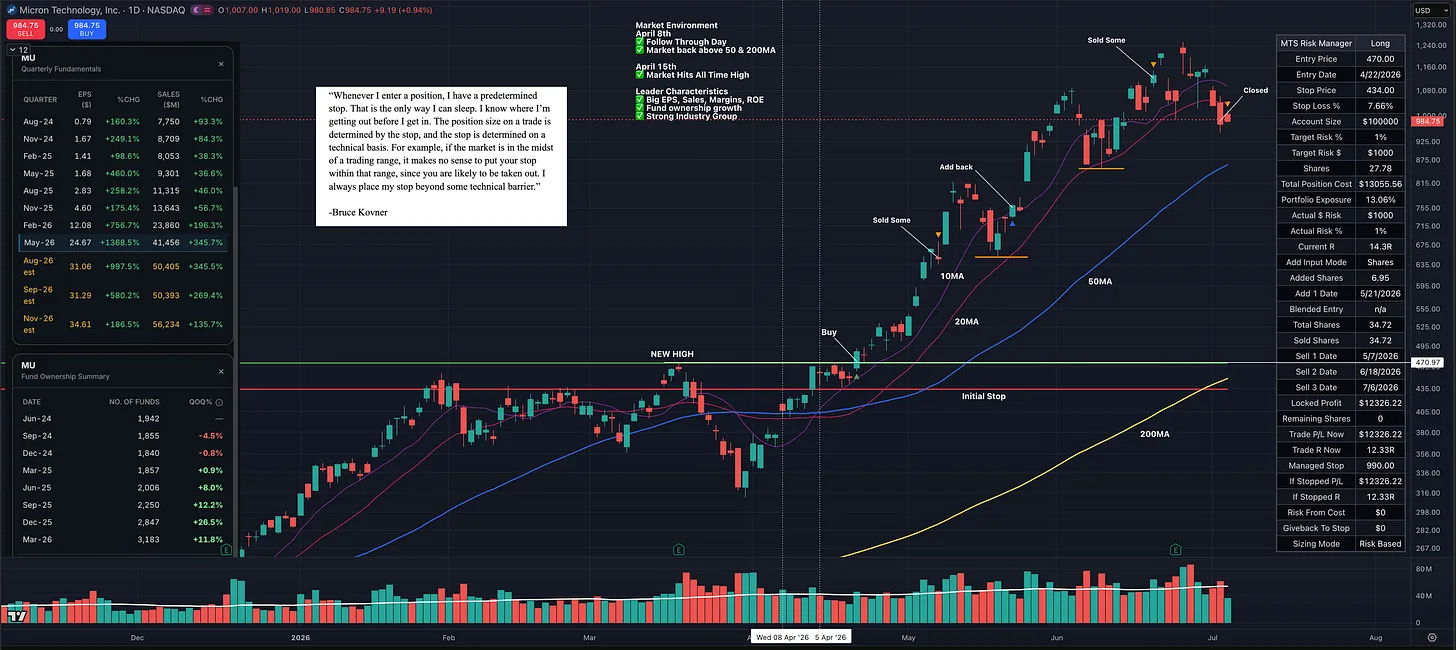
Position Size and Manage Risk Like a Market Wizard
Using Bruce Kovner’s stop-loss principle to plan the trade before the trade begins.
- growth stocks
- Momentum Trading
- fundamental analysis
- Learn Trading
- technical analysis
- Investing
- CANSLIM
- Trading
May 19, 2026 · Risk Management
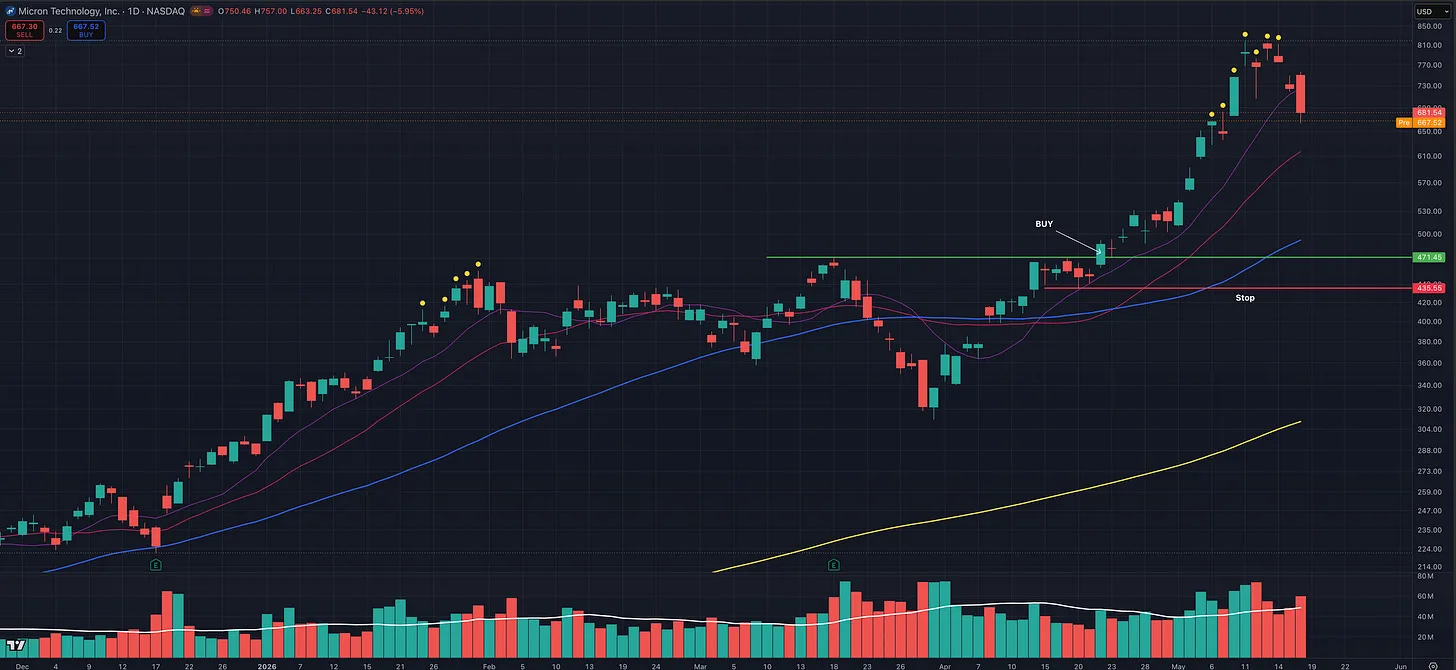
Does O’Neil’s 8% Stop-Loss Rule Still Work Today?
A real trade example showing how the rule works when paired with proper position sizing.
- growth stocks
- Momentum Trading
- learn to trade
- Finance Risk
- CANSLIM
- position trading
- Position Sizing
- Risk Management