
Trading articles/Why Relative Strength Screeners Shouldn't Rank Every Stock
Jul 30, 2026 · Momentum Trading Strategy
Why Relative Strength Screeners Shouldn't Rank Every Stock
The quality of your Relative Strength rankings depends just as much on the universe you're measuring as the formula you're using.
Originally published on Substack.
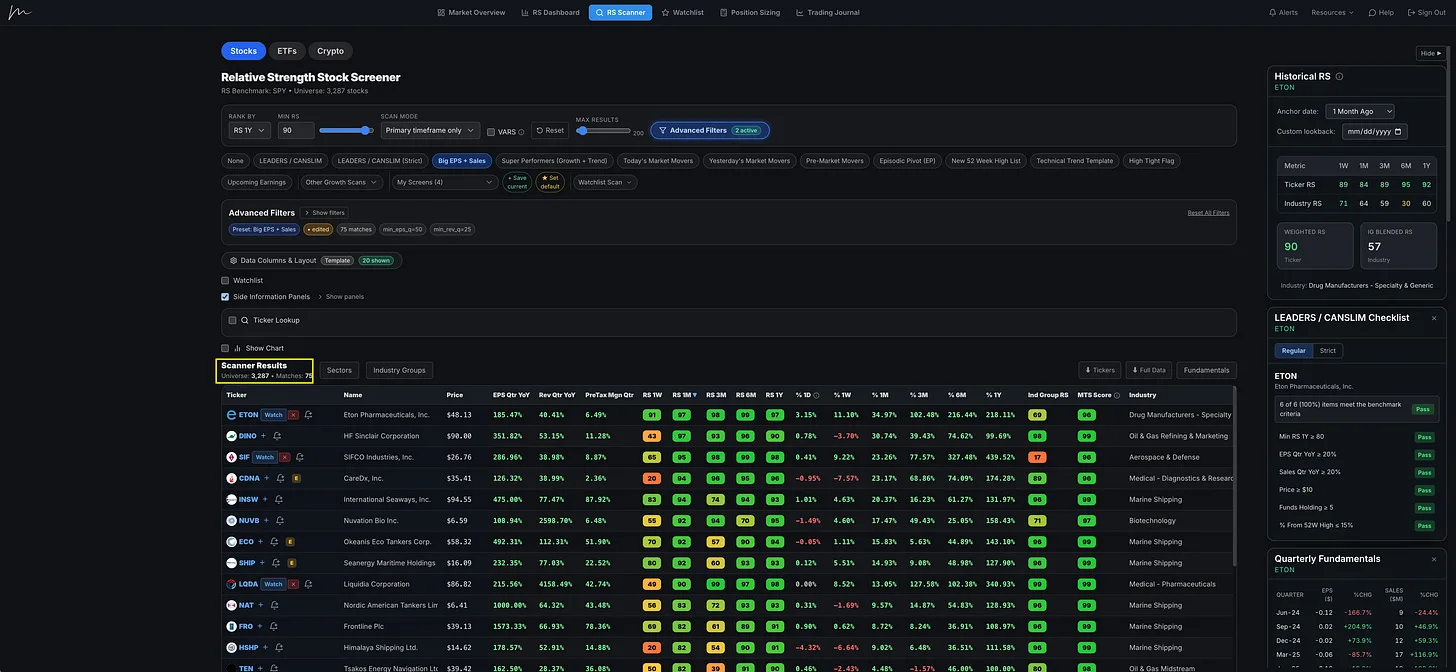
A member recently asked why the MTS RS Scanner shows a universe of roughly 3,200 stocks when platforms like TradingView list substantially more.
It’s a fair question.
The answer has nothing to do with missing market data.
In fact, the MTS platform has access to essentially the same U.S. stock universe as the major screening platforms, and in some cases, even more securities.
The difference is what happens before the Relative Strength calculations begin.
Most people assume a Relative Strength screener should rank every listed stock.
I don’t.
I believe the quality of a Relative Strength ranking depends just as much on the universe you’re comparing against as the formula you’re using.
If you compare the wrong stocks, even the best Relative Strength calculation in the world becomes less useful.
That is why the MTS RS Scanner does not rank every available security.
Instead, it intentionally defines the universe first by removing securities that are generally less suitable for this style of momentum investing before any Relative Strength ratings are calculated.
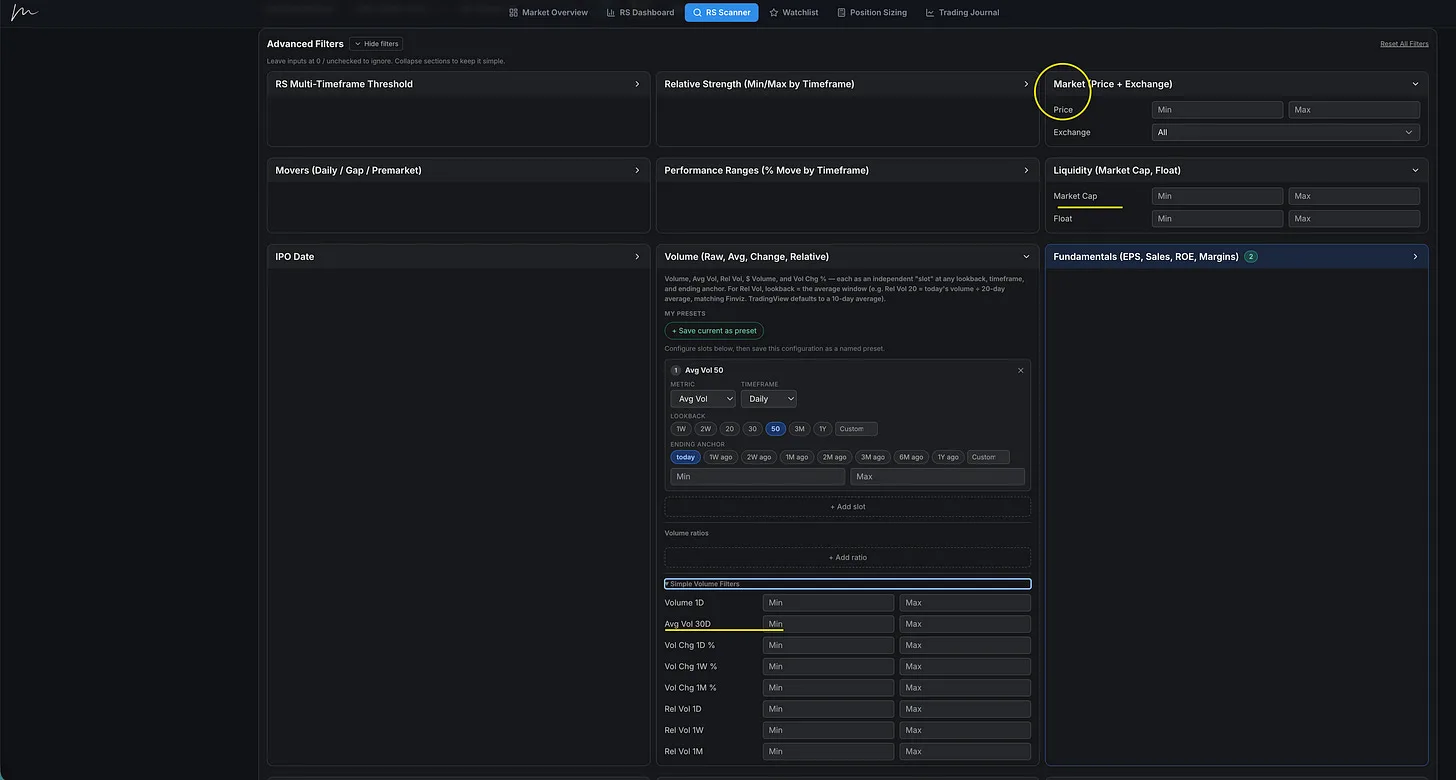
The current universe is built around the following minimum requirements:
- Listed on the NASDAQ or NYSE
- Share price of at least $5
- Average daily volume of at least 100,000 shares over the previous 30 trading days
- Market capitalization of at least $100 million
- OTC securities are excluded
Because stocks regularly move above and below these thresholds, the total number of securities in the scanner naturally fluctuates over time.
Why Not Include Everything?
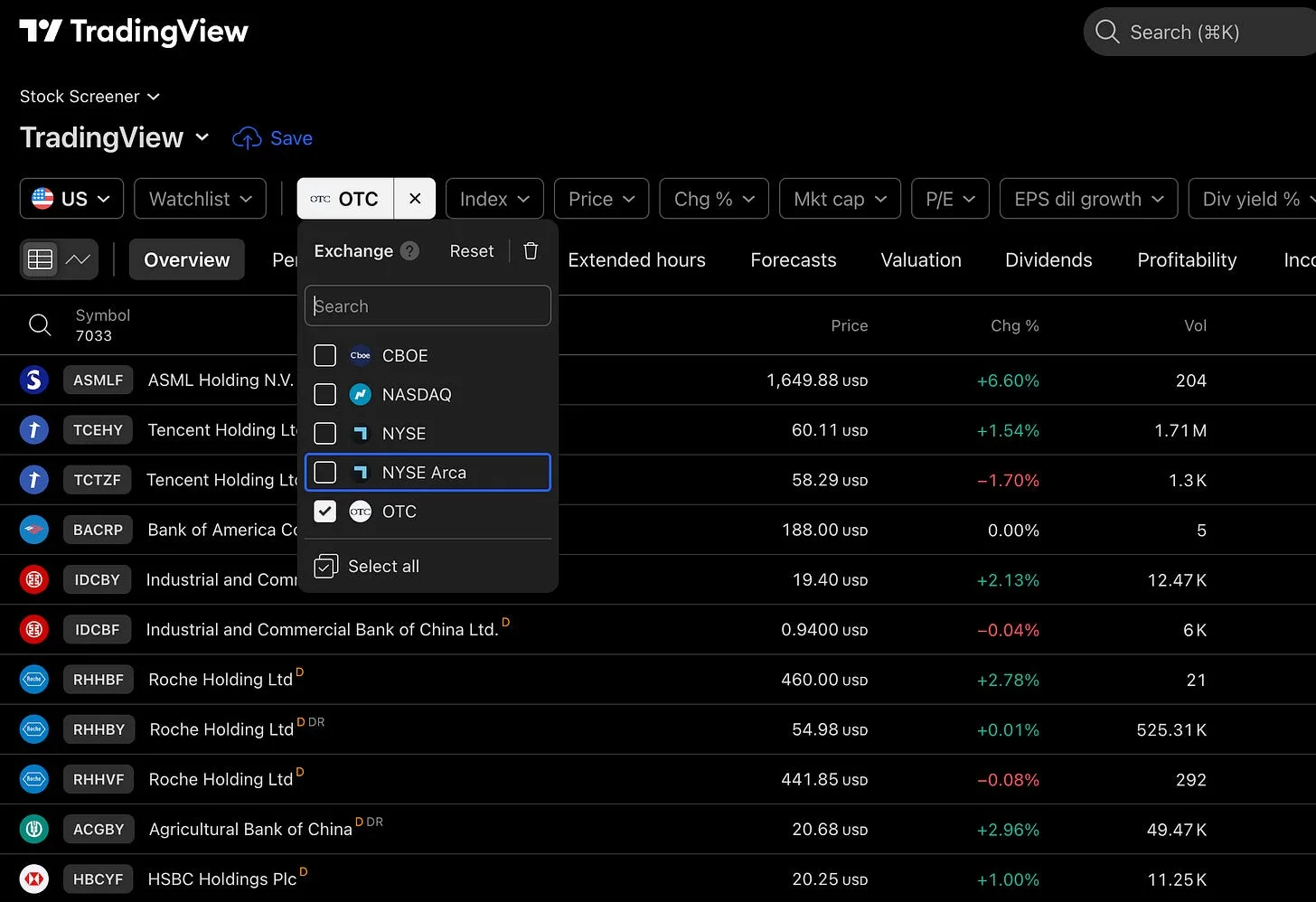
TradingView currently includes more than 7,000 OTC securities alone. More stocks don't automatically create better Relative Strength rankings. The quality of the universe matters just as much as the calculation itself.
At first glance, including more stocks sounds like a good idea.
More stocks should mean more opportunities.
Right?
Not necessarily.
If the universe includes thousands of illiquid, low-priced, and very small companies, those securities become part of the Relative Strength ranking process.
That can dilute the rankings with stocks that may show impressive percentage gains but are not realistically tradable for most growth and momentum investors.
A stock can double simply because a relatively small amount of buying moves the price.
That does not necessarily mean it is attracting institutional demand or becoming the type of sustained market leader that traders are actually searching for.
Liquidity, tradability, and institutional participation all matter.
The purpose of a Relative Strength screener isn’t to find every stock that moved.
It’s to identify the strongest stocks within a meaningful and tradable universe.
The Base Filters Are Still Fairly Lenient
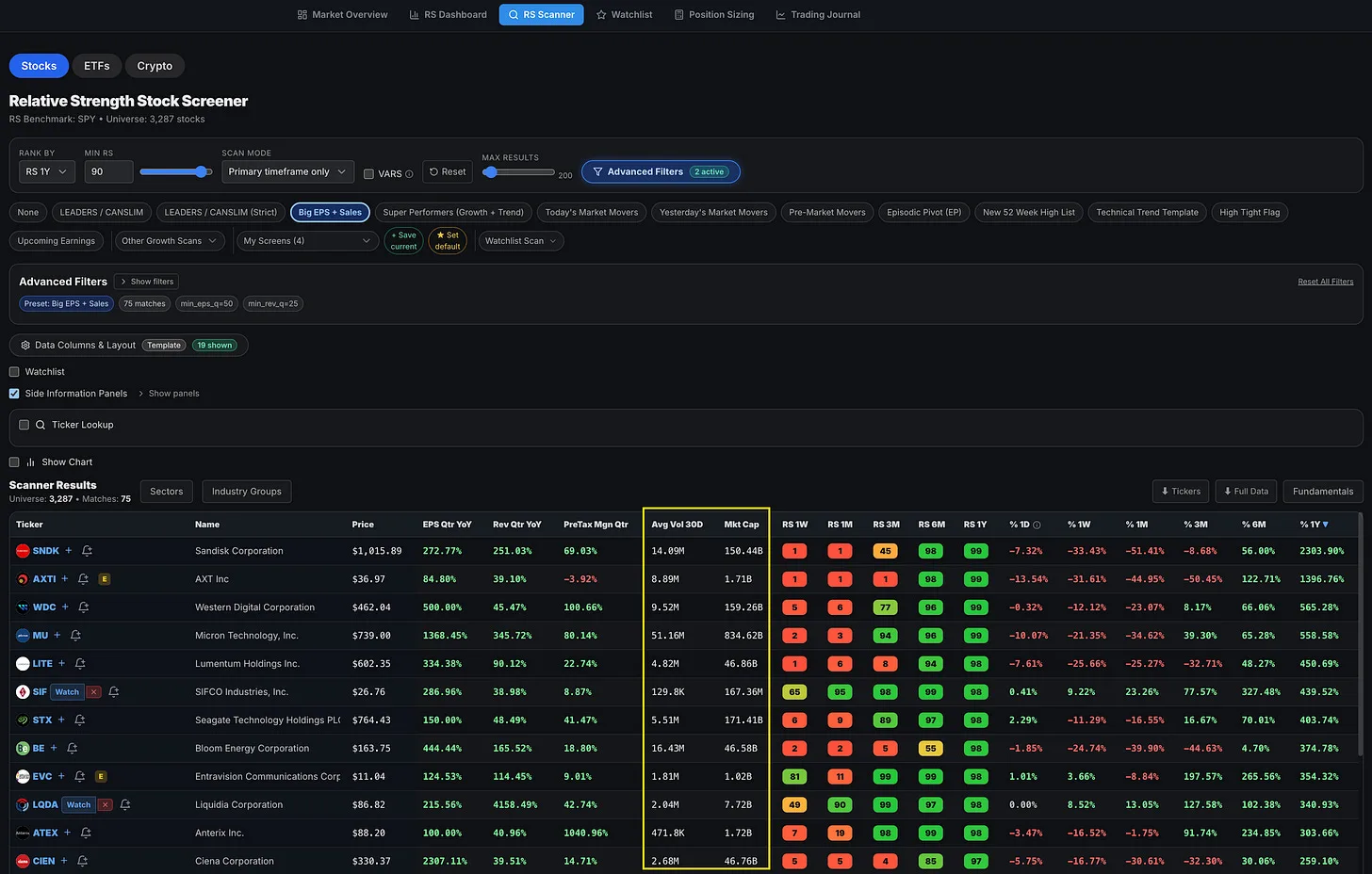
The market's biggest winners rarely sit near the minimum thresholds. In most cases, they trade with substantially higher liquidity and market capitalizations. That's why the MTS base universe is designed to be broad enough to capture future leaders, while filtering out thousands of securities that add little value to the Relative Strength rankings.
These requirements may sound restrictive, but they are actually quite broad.
William O’Neil recommended avoiding very low-priced stocks and frequently used a minimum price of $10 when screening for potential market leaders.
Traders such as Mark Minervini, David Ryan, Dan Zanger, Kristjan Kullamägi, and many of the traders featured in the Market Wizards books have also emphasized liquidity and the importance of focusing on a clearly defined universe of tradable securities.
In reality, most of the stocks these traders pursue trade far more than 100,000 shares per day.
That means the scanner’s minimum requirements are not designed to create an exclusive universe consisting only of the largest companies.
They simply remove the weakest and least tradable portion of the market.
Relative Strength Is Only as Useful as the Universe Behind It
A Relative Strength rating is never calculated in isolation.
It tells you how one stock is performing compared with every other stock in the selected universe.
That makes the quality of the universe incredibly important.
If the comparison group includes dormant companies, penny stocks, thinly traded microcaps, and securities with very limited liquidity, the resulting rankings become less useful for identifying institutional-quality leadership.
A broader universe is not automatically a better universe.
The objective is not to produce the largest possible list.
The objective is to create the most meaningful comparison.
This Does Not Mean Every Excluded Stock Is Bad
None of this means lower-priced or lower-liquidity stocks cannot produce exceptional returns.
Many successful traders specialize in microcaps and penny stocks.
Those securities simply require a different approach, different risk management, and a different screening methodology.
Every trading strategy requires boundaries.
The MTS RS Scanner is primarily designed for growth investors and momentum traders who trade in the tradition of William O’Neil, David Ryan, Mark Minervini, Dan Zanger, Kristjan Kullamägi, and many more. For that style of trading, liquidity and institutional participation matter.
The Bottom Line
The smaller universe is not caused by missing data or hidden settings.
It is intentional.
The MTS platform has access to the same market data as the major stock screening platforms.
The difference is that the universe is intentionally filtered before the Relative Strength calculations begin.
Stocks that fail to meet minimum standards for price, liquidity, and market capitalization are removed first.
Only then are the Relative Strength ratings calculated.
That keeps the rankings focused on the types of stocks momentum traders are most likely to actually trade.
Because the value of a Relative Strength rating doesn’t come from how many stocks you rank.
It comes from the quality of the universe you’re ranking against.
A Future Update
I also understand that some members would like the ability to search beyond the scanner’s default universe by including OTC securities, foreign stocks, lower-priced companies, and other securities that currently fall outside the base requirements.
I’m considering adding this capability in a future update.
Rather than changing the default universe and potentially diluting the current Relative Strength rankings, the most likely approach would be optional universe selectors.
That would allow traders to expand or narrow the universe depending on their own strategy while preserving the existing default universe for those who trade liquid growth and momentum stocks.
For those who believe the current base requirements are too lenient, remember that the scanner already includes advanced filters that allow you to narrow the results further.
You can increase the minimum volume or market-capitalization requirements, require a higher Average Daily Range percentage or ATR percentage, and combine those with many other fundamental and technical criteria.
This allows each trader to create a stricter list of candidates without forcing every user into the same standards.
There is one important distinction, however.
The advanced filters determine which stocks appear in your scan results, but the Relative Strength ratings are still calculated against the scanner’s full default base universe.
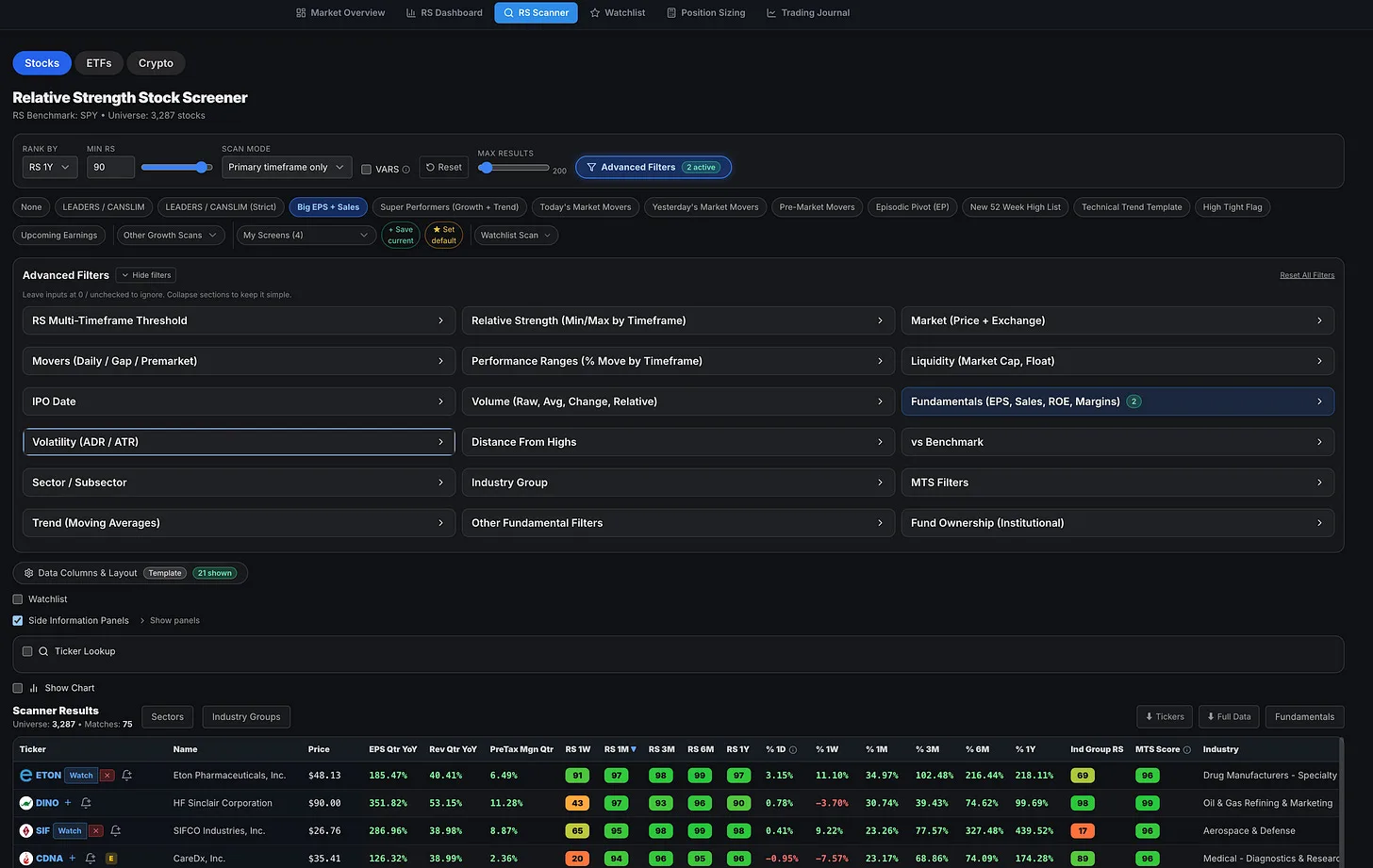
For example, increasing your minimum average volume to one million shares may remove lower-volume stocks from your results, but it does not recalculate Relative Strength using only those remaining stocks.
That is intentional.
It keeps the Relative Strength ratings consistent across the platform while still allowing traders to customize which stocks they personally want to review.
In other words, the default universe would remain the foundation for the RS calculations, while advanced filters and any future universe selectors would give users more control over the securities displayed in their individual scans.
The Right Balance
Hopefully, this clears up some of the questions about why the MTS RS Scanner uses a defined base universe and shows how much the underlying universe can affect Relative Strength rankings.
There is no perfect universe for every trader or strategy. If the universe is too broad, the rankings can become diluted by illiquid, low-priced, and largely untradable securities. If it is too narrow, you risk excluding legitimate opportunities before they ever appear.
The best solution is somewhere in the middle: broad enough to capture emerging leadership, but selective enough to keep the rankings relevant, liquid, and practical for the style of trading the scanner was built to support.
More in Strategy & Tactics
All Strategy & Tactics articles →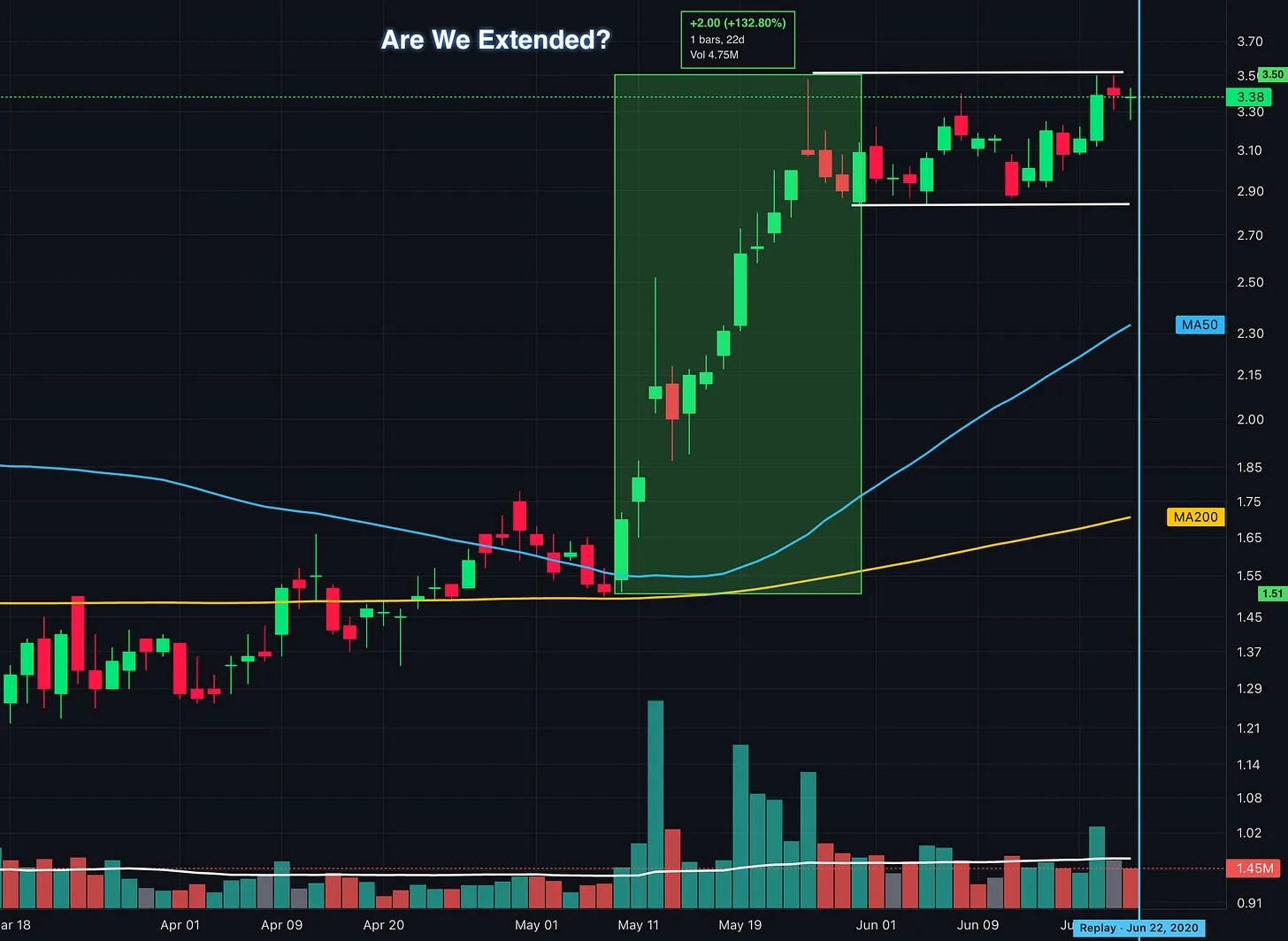
Oct 8, 2026 · Strategy & Tactics
Up 100% and Still Buyable? What Traders Get Wrong About Extended Stocks
How to identify proper buy points, avoid chasing stock breakouts, and manage entry risk using lessons from William O’Neil, Mark Minervini, David Ryan, and Dan Zanger.
- Momentum Trading
- VCP
- position trading
- Growth Stock Trading
- David Ryan
- Flag Pattern
- chart patterns
- Cup and Handle
Sep 27, 2026 · Strategy & Tactics
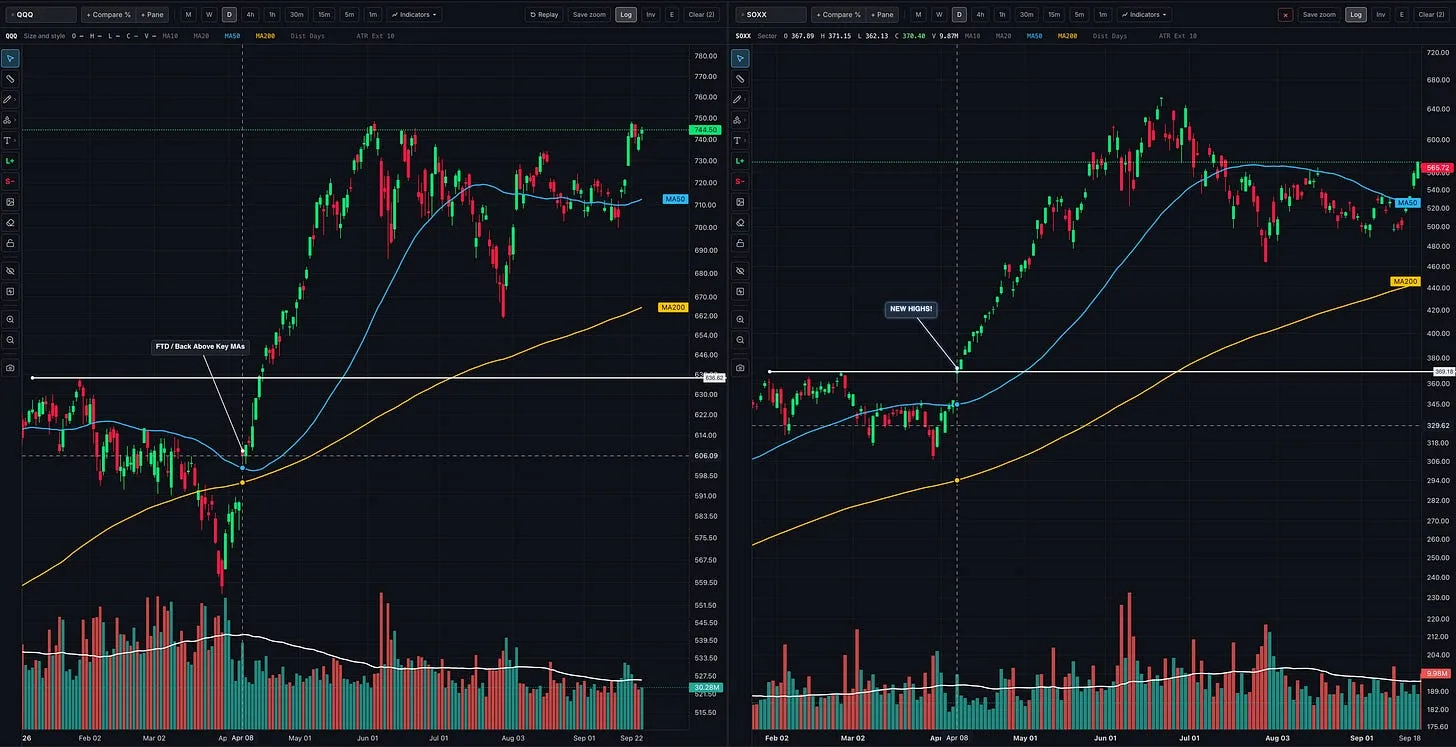
Should You Follow Leading Stocks or Wait for Market Confirmation?
How to read the market, industry groups, and individual stocks together so you can recognize opportunities, build exposure, and respond when conditions change
- growth stocks
- CANSLIM
- Trading
- position trading
- Stan Weinstein
- William O'Neil
- Momentum Trading Strategy
- Trade stocks
Sep 25, 2026 · Strategy & Tactics
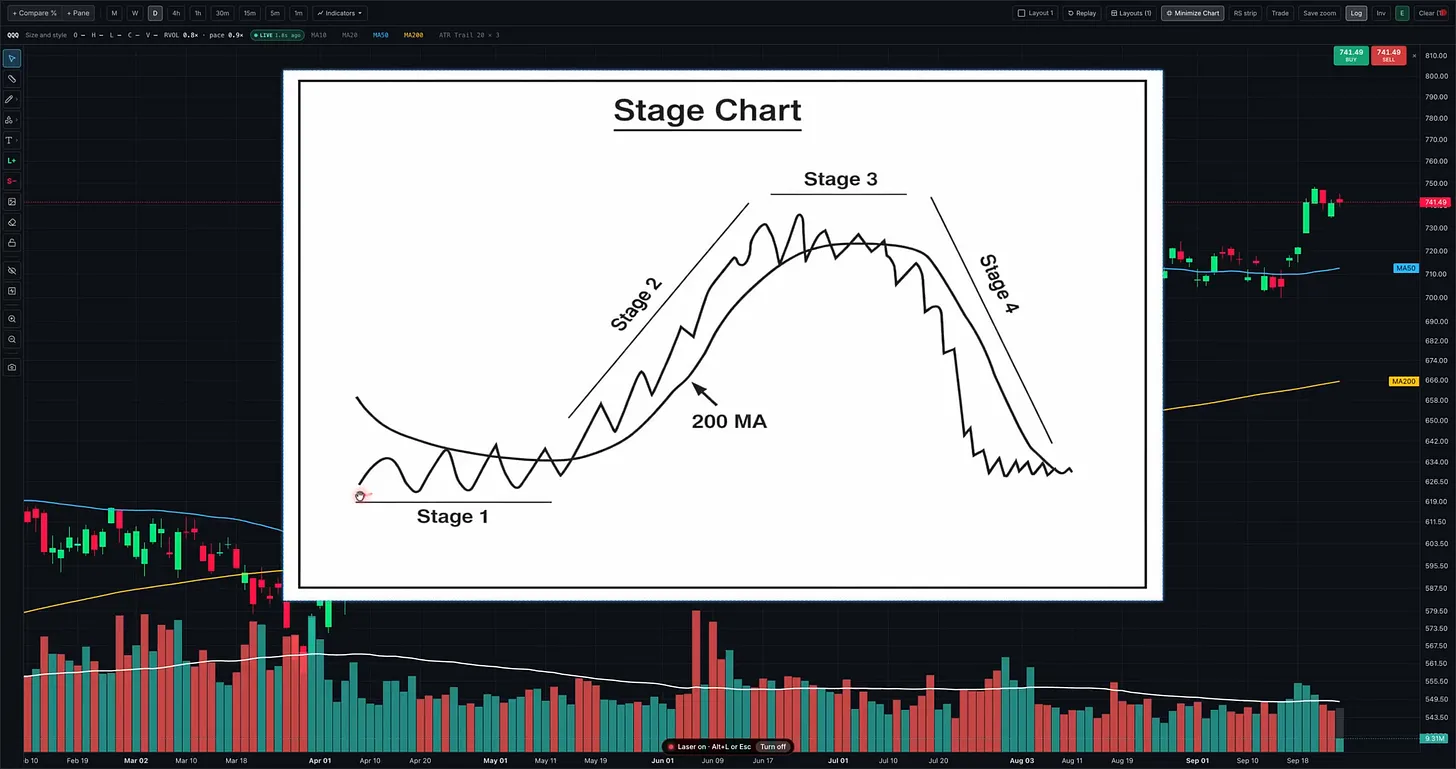
Stage Analysis: How to Spot Stage 3 in Real Time
Recognize a developing Stage 3 using Stan Weinstein’s framework, with real chart examples, warning signs, and lessons for protecting your gains
- Momentum Trading
- Nasdaq
- technical analysis
- CANSLIM
- position trading
- Stan Weinstein
- QQQ
- Find True Market Leaders