
Trading articles/Why Most Stocks Follow the Market and How to Spot the Next Leaders Early
Jan 11, 2026 · Momentum Trading Strategy
Why Most Stocks Follow the Market and How to Spot the Next Leaders Early
Most stocks rise and fall with the indexes. The real edge is finding the few that hold up when the market does not. This is how relative strength and institutional accumulation reveal future leaders.
Originally published on Substack.
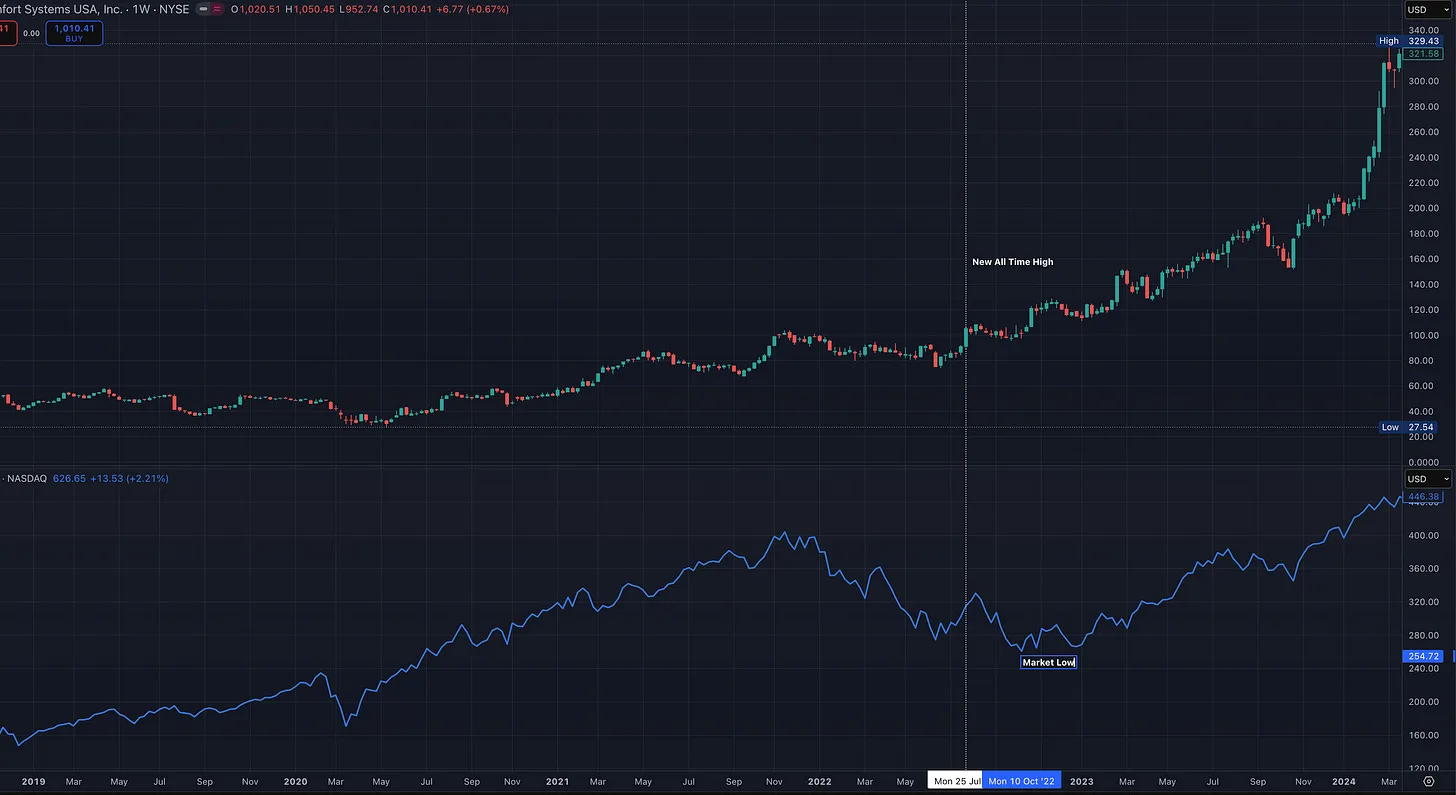
You already know this is true.
Most stocks move with the market.
Most break down when the market weakens.
Most rallies fail when the trend is against them.
William O’Neil said it plainly:
“Three out of four stocks will move in the same direction as the market.”
So yes, market direction matters more than stock selection.
Yes, even great companies struggle in bear markets.
Yes, trading against the trend is one of the fastest ways to lose money.
But here is what separates professionals from everyone else.
When the market is weak, some stocks do not break.
They stop going down.
They tighten up.
They quietly form higher lows.
You have seen this before.
You know exactly what it looks like.
That behavior is not random.
That is relative strength.
Relative strength is often the earliest sign of institutional accumulation.
It is how future market leaders begin separating from the crowd before the breakout.
It is how strong stocks reveal themselves while most traders are focused on what already moved.
This is why successful traders do not ignore the M in CANSLIM.
Being aligned with market direction is critical.
Understanding how leaders behave when the market is rising or falling is the real edge.
Example 1: MU Showing Relative Strength While the Market Consolidates
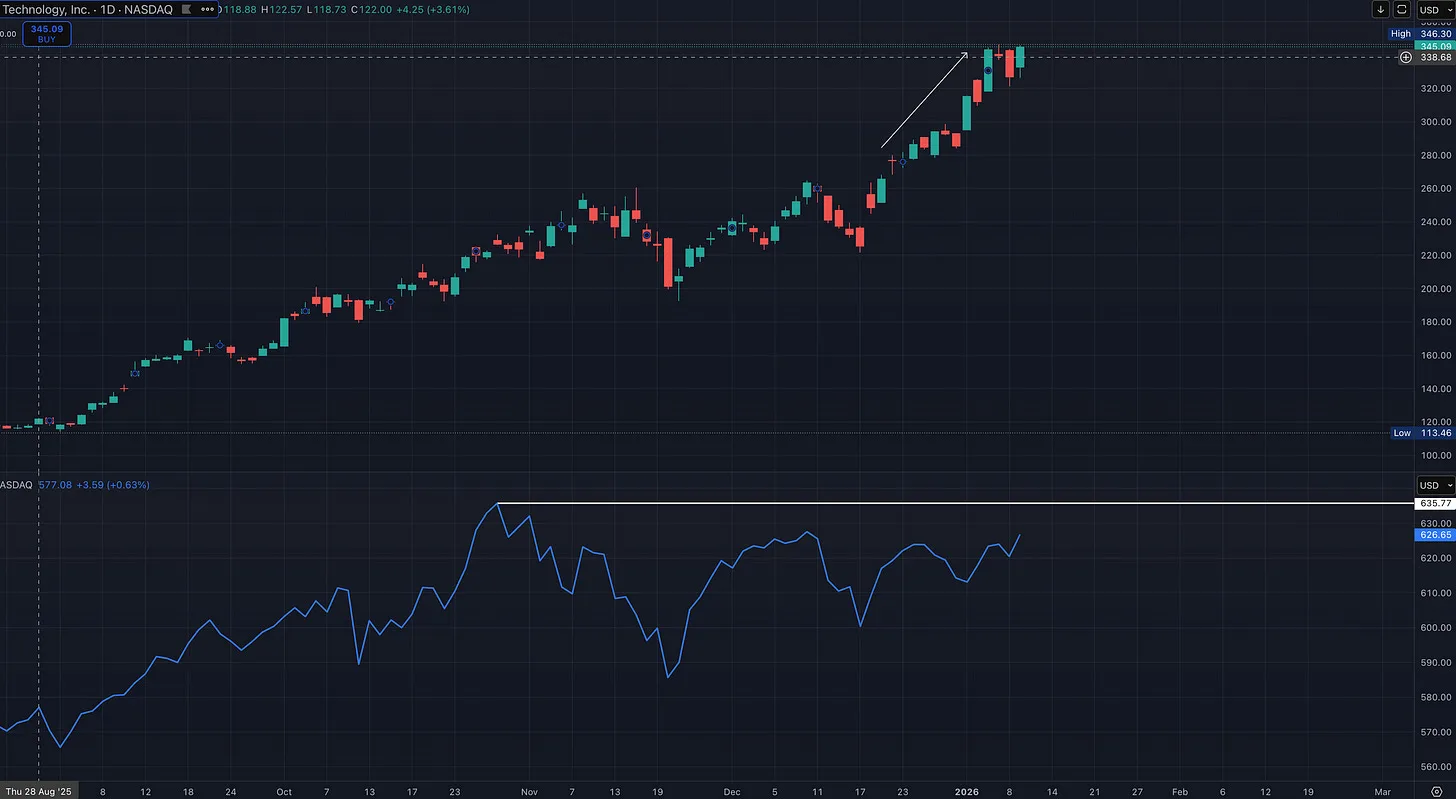
Here is what leadership looks like before the breakout.
The market is going sideways.
Most stocks are chopping.
Many are losing momentum.
Yet MU is making new highs.
That is not random.
That is relative strength.
When a stock advances while the broader market is stuck, it tells you something important.
Institutional demand is already present.
Selling pressure is being absorbed.
The stock is acting like a future leader before the crowd recognizes it, or confirming that it is already a leader.
This is how professionals identify strength early.
Not after the breakout.
Not after the headlines.
Before.
Example 2: SMCI Making New Highs While the Market Makes New Lows
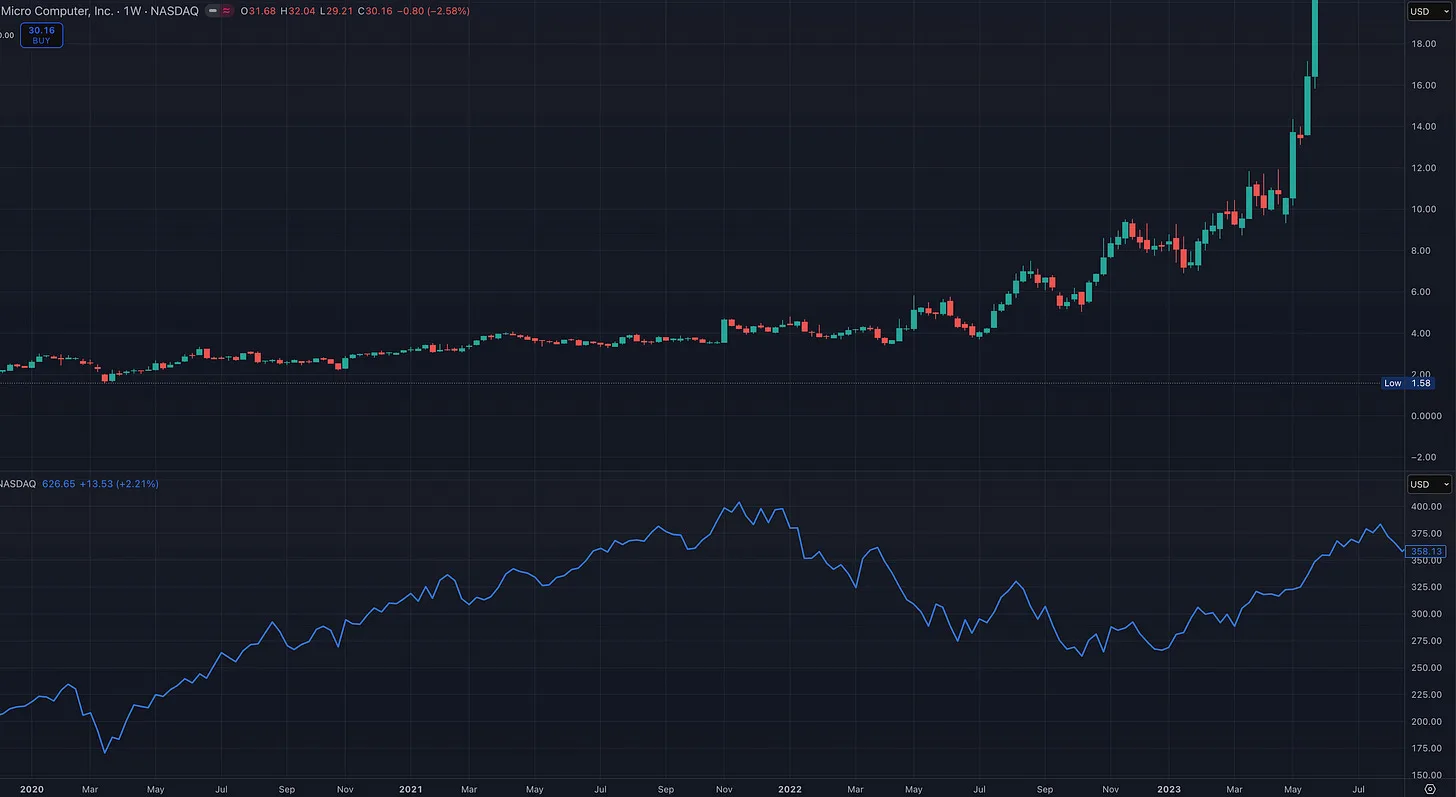
This is even more powerful.
The market is in a bear phase.
Indexes are breaking down.
Most stocks are making new lows.
Yet SMCI is making new highs.
That should immediately get your attention.
When a stock refuses to go down in a falling market, it is telling you demand is overwhelming supply.
That is institutional accumulation in its earliest form.
That is how market leaders separate from the crowd long before the next bull phase begins.
This is why professionals do not chase what already moved.
They study what holds up when everything else breaks.
What to Watch in Corrections, Consolidations, and Bear Markets
Next time the market enters a correction, scan for stocks that decline more moderately than the indexes. When the market is consolidating, watch which names break out before the averages do. And in the next bear market, pay close attention to any stock making new highs while the market is still making new lows. That behavior is not random.
First, it can signal that the bear market is approaching its end, because stocks lead the market. Second, it often identifies the next generation of market leaders. The relationship also works in reverse. When the market is rising but former leaders begin breaking down, it can signal that a top is forming or that a major leadership rotation is underway.
Spend as much time studying this relationship between stocks and the market as you do studying the characteristics of winning stocks themselves.
More in Strategy & Tactics
All Strategy & Tactics articles →
Oct 8, 2026 · Strategy & Tactics
Up 100% and Still Buyable? What Traders Get Wrong About Extended Stocks
How to identify proper buy points, avoid chasing stock breakouts, and manage entry risk using lessons from William O’Neil, Mark Minervini, David Ryan, and Dan Zanger.
- Momentum Trading
- VCP
- position trading
- Growth Stock Trading
- David Ryan
- Flag Pattern
- chart patterns
- Cup and Handle
Sep 27, 2026 · Strategy & Tactics
Should You Follow Leading Stocks or Wait for Market Confirmation?
How to read the market, industry groups, and individual stocks together so you can recognize opportunities, build exposure, and respond when conditions change
- growth stocks
- CANSLIM
- Trading
- position trading
- Stan Weinstein
- William O'Neil
- Momentum Trading Strategy
- Trade stocks
Sep 25, 2026 · Strategy & Tactics
Stage Analysis: How to Spot Stage 3 in Real Time
Recognize a developing Stage 3 using Stan Weinstein’s framework, with real chart examples, warning signs, and lessons for protecting your gains
- Momentum Trading
- Nasdaq
- technical analysis
- CANSLIM
- position trading
- Stan Weinstein
- QQQ
- Find True Market Leaders