
Trading articles/The Stock Looks Too High. That Might Be the Point.
Jun 24, 2026 · Momentum Trading Strategy
The Stock Looks Too High. That Might Be the Point.
What O’Neil, Ryan, Minervini, and Darvas understood about buying strength before the move becomes obvious
Originally published on Substack.
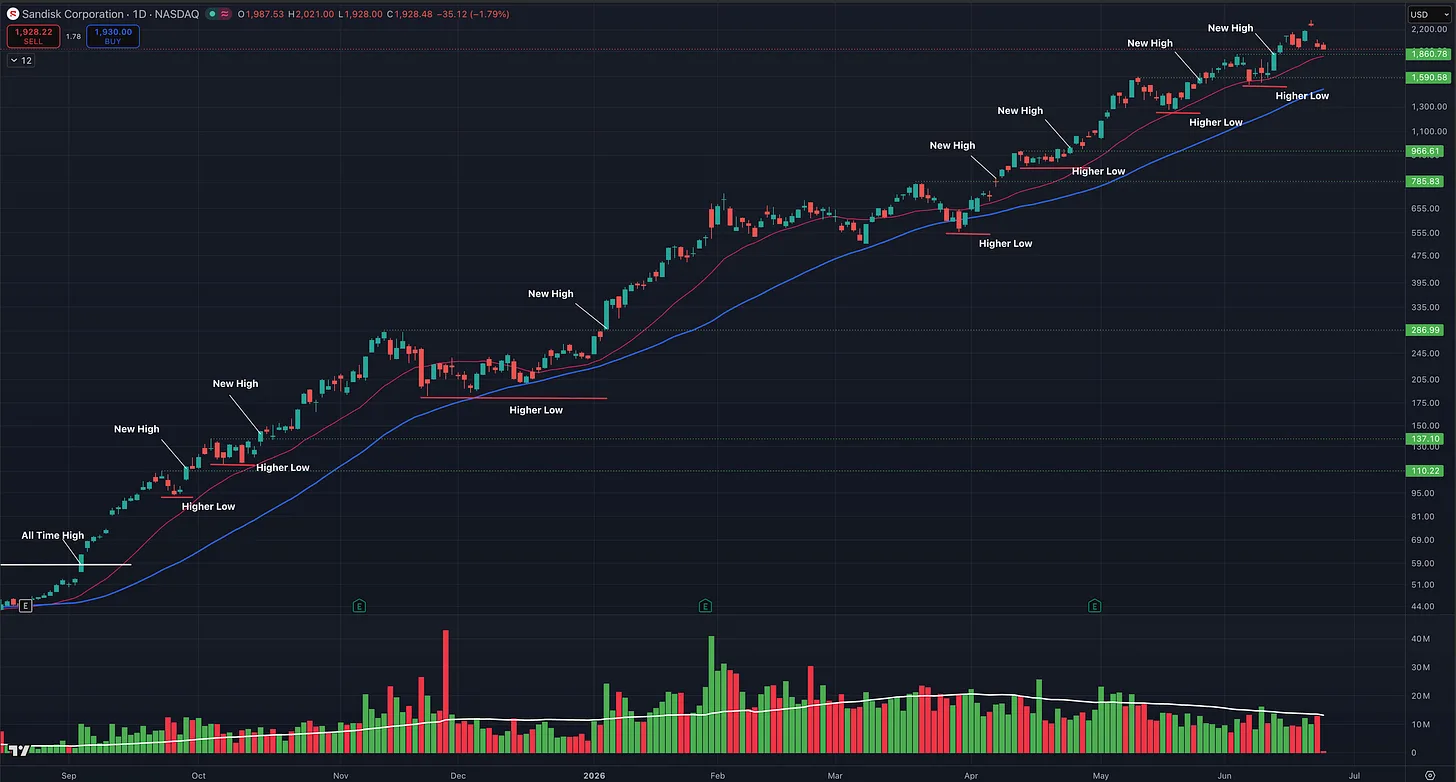
One of the hardest ideas for most investors to accept is that the best stocks usually do not look cheap when they are ready to begin their biggest moves. They often look expensive, obvious, and uncomfortable to buy. They may already be near or at new highs, and to the average investor, that feels like the worst possible place to enter.
That feeling is exactly why so many people miss the biggest winners. They confuse a stock being “high” with a stock being “too late” or “extended.” In reality, many of history’s greatest market leaders began their most important advances from areas that looked too high to the majority.
This is the point I want to show visually in the video below. There are moments on a chart where most people look at the stock and say, “I missed it.” Then, weeks or months later, that same area looks obvious because the stock went much higher.
That is the paradox of true leadership. The stock often looks extended to the crowd right before it proves that it is not done moving. The key is knowing the difference between a proper breakout and careless chasing.
This is why new highs should not automatically scare growth investors. In a true leader, repeated new highs can be evidence of demand, not a reason to assume the move is over. The key is whether the stock continues building higher highs, higher lows, and proper support along the way.
One of the best ways to train your eye is to study the biggest market winners and replay their charts as if you were seeing them in real time. Do not only study what the chart looked like after the move was obvious. Study what it looked like before the breakout, near the new high, when the decision still felt uncomfortable.
Below, I’ll break down how William O’Neil, David Ryan, Mark Minervini, and Nicolas Darvas all approached this same idea in different ways, and why buying strength near new highs is often misunderstood by the majority of investors.
O’Neil’s Great Paradox
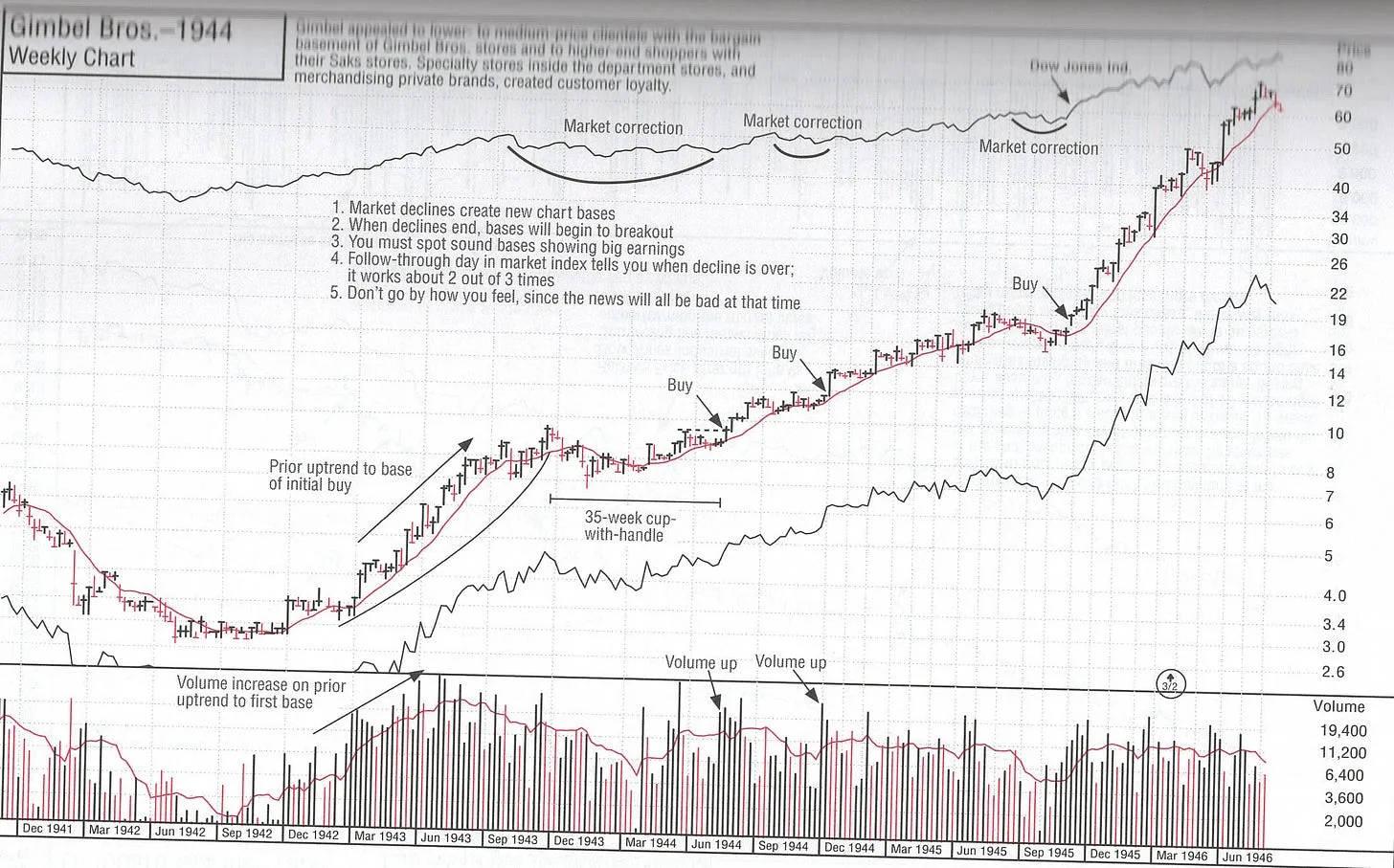
William O’Neil spent decades studying the biggest stock market winners. One of the most important conclusions from that research was that great stocks often begin their major advances near new price highs, not near new lows. This went directly against the common belief that investors should focus on stocks that look cheap after large declines.
O’Neil understood that most people are naturally drawn to bargains. They feel safer buying a stock that has fallen because it appears less risky, but in many cases, a stock is down for a reason, while a stock pressing into new high ground may be showing that institutional demand is beginning to overpower supply.
That is why buying strength can feel so uncomfortable. The investor’s emotions say the stock is too high, but the chart may be saying something very different. It may be saying that the stock is under accumulation, that it is separating from the market, and that a new advance is starting.
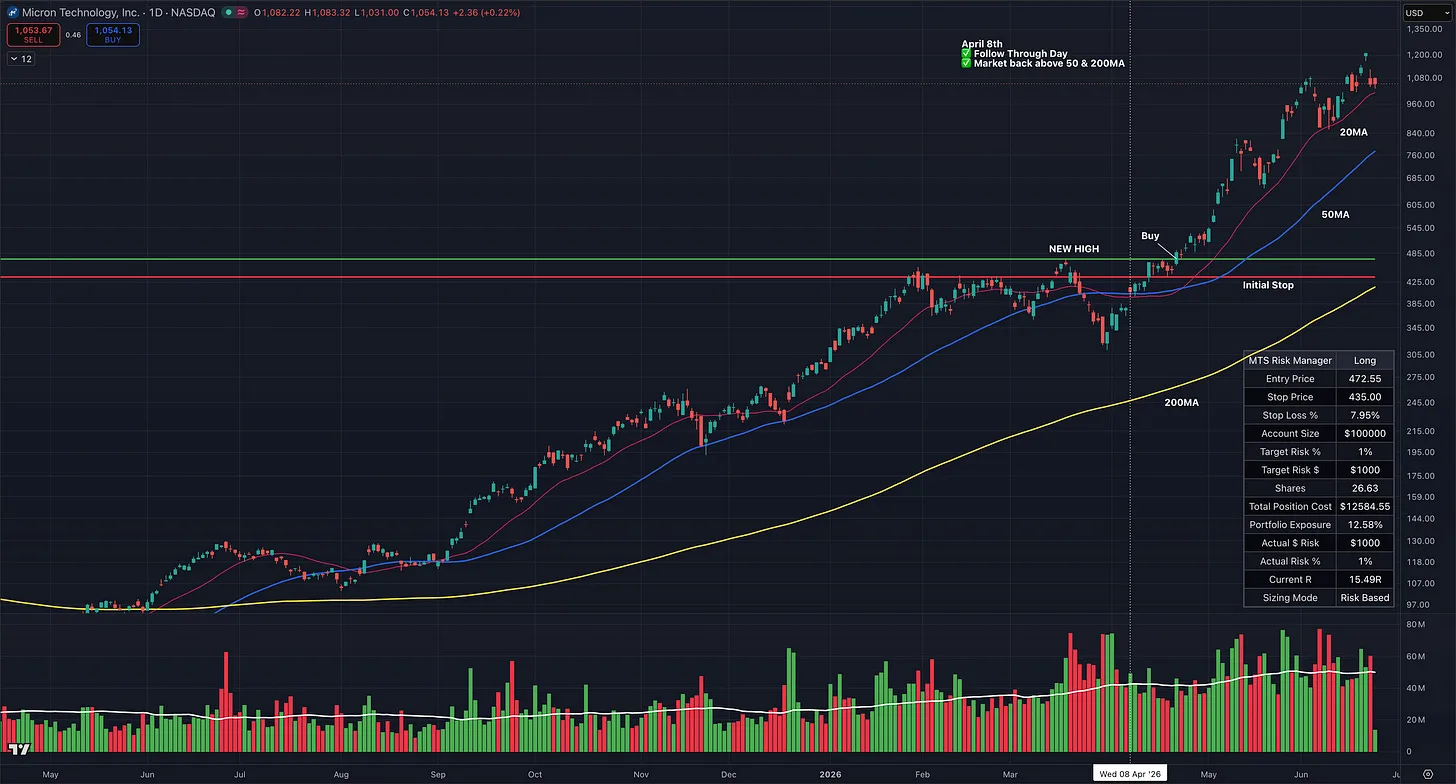
The lesson is not to buy every stock making a new high. That would be reckless. The lesson is to stop automatically fearing new highs when they appear in the right market environment, in a stock with the characteristics of a true leader, and from a proper buyable setup.
High Is Not the Same as Extended
A stock can be high and still be early. A stock can also be down and still be dangerous. Price alone does not tell you whether a stock is buyable.
What matters is the full context. Is the stock emerging from a proper base? Is volume expanding as it moves through resistance? Is relative strength confirming? Is the company a leader, and is the market environment supportive?
When those pieces come together, a stock near new highs may not be late at all. It may be doing exactly what a true leader is supposed to do. It is proving itself before the crowd fully understands what is happening.
This is where many investors make their biggest mistake. They look at how far the stock has already moved instead of studying whether it is beginning a new leg higher. They focus on the past move while the best traders focus on the current setup.
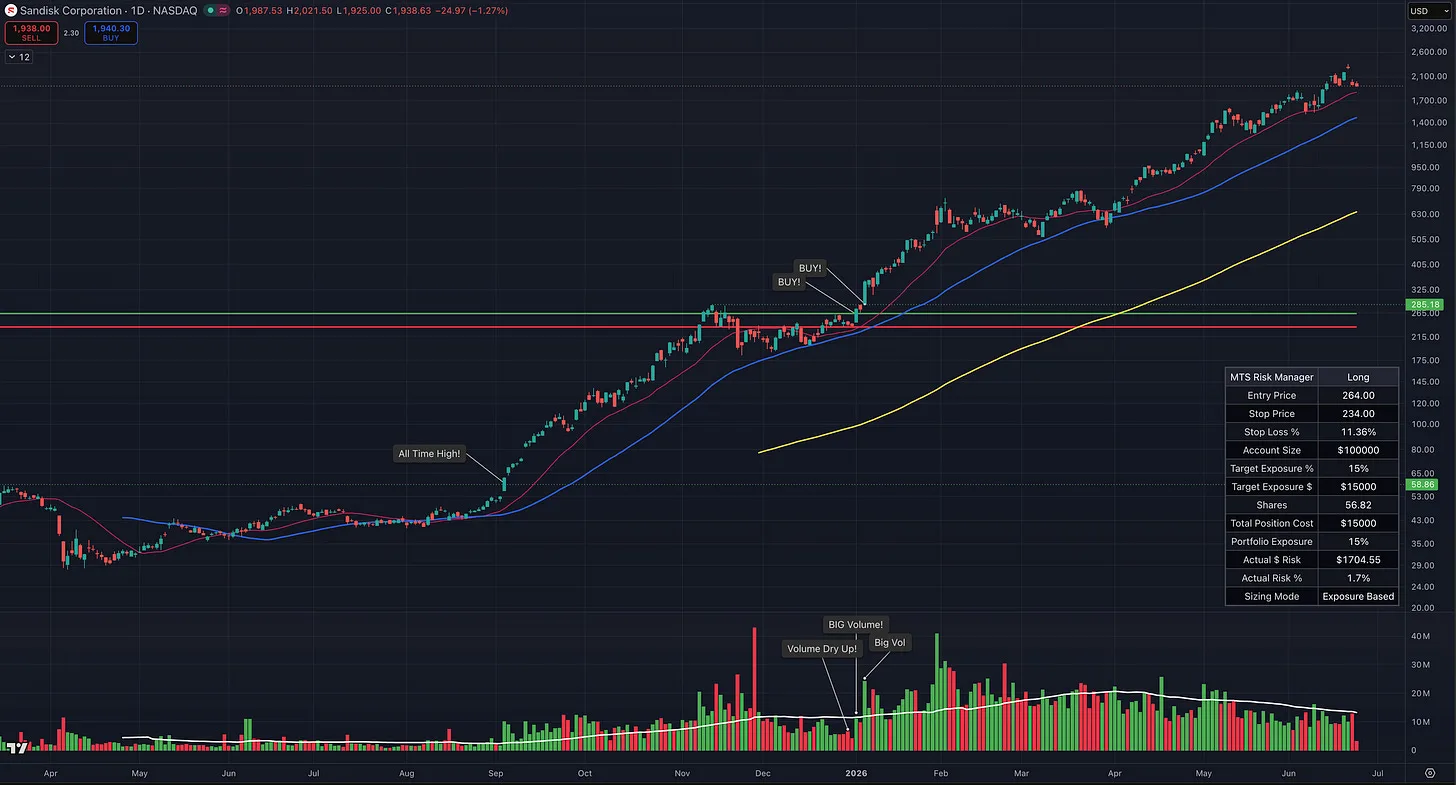
SNDK above is a perfect example of this.
From its March 2025 low to its January 2026 high, the stock advanced roughly 930%. From its breakout into all-time highs in September 2025 to November 2025, it advanced about 390%. By the time it began breaking out to new highs again in January 2026, many investors refused to touch it because it had already moved so much.
But the evidence was still there. SNDK had a hot industry group, accelerating sales and earnings, increasing fund ownership, and a 99 Relative Strength Rating. In other words, many of the characteristics of a true market leader were still lining up.
What happened next?
From January 2026 to June 2026, SNDK advanced more than 700%. And from its September 2025 breakout into all-time highs, the stock ultimately advanced more than 3,800%.
This is why the phrase “it’s already up too much” can be so dangerous. Sometimes a stock really is extended and late. But other times, the stock is simply proving that it is a true leader, and the move that looks too high to the crowd is still early in the context of the full advance.
David Ryan: Keep the Breakout Simple
David Ryan is a direct link to the O’Neil school of growth investing. He was William O’Neil’s protégé, worked at William O’Neil & Co., and went on to win the U.S. Investing Championship three years in a row. But what I like about Ryan is how simple he makes the breakout concept.
In Momentum Masters, Ryan explains that he basically reduces his setups to two categories: breakouts and pullbacks. He says traders do not need to get lost in every possible chart pattern name. Instead, they can draw a line across the top of where most of the stock’s trading has taken place and buy as the stock moves through that line.
That is a powerful way to think about new highs. The breakout is not complicated. A stock builds a base, trades sideways, tightens up, and then pushes through the area where sellers had previously stopped it. When that move happens in a company with accelerating earnings and strong leadership characteristics, the new high is not automatically a warning sign. It may be the signal that demand is finally taking control.
Ryan also emphasizes that price alone is not enough. He wants to see strong volume and follow-through after the breakout. If a stock breaks out and quickly falls back into its base, that is not the action of a strong leader. But if the stock breaks out on strong volume and continues higher for several days, that can be evidence of institutional buying.
This is the part many investors miss. They see a stock moving into new highs and think it is already too late. Ryan’s approach asks a better question: is the stock breaking out of a proper setup with real demand behind it?
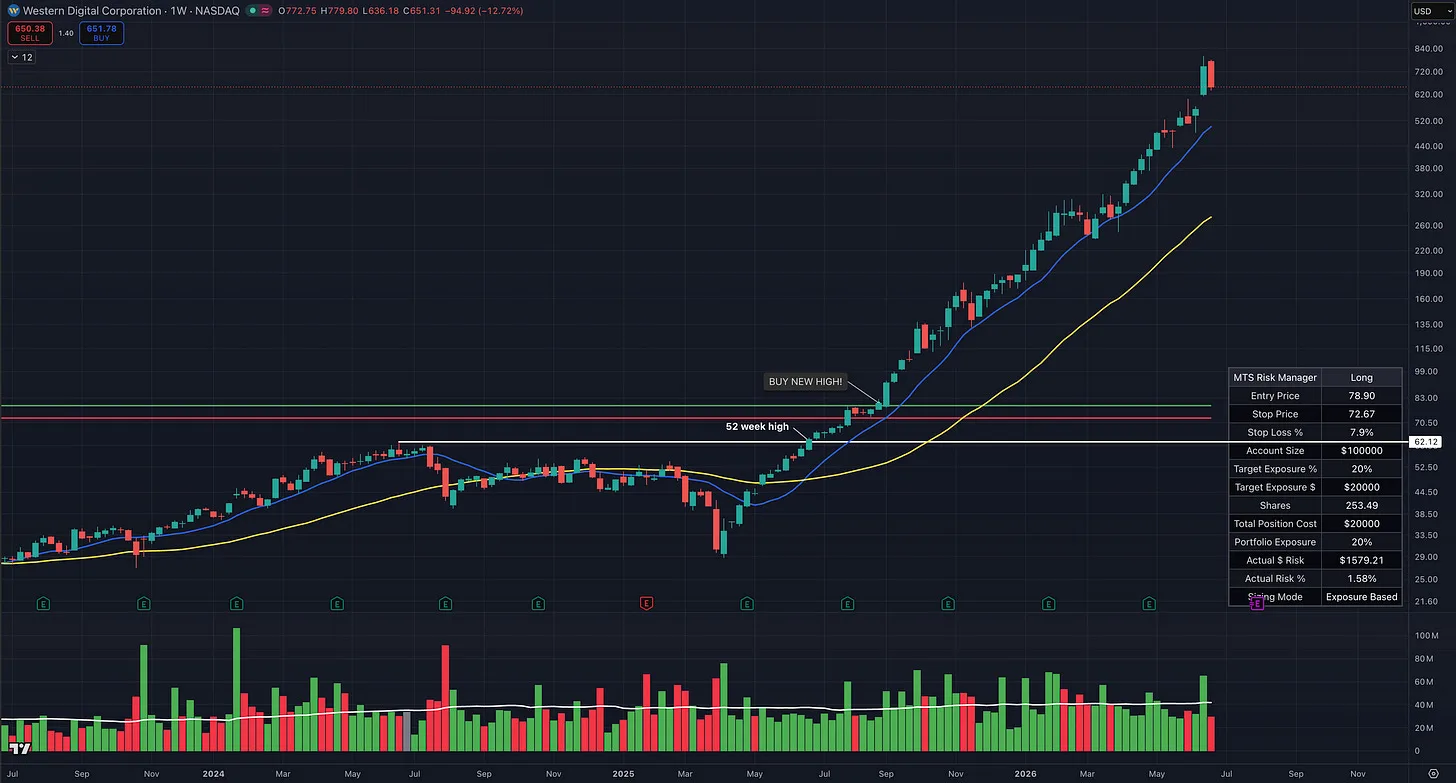
That is the difference between chasing and buying correctly. Chasing is buying a stock just because it is up. Buying correctly is waiting for a strong stock, with the right characteristics, to emerge from a proper base as demand shows up.
Minervini and Buying After the Stock Proves Itself
Mark Minervini makes the same point from a different angle. He is not trying to buy the lowest price. He is trying to buy the right price, at the point where the stock has already started to prove itself.
The lowest price often comes before confirmation. At that stage, the stock may still be in a downtrend, under distribution, or lacking the type of demand that supports a sustained advance.
Minervini wants evidence first. He wants leading stocks in sound price structures, emerging through proper pivot points, with price tightening and volume contracting before the move. In other words, the stock should not only be strong. It should be setting up in a way that creates a defined entry and a clear risk point.
By the time a stock is setting up correctly, it may already be far above its low. In some cases, Minervini notes that a stock may have already advanced 25% to 100%, and sometimes 200% to 300%, before forming the next actionable setup.
To an amateur, that looks like the stock is too high. To a professional, that may be the evidence that the stock is a real leader. The stock has moved from hope to confirmation.
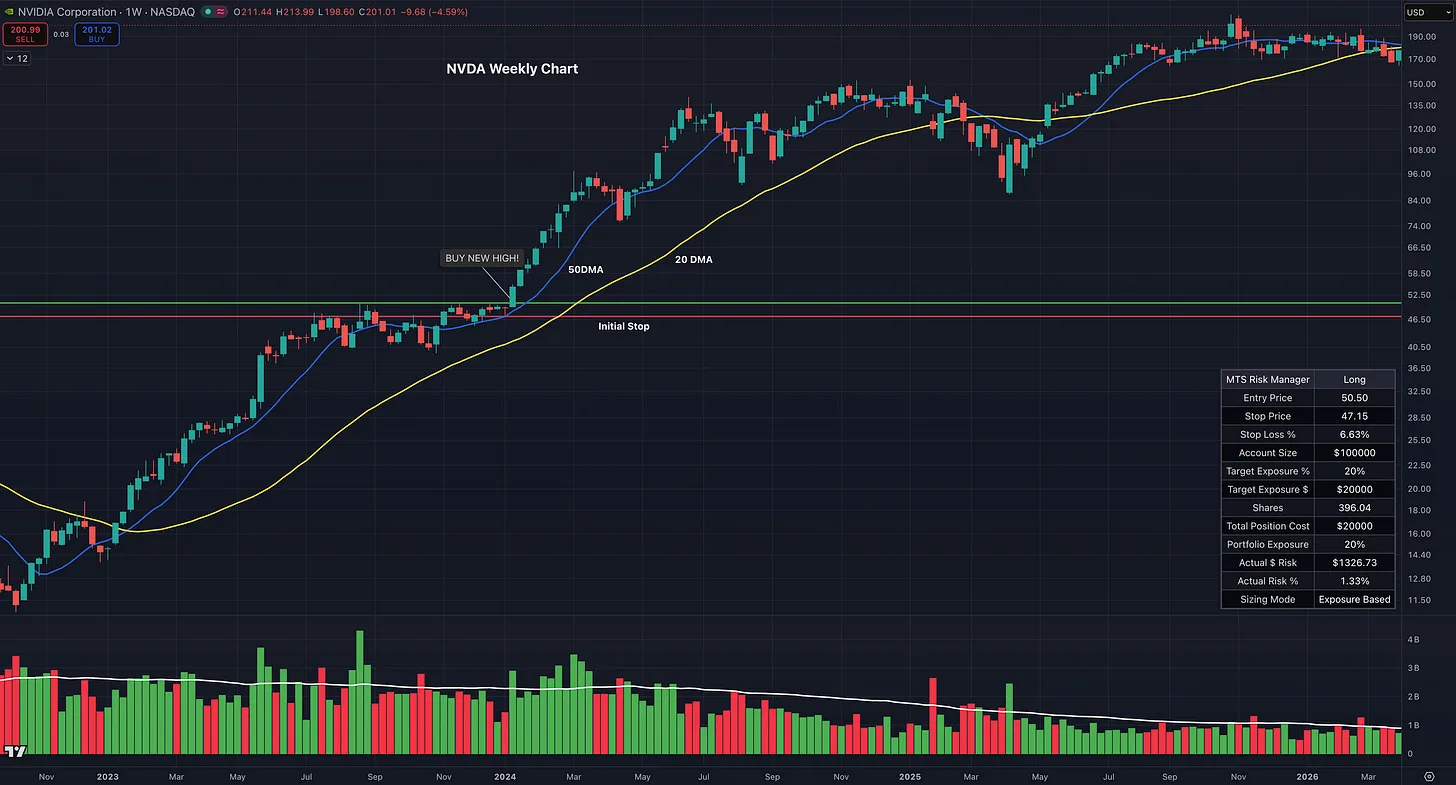
This is where the psychology becomes difficult. Most people want to buy before the proof arrives because they want the lowest possible price. But the best growth traders are often willing to pay a higher price after the stock confirms that demand is real and the risk can be defined.
Darvas and the Box Breakout
Nicolas Darvas came to this same truth through painful experience. Early in his journey, he made many of the mistakes that most new traders make. He listened to tips, bought low-priced stocks, followed rumors, traded too frequently, and tried to find bargains.
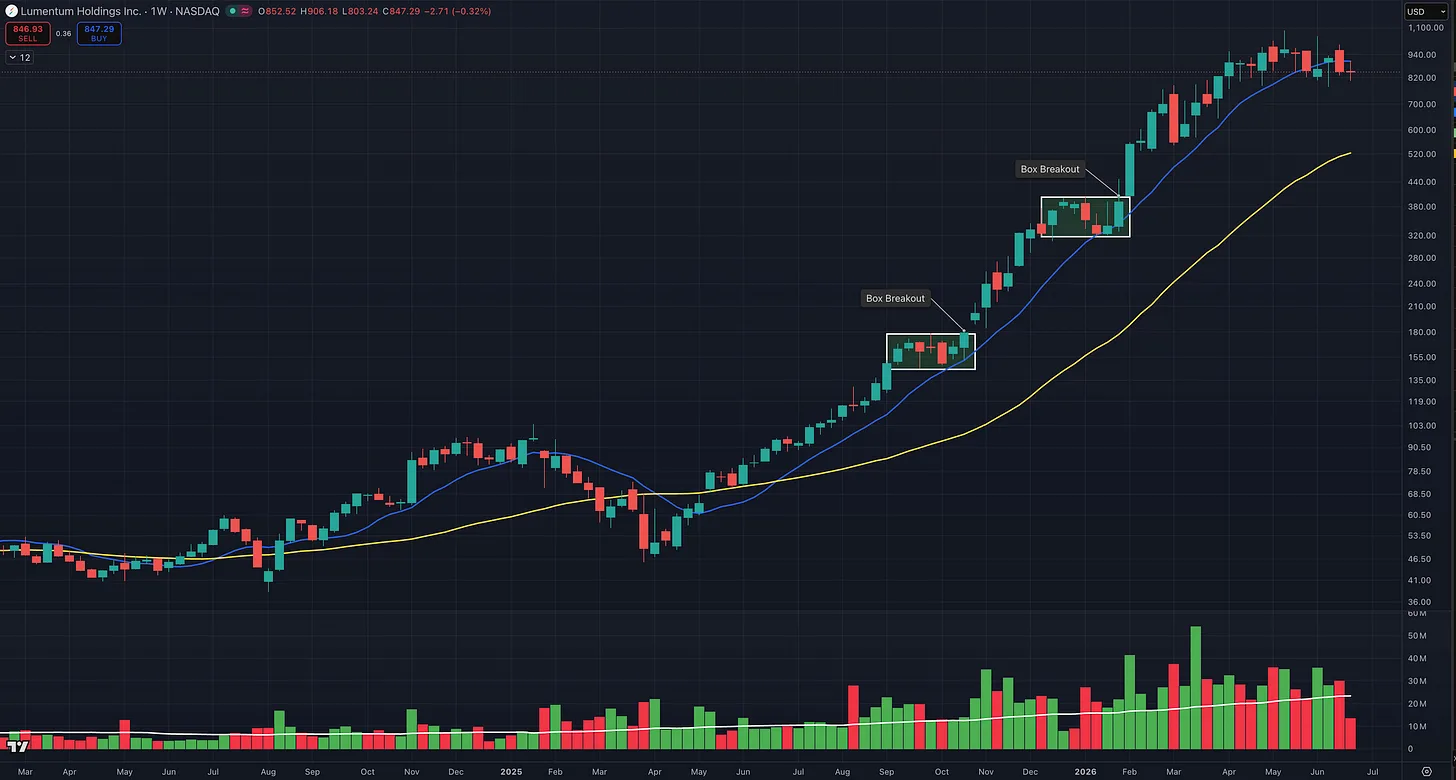
What changed his results was that he stopped trying to predict and started letting price action guide him. Instead of looking for stocks that merely looked cheap, he began focusing on stocks that were already moving upward, forming defined trading ranges, and then breaking into higher price levels.
That became the foundation of his box theory. A stock would advance, pause, and trade within a range. Darvas would define the upper and lower edges of that box and watch to see whether the stock could hold the lower part of the range and eventually move into a higher box.
The key was confirmation. Darvas was not buying because a stock had fallen to a bargain price. He was interested when a stock showed strength, held its structure, and began moving into a higher range. In his view, a normal reaction inside the box did not automatically mean the move was over. It could simply be the stock preparing for the next advance.
This is why Darvas fits so well with the lesson of new highs. He was not afraid of strength. He wanted stocks that were rising, forming boxes, and proving they could move into higher ground.
The Lesson Has Not Changed
Darvas was trading in the 1950s. O’Neil built his research from more than a century of market winners, and his own buy rules began after studying the Dreyfus Fund and noticing how much of its success came from buying stocks as they broke into new highs. Ryan carried many of those principles forward after working directly with William O’Neil, and Minervini has applied many of the same timeless ideas in modern markets.
Different traders. Different eras. Different stocks. But the core lesson has not changed.
The greatest winners often look uncomfortable before they become obvious. They break out near new highs, they force investors to buy strength instead of weakness, and they usually do not give everyone the perfect pullback they are waiting for.
That does not mean every new high is buyable. The lesson is that new highs should be studied in context. The market environment matters. Leadership characteristics matter. Price action, volume, and what is currently working in the market all matter.
What worked in the 1950s still works today because human nature has not changed. Investors still want comfort. They still fear buying too high. They still hesitate when a stock looks obvious, and they still look back later wondering why they missed it.
A major edge is learning to recognize when a stock is not simply extended, but emerging as a true leader. That is why studying past winners matters. You are not just studying what the chart looked like after the move was obvious. You are training your eye to notice strength in real time, before the move becomes obvious to everyone else.
Eliminate the automatic phrase, “It’s already up too much.” Sometimes it is true. Sometimes the stock really is extended, or showing a climax-type move like we saw in silver in early 2026. But other times, that phrase becomes the exact reason investors talk themselves out of the biggest winners in the market.
Go Deeper With a Complete Process
If you want to go further, the Momentum Trading Strategy Course walks you through the full process from the ground up: reading the market environment, selecting the right stocks, building a playbook of proven setups, managing risk, sizing positions, planning trades, and reviewing your performance.
More in Strategy & Tactics
All Strategy & Tactics articles →
Oct 8, 2026 · Strategy & Tactics
Up 100% and Still Buyable? What Traders Get Wrong About Extended Stocks
How to identify proper buy points, avoid chasing stock breakouts, and manage entry risk using lessons from William O’Neil, Mark Minervini, David Ryan, and Dan Zanger.
- Momentum Trading
- VCP
- position trading
- Growth Stock Trading
- David Ryan
- Flag Pattern
- chart patterns
- Cup and Handle
Sep 27, 2026 · Strategy & Tactics
Should You Follow Leading Stocks or Wait for Market Confirmation?
How to read the market, industry groups, and individual stocks together so you can recognize opportunities, build exposure, and respond when conditions change
- growth stocks
- CANSLIM
- Trading
- position trading
- Stan Weinstein
- William O'Neil
- Momentum Trading Strategy
- Trade stocks
Sep 25, 2026 · Strategy & Tactics
Stage Analysis: How to Spot Stage 3 in Real Time
Recognize a developing Stage 3 using Stan Weinstein’s framework, with real chart examples, warning signs, and lessons for protecting your gains
- Momentum Trading
- Nasdaq
- technical analysis
- CANSLIM
- position trading
- Stan Weinstein
- QQQ
- Find True Market Leaders