
Trading articles/The Importance of Low-Risk, High-Reward Setups in Trading
Apr 30, 2026 · Momentum Trading Strategy
The Importance of Low-Risk, High-Reward Setups in Trading
A Nasdaq-100 trade example on using multiple timeframes, progressive exposure, and financing risk to control downside while staying open to bigger upside
Originally published on Substack.
Read This Before Watching the Video
One of the biggest mistakes traders make is focusing too much on whether a trade will work and not enough on what the trade looks like if it does not.
The goal is not to predict the future with perfect accuracy. The goal is to structure trades where the downside is clearly defined, the potential reward is meaningfully larger than the risk, and the position can be managed in a way that protects capital if the market does not follow through.
That is the main idea behind low-risk, high-reward trading.
In the video above, I walk through a real Nasdaq-100 futures trade to show how I think about three related concepts: multiple timeframe analysis, progressive exposure, and financing risk. The trade itself is less important than the process behind it. The setup did not turn into a huge winner, but it still did what a good setup is supposed to do. It offered a defined-risk entry, gave the trade room to work, and allowed risk to be reduced after the position moved in my favor.
The daily chart provided the broader context. At the time, the Nasdaq-100 had been in a strong uptrend for months. Price had recovered from the April weakness, reclaimed key moving averages, and spent much of the summer and early fall making higher highs and higher lows. In that type of environment, a pullback toward the 50-day moving average is not automatically bearish. It can become an area where institutions and active traders begin watching for support.
That does not mean the 50-day moving average is a buy signal by itself.
This is an important distinction. A moving average is not magic. It is a reference point. When price pulls back into an important level, I want to observe how it behaves there. Are sellers still in control? Is volume expanding to the downside? Is price slicing through the level with no response from buyers? Or are sellers beginning to lose control while buyers start stepping back in?
That is where the shorter timeframe becomes useful.
The daily chart gave the context: trend, moving average support, prior price behavior, and the possibility of another leg higher. The intraday chart helped with execution. On the intraday chart, price moved slightly below the 50-day, rallied back, pulled in again, and then began to show a change in character. Sellers were no longer pushing price down with the same force. Price formed a higher low, then pushed into a higher high. Volume behavior also began to improve.
That shift gave the trade structure.
The entry was not based on a prediction that the Nasdaq had to go higher. It was based on price action improving near an important area of interest. If the trade failed, the stop was close and clearly defined. If the trade worked, the potential reward was several times larger than the initial risk.
That is what low-risk, high-reward really means.
It does not mean the trade is guaranteed to work. It does not mean the setup is safe. It means the downside is controlled and the upside is worth the risk.
This is also where progressive exposure matters. When the market is healthy and your trades are working, you can gradually press the gas. That might mean increasing position size, increasing individual trade exposure, or becoming more willing to take additional high-quality setups. When the market becomes choppy and trades stop working, you do the opposite. You reduce size, cut exposure, become more selective, and protect capital.
The key is that exposure should respond to evidence.
If the market is confirming your process, you can increase exposure gradually. If the market is punishing your process, you should reduce exposure quickly. This keeps you from being overly aggressive when conditions deteriorate and overly cautious when conditions are favorable.
Financing risk is another important part of this process.
Financing risk is the point where a trade has moved far enough in your favor that you can sell part of the position and reduce or eliminate the original risk on the rest of the trade.
For example, if a trade is up three times what you initially risked, selling one-third or one-half of the position can put you in a much stronger position. If price later comes back to your stop or breakeven level, you are no longer taking the same original risk. Depending on the math, you may walk away flat or still keep a small profit.
That is the purpose of financing risk. It is not just about taking a quick gain. It is about using strength in the trade to protect capital while keeping part of the position open for a larger move.
There are different ways to do this. Some traders sell into strength. Others wait for the first or second sign of weakness. Those tactics are a separate discussion, but the main concept is simple: once the trade gives you enough cushion, you can take partial profits, reduce risk, and let the remaining position work without being fully exposed to the original downside.
That changes the psychology of the trade.
Instead of being forced to make an all-or-nothing decision, you can reduce risk while still leaving part of the position open for a larger move. If the trade keeps working, you participate. If the trade reverses, you have already taken steps to protect yourself.
In this example, the Nasdaq did not continue to new highs. It eventually rolled back over and stopped out the remaining position. But that does not mean the trade was wrong. In real time, there was no way to know that the market was about to move into a choppy multi-month consolidation. All we can do is judge the evidence in front of us and structure the trade so that the potential reward justifies the risk.
That is the real lesson.
A good trade is not defined only by whether it becomes a big winner. A good trade is defined by whether the risk was controlled, the setup was logical, and the management process made sense.
This is why multiple timeframes, progressive exposure, and financing risk work together. The higher timeframe gives context. The lower timeframe can help refine execution. Progressive exposure helps you adjust to market conditions. Financing risk helps you protect capital after the trade starts moving in your favor.
The objective is not to be right all the time.
The objective is to put yourself in situations where being wrong does limited damage and being right can produce a meaningful reward. That is the foundation of asymmetric trading. Small losses when wrong. Larger opportunities when right. Controlled risk throughout the process.
More in Risk Management
All Risk Management articles →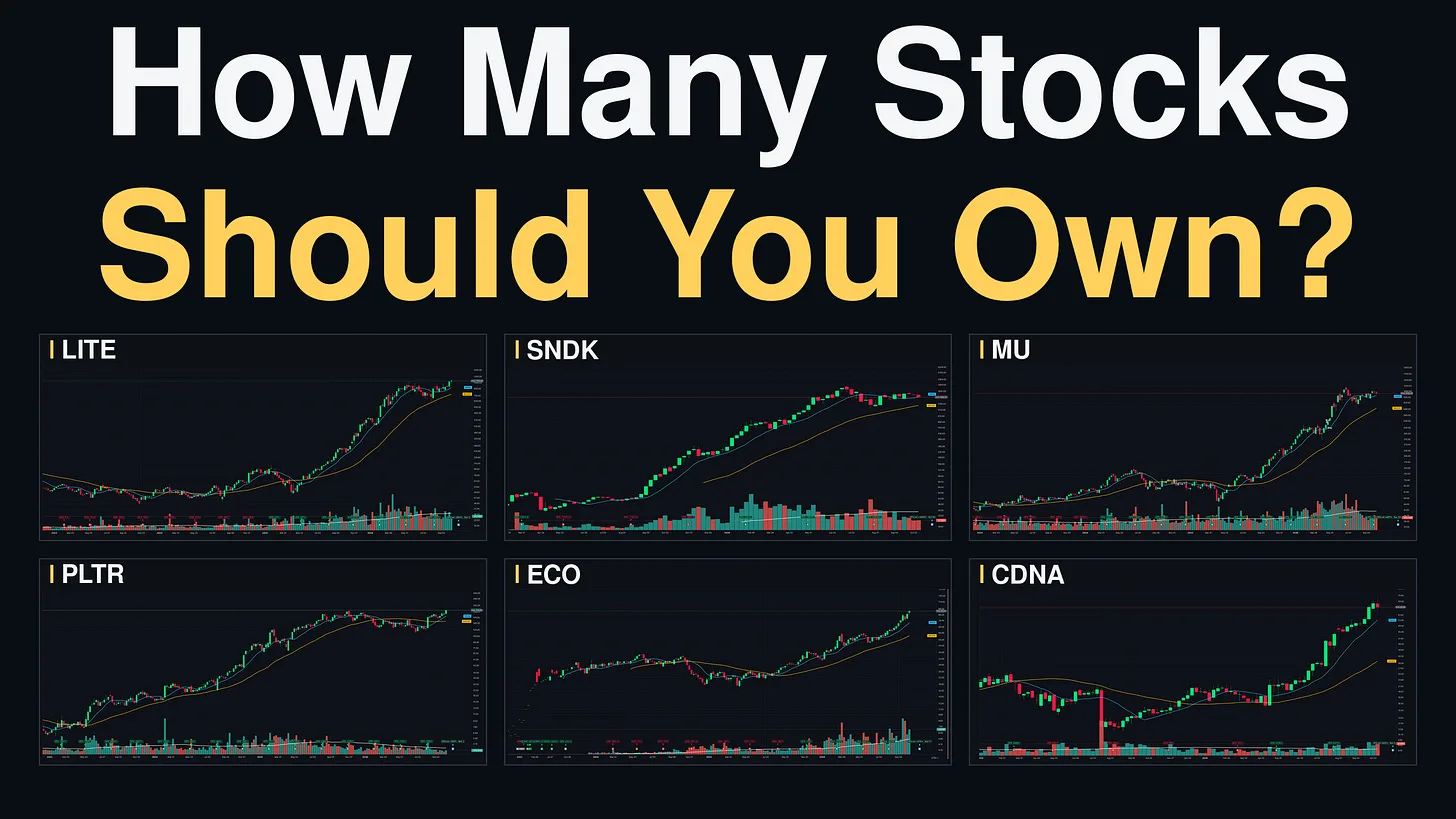
Oct 11, 2026 · Risk Management
How Many Stocks Should You Own? The Mistake That Can Cost You Your Biggest Winners
What William O'Neil, Mark Minervini, and the Market Wizards teach us about portfolio concentration, position sizing, cash management, and knowing when to stop trading.
- Momentum Trading
- Investing
- CANSLIM
- Trading
- position trading
- Growth Stock Trading
- Portfolio Heat
- David Ryan
Jul 7, 2026 · Risk Management
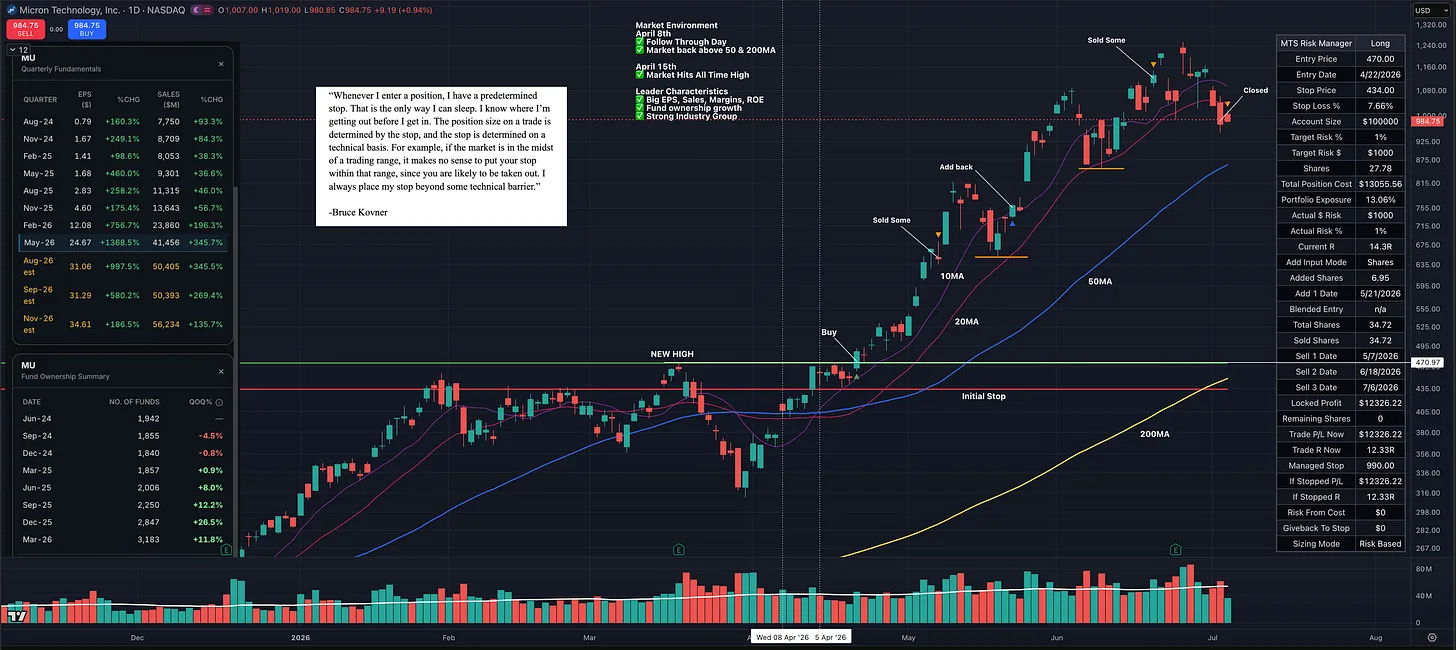
Position Size and Manage Risk Like a Market Wizard
Using Bruce Kovner’s stop-loss principle to plan the trade before the trade begins.
- growth stocks
- Momentum Trading
- fundamental analysis
- Learn Trading
- technical analysis
- Investing
- CANSLIM
- Trading
Jul 2, 2026 · Risk Management
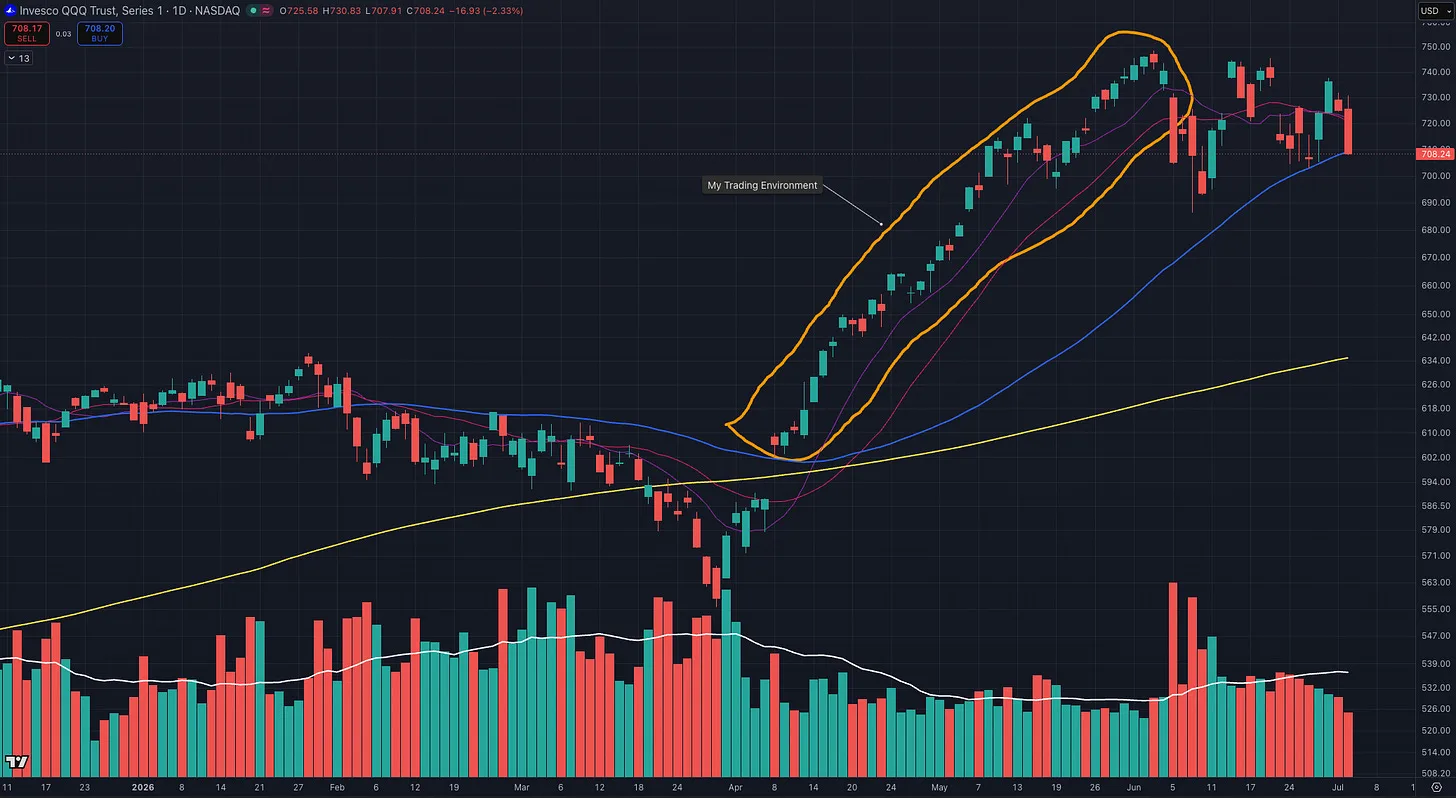
Why Great Traders Can Seem Bipolar in Choppy Markets
The best traders are not changing their minds because they are confused. They are changing their exposure because the market evidence has changed.
- Momentum Trading
- progressive exposure
- Learn Trading
- CANSLIM
- Trading
- position trading
- Growth Stock Trading
- stock trading