
Trading articles/The Best Trades Put You in the Money Immediately and Never Look Back
Jan 18, 2026 · Momentum Trading Strategy
The Best Trades Put You in the Money Immediately and Never Look Back
Why the biggest stock winners prove you right immediately
Originally published on Substack.
Most traders are taught to buy the pullback, the retest, or the moment where risk feels obvious and controlled. This approach is not wrong, but it often leads traders to sit and wait in stocks that are simply chopping around because the trade has not hit their stop or been technically invalidated. They want to feel intellectually smart about their entry, so they hold positions even though price is going nowhere. The market, however, rarely rewards this behavior. In fact, the greatest trades in history tend to do the opposite. They move fast, they move decisively, and they leave very little room for hesitation.
When I recently reread a Jesse Livermore quote, it forced me to reexamine this idea with fresh eyes. Livermore said,
“The real money made in speculating has been: ‘IN COMMITMENTS IN A STOCK OR COMMODITY SHOWING A PROFIT RIGHT FROM THE START.’”
At first glance, this sounds almost too simple to matter, but simplicity is often where the deepest truths hide in markets. That one sentence captures a behavioral edge that most traders still fail to grasp.
After reading it again, I went back and reviewed some of my own biggest winning trades. I also studied many of the most successful stock winners of the last one hundred years, similar to the historical work William O’Neil documented. What stood out immediately was how consistent the pattern was across different decades, industries, and market environments. The biggest winners almost never looked back after the entry. They worked right away and continued to advance.
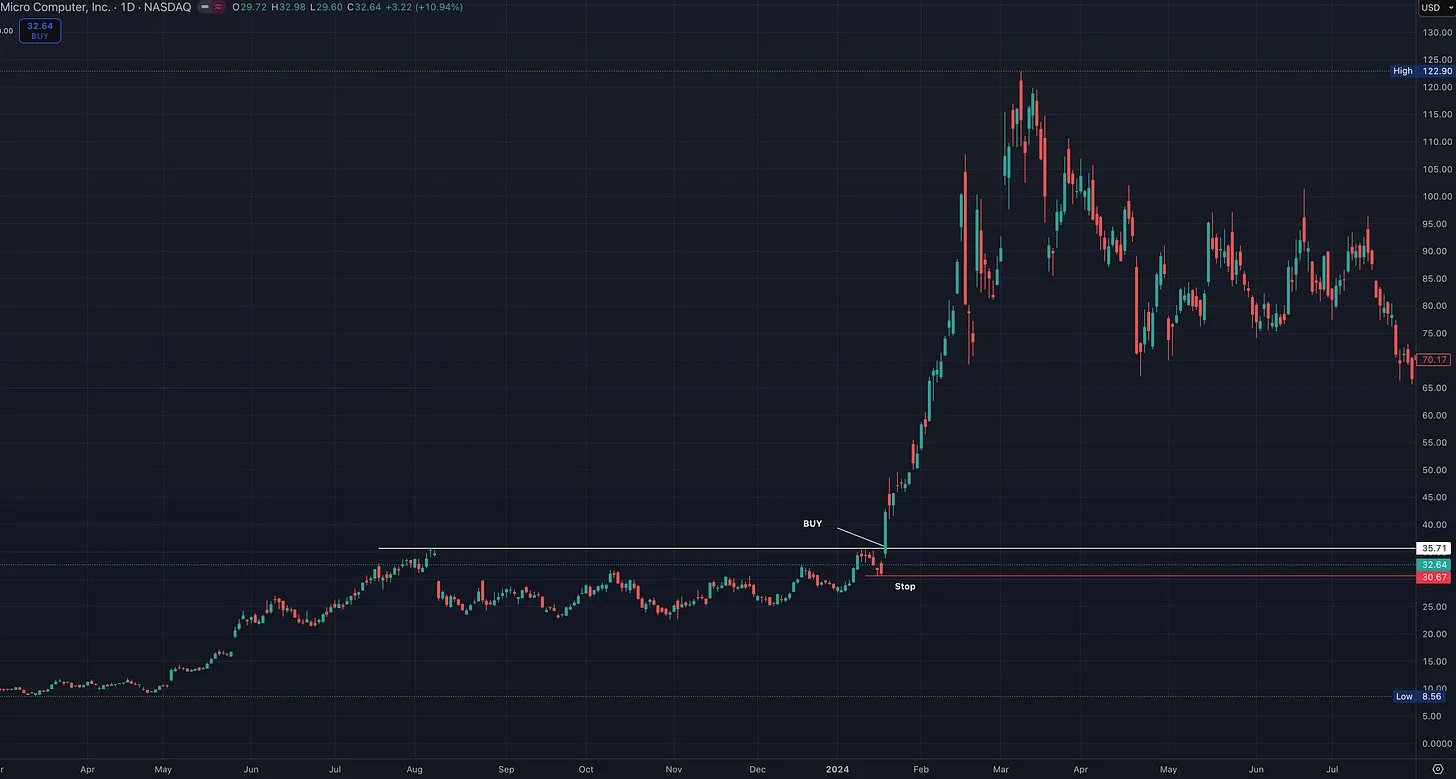
Below are several modern examples that followed this exact behavior.
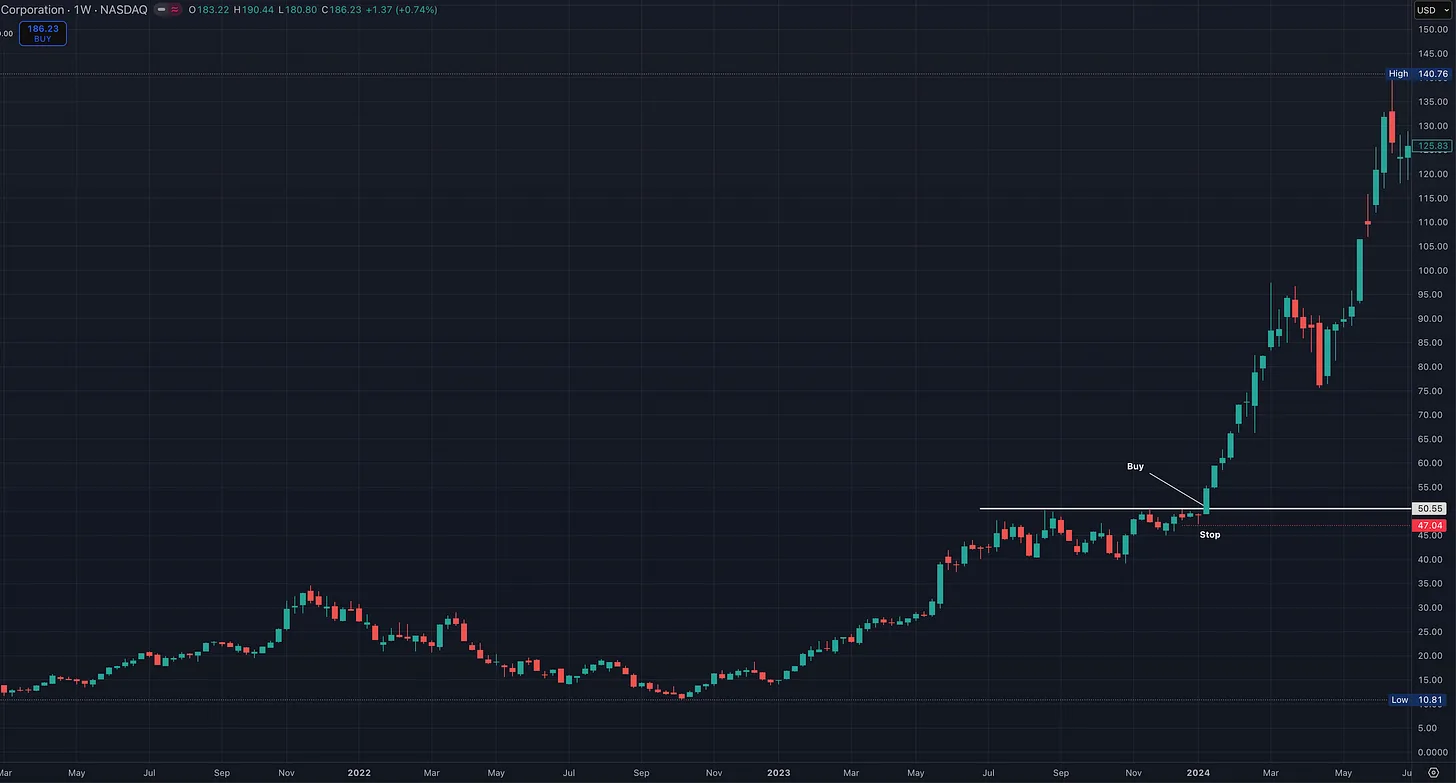
*Chart of NVDA
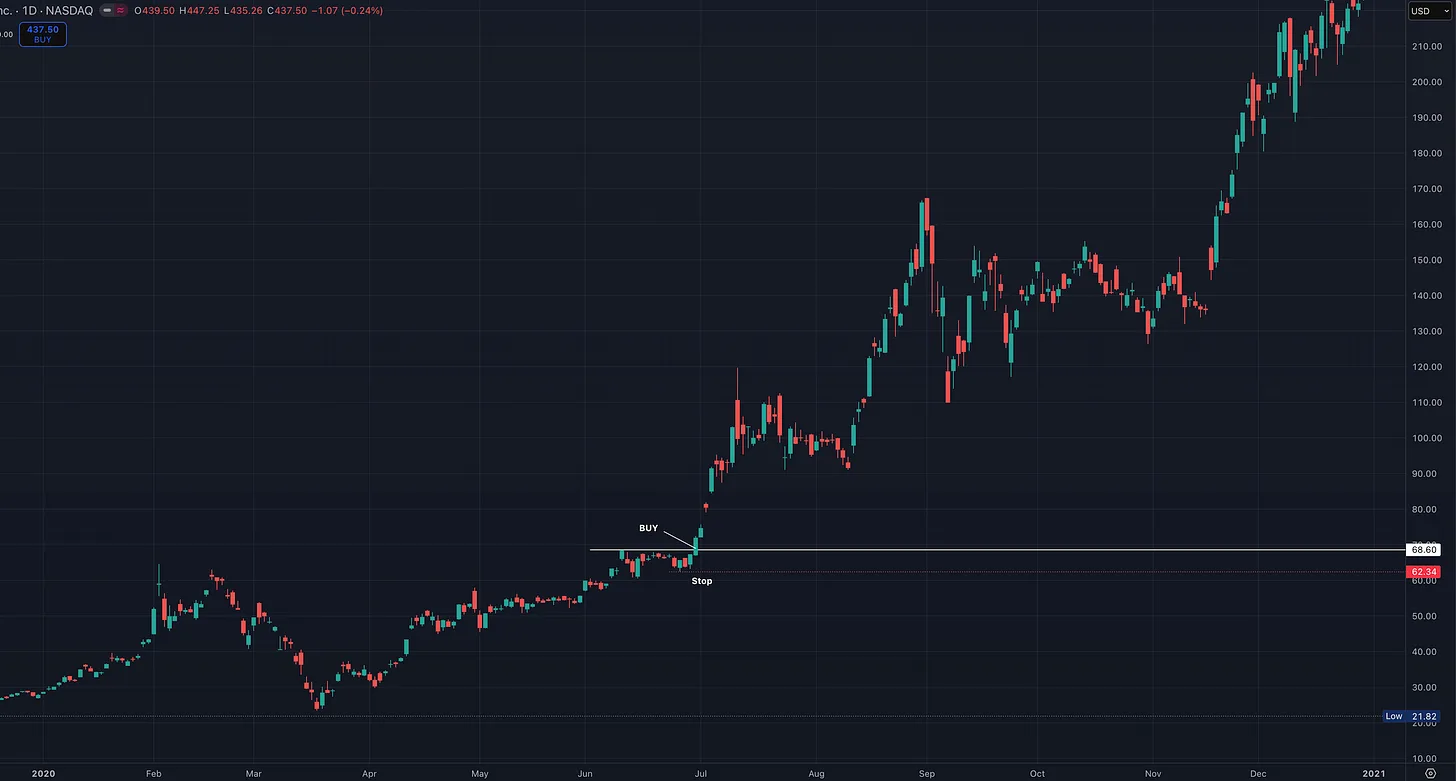
*Chart of TSLA
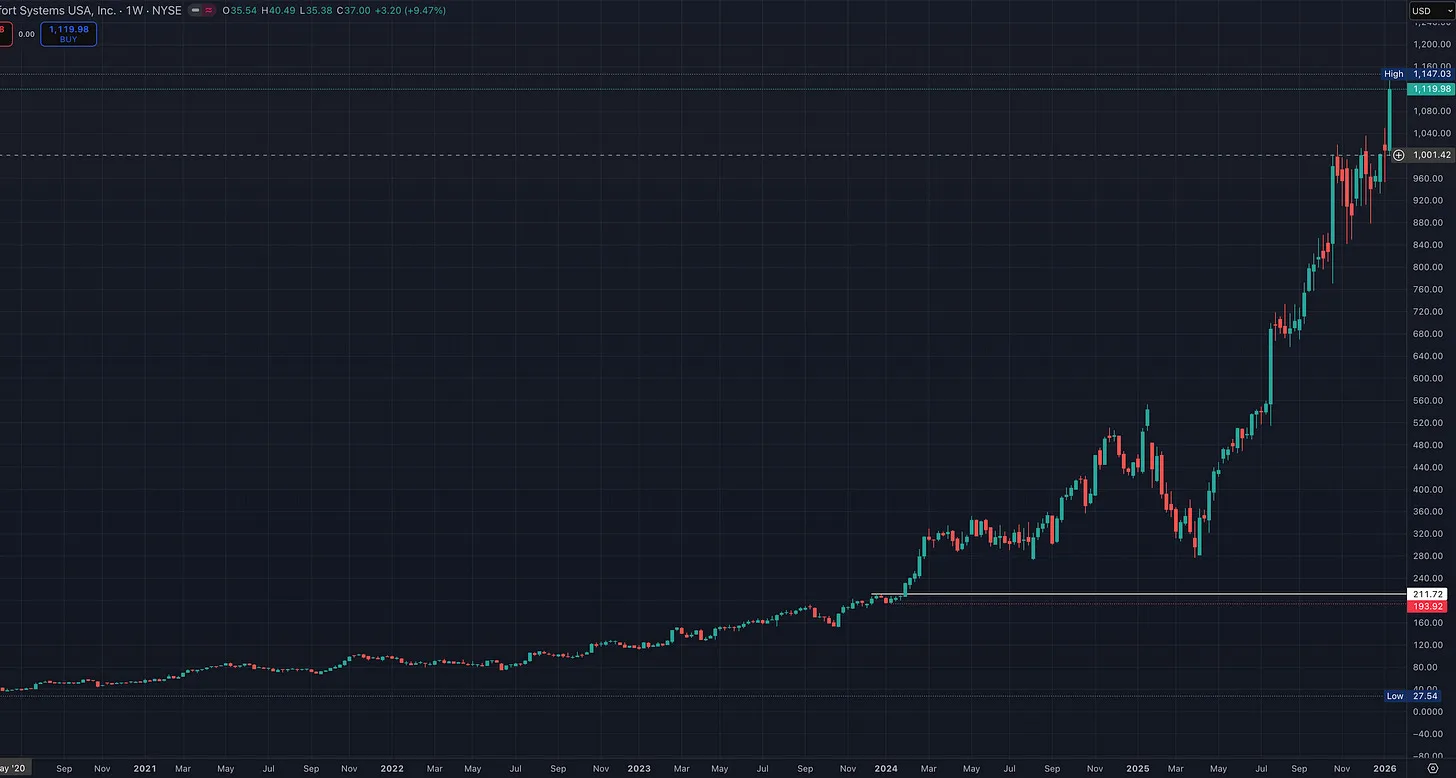
*Chart of FIX
In nearly every case, true leaders followed one of two paths. Some broke out and never returned to the buy point, leaving late buyers watching from the sidelines. This is not just ideal, it also puts you in a much better position to manage the trade, and emotions are far easier to regulate. It is difficult for most people to watch price run up and then pull back to their entry point. Other leaders surged rapidly, reaching two to three times the initial risk, then pulled back toward the buy area before continuing much higher. What they rarely did was chop sideways for weeks while allowing repeated, low-stress entries. That type of action is far more common in average stocks than in true leaders.
This behavior is not random, and it is not technical trivia. Strong stocks attract institutional demand early, and that demand expresses itself through immediate price movement. When institutions are accumulating shares, price does not linger or drift aimlessly. It moves with urgency. Weak stocks, or non-market leaders, on the other hand, need time, explanations, and optimism to stay afloat, or they simply rise in a choppy manner alongside the overall market.
This is exactly why Livermore’s rule still works today. When a stock shows a profit right from the start, it confirms that your thesis aligns with real demand. It removes uncertainty before emotions have time to interfere with execution and risk management. When a stock fails to do this, the psychological battle begins, and that battle is where most traders lose.
Once a trade stops working early, rational behavior quietly erodes. Traders begin widening stops, justifying poor action, and waiting for information that never arrives. Risk management turns into negotiation. Small losses turn into larger ones, not because the trader lacked intelligence, but because the trade never proved itself when it mattered most. And if a stock pulls back into the entry and then chops around for a while, you may not be losing money, but you are losing time. That capital could be allocated to something that is moving now, with the option to always reenter later.
If you look at modern leaders, the same pattern repeats again and again. Stocks like NVDA, SMCI, TSLA, FIX, MU, BE, and APP all showed strength almost immediately after their proper entries. They either accelerated away from the buy point or reached multiple times the initial risk before any meaningful pullback occurred. Leadership does not hesitate. It reveals itself early.
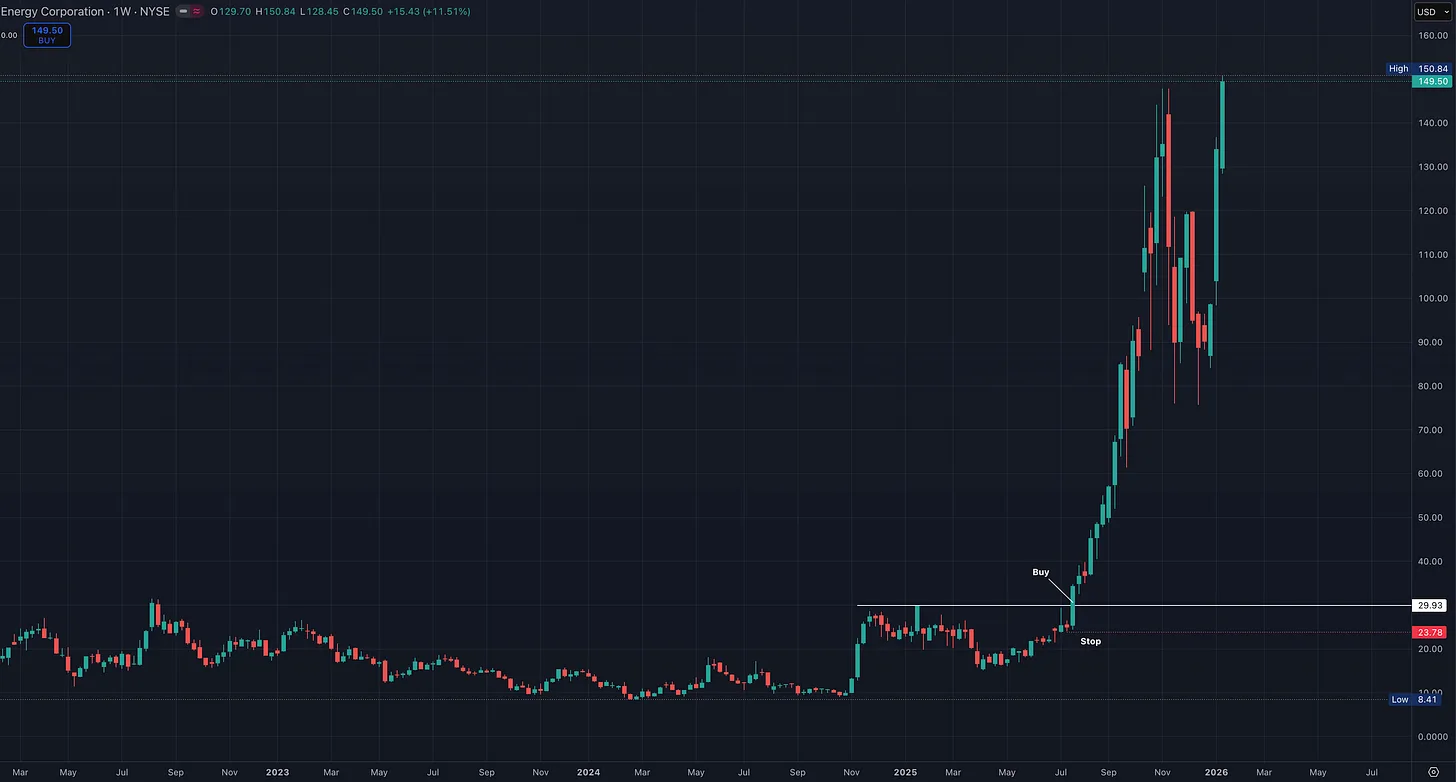
*Chart of BE
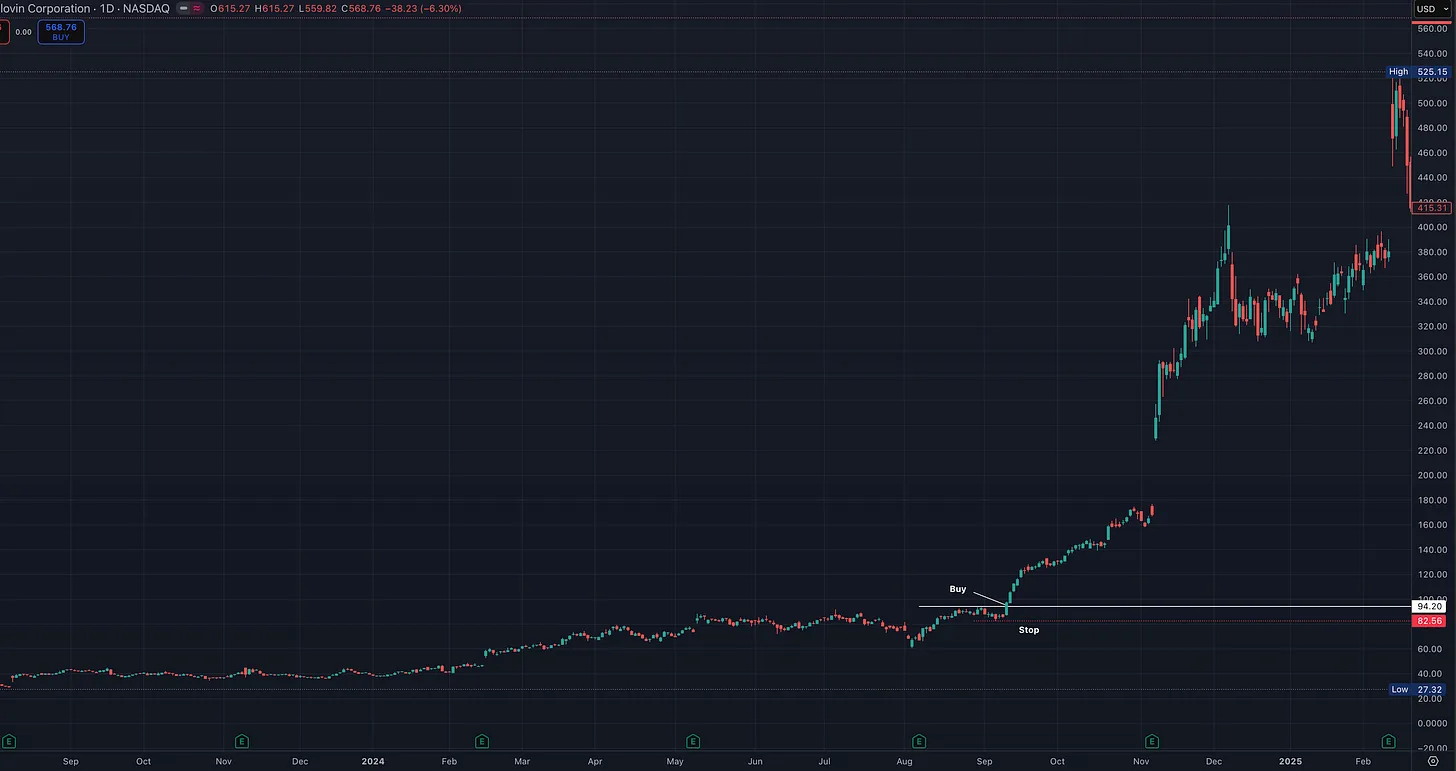
*Chart of APP
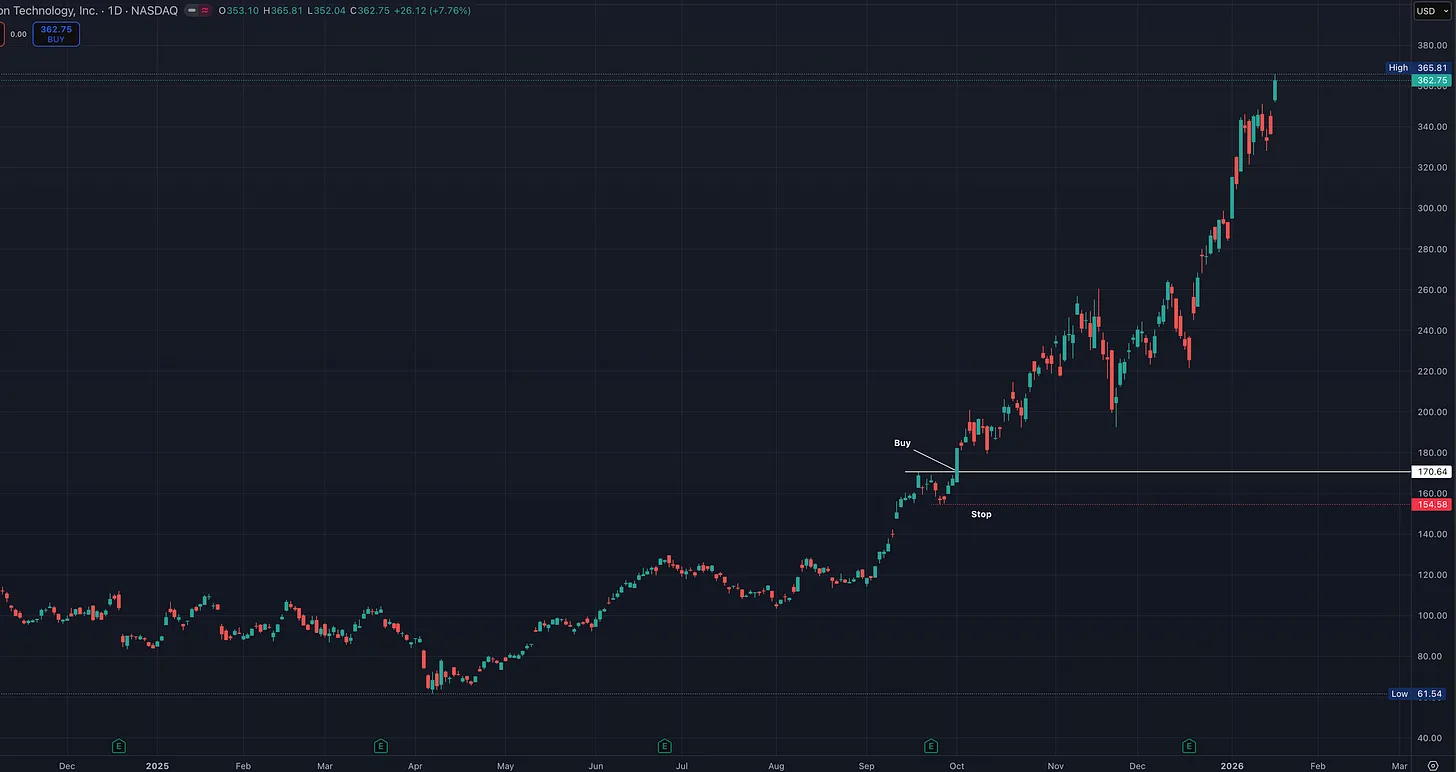
*Chart of MU
Livermore identified this behavior more than a century ago, and O’Neil documented it across generations of market winners. Despite changes in technology, regulation, and market structure, human behavior has not changed. The market still rewards strength and punishes hesitation.
The lesson is straightforward and simple. If your trade is right, it should not need much forgiveness. If it does, it is probably the wrong trade or the wrong timing. Watch how your next breakout behaves in the first few days. The market will tell you very quickly whether you are right. Your job is not to argue with that message, but to listen.
If this way of thinking resonates with you, I encourage you to do some of your own research on this. Learning how real leaders behave early is one of the most valuable skills a trader can develop, and it fundamentally changes how you see every chart that follows.
More in Strategy & Tactics
All Strategy & Tactics articles →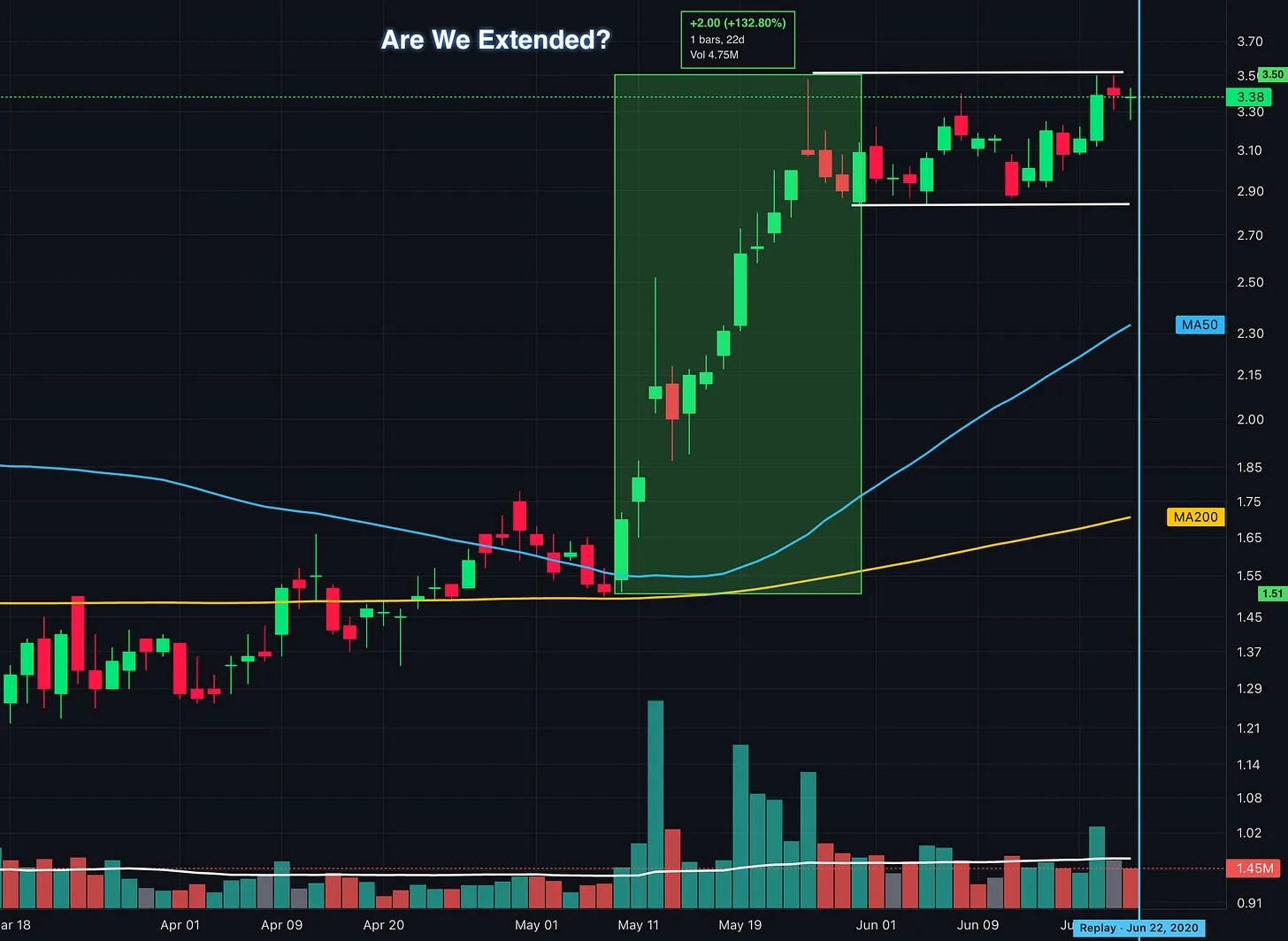
Oct 8, 2026 · Strategy & Tactics
Up 100% and Still Buyable? What Traders Get Wrong About Extended Stocks
How to identify proper buy points, avoid chasing stock breakouts, and manage entry risk using lessons from William O’Neil, Mark Minervini, David Ryan, and Dan Zanger.
- Momentum Trading
- VCP
- position trading
- Growth Stock Trading
- David Ryan
- Flag Pattern
- chart patterns
- Cup and Handle
Sep 27, 2026 · Strategy & Tactics
Should You Follow Leading Stocks or Wait for Market Confirmation?
How to read the market, industry groups, and individual stocks together so you can recognize opportunities, build exposure, and respond when conditions change
- growth stocks
- CANSLIM
- Trading
- position trading
- Stan Weinstein
- William O'Neil
- Momentum Trading Strategy
- Trade stocks
Sep 25, 2026 · Strategy & Tactics
Stage Analysis: How to Spot Stage 3 in Real Time
Recognize a developing Stage 3 using Stan Weinstein’s framework, with real chart examples, warning signs, and lessons for protecting your gains
- Momentum Trading
- Nasdaq
- technical analysis
- CANSLIM
- position trading
- Stan Weinstein
- QQQ
- Find True Market Leaders