
Trading articles/Strong Opinions, Weakly Held: The Mindset That Separates Great Traders and Investors from Everyone Else
Jul 18, 2026 · Momentum Trading Strategy
Strong Opinions, Weakly Held: The Mindset That Separates Great Traders and Investors from Everyone Else
Why the world's greatest traders and investors build high conviction, change their minds without hesitation, and never let an investment thesis become their identity.
Originally published on Substack.
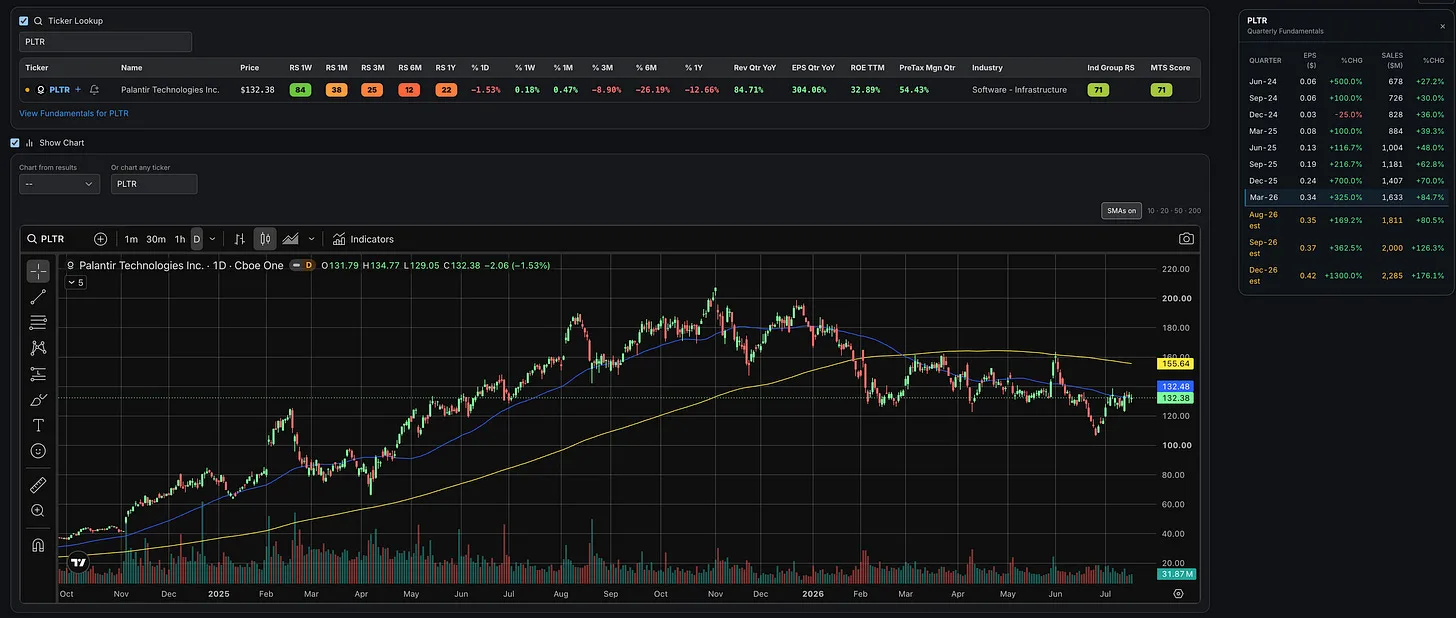
Conviction Is Not the Same as Attachment
One of the stories Stanley Druckenmiller has shared over the years has always stuck with me. He has talked about spending months developing a bullish investment thesis that he expected would play out over the next 12 to 18 months. He would study the macroeconomic backdrop, understand the business, analyze the technicals, and build enough conviction to put meaningful capital to work.
And then, just days or a few weeks later, he could be completely out of the position.
To most investors, that sounds irrational. Why spend months researching an idea only to abandon it a week later?
The answer is that Druckenmiller was never committed to being right. He was committed to making money. The moment price action, market conditions, or new information invalidated his thesis, he didn’t feel obligated to defend his original opinion. He simply accepted that the evidence had changed and moved on.
That philosophy is captured perfectly in one simple phrase:
Strong opinions, weakly held.
Although the quote did not originate in the investing world, it perfectly describes how many of history’s greatest traders operate. George Soros, Paul Tudor Jones, William O’Neil, Peter Brandt, and Druckenmiller himself all share one characteristic that separates them from the average investor. They are capable of developing enormous conviction in an idea while remaining completely willing to abandon it the moment the market proves them wrong.
That distinction sounds subtle, but I believe it is one of the most important psychological lessons a trader can ever learn.
One of the biggest misconceptions among newer investors is that conviction means refusing to change your mind. They admire investors who “never sell” or who continue buying through every decline because they mistake stubbornness for discipline. In reality, those are two very different things. Discipline is following your process. Stubbornness is defending your ego.
The Day Your Thesis Becomes Your Identity
Over the years, I’ve realized that one of the biggest contributors to my own success has been my willingness to separate conviction from attachment. Before I risk capital, I want to have a strong opinion. I want to understand the company, identify the catalyst, analyze the chart, and know exactly why I believe the stock could become the next market leader. I don’t want to enter positions based on hope or emotion.
But I also recognize that every investment thesis is simply a hypothesis. It’s my best interpretation of the available evidence, not an objective truth.
The market has no obligation to validate my opinion.
If the price action stops confirming my thesis, I can exit.
If the broader market changes character, I can reduce exposure.
If earnings and sales completely change, I can admit I was wrong.
None of those decisions represent failure. They represent adaptability.
Ironically, I think this is one of the hardest concepts to teach beginner traders because changing your mind feels emotionally uncomfortable. Most people interpret it as admitting defeat. Instead of objectively evaluating new information, they begin searching for reasons to preserve the original thesis.
They move their stop-loss because “it’s just temporary.”
They search social media for bullish opinions that confirm what they already believe.
They ignore deteriorating price action because they convince themselves everyone else simply doesn’t understand the opportunity yet.
Eventually, something subtle but incredibly dangerous happens.
What began as an investment thesis becomes part of their identity.
You can see this pattern everywhere in financial markets. There are gold bugs who believe every economic event confirms the coming collapse of the dollar. There are Tesla investors who defend every criticism of the company. There are Bitcoin maximalists who dismiss every legitimate concern because questioning Bitcoin feels like questioning the community itself. The same thing happens in countless crypto projects, technology stocks, and even individual CEOs who develop almost cult-like followings.
The specific asset doesn’t matter.
The psychology is always the same.
People stop evaluating the evidence and start defending the belief.
The Market Doesn’t Care About Your Opinion
Sometimes those investors are even right about the long-term story. Tesla changed the automotive industry. Bitcoin has been one of the best-performing assets of the past two decades. Great companies and transformative innovations often deserve enormous admiration.
But none of that guarantees a profitable investment.
A wonderful business can become wildly overvalued. A revolutionary technology can still experience an 80% drawdown. A company can dominate its industry while producing years of disappointing shareholder returns because expectations became impossible to meet.
Being right about the story is not the same as being right about the trade.
The greatest traders understand this distinction better than anyone. Their confidence doesn’t come from believing they’re always right. It comes from trusting their process enough to know they’ll survive being wrong.
That’s why they define risk before entering a position.
That’s why they cut losses instead of explaining them away.
That’s why they continuously update their opinions as new information becomes available.
Tom Hougaard titled his book Best Loser Wins for a reason. The greatest traders don’t avoid being wrong. They become exceptionally good at recognizing it quickly, accepting it without emotion, and moving on to the next opportunity.
Most importantly, they never allow their identity to become tied to a stock, a market, or a prediction.
Professionals are loyal to their process.
Amateurs become loyal to their opinions.
The difference may seem insignificant, but over the course of a career it becomes enormous. One mindset encourages curiosity, flexibility, and continuous learning. The other encourages confirmation bias, emotional decision-making, and increasingly larger mistakes.
The market rewards the first and punishes the second.
The Market Earns Your Conviction
Earlier this year, I experienced both sides of this lesson.
When I first bought LITE, I had conviction in the name and had done my research, but I did not enter the trade with overwhelming conviction. What mattered was that it aligned with my process. The company had strong earnings and sales growth, high relative strength, a leading industry group, and a low-risk, high-reward setup. The evidence was there, the risk-to-reward was attractive, and that was enough to take the trade.
After my entry, the stock continued to act well. As the evidence improved, so did my conviction. LITE earned more of my confidence because the price action kept confirming the original thesis.
PLTR taught me the opposite lesson.
Fundamentally, I still loved the company. Sales growth was accelerating, earnings were exceptional, and its AI platform was seeing real adoption across both commercial customers and government contracts.
But the stock was telling me a different story.
The price action had changed. Leadership was fading, the trend had weakened, and the market was no longer rewarding those outstanding fundamentals.
William O’Neil warned investors about exactly this mistake. One of his most important lessons is that great growth stocks can top while earnings are still exceptional. He pointed to numerous historical leaders that rolled over despite reporting triple-digit earnings growth because the market had already begun looking ahead.
I had a choice.
I could defend my opinion, or I could respect the evidence.
I chose the evidence.
That did not mean I suddenly believed Palantir had become a bad company. It simply meant that, at that moment, it was no longer behaving like a great stock.
That experience reinforced something I have come to believe over the years:
The market earns your conviction.
Conviction should not remain fixed simply because you spent months researching an idea. It should increase when the evidence improves and decrease when the evidence deteriorates.
That is the difference between conviction and attachment.
The Lesson Every Trader Eventually Learns
If there’s one lesson I’d encourage every investor to internalize, it’s this: develop your opinions with confidence, but hold them with humility. Do the research. Build the thesis. Commit capital when the probabilities are in your favor, but never confuse conviction with certainty, and never mistake loyalty to a stock for discipline.
The market doesn’t care how much time you spent researching an investment. It doesn’t care how passionately you believe in a company or how many intelligent people agree with your thesis. It only cares whether your thesis continues to match reality.
The best traders in history understood that. They had the confidence to take big swings when the evidence supported them, but they also had the humility to walk away the moment the evidence changed.
That’s what strong opinions, weakly held really means.
It isn’t a lack of conviction.
It’s the willingness to admit that the market knows something you don’t.
The greatest traders don’t make their money by always being right.
They make their money by refusing to stay wrong.
More in Trading Psychology
All Trading Psychology articles →
Oct 27, 2026 · Trading Psychology
The Hidden Beliefs Sabotaging Your Trading
Why knowing the rules isn’t enough. Lessons from Van Tharp and Ed Seykota on trading psychology, self-sabotage, and changing the beliefs that hold you back.
- trading psychology
- Investing
- Trading
- Momentum Trading Strategy
- Market Wizards
Sep 1, 2026 · Trading Psychology
The Market Isn’t Your Biggest Opponent. You Are.
Why the greatest traders eventually discover that trading psychology, discipline, and self-mastery matter more than another setup, indicator, or strategy
- growth stocks
- Momentum Trading
- Learn Trading
- trading psychology
- Investing
- ed seykota
- position trading
- Peter Brandt
Aug 26, 2026 · Trading Psychology
Most Traders Fail. But That Statistic Doesn’t Tell the Whole Story
Why the failure rate in trading may say more about preparation, persistence, and process than your actual odds of success
- Momentum Trading
- Learn Trading
- CANSLIM
- Growth Stock Trading
- trading stocks
- growth stock investing