
Trading articles/Most Traders Fail. But That Statistic Doesn’t Tell the Whole Story
Aug 26, 2026 · Momentum Trading Strategy
Most Traders Fail. But That Statistic Doesn’t Tell the Whole Story
Why the failure rate in trading may say more about preparation, persistence, and process than your actual odds of success
Originally published on Substack.
If you spend enough time around trading, eventually you will hear some version of the same statistic:
Most traders fail.
Depending on who is quoting the number, you might hear 80%, 90%, 95%, or something even worse.
For someone trying to become a consistently profitable trader, those numbers can be incredibly discouraging. They make it sound as though the odds are overwhelmingly stacked against you before you even begin.
But I think there is an important problem with looking at those statistics that way.
The statistics tell you what happened to a very large group of people.
They do not necessarily tell you your individual probability of success if you approach this profession completely differently from the majority of that group.
Who Exactly Is Included in the Failure Rate?
This is something I have thought about for years, but spending time on Substack and interacting with so many different traders has reinforced it even more.
A huge percentage of people who begin the journey toward becoming consistently profitable traders simply never put in enough work to find out whether they could have succeeded.
That isn’t meant as an insult.
Some people start trading and eventually realize they don’t enjoy it enough to dedicate the time required. There is absolutely nothing wrong with that.
Others discover that they aren’t willing to tolerate the uncertainty, losses, repetition, boredom, and psychological difficulty that come with learning the craft.
But there are also plenty of people who want the results without ever building the foundation required to produce them.
- They never seriously study market history.
- They never develop a trading methodology.
- They never learn proper position sizing.
- They never understand risk management.
- They don’t maintain a trading journal.
- They don’t review their mistakes.
- They don’t study hundreds or thousands of charts.
- They don’t learn how the greatest winning stocks in history behaved before their major advances.
- They trade for a while, struggle, lose money, and eventually quit.
And then they become another data point in the statistic that says:
“Most traders fail.”
This Should Encourage You, Not Discourage You
When I talk about how difficult trading is, some people interpret it as negative.
I actually mean the opposite.
Understanding why so many people fail should be encouraging if you are genuinely willing to do the things most people aren’t willing to do.
It doesn’t mean that working hard guarantees success.
There are no guarantees in trading, business, sports, or almost anything else worth pursuing.
But it does mean that the failure rate of the entire population is probably not the most useful number for determining the probability of success of someone who prepares properly, manages risk intelligently, continually learns, and refuses to take shortcuts.
I’ve seen this same phenomenon in other areas of my life.
I Heard the Same Statistics When We Started a Business
When my wife and I decided to invest a significant amount of our own money into starting a skincare company, plenty of people thought we were crazy.
One statistic I heard repeatedly was how many businesses fail before reaching their tenth year.
And they weren’t wrong.
Starting and operating a business is extremely difficult.
There were plenty of moments over those years when things did not go according to plan. There were problems, setbacks, mistakes, financial risk, long hours, and periods when quitting would have been much easier, and probably looked more responsible to most people, than continuing to push forward.
But now that we have been doing it for years, I look at those failure statistics differently.
I saw businesses disappear along the way.
In many cases, it wasn’t because the people behind them lacked intelligence or talent. They simply reached a point where the struggle exceeded how badly they wanted to continue.
They stopped.
And that happens in trading every day.
Ranger School Taught Me the Same Lesson
I saw another version of this when I went through Army Ranger School.
When I attended, a little more than half of the people who started did not ultimately make it through.
And these weren’t random people off the street.
Just to earn a spot at Ranger School, you already had to be among the stronger candidates from across the Army and other branches of the military.
Yet even within a highly selected group, preparation varied enormously.
Some people arrived without being physically prepared enough.
Some hadn’t put enough work into land navigation.
Some hadn’t prepared themselves adequately on tactical doctrine.
And some simply reached a point where they no longer wanted to be there badly enough.
What struck me was that plenty of those people were smarter than me.
Some were naturally more athletic than me.
Some probably had more raw ability than I did.
But raw talent alone doesn’t determine who finishes something difficult.
Preparation, persistence, and grit does.
Doing the boring work before and when nobody was watching.
And trading is no different.
Stop Asking Whether You Can Beat the Odds
I think aspiring traders spend far too much time asking:
“What percentage of traders succeed?”
A better question might be:
“What percentage of traders actually do everything required to give themselves a legitimate opportunity to succeed?”
I suspect that number is dramatically smaller. Unfortunately, in my experience, the majority of people I’ve worked with simply do not put in that level of work. They may believe they do, or even convince themselves that they do, but when you look closely at their preparation, process, and consistency, the reality is often very different.
So instead of obsessing over the probability of making it, put that energy into improving the variables you can actually control.
- If you don’t understand how stocks behave, study them.
- If you don’t understand risk management, learn it.
- If you don’t understand position sizing, learn it.
- If you don’t understand the general market, study it.
- If your execution is poor, work on execution.
- If you’re repeating the same mistakes, start documenting them.
Turn the gigantic objective of “becoming a successful trader” into many smaller skills that can actually be practiced and improved.
Build Your Trading Education
If you’re trading growth and momentum stocks, there is an enormous amount of knowledge already available from people who came before us.
- Read William O’Neil’s How to Make Money in Stocks.
- Read Mark Minervini’s Trade Like a Stock Market Wizard and Think & Trade Like a Champion.
- Read Stan Weinstein’s Secrets for Profiting in Bull and Bear Markets.
- Study technical analysis through books such as John Murphy’s Technical Analysis of the Financial Markets and the classic work of Edwards and Magee.
- Study position sizing and risk management through Van Tharp’s work.
And don’t just read these books once.
Go back through them after you’ve accumulated more experience. A paragraph that meant almost nothing to you when you had six months of experience can suddenly become incredibly important after you’ve traded for several years.
If you don’t want to take my course, that’s fine too.
There are other excellent educational resources available. Mark Minervini’s Master Trader Program is one example.
Then Learn to See What the Market Is Telling You
Once you have the foundation, spend an enormous amount of time studying price and volume.
You don’t need a chart covered with twenty indicators.
Learn how stocks move.
- Study bases.
- Study breakouts.
- Study failed breakouts.
- Study low-volume pullbacks.
- Study accumulation and distribution.
- Study how leaders behave around their 10-day, 20-day, 50-day, and 200-day moving averages.
- Study what happens before enormous advances.
- Study what happens before major declines.
- Then study the fundamental characteristics behind history’s greatest stock market winners.
William O’Neil spent decades documenting the importance of factors such as strong earnings growth, strong sales growth, return on equity, profit margins, Relative Strength, industry leadership, and institutional sponsorship. CANSLIM!!!
Learn why those characteristics matter instead of simply checking boxes on a screener.
Your Screener Isn’t Your Trading System
Technology can make this process dramatically more efficient.
I built my own Relative Strength screener because I want to quickly narrow thousands of stocks down to the handful that deserve my attention.
But a screener is only a tool.
Whether you’re using my software, MarketSurge from Investor’s Business Daily, or something else entirely, you still need to know what you’re looking for.
You need to know how to build a watchlist.
You need to know when a stock is approaching an actionable area.
You need to know how to set alerts and manage a watchlist so you aren’t staring at 100 charts all day.
You need to understand the orders available through your broker, including tools such as buy-stop orders that can allow you to participate when a stock moves through a predetermined level.
Finding a great stock is only one part of the process.
Learn What Happens After You Buy
This is another area where beginners spend far too little time.
Everyone wants to know:
“What stock should I buy?”
Far fewer people spend enough time asking:
“What exactly am I going to do after I own it?”
- Where is your initial stop?
- How much of your account are you risking?
- When will you reduce the position if the trade isn’t behaving correctly?
- Will you sell into strength?
- Will you sell into weakness?
- Will you take partial profits?
- How will you manage a stock that becomes a major winner?
- How will you trail your stop?
How do you eventually get yourself into a position where you are risking accumulated profits rather than continuously putting additional principal at risk?
These aren’t details.
This is trading.
Treat Trading Like a Business
Individual trade plans are important, but eventually you need something much bigger.
You need a trading strategy, a trading process, and an overall trading business plan.
Your strategy defines what you trade, your setups, entries, exits, position sizing, risk parameters, and the market environments in which your approach works best.
Your process defines how you execute that strategy every day: screening, building watchlists, setting alerts, preparing orders, managing positions, journaling, reviewing trades, and conducting after-action reviews.
But your business plan sits above all of it.
- How much capital are you starting with?
- What are you realistically trying to accomplish with that capital?
- What return are you targeting?
- What level of drawdown are you willing and financially able to tolerate?
- How much portfolio risk will you accept at one time?
- What happens if you hit a predetermined drawdown?
- When will you reduce exposure or stop trading entirely and reassess?
- What are your operating expenses?
- How will you measure whether your strategy still has an edge?
- What is your contingency plan if market conditions change or your results deteriorate?
- Then, within that framework, you should understand your setups, entry rules, exit rules, position-sizing methodology, portfolio exposure limits, maximum acceptable risk, and the market environments in which you perform best and worst.
You should also track your actual results.
- What is your batting average?
- What is your average gain?
- What is your average loss?
- What is your expectancy?
- Which setups make you the most money?
- Which mistakes cost you the most money?
- Which market environments hurt your performance?
Without analytics, you’re relying heavily on memory, and human memory is remarkably good at remembering the things we want to remember.
Conduct After-Action Reviews
One practice I carried with me from the military is the concept of the after-action review.
After a trade, don’t simply move on to the next ticker.
Study the trade.
- What was planned to happen?
- What actually happened?
- What did you do well?
- What did you do poorly?
- Most importantly:
What can you learn from the trade?
Then ask yourself a question that I think every trader should be asking:
Was this actually a good trade?
A good trade is not necessarily a trade that made money.
A good trade is one where you properly executed your strategy, followed your process, took a valid setup, managed your risk, and did what you said you were going to do.
You can lose money on a good trade.
And you can make money on a terrible trade.
The difference is incredibly important.
If you FOMO into a stock, violate your entry rules, average down when your strategy says not to, or take far too much risk and the trade happens to work, that can actually be one of the most damaging outcomes for a developing trader.
In the moment, it feels great.
You made money.
But the market just rewarded you for doing the wrong thing.
And when bad behavior gets rewarded, it becomes much easier to repeat.
Eventually, the same behavior that happened to work once can cost you far more than you originally made.
That is why one of the most important questions in every trade review should be:
Was this trade profitable because I executed well, or did poor execution simply happen to be rewarded?
Likewise, if you followed your strategy perfectly and took a normal loss, don’t automatically label the trade a mistake.
Losses are part of trading.
The purpose of the review is not to judge yourself based solely on the outcome, but to determine whether you made a good decision based on the information available at the time.
- Keep a trading journal.
- Keep an emotional trading journal.
- Take screenshots.
- Document your mistakes.
- Review your winners.
- Review your losers.
And then look for patterns.
That is how experience becomes useful.
Simply trading for ten years does not necessarily mean you have ten years of experience.
If you repeat the same year ten times without studying what you’re doing, you may simply have one year of experience repeated ten times.
The Statistics Don’t Get to Decide What You Do
None of this guarantees that you’ll become a great trader.
That’s not the point.
The point is that hearing “most traders fail” and concluding that your own chances of success are therefore hopeless is the wrong lesson.
The statistic includes everyone.
The prepared and the unprepared.
The disciplined and the reckless.
The people who studied for years and the people who opened an account last month because they watched someone make money on social media.
The people who managed risk and the people who eventually blew up their accounts.
The people who kept improving and the people who quit.
Those groups do not deserve to be treated as though they all had the same probability of success.
So if this is something you truly want, stop worrying so much about whether you’re going to “make it.”
Stop asking how long it will take.
Stop comparing your timeline to somebody else’s.
Instead, wake up tomorrow and work on becoming a little better at the craft.
- Study the market and individual stocks.
- Build your knowledge and understand your strategy.
- Trade small.
- Manage risk and position sizing.
- Get actual screen time and study price and volume.
- Journal your trades and emotions.
- Review your decisions.
- Build and refine your process.
- Track your performance.
- Correct your mistakes.
- Then do it again.
And again.
And again.
Don’t obsess over the odds.
Focus on becoming the kind of trader those odds weren’t built around.
More in Trading Psychology
All Trading Psychology articles →
Oct 27, 2026 · Trading Psychology
The Hidden Beliefs Sabotaging Your Trading
Why knowing the rules isn’t enough. Lessons from Van Tharp and Ed Seykota on trading psychology, self-sabotage, and changing the beliefs that hold you back.
- trading psychology
- Investing
- Trading
- Momentum Trading Strategy
- Market Wizards
Sep 1, 2026 · Trading Psychology
The Market Isn’t Your Biggest Opponent. You Are.
Why the greatest traders eventually discover that trading psychology, discipline, and self-mastery matter more than another setup, indicator, or strategy
- growth stocks
- Momentum Trading
- Learn Trading
- trading psychology
- Investing
- ed seykota
- position trading
- Peter Brandt
Jul 18, 2026 · Trading Psychology
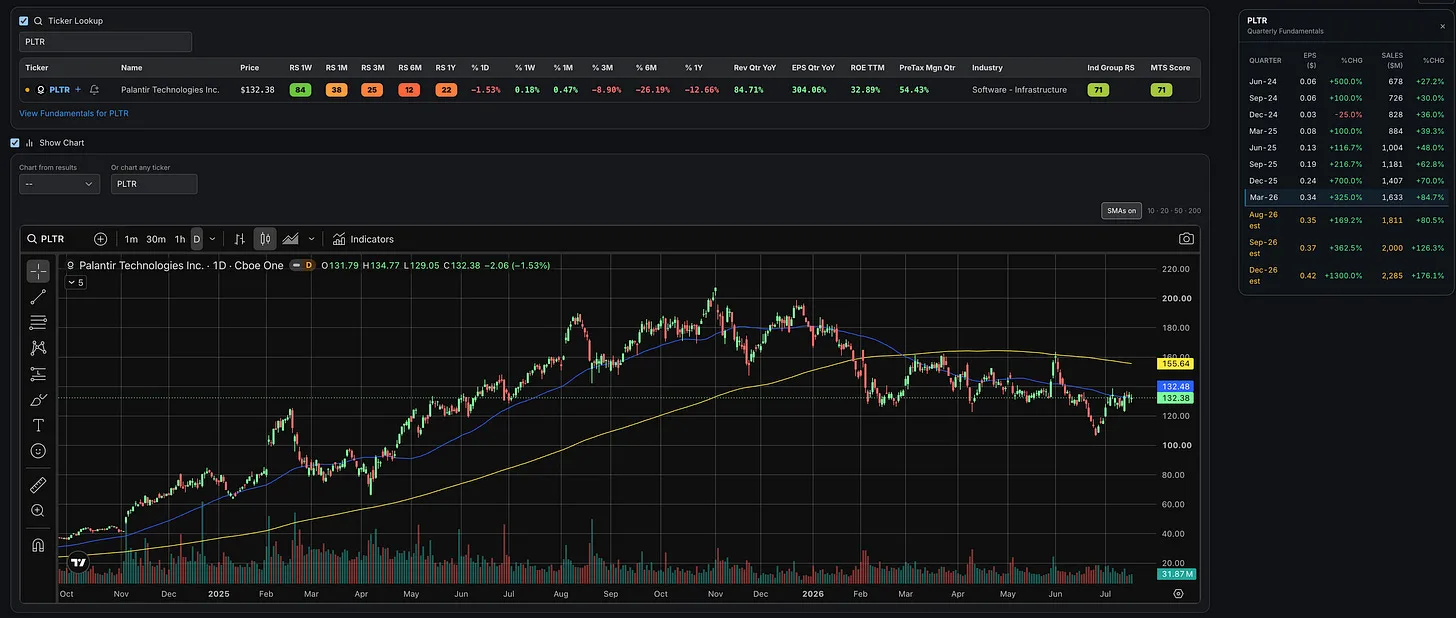
Strong Opinions, Weakly Held: The Mindset That Separates Great Traders and Investors from Everyone Else
Why the world's greatest traders and investors build high conviction, change their minds without hesitation, and never let an investment thesis become their identity.
- Investing
- CANSLIM
- Trading
- George Soros
- Tom Hougaard
- Stock Market
- William O'Neil
- Stanley Druckenmiller