
Trading articles/Ed Seykota: The Systematic Trading Pioneer Who Helped Shape Modern Trend Following
Oct 14, 2025 · Momentum Trading Strategy
Ed Seykota: The Systematic Trading Pioneer Who Helped Shape Modern Trend Following
How Ed Seykota helped turn a $5,000 client account into more than $15 million, and what his systems, discipline, and self-mastery still teach traders today.
Originally published on Substack.
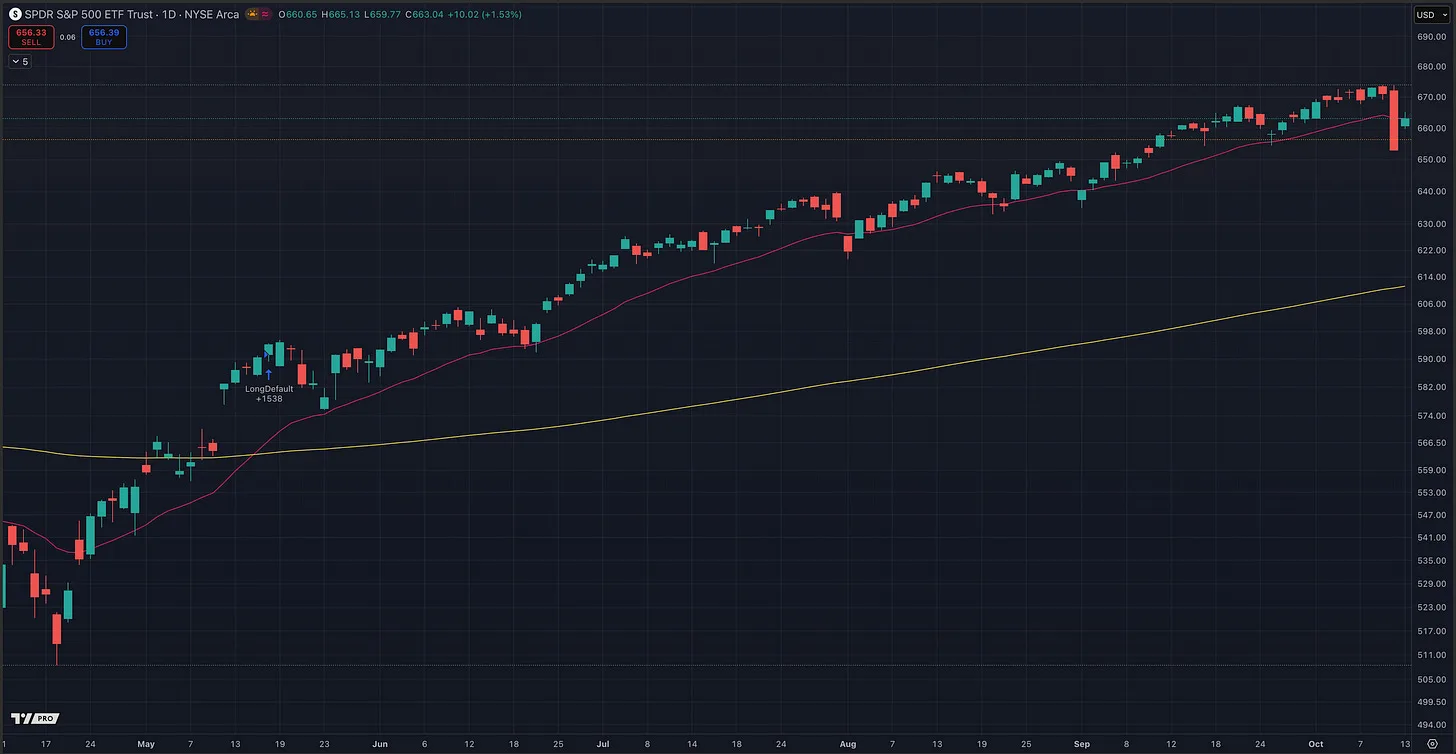
“The elements of good trading are: (1) cutting losses, (2) cutting losses, and (3) cutting losses. If you can follow these three rules, you may have a chance.”
— Ed Seykota
A Pioneer of Systematic Trend Following
Few traders have shaped the art and science of systematic trading as profoundly as Ed Seykota. Long before “quant” was a buzzword, Seykota was coding one of the first computerized trend-following systems for commodities in the early 1970s.
Starting with a modest $5,000 account, he reportedly compounded it into more than $15 million, a feat immortalized in Jack Schwager’s Market Wizards (1989).
Seykota’s genius didn’t lie in complexity. It lay in clarity, discipline, and emotional control. He proved that success in trading isn’t about prediction; it’s about following trends, managing risk, and mastering oneself.
The Core of Seykota’s Philosophy
“There are old traders and there are bold traders, but there are very few old, bold traders.” - Ed Seykota
At the heart of Seykota’s approach are three timeless pillars:
- Trend Following – Let price dictate direction.
- Risk Management – Cut losses, ride winners.
- Psychological Mastery – Align emotion with logic.
Even his most mechanical systems had a human layer. As Seykota explained:
“System trading is ultimately discretionary. The manager still has to decide how much risk to accept, which markets to play, and how aggressively to increase and decrease the trading base.” - Ed Seykota
The Science of Trend
On his Trading Systems Project (TSP) website, Seykota published a remarkable essay titled “Trends.” In it, he stripped away the mysticism and defined trend in purely mathematical terms.
“A trend is a general drift or tendency in a set of data. All measurements of trend involve taking a current reading and a historical reading and comparing them.”
- Ed Seykota
He emphasized:
- There is no single trend, only trends defined by timeframe.
- Trends are historical, not current.
- The exponential moving average (EMA) is a mathematical way to quantify drift.
His famous example:
A stock jumps from $10 to $20. A 5-day exponential lag rises from $10 → $12 → $13.6 → $14.9 → $15.9…
The lag “chases” the price, never quite catching it, a perfect metaphor for trend following itself.
This concept became the foundation of Seykota’s first published system:
the Exponential Average Crossover.
System #1: The Exponential Average Crossover System
Published: September 11, 2005, Trading Systems Project
This was one of Seykota’s two fully disclosed model systems, a long-only trend-following strategy on the S&P 500 continuous contract.
The Rules
Compute Indicators after each close:
Slow Lag = Long-term exponential average, such as 150 days
Fast Lag = Short-term exponential average, such as 15 days
ATR = Average True Range, a measure of volatility
Generate Signals:
Buy when the Fast Lag crosses above the Slow Lag
Sell when the Fast Lag crosses below the Slow Lag
Orders are placed overnight to execute on the next open
Position Sizing and Heat
Seykota’s position sizing was based on the relationship between account equity, volatility, contract risk, and acceptable heat. The key idea was not simply how many contracts to buy, but how much total portfolio risk the trader was willing to carry.
Risk Budget = Account Equity × Heat Percentage
Risk Per Lot = ATR × ATR Risk Multiplier × Contract Point Value
Position Size = Risk Budget ÷ Risk Per Lot
In practical terms, a trader first decides how much of the account is acceptable to risk, then sizes the position based on volatility. The more volatile the market, the smaller the position. The less volatile the market, the larger the position.
Example Trade
From Seykota’s 150/15 system test:

A slower 325/85 crossover produced higher returns but deeper drawdowns. Seykota encouraged traders to experiment, not just to optimize profits, but to find emotional comfort with risk.
Why It Works
This simple system captures Seykota’s essence:
- Simple rules, rigorously applied
- Risk control through volatility
- Let profits run, limit downside
It’s not the signal that makes the money, it’s the discipline to follow it.
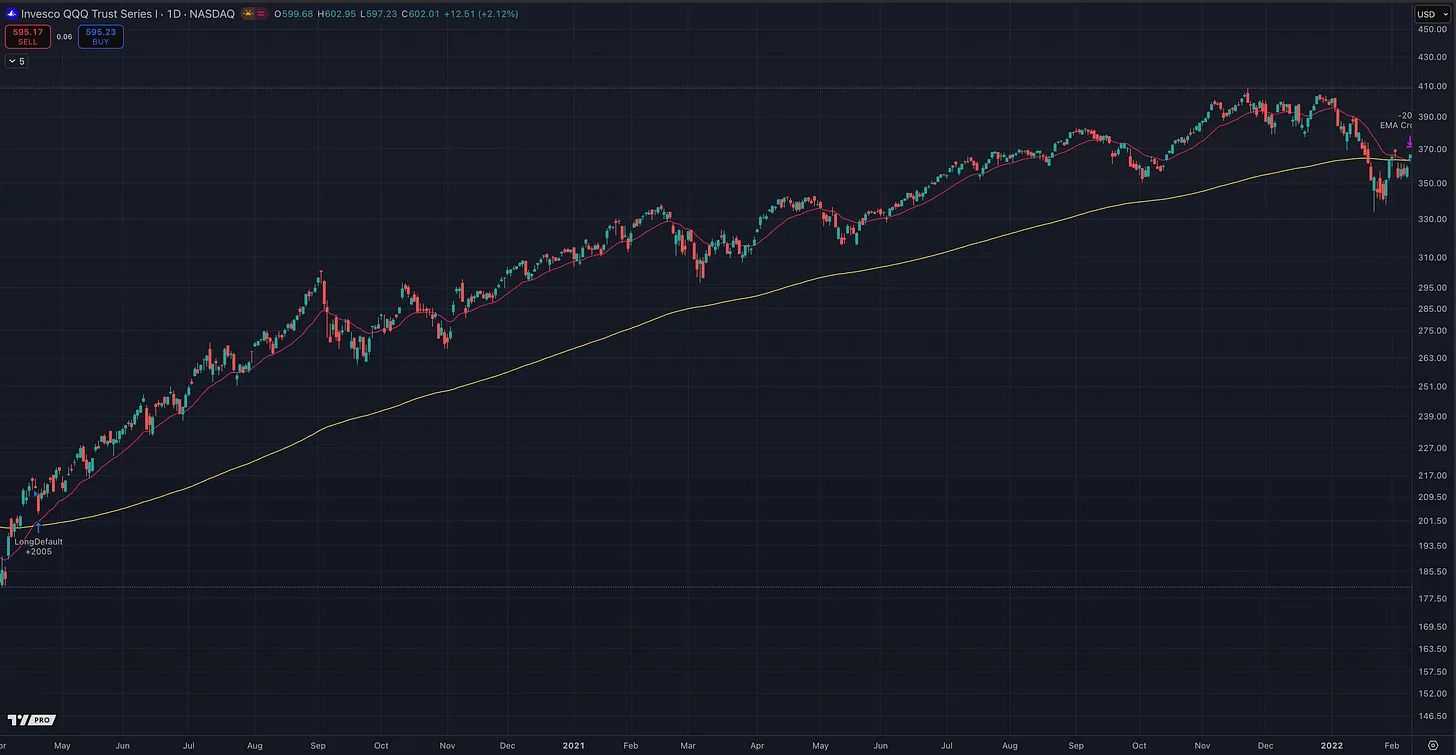
Exponential Average Crossover (Modern Example on QQQ)
Modern recreation of Seykota’s Exponential Average Crossover System applied to QQQ (20-day vs. 200-day EMAs). While Seykota’s original system used 150/15 parameters on the S&P Continuous Contract, this example visualizes the same principle — simple trend following through moving average alignment.
System #2: The Support & Resistance System
Seykota’s second published model traded COMEX Gold, using dynamic Support and Resistance corridors to define trend direction and timing.
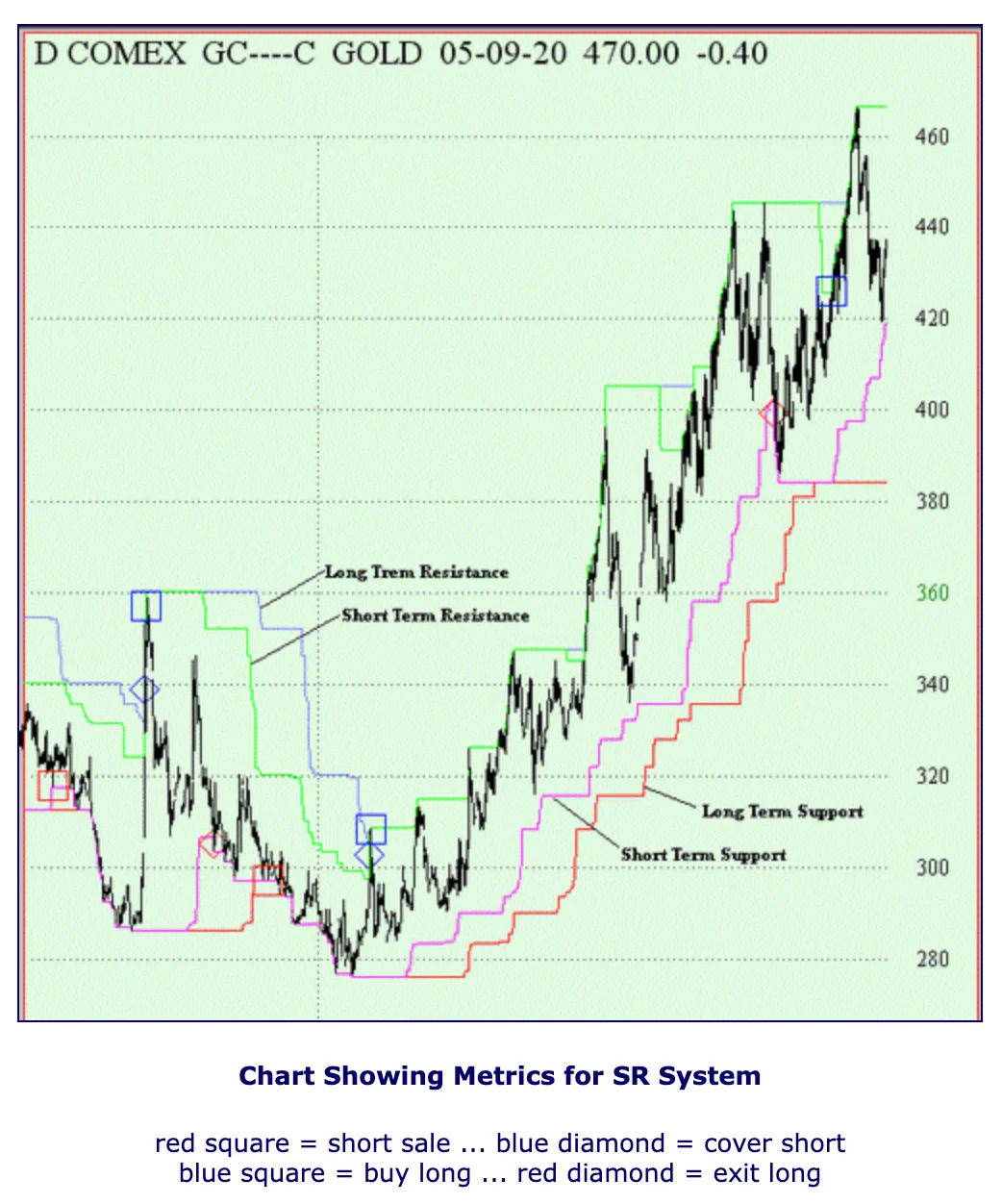
Penetration of the corridor on the upside defines the trend as up; downward penetration defines the trend as down.
System Logic
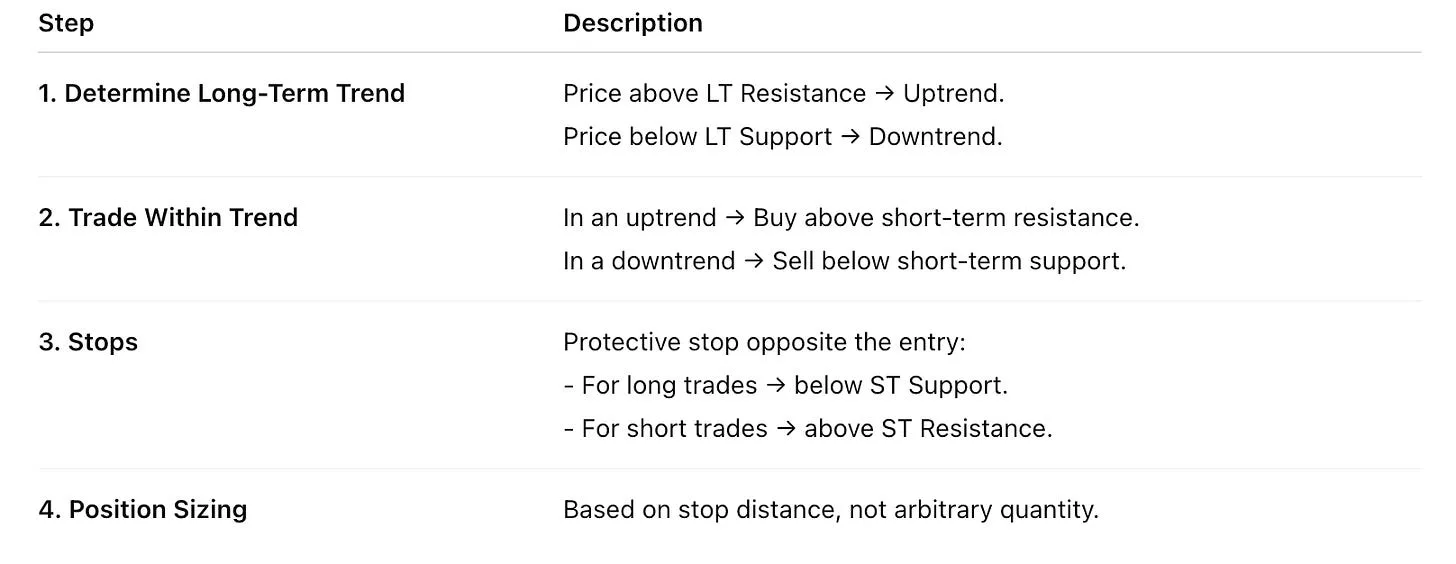
Chart Example (COMEX Gold)
This design perfectly illustrates Seykota’s belief:
Simplicity outperforms complexity. Clarity, rules, and execution matter far more than prediction.
The Panama Continuous Contract
To test these systems accurately, Seykota developed the Panama Continuous Contract, which merged expiring futures contracts into one continuous price series.
He discovered that:
- Panama-style (additive) adjustments preserve volatility and realistic backtests.
- Proportional (multiplicative) adjustments distort ATR and equity curves.
This technical precision reflected Seykota’s engineering mindset:
clean data → clean insights → consistent trading logic.
Dynamic Risk and Equity Scaling
In later research, Seykota introduced Dynamic Risk Modification, also known as “heat control,” which adjusts exposure as equity changes.
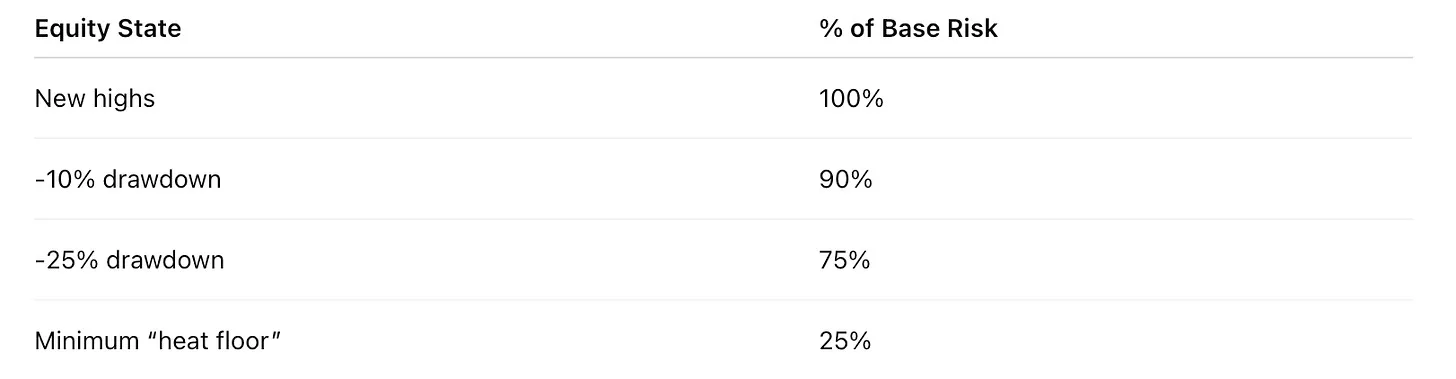
This method helps prevent overexposure after losses and tempers aggression during growth, creating a self-correcting feedback loop for emotional and capital stability.
“These decisions, how much risk to accept and how aggressively to adjust the trading base, are quite important, often more important than trade timing.”
-Ed Seykota
The Trading Tribe: Mastering the Inner Game
Seykota eventually realized that the true edge wasn’t the system. It was the trader.
He founded The Trading Tribe, a group focused on processing emotions that sabotage trading: fear, greed, pride, and frustration.
“Win or lose, everybody gets what they want out of the market. Some people seem to like to lose, so they win by losing money.” -Ed Seykota
Through “emotional processing,” traders learned to feel feelings fully instead of acting them out impulsively in trades. It was psychological engineering, as methodical as his systems. To learn more read this post:
 Ed Seykota’s Trading Tribe: Why Trading Psychology Matters More Than Another StrategyEd Seykota’s real lesson in The Trading Tribe is that trading psychology is not solved by thinking harder, reading another mindset quote, or pretending emotions do not exist. His answer was much more direct: find the emotional pattern causing you to break your rules, experience it instead of acting it out in the market, and repeat that process until the pattern loses its grip.May 25, 2026 · Read the article →
Seykota’s Timeless Trading Rules
- Cut losses.
- Ride winners.
- Keep bets small.
- Follow rules without question.
- Know when to break the rules.
“Trying to play catch-up is lethal.” - Ed Seykota
Key Takeaways
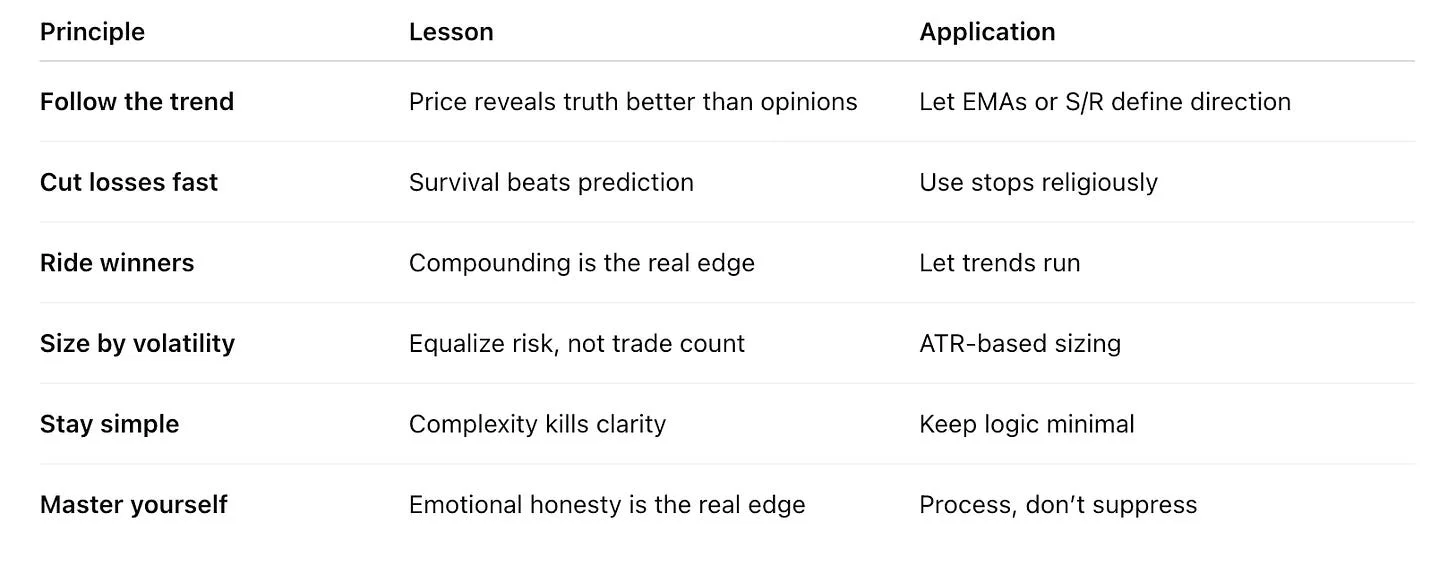
Final Thoughts
Ed Seykota’s systems were never secret formulas. They were mirrors, reflecting the truth that trading success flows from simplicity, structure, and self-awareness.
The markets are the perfect teacher. They reward emotional honesty and punish self-deception.
Half a century later, his message remains the same:
Trade your system, and master yourself.
More in Legendary Traders
All Legendary Traders articles →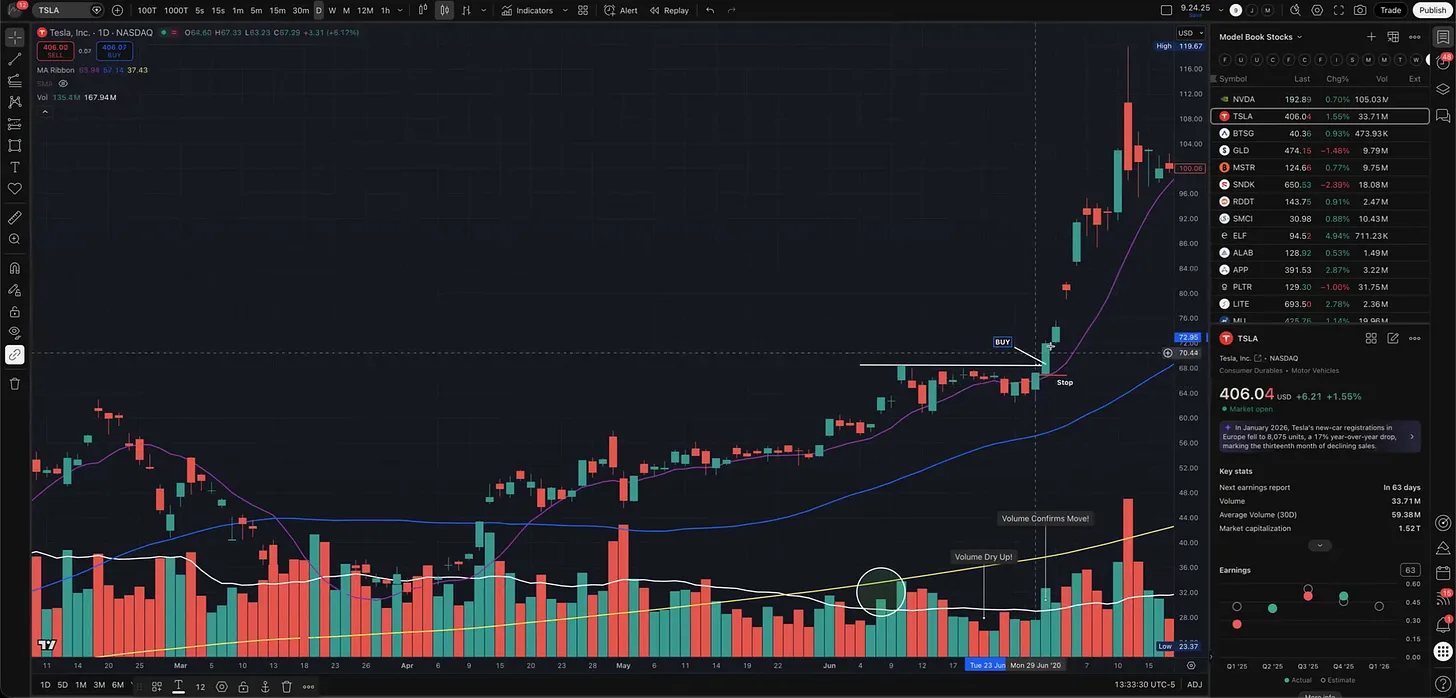
Sep 17, 2026 · Legendary Traders
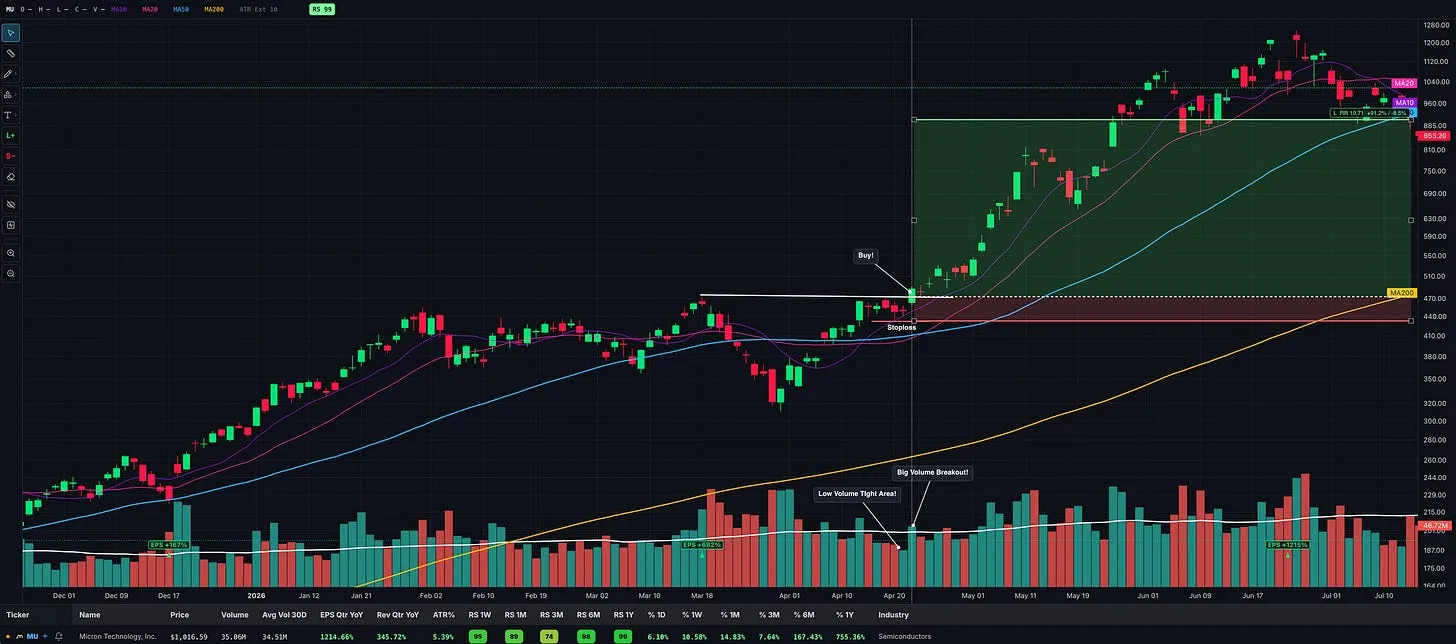
4 Legendary Traders. 4 Breakout Entry Tactics.
A chart-by-chart breakdown of Minervini’s VCP, O’Neil’s cup with handle, Darvas’s box breakout, and Kullamägi’s opening range breakout.
- how to make money in stocks
- IBD
- Momentum Trading
- VCP
- technical analysis
- CANSLIM
- Trading Setups
- position trading
Sep 6, 2026 · Legendary Traders
Market Wizard David Ryan: How He Made 1,379% in Three Years
Inside the growth-stock approach of William O’Neil’s protégé and three-time U.S. Investing Champion, from precise entries to holding major winners.
- IBD
- fundamental analysis
- Learn Trading
- technical analysis
- position trading
- David Ryan
- Market Wizard
- CAN SLIM
Aug 29, 2026 · Legendary Traders
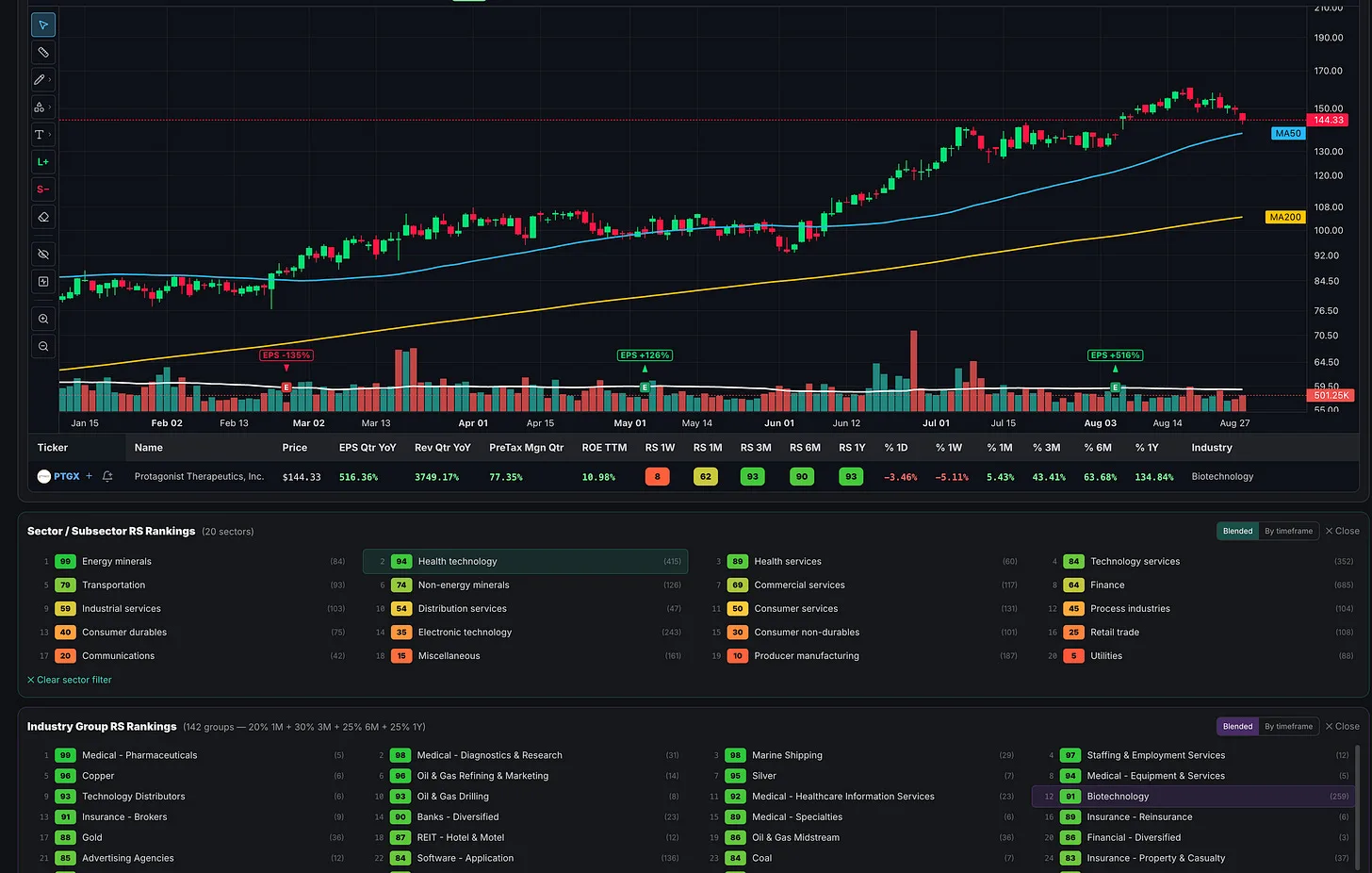
Why the Market’s Biggest Winning Stocks Rarely Move Alone
Lessons from Nicolas Darvas, William O’Neil, and Mark Minervini on using industry-group strength and relative strength to find new market leaders without getting whipsawed.
- growth stocks
- CANSLIM
- position trading
- David Ryan
- stock trading
- Kristjan Kullamägi
- Nicolas Darvas
- industry groups