
Trading articles/Ed Seykota’s Trading Tribe: Why Trading Psychology Matters More Than Another Strategy
May 25, 2026 · Momentum Trading Strategy
Ed Seykota’s Trading Tribe: Why Trading Psychology Matters More Than Another Strategy
The Market Wizards legend proved the power of systematic trading, then showed why the hardest part is following your rules under pressure.
Originally published on Substack.
Ed Seykota’s real lesson in The Trading Tribe is that trading psychology is not solved by thinking harder, reading another mindset quote, or pretending emotions do not exist. His answer was much more direct: find the emotional pattern causing you to break your rules, experience it instead of acting it out in the market, and repeat that process until the pattern loses its grip.
For Seykota, the full version of that work happened in a Tribe. A trader would join or form a group, commit to showing up, take the hot seat, say the issue out loud, locate the feeling in the body, let the group support the process without advice or judgment, report what happened, and repeat.
The purpose was not to get stock tips. The purpose was to stop paying the market to expose the same emotional weakness over and over again.
That is why The Trading Tribe still matters. It gives traders two practical takeaways. If you want the full Seykota method, you do the work with other serious people. If you do not join a Tribe, the lesson still applies: review every rule break through emotion, behavior, responsibility, and repetition until you can see the pattern pulling you away from your own system.
The Trading Book That Wasn’t Really About Trading
Seykota is one of the most important figures in systematic trend following. He was profiled in Market Wizards, helped pioneer computerized trading systems, and is widely known for the story of turning a small client account from a few thousand dollars into tens of millions.
So you would think the one book he wrote about trading would be packed with entries, exits, indicators, formulas, system parameters, and technical rules. But that is not what he wrote.
The Trading Tribe is essentially a psychology book. Trading is the arena, but psychology is the subject. Seykota does not present it as a secret formula book. He makes it clear that most trading systems are relatively simple. They follow trends, let profits grow, cut losses, manage risk, and control volatility.
The hard part is not understanding those ideas. The hard part is following them when money is on the line.
That should stop every serious trader in their tracks. Because once you have a real strategy, the biggest problem is usually not the market, the chart, the indicator, or the setup. It is the trader’s inability to follow the rules when emotions start to interfere.
Strategy Still Matters
This does not mean strategy is irrelevant. If you are brand new, you probably do need more knowledge. You need to study market history, understand risk management, learn position sizing, build a repeatable process, and develop enough screen time to recognize quality setups.
You cannot skip that stage and pretend every failure is psychological.
But there is a second stage that many traders never get past. This is the stage where you already know what you are supposed to do, but you still do not do it. You know where the stop goes, but you move it. You know the stock is extended, but you chase it. You know the loss should be small, but you let it grow. You know the winner needs room, but you sell too early.
You know the plan, but you negotiate with it in real time.
That is no longer a strategy problem. That is an execution problem. And execution, at the highest level, is psychological.
The System Is Simple. Following It Is Not.
One of the most important ideas in The Trading Tribe is that emotions can pull a trader away from even a good system.
Hope tells the trader to give a losing trade more room. Fear tells the trader to sell a winner before it has time to work. Greed tells the trader to size up because this one “feels obvious.” Boredom tells the trader to take a mediocre trade because doing nothing feels uncomfortable. Despair tells the trader to make the money back immediately.
This is where traders get destroyed. Not because they have never heard of a moving average. Not because they need one more indicator. But because they cannot execute the rules they already claim to believe in.
A trading plan only matters if the trader can follow it. A stop only protects you if you take it. A sell rule only works if you obey it. A position sizing model only controls risk if you do not override it when you feel certain.
That is the gap Seykota was pointing at: the distance between knowing what to do and actually doing it.
The Tribe Is the Process
The Tribe is not a side note. It is central to Seykota’s method.
In the process, one person takes the hot seat and becomes the sender. The other members act as recipients. A leader guides the process. The group does not debate the market, offer advice, argue about the trade, or try to fix the person. They help the sender experience the feeling underneath the problem.
That distinction matters because most traders already know the advice. They know they should cut losses. They know they should not chase. They know they should stop revenge trading. They know they should not oversize. The issue is not that nobody told them the rule. The issue is that something inside them keeps overriding the rule.
That is why saying the issue out loud matters. A trader can rationalize almost anything alone. He can call a chase “confirmation.” He can call revenge trading “getting aggressive.” He can call fear “discipline.” He can call greed “conviction.”
But when he has to say what happened, what rule he broke, and what he felt before he broke it, the story starts to fall apart. He stops hiding behind the chart and starts looking at the behavior.
A normal trading chat room is about opinions, setups, alerts, predictions, and stock names. Seykota’s Tribe is about behavior. It is about the trader’s internal process. It is about the gap between the system and the person executing the system.
Many traders want community so they can get more ideas. Seykota’s work points to a better reason for community: you need people who help you stop lying to yourself.
The Lessons Apply Even Without a Tribe
Not everyone is going to join a formal Trading Tribe. Some traders will not have one nearby. Some will not want to do that kind of group work. Some will prefer to start alone.
That does not mean the book has nothing to offer them.
The full Seykota process is group-based, but the individual lesson still matters: stop reviewing trades only through the chart. Start reviewing them through behavior.
After every meaningful rule break, ask:
What rule did I break?
What did I feel right before I broke it?
Where did I feel it in my body?
What excuse did I use in the moment?
Where have I seen this pattern before?
What rule do I need to add or enforce next time?
That is the no-Tribe version. It is not the full process, but it is still useful because it forces the trader to stop pretending mistakes are random.
A trader who keeps moving stops may be refusing to feel the pain of being wrong. A trader who sells winners too early may be refusing to feel the discomfort of open profit fluctuation. A trader who keeps chasing may be refusing to feel the fear of missing out. A trader who overtrades may be refusing to feel boredom.
The mistake is usually the symptom. The feeling underneath it is often the root.
The Practical Takeaways
The most useful lessons from The Trading Tribe are simple, but they are not easy.
First, stop looking for another strategy if you already have a valid one. If your system is clear and tested, but you keep breaking your rules, another indicator will not fix you.
Second, identify the emotion behind the rule break. Before you move a stop, chase, oversize, freeze, revenge trade, or sell too early, there is usually a feeling that shows up first.
Third, feel the feeling instead of acting it out in the market. The market is one of the most expensive places in the world to express unresolved fear, greed, anger, boredom, or shame.
Fourth, stop treating emotions as enemies. Fear may be telling you your size is too big. Anger may be telling you that you violated your own rules. Boredom may be telling you that you are trying to force action where there is none.
Fifth, use other serious people if you can. A group can help you see patterns that you will rationalize alone.
Sixth, stop giving advice too quickly when someone is emotional. Most traders already know the surface-level advice. The deeper question is: what were you feeling when you did not follow the rule?
Seventh, pay attention to the body. Tight jaw, chest pressure, clenched hands, shallow breathing, stomach tension, or throat tightness can reveal the emotional charge behind a trading mistake.
Eighth, watch for repeated drama. If the same mistake keeps happening, it is probably not random. It is a pattern.
Ninth, take responsibility. The Fed, algos, news, alerts, market makers, and gurus did not place your order, size your position, move your stop, or ignore your sell rules.
Tenth, define your system clearly enough to test it. Psychology does not replace structure. If your entries, stops, sizing, sell rules, and market filters are vague, you may not have a psychology problem yet. You may have a clarity problem.
Eleventh, follow the trend, cut losses, let profits grow, and manage risk. That is the simple part. Doing it under pressure is the hard part.
Twelfth, practice it. This work is not a one-time mindset hack. Just like entries, exits, risk management, and chart reading, emotional execution has to be trained.
How the Process Changes Behavior
The reason this kind of work can change trading behavior is not magic. It is pattern recognition.
At first, every mistake feels unique. This stop move was different. This chase was justified. This oversized trade made sense. This revenge trade was actually a high-conviction opportunity.
But when the trader repeatedly reviews behavior, takes the hot seat, reports after meetings, or writes the truth down after rule breaks, the pattern becomes harder to hide. He starts to see that the market is not creating a new problem every time. The market is exposing the same unresolved pattern over and over again.
Maybe every oversized trade comes after a loss. Maybe every early exit comes from fear of giving back open profit. Maybe every chase comes from the fear of missing a move that others are talking about. Maybe every stop move comes from the inability to accept being wrong.
Once the pattern is seen clearly, it becomes easier to interrupt.
Awareness creates a pause. The pause creates a choice. The choice allows the trader to follow the system instead of acting out the emotion.
That is how the work moves from psychology into performance.
The Goal Is Not Just Relief
Seykota later expanded the Trading Tribe Process with what he called the Rocks Process, and the reason matters. Some Tribe members were getting temporary relief during meetings, but then returning with the same emotional reactions again and again. The process was helping them feel better in the moment, but it was not always changing the deeper response pattern.
That distinction is important for traders. The goal is not simply to talk about fear, feel temporary relief, and then move the stop again the next time fear appears. The goal is to identify the automatic pattern that connects the emotion to the behavior.
This is where Seykota’s later work adds an important layer. In the Rocks Process, a “Rock” represents a subconscious program that converts an emotion into an action. In trading terms, the real problem is not fear by itself. The problem is fear followed by moving the stop. The problem is not boredom by itself. The problem is boredom followed by forcing a trade. The problem is not anger by itself. The problem is anger followed by revenge trading.
Once the trader sees that emotion-to-action loop clearly, the mistake stops looking random. It becomes a pattern that can be interrupted.
A trader who notices, “When I feel fear, I move my stop,” can build a rule around that exact pattern. Stops are placed before entry and cannot be moved lower after entry. A trader who notices, “When I feel FOMO, I chase extended stocks,” can build a rule that no stock can be bought outside the written setup criteria. A trader who notices, “When I feel anger after a loss, I trade bigger,” can build a rule that risk is reduced after emotional losses.
That is how psychology becomes process.
The trader is no longer just saying, “I felt fear.” He is identifying what fear makes him do. He is no longer just saying, “I got angry.” He is identifying the action anger triggers. He is no longer treating every rule break as a one-off mistake. He is identifying the repeated emotional program behind the mistake.
This is what helps prevent the habit from recurring. Awareness creates the pause. The pause creates the choice. The choice allows the trader to replace the old response with a better one.
Relief is not enough. The pattern has to change.
The Trading Tribe Process, Stripped Down
Here is the full process in practical terms.
Join or form a Tribe of serious traders who are willing to do more than talk about tickers. Commit to a series of meetings, because patterns become obvious through repetition. Take the hot seat when it is your turn and bring a real issue: moving stops, oversizing, chasing, selling too early, freezing, revenge trading, hiding losses, or breaking rules.
Say the issue out loud. Say what happened. Say what rule you broke. Say what you felt. Say what pattern keeps repeating. Then locate the feeling in the body. Do not just analyze the story. Notice the tight jaw, chest pressure, stomach tension, throat tightness, clenched hands, shallow breathing, or nervous energy.
The group’s job is to support the feeling, not debate the trade. The group does not give stock advice. It does not argue about whether the setup was good. It supports the trader in experiencing the feeling underneath the behavior.
When someone else takes the hot seat, your job is not to be the genius with advice. Your job is to help them stay with the feeling instead of running back into explanations.
After the meeting, report what happened. What issue came up? What feeling showed up? What pattern did you notice? What changed afterward?
Then review the patterns over time. The goal is not one emotional breakthrough. The goal is to identify the recurring pattern that keeps causing the same mistake.
Finally, bring the pattern back to your trading rules. If you move stops after losses, add a rule that stops cannot be moved after entry. If you chase because of FOMO, add a rule that no stock can be bought if it is extended beyond your setup criteria. If you oversize after emotional losses, reduce risk after a loss.
Then repeat until the pattern loses power.
The point is not to become emotionless. The point is to stop being controlled by the same emotional pattern every time it appears.
The Bottom Line
The Trading Tribe was not really about indicators, secret entries, or magic formulas. It was about the emotional interference that causes traders to abandon good systems.
Seykota’s answer was to stop treating those mistakes as random and start exposing the emotional pattern behind them.
That work can happen through the full Tribe process, where traders take the hot seat, say the issue out loud, experience the feeling, support others, report what happens, and repeat the process over time. It can also begin individually by tracking every rule break, identifying the emotion behind it, locating it in the body, and building rules that interrupt the repeated pattern.
Either way, the lesson is the same. Most traders are not stuck because they need one more setup. They are stuck because they cannot execute the one they already have.
They know they should cut the loss. They know they should stop chasing. They know they should respect risk. They know they should follow their plan. They know they should let the trade work.
But knowing is not enough. You have to become the kind of trader who can do it when money is on the line.
The market is not only testing your strategy. It is testing whether you can follow it when fear, greed, boredom, anger, and hope try to take over.
More in Legendary Traders
All Legendary Traders articles →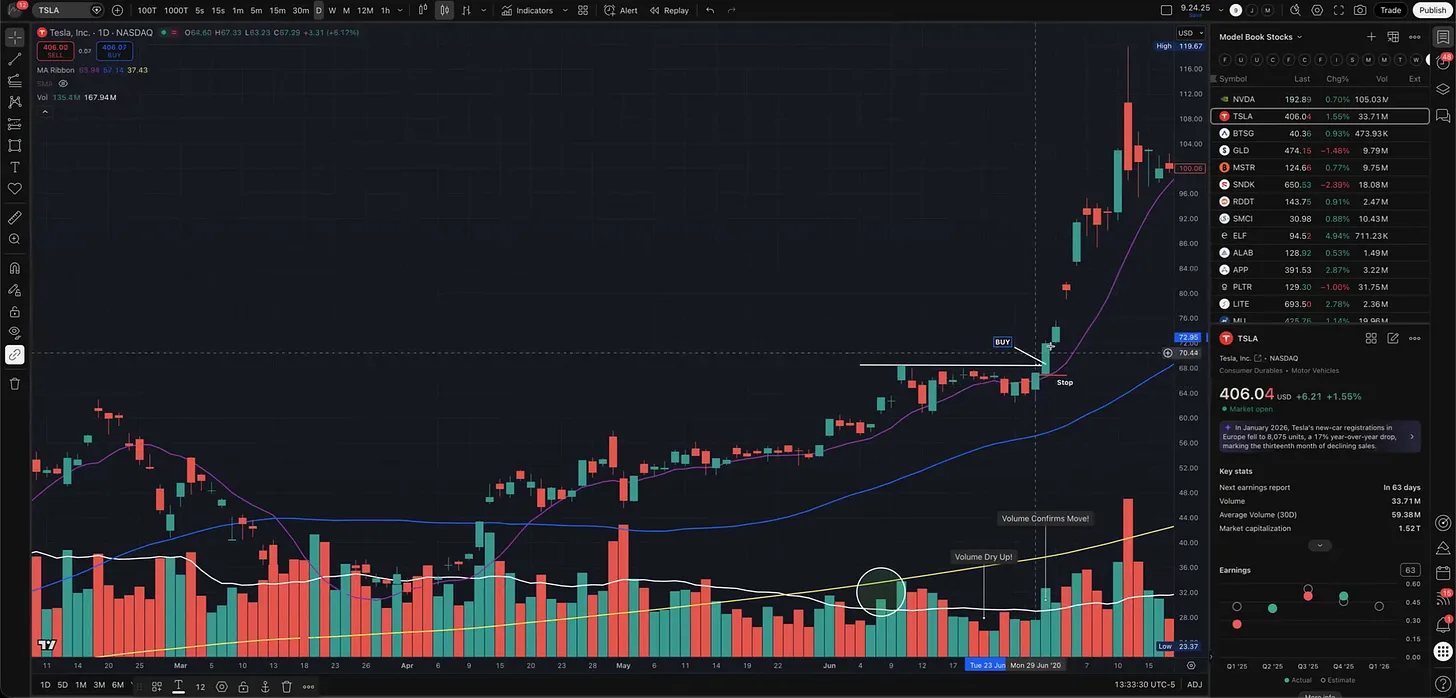
Sep 17, 2026 · Legendary Traders
4 Legendary Traders. 4 Breakout Entry Tactics.
A chart-by-chart breakdown of Minervini’s VCP, O’Neil’s cup with handle, Darvas’s box breakout, and Kullamägi’s opening range breakout.
- how to make money in stocks
- IBD
- Momentum Trading
- VCP
- technical analysis
- CANSLIM
- Trading Setups
- position trading
Sep 6, 2026 · Legendary Traders
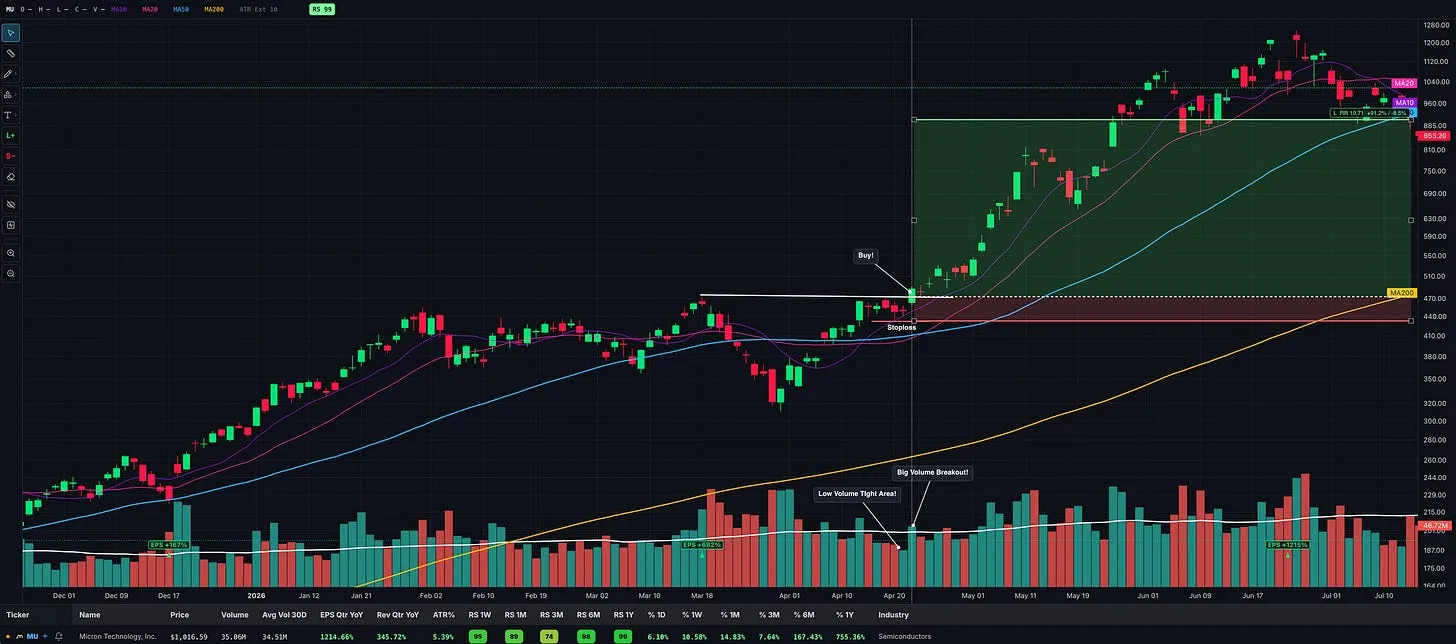
Market Wizard David Ryan: How He Made 1,379% in Three Years
Inside the growth-stock approach of William O’Neil’s protégé and three-time U.S. Investing Champion, from precise entries to holding major winners.
- IBD
- fundamental analysis
- Learn Trading
- technical analysis
- position trading
- David Ryan
- Market Wizard
- CAN SLIM
Aug 29, 2026 · Legendary Traders
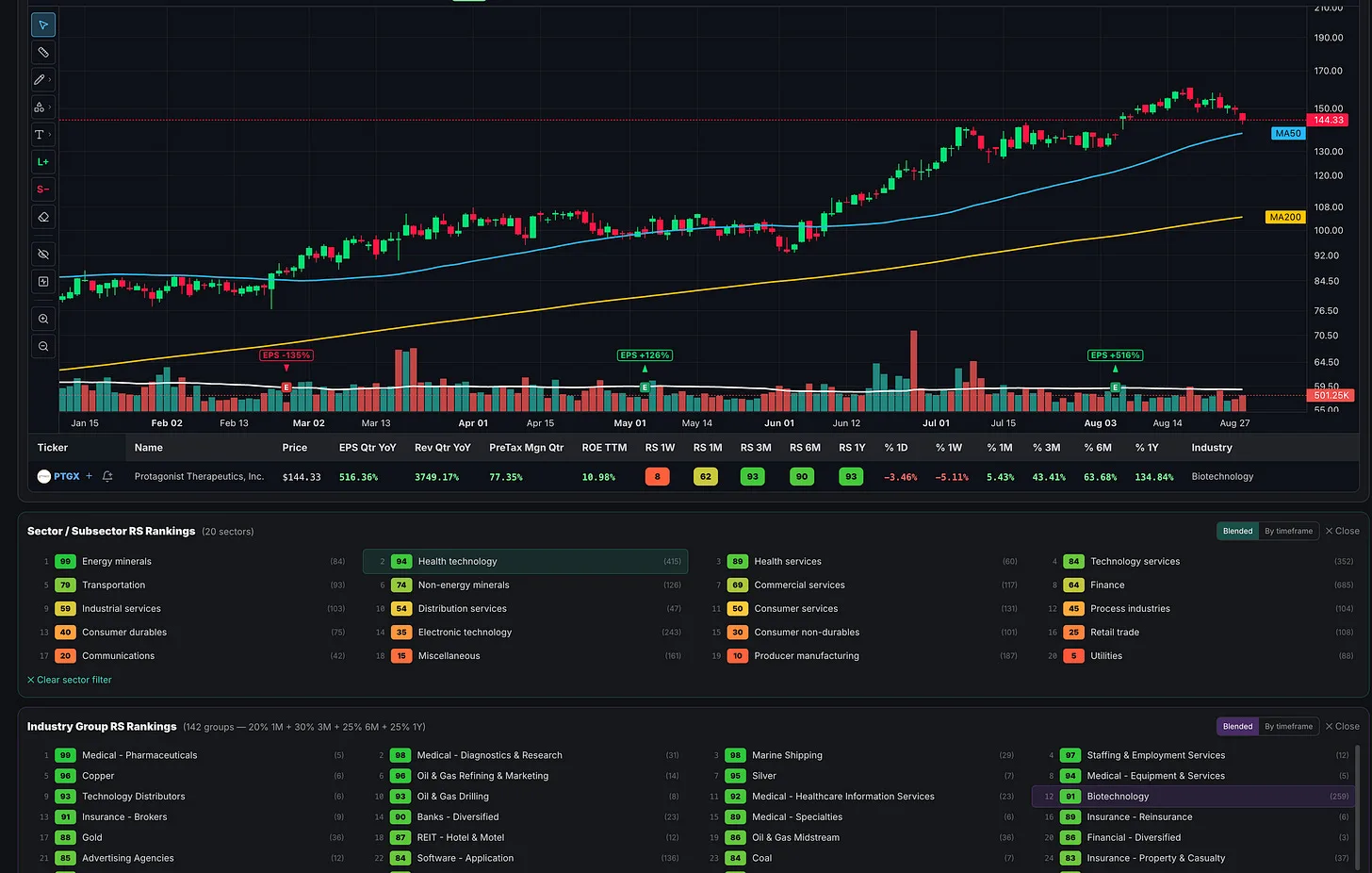
Why the Market’s Biggest Winning Stocks Rarely Move Alone
Lessons from Nicolas Darvas, William O’Neil, and Mark Minervini on using industry-group strength and relative strength to find new market leaders without getting whipsawed.
- growth stocks
- CANSLIM
- position trading
- David Ryan
- stock trading
- Kristjan Kullamägi
- Nicolas Darvas
- industry groups