
Trading articles/Market Wizard David Ryan: How He Made 1,379% in Three Years
Sep 6, 2026 · Momentum Trading Strategy
Market Wizard David Ryan: How He Made 1,379% in Three Years
Inside the growth-stock approach of William O’Neil’s protégé and three-time U.S. Investing Champion, from precise entries to holding major winners.
Originally published on Substack.
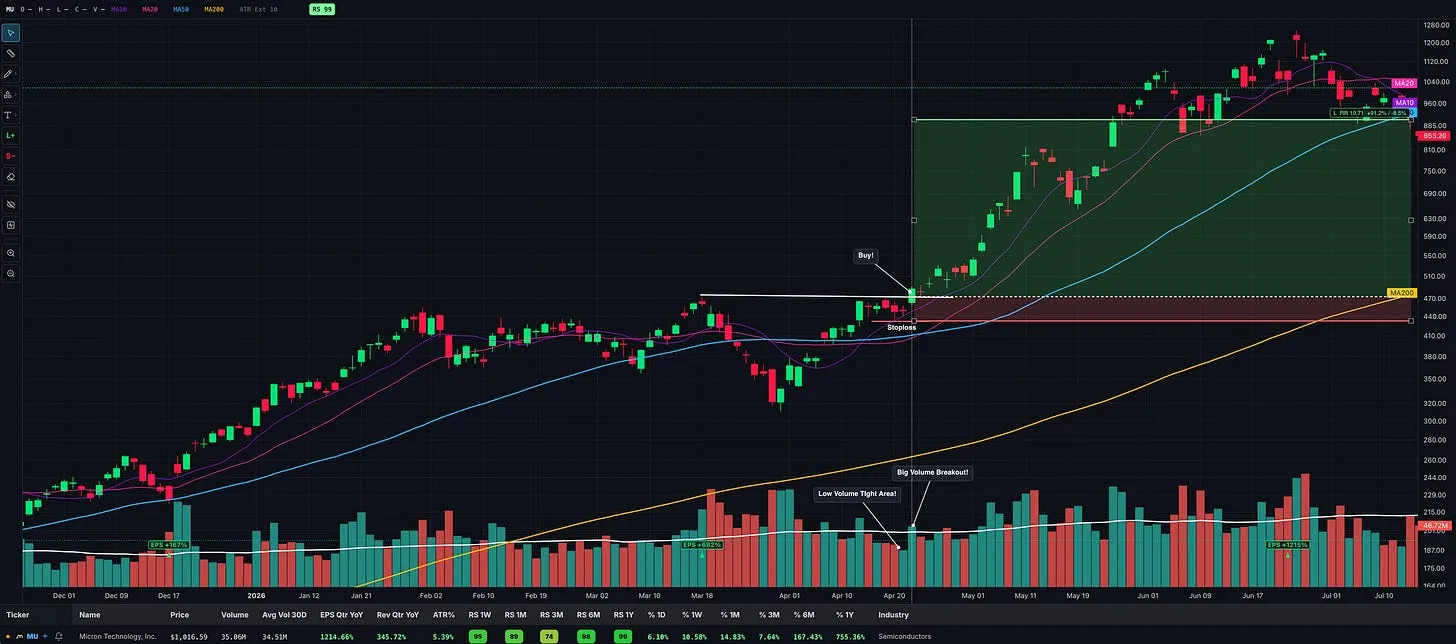
David Ryan turned $20,000 into $52,000, then watched it shrink to $16,000. He was already working for William O’Neil, studying the research and charts that would help shape his career. Yet he kept buying stocks after they had moved too far above their proper buy points, and he remained aggressive after the market weakened. His breakthrough came when he sat down to study exactly where his decisions were going wrong.
From 1985 through 1987, Ryan compounded a 1,379% return, according to Jack Schwager’s Market Wizards. For traders who have picked a strong stock and still managed to lose money, the more useful story is how he changed his decisions. His approach forces a distinction that enthusiasm can easily blur: a company can deserve a place on your watchlist without offering a good trade at today’s price.
Learning to See What O’Neil Saw
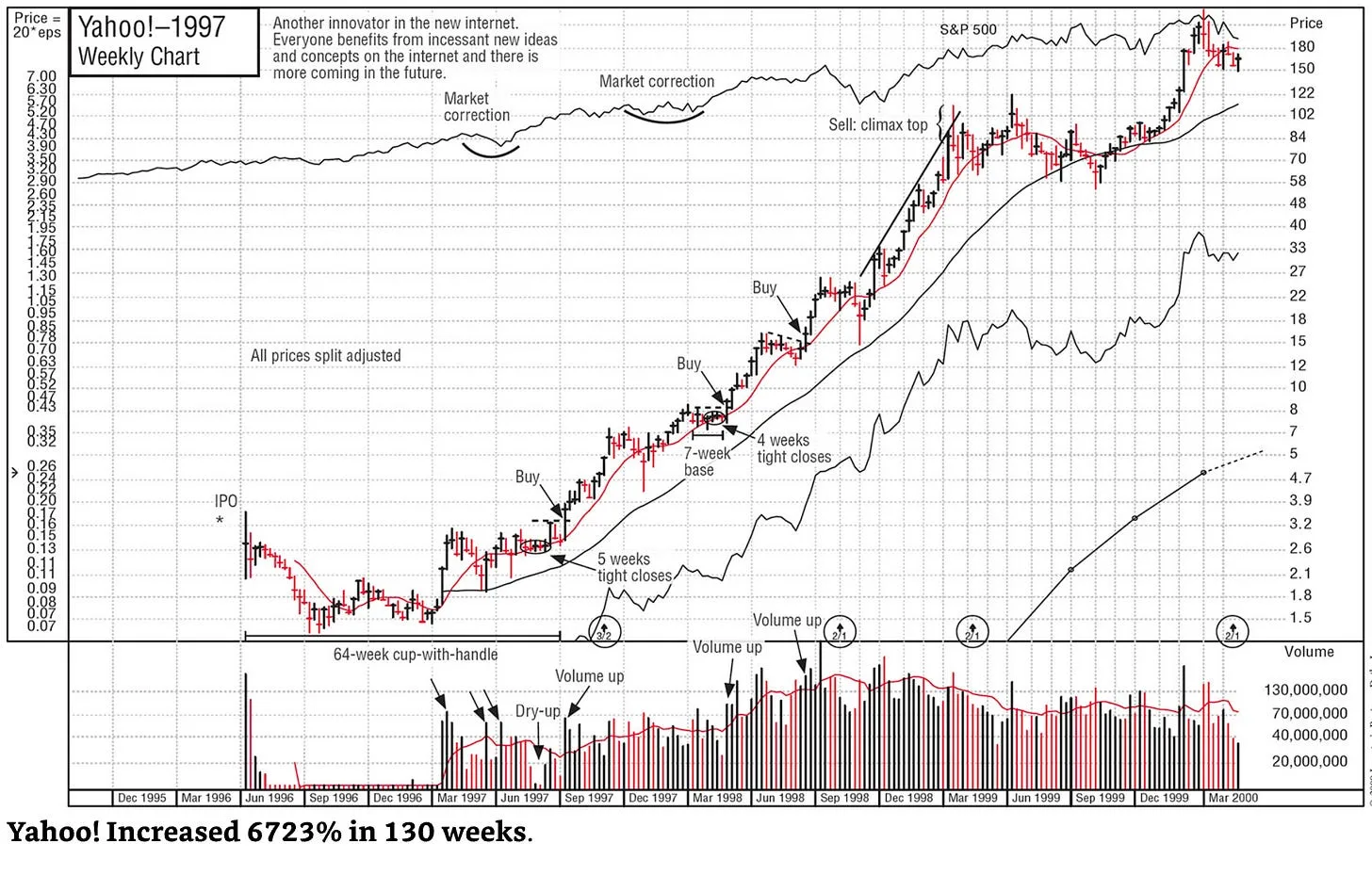
Ryan’s interest in stocks began around the dinner table, listening to his father discuss investments. At 13, he bought shares in Ward Foods, a candy company whose products he knew. After graduating from college in 1982, he approached William O’Neil & Co. willing to accept virtually any job, even offering to work for free. Within four years, he became the firm’s youngest vice president, with responsibilities that included portfolio management and assisting O’Neil with stock selection for institutional clients.
His education involved studying historical winners until he could recognize what they looked like before their major advances. He examined the earnings, price patterns, and trading volume that accompanied those opportunities, then compared them with stocks developing in the current market. This was the foundation of O’Neil’s CAN SLIM approach: strong earnings growth, something new driving the business, evidence of demand, market leadership, institutional sponsorship, and attention to the overall market. Ryan later managed the New USA Growth Fund and his own hedge fund, Rustic Partners, applying that foundation across different market environments.
What makes Ryan useful to study is the detail he provides about turning those principles into decisions. His approach combines the patience needed to hold a major winner with the willingness to sell a failed purchase quickly. He has described both swing trading and holding positions for many months, sometimes longer than a year. The stock’s behavior determines how long he stays.
What David Ryan Looks for in a Stock
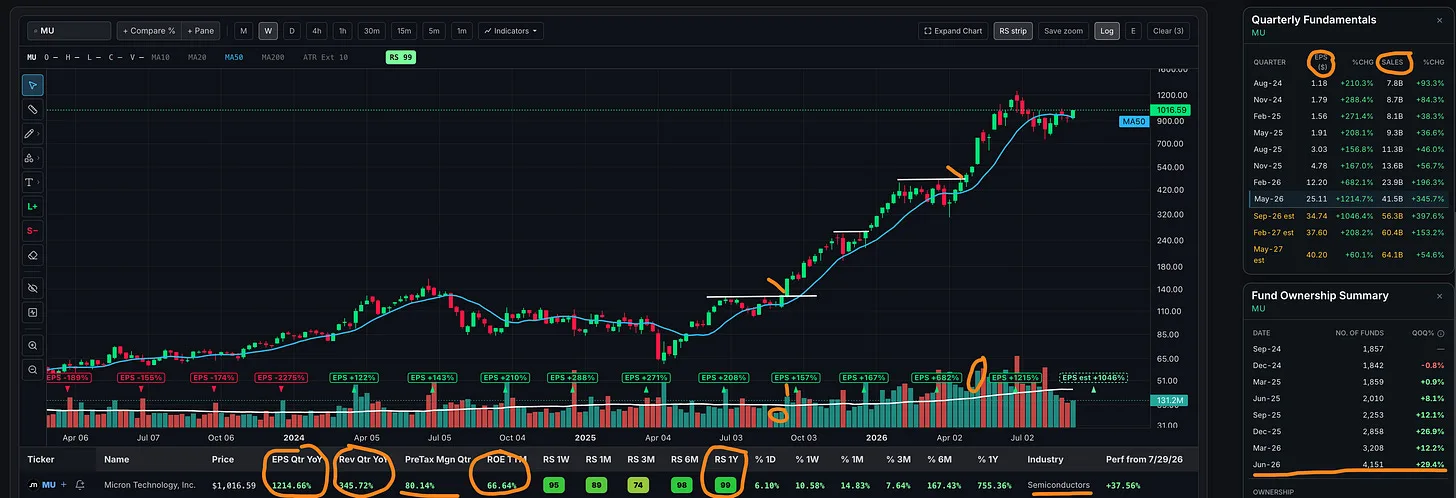
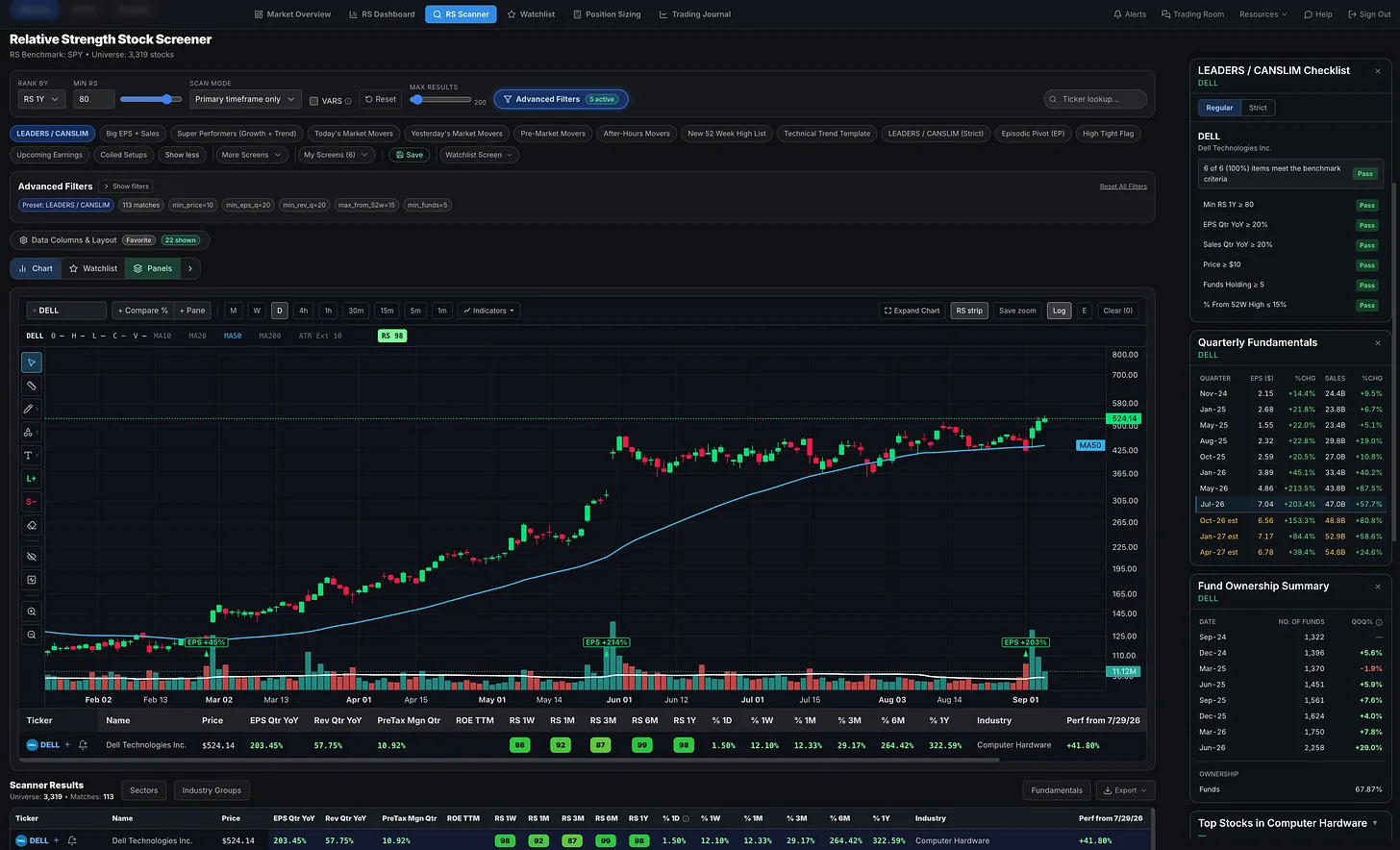
Ryan looks for a business whose growth gives investors a reason to keep buying. Strong quarterly earnings matter, and he pays particular attention to whether their year-over-year growth is accelerating across successive reports. Sales growth helps him judge the strength behind the profits, while margins and return on equity provide additional information about the company’s performance. New products, services, or business concepts can help explain why that growth might continue.
The chart must support the business case. Ryan has preferred relative-strength rankings above 80 and ideally above 90, meaning he is looking among stocks already outperforming much of the market. He also watches the direction of that strength, because a high ranking can conceal emerging deterioration. His description of a typical strong uptrend includes a rising 50-day moving average above a rising 200-day moving average.
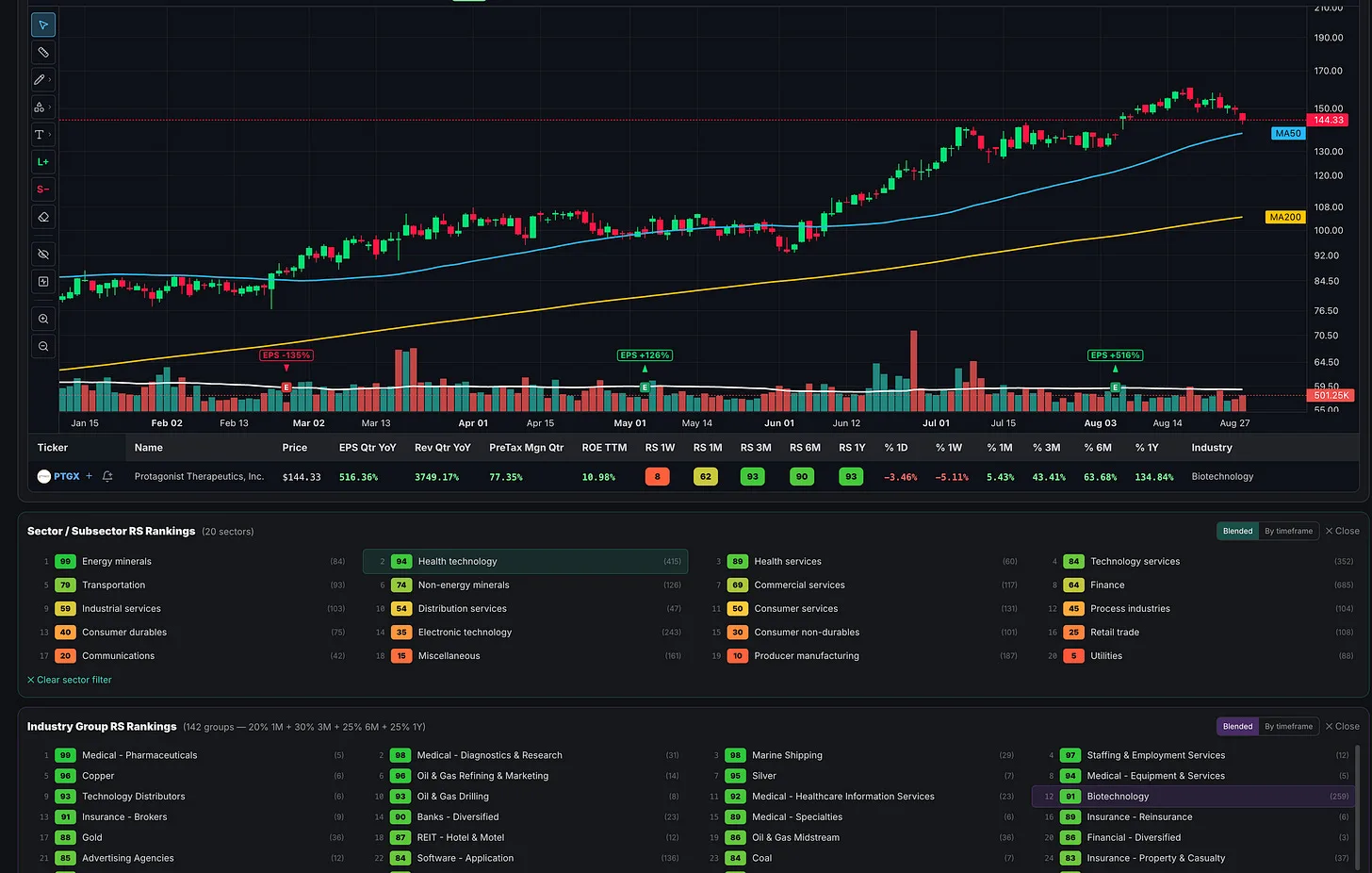
Industry leadership provides another layer of evidence. Ryan often organizes his research with the strongest groups first, looking for promising stocks within areas attracting capital. A stock that has already doubled can still interest him if its earnings remain strong and it builds another constructive base. The prior advance establishes that it can move; the next setup determines whether he has a place to enter.
A Great Stock Can Still Be a Bad Trade
For a breakout entry, Ryan wants a stock to settle into a tight trading range before attempting its next advance. He has described looking for a week or more of quiet action, often in the upper half of a larger base. That tightness helps define both the level the stock needs to clear and the nearby support against which he can judge the purchase. A cup with handle or flat base becomes useful because it identifies those decision points.
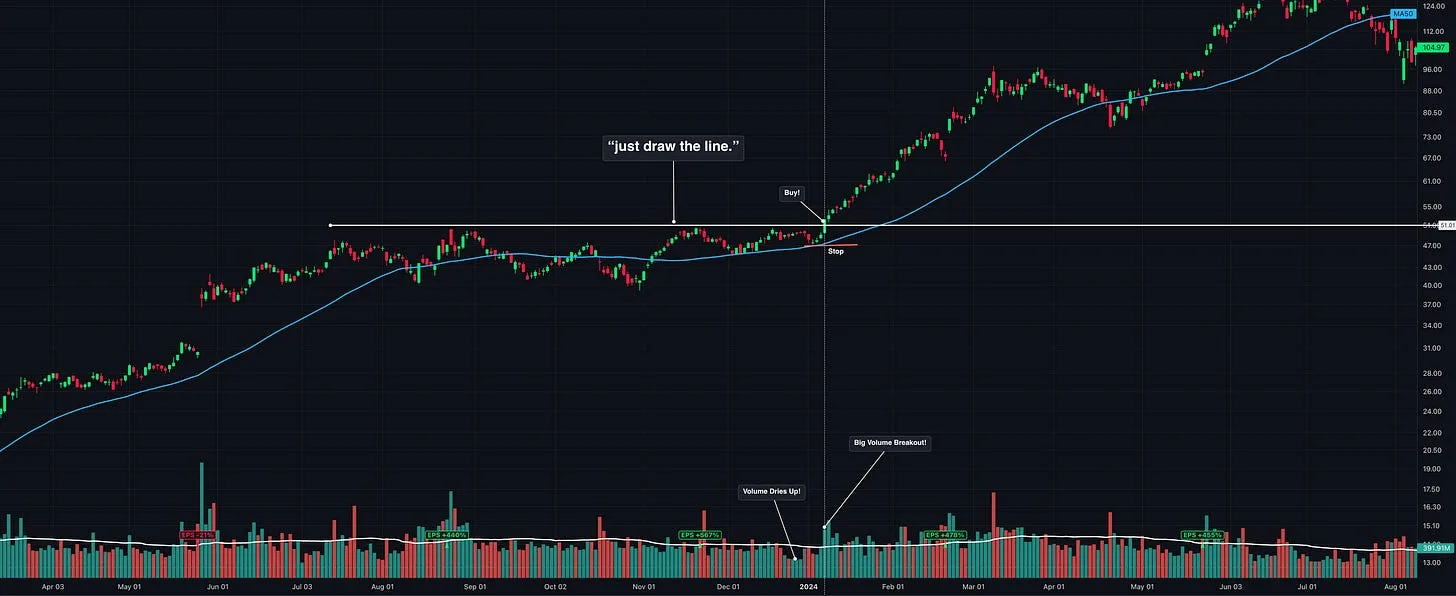
His shorthand is “just draw the line.” After assessing the larger pattern, he identifies the area above which the stock would demonstrate renewed strength. He favors volume drying up during consolidation and expanding as the stock moves out, especially when that demand continues over several sessions. If the setup is particularly strong, he may begin with a small position before full volume confirmation and add as the evidence improves.
Entry precision changes the economics of the trade. Consider a hypothetical stock breaking out at $50 with a planned exit at $48: the distance to that exit is 4%. Buy the same stock at $55, and the same exit is almost 13% below the purchase price. The company has not changed, but the late buyer must accept substantially more price risk, reduce the position, or choose a different exit that may be more vulnerable to an ordinary pullback.
This was the mistake Ryan identified in his early trading. He had been purchasing stocks 15% to 20% above their bases, then suffering when they pulled back. He became more disciplined about buying at the intended point and accepting that a missed entry could remain missed. Finding the right company could no longer excuse paying the wrong price.
Breakouts and Pullbacks Serve Different Conditions
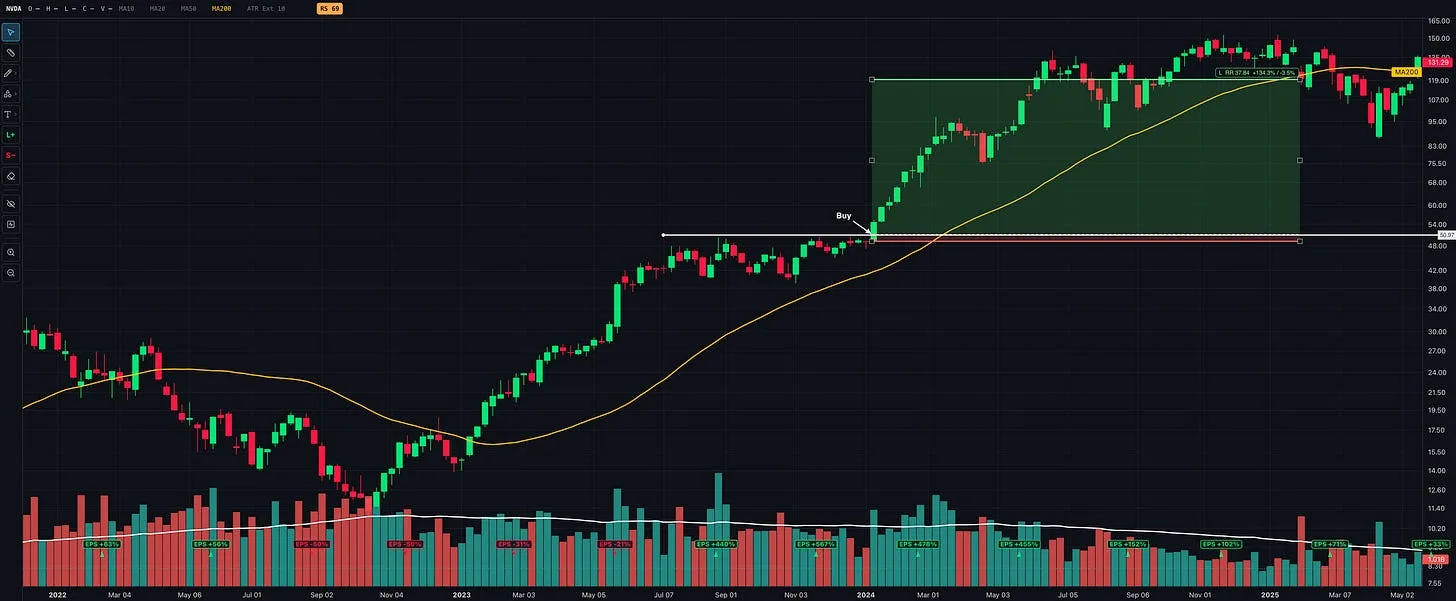
Ryan groups his entries into two broad categories: breakouts and pullbacks. Earlier in his career, he concentrated on breakouts, later adding pullbacks in strong stocks. In a powerful market uptrend, a breakout can continue higher without providing a convenient second chance. In choppier conditions, he has found more reason to consider a leader that retreats, stabilizes, and begins turning upward again.
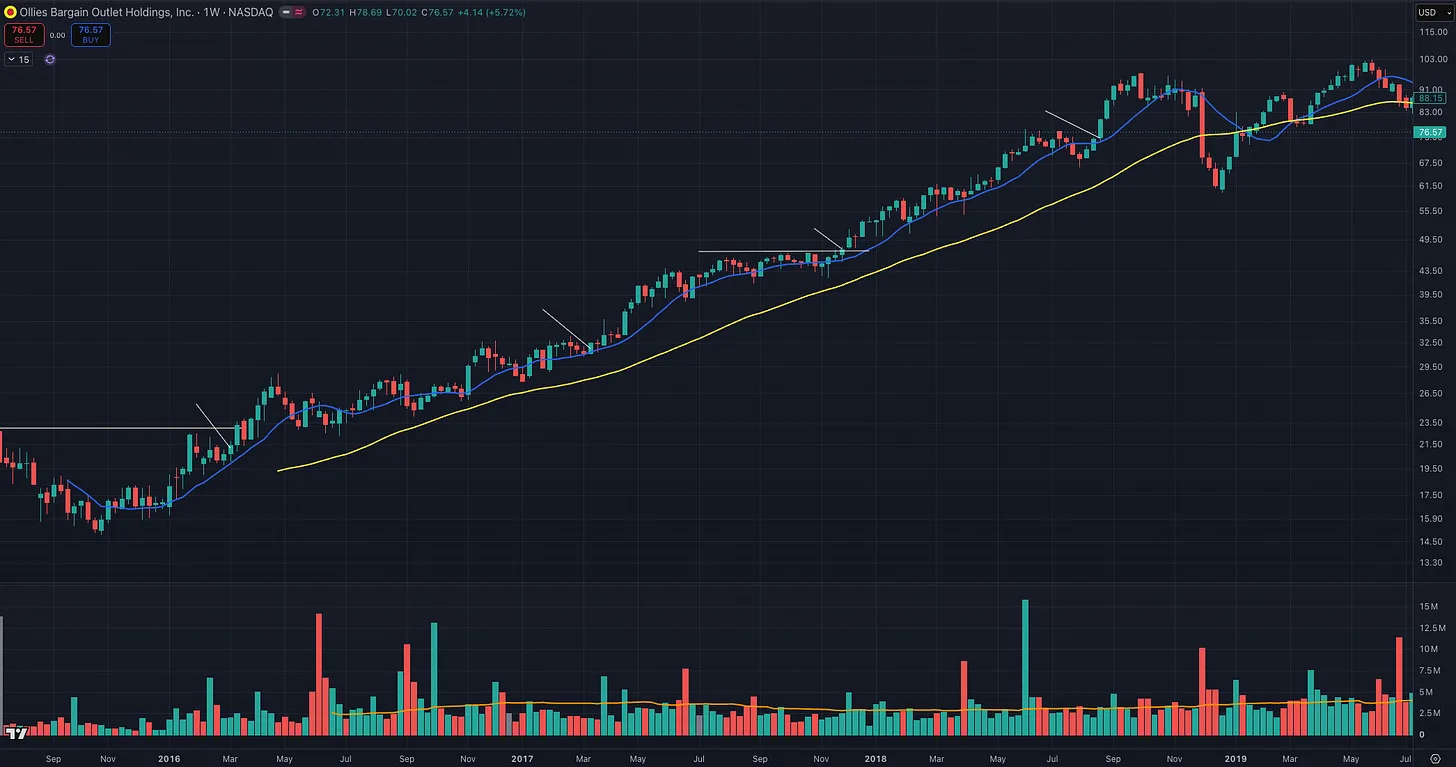
A pullback requires judgment about whether selling pressure is subsiding and the larger trend remains constructive. Ryan considers price and volume, moving averages, and trendlines. He does not require every pullback to end precisely at a moving average, and he regards these entries as more complicated than breakouts. The attraction is an opportunity to enter a strong stock as it resumes its advance, with a clear plan if the turn fails.
Make the Position Earn More Capital
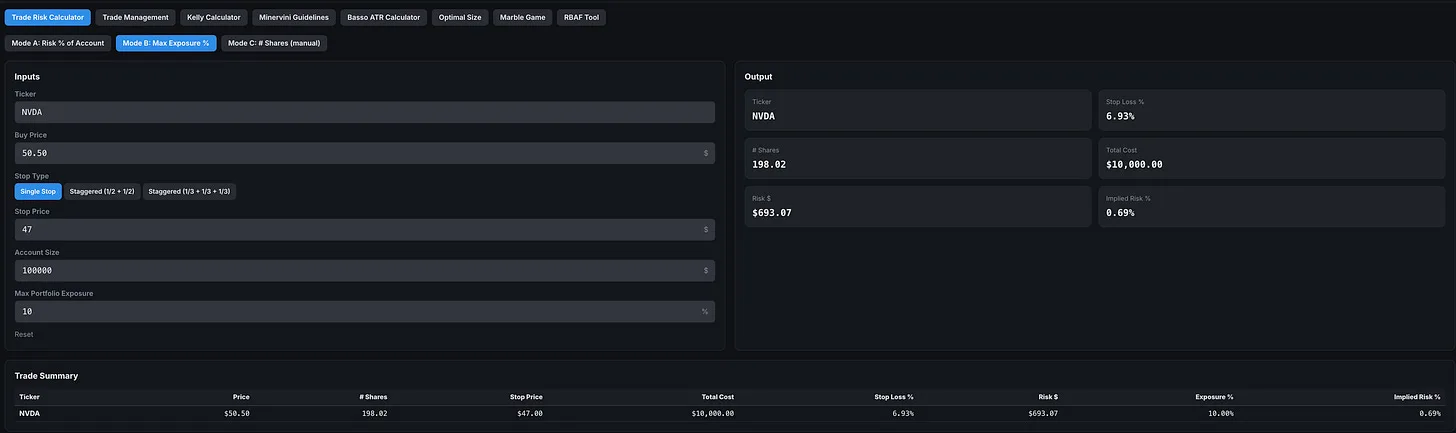
Ryan builds his largest positions through a sequence of successful decisions. He has described starting with approximately 5% to 10% of the portfolio, using smaller purchases when conditions are uncertain. If a stock advances, builds another base, and breaks out again, he can add to an already profitable holding. Through appreciation and subsequent purchases, a successful position may eventually represent 20% to 25% of the account.
That progression is central to his risk management. He refuses to add to a position simply because it has fallen below his purchase price, and he wants an established winner to earn a larger allocation. In a 2022 interview, he explained that starting with oversized positions had created problems when he became preoccupied with winning another championship. A normal fluctuation becomes much harder to tolerate when too much capital is committed immediately.
Position size must also be distinguished from the amount at risk. A holding equal to 10% of the portfolio, sold after an 8% price decline, would cost approximately 0.8% of account equity before costs and execution differences. Ryan has described intended risk of no more than about 1% of total equity on an individual trade, frequently exiting before his maximum price-loss allowance. A tight formation may permit a stop only 3% or 4% away, although overnight gaps can produce losses larger than planned.
The same reasoning governs his total market exposure. When initial purchases work and more leaders develop, he has evidence to commit additional capital; when trades repeatedly fail, he reduces size and can move heavily into cash. He studies the major indexes but also wants a market rally to produce individual stocks worth buying. During deterioration, his weakest holdings are generally the first to go, giving stronger positions greater consideration.
The Patience to Hold, the Judgment to Sell
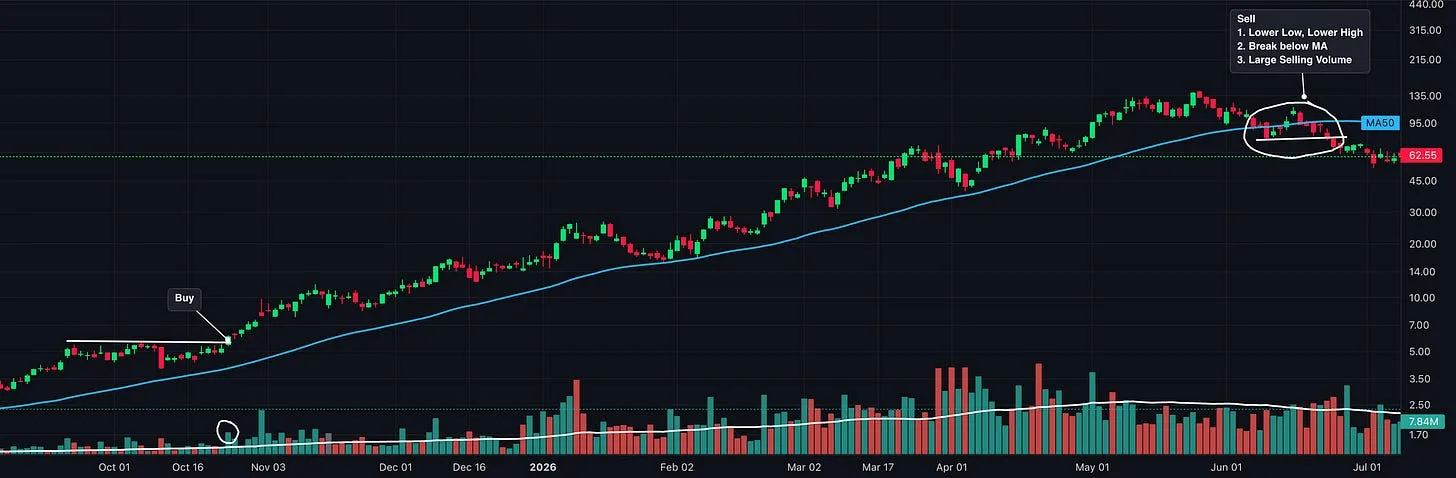
Ryan has described holding his biggest winners for six to twelve months while disposing of losers in less than two weeks. His later interviews allow a wider range, from weeks to more than a year, because the holding period follows the opportunity. Daily and weekly charts help him judge the larger move, while shorter time frames can help refine execution. Looking too closely at intraday fluctuations, he has warned, can shake a trader out of a stock whose broader trend remains healthy.
His solution often involves trading around a core position. He may reduce a holding after an extended advance, retain shares through a constructive consolidation, and rebuild the position when another setup develops. During another interview, he described holding Eli Lilly since approximately June of the previous year while adjusting its size along the way. IBD also documented his retaining shares in Ollie’s Bargain Outlet from its IPO base while trading around subsequent bases.
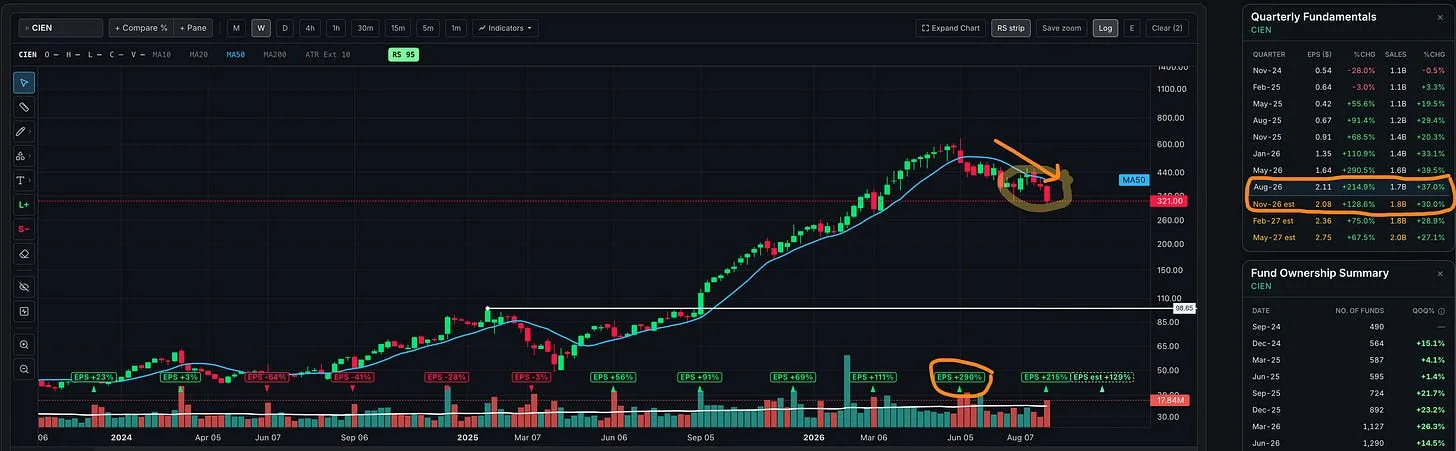
He watches for changes in character that suggest a winner is becoming less healthy. Repeated declines on increased volume, weak rallies, and breaks of important support can justify reducing or closing a position. Once a trade has developed a meaningful gain, he uses moving averages, trendlines, and areas of consolidation to help protect it. The initial 7%–8% loss allowance is not a permanent trailing stop applied mechanically beneath every new high.
The age and shape of the advance also matter. A rapid gain emerging from a long base can signal the kind of strength he wants to hold. A similar acceleration after a stock has already advanced for a year and formed numerous bases may suggest a climactic move, prompting sales into strength. Those situations can look equally exciting on a short-term chart while calling for different decisions.
Ambarella and Fiesta: The Method in Real Trades
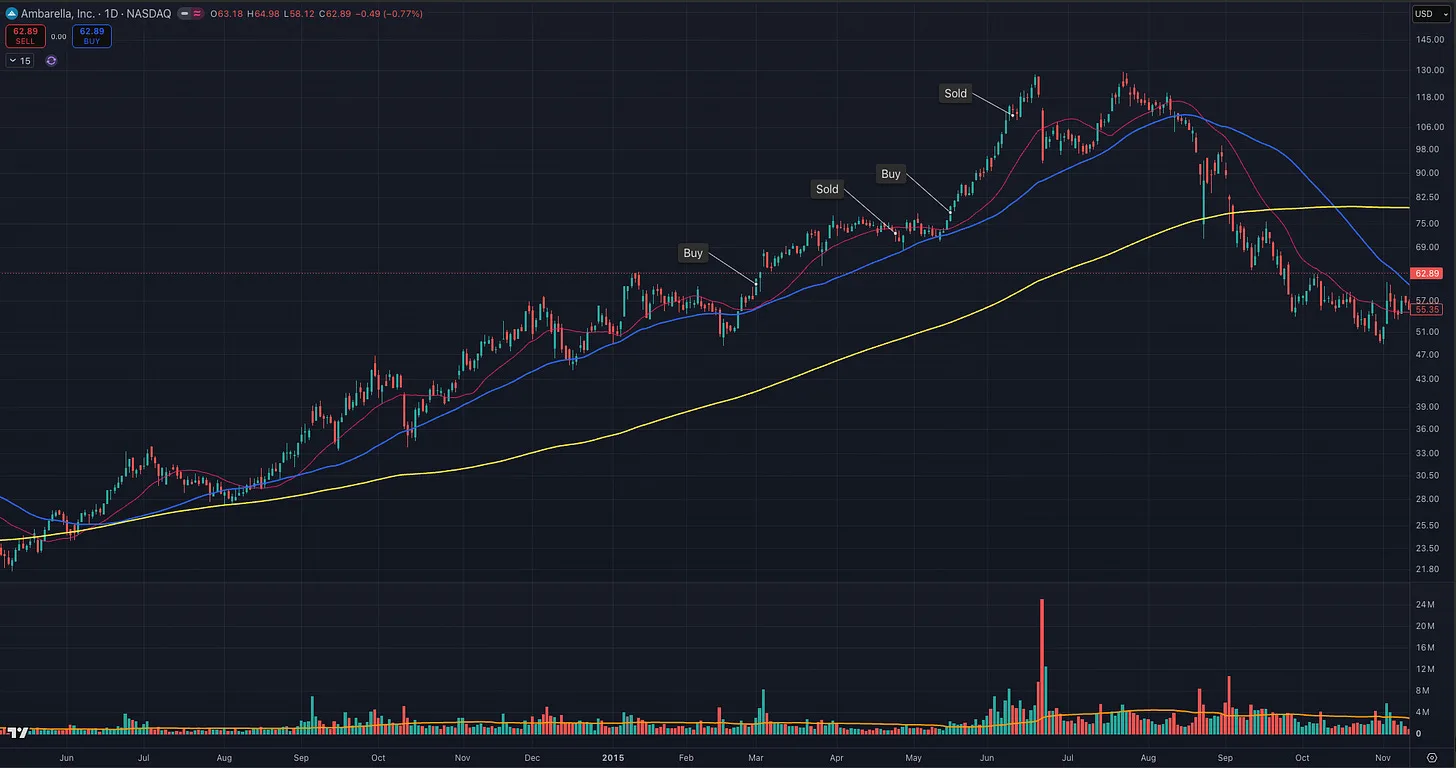
Ambarella shows how Ryan combines business growth with active trade management. In 2015, he highlighted successive year-over-year earnings increases of 19%, 42%, 84%, and 162%, accompanied by accelerating sales. He bought AMBA on March 2 as it cleared most of its base on increased volume, then sold on April 24 when it began breaking down from a subsequent consolidation. He bought it again on May 15 and sold on June 10 after judging the later acceleration potentially climactic. His account documents two separate opportunities in the same stock, with a fresh decision required at each entry and exit.
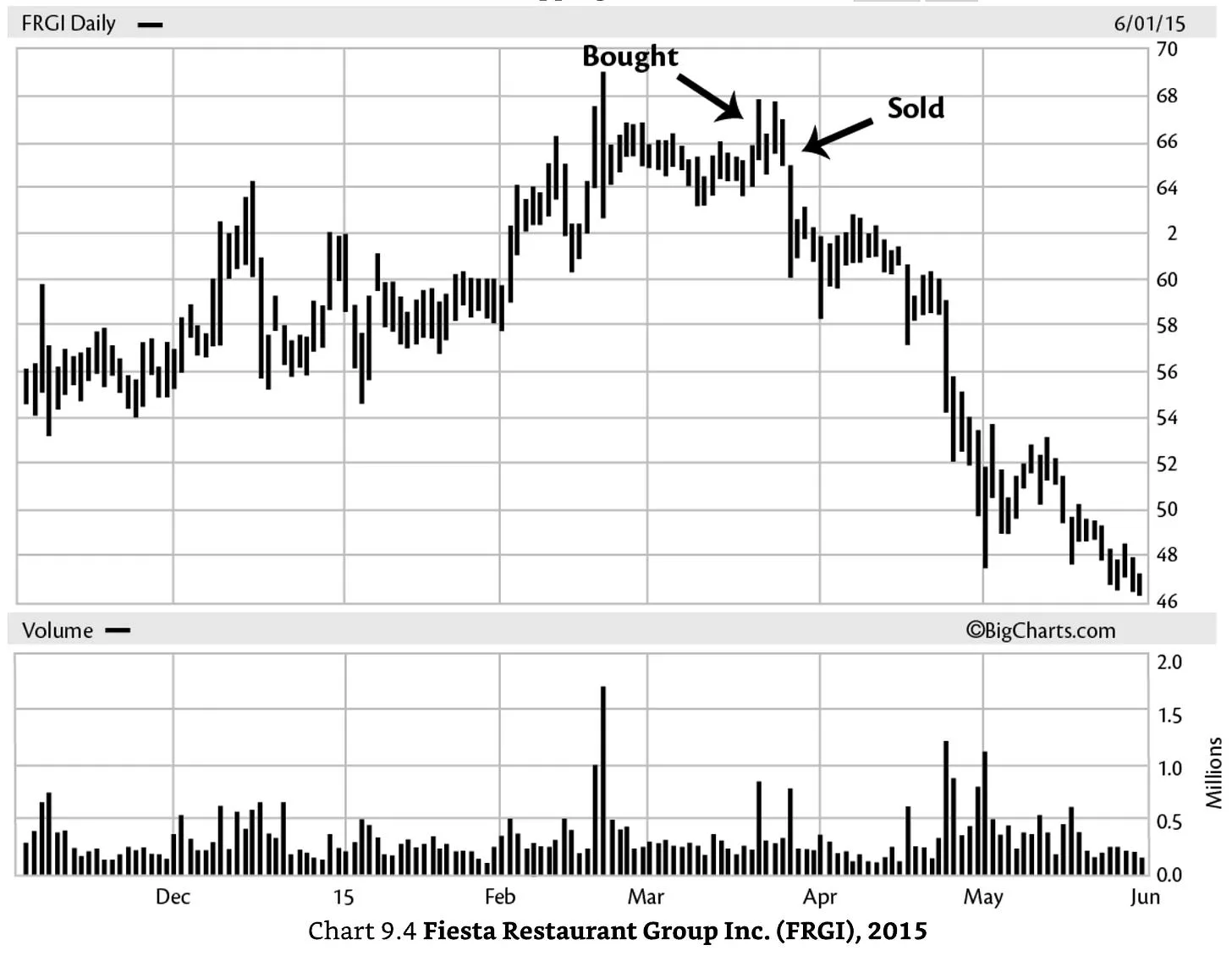
Fiesta Restaurant Group illustrates how he responds when the evidence disappoints. He bought FRGI on March 20, 2015, as it attempted to emerge from a base, but the stock stalled and closed near its daily low. He sold on March 25 after the advance failed to develop, ahead of a sharp subsequent decline shown in the book. Reviewing the purchase, he also identified an earlier reversal on exceptionally heavy volume that deserved more attention. The trade became a recorded mistake he could study, with the loss contained by his exit.
The Review That Changed Everything
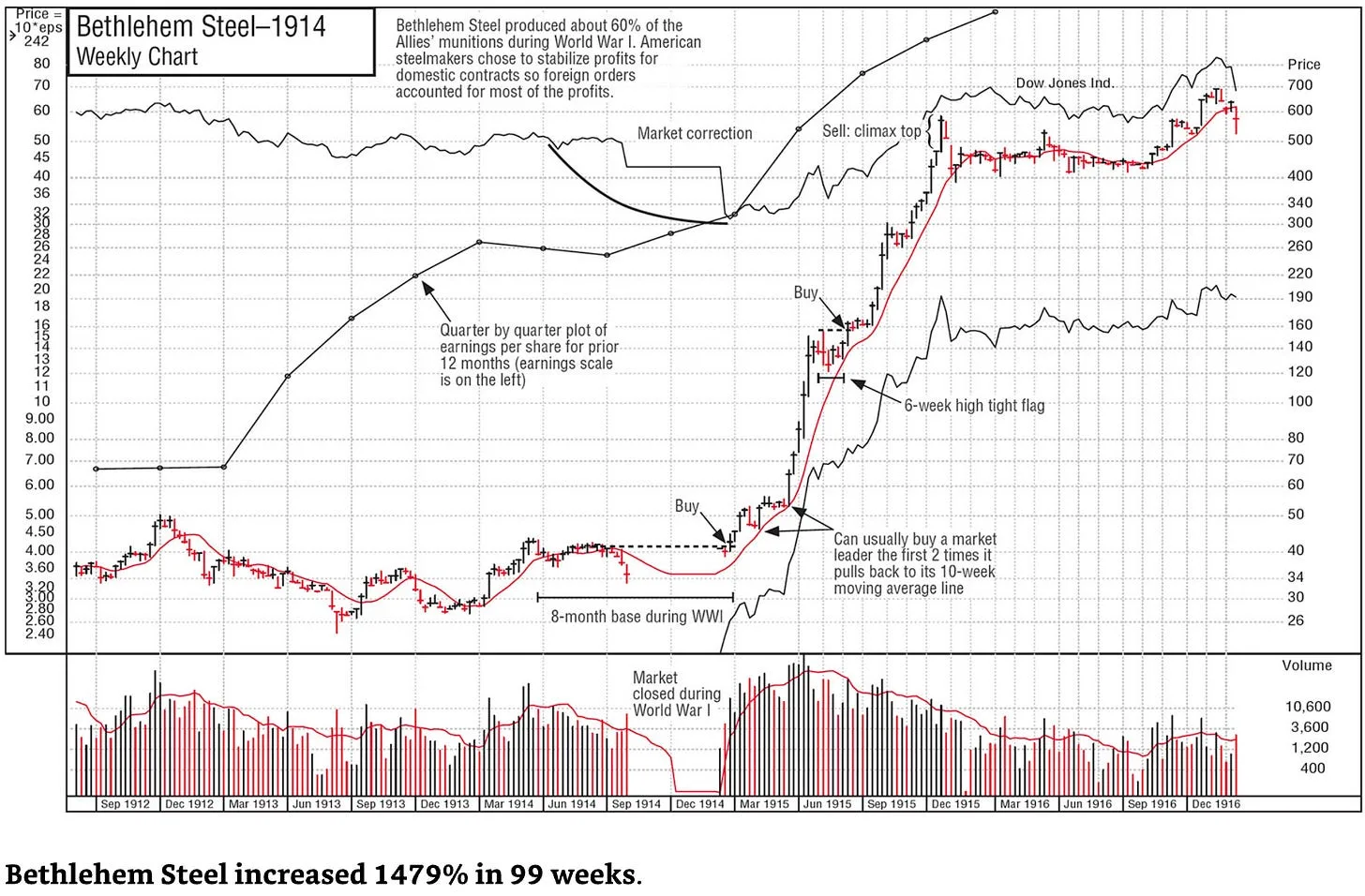
Ryan studies two sets of patterns: those formed by stocks and those repeated in his own decisions. His historical work includes comparing the behavior of winners across generations, from Bethlehem Steel in 1914 to more recent leaders. He also saves charts when he buys, records his reasons and the market conditions, then reviews the completed trades. This gives him evidence of whether a loss came from a reasonable trade that failed or from a mistake he keeps making.
His personal perspective supports that willingness to examine himself. Ryan has spoken openly about how his Christian faith informs his emphasis on humility, stewardship, and keeping trading in proportion to the rest of life. He cautions against becoming so absorbed in performance that relationships suffer, and against allowing daily profit and loss to dominate decisions. The discipline he describes includes knowing when ambition is beginning to interfere with execution.
The most practical way to apply that lesson is to open your last few completed trades and mark the entries, exits, and reasons for each decision. Look for the mistake that appears repeatedly, whether it is buying extended, entering before a setup is ready, or abandoning a healthy winner. Ryan’s early turning point came when he recognized his own recurring error and changed his behavior.
Which mistake shows up most often in your own trades?
Put the Market Wizards’ Playbook Into Practice
If you found this article useful, this is exactly the type of trading we practice here at Momentum Trading Strategy. My entire course is built on the principles of legends like David Ryan and William O’Neil, from identifying leading growth stocks and finding precise entries to managing risk and holding major winners.
More in Legendary Traders
All Legendary Traders articles →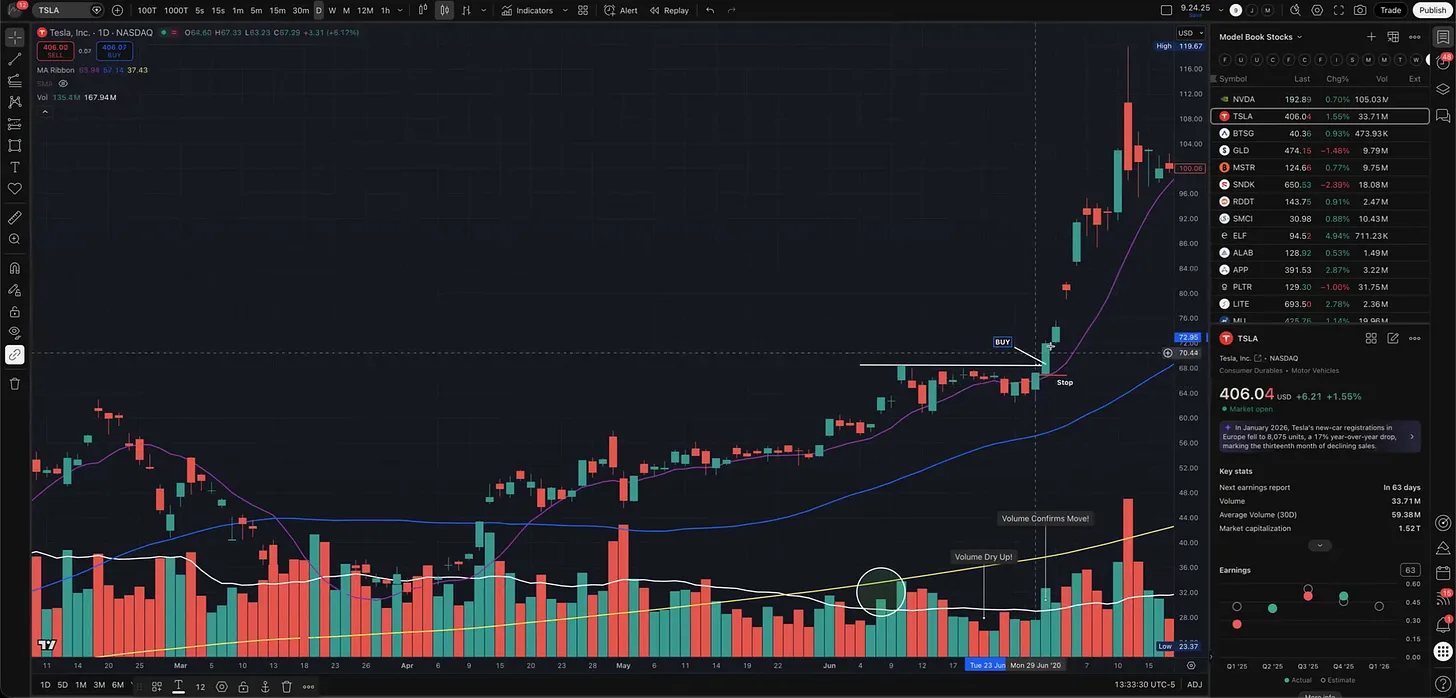
Sep 17, 2026 · Legendary Traders
4 Legendary Traders. 4 Breakout Entry Tactics.
A chart-by-chart breakdown of Minervini’s VCP, O’Neil’s cup with handle, Darvas’s box breakout, and Kullamägi’s opening range breakout.
- how to make money in stocks
- IBD
- Momentum Trading
- VCP
- technical analysis
- CANSLIM
- Trading Setups
- position trading
Aug 29, 2026 · Legendary Traders
Why the Market’s Biggest Winning Stocks Rarely Move Alone
Lessons from Nicolas Darvas, William O’Neil, and Mark Minervini on using industry-group strength and relative strength to find new market leaders without getting whipsawed.
- growth stocks
- CANSLIM
- position trading
- David Ryan
- stock trading
- Kristjan Kullamägi
- Nicolas Darvas
- industry groups
Aug 25, 2026 · Legendary Traders
Why Most Traders Fail Even With a Winning System: The Edge Almost Everyone Ignores
Richard Dennis, Paul Tudor Jones, Ed Seykota, Larry Hite, and Van Tharp all point to the same uncomfortable truth: the trader is part of the system.
- learn to trade
- Larry Hite
- Investing
- ed seykota
- Trading
- psychology of trading
- Dr. Van K. Tharp
- Richard Dennis