
Trading articles/Why You Keep Getting Stopped Out Even When You Are Right
Jan 20, 2026 · Momentum Trading Strategy
Why You Keep Getting Stopped Out Even When You Are Right
The uncomfortable truth about stop losses most traders never learn
Originally published on Substack.
If you have ever said, “I was right but still lost,” this article is for you.
That sentence alone explains why most traders never progress.
Getting stopped out is not bad luck. It is rarely manipulation, and it is almost never because the market is out to get you.
It happens because your stop does not align with how markets actually move.
The Entry Obsession Problem
Most traders spend the majority of their time perfecting entries.
Stops are treated like an afterthought. A line drawn because it feels safe or because someone said you should risk one percent.
Most trading education quietly teaches stops for emotional comfort, not market reality.
That mismatch creates frustration.
You can have a strong thesis, solid timing, and still lose repeatedly if your stop placement ignores volatility, structure, and context.
Markets do not move in straight lines. They probe. They test. They shake out weak positioning before real movement begins.
If your stop sits where it feels comfortable, it usually sits where everyone else put theirs too.
Stops Are Protection When They Are Aligned With Structure
A stop loss is not there to protect your emotions. It is there to invalidate your idea.
That distinction matters.
If price has not violated structure, momentum, or behavior, your idea is still valid. If your stop is triggered before that happens, you did not manage risk. You misdefined risk.
This is why so many traders experience death by a thousand cuts. They exit trades not because they were wrong, but because of poor stop placement or because emotionally they could not handle the original stop location, often due to being over-positioned.
Bruce Kovner Explained This Perfectly
This is not a quote about stops. It is a quote about thinking correctly.
Bruce Kovner articulated this better than almost anyone in Market Wizards:
“Whenever I enter a position, I have a predetermined stop. That is the only way I can sleep. I know where I’m getting out before I get in. The position size on a trade is determined by the stop, and the stop is determined on a technical basis. For example, if the market is in the midst of a trading range, it makes no sense to put your stop within that range, since you are likely to be taken out. I always place my stop beyond some technical barrier.”
That quote explains the entire problem most traders face.
Structure comes first.
The stop is based on that structure.
Size adjusts based on the level of portfolio risk.
Most traders find their entry and then add a stop that makes little sense relative to structure.
Why Volatility Matters
Strong trends are volatile by nature. The very stocks that produce the largest gains also experience sharp pullbacks, undercuts, and shakeouts.
If you tighten stops in volatile environments, you remove yourself from the trades that matter most.
This is not an argument for reckless risk. It is an argument for intelligent risk.
Position size exists so your stop can be placed where it makes technical sense.
If the logical stop location is wide, you do not move the stop closer. You reduce position size.
Professionals think in that order.
Most People Misunderstand What “Risking 1%” Actually Means
Most traders think risking one percent means placing their stop one percent from entry.
That is not risk management. That is just forcing a stop into an arbitrary location.
Risking one percent means adjusting position size so the stop can sit where it makes technical sense on the chart.
When I was newer, I did not fully understand this either, even though it sounds simple in hindsight.
A Real Example of How This Actually Works
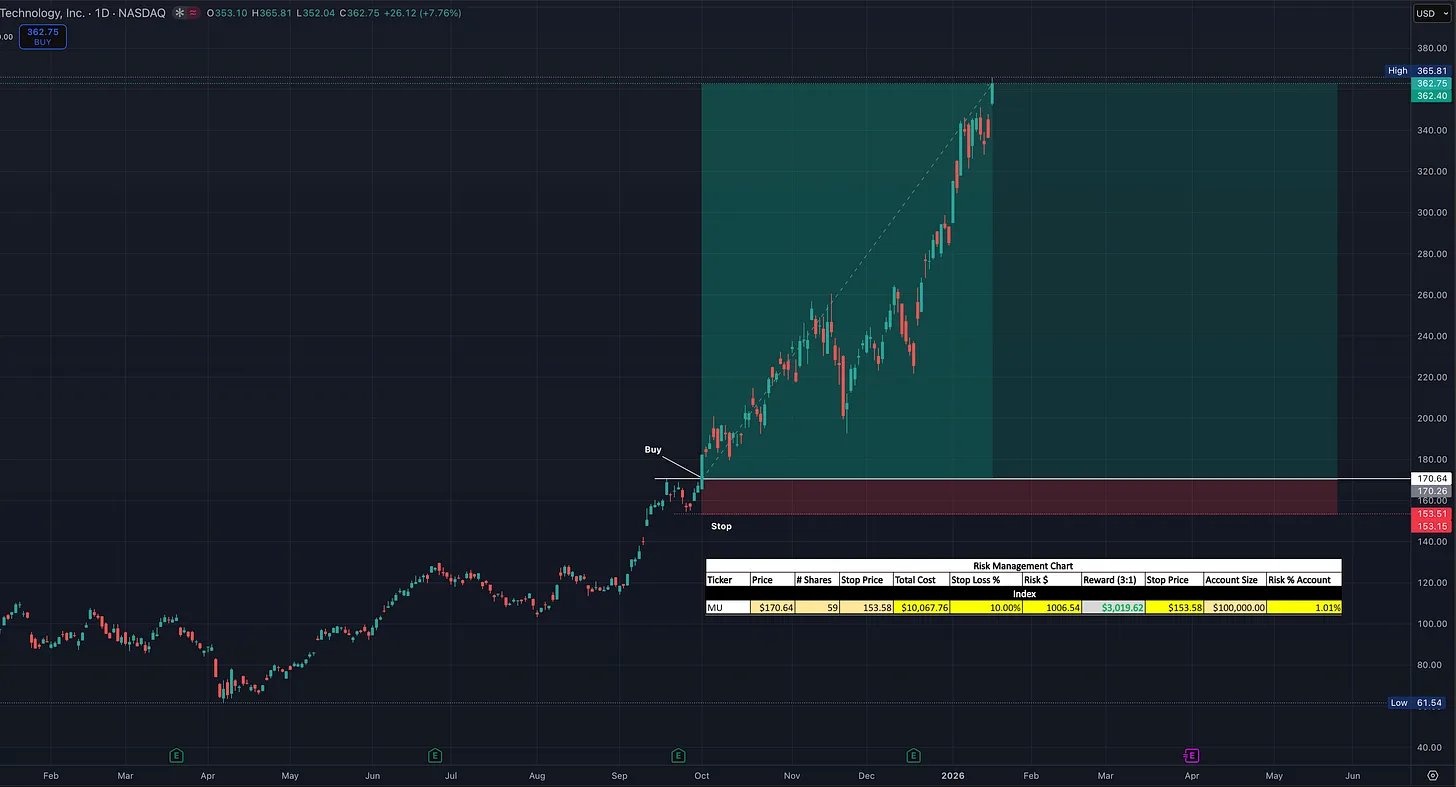
Say you identify a strong setup and the most logical technical stop is below a prior higher low. On the chart, that higher low is roughly ten percent below your entry.
From a market structure perspective, that pullback is completely normal and still keeps the trend intact.
Now introduce risk management.
If you only want to risk one percent of your account on the trade, many traders immediately conclude the setup is too risky. They either skip the trade or force a tighter stop that sits inside normal price movement.
That is the mistake.
The correct adjustment is not to look for another trade. The correct adjustment is to reduce position size so that a ten percent move against the entry only equals a one percent loss on your account.
The stop stays where it makes technical sense.
The size is what changes.
This is exactly why position sizing exists.
The Math Most Traders Underestimate
Losses are not linear. Recovery gets harder as drawdowns increase.
- A 10% loss requires an ~11% gain to recover
- A 20% loss requires a 25% gain
- A 33% loss requires a 50% gain
- A 50% loss requires a 100% gain
This is why large percentage losses on individual trades matter too, even when position sizing limits the damage to total account equity.
You can survive a big loss with position sizing.
You rarely thrive with it.
The Part Most People Miss About Position Sizing
This is where confusion often creeps in.
If a trade is sized so that a twenty percent move against the stock only costs one percent of your total account, your account does not need a twenty five percent gain to recover. From an account perspective, you only need to make back one percent.
That is the power of position sizing.
But that does not mean the trade itself was healthy.
A large percentage loss on an individual position still matters because it reflects how far price moved against your idea. The deeper that move, the more the trade worked against the behavior you were trying to capture.
Position sizing answers the question, “How much of my account can I lose?”
Loss magnitude answers a different question, “How wrong was this idea?”
Great traders respect both.
They keep portfolio risk small and avoid trades that require large percentage losses to prove they are wrong.
That balance is where consistency lives.
Knowing What You Are Trading Matters
Not all stocks behave the same.
Many small cap and mid cap stocks have completely normal price swings of twenty to thirty percent, even while remaining in valid trends.
In those cases, you cannot always place a stop eight or ten percent away and still respect structure. A technically sound stop may simply be wider.
That does not mean the trade is wrong. It means the instrument is volatile.
This is exactly why traders must know what they are trading.
If you are trading something that routinely swings twenty percent, you must expect that behavior and size accordingly. If you are uncomfortable with that kind of volatility, the solution is not to force a tighter stop. The solution is to trade something else.
Risk management is not about applying the same rule to every chart. It is about aligning your strategy, your position size, and the normal behavior of the instrument you are trading.
Large cap leaders, small caps, thin names, and ETFs all move differently. Good traders adjust. Struggling traders don’t.
Why William O’Neil Capped Losses Early
This is exactly why William O’Neil always emphasized cutting losses early.
In How to Make Money in Stocks, O’Neil made it clear that losses should be cut at a maximum of 8% below the purchase price. Earlier, during the Market Wizards era, he referenced losses closer to 7%.
This rule was not about position sizing. It was about price behavior from entry.
O’Neil understood that leading stocks should work quickly after proper breakouts. Once a stock moves decisively against you early, the odds are no longer favorable.
Even if position sizing protects your account, allowing large percentage losses on individual trades works against you mathematically and psychologically.
This is where both ideas come together.
Position sizing controls total account risk.
Loss limits control trade quality and asymmetry.
The Hidden Psychology Behind Bad Stops
Most tight stops are not about discipline. They are about emotional comfort.
Traders tighten stops to avoid discomfort. To avoid watching unrealized gains fluctuate. To avoid being wrong longer than necessary.
The market does not reward emotional comfort. It rewards alignment with structure and behavior.
If your stop is designed to make you feel better instead of reflect how price actually moves, it will fail repeatedly.
Why Good Traders Still Get Stopped Out
Even the best traders take losses. Getting stopped out is part of the process.
The real problem is getting stopped out of the right trades.
A system that consistently removes you from winning behavior before it can develop is worse than no system at all.
This is why many traders have decent win rates but poor equity curves. They cap upside while fully absorbing downside.
That math never works.
The Real Job of Risk Management
Risk management is not just about minimizing losses.
It is about surviving long enough and staying positioned well enough to allow big winners to occur.
That requires stops based on structure, volatility, and intent, not fear.
When stops align with how markets move, losses become information instead of frustration.
The Shift That Changes Everything
The moment trading improves is when you stop asking, “How tight can my stop be?” and start asking, “At what point is my idea clearly wrong?”
That single shift changes behavior, confidence, and results.
I will add chart examples showing logical stop locations and how position size adjusts when the percentage risk from entry is wider. That is where theory turns into execution.
Stops protect your capital, but more importantly, they define the point at which your idea is wrong.
Most traders never make that distinction.
That is why they keep getting stopped out, even when they are right.
Examples
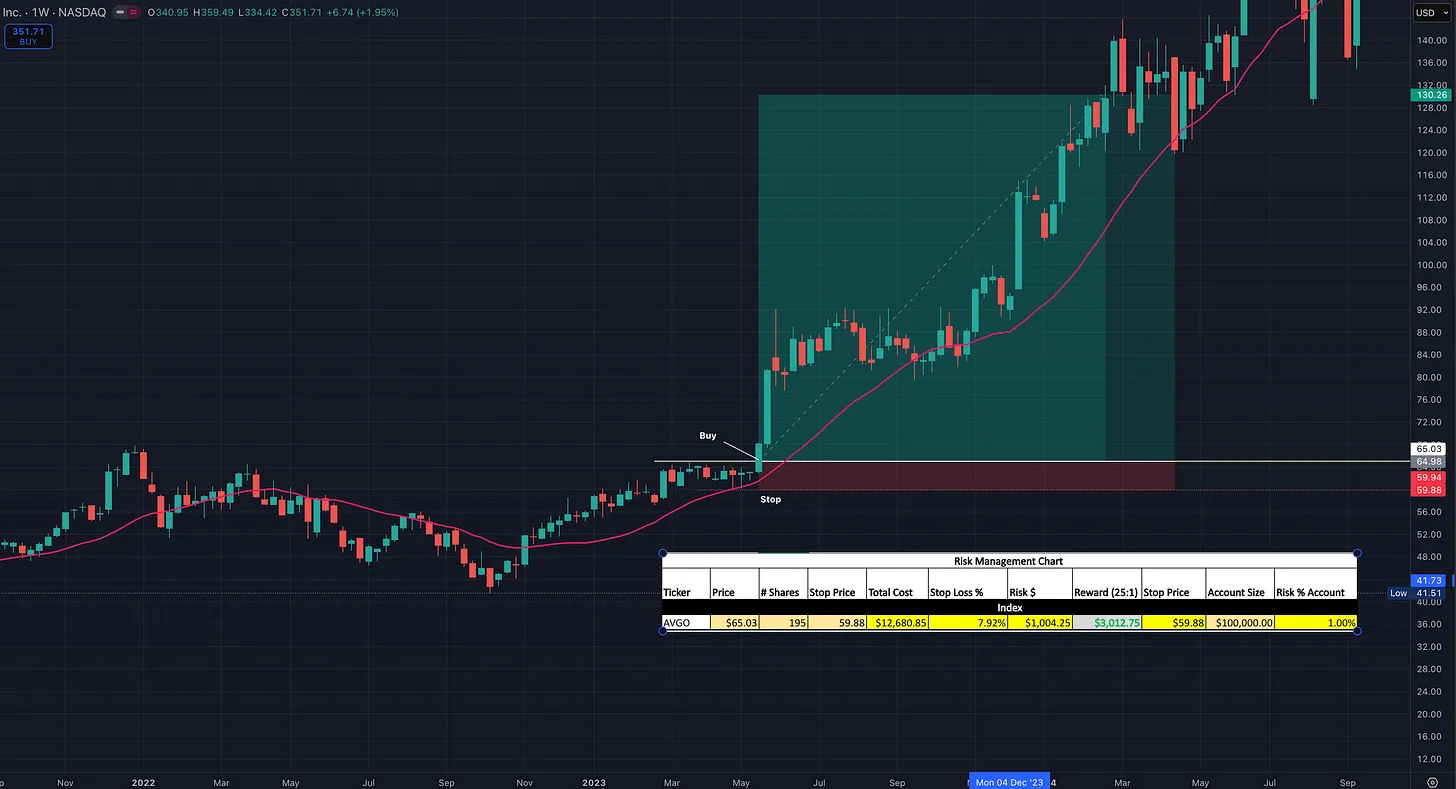
Example 1: The stop is placed below structure, not for comfort. Price never violated the level that would invalidate the thesis, allowing the trade to absorb normal volatility and develop into a large winner. Position size was adjusted so the wider stop still limited total account risk to 1%.
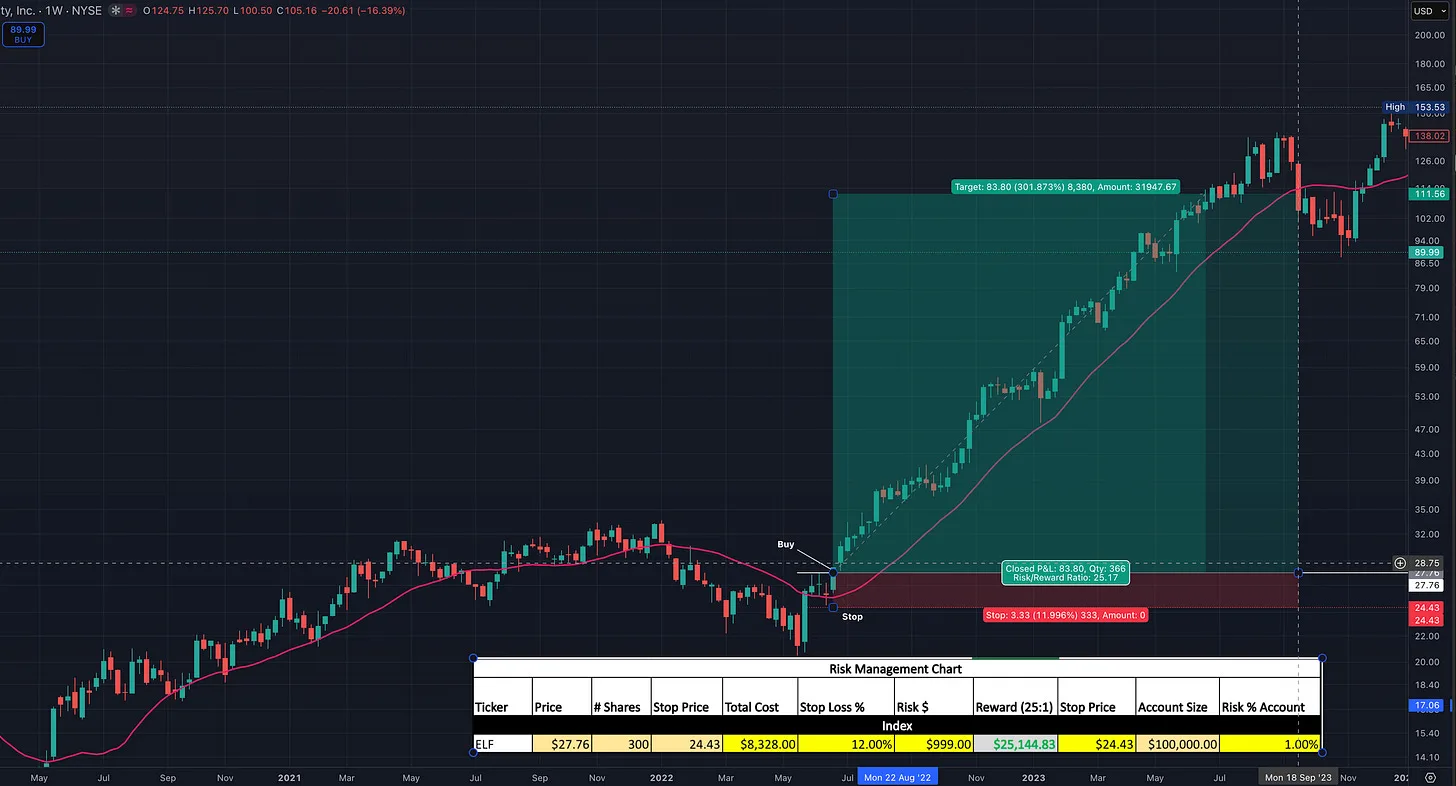
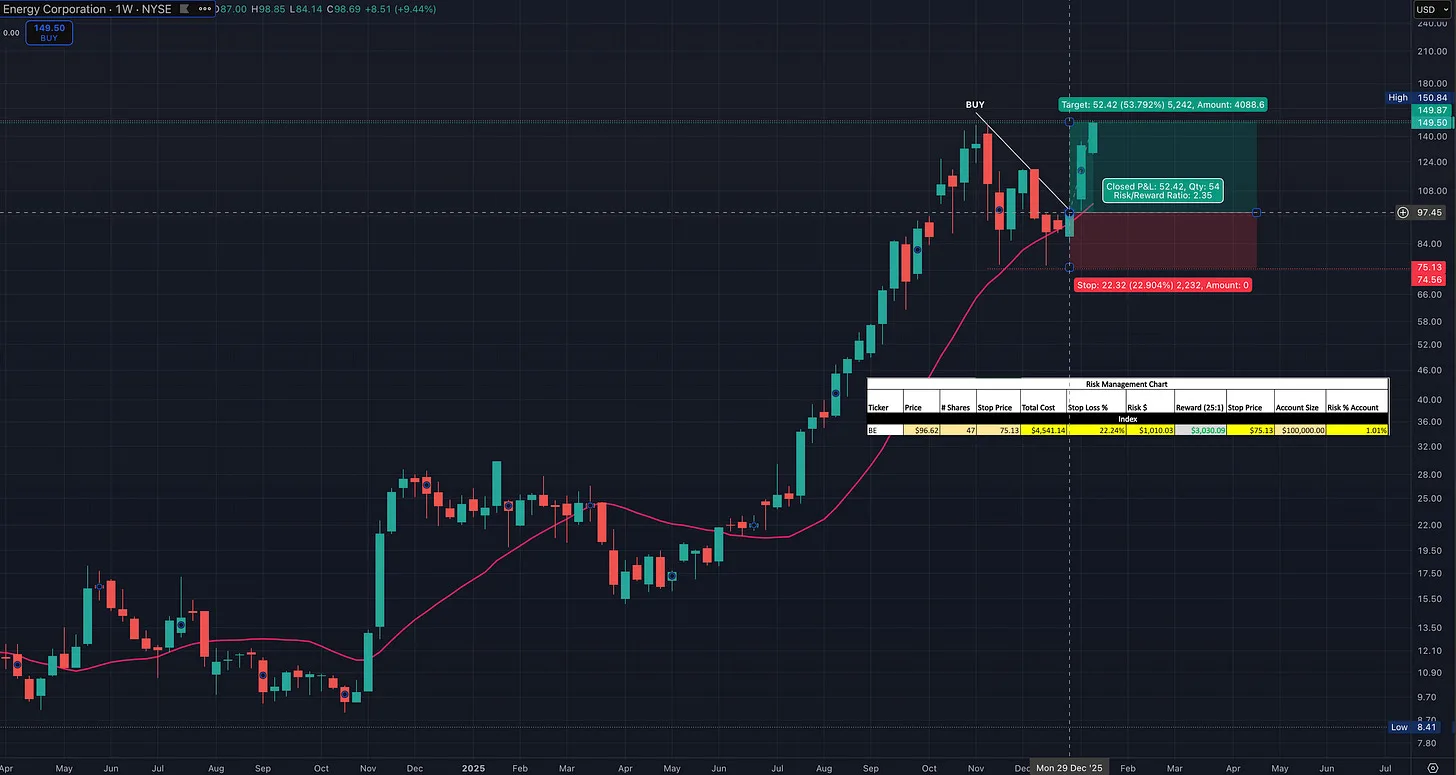
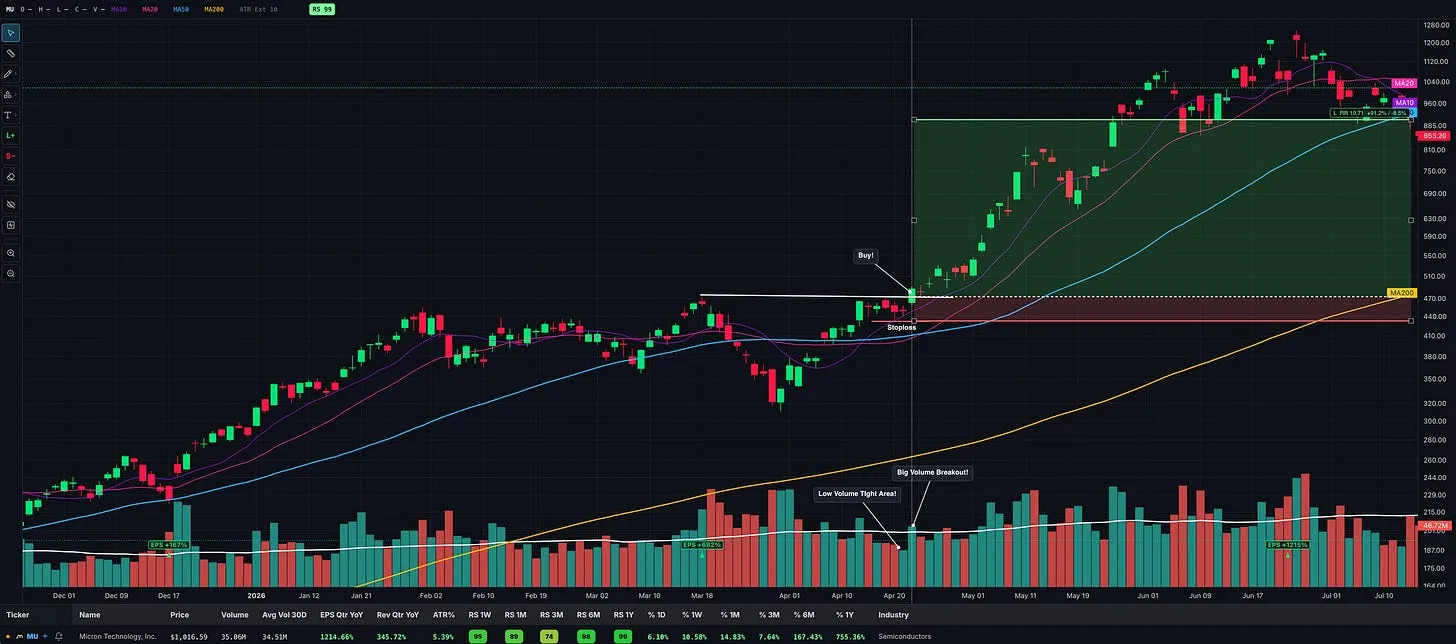
Example 2: A structurally valid stop with controlled portfolio risk. The wider stop distance reflects a more volatile name, while the position sizing chart shows how risk can still be managed.
More in Legendary Traders
All Legendary Traders articles →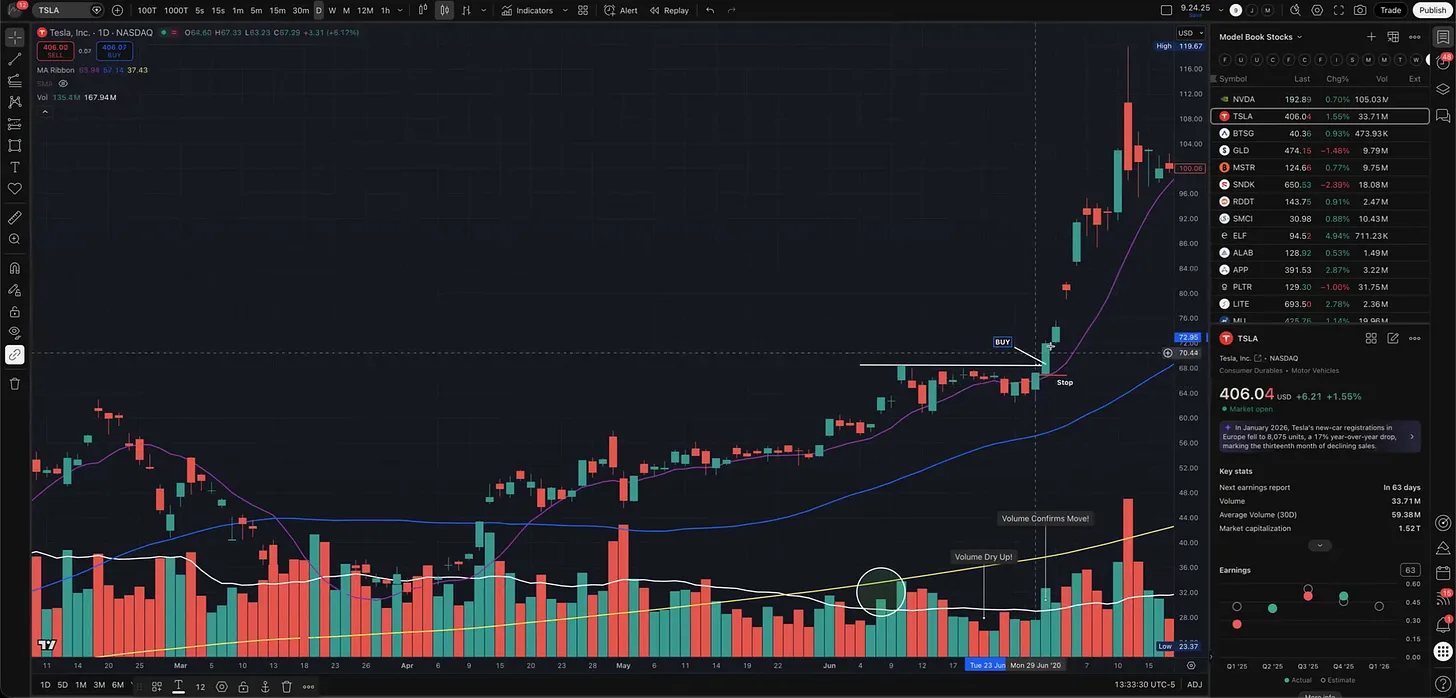
Sep 17, 2026 · Legendary Traders
4 Legendary Traders. 4 Breakout Entry Tactics.
A chart-by-chart breakdown of Minervini’s VCP, O’Neil’s cup with handle, Darvas’s box breakout, and Kullamägi’s opening range breakout.
- how to make money in stocks
- IBD
- Momentum Trading
- VCP
- technical analysis
- CANSLIM
- Trading Setups
- position trading
Sep 6, 2026 · Legendary Traders
Market Wizard David Ryan: How He Made 1,379% in Three Years
Inside the growth-stock approach of William O’Neil’s protégé and three-time U.S. Investing Champion, from precise entries to holding major winners.
- IBD
- fundamental analysis
- Learn Trading
- technical analysis
- position trading
- David Ryan
- Market Wizard
- CAN SLIM
Aug 29, 2026 · Legendary Traders
Why the Market’s Biggest Winning Stocks Rarely Move Alone
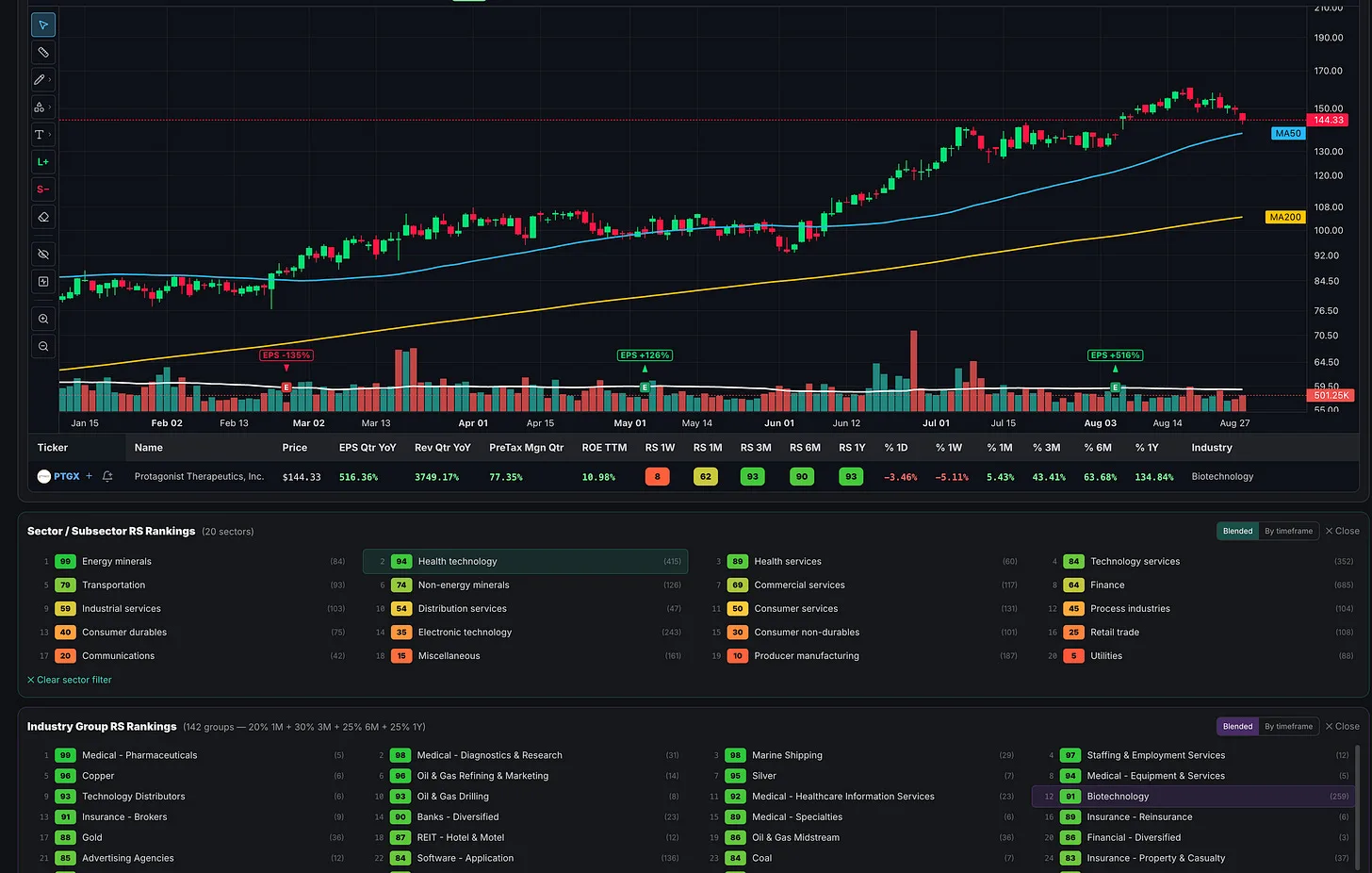
Lessons from Nicolas Darvas, William O’Neil, and Mark Minervini on using industry-group strength and relative strength to find new market leaders without getting whipsawed.
- growth stocks
- CANSLIM
- position trading
- David Ryan
- stock trading
- Kristjan Kullamägi
- Nicolas Darvas
- industry groups