
Trading articles/The 6 Market Types Every Trader Must Understand
Dec 2, 2025 · Momentum Trading Strategy
The 6 Market Types Every Trader Must Understand
A simple framework that shows you when to press, when to sit tight, and when to stay out
Originally published on Substack.
Most traders obsess over setups, entries, and indicators. Very few ever stop and ask the one question that actually determines their probability of success:
What type of market am I in right now?
Dr. Van K. Tharp famously broke the market into six repeatable environments. When you recognize which one you are trading, everything becomes easier. You know whether to press, sit tight, trim, avoid, or stay flat. Your expectations match reality.
Below is the short, practical guide you can use today.
Six Market Types
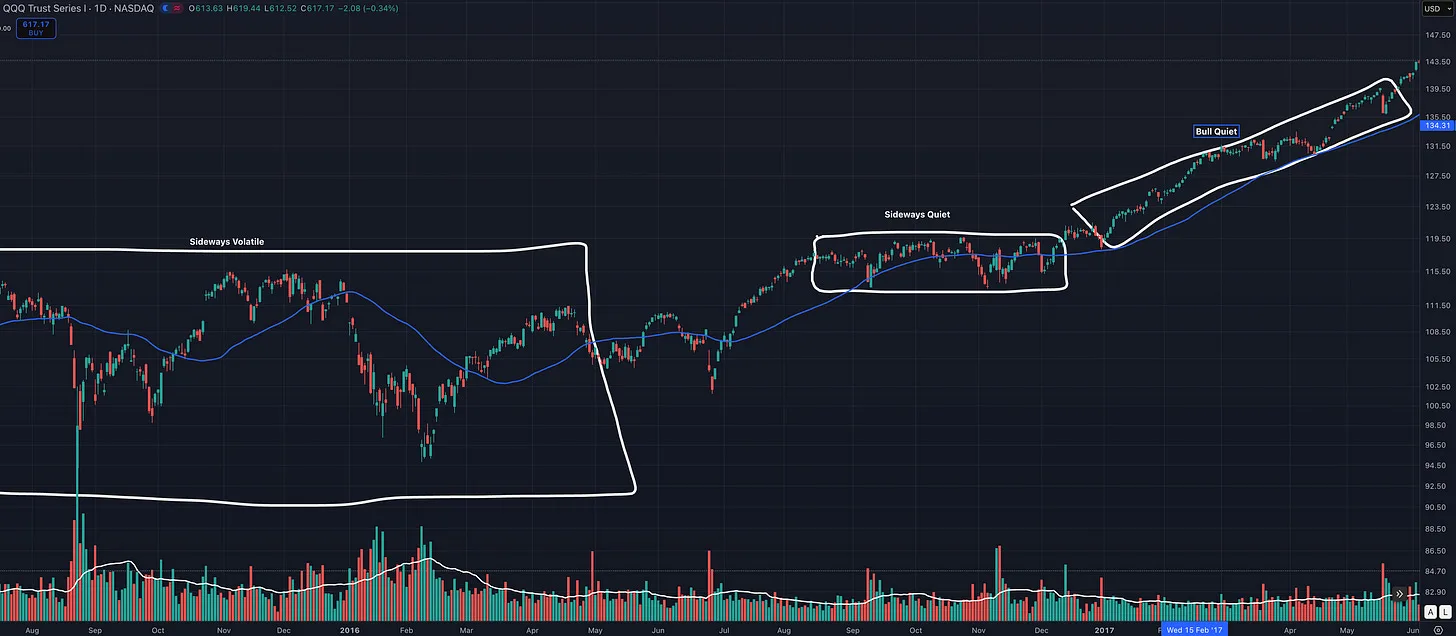
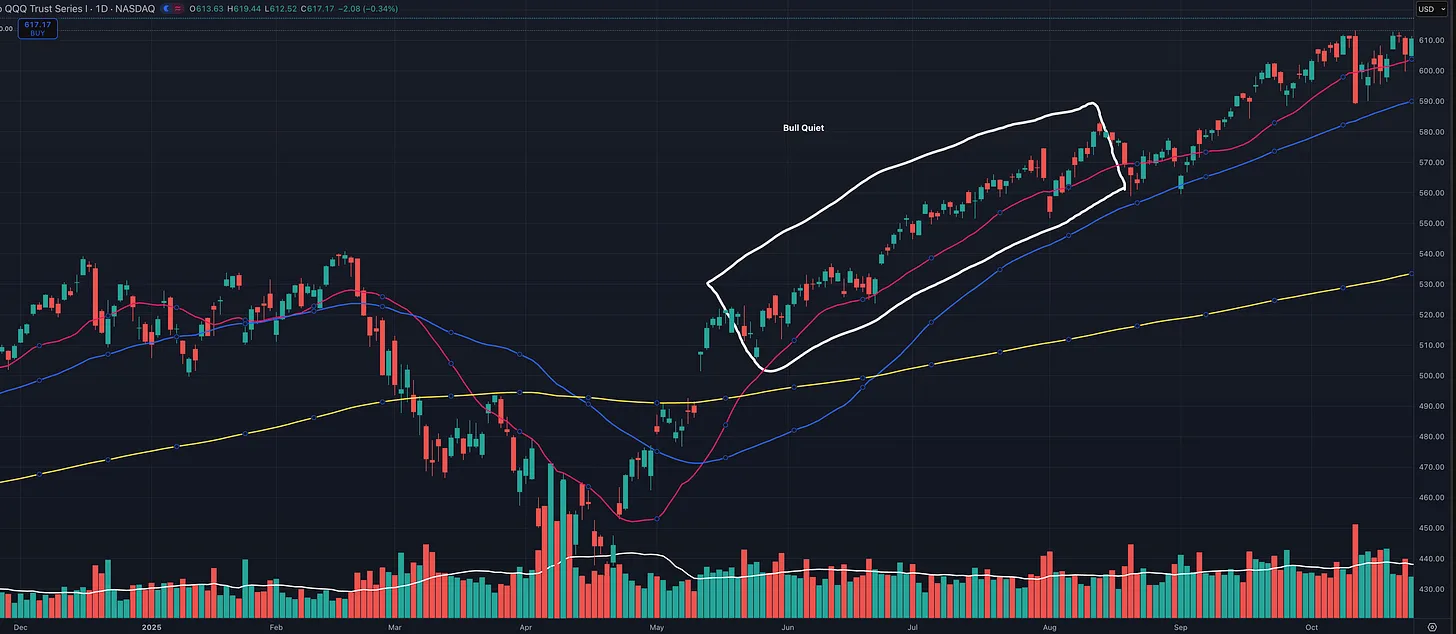
1. Bull Quiet
A strong uptrend with low volatility. Pullbacks are shallow. Moving averages slope upward. Bars are orderly. This is when breakouts work and trends extend.
Often confirmed by compressed Bollinger Bands inside an uptrend or a tight rising Donchian channel.
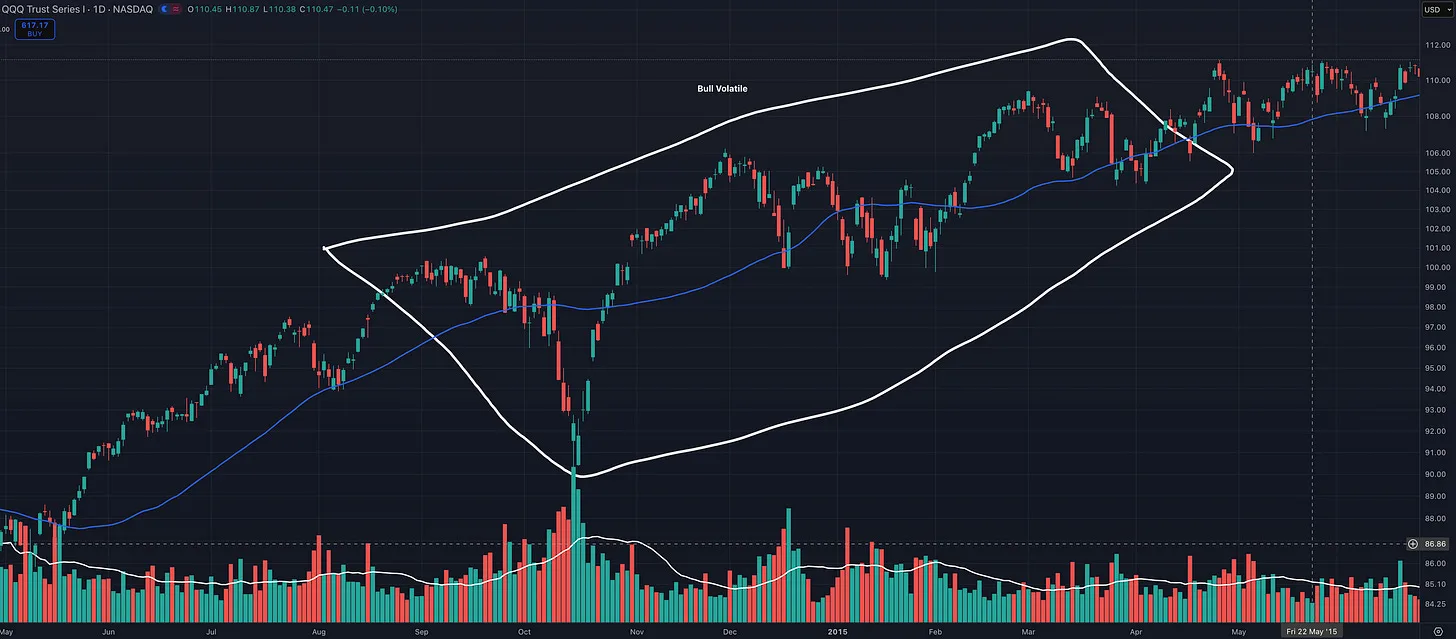
2. Bull Volatile
An uptrend with wide swings, emotional bars, shakeouts, and deeper pullbacks. Trend is still up, but you must size smaller and expect fast moves.
Bollinger Bands expand sharply. Big bars. Donchian channel widens.
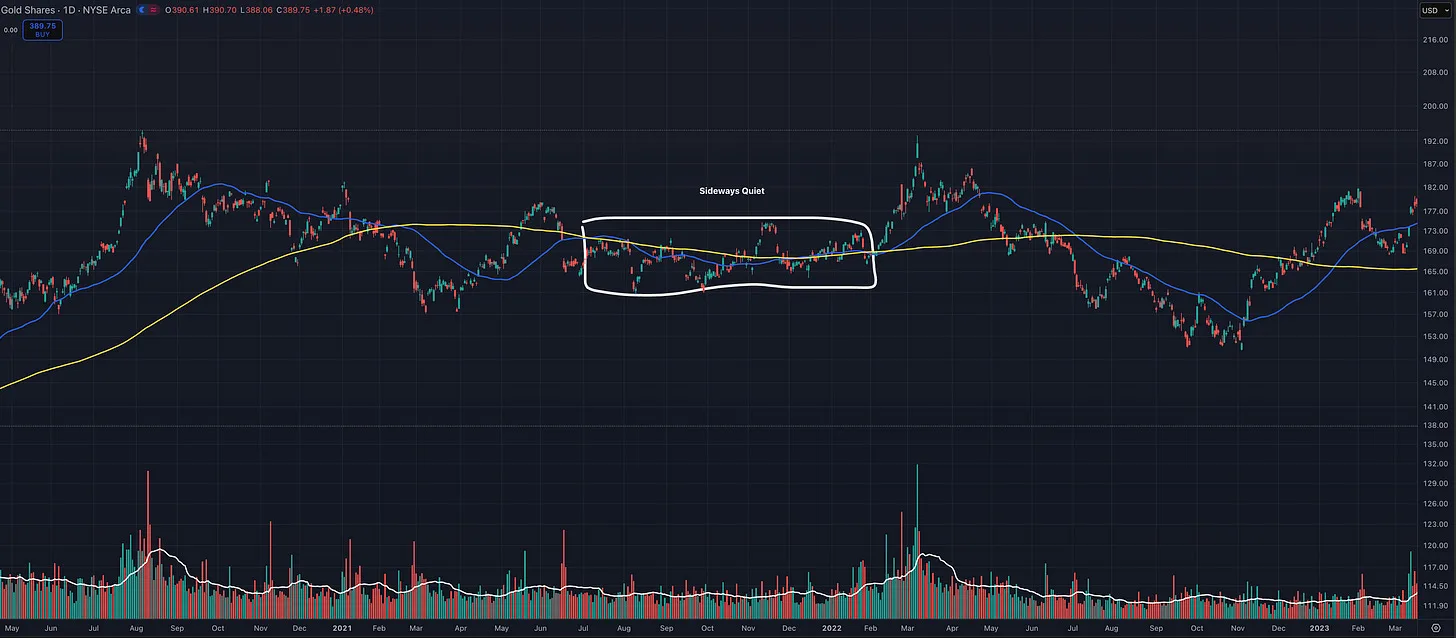
3. Sideways Quiet
A tight and quiet range. Volatility compresses, price chops, and both buyers and sellers step back. This is where future big moves are born.
Bollinger Bands contract. Donchian channel narrows. Volume dries up.
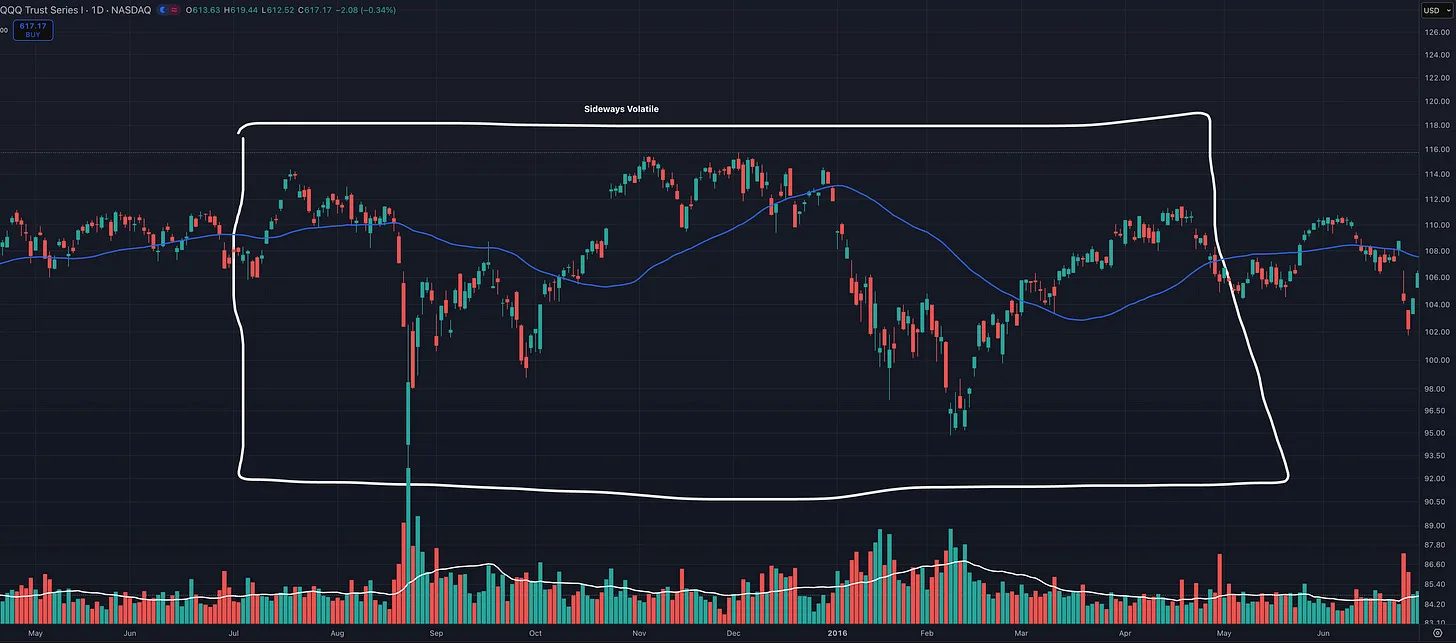
4. Sideways Volatile
A wide and emotional range with no trend. Stops get hit. Breakouts fail. Mean reversion dominates. This is where most traders lose money because it feels like a trend is about to start but never does.
Bollinger Bands are wide and flat. Donchian boundaries far apart. Constant whipsaw.
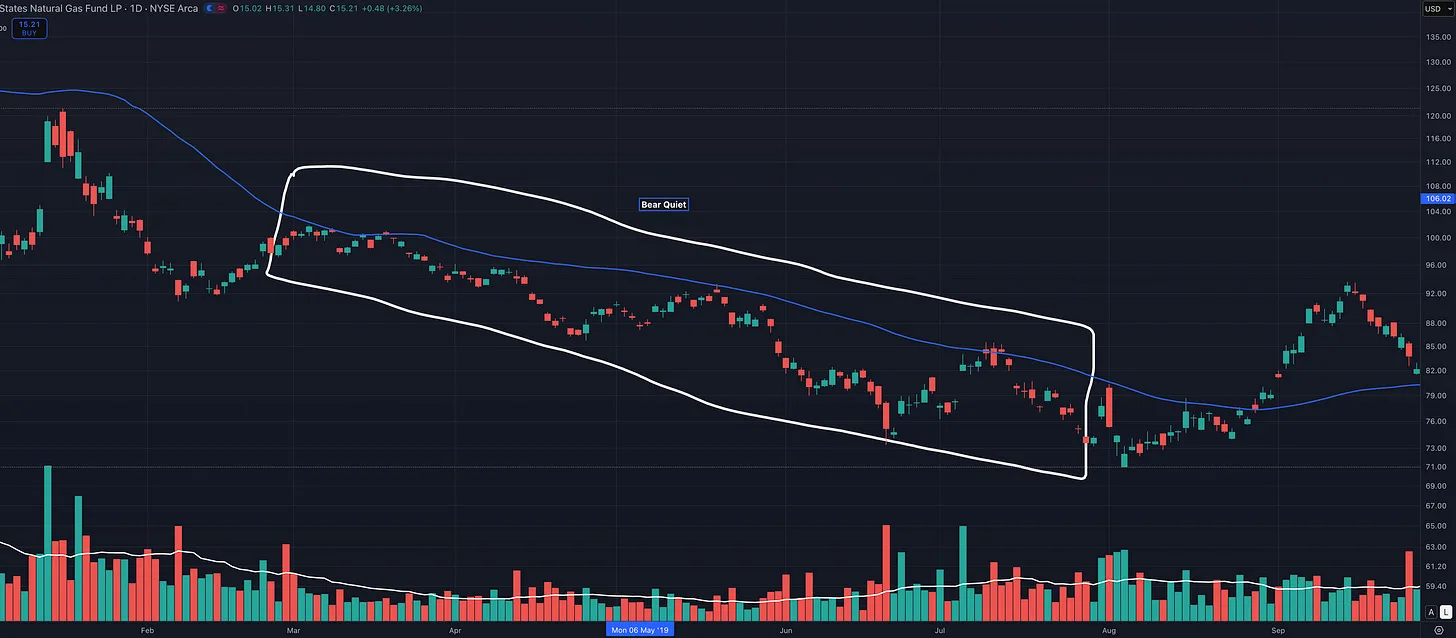
5. Bear Quiet
A controlled, low-volatility downtrend. It looks like a staircase drifting lower. Not common in QQQ but shows up in weak commodities, FX, and some single stocks.
Bollinger Bands slightly expanding but orderly. Clear downward sloping moving averages.
Extremely uncommon. Bears usually unfold with volatility, not calm, controlled declines.
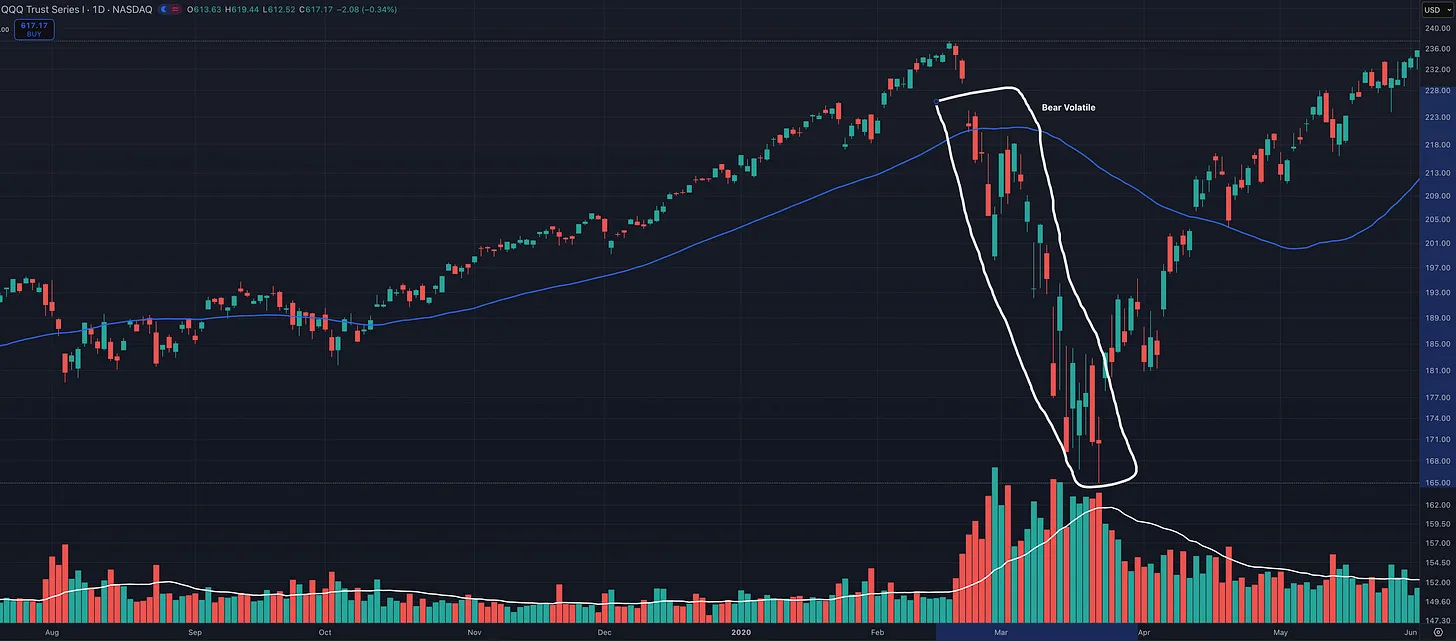
6. Bear Volatile
A violent downtrend. Huge candles. Panic selling. Liquidity disappears. This is when markets crash and hedges finally pay.
Bollinger Bands explode outward. Donchian channel widens aggressively.
How to Identify Market Type in Seconds
You only need three things.
1. Trend direction
Use the 50-day and 200-day moving averages.
Upward slope = bull. Downward slope = bear. Flat = sideways.
2. Volatility
Use ATR, ROC, Bollinger Band width, or Donchian range.
Narrow = quiet. Wide = volatile.
3. Structure
Higher highs and higher lows = bullish.
Lower highs and lower lows = bearish.
Back-and-forth with no progress = sideways.
When you combine trend and volatility, the six market types reveal themselves instantly.
Why This Matters
Every setup has a market type where it thrives.
Every trader has a personality that fits certain environments.
Your job is not to predict.
Your job is to adapt.
The traders who survive are the ones who stop forcing trades during the wrong environment and wait for the market type that aligns with their strategy.
This framework gives you that discipline.
Match the Strategy to the Market Type
Most traders make the same mistake that Dr. Van Tharp warned about. They try to force one strategy to work in every market type. The problem is that almost no strategy performs well across all six environments. Systems built for Bull Quiet get crushed in Bear Volatile. Breakout systems fail in Sideways Quiet. Mean reversion systems blow up in trending volatility.
Van Tharp taught that traders can improve their results by understanding the current market type and recognizing when it begins to shift. It is not about predicting the future. It is about being aware of the environment you are in and using the strategies that fit that environment. Market type is not the only part of trading, but it is an important one, and learning to spot it sooner gives you a meaningful advantage.
More in Legendary Traders
All Legendary Traders articles →
Sep 17, 2026 · Legendary Traders
4 Legendary Traders. 4 Breakout Entry Tactics.
A chart-by-chart breakdown of Minervini’s VCP, O’Neil’s cup with handle, Darvas’s box breakout, and Kullamägi’s opening range breakout.
- how to make money in stocks
- IBD
- Momentum Trading
- VCP
- technical analysis
- CANSLIM
- Trading Setups
- position trading
Sep 6, 2026 · Legendary Traders
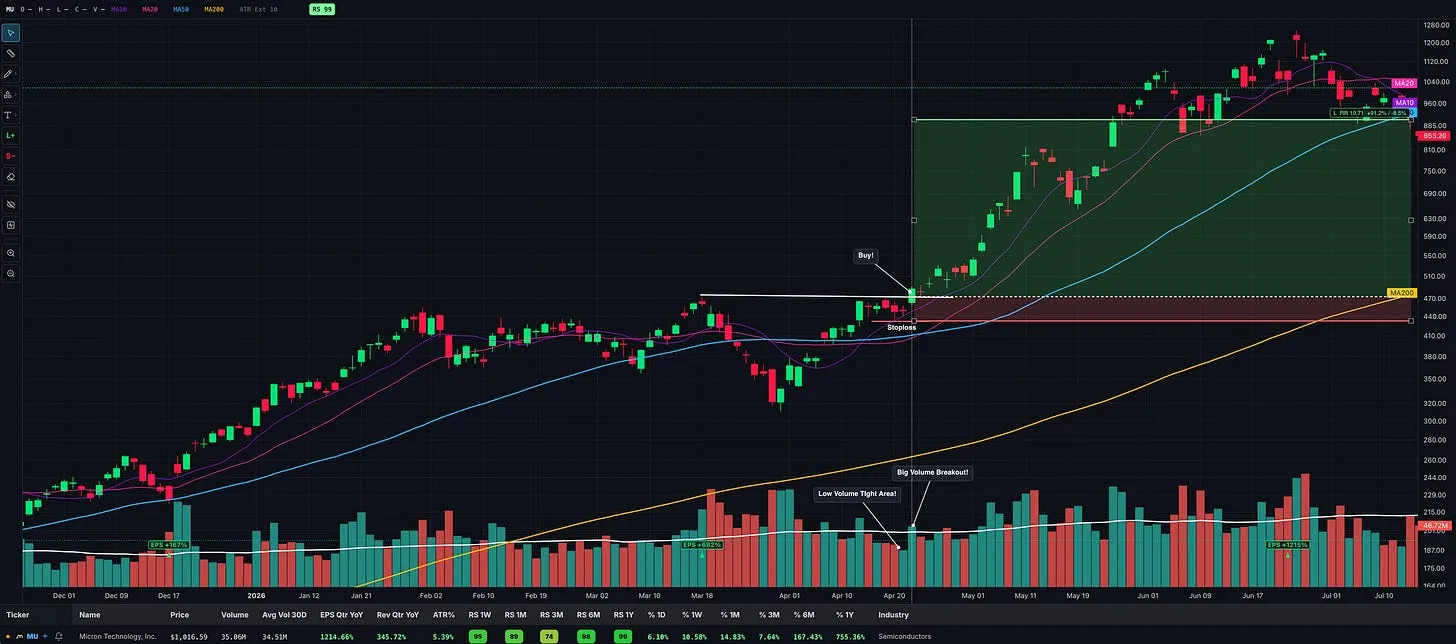
Market Wizard David Ryan: How He Made 1,379% in Three Years
Inside the growth-stock approach of William O’Neil’s protégé and three-time U.S. Investing Champion, from precise entries to holding major winners.
- IBD
- fundamental analysis
- Learn Trading
- technical analysis
- position trading
- David Ryan
- Market Wizard
- CAN SLIM
Aug 29, 2026 · Legendary Traders
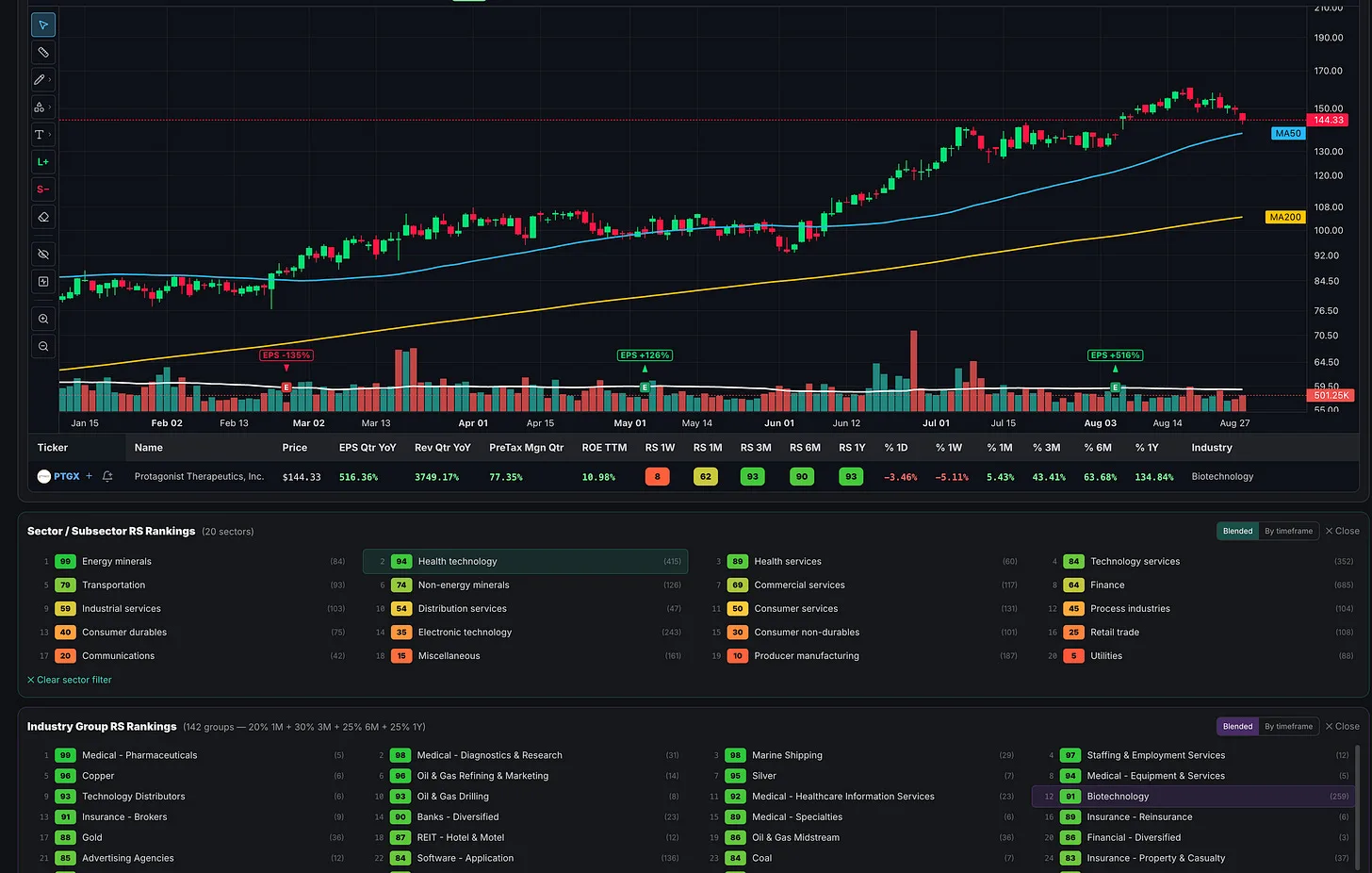
Why the Market’s Biggest Winning Stocks Rarely Move Alone
Lessons from Nicolas Darvas, William O’Neil, and Mark Minervini on using industry-group strength and relative strength to find new market leaders without getting whipsawed.
- growth stocks
- CANSLIM
- position trading
- David Ryan
- stock trading
- Kristjan Kullamägi
- Nicolas Darvas
- industry groups