
Trading articles/The $100 Million Bet That Rewrote Trading Forever: The True Story of the Turtle Traders
Nov 27, 2025 · Momentum Trading Strategy
The $100 Million Bet That Rewrote Trading Forever: The True Story of the Turtle Traders
How two Market Wizards proved that elite trading could be taught and turned complete beginners into multi millionaire trend followers
Originally published on Substack.
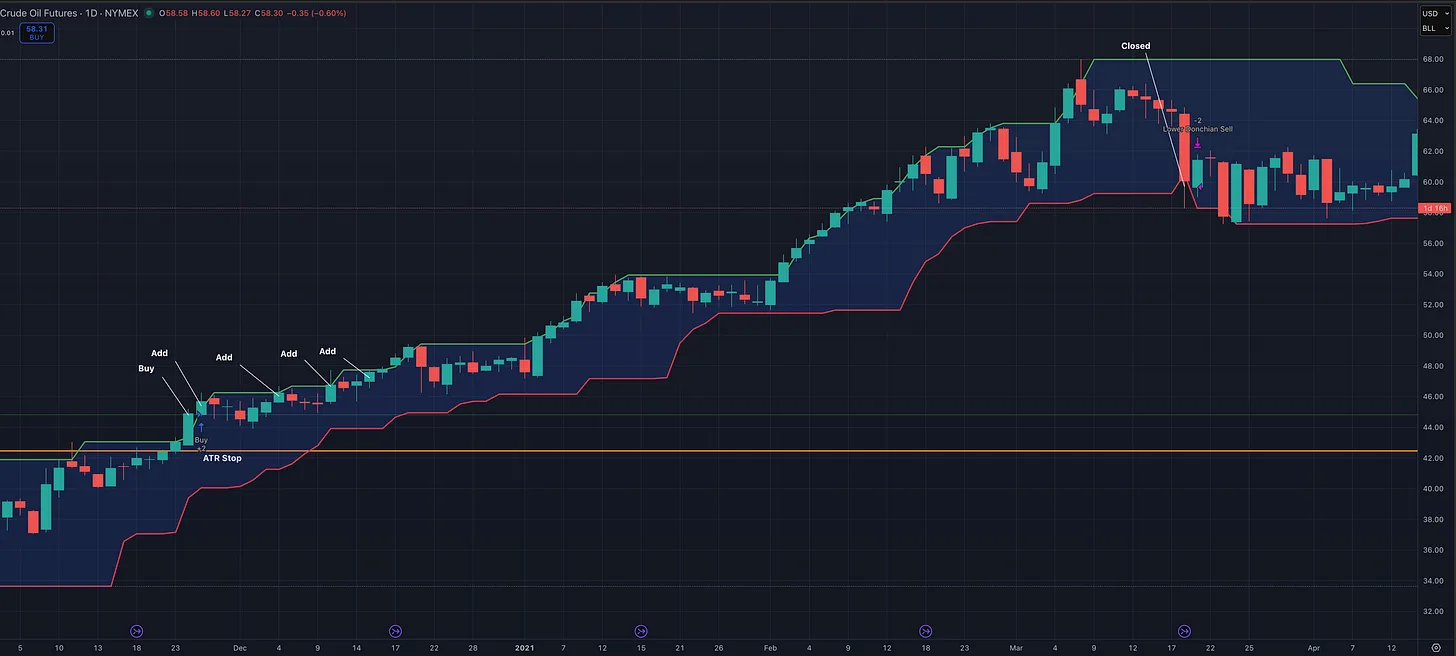
If someone handed you a trading system that transformed total beginners into millionaires, would you follow it with absolute discipline?
If you answered yes, keep going. The Turtle Trader experiment is the strongest real world evidence that:
- Trading is a teachable skill
- Discipline beats intelligence
- A rules based trend following system can outperform seasoned professionals
- Most traders lose because they break their own rules
This is the true story of how a simple bet between two Chicago traders led to one of the most successful training programs ever attempted.
And it still matters today, no matter how you trade. Even discretionary traders can pull powerful lessons from the Turtles that improve decision making, risk management, and long term consistency.
The Backstory: The Bet That Sparked a Trading Revolution
In the early 1980s, Chicago futures trader Richard Dennis was already a phenomenon.
- He turned a few hundred dollars into hundreds of millions trading global futures
- He believed trading was a skill that any disciplined person could learn
- His partner, William Eckhardt, disagreed and believed great traders were born, not made
Their disagreement became a legendary wager.
Dennis famously said they could “grow traders just like they grow turtles in Singapore.” The analogy stuck, and the experiment became known as the Turtle Traders.
The rules of the experiment were simple.
- Place a newspaper ad inviting anyone to apply
- Choose ordinary people with no trading experience required
- Train them for two weeks
- Give them real capital
- Let them trade
- See who thrives
It became one of the purest nature versus nurture experiments in financial history.
The Selection: Who Became Turtles?
Applications came from around the country.
The finalists included:
- A 19 year old programmer
- An accountant
- Students
- Gamblers
- Office workers
- People with zero background in finance
Dennis was not searching for genius. He wanted:
- Emotional stability
- Ability to follow rules
- Comfort with discomfort
- Respect for risk
Most people know technical analysis, price charts, and indicators.
Very few can follow a system under pressure.
That was the difference Dennis cared about.
The Training: Two Weeks That Built Millionaires
In only two weeks, Dennis and Eckhardt taught the group a complete mechanical trend following system built on several core ideas.
1. Breakout entries
The system bought markets breaking out above recent highs and shorted markets breaking below recent lows.
Simple, clean, and rule based.
2. ATR based position sizing
Every position was sized based on volatility so that each trade risked a consistent percentage of capital.
3. Adding to winners
When a trend moved in their favor, they pyramided aggressively.
4. Small losses and outsized winners
Losing trades were expected and accepted.
The power came from the massive wins during long trends.
5. Zero discretion
Signals were followed without hesitation.
No forecasting. No second guessing.
The genius was in the simplicity.
The difficulty was in the discipline.
The Results: One of the Greatest Trading Experiments Ever Conducted
The results shocked the trading world.
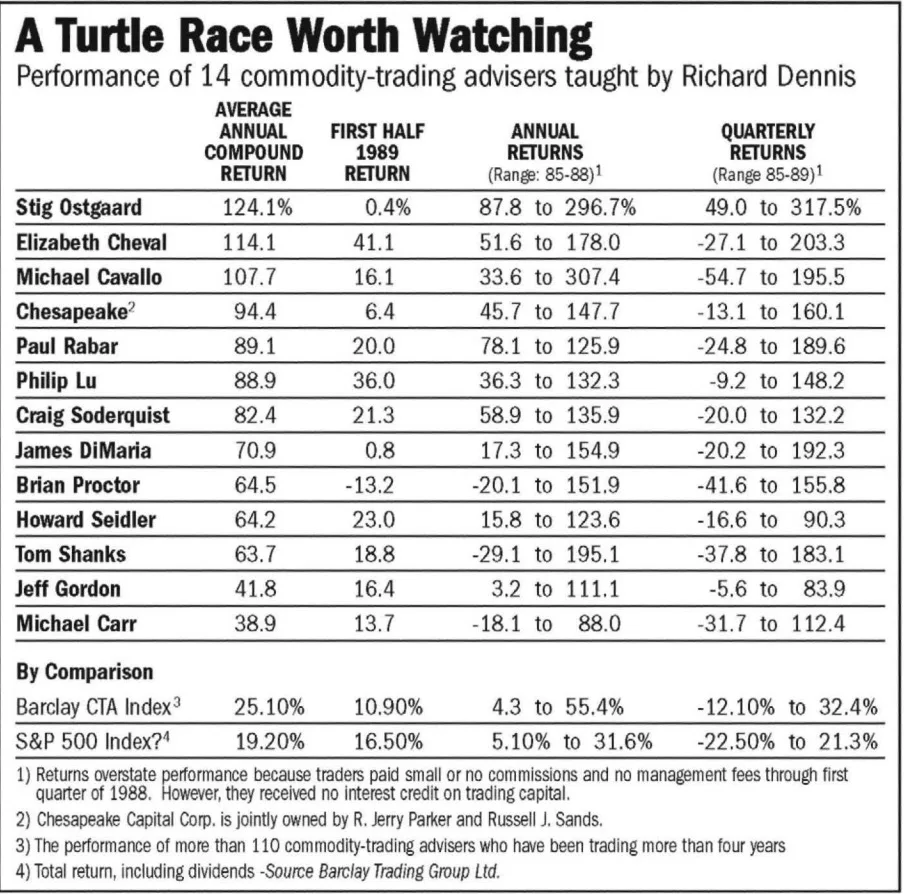
- Many Turtles generated triple digit annual returns
- Some made tens of millions of dollars in a few short years
- Several went on to build highly successful trading firms
- Collectively, the group made hundreds of millions
Their systems worked across commodities, currencies, bonds, and stock index futures.
The lesson was impossible to ignore.
Skill could be taught.
Execution was everything.
And discipline mattered more than intelligence.
The Corse Principles They Used (Simplified)
1. Trade many markets
Trend following requires opportunities, and diversification increases the odds of catching major trends.
2. Use breakouts to enter trends
Buy strength. Sell weakness.
Avoid predicting tops or bottoms.
3. Risk a fixed percentage per trade
This kept losses small and consistent.
4. Add to winning trades
Strong trends can be life changing when pyramiding is done correctly.
5. Cut losses quickly
Small losses were part of the game. Large losses were never allowed.
6. Follow the rules when it feels hardest
This was the true separator between success and failure.
The Training: Two Weeks That Built Millionaires
In only two weeks, Dennis and Eckhardt taught the group a complete mechanical trend following system built on several core ideas. Below is what the Turtles actually used in practice, including the exact entry logic, ATR stops, and pyramiding method.
1. Breakout Entries
The Turtle system revolved entirely around two breakout methods. Both were traded on daily charts, both used Donchian Channels, and both were completely mechanical.
System 1 (Short-Term Breakout)
Designed to catch quicker trend moves.
- Buy when price breaks above the 20-day high
- Sell short when price breaks below the 20-day low
- If the last breakout was a winner, skip the next one
- If the last breakout was a loser, take the next signal
This rule helped System 1 avoid getting chopped up in sideways markets.
System 2 (Long-Term Breakout)
Designed to capture the big, sustained trends that make a trading year.
- Buy when price breaks above the 55-day high
- Sell short when price breaks below the 55-day low
- No filter — take every trade
System 2 traded less frequently but stayed in trends longer.
How This Looks on a Real Chart (MNQ Example)
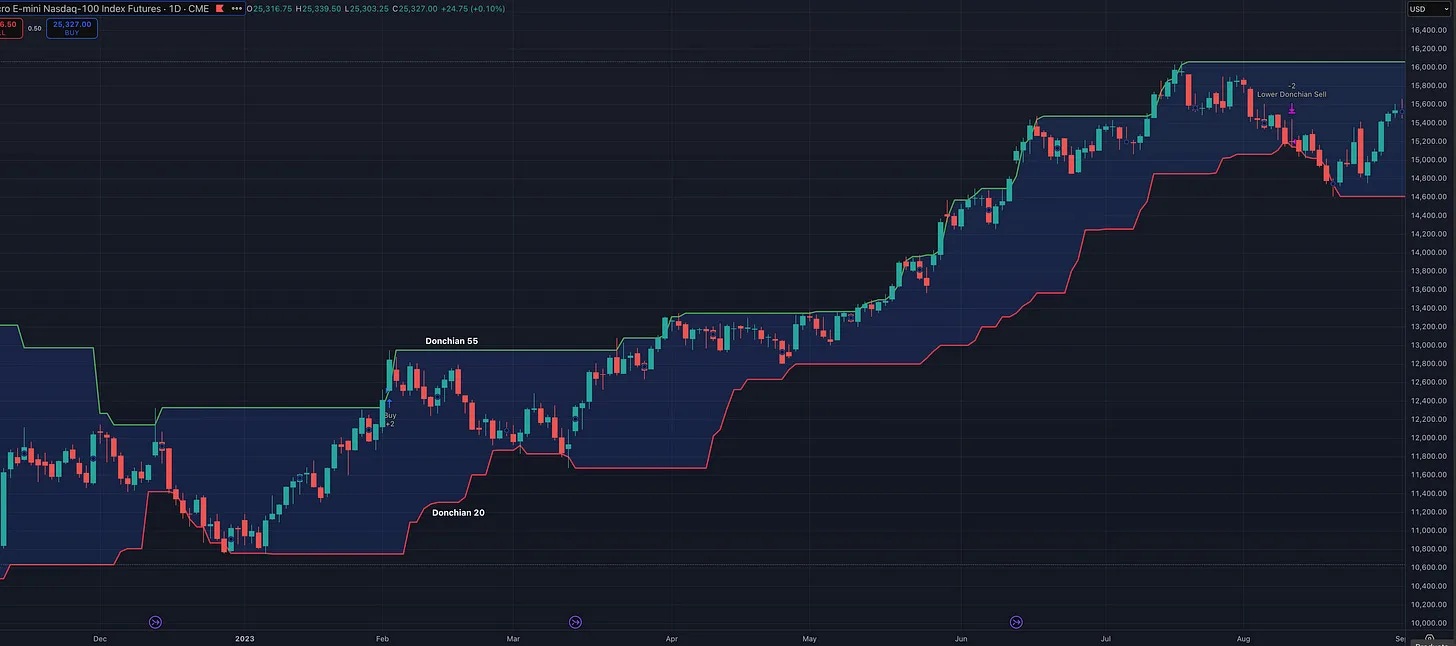
A standard Donchian Channel uses one lookback for both the upper and lower bands.
But the Turtles often used mixed lookbacks:
- Entry: break above the 55-day high
- Exit: close below the 20-day low
So the upper and lower bands do not match and that is exactly how the original Turtle System 2 was designed.
In the Nasdaq-100 futures example below:
- The green upper band plots the 55-day high (System 2 entry trigger)
- The red lower band plots the 20-day low (System 2 exit trigger)
- Price must break the green band to enter
- The trade stays alive until price closes below the red band
This is the pure Turtle breakout logic, visually displayed:
2. ATR based position sizing and stops
The Turtles used the Average True Range to size trades and to know where to place exits.
They defined ATR as “N.”
Every trade risked 2 percent of capital based on N.
Position sizing formula:
Units = (1 percent of account) divided by (N value in dollars)
So the more volatile the market, the smaller the position.
The less volatile the market, the larger the position.
This normalized every trade so that a sugar breakout and a bond breakout had equal dollar risk.
Stops:
The stop for every entry was placed 2 N below the entry price for long trades.
For shorts, 2 N above the entry price.
Example:
If you buy gold at 2000 and N equals 20 points, then:
Stop = 2000 minus (2 x 20) = 1960
If you short crude at 76 and N equals 1.50, then:
Stop = 76 plus (2 x 1.50) = 79
You can show this on a chart by adding ATR(20) and multiplying by 2 to plot stops.
3. Pyramiding into strength (Nasdaq 100 example)
This is one of the strongest edges in the entire Turtle methodology and the reason the Turtles were able to turn ordinary trends into enormous winners.
The rule was simple:
Add another unit every time price moves 0.5 N in your favor, up to a maximum of 4 units.
Instead of loading up at the start, the position grows only as the trend proves itself.
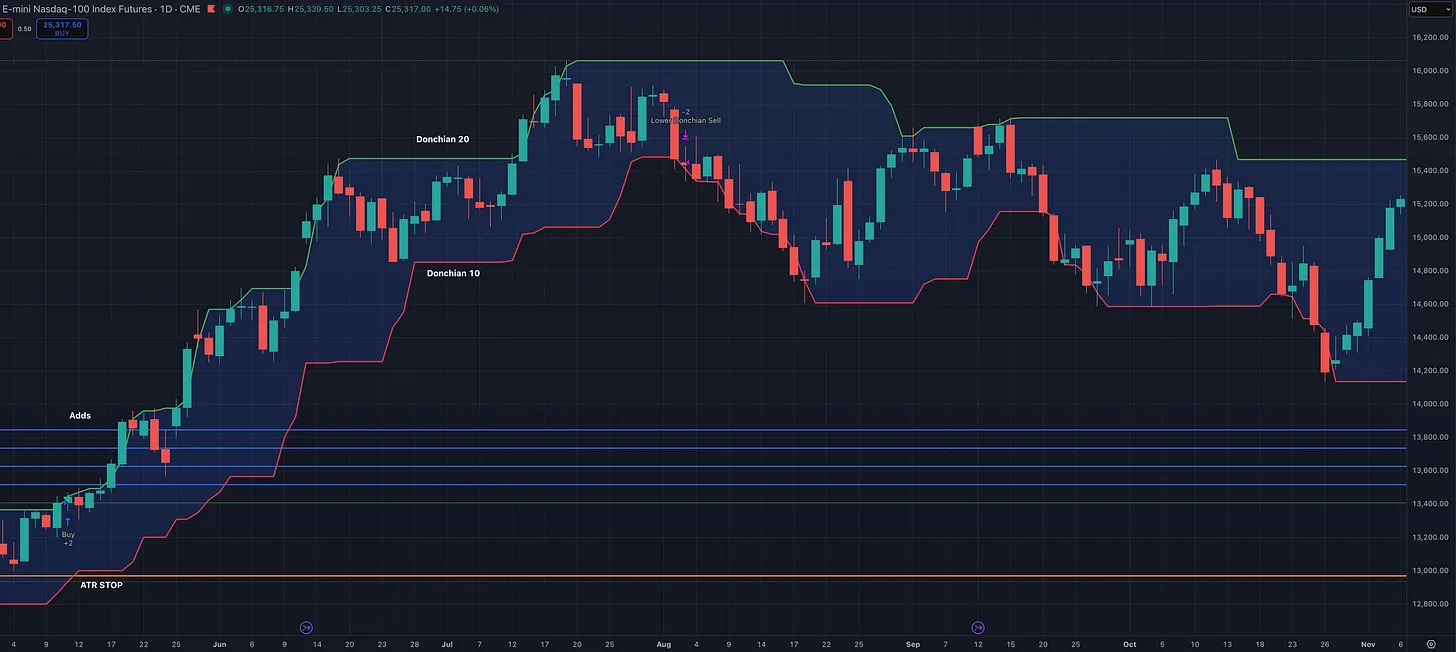
In your Nasdaq 100 example:
- Entry: 13,408
- N (ATR): about 219
- 0.5 N: about 109 points
So every additional position is added only after price continues to move higher by another 109 points of real trend movement.
Here is your add progression:
- Initial entry: 13,408
- Add 1: 13,517
- Add 2: 13,625
- Add 3: 13,740
- Add 4: 13,848
Each add is stacked exactly 0.5 N above the last filled unit.
This creates a smooth, controlled pyramid that increases exposure only when the trend is truly moving in your favor and not during random noise.
Each added unit uses the same risk structure, the same 2 N stop logic, and the same Donchian exit logic for System 1 which uses a Donchian 10 exit.
On the chart, the blue lines show each 0.5 N add level and the orange line displays the 2 N ATR stop from the original entry.
This simple framework allowed the Turtles to turn a basic breakout into a leveraged compounding engine. Small trends became meaningful and major trends became career building.
4. Exit logic
The exits matched the philosophy of letting winners run and cutting losers fast.
System 1 exit:
- Exit on a break of the 10 day low for longs
- Exit on a break of the 10 day high for shorts
System 2 exit:
- Exit on a break of the 20 day low for longs
- Exit on a break of the 20 day high for shorts
This prevented early exits and allowed trends to mature.
How the Turtle Traders Chose What to Enter and When
The Turtle method removed all discretion from trading. They did not pick markets based on preference, research, or conviction. They monitored a fixed basket of liquid futures markets each day and waited for mechanical signals to appear. If a signal appeared, they entered. If no signal appeared, they did nothing.
Their trading process was built entirely on daily price data. Volatility, position size, and stops were all calculated from daily price ranges, and the breakout signals they used to enter trades came from daily charts. Because volatility measurements and stop placement depended on daily values, the daily timeframe controlled every trading decision.
Each day, the group reviewed the same basket of markets for trend-following breakouts. If a market was not moving, it never produced a signal and they ignored it. If a market reached the predetermined breakout level, they entered immediately. There was no comparing setups, no choosing stronger trends, and no filtering. Every valid breakout in the assigned portfolio was taken automatically.
The logic was simple. Follow the same list of markets. Use daily data to determine when a trend might be starting. Enter every time the rules give a breakout signal. Wait patiently when no signals appear. This consistent process is what allowed the system to function as intended.
Markets the Turtles Monitored and Traded
Currencies
British Pound
Swiss Franc
Deutschemark
Japanese Yen
Canadian Dollar
Eurodollars
Mexican Peso (appeared later and was thin, but included in the official portfolio list)
Interest Rates and Financials
T-Bills
Treasury Bonds
Treasury Notes
S&P 500 Index Futures
Metals
Gold
Silver
Copper
Energies
Crude Oil
Heating Oil
Unleaded Gasoline
Grains
Corn
Wheat
Soybeans
Soybean Oil
Soybean Meal
Softs
Cotton
Coffee
Cocoa
Sugar
Livestock
Live Cattle
Feeder Cattle
Lean Hogs
Thy The Turtle System Still Matters Today
The core principles of the Turtle system still sit at the foundation of most of the world’s largest trend following funds.
These include:
- Breakout logic
- Volatility based sizing
- Diversification across markets
- Pyramiding
- Rules based execution
Even if you are a fully discretionary stock or futures trader, you will find enormous value in these lessons.
Trends still occur.
Risk still matters.
Discipline still wins.
Human behavior has not changed.
Markets still overshoot and undershoot.
Trend following still captures those extremes.
The Real Reason the Turtles Succeeded
They did not beat the markets because they had a magic indicator.
They succeeded because:
- They executed rules without hesitation
- They embraced discomfort
- They accepted long streaks of losses
- They did not seek to predict
- They trusted their system
Most traders crumble during drawdowns.
The Turtles were trained to survive them.
The Bottom Line for Modern Traders
The Turtle story proves a powerful truth.
Trading success can be taught.
Discipline separates winners from the majority.
If you trade what’s actually moving, follow momentum, use a rules-based system, respect your stops, and ride trends instead of fighting them, then you’re already operating in the same direction the Turtles did. You may not be running their exact playbook, but you’re aligned with the same core principles that made them successful.
And even if you trade discretionary setups, the same lessons still apply. Risk management, patience, trend awareness, and sticking to your rules are universal. The approach may differ, but the principles that keep you profitable do not.
Build a system.
Test it.
Refine it.
Follow it.
That is how you grow as a trader.
More in Legendary Traders
All Legendary Traders articles →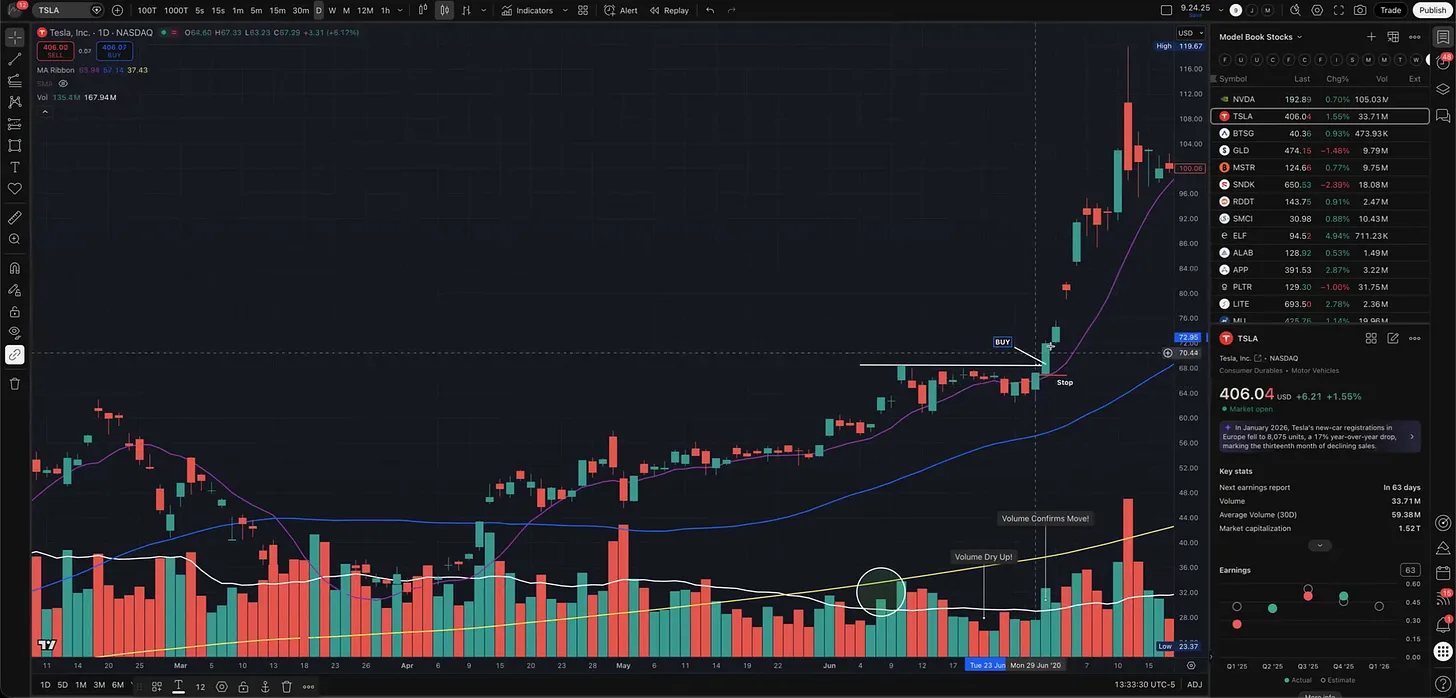
Sep 17, 2026 · Legendary Traders
4 Legendary Traders. 4 Breakout Entry Tactics.
A chart-by-chart breakdown of Minervini’s VCP, O’Neil’s cup with handle, Darvas’s box breakout, and Kullamägi’s opening range breakout.
- how to make money in stocks
- IBD
- Momentum Trading
- VCP
- technical analysis
- CANSLIM
- Trading Setups
- position trading
Sep 6, 2026 · Legendary Traders
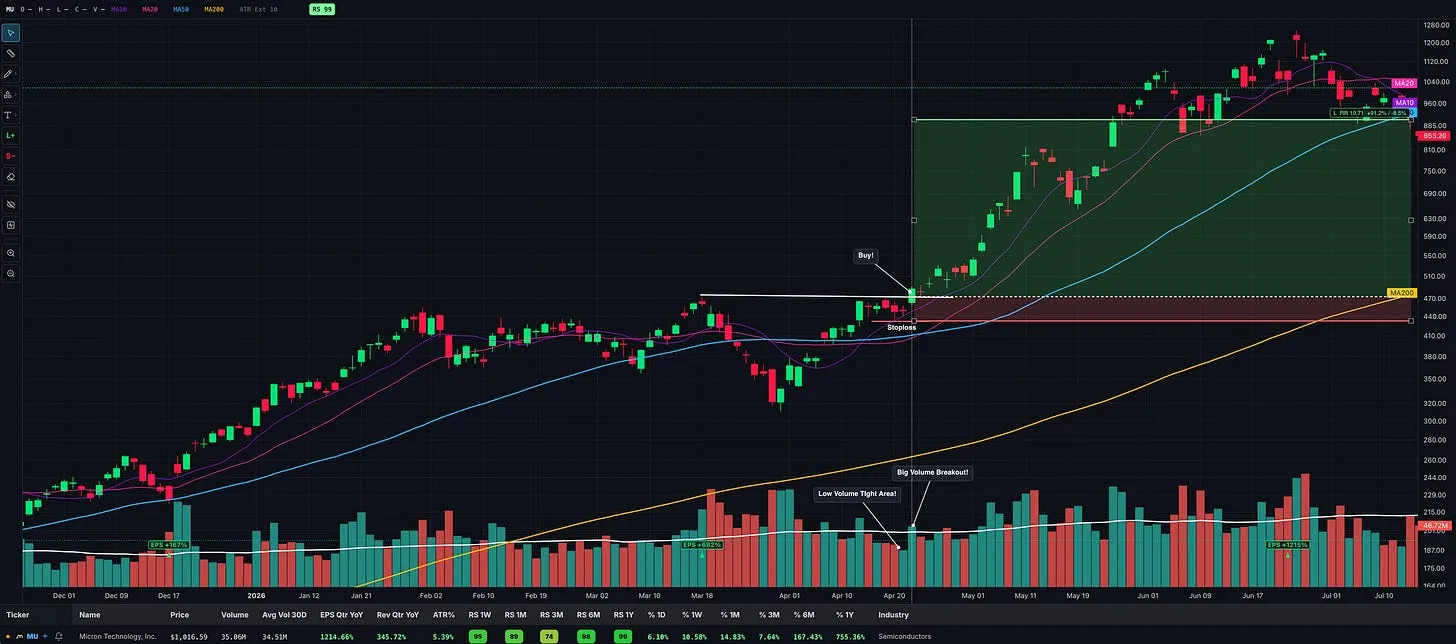
Market Wizard David Ryan: How He Made 1,379% in Three Years
Inside the growth-stock approach of William O’Neil’s protégé and three-time U.S. Investing Champion, from precise entries to holding major winners.
- IBD
- fundamental analysis
- Learn Trading
- technical analysis
- position trading
- David Ryan
- Market Wizard
- CAN SLIM
Aug 29, 2026 · Legendary Traders
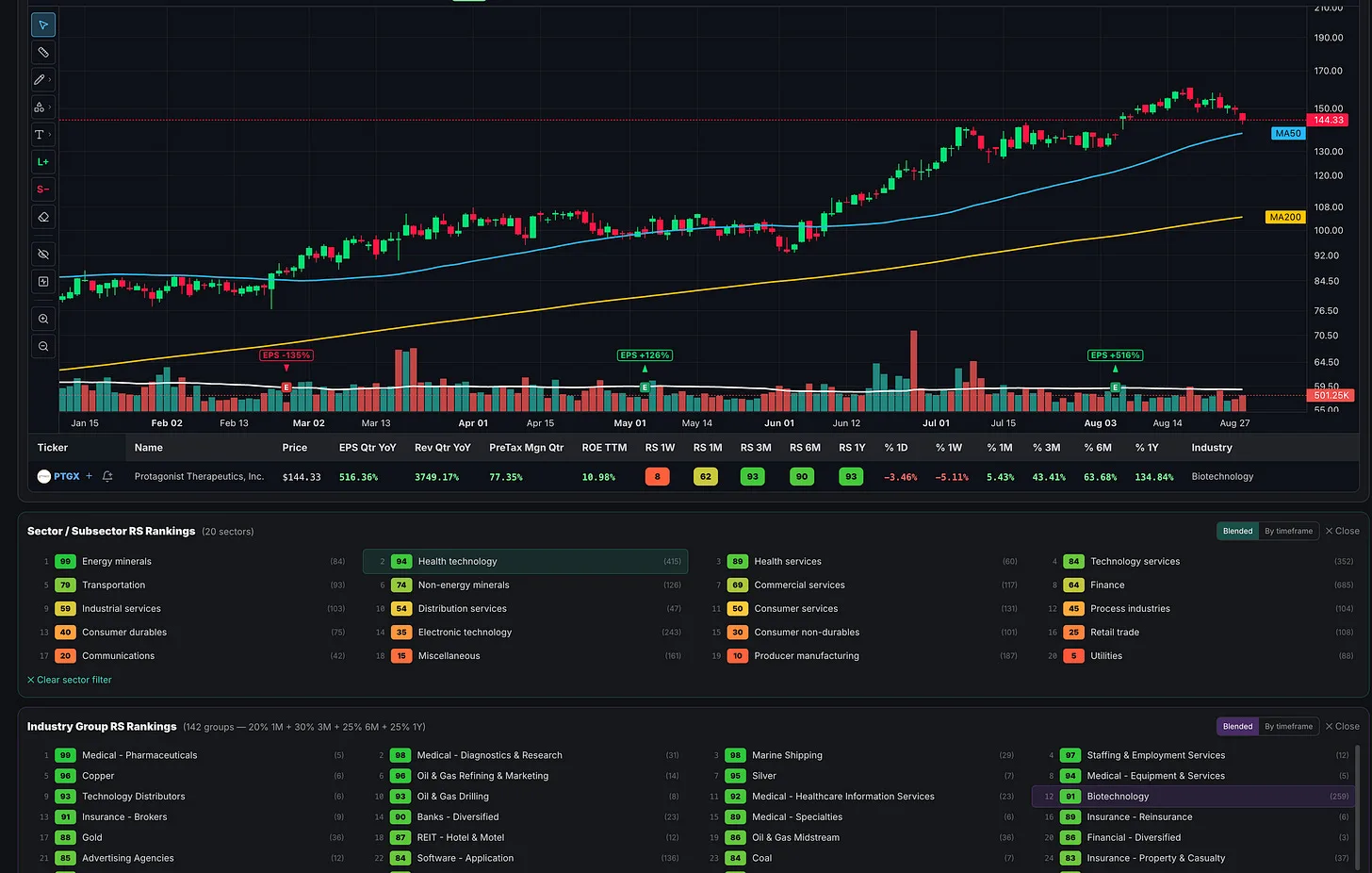
Why the Market’s Biggest Winning Stocks Rarely Move Alone
Lessons from Nicolas Darvas, William O’Neil, and Mark Minervini on using industry-group strength and relative strength to find new market leaders without getting whipsawed.
- growth stocks
- CANSLIM
- position trading
- David Ryan
- stock trading
- Kristjan Kullamägi
- Nicolas Darvas
- industry groups