
Trading articles/Why It Hurts More to Spend Money You Earn Yourself
Jun 4, 2026 · Momentum Trading Strategy
Why It Hurts More to Spend Money You Earn Yourself
I thought making more money would make spending easier. Instead, trading and building businesses made every dollar feel harder to let go.
Originally published on Substack.

When I had a W-2 career, I made good money. More than most people, in fact, and somehow, I had no problem spending it. A nice Audi felt normal. Eating out all the time felt normal. Car payments felt like part of life.
At the time, I did not think of it as reckless. I worked hard, earned a paycheck, and paid my bills. That is how most people are trained to think about money. You work, you get paid, and then you spend what you earn. The few smart ones save 10-20% by paying themselves first and don’t allow lifestyle creep to enter.
But something changed when I became a full-time trader and entrepreneur. My income started coming from my businesses, trading, and things I built myself. Even though I eventually made much more money, I became far more frugal. Not because I was broke, scared, or struggling. Actually, the opposite was true. I had more income, more control, and more options than I had before.
But I wanted to spend less.
I do not know if I fully understand the psychology behind it. I am not sure I even care to fully understand it. I just know what happened to me, and I have seen the same pattern in a lot of people who went from employee to entrepreneur, investor, or full-time trader.
The money starts to feel different.
The Car Purchase That Made Me Think About This
You may be wondering why I am writing this piece in the first place. Honestly, I am not completely sure. I was drinking my coffee this morning, and this is what came to mind.
I think it came from something very normal that happened yesterday. My wife and I bought a car in cash because our oldest son is now 16, and with four kids, travel sports, and everything else going on, we needed another vehicle. Our son needs to be able to help more and drive himself to soccer, practices, and all the things that come with this stage of life.
The purchase made sense. We found a good car at a great price. It was reliable, practical, and very normal for a family in our position. It did not put a dent in us financially, and it was not some reckless purchase.
But it still hurt to spend the money.
That is what caught my attention. I could take a loss on a trade for the same amount and not be bothered by it, because losses are part of doing business as a trader. My wife and I could spend that same amount on inventory, operating expenses, or business costs and not think twice, because those dollars are being deployed back into the machine.
But spending that money on something that does not make us money felt different.
The funny thing is, the old version of me, the W-2 version of me, probably would not have thought twice about it. Even though back then it would have represented a much larger percentage of my income and net worth, I probably would have spent it more easily.
That is the strange part. The purchase was responsible. The car was needed. The money was there. The decision made sense, and it still hurt to spend it.
The Part That Does Not Make Sense
Both the employee and the entrepreneur are working for money. In many cases, you could even argue that the W-2 employee gives up more freedom to earn that money. They have to show up when they are told. They have to ask for time off. They have to sit in meetings they do not want to be in and trade hours of their life for a paycheck.
Logically, you would think someone who gives up that much freedom for money would care more about wasting it, but in my experience, the opposite often happens. When my money came from a paycheck, I spent it more easily. When it came from something I built, something I risked for, and something I fought through, I did not want to let it go.
The Audi stopped looking like success. The car payment stopped looking normal. Eating out or random purchases stopped feeling harmless. Spending money started to feel different because the money itself represented something different.
It almost hurt more to spend it.
It Was Not Because the Work Was Easy
Some people might assume this depends on the type of work I was doing. I do not think that is it.
I was the same way in the military. Even when I went to war and earned that paycheck the hard way, I could still spend it easily. Even during seasons where I was starting work at 5:00 in the morning and not getting home until 7 or 8 at night, month after month, year after year, I could still blow through the money.
Then I left the military and worked in the corporate world and a startup company. The pattern was the same. The money came from a job. It came from being an employee, and for whatever reason, it was easier to spend.
That is why I do not think this has much to do with whether the work was easy or hard. Some of that W-2 money was earned through long days, stress, sacrifice, and time I will never get back. The difference seems to have more to do with how the money was earned and what that money represented once it was in my hands.
Money from a job / paycheck felt different than money from entrepreneurship and trading. Even if both required work, even if both required sacrifice, and even if the W-2 job sometimes required more time and less freedom, the psychological effect was completely different.
Scar Tissue Changes How You See Money
Maybe entrepreneurship leaves scar tissue, and maybe trading leaves scar tissue. Maybe once every dollar has been earned through uncertainty, pressure, mistakes, setbacks, sleepless nights, and hard lessons, you never look at that money the same way again.
But even that explanation is not perfect.
Because then I think back to the money I earned during deployments. I experienced war. I dealt with things that created plenty of mental scar tissue, and yet, when that money came in and I got home, I could still spend it easily.
So maybe scar tissue alone is not the difference.
To be fair, my life now is much easier than it was in the beginning. Today, my businesses and trading are less stressful, less time-consuming, and far more rewarding than working for someone else ever was.
But it did not start that way.
In the beginning, the pressure I put on myself as a trader was intense. The ups and downs in our businesses were intense. There were times when the stress felt so heavy that, as crazy as it sounds, part of me felt like I would rather be back at war getting shot at than deal with the pressure I had created for myself.
That may not make sense from the outside, but it is the truth.
There is a different kind of pressure that comes from knowing it is all on you. There is no guaranteed paycheck, no one coming to save you, and no one else responsible for figuring it out. You are the one making the decisions. You are the one taking the risk. You are the one who has to absorb the losses, fix the mistakes, and keep going.
That kind of pressure changes you.
Maybe the difference is whether the money came from a system someone else built or a system I had to build myself.
A W-2 paycheck can feel like money you earned inside someone else’s machine. Money from a business or trading can feel like money you earned by building and surviving your own machine.
That is different.
When the money comes from your own business, your own risk, your own trading account, your own decisions, and your own ability to stay in the game, every dollar feels connected to the machine that produced it.
Once that switch flips, money stops feeling like something to spend and starts feeling like something to protect, reinvest, and use to buy more freedom.
That does not mean you never enjoy your money. It means you become much more aware of what it took to create it, and how quickly careless spending can pull resources away from the thing that gave you freedom in the first place.
The Risk People Get Backwards
Another thing I think people get backwards is risk.
Most people think being an entrepreneur, owning a business, or trading full-time is riskier than having a job. From the outside, I understand why it looks that way. There is no guaranteed paycheck, no employer benefits, and no one automatically handing you money every two weeks.
But after doing both, I see it differently. To me, relying on one job can be much riskier than people realize. When economic times get tough, what is one of the first things many companies do? They cut employees. If the business struggles, they can cut you. If margins get tight, they can cut you. If leadership changes, they can cut you. If the company gets bought, reorganized, or decides your position is no longer needed, they can cut you.
And you may have done everything right.
That is the part people do not talk about enough. You can be loyal, work hard, show up early, stay late, do a great job, and still lose your income because someone else made a decision above you. That does not feel safe to me anymore.
When I own the business, there is risk, but I also have control. If one business slows down, I can lean into another. If sales dip, I can adjust expenses. If demand changes, I can adapt by offering those products and services people want.
That is a completely different type of risk.
If you run a business effectively, keep overhead under control, avoid unnecessary debt, and build multiple streams of income, you can take a 30% or 40% hit in sales and still weather the storm. That does not mean entrepreneurship is easy, it is not. It comes with stress, pressure, mistakes, sacrifice, and plenty of pain, but at least the risk is in my hands.
A job can feel safer because the paycheck is predictable, but predictable does not always mean secure. Sometimes the real risk is depending on one person, one company, one boss, and one income stream to decide your future.
Freedom Is Hard to Give Back
Once I reached the point where I was living 100% off my own trading and business income, which happened for me around age 35, I knew without a doubt that I could never imagine going back to working for someone else.
That did not happen overnight. I had been trading the markets since I was a teenager, and over time, I became good enough that trading consistently supplemented my income throughout my 20s. At the time, my wife and I were married with four kids, building a life without help from anyone. Trading gave us breathing room. It helped us do things that otherwise would have been much harder.
But there was a specific point where everything changed for me.
When your wife is diagnosed with breast cancer at 30, you have four kids, and no one is coming to help, your priorities change fast. Then, on the day of her first round of chemotherapy, when your boss is calling you at 8 p.m. to update briefing slides, something inside you shifts.
That was one of those moments where I knew I had to get out and do my own thing. I knew I needed to take trading more seriously. I knew I needed to build income streams that gave me control over my time, my decisions, and my family’s future. Eventually, that meant trading full-time and using profits to launch and support other businesses.
Not because I could not work for someone else. Not because I think I am above it, but because once you experience the freedom of building something yourself, controlling your own time, and living off the results of your own decisions, it is hard to unsee it.
Before I lived this way, I do not think I fully understood how good it could be. I knew I wanted more freedom. I knew I wanted more control. I knew I did not want every hour of my life dictated by someone else, but until you actually experience it, it is hard to fully understand the difference.
And I have not met many people who made that transition successfully and then said, “I cannot wait to go back and work a normal job again.” Most people who build their own income, whether through business, investing, trading, or some combination of all three, become very protective of that freedom.
That is why the money feels different. It is not just money anymore. It is independence. It is time. It is optionality. It is proof that you can build something on your own. And once money represents those things, you treat it differently.
The Version Social Media Does Not Show
Social media usually shows the opposite. It shows the person who “made it” buying the bigger house, the nicer car, the flashier lifestyle, the expensive watch, or the private jet image. Some of that may be real, but a lot of it is marketing.
It gets attention. It sells the dream. It makes people stop scrolling.
But in real life, at least from what I have seen, many people who actually build something become more protective of their money, not less. They do not want more liabilities. They do not want more payments. They do not want to give away the thing that took so much scar tissue to earn.
That part does not get posted as much because it is not as flashy. It does not sell the dream as easily, but I think it is much closer to the truth.
A lot of the people who truly understand how hard it is to build wealth are not rushing to impress strangers with it. They are trying to keep their overhead low, protect their capital, control their risk, and preserve the freedom they fought to create.
Not Everyone Wants to Quit Their Job
To be clear, I am not saying everyone needs to quit their job. Some people are completely happy in their careers. They like what they do, enjoy the structure, have a good income, and use trading as something they do on the side to supplement their income, grow their account, or challenge themselves.
There is absolutely nothing wrong with that.
But I also know a lot of people want something more. Some want to get to the point where trading becomes a serious source of income. Some want to eventually trade full-time. Some want to use trading profits the way I did, to invest into businesses, build assets, and create more control over their lives.
I think a lot of people get into trading believing they just want to make more money. But deep down, I think it is often about something bigger. It is about freedom.
Freedom of time. Freedom to be with family. Freedom to pursue other interests. Freedom to build something of your own. Freedom to not have every hour of your day controlled by someone else.
Money is the surface-level goal. For a lot of people, freedom is the real goal. And trading, if done with discipline, patience, risk management, and a real process, can become one of the vehicles that helps you move closer to that.
What This Has to Do With Trading
I know this is not my normal article about setups, relative strength, market leaders, risk management, or planning trades, but in a strange way, it all connects.
Because if you commit to this path long enough, trading starts to change the way you think. Not just about charts or stocks, but about money, risk, freedom, discipline, and control.
You start to realize that capital is not something to gamble with. It is not something to flash. It is not something to waste just because you had a good month. Capital is what keeps you in the game. Capital gives you the ability to take the next trade. Capital gives you the ability to survive mistakes, bad markets, drawdowns, slow seasons, and setbacks.
That is why protecting it matters. That is why risk management matters. That is why discipline matters. That is why having a process matters.
If you are serious about trading, you eventually learn that the goal is not just to make money. The goal is to become the kind of person who can keep it. The kind of person who can manage risk, stay disciplined when others are emotional, take losses without falling apart, think independently, and build more control over their life.
Yes, we study growth stocks. Yes, we look for leadership. Yes, we plan trades. Yes, we manage risk. Yes, we study setups, but underneath all of that is something bigger.
The goal is not just to find the next stock. The goal is to become the kind of person who can handle the responsibility that comes with freedom.
Because freedom is not free. It requires capital, discipline, patience, and mental scar tissue. Once you earn money that way, through your own risk, your own decisions, your own process, and your own ability to stay in the game, you may never look at money the same way again.
I am not saying one path is better than the other. I am just saying the money feels different.
Any psychologists out there who can explain why this happens? Haha.
More in Other Articles
All Other Articles articles →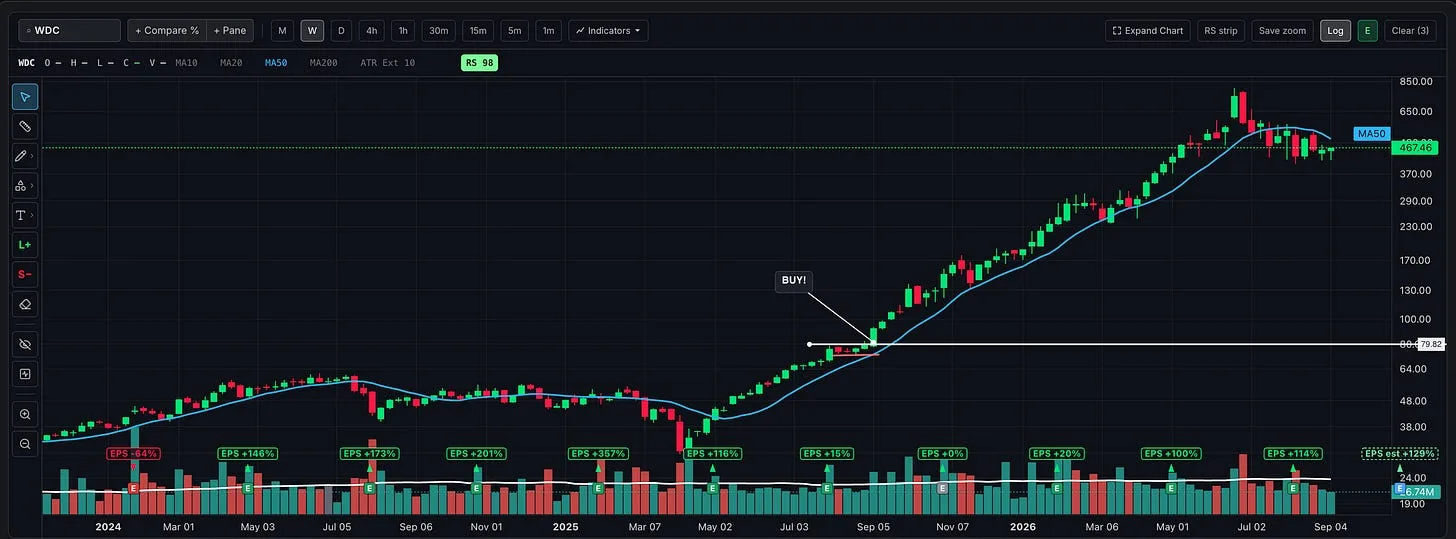
Sep 6, 2026 · Other Articles
Growth Stock and Momentum Trading: What It Is and What It Isn’t
What 100 Years of Stock Charts Reveal About Growth-Momentum Trading, and Where Personal Style Ends and a Different Strategy Begins
- how to make money in stocks
- Momentum Trading
- CANSLIM
- position trading
- Stan Weinstein
- David Ryan
- Trend Trading
- Kristjan Kullamägi
Jun 23, 2026 · Other Articles
If I Had to Bet on a Group of Traders, I’d Bet on These Ones
The real edge after you learn the rules is becoming the kind of person who can actually follow them.
- Investing
- Trading
May 8, 2026 · Other Articles
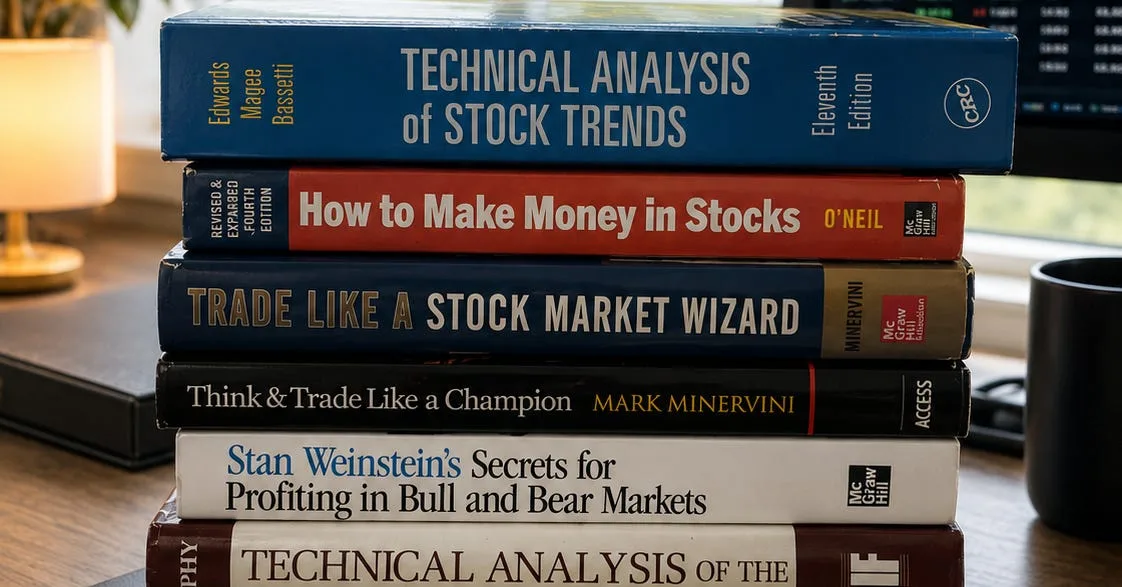
The $20 Books Taught Me the Rules. The $5,000 Course Bought Me Time
Why the right trading education is not a shortcut around the work, but it can compress years of confusion, mistakes, and unnecessary pain.
- Momentum Trading
- learn to trade
- Learn Trading
- Investing
- CANSLIM
- Trading
- position trading
- Momentum Trading Strategy