
Trading articles/The Wall of Worry: How 2025 Proved That Bull Markets Rise Through Fear and Why Tape Reading Still Wins
Dec 28, 2025 · Momentum Trading Strategy
The Wall of Worry: How 2025 Proved That Bull Markets Rise Through Fear and Why Tape Reading Still Wins
What the Tape Revealed While the Headlines Got It Wrong
Originally published on Substack.
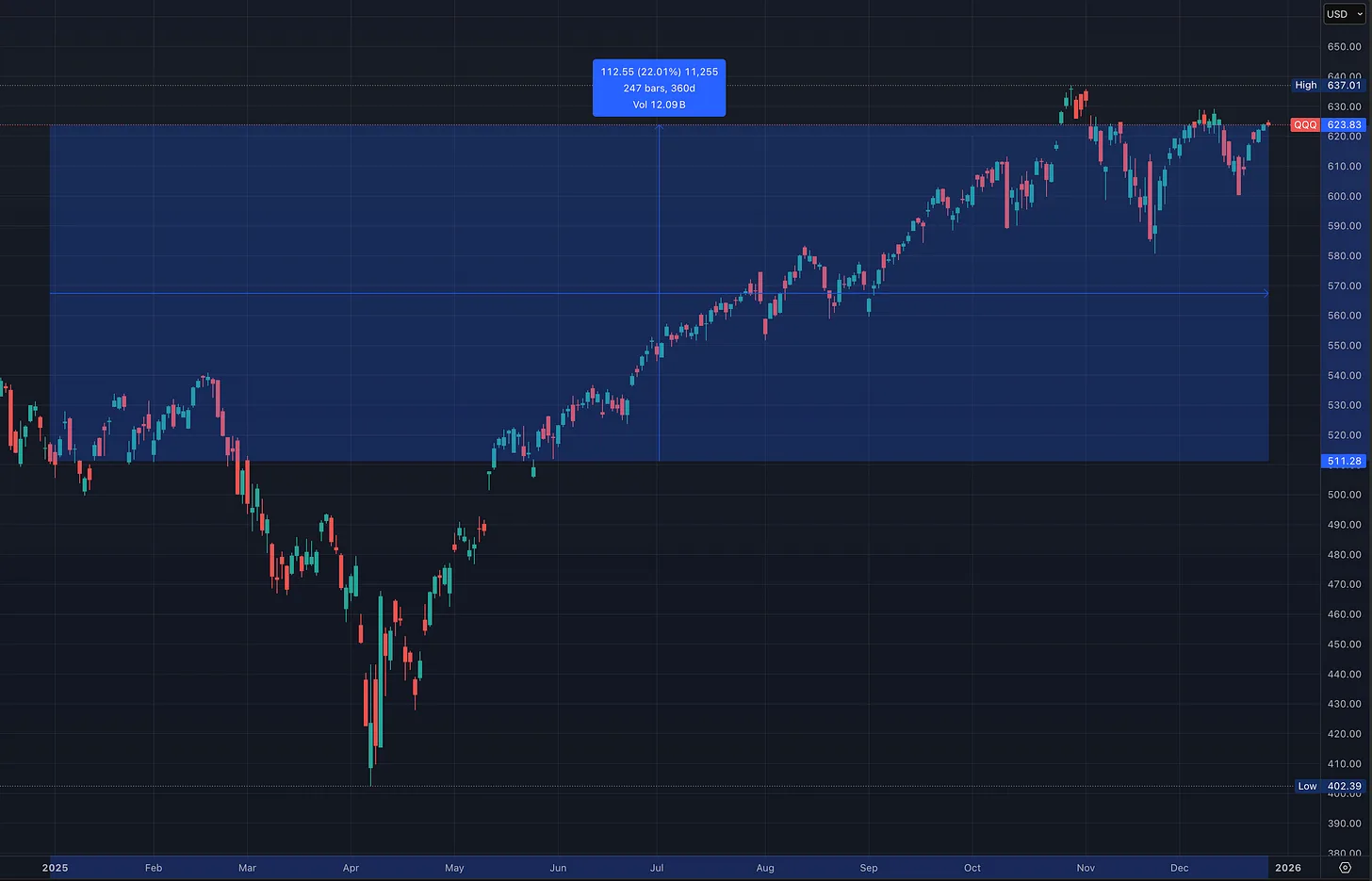
If You Felt Uneasy This Year, You Were Supposed To
Every major bull market climbs a wall of fear.
Every single one.
The headlines screamed recession. Inflation. Tariffs. AI bubbles.
Yet prices kept moving higher.
If you felt conflicted, cautious, or unsure whether to trust the rally, that was not a failure of intelligence. It was the psychological environment doing exactly what it always does in strong markets.
Most people believe bull markets rise when everything feels safe.
They do not.
They rise when uncertainty is high, confidence is low, and doubt is everywhere.
That is why the most important skill in markets is not forecasting, macro analysis, or predicting the next headline.
It is learning to read what the market itself is doing.
This year was a perfect case study.
In 2024, the dominant fear was concentration. The market was accused of being propped up by a handful of names, with the “Magnificent Seven” carrying the entire index while breadth lagged. Many argued the rally was fragile and unsustainable.
In 2025, that concern shifted. Breadth improved, participation widened, and leadership broadened. Yet instead of easing fears, the narrative simply changed. The new worry became an “AI bubble,” even as price action showed broader engagement across sectors.
2025 Was a Masterclass in Climbing the Wall of Worry
If you followed the news, 2025 felt like one long crisis.
Yet the Nasdaq 100 finished up roughly 22 percent.
That disconnect was not an accident. It was the entire lesson.
Bull markets do not move on good news.
They move when fear is slowly absorbed and sellers quietly run out.
And all year long, the tape was telling that story.
January–February: The DeepSeek Panic
After the market pushed to new highs in December 2024, the tone shifted quickly.
As 2025 began, price stopped advancing. The market drifted sideways, momentum stalled, and uncertainty crept in.
Then came the shock.
An AI breakthrough out of China sent waves through global markets. Semiconductors sold off sharply. Commentators rushed to declare the end of the AI trade, questioning whether the entire narrative had been overextended.
The headlines were loud.
The reactions were emotional.
But the tape remained composed.
Beneath the volatility, something different was happening. Selling pressure failed to expand. Dips were met with steady demand. Accumulation began quietly, long before confidence returned.
The market then staged a sharp rebound. Price recovered quickly from the selloff and pushed to fresh all-time highs by mid-February. On the surface, it looked like the panic had passed.
But the strength didn’t last.
The rally failed to attract follow-through. Momentum faded. What initially appeared to be a clean breakout quickly reversed, forming a clear double top around February 18.
That failure marked a shift in character. The market had tested higher prices and been rejected.
Inflation Fears and Fed Confusion
As the year progressed, attention shifted to inflation and monetary policy.
Every data release sparked overreaction.
Every Fed comment was dissected for hidden meaning.
Markets whipped back and forth as traders tried to anticipate the next move.
Yet despite the noise, price refused to break down.
The market stayed range-bound, not weak. Uncertain, but resilient.
And once again, the tape was signaling something most were too distracted to see.
March and April: Tariffs and a Mini Crash
Tariff headlines hit the market hard.
What began as uncertainty quickly turned into outright fear. Selling accelerated. Volatility surged. The narrative flipped almost overnight from cautious optimism to full-blown concern.
Markets did not simply pull back.
They broke down.
From the February 19th high to the early April low, the Nasdaq dropped more than 25 percent. The move was fast, emotional, and forceful enough to convince many that the bull market had already ended.
Even more important was where price went.
For the first time since the 2022 bear market, the index fell decisively below its 200-day moving average, a level that had acted as long-term support for months. At the same time, price broke below the 2021 all-time high, a key reference point for market structure. This was not a routine pullback but a meaningful technical break that forced traders to question whether the prior uptrend was still intact.
To many, this confirmed the worst fears.
The trend was broken.
The cycle had turned.
The rally was over.
But the tape told a more nuanced story.
Despite the intensity of the selloff, selling pressure began to fade. A powerful rebound followed, including a single-day surge of more than 12 percent on April 9th. Down days lost momentum. Buyers stepped in aggressively.
Instead of accelerating lower, price stabilized and began to recover. The market formed a higher low and started working its way back toward the 200-day moving average.
Large players were quietly stepping in as fear peaked. Weak hands were forced out, while stronger hands accumulated positions at far better prices.
The most important shift happened before the headlines changed.
As panic dominated the narrative, price stopped making new lows. The market began to repair itself even as sentiment remained deeply negative.
That was the reset.
Not a collapse.
Not the start of a new bear market.
But the necessary cleansing move that allowed the next advance to begin.
And once that process was complete, the path higher was already being built, long before most participants were willing to believe it.
Spring: Stagflation Talk and Margin Fears
As spring unfolded, the narrative shifted again.
Attention turned to slowing growth, rising costs, and the risk of margin compression. Analysts warned that higher input prices and softer demand would eventually pressure earnings. The word stagflation began creeping back into the conversation.
Confidence wavered.
Yet beneath the surface, the market refused to crack.
Leadership held firm.
The strongest names digested gains instead of breaking down.
Pullbacks stayed orderly.
Relative strength remained intact.
While the headlines focused on what could go wrong, price action told a different story. Institutions were not exiting. They were rotating, consolidating, and positioning.
The tape did not reflect panic.
It reflected patience.
And that disconnect mattered.
When markets are truly in trouble, leaders fall apart first. This time, they didn’t. They tightened up, absorbed selling pressure, and quietly prepared for the next move.
Once again, the message was clear for anyone willing to listen.
The fear was loud.
The tape was tightening up.
Summer: Recession Calls and AI Bubble Warnings
As summer arrived, recession forecasts multiplied.
The word bubble returned to headlines, once again attached to AI.
Pundits warned valuations were stretched.
Commentary grew increasingly cautious.
Confidence remained fragile.
But the market told a very different story.
Volatility faded.
Price action smoothed out.
What had been a choppy, emotional tape in the spring transitioned into a steady, controlled advance.
The market began trending higher with support from its 10 and 20 day moving averages. Pullbacks were shallow. Dips were quickly bought. Momentum quietly rebuilt beneath the surface.
By late June, major indexes were pushing to new all-time highs.
The most telling detail was not the breakout itself, but how it happened.
There was no euphoria.
No speculative frenzy.
No rush of excess.
Just a calm, persistent grind higher that carried through the summer months.
While headlines warned of bubbles and downturns, the tape told a different story, one of strength, stability, and broad participation.
The market was not acting like one on the verge of collapse.
It was acting like one preparing for continuation.
Fall and Winter: Stagflation, Job Loss Fears, and Renewed Volatility
As fall arrived, the market pushed to fresh all-time highs, but confidence remained fragile.
Stagflation fears resurfaced.
Talk of layoffs and slowing labor demand grew louder.
The “AI bubble” narrative returned once again.
Concerns about job security began creeping into the conversation, adding a new layer of anxiety to an already cautious market.
Volatility followed.
The VIX rose from the mid-teens into the mid-20s. Price action grew choppier. Rallies were sold. Pullbacks deepened. The market repeatedly tested traders’ resolve.
Yet even as fear intensified, something important stood out.
The selling never turned into panic.
Dips pushed below short-term moving averages, but each time, buyers reappeared. The market found support near the 50-day, reclaimed it, and refused to unravel.
This was not the behavior of a market rolling over.
It was the behavior of a market digesting gains, shaking out weak hands, and recalibrating expectations after a powerful advance.
While headlines focused on recession risks and job losses, the tape continued to show resilience beneath the surface.
Once again, the message was clear:
Volatility does not always mean the end of the bull market.
Noise does not equal trend change.
And the market was still very much alive.
Fear Is the Fuel of Bull Markets
This year reinforced one of the oldest truths in market history.
Bull markets do not die from fear.
They die from euphoria.
Fear creates opportunity.
Disbelief extends trends.
Uncertainty keeps positioning light and upside alive.
As long as most participants remain skeptical, trends have room to breathe.
Why Tape Reading Still Wins
This is the part most people miss.
The tape beats everything.
Headlines.
Opinions.
Narratives.
You do not trade stories.
You trade price.
When fear hits, the tape shows whether institutions are selling or quietly accumulating.
When emotions run high, the tape reveals whether moves are real or just noise.
It strips away interpretation and exposes reality.
The tape tells you what money is actually doing, not what commentators think should be happening.
And in a market driven by emotion, headlines, and noise, that clarity is the ultimate edge.
No Permabulls. No Permabears. Only the Tape.
This is not about being permanently bullish or permanently bearish.
Both extremes lose money.
Markets reward flexibility, not conviction.
When the tape weakens, you step aside.
When it strengthens, you press.
You do not argue with price.
You do not rationalize losses.
You do not marry narratives.
Fundamentals explain what a company has done.
The tape tells you what the market thinks of it right now.
If price is moving higher, the market is saying there is more upside ahead.
If price stalls or rolls over, even with great fundamentals, the message is just as clear.
And in the end, that is all that matters.
The Bottom Line
2025 reminded us of three timeless truths:
• Fear is fuel for bull markets
• Narratives lag price
• The tape never lies
The market is always communicating.
Most people are just too distracted to listen.
Learn to read the tape, and the noise fades away.
More in Market Commentary
All Market Commentary articles →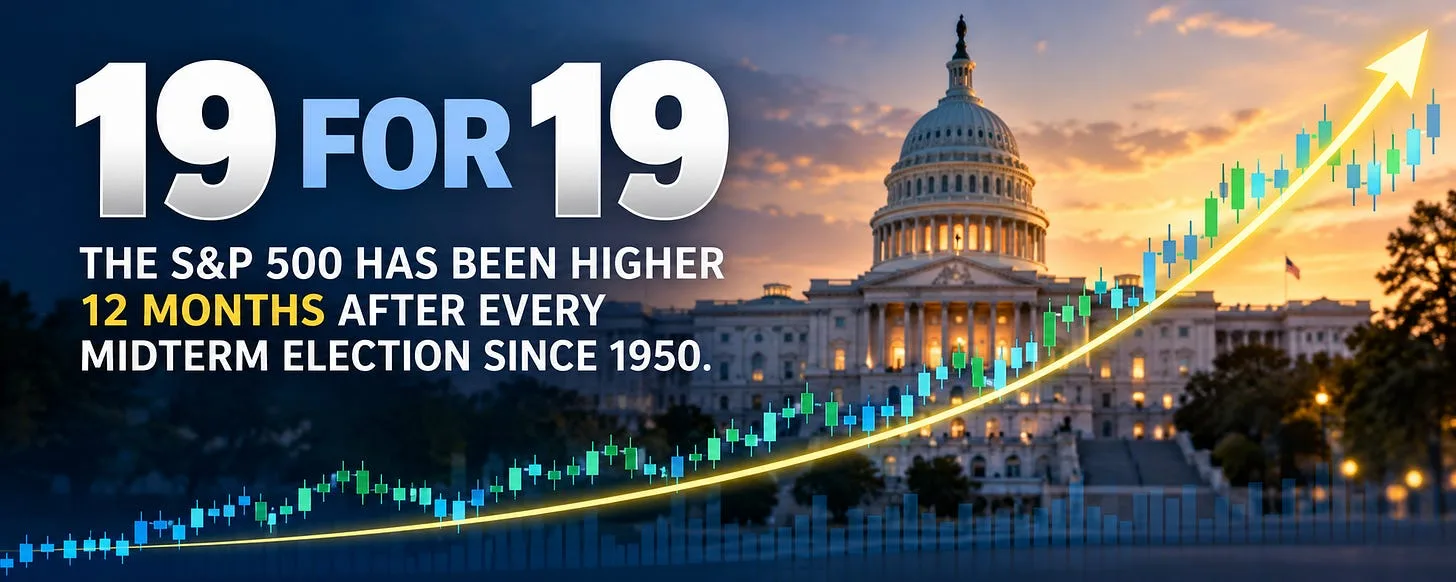
Oct 31, 2026 · Market Commentary
19 for 19. But Don’t Buy the Headline.
What 19 midterm elections reveal about the S&P 500, and why higher later does not mean higher tomorrow.
- Market History
- Midterm Elections
- S&P 500
- Market Analysis
- Stock Market
- Market Seasonality
Oct 14, 2026 · Market Commentary
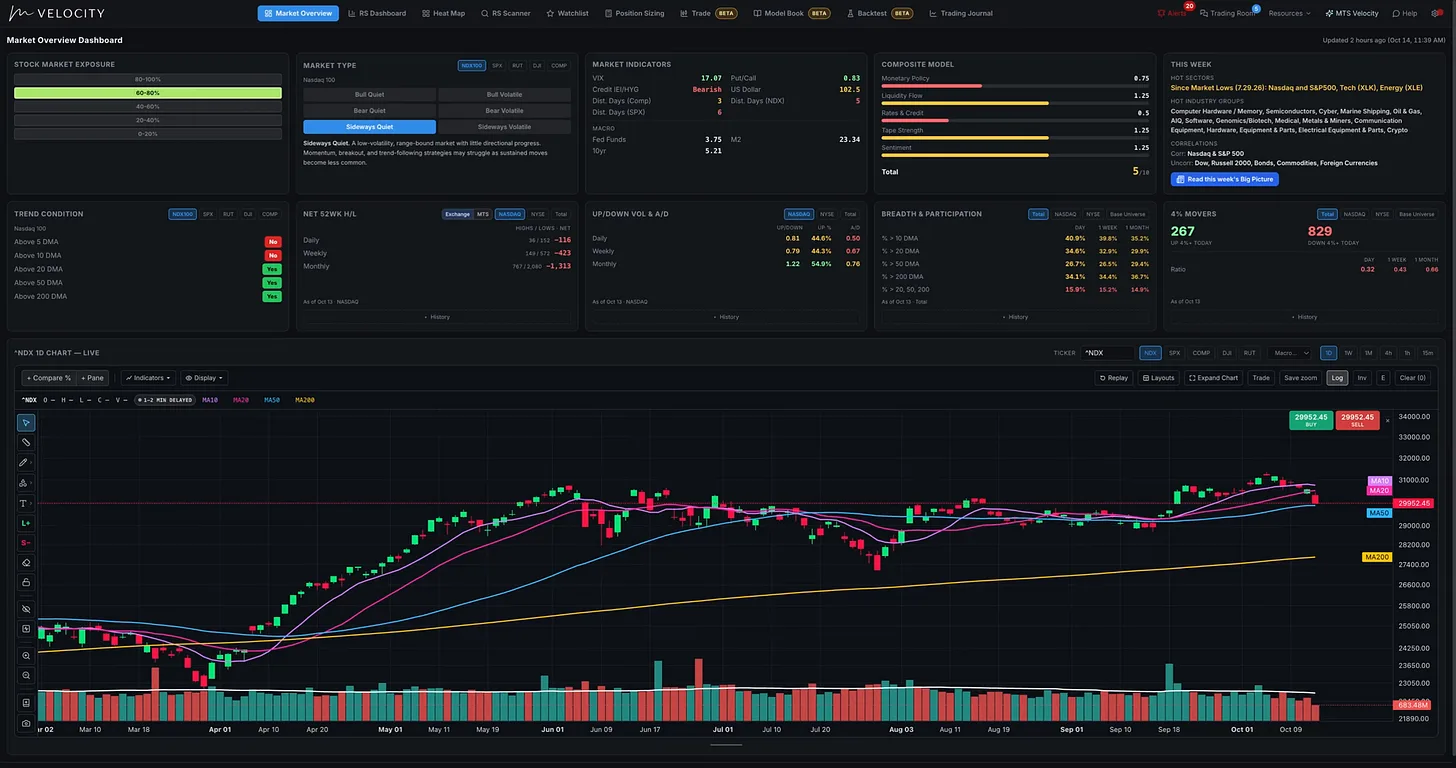
Stock Market Warning Signs: Why I’m Getting Defensive
Weak breadth, rising rates, failed breakouts, and increasing distribution are telling growth and momentum traders to protect capital.
Aug 14, 2026 · Market Commentary
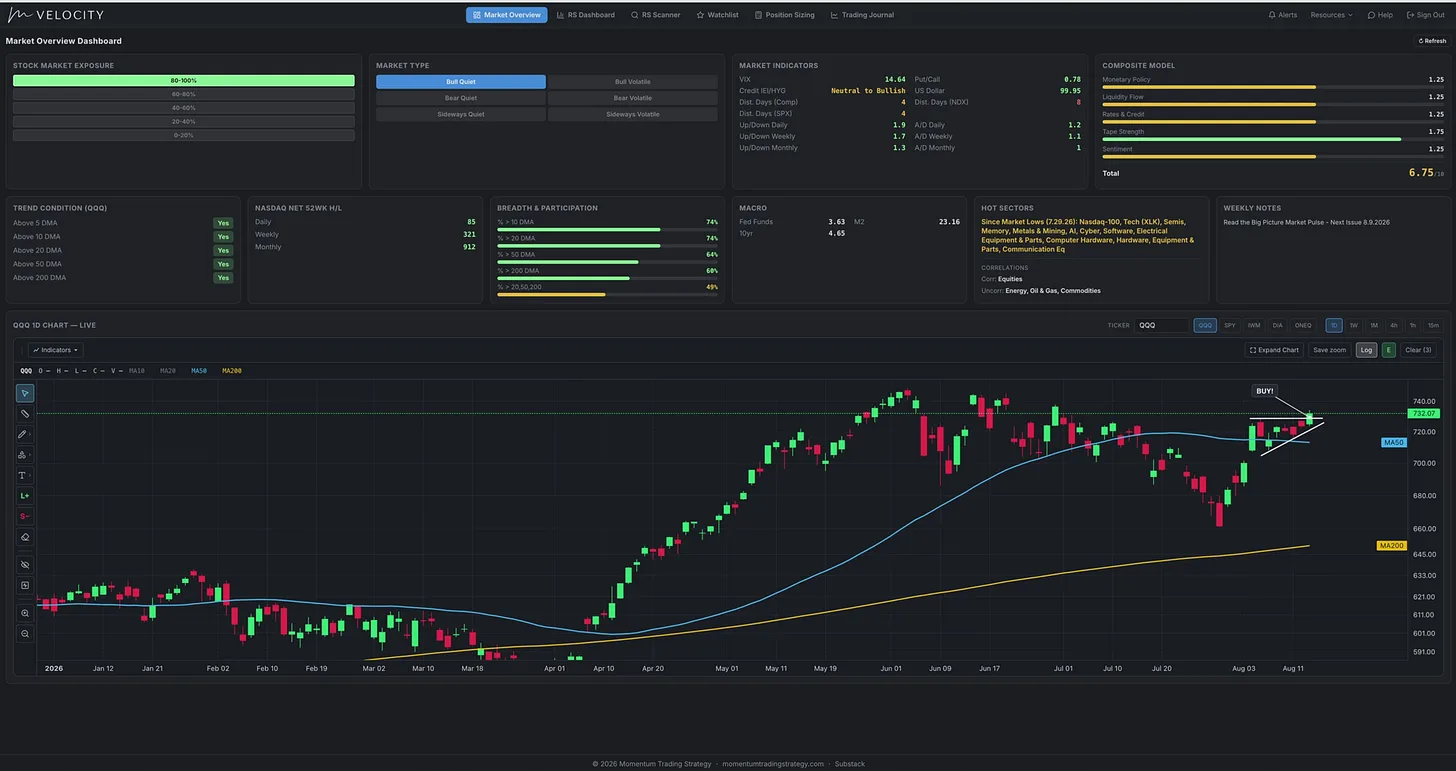
This Market Keeps Getting Stronger: 10 Stocks in 10 Different Industry Groups
Breadth is expanding, growth is leading again, and strength is showing up across the market. Here are 10 stocks that have my attention right now.
- Momentum Trading
- Investing
- CANSLIM
- Trading
- position trading
- stock trading
- Growth Investing
- Market Analysis